Table of Contents
What Makes an Email CTA Work (and Why Most Don't)
Cold Email CTAs vs. Email Marketing CTAs: The Key Difference
The 3 Types of Cold Email CTAs (And What the Data Says)
Cold Email CTA Best Practices (With Examples)
Email Marketing CTA Best Practices (With Examples)
Email CTA Examples by Email Type
Common Email CTA Mistakes to Avoid
How to A/B Test Your Email CTAs
How Cleverly Writes Cold Email CTAs That Convert
Conclusion
Frequently Asked Questions
Modified On :
May 19, 2026
Key Takeaways
- Single-CTA emails generate up to 371% more clicks than emails with multiple asks — one email, one direction, always.
- Soft CTAs (interest-confirmation questions) outperform hard asks like demo requests by 3x in cold outreach — match the ask to the relationship stage.
- Never include a calendar link in a first cold email — it forces commitment before trust is established.
- For email marketing CTAs, first-person button copy ("Get My Free Guide") consistently outperforms generic copy ("Download Now") — specificity drives clicks.
- Personalized CTAs convert 202% better than generic defaults — the more the ask reflects where the reader is in their journey, the higher the action rate
The CTA is the one line your entire email is building toward. The subject line earns the open. The first sentence earns the scroll. The body copy earns the right to ask. Then the CTA either converts that attention into action — or wastes all of it.
The average cold email reply rate sits at 3.43%, with top performers exceeding 10% — a 2-4x gap driven primarily by relevance and message calibration.
A lot of that gap comes down to CTA quality. Open-ended CTAs outperform hard asks: "Can I send more info?" and "Open to learning more?" are preferred by decision makers over scheduling a meeting upfront.
This guide covers two distinct contexts: cold email CTAs (goal = reply) and email marketing CTAs (goal = click or conversion). The rules are different in each context — and confusing them is one of the most common reasons campaigns underperform.
You'll get CTA types, data-backed best practices, placement rules, real examples, common mistakes, and a testing framework you can use immediately.
What Makes an Email CTA Work (and Why Most Don't)
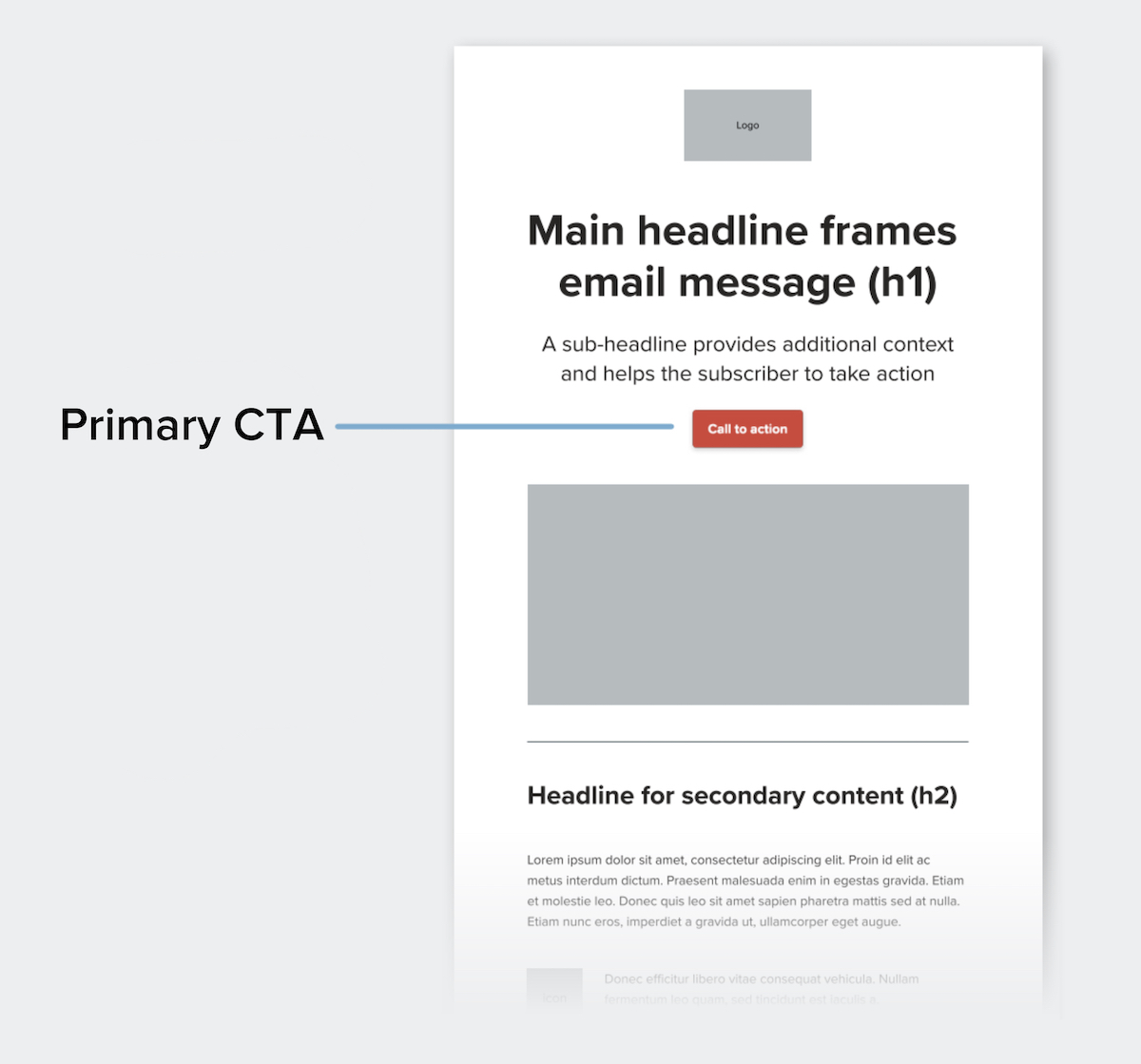
The core problem with most CTAs for emails is simple: they ask for more than the relationship justifies.
A CTA works when it matches the reader's willingness to act at that exact moment. Three variables determine whether that happens:
- Friction — How much effort does the prospect need to respond? The lower the friction, the higher the conversion. A yes/no question costs almost nothing. A 30-minute calendar booking costs a lot.
- Clarity — Does the reader know exactly what happens when they click or reply? Vague asks like "Let me know" or "Feel free to reach out" create no obvious path forward.
- Relevance — Does the ask connect directly to what the email just said? A CTA that feels disconnected from the body copy breaks trust right at the finish line.
Low friction + high clarity + high relevance = the formula for a converting CTA.
There's also what's called the commitment ladder — the idea that you earn the right to a bigger ask by starting with the smallest possible one.
Cold email and email marketing sit at very different rungs on that ladder. Cold email prospects don't know you, so the ask has to be nearly effortless.
Opted-in subscribers have already shown intent, so you can ask for more. Applying the wrong rules to the wrong context is where most campaigns quietly bleed replies and clicks.
📩 One Sentence Can Make or Kill Your Reply Rate
We write cold emails built to generate conversations—not get ignored. You only pay for qualified meetings we book.
Cold Email CTAs vs. Email Marketing CTAs: The Key Difference
Understanding email CTA best practices starts with understanding which game you're playing.
A cold email CTA has one job: get a reply. The prospect doesn't know you, hasn't opted in, and has no reason to give you their calendar. The ask has to be small enough that saying yes costs them almost nothing — ideally just a one-word confirmation.
An email marketing CTA has a different job: get a click or a conversion. The reader opted in, which means there's some level of trust already built. You can ask for more — a page visit, a download, a trial sign-up — because the relationship earned it.
❗ The mistake that kills campaigns: applying email marketing CTA logic to cold email. When you drop a bold "Book a Demo" button into a first cold touch, you're signaling that you care more about your conversion than their time. Reply rates collapse.
How the two contexts compare:
The 3 Types of Cold Email CTAs (And What the Data Says)
Not all cold email CTAs perform equally. Analysis of hundreds of thousands of cold emails consistently surfaces three distinct CTA types with very different reply rates:
Interest-based CTAs consistently outperform both specific scheduling asks and open-ended questions. The CTA that performs best asks for a low-commitment next step, not a full calendar commitment.
Soft CTAs work because they cost the prospect nothing. No calendar coordination, no time blocked, no commitment — just a low-friction nod. From there, the conversation opens naturally and you earn the right to suggest a call.
Hard CTAs in a first cold email signal one thing: you care more about your pipeline than their experience.
Asking for "thoughts" in a cold email increases replies but actually decreases meetings booked by 20% — the winning CTA pattern across top-performing accounts is a binary question or simple request with minimal cognitive load.
🚀 Better CTAs. Better Replies. Bigger Pipeline.
We handle targeting, copy & outreach end-to-end. More replies. More calls. Zero busywork.
Cold Email CTA Best Practices (With Examples)
Cold email CTAs live or die by one principle: match the ask to the relationship stage. Here's how to do it right.
1. Use One CTA Only
Multiple CTAs create multiple decisions — and multiple decisions usually produce no decision at all.
Emails with a single CTA receive 371% more clicks compared to those with multiple calls to action.
❌ Wrong: "Let me know if you'd like to hop on a call, check out our case study, or reply with any questions."
✅ Right: "Worth a quick chat?"
One ask. One direction. One reason to reply.
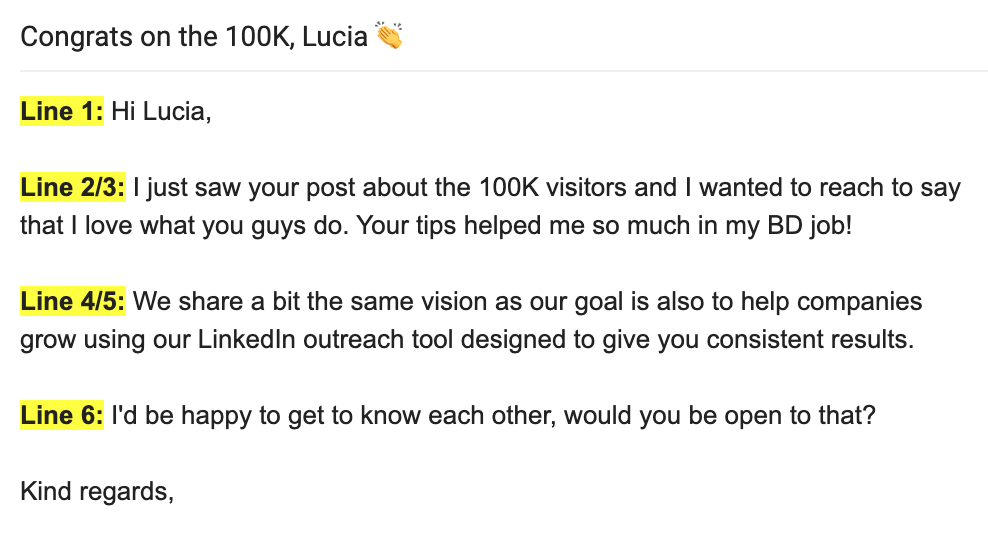
2. Keep It Short — 4 to 8 Words Maximum
"Worth a quick chat?" (4 words) converts better than "Would you be open to scheduling a brief 15-minute conversation to discuss this further?" (18 words).
Longer CTAs signal over-eagerness. They increase cognitive load — the reader feels the weight of the commitment before they've even agreed to anything. Short CTAs feel conversational and low-stakes.
High-converting cold email CTAs that work:
- "Worth a quick chat?"
- "Is this on your radar?"
- "Worth exploring?"
- "Open to a quick call?"
- "Does this resonate?"
Keep first-touch emails under 80 words with a single, focused ask such as "Worth a quick chat next week?" — every sentence earns its place by adding value or building toward the CTA.
3. Use Soft Asks Over Hard Pitches
A soft ask confirms interest — it doesn't demand commitment.
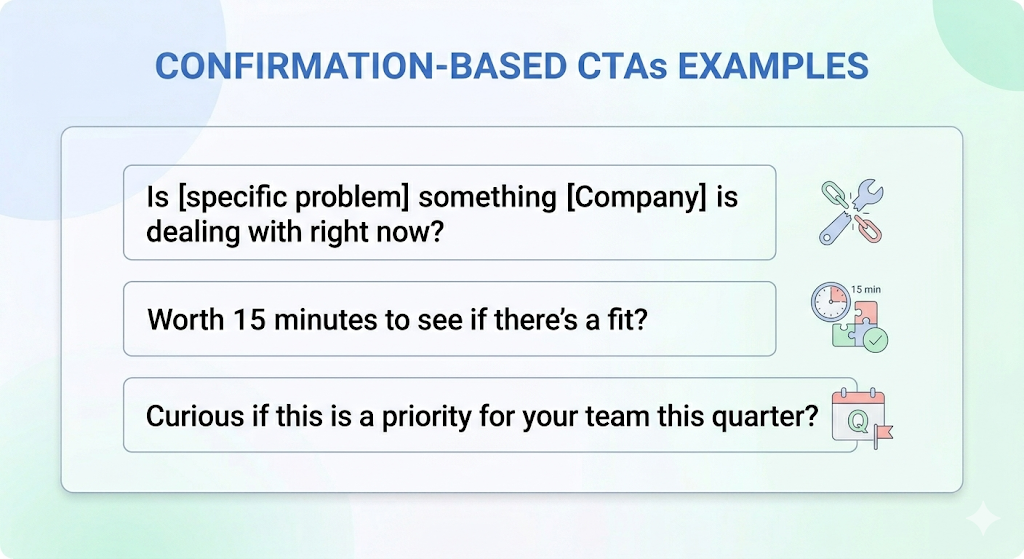
Confirmation-based CTAs that convert:
- "Is [specific problem] something [Company] is dealing with right now?"
- "Worth 15 minutes to see if there's a fit?"
- "Curious if this is a priority for your team this quarter?"
These work because the prospect just needs to say "yes, it is." That one-word reply opens the conversation naturally, and from there you move to the next step.
Avoid on first contact: "Book a 30-minute demo," "Schedule a call with our team," "Sign up for a free trial." All of these require meaningful commitment from someone who doesn't know you yet.
4. Lead with a Problem-Confirmation Question
The best-performing best CTA for cold email asks the prospect to confirm or deny whether a specific pain point applies to them.
Examples:
- "Is manually tracking [X] still a challenge for your team?"
- "Are you still handling [specific process] without a dedicated tool?"
- "Is scaling [X] something on your roadmap for this year?"
This works because the prospect can reply with a simple "yes" or "no." A yes opens the door to the next step. A no is still valuable — it's a targeting data point that tells you something about your ICP.
"Is [specific goal or challenge] on your roadmap for 2025?" and "Are you seeing [industry trend] impact [relevant metric] for your team?" both invite dialogue without requesting calendar time.
5. Match the Ask to Relationship Warmth
The colder the prospect, the smaller the ask. The commitment ladder in practice:
- Cold (first touch): "Is this on your radar?" or "Worth exploring?"
- After positive reply: "Would a quick 15-min call make sense?"
- After call agreed: Send calendar link
Never include a calendar link in the first cold email — it forces commitment before trust is established. Once the prospect replies positively, send the calendar link in that second message. They've opted into the conversation at that point.
The exception: warm outreach (referral, event follow-up, inbound signal) — you can move one step up the ladder.
6. Place the CTA as the Second-to-Last Line
Optimal placement: CTA is the second-to-last line of the email, directly before the sign-off.
Structure: hook → context/relevance → value line → CTA → sign-off
Everything before the CTA builds the case. The CTA is the natural conclusion of that argument. Single CTAs at the end generate 35–42% higher response rates than multiple CTAs scattered throughout the email body.
Don't bury the CTA mid-email or after a long block of text — it gets lost. One line, one question, no alternatives after it.
7. Start with an Action Verb for Clarity
CTAs that open with a clear verb feel instant and obvious:
- "Open to a quick call?" ✓
- "Worth exploring a fit?" ✓
- "Interested in seeing how we did this for [Company]?" ✓
Passive or vague openers dilute the ask: "Perhaps we could..." or "Let me know if..." both reduce urgency and clarity. The verb signals the action. The rest of the CTA signals the effort required.
Email Marketing CTA Best Practices (With Examples)
Email marketing CTAs operate in a trust environment. The reader opted in, so you can ask for more — but the ask still has to earn its click.
The goal shifts from reply to click: the CTA must be visually clear, copy-specific, and directly connected to the email's value proposition.
1. Use Button CTAs for Primary Actions
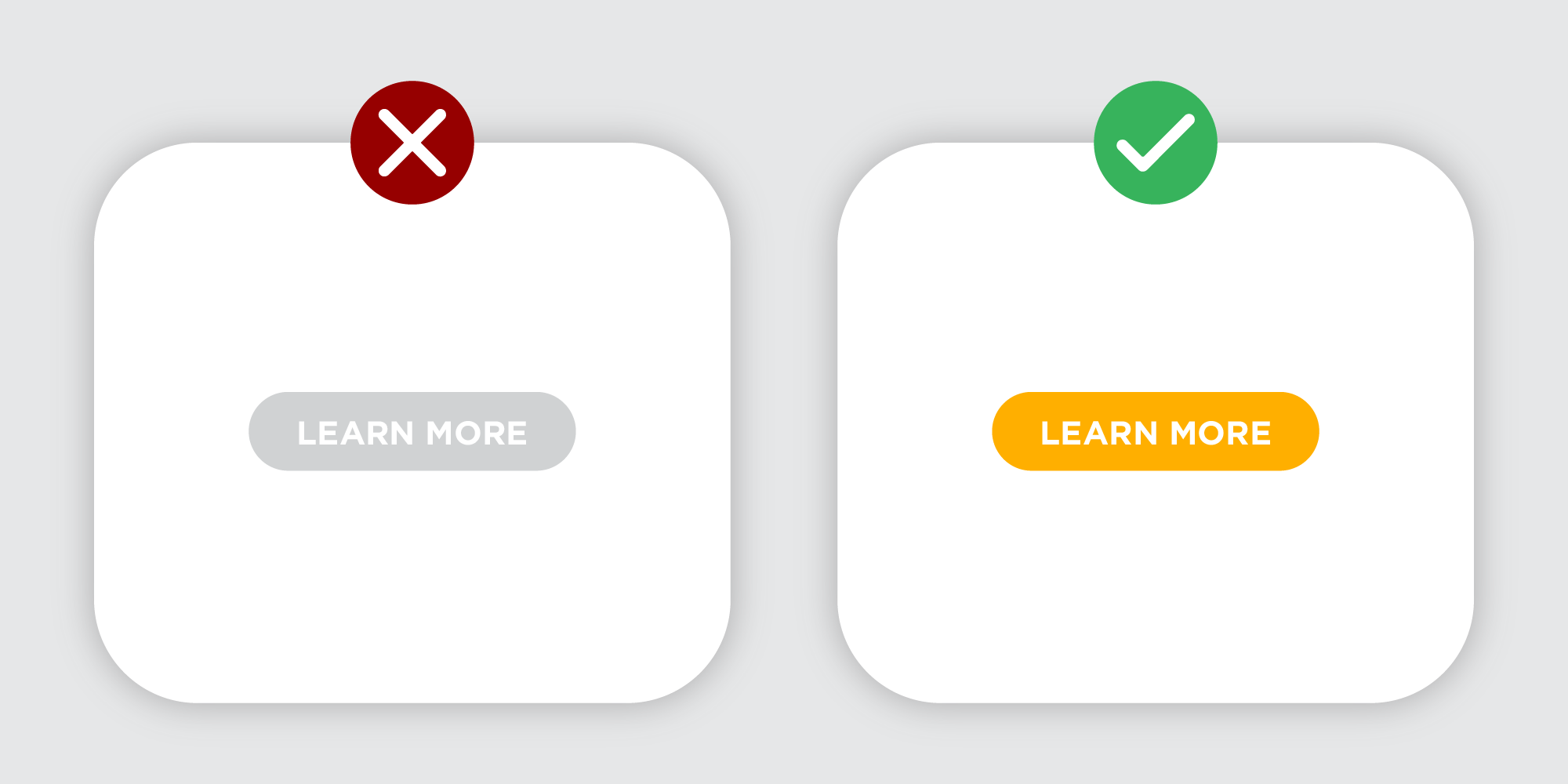
Buttons outperform text links for primary CTAs in marketing emails. Button-based CTAs improved click-through rates by 127% according to Campaign Monitor research. They're visually distinct and create a clear focal point in an email.
Button copy best practices:
- Use first-person: "Get My Free Guide" outperforms "Download Guide"
- Be specific: "Start My Free Trial" beats "Click Here"
- Avoid generic: "Submit," "Click Here," "Learn More" all underperform specific action-oriented copy
Button examples that convert:
- "Show Me How It Works"
- "Get the Full Report"
- "Start My Free 14-Day Trial"
- "See the Pricing"
- "Book My Strategy Call"
2. Write CTA Copy That Communicates Value, Not the Action
Weak: "Download Now" — tells the reader what they're doing, not what they're getting.
Strong: "Get the 2026 Cold Email Benchmarks" — tells the reader the value they receive.
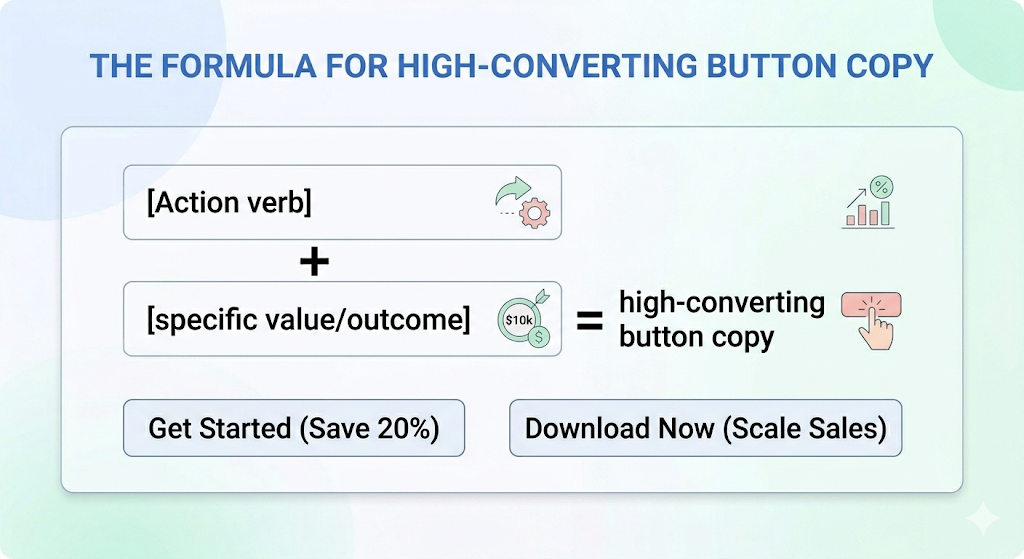
Examples:
- "Get My Free Cold Email Audit"
- "See How We Book 30+ Meetings/Month"
- "Download the B2B Outreach Playbook"
- "Claim Your Free Strategy Call"
3. One Primary CTA Per Email — Secondary Actions in Text Only
One button = one clear goal per email. Reducing to one CTA per page can boost conversions by 266%.
If a secondary action is needed (share this, read more), use a text link — never a second button. Two buttons create a visual split and dilute the primary action. If you have multiple goals, send multiple emails — don't stack CTAs in one.
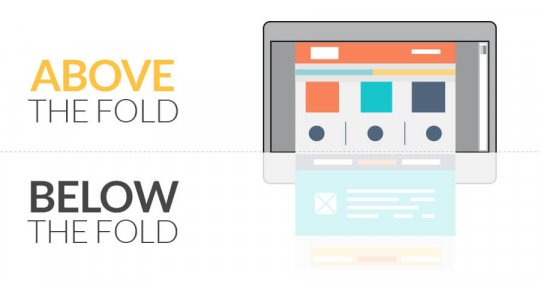
4. Place the CTA Above the Fold and Repeat It at the Bottom
First placement: above the fold (visible without scrolling) for readers ready to act immediately.
Second placement: bottom of email for readers who need to read through first.
Use the same CTA copy both times — consistency reduces confusion. Never put the only CTA at the very bottom of a long email. Some readers won't scroll that far, and you lose the easy converts at the top.
5. Create Urgency Without Fake Scarcity
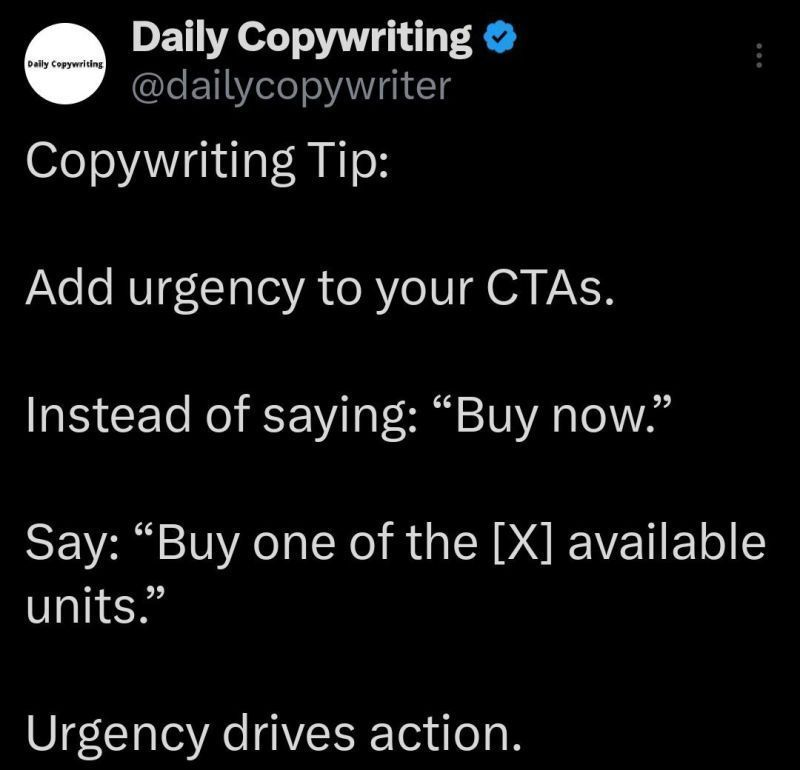
Urgency lifts CTR when it's genuine. Fake countdown timers and false scarcity damage trust and deliverability.
Real urgency: "Offer ends Friday," "Only 5 spots left," "Registration closes tomorrow."
Soft urgency without pressure: "While spots last," "Don't miss out," "While it's available."
Adding urgency to CTAs, such as limited-time offers, can increase conversion rates by 332% — but only when the urgency is real. "ACT NOW!!!" in all caps reads as spam and triggers filters.
6. Personalize the CTA to the Segment
Personalized CTAs convert 202% better than generic defaults, according to HubSpot's study of 330,000+ calls-to-action.
Generic CTAs convert less than segment-specific ones. Personalization examples:
- For free trial users: "Upgrade My Account"
- For new subscribers: "Start Your First Campaign"
- For enterprise prospects: "Talk to Our Enterprise Team"
The more the CTA reflects where the reader is in their journey, the higher the click-through. A prospect who just downloaded a benchmark report should see "See How We Apply These Benchmarks," not "Book a Demo."
Email CTA Examples by Email Type
Quick-reference bank of proven email CTA examples organized by use case:
Cold Email — First Touch:
- "Is this on your radar?"
- "Worth a quick chat?"
- "Does this resonate with where [Company] is right now?"
- "Is [specific pain] something your team is dealing with?"
- "Worth exploring a fit?"
Cold Email — Follow-Up:
- "Still worth a quick conversation?"
- "Wanted to bump this up — still relevant?"
- "Quick question: is [pain point] still a priority?"
- "Any interest in seeing how we handled this for [Similar Company]?"
Demo or Discovery Request:
- "Open to a 20-minute call to see if there's a fit?"
- "Want to see the exact playbook we used for [Company]?"
- "Would a quick walkthrough be useful?"
Email Marketing — Lead Magnet:
- "Get the Free Guide"
- "Download the 2026 Benchmark Report"
- "Get My Free Audit"
Email Marketing — Product/Service:
- "Start My Free Trial"
- "See How It Works"
- "Book My Strategy Call"
- "Get Custom Pricing"
Email Marketing — Re-engagement:
- "I'm Still In — Keep My Subscription"
- "See What's New"
- "Claim My Spot Before It's Gone"
Common Email CTA Mistakes to Avoid
These are the patterns that quietly kill campaign performance across both cold email and marketing sends.
❌ Multiple CTAs in one email. Emails with a single CTA receive 371% more clicks compared to those with multiple calls to action. Every additional ask is a leak in the funnel.
❌ Too long and too formal. "Would you be open to scheduling a brief 15-minute introductory call at your earliest convenience?" signals low confidence and high friction. The reader feels the weight before they've agreed to anything.
❌ Calendar link in the first cold email. This forces commitment before trust is established. Wait until the prospect has replied positively — then send the link in the follow-up.
❌ Vague copy. "Click here," "Learn more," "Submit" tell the reader nothing about the value they'll receive. Every CTA should communicate the outcome, not just the action.
❌ No urgency or reason to act now. Leaving timing open indefinitely kills email marketing conversion. Give the reader a reason to act in this moment.
❌ CTA buried at the bottom. Readers who skim never see it. Place above the fold for marketing emails. Place second-to-last for cold email.
❌ Hard pitch to a cold prospect. "Book a 30-minute demo" on a first cold touch signals you care more about your conversion than their time. Every additional CTA in a cold email reduces clarity and response rates. The most effective cold emails have a single, unambiguous ask.
❌ Mismatching CTA to email context. A nurture email that ends with "Buy Now" breaks trust. A re-engagement email that ends with a soft question feels off too. The ask must match the stage of the relationship.
How to A/B Test Your Email CTAs
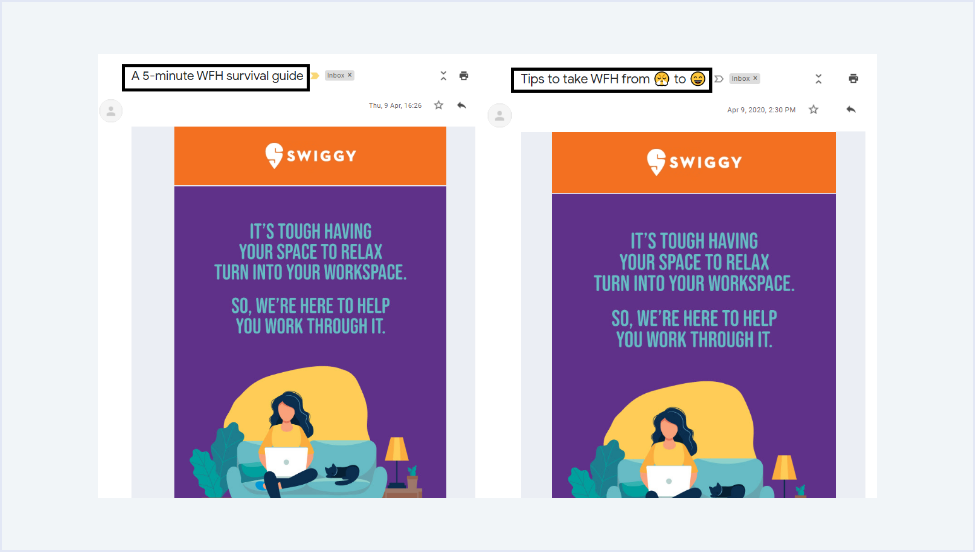
CTA testing is the fastest lever for improving email performance. A/B testing subject lines increases open rates by up to 20% over time — the same compounding logic applies to CTAs.
What to test in cold email CTAs:
- Soft vs. medium ask: "Is this on your radar?" vs. "Open to a quick call?"
- Question length: 4-word vs. 8-word CTA
- Problem-confirmation vs. meeting ask
- First-person vs. second-person framing
What to test in email marketing CTAs:
- Button copy: "Get the Guide" vs. "Download Now" vs. "Show Me the Report"
- Button placement: above fold vs. bottom only vs. both
- With vs. without urgency language
- First-person vs. third-person: "Get My Trial" vs. "Start Free Trial"
Testing rules that actually matter:
Change one variable at a time — otherwise you can't isolate what moved the needle. Never make decisions based on tests with fewer than 100 emails per variant unless your baseline conversion rate exceeds 10%.
Measure by the metric that actually matters: reply rate for cold email, click-through rate for marketing.
Run tests weekly — CTA performance shifts with audience fatigue, and the best-performing CTA today will plateau if you stop iterating.
How Cleverly Writes Cold Email CTAs That Convert
The CTA is one element. But it only converts if the targeting, copy, deliverability, and sequence are working together. Most in-house teams get one or two of these right — the others quietly leak pipeline.
At Cleverly, we build and run complete cold email outreach systems for B2B companies — including CTA strategy, sequence structure, and continuous testing.
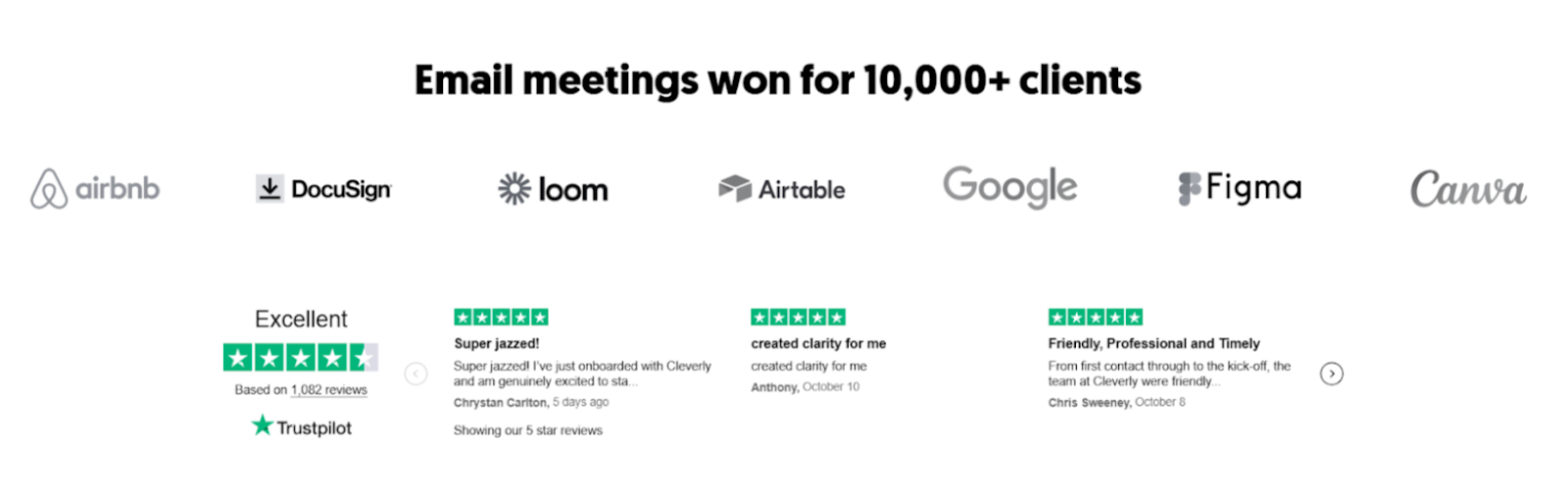
As a cold email marketing agency that has worked with 10,000+ clients across companies like Amazon, Google, Uber, Slack, and Spotify, we've seen every CTA failure pattern and built playbooks that address them at every stage.
What we handle end-to-end: ICP targeting and verified list building, multi-touch sequences with CTA variants tested per segment, problem-first copy with soft CTAs calibrated to relationship stage, domain setup, warm-up, and deliverability management, response handling and meeting handoff, and ongoing A/B testing across CTAs, subject lines, and email structure.
The CTA frameworks and sequence structures that take in-house teams months to figure out are deployed from day one. We've generated $312M in pipeline revenue and $51.2M in closed revenue through outreach — the systems are proven, not theoretical.
Cold email is not hard to understand. It is hard to execute at a consistently high level. Targeting drifts, deliverability degrades, CTAs go stale — without continuous optimization, even a great setup slowly erodes.
Want cold email CTAs — and everything around them — handled end-to-end?
🤝 Book a strategy call with Cleverly

Conclusion
The CTA is where email campaigns win or lose. Not the subject line. Not the opener. The ask itself — and whether it matches what the reader is willing to do at that exact moment.
For cold email: keep it under 8 words, use soft asks over hard pitches, never open with a calendar link, and place it second-to-last. For email marketing: use specific button copy, one primary CTA per email, place above the fold and repeat at the bottom, and personalize to the segment.
Both contexts share the same underlying principle: earn the ask before you make it. Get that right, and the mechanics follow naturally.
Frequently Asked Questions
Free Resource
How to Scale a Profitable Cold Call System
Get the complete guide — download it instantly now.
Free Ebook
Download the Free Guide
Enter your details to get instant access.
You're all set! 🎉
Your ebook is downloading now.
Click below if the download didn't start automatically.