Table of Contents
What Is Meeting-to-Opportunity Conversion Rate?
Meeting-to-Opportunity Conversion Rate Benchmarks
Why Booked Meetings Fail to Become Opportunities
How to Improve Meeting-to-Opportunity Conversion
Tracking the Full Outbound Sales Funnel
Common Mistakes That Hurt Cold Outbound Conversion
How Cleverly Improves Meeting-to-Opportunity Conversion From the Start
Conclusion
Frequently Asked Questions
Modified On :
August 11, 2026
Key Takeaways
- A packed calendar isn't the win. Meeting-to-opportunity conversion rate is the number that tells you if your outbound is actually building a pipeline.
- Most conversion problems start before the meeting happens. The premise you use to book it sets a ceiling on how well it can convert.
- A vague or misaligned definition of "opportunity" between sales and marketing makes the metric impossible to improve, because nobody agrees what you're measuring.
- Discovery, not pitching, is what turns a meeting into a real opportunity. Skipping straight to a demo is the single most common way teams waste a booked call.
- Tracking the full funnel, not just meetings booked, is the only way to know whether you have a targeting problem, a show-rate problem, or a discovery problem.
You booked 40 meetings last month. Twelve turned into real opportunities. Is that good? Depends who you ask, and that's the whole problem.
Booking a meeting feels like the finish line. It isn't. It's the midpoint. A full calendar can sit right next to a flat pipeline, and a lot of sales leaders don't notice the gap until the quarter's numbers come in short.
Recent benchmark data puts outbound meeting-to-opportunity conversion rate in the 10-30% range, with some 2026 reports showing SaaS teams averaging closer to 25-40% when qualification is tight.
Inbound and ABM programs run meaningfully higher, often 30-60%, because the prospect showed up wanting something instead of agreeing to "learn more."
This guide breaks down what actually happens between a booked meeting and a real sales opportunity, what benchmarks look like right now, and the specific fixes that move the number.
If you're a sales leader or a rep running cold outbound and your calendar looks fine while your pipeline doesn't, this is for you.

What Is Meeting-to-Opportunity Conversion Rate?
Meeting to opportunity conversion measures the percentage of held sales meetings that turn into a qualified opportunity in your pipeline.
The formula is simple:
Opportunities Created ÷ Meetings Held x 100 = Conversion Rate
Hold 40 meetings, create 12 opportunities, and you're at 30%. The math isn't the hard part.
This metric is different from your meeting booked rate (how many prospects agreed to a call) and your show rate (how many actually attended). Those measure whether outreach worked. This one measures whether the meeting itself produced anything real once it happened.
Why This Metric Gets Confusing Fast
Here's where most teams get stuck. Sales and marketing rarely agree on what counts as an "opportunity."
One team logs any deal created in the CRM. Another only counts a deal once there's a confirmed budget, timeline, and decision-maker involved. Both are technically right. Both are also using the same word to mean different things, which means the reported conversion rate can swing wildly depending on who's counting.
Before you try to improve this number, get sales and marketing in a room and agree on a specific, written definition. Without that, you're optimizing against a moving target.
🎯 Booked Meetings Are Good. Qualified Opportunities Are Better.
Our outbound campaigns generate 15–30 qualified meetings every month with prospects that fit your ICP.
Meeting-to-Opportunity Conversion Rate Benchmarks
Benchmarks here vary more than almost any other funnel metric, and the range itself is useful information.
- Outbound: 10-30% typical
- Inbound: 30-50%, with some ABM and inbound-qualified programs reaching 60%+
- 2026 SaaS-specific data: some reports show meeting-to-qualified-opportunity averaging 25-40%, with SaaS specifically landing in the 30-50% band
- ICP fit swing: reports show 40-70% variance in conversion depending on how tightly targeted the original outreach was
That last point matters more than it sounds. A meeting booked with someone who barely fits your ICP will convert at a fraction of the rate of a meeting booked with a decision-maker who has a real, current problem you solve.
Don't Skip Show Rate

Show rate quietly distorts this entire calculation. No-show rates are climbing over the past several years, with some sources putting cold-outbound no-shows as high as 30%+ while broader B2B SaaS medians sit closer to 13-15%.
If a third of your booked meetings never happen, your true opportunity rate against booked meetings looks much worse than your rate against held meetings. Track both separately, or you'll misdiagnose the problem.
Why Booked Meetings Fail to Become Opportunities
Most of the leakage happens for one of five reasons. Look at your last 10-15 meetings that went nowhere and you'll likely find one of these.
- The meeting was booked on a weak premise. The prospect agreed to "learn more" or "see a quick demo," not because of a specific, relevant reason tied to their business.
- No real discovery happened. The call turned into a product pitch instead of a conversation that uncovered an actual problem worth solving.
- No clear opportunity definition. Reps mark deals as opportunities inconsistently, which inflates or deflates the real number and makes trend data useless.
- Poor lead-to-meeting fit. The meeting landed with someone outside your ICP, or without real buying authority.
- No structured next step. The call ends without a specific, scheduled follow-up. Momentum dies within 24 hours if there's nothing concrete on the calendar.
🚀 Turn More Meetings Into Pipeline
With 53,000+ meetings booked and $312M+ in pipeline generated, Cleverly helps 10,000+ businesses build a predictable outbound engine.
How to Improve Meeting-to-Opportunity Conversion
The fixes span three phases: before the meeting, during it, and immediately after. Most teams only work on one of these. The gap usually closes once you address all three.
Set the Right Premise Before the Meeting Even Happens
Frame the meeting as a give, not a get. A give is something specific and useful on its own, like an audit, a benchmark comparison, or a targeted insight about the prospect's business. A get is a demo request dressed up as an invitation.
A meeting booked around a vague premise attracts curious clickers. They show up out of mild interest, not because they have a problem to solve. Those meetings rarely convert, no matter how good the call itself is.
Run Real Discovery, Not a Pitch
Use a structured discovery framework, something built around situation, pain, impact, and decision process, instead of jumping into a demo five minutes in.
Confirm budget, authority, need, and timeline before you pitch anything. If you can't answer those four questions by the end of the call, you don't have a qualified opportunity yet. You have a conversation that might become one.
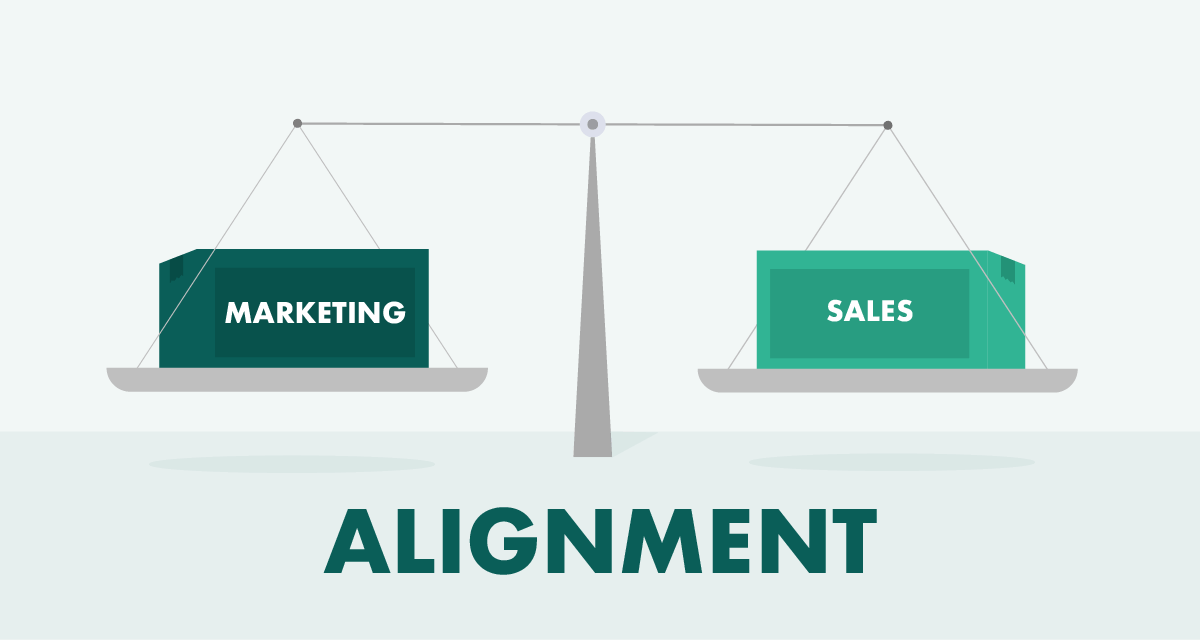
Define "Opportunity" Criteria Clearly and Get Sales and Marketing Aligned
Write down the specific, objective criteria that qualify a meeting as an opportunity. Something like: confirmed budget range, a stated timeline, and access to the actual decision-maker.
Without that agreement in writing, this metric becomes unreliable fast, and you'll spend more time arguing about the number than improving it.
Reduce Scheduling Friction to Protect Show Rate
Offer specific time blocks in your outreach: "Tuesday at 2pm or Thursday at 10am?" instead of an open-ended "let me know what works for you." Specific options convert to booked meetings faster and reduce the back-and-forth that lets interest cool off.
Follow that up with confirmation and reminder touches. Booking lead time is one of the biggest levers on show rate. The longer the gap between booking and the meeting, the more it decays.
End Every Meeting With a Defined Next Step
Never end a discovery call without something specific and scheduled: a proposal deadline, a follow-up call, an intro to another stakeholder. Anything.
Momentum you lose right after a meeting is nearly impossible to get back. A vague "I'll follow up" is where most deals quietly die.
Tracking the Full Outbound Sales Funnel
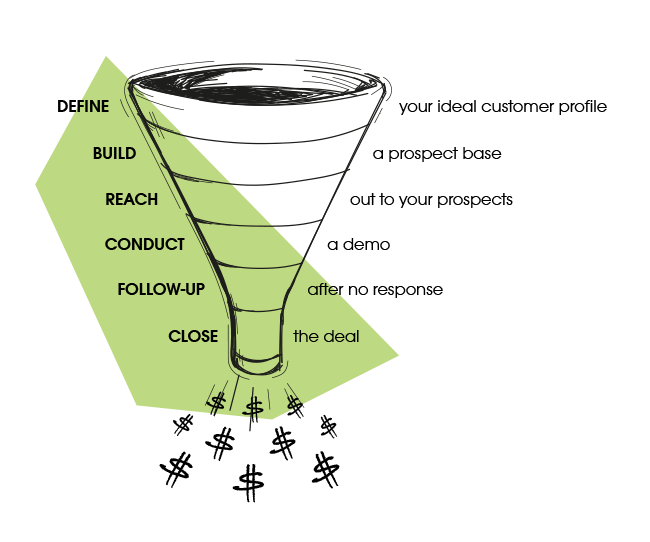
Meeting-to-opportunity conversion doesn't exist in isolation. Track the full sequence so you know exactly where things break:
Delivered rate → reply rate → positive reply rate → meeting booked rate → meeting held rate → opportunity created rate
Here's why this matters. A low opportunity rate paired with a strong reply rate points to a meeting-quality problem, not a targeting problem. Your outreach is working. Your discovery process isn't.
A team with strong booking numbers but weak meeting-to-opportunity conversion usually has a discovery or qualification issue, not a volume problem. Adding more meetings to a broken conversion process just produces more meetings that go nowhere.
Review this funnel monthly, segmented by rep and by lead source. Problems caught early are cheap to fix. Problems caught at quarter-end are not.
Common Mistakes That Hurt Cold Outbound Conversion
Most teams don't have a targeting problem or a copywriting problem. They have a handful of habits baked into how they run outbound that quietly cap conversion before a single meeting gets booked. Here's what that actually looks like in practice.
❌ Measuring Meetings Booked Instead of Opportunities Created
This is the big one. A rep who books 20 meetings a month looks like a top performer on paper. But if only 3 of those meetings ever become real opportunities, the team is optimizing for the wrong number.
Booking volume is easy to game. Send enough cold emails offering something vague and low-commitment, and people will take the call out of curiosity. It looks like a win in the activity dashboard and shows up as a loss two weeks later when nothing progresses.
If your team's comp plan or KPI dashboard leads with meetings booked, you're incentivizing exactly this behavior without meaning to.
❌ Booking Meetings With Anyone Who'll Take a Call
Under quota pressure, reps start saying yes to meetings that shouldn't happen. A prospect with the wrong title, at a company outside the ICP, or with zero budget authority still counts as "a meeting" on the activity report.
This shows up most in campaigns run without firm ICP filters, or where reps have discretion to override targeting criteria to hit a booking number.
The result is a calendar full of conversations that were never going to close, and a conversion rate that looks broken when the real problem is who's getting booked in the first place.
❌ Pitching Before Discovery Is Complete
This is the fastest way to burn a meeting that could have converted. The call starts, the rep opens with a few pleasantries, then jumps straight into a product walkthrough or slide deck before understanding whether the prospect has a real problem worth solving.
Prospects can tell the difference between a conversation and a pitch within the first two minutes. If they haven't said anything about their actual situation before the demo starts, the rep is guessing what matters to them. Guessing wrong once is usually enough to lose the deal, even if the product would have been a great fit.
❌ No Consistent, Objective Definition of "Opportunity"
Without written criteria, opportunity marking becomes a judgment call, and different reps make that call differently. One rep marks a deal as an opportunity after a single positive conversation. Another waits until there's a signed NDA and a second meeting scheduled.
This inconsistency does two things. It makes the conversion rate meaningless as a trend line, since you're comparing numbers that don't measure the same thing month to month. And it makes coaching nearly impossible, because you can't tell if a rep's "high conversion rate" reflects strong discovery or just a looser definition of what counts.
❌ Not Tracking Show Rate Separately
Teams that only look at meeting-to-opportunity conversion against booked meetings, not held meetings, end up misreading their own funnel. If 25% of booked meetings no-show, and you're calculating conversion against the full booked number, your rate looks artificially low, and the fix you reach for is wrong.
The actual problem might be scheduling friction, weak reminder sequences, or meetings booked too far out.
None of that gets fixed by tightening discovery scripts or rewriting the pitch. Separating show rate from opportunity rate is the only way to know which lever you're actually supposed to pull.
❌ Letting Meetings End Without a Next Step
This one is subtle but shows up constantly. The call goes well, the prospect seems engaged, and it ends with something like "great chat, I'll follow up with some info." No date. No specific action. No mutual commitment.
That kind of ending relies entirely on the rep's follow-through and the prospect's memory, both of which fade fast. A meeting that ends without a scheduled next step has a much lower chance of becoming a tracked opportunity, even if the conversation itself was strong. It just quietly falls off both people's radar.
❌ Treating Every Lead Source the Same Way
A meeting booked through a cold LinkedIn message and a meeting booked from a warm inbound demo request are not the same kind of meeting, but plenty of teams track them under one blended conversion number.
That blend hides real performance differences. A source converting at 8% can drag down the average for a source converting at 35%, and nobody notices because the report only shows one combined figure.
Segmenting conversion by source is what actually reveals where to double down and where to fix things.
How Cleverly Improves Meeting-to-Opportunity Conversion From the Start
Most of what determines whether a meeting converts happens before the meeting is ever booked. The quality of the targeting and the premise used to get someone on the calendar set the ceiling on everything that follows. No amount of sales skill fixes a meeting booked with the wrong person on a weak premise.
This is where Cleverly focuses. As a done-for-you outbound lead generation agency running LinkedIn outreach, cold email, and cold calling, we build campaigns around ICP-aligned targeting so booked meetings arrive pre-qualified on fit, not just curiosity.
That means qualification-focused messaging from the first touch, list building that filters for real decision-makers, and meeting handoffs that come with enough context for your team to run strong discovery instead of starting from zero.
This approach fits teams whose calendars look healthy on volume but whose pipeline doesn't reflect it. Cleverly has generated 224,700+ leads and $312M+ in pipeline for clients across B2B industries, built on the same targeting discipline described here.
If your booked meetings aren't converting, the fix usually starts upstream. Book a strategy call to see how it applies to your funnel.
Conclusion
Booking meetings and converting them into opportunities are two different skills, and most teams over-invest in the first while barely touching the second. A full calendar feels like progress, but it's only real progress if what happens on those calls turns into pipeline.
The fix starts before the meeting, with the targeting and premise you use to book it, and continues through the call itself, with real discovery and a defined next step. None of it works without a clear, agreed-upon definition of what actually counts as an opportunity.
Track the full funnel, not just the meetings on your calendar. The real signal of outbound health lives in what happens after the meeting, not before it.
Frequently Asked Questions
Free Resource
How to Scale a Profitable Cold Call System
Get the complete guide — download it instantly now.
Free Ebook
Download the Free Guide
Enter your details to get instant access.
You're all set! 🎉
Your ebook is downloading now.
Click below if the download didn't start automatically.