Table of Contents
Why Outbound Attribution Is Fundamentally Harder Than Inbound
The Most Common Ways CRM Data Misrepresents Outbound Performance
Why First-Touch and Last-Touch Attribution Fail Outbound Teams
How to Fix Outbound Attribution: A Step-by-Step Framework
What Accurate Outbound Attribution Enables
How Cleverly Tracks and Reports Outbound Lead Generation Performance
Conclusion
Frequently Asked Questions
Modified On :
June 23, 2026
Key Takeaways
- Outbound sales attribution is structurally harder than inbound — multi-touch journeys, manual logging gaps, and sequencing tool sync failures all conspire to make your CRM data unreliable.
- 70% of CRM databases contain outdated, incomplete, or inaccurate information — meaning most outbound pipeline reports are built on a foundation that's already compromised.
- First-touch and last-touch attribution models systematically undercredit outbound; position-based (U-shaped) attribution — 40% first touch, 40% last touch, 20% middle — better reflects how B2B pipeline is actually built.
- Fixing outbound pipeline reporting requires structural changes: a locked source taxonomy, enforced logging discipline, sequencing tool sync, and outbound-specific reports separated from inbound.
- When attribution is accurate, every budget, ICP, and rep performance decision becomes data-driven — and outbound finally gets the pipeline credit it's been generating all along.
Your outbound team is booking meetings. Pipeline is moving. But come budget season, the numbers don't add up — and outbound gets questioned while inbound gets defended with clean dashboards and clear attribution trails.
That's not a performance problem. That's an attribution problem.
Only 35% of sales professionals fully trust their CRM data's accuracy — and that lack of trust is usually justified. 45% of selling professionals say incomplete data is their biggest obstacle, and for outbound teams specifically, the gaps aren't random. They're systematic. The way most CRM systems are configured, inbound attribution is clean and automatic while outbound attribution is manual, inconsistent, and chronically underreported.
The result: outbound gets undervalued in budget reviews. Inbound gets over-credited at close. And the optimization decisions that follow — which channels to fund, which ICPs to target, which reps to scale — are being made on data that reflects logging problems more than actual performance.
This guide breaks down exactly why outbound sales attribution breaks down, how the most common attribution models make it worse, and a practical six-step framework for fixing it — so your CRM data finally reflects what's driving pipeline.

Why Outbound Attribution Is Fundamentally Harder Than Inbound
When an inbound lead converts, the CRM almost logs itself. A prospect clicks an ad, fills out a form, and the source is recorded automatically — digital, timestamped, and tied to the specific campaign that drove the click.
Outbound doesn't work like that. An SDR sends eight LinkedIn messages, three emails, and makes five cold call attempts over two weeks. On attempt five, the prospect picks up, agrees to a meeting, shows up, and eventually closes. But what does the CRM record? "Outbound." One field. No channel breakdown. No sequence context. No information about which touch actually generated the response.
That's the core problem — and it gets compounded by three structural issues that inbound simply doesn't face.
The Multi-Touch Reality of B2B Buying
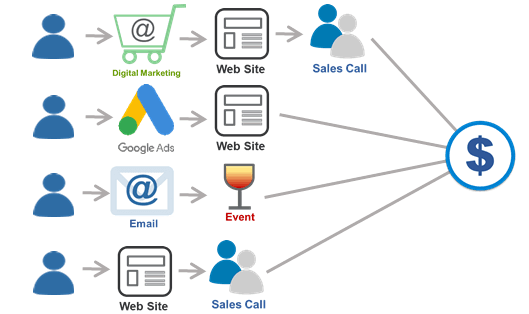
Forrester Research found that B2B buyers now engage with 27+ touchpoints before making a purchase decision. Crediting one of those touches with the full deal erases the contribution of every other activity that built the relationship.
Outbound teams typically own the first 10–15 of those touches — the hard work of cold outreach, follow-up, and early trust-building. But if the attribution model only sees the last touch, those efforts disappear from the record entirely.
The Manual Logging Gap
Sales reps spend nearly 18% of their week on CRM updates and administrative tasks alone — and under time pressure, logging quality deteriorates fast. Calls go unrecorded. LinkedIn replies get handled but not entered.
Emails sent from sequencing tools don't always sync back to the CRM activity timeline. Without complete touch logging, the attribution model is working from an incomplete dataset — and incomplete data always undercredits the channel that relies most on manual entry, which is outbound.
The Inbound Bleed Problem
A prospect reached through six outbound touches eventually engages with a retargeting ad or downloads a piece of content. If last-touch attribution gives credit to that inbound interaction, the entire outbound sequence that created the original awareness and intent disappears from the record. The CRM says inbound. The reality was outbound. And that discrepancy compounds across every deal in the pipeline.
Stop Guessing Which Channel Created the Deal
Get LinkedIn, cold email, and cold calling campaigns backed by reporting that connects meetings to pipeline and revenue.
The Most Common Ways CRM Data Misrepresents Outbound Performance
Understanding the specific failure modes matters before you can fix them. These are the ones we see most consistently when auditing CRM data for outbound-heavy teams.
Source Field Overwriting
When a prospect originally sourced through outbound later fills a form from a paid ad, many CRMs overwrite the original source. An outbound-originated deal becomes an inbound-attributed one. Inbound pipeline metrics inflate. Outbound metrics shrink. The discrepancy looks like a channel performance difference — but it's a data architecture problem.
Inconsistent Source Taxonomy
"Outbound," "cold email," "SDR," "cold call," and "LinkedIn" are all being used by different reps to describe the same type of activity. 64% of B2B organizations lack a formal UTM policy — and most don't have a locked outbound source taxonomy either. When source values aren't standardized, you can't aggregate outbound pipeline data cleanly across the team. Every report becomes a manual reconciliation exercise.
Sequence Tool Data Not Syncing
Outreach sequences running in tools like Outreach, Salesloft, or Apollo frequently don't sync fully with CRM activity records. The full picture of outbound activity exists in the sequencing tool — reply rates, touch counts, sequence stages — but not in the CRM where pipeline reporting lives. You're making attribution decisions based on half the data.
Opportunity Backdating
When reps log opportunities late, the creation date doesn't match the actual first meaningful interaction. Touchpoints attributed to that opportunity get mapped to the wrong time window. Attribution data becomes structurally incorrect even when the source value is right.
Data Decay Distorting Conversion Metrics
B2B contact data decays at approximately 22.5% annually, with email addresses and phone numbers becoming obsolete regularly. Activities logged against outdated records — wrong company, wrong title, wrong contact status — are attributed to the wrong segment or persona. Your ICP-level conversion metrics look worse than they actually are because the denominator includes records that were never going to convert.
Why First-Touch and Last-Touch Attribution Fail Outbound Teams
The two most common attribution models in B2B CRM setups are first-touch and last-touch. Both are single-touch models. And for outbound-heavy teams, both systematically misrepresent which activities are actually generating pipeline.
The First-Touch Problem
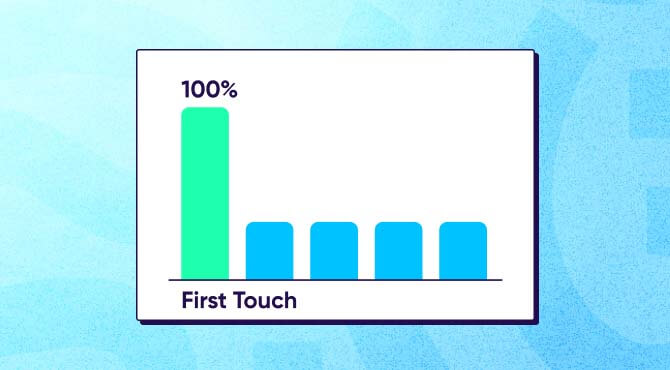
First-touch attribution assigns 100% of conversion credit to the very first interaction a prospect had with your brand. In theory, this should credit outbound for cold prospecting — since outbound often generates the first touch. In practice, it systematically overfunds top-of-funnel awareness channels and underfunds the outbound activities that moved a prospect from cold to engaged. It tells you how deals started, not how they were built.
The Last-Touch Problem
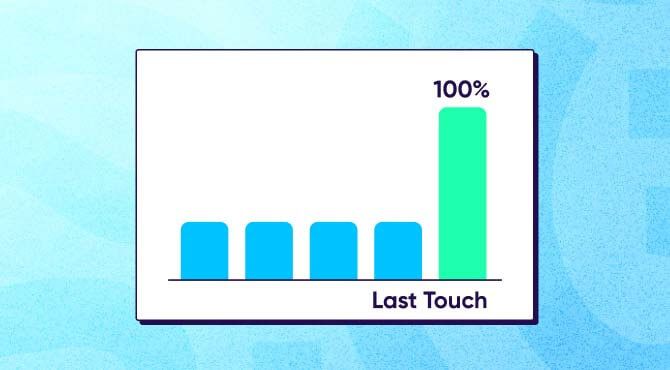
Last-touch attribution assigns 100% of the credit to the final interaction before conversion. For outbound teams running parallel campaigns alongside inbound content and retargeting, this is the most damaging model.
A prospect touched by six outbound sequences who later converts via a retargeting ad gets attributed to paid. The outbound team that created the awareness and intent that made the conversion possible gets zero credit.
When a company relies on last-touch attribution, branded search and retargeting campaigns appear to drive most conversions — while prospecting campaigns appear inefficient because they rarely receive direct credit. That leads to budget cuts in the channel that's actually doing the hardest work.
Why Single-Touch Models Can't Survive in B2B
For B2B companies with sales cycles longer than 30 days, multiple touchpoints, and committee-based buying processes, multi-touch attribution isn't optional — it's the foundation for proving outbound ROI and making accurate channel investment decisions.
The Multi-Touch Alternative
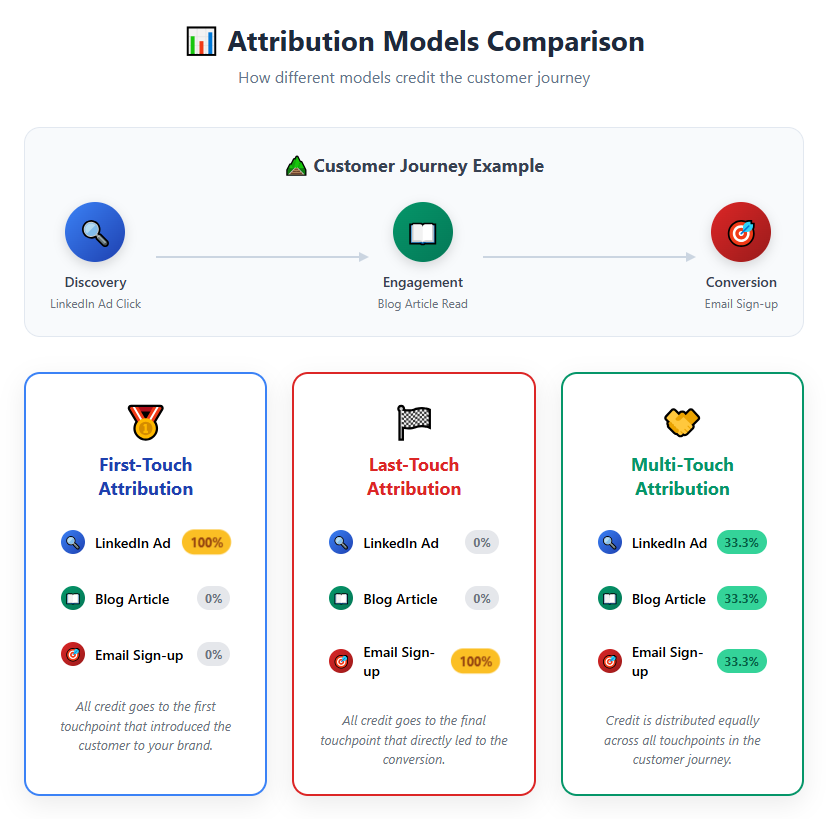
Position-based (U-shaped) attribution assigns 40% of credit to the first touchpoint, 40% to the last touchpoint before conversion, and splits the remaining 20% evenly across all middle interactions. For outbound-heavy B2B teams, this is a significantly better model — it preserves credit for the cold prospecting that started the relationship while acknowledging the full journey it took to close.
Recover Lost Attribution. Unlock More Pipeline.
We help B2B teams generate predictable meetings and accurately measure the revenue impact of every outbound channel.
How to Fix Outbound Attribution: A Step-by-Step Framework
Fixing outbound sales attribution is a structural rebuild — not a dashboard tweak. Here's how to approach it.
Step 1 — Audit Your Current CRM Data Hygiene
Before you build a better attribution model, you need to understand how broken the current one is. Pull every deal closed in the last 90 days and trace back to the first outbound touch that started the relationship. In most organizations, fewer than half are correctly attributed in the CRM.
What to audit:
- What percentage of open opportunities have a source field that matches actual prospecting activity?
- How many opportunities have zero activities logged before the first meeting?
- How many different source values are being used across the team?
- Are sequencing tool records syncing to CRM activity timelines?
The output of this audit is a list of specific data quality gaps — missing source data, inconsistent taxonomy, late logging, and sync failures — that need to be addressed before the attribution model can be trusted.
Step 2 — Define a Single Source Taxonomy for Outbound
Source fields need locked, consistent definitions — not free-text fields that produce 12 variations of "cold email."
Define your outbound source taxonomy: LinkedIn outreach, cold email, cold call, inbound (form/content), referral, event, partner. Make these the only selectable options in the CRM source field. Then add a secondary field for campaign or ICP segment context — this is what enables optimization at the campaign level, not just the channel level.
Build the source field into required fields at opportunity creation. No deal should enter the pipeline without a correctly attributed source. Then define which tool is the system of record for each source type — LinkedIn activity in the sequencing tool, calls in the dialer, email in the email tool — and ensure each feeds the CRM with consistent field mapping.
Step 3 — Choose the Right Attribution Model for Your Sales Motion
There's no universally correct attribution model. The right choice depends on your sales cycle length, channel mix, and what decisions the model needs to inform.
For outbound-heavy B2B teams with 30–90 day cycles: Position-based (U-shaped) attribution distributes 40% to first touch (outbound prospecting), 40% to last touch (closing activity), and 20% across middle touches. This preserves outbound's credit for creating the initial opportunity while acknowledging the full journey.
For longer enterprise cycles with multiple stakeholders: Time-decay attribution weights more recent touches more heavily — appropriate when the final few touches before close are genuinely the most strategically important.
For teams running parallel inbound and outbound: Run first-touch and last-touch reports side by side and compare them. The gap between the two models is the size of the attribution problem. Only 24% of B2B organizations currently use multi-touch attribution — which means if you implement it now, you have a reporting advantage most of your competitors don't.
The key rule: choose the model that most accurately reflects how your buyers actually make decisions — not the one that makes outbound look better or worse.
Step 4 — Enforce CRM Logging Discipline Across the Outbound Team
Attribution accuracy is only as good as the logging discipline behind it. A model applied to incomplete data produces wrong answers confidently.
Required logging standards:
- Every outbound activity (email, call, LinkedIn message) logged in the CRM or synced from the sequencing tool on the day it occurred.
- Every opportunity created within 24 hours of the first positive response.
- Every stage change logged with a date that matches when the stage actually changed.
Automate what can be automated: sequencing tool sync to CRM, dialer call logging to activity records, calendar integration for meetings. Manual logging should be the exception.
Build weekly data hygiene checks into your management cadence — opportunities without source attribution, activities logged on the wrong date, stage changes without a documented next step. These metrics tell you where the attribution model is breaking before it shows up in bad pipeline reports.
Step 5 — Build Outbound-Specific Pipeline Reports Separate From Inbound
Mixing inbound and outbound pipeline in the same report produces aggregate metrics that mislead on both sides. Inbound conversion rates look weaker because outbound deals take longer to close. Outbound pipeline looks smaller because the source attribution is wrong. Separate them.
What an outbound-specific pipeline report should show:
- Outbound-sourced opportunities by channel (LinkedIn, cold email, cold call).
- Stage distribution and velocity by outbound source.
- Outbound-sourced revenue as a percentage of total closed revenue.
- Cost per outbound opportunity and cost per closed-won deal from outbound.
- Meeting-to-opportunity conversion rate by source.
Then run an outbound vs. inbound comparison using the same attribution model — cost per opportunity, time to close, average deal size, and win rate. This is the data that should drive budget allocation decisions between channels, not gut feel.
Every meeting booked from outbound should be tagged to the specific sequence, campaign, and channel that generated it. Campaign-level attribution is what turns reporting into an optimization engine.
Step 6 — Measure the Metrics That Actually Reflect Outbound ROI
The most common measuring outbound ROI mistake is tracking input metrics — emails sent, calls made, connection requests. These measure activity, not output. A team with a broken ICP can post impressive activity numbers while generating no pipeline.
The right metrics:
- Outbound-sourced pipeline value (month over month)
- Outbound cost per meeting booked
- Cost per outbound opportunity
- Cost per closed-won deal from outbound
- Outbound-sourced revenue as a percentage of total revenue
For every closed deal, you should be able to answer: What was the first outbound touch? What channel? What message? How many touches from first contact to close? That data is what turns attribution from a reporting exercise into a decision-making tool.
What Accurate Outbound Attribution Enables
Getting B2B revenue attribution right isn't just a reporting improvement. It changes how the entire outbound function operates.
✅ Better budget decisions. When outbound pipeline is correctly attributed, its contribution to revenue is visible — and the argument for investing in it is supported by data, not anecdote. You stop defending outbound with qualitative reasoning and start showing it in the numbers.
✅ Channel optimization. Knowing which outbound channels produce the most pipeline per dollar allows investment to flow to the highest-ROI activities. If LinkedIn outreach is generating 60% of outbound pipeline at 40% of the cost of cold calling for your ICP, that data should drive resource allocation — and without accurate attribution, you'd never know.
✅ ICP validation. Accurate attribution at the segment level shows which ICPs are producing the most qualified meetings, the fastest time-to-close, and the highest deal value. It also shows which segments are consuming outbound resources without generating proportional pipeline — and those are the ICPs you stop targeting.
✅ Rep performance calibration. Activity metrics look identical for a rep who sends 50 emails to the right ICP and a rep who sends 50 emails to the wrong one. Attribution data tied to pipeline outcomes shows which rep's activity is actually producing revenue — and makes coaching conversations data-driven rather than directional.
How Cleverly Tracks and Reports Outbound Lead Generation Performance
Most outbound agencies give you a spreadsheet of meetings booked and call it reporting. We don't.
At Cleverly, every campaign we run — across LinkedIn outreach, cold email, and cold calling — is tracked and reported at the channel and sequence level. Clients see reply rate, positive reply rate, meetings booked per month, and source attribution tied to the specific targeting segment and messaging that generated each response.
When a Cleverly-booked meeting converts to an opportunity, the CRM has the context it needs to attribute it correctly — channel, campaign, and sequence — rather than logging it as a generic "outbound" entry.
That attribution clarity matters because it's what lets you make accurate comparisons. Cost-per-meeting from your Cleverly LinkedIn campaign versus your cold email campaign. Outbound-sourced pipeline versus inbound-sourced pipeline. Channel mix decisions based on data, not assumption.
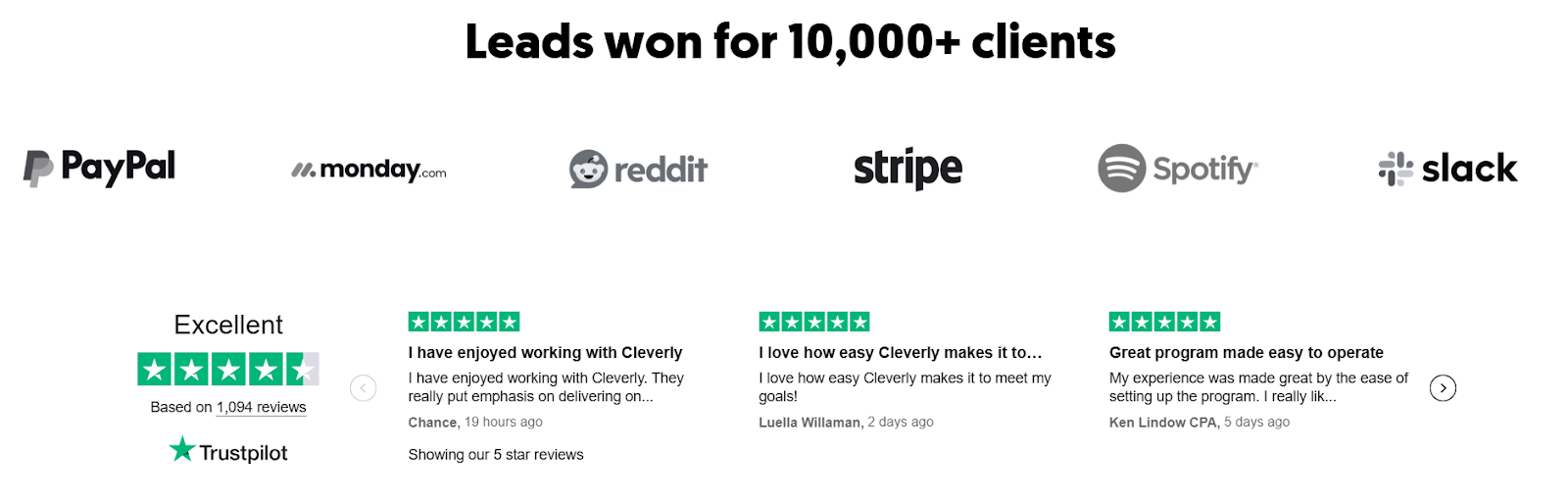
We've generated $312M in client pipeline and $51.2M in closed revenue across 10,000+ clients — including eBay, Airbnb, DocuSign, Loom, and Airtable — and we're rated 4.6/5 on Trustpilot across 1,136+ reviews. The clients who get the most from that track record are the ones who can see exactly what their campaign is producing.
Want outbound pipeline data you can actually trust? Book a strategy call with Cleverly and see how we report campaign performance — so you know exactly what your outbound investment is producing.
Conclusion
Outbound sales attribution is broken in most B2B organizations — not because the CRM tools are wrong, but because the data infrastructure, logging discipline, and attribution models haven't been built to handle how outbound actually works.
The fix requires going deeper than a new dashboard. It means locking your source taxonomy, enforcing logging standards, choosing an attribution model that reflects your actual sales motion, and building outbound-specific reports that separate channel performance clearly.
Do that, and outbound stops being a line item that gets questioned every budget cycle — and starts being a revenue function with clean numbers to back it up.
Get the attribution right, and every decision about budget, channel mix, ICP targeting, and rep performance becomes data-driven instead of directional. And outbound finally gets the credit it's been generating all along.
Frequently Asked Questions
Free Resource
How to Scale a Profitable Cold Call System
Get the complete guide — download it instantly now.
Free Ebook
Download the Free Guide
Enter your details to get instant access.
You're all set! 🎉
Your ebook is downloading now.
Click below if the download didn't start automatically.