Table of Contents
Why Most Discovery Calls Sound Scripted (and Why It Kills Conversions)
Qualification Frameworks to Structure (Not Script) Your Discovery Call
Discovery Call Questions by Category (With Examples)
How to Ask These Questions Without Sounding Scripted
Mistakes That Make Discovery Calls Feel Like an Interrogation
Discovery Call Checklist for Qualifying B2B Prospects
How Cleverly's Cold Calling Agency Builds Qualification Into Every Conversation
Conclusion
Frequently Asked Questions
Modified On :
August 4, 2026
Key Takeaways
- A good discovery call works like a conversation with a direction, not a form you're filling out. Frameworks give you direction. They shouldn't dictate your exact words.
- Qualification happens through follow-up, not through checking boxes. The question that matters most is often the one that comes after the planned one.
- Order matters less than sequencing based on what the prospect just told you. Rigid question order is what makes a call feel like an interrogation, not the questions themselves.
- Letting the prospect talk more than you do isn't a nice-to-have. It's the single clearest signal that a call is working.
- Disqualifying honestly, on the spot, saves more pipeline time than forcing a fit that was never really there.
You can tell within the first two minutes whether a discovery call is going to feel like a conversation or an interrogation. The rep either listens to what you just said and builds on it, or they move to the next line on their sheet regardless. Prospects notice the difference immediately, and it shapes whether they open up or shut down for the rest of the call.
The data backs this up. Gong's analysis of more than 519,000 B2B sales calls found that top-performing reps ask 11 to 14 questions per discovery call, compared to 6 to 7 for average reps. It's not just about asking more.
Top performers also lean heavily toward open-ended questions, running closer to an 80/20 open-to-closed ratio, while lower performers default to closed questions that shut a conversation down instead of opening it up.
This guide breaks down how to run a discovery call that actually qualifies a prospect: the frameworks that give you structure, question categories with real examples, how to keep the delivery natural, and the mistakes that turn a good call into a checklist read out loud.

Why Most Discovery Calls Sound Scripted (and Why It Kills Conversions)
The problem usually isn't the questions themselves. Most B2B discovery call questions are perfectly reasonable on paper. What kills the call is the delivery.
A rep asks a question, gets an answer, and moves straight to the next question on the list without acknowledging what they just heard. That's the moment a prospect mentally checks out.
Prospects can tell the difference between being asked and being processed. When a rep reacts to what was actually said, asks a real follow-up, or circles back to something the prospect mentioned earlier, it signals genuine curiosity.
When a rep just keeps reading down a list, it signals the opposite, and the prospect starts giving shorter, guarded answers because they've correctly concluded that no one is really listening.
The clearest evidence of this shows up in talk ratio. Successful discovery calls tend to have the prospect talking the majority of the time, often in the range of 57% or more, while the rep stays closer to 43%. A scripted call flips this. The rep talks more because they're reading and reacting to their own material instead of the prospect's answers.
Sounding scripted, in other words, has almost nothing to do with which questions you picked. It's about whether you're running a rigid sequence or actually reacting to the person in front of you.
🎯 Spend More Time Consulting—Less Time Prospecting
Our LinkedIn, cold email, and cold calling campaigns generate 15–30 qualified meetings every month with decision-makers who fit your ideal client profile.
Qualification Frameworks to Structure (Not Script) Your Discovery Call
A framework gives your call a backbone. It tells you what you need to uncover by the end of the conversation. It should never tell you the exact words to use to get there.
Treating a framework as a script is exactly what makes calls feel robotic, so it's worth being clear on the difference before picking one.
SPICED Framework
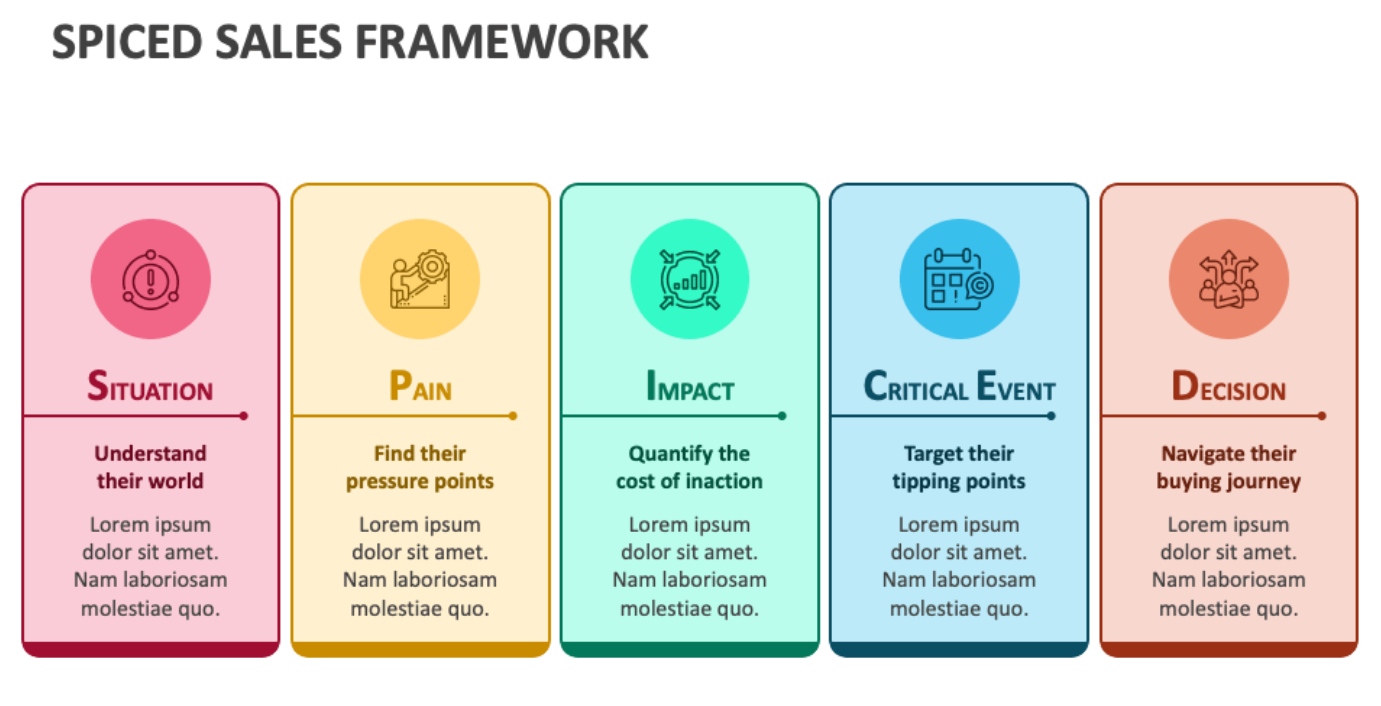
SPICED stands for Situation, Pain, Impact, Critical Event, Decision. It's built for conversations where you need to understand not just what's broken, but why fixing it now matters more than fixing it later.
A practical way to run SPICED: weight your questions toward Pain and Impact. Aim for roughly 6 to 8 open-ended questions total, with most of them focused on what's not working and what it's costing, rather than surface-level situation questions that a prospect could answer in a form.
BANT Framework
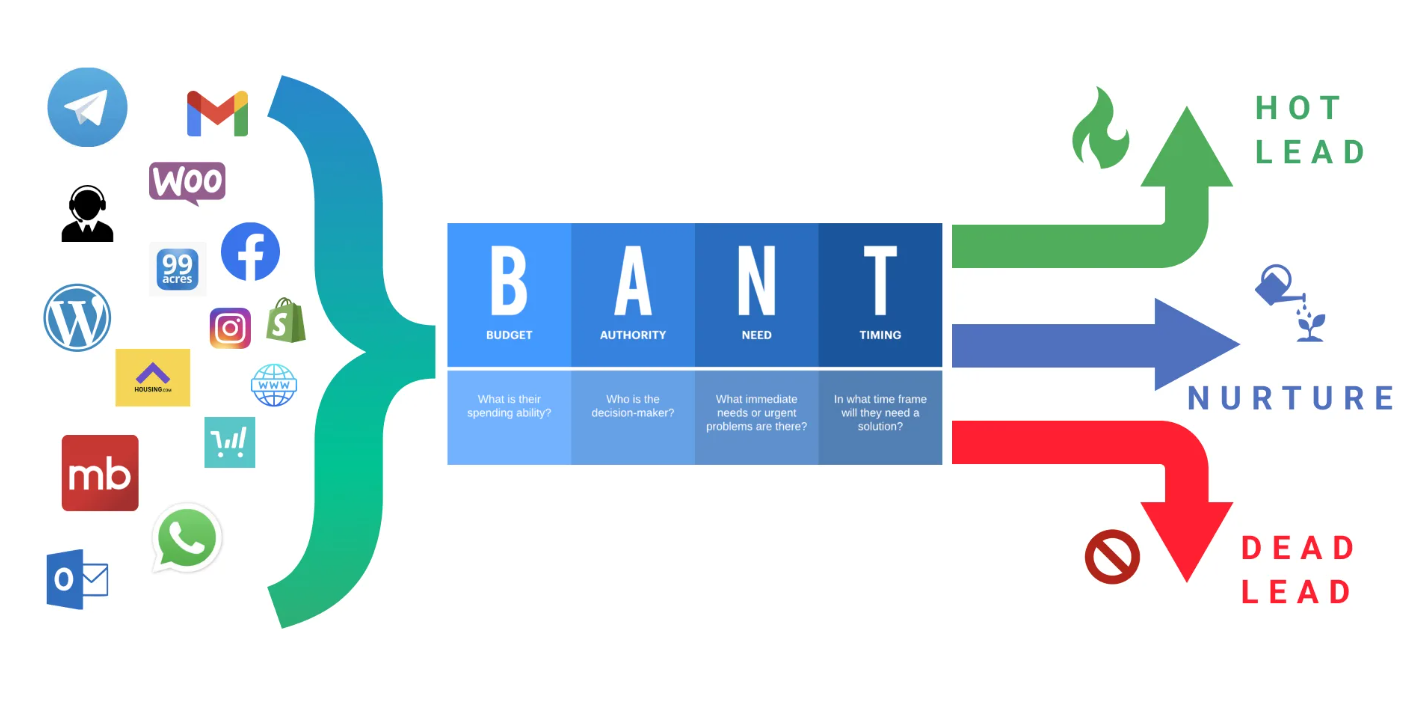
BANT is the older, simpler cousin: Budget, Authority, Need, Timeline. It's a leaner structure, and it works well for shorter sales cycles or lower-complexity offers where you don't need a deep dive into business impact to know if there's a fit.
BANT tends to move faster because it's checking for basic fit rather than building a full business case. That makes it a better match for transactional deals than for anything involving multiple stakeholders or a longer evaluation process.
Why Frameworks Are a Guide, Not a Script
Both frameworks are answering the same underlying questions: what's the current state, what does the future state need to look like, who's involved in deciding, and when does this need to happen. Neither one hands you the exact sentence to say.
That's the part reps miss. The same framework, run on two different calls, should produce completely different questions, because the prospect's answers are different. If your SPICED calls all sound identical regardless of who you're talking to, you're scripting the framework instead of using it.
Discovery Call Questions by Category (With Examples)
Instead of memorizing a rigid order, it helps to think in categories: what you're trying to uncover, not which number question you're on. Here's what that looks like broken down, with real examples for each.
Situation Questions (Understand Their Current State)
These establish the baseline. You're not trying to impress anyone here, just get an accurate picture of how things work today.
- "Walk me through how [process] works today."
- "What are you currently using to handle this?"
- "Who's involved when this decision gets made?"
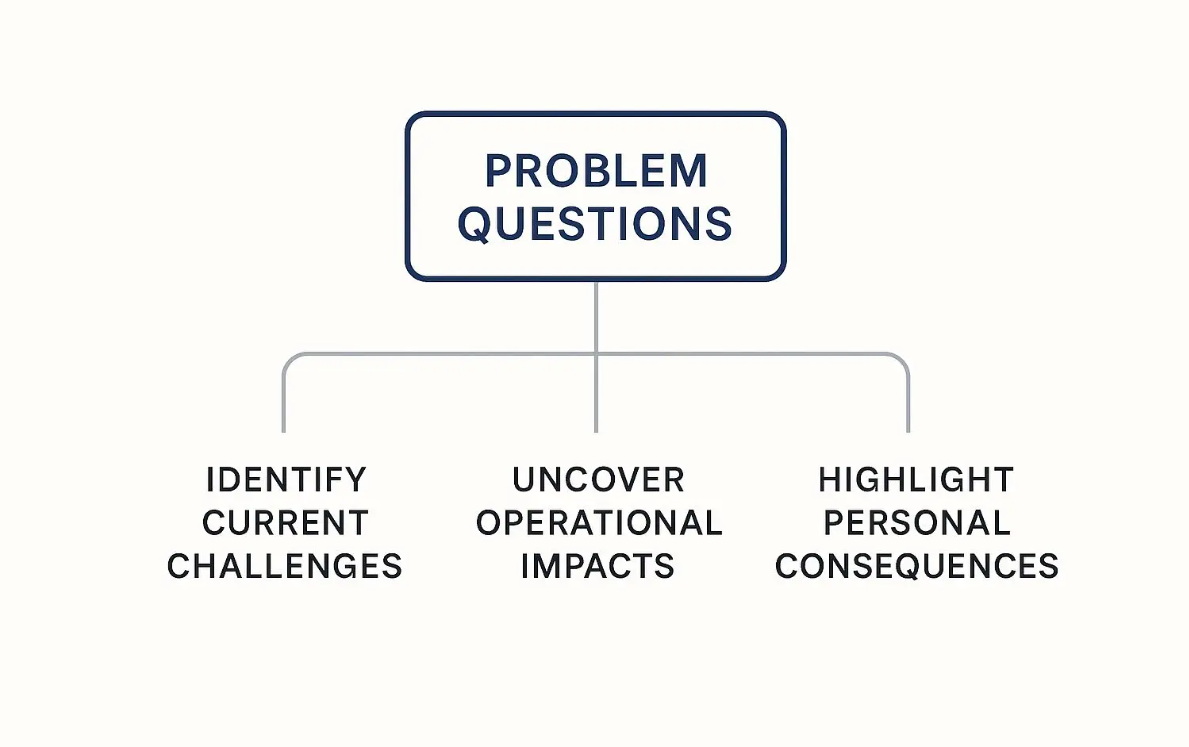
Pain and Problem Questions
This is where the real conversation usually starts. Prospects will often give you a surface-level answer first. The follow-up is where you get the real one.
- "What's not working about your current approach?"
- "What made you decide to explore this now instead of six months ago?"
- "What's the cost of leaving this unsolved?"
Impact Questions
Impact questions take a small, specific pain point and connect it to something the business actually cares about. This is the step that turns "this is annoying" into "this is worth solving."
- "If this doesn't get fixed, what happens to [team/goal/metric]?"
- "How is this affecting [related team/process/revenue]?"
Critical Event / Timing Questions
Urgency without a real trigger event is usually soft urgency. These questions test whether there's an actual deadline behind the interest.
- "Is there a deadline or event driving this decision?"
- "What happens if you don't solve this by [timeframe]?"
Decision Process Questions
Skipping this category is one of the most common reasons deals stall later. Know who else is involved before you're deep into a sales cycle, not after.
- "Besides you, who else weighs in on a decision like this?"
- "What does your evaluation process typically look like?"
- "What would need to be true for this to be a clear yes?"
🚀 53,000+ Meetings. $312M+ Pipeline. Proven ROI.
See why 10,000+ businesses trust Cleverly to turn LinkedIn, cold email, and cold calling into predictable revenue.
How to Ask These Questions Without Sounding Scripted
The questions above are examples, not a script to memorize word for word. How you deliver them matters more than which exact phrasing you use.
✅ Bring genuine curiosity. The goal is understanding the prospect's situation, not extracting checklist answers to fill in a CRM field. If you're only asking because the field is empty, it shows.
✅ Prepare the idea, not the sentence. Know what you want to learn from each question category. Let the actual wording come out naturally in the moment. This alone is the biggest thing that separates a natural-sounding call from a scripted one.
✅ Follow up on what they actually said. If a prospect mentions something unexpected, chase that thread before moving to your next planned question. The best discovery question is frequently "tell me more about that," not the next item on your list.
✅ Use their own words as a bridge. A simple line like "you mentioned X, tell me more about that" does two things at once. It shows you were listening, and it moves the conversation forward without feeling like a new topic.
✅ Let engaged prospects drive. If someone is talking freely and giving you useful information, don't interrupt just to get through your remaining questions. You can circle back to anything important you missed.
✅ Slow down. Rushing through questions is one of the fastest ways to signal you're following a script. An unhurried, conversational pace does more for trust than any specific question you ask.
Mistakes That Make Discovery Calls Feel Like an Interrogation
Most of these come down to sequencing and ratio, not the questions themselves.
❌ Too many closed questions. Yes/no questions stop a conversation instead of opening it. Aim for something close to an 80% open, 20% closed split.
❌ Asking about budget too early. Budget questions before pain and impact are established tend to kill momentum. Establish why something matters before asking what they're willing to spend on it.
❌ Leading questions. Questions that telegraph the answer you want ("wouldn't it help if...") train the prospect to just agree with you instead of telling you what's actually true.
❌ Talking too much. If you're talking more than roughly 46% of the call, you're pitching, not discovering.
❌ Rigid question order. Running through the same sequence regardless of what the prospect shares is the single biggest tell that a call is scripted rather than responsive.

Discovery Call Checklist for Qualifying B2B Prospects
Before the call:
- Research the company and the contact.
- Prepare framework-based question themes, not word-for-word scripts.
During the call:
- Aim for 11 to 14 open-ended questions across roughly 30 to 40 minutes.
- Keep the prospect talking 57% or more of the time.
- Confirm current state, pain and impact, decision process, and timing.
After the call:
- Document answers immediately, while the details are fresh.
- Flag disqualifiers honestly instead of forcing a fit that isn't there.
How Cleverly's Cold Calling Agency Builds Qualification Into Every Conversation
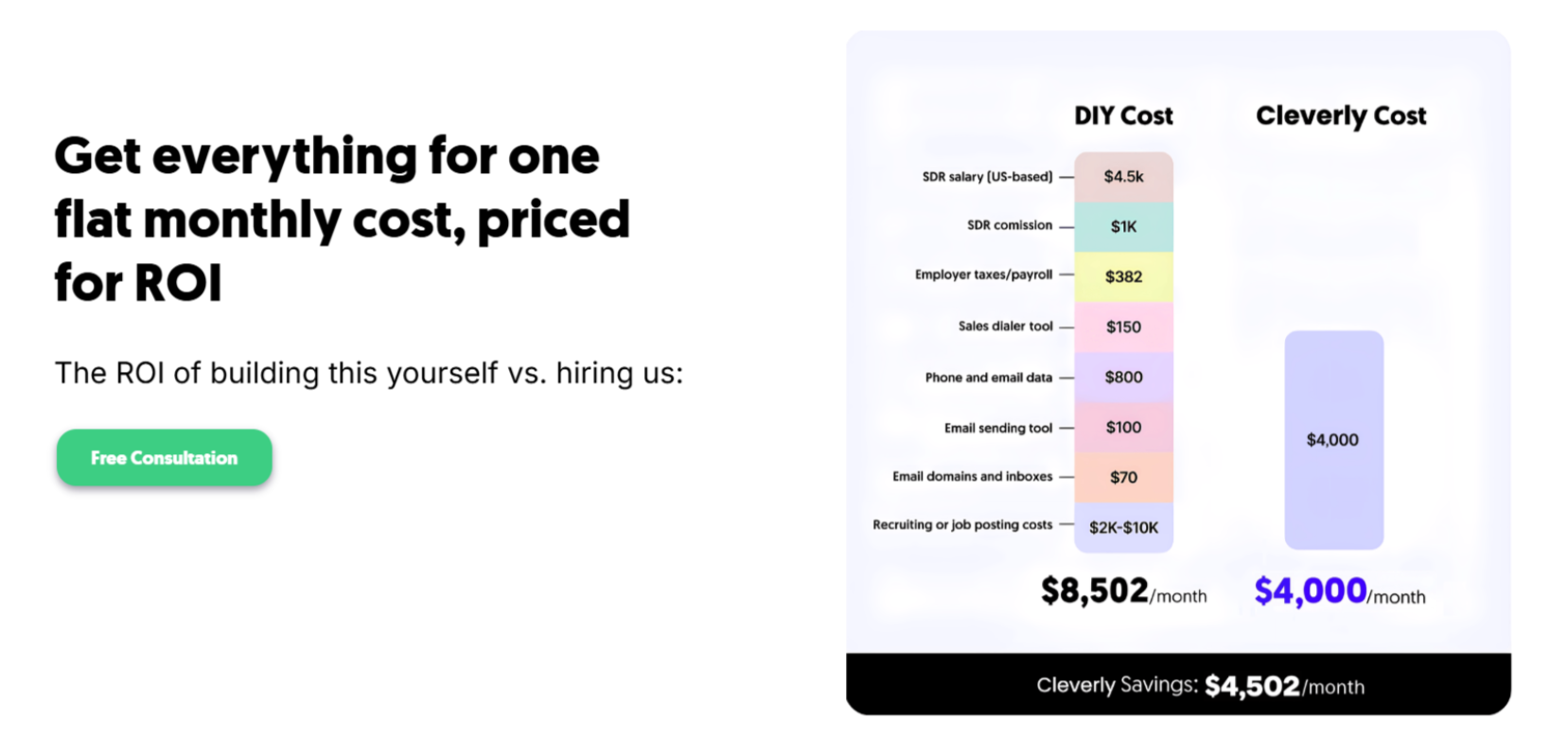
Getting a prospect on the phone is only half the job. What happens in the next few minutes, whether the questions land naturally or come across as a script being read, decides whether that call turns into a qualified meeting or a wasted slot on someone's calendar.
That's the part we've built our cold calling process around. Our trained appointment setters use conversation-based qualification instead of rigid scripts, asking discovery-style questions during the initial call itself so the meetings that land on your calendar are already pre-qualified on fit, pain, and timing.
A booked meeting that turns out to be a poor fit wastes your rep's time just as much as no meeting at all, so we treat qualification as part of the call, not something that happens later.
Behind that process sits ICP-aligned targeting, trained callers, and a meeting handoff that comes with context already captured, so your team walks into every call knowing what matters to that prospect. It's the same principle this guide has been making the whole way through: better questions, asked naturally, produce better meetings.
Want qualified meetings booked by trained callers, not a script-reader? Book a strategy call with Cleverly!
Conclusion
The best discovery call questions don't come from a longer list or a stricter script. They come from a framework that tells you what to uncover, paired with genuine attention to what the prospect is actually telling you in the moment.
Ask fewer, better open-ended questions, and let each answer shape what you ask next instead of plowing ahead to the next line on your sheet.
Qualification isn't something you extract through a checklist. It happens through curiosity and follow-up, the same way it would in any real conversation.
The goal of a discovery call was never to collect answers. It's to figure out, honestly, whether you can help this person, and to let that understanding guide everything that comes after.
Frequently Asked Questions
Free Resource
How to Scale a Profitable Cold Call System
Get the complete guide — download it instantly now.
Free Ebook
Download the Free Guide
Enter your details to get instant access.
You're all set! 🎉
Your ebook is downloading now.
Click below if the download didn't start automatically.