Table of Contents
What Is Sales Funnel Software?
What to Look for in the Best Sales Funnel Software
Sales Funnel Software Comparison: Quick Review Table
8 Best Sales Funnel Software in 2026
Free Sales Funnel Software — What You Can (and Can't) Expect
Which Sales Funnel Software Is Right for Your Business?
How Cleverly Helps B2B Companies Fill Their Sales Funnel with Qualified Leads
Conclusion
Frequently Asked Questions
Modified On :
October 9, 2026
Key Takeaways
- Sales funnel software falls into four main categories: funnel builders, CRM platforms, marketing automation tools, and all-in-one platforms.
- ClickFunnels and Systeme.io are better suited to landing pages and direct-response funnels, while HubSpot, Pipedrive, and Zoho CRM are stronger for B2B pipeline management.
- ActiveCampaign is the strongest option in this list for behavior-based sales funnel automation.
- Compare pricing at your expected contact count and team size, since entry-level plans often exclude advanced automation, reporting, and testing.
- Choose software based on the weakest point in your funnel, whether that is lead capture, nurturing, pipeline visibility, checkout, or follow-up.
Sales funnel software helps teams capture leads, automate follow-up, track opportunities, and move prospects toward a purchase. The difficulty is that the category includes several very different types of tools.
A landing-page funnel builder such as ClickFunnels focuses on traffic conversion, checkout flows, and upsells. A CRM-based platform such as HubSpot or Pipedrive focuses on lead management, pipeline visibility, and deal progression. Marketing automation platforms sit between the two, connecting lead capture with nurturing, scoring, and sales follow-up.
We reviewed eight sales funnel software tools for 2026 based on funnel type, automation, CRM capabilities, integrations, pricing, usability, and the business model each platform supports. The goal is not to find the platform with the longest feature list. It is to find the one that fixes the specific stage where your funnel is losing revenue.
What Is Sales Funnel Software?
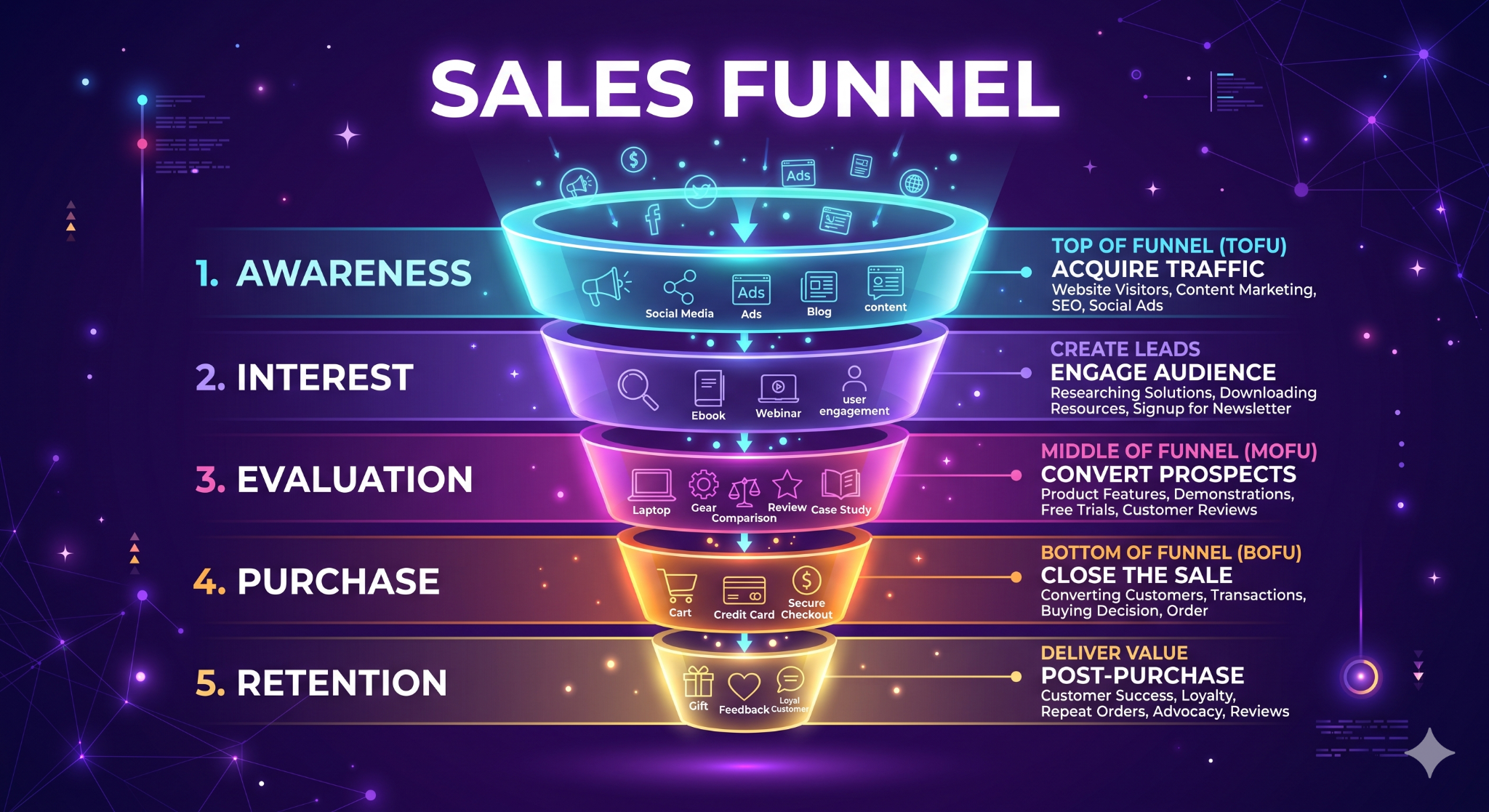
Sales funnel software is a platform that helps businesses guide potential customers through the buying journey — from first touch attribution all the way to closed sale — by automating lead capture, nurturing, and conversion at every stage.
Think of it like a system that runs the middle of your revenue operation. Without it, every step — capturing leads, sending follow-ups, tracking deal progress, and closing — happens manually, which means it happens inconsistently.
The core stages a funnel covers:
- Awareness — prospect discovers your brand
- Interest — prospect engages with your content or offer
- Consideration — prospect evaluates your solution
- Decision — prospect is ready to buy
- Purchase — deal closes
Most funnel builders cover the top of this journey well — landing pages, lead capture forms, email sequences. CRM-based funnel tools cover the bottom — deal tracking, lead gen pipeline stages, close rates.
Before you choose a tool, figure out which part of your funnel is actually broken. Buying a landing page builder when your problem is deal tracking (or vice versa) is one of the most common — and expensive — mistakes teams make.
The Four Types of Sales Funnel Software
Sales funnel software generally falls into four categories:
Funnel builders: These platforms create landing pages, forms, checkout flows, upsells, and conversion paths. ClickFunnels and Systeme.io fit this category.
CRM-based funnel software: These tools manage contacts, opportunities, sales activities, and pipeline stages. Pipedrive, Zoho CRM, and HubSpot are stronger choices when deal management is the priority.
Marketing automation platforms: These platforms connect lead capture with email nurturing, segmentation, scoring, and behavior-based workflows. ActiveCampaign is the clearest example in this list.
All-in-one funnel platforms: These combine landing pages, email, checkout, automation, and digital-product delivery. Kartra and GetResponse cover more of the customer journey inside one account.
The distinction matters because a funnel builder cannot replace a full sales CRM, and a CRM may not provide the landing pages, checkout controls, or conversion testing needed for a direct-response funnel.
⚡ Your Funnel Is Only as Good as the Leads Entering It
We turn traffic into booked meetings via LinkedIn, email & calls. Done-for-you. No tools. No guesswork.
What to Look for in the Best Sales Funnel Software
Not all sales funnel tools are built the same. Here's what actually separates the ones worth paying for from the ones you'll cancel in 60 days.
✅ Ease of use
Drag-and-drop visual builder, no-code setup, and pre-built funnel templates. If your team needs a developer to launch a campaign, you'll never move fast enough.
✅ Automation depth
Workflow automation for email sequences, lead scoring, upsells, and follow-ups. Surface-level automation wastes the tool's potential.
✅ Landing page quality
Mobile-responsive templates, fast load speeds, and A/B testing built in. Page speed alone can make or break your conversion rate.
✅ CRM and pipeline management
Visual deal tracking, contact segmentation, and lead management. You need to see where every prospect stands without digging through spreadsheets.
✅ Integrations
Compatibility with your existing email platform, analytics stack, payment tools, and CRM. A funnel tool that doesn't talk to your other tools creates more work, not less.
✅ AI capabilities
Predictive lead scoring, send-time optimization, and AI-generated copy. In 2026, platforms without AI features are already falling behind.
✅ Pricing model
Contact-based, funnel-based, or flat-rate — understand how costs scale before you commit. What looks affordable at 1,000 contacts can get expensive at 10,000.
✅ Free plan or trial availability
Most serious tools offer at least a 14-day trial. If they don't, that's worth noting.
✅ Customer support quality
Live chat, onboarding support, and a solid knowledge base. When something breaks mid-campaign, you need answers fast.
Sales Funnel Metrics Your Software Should Track
A platform should show more than total leads and closed deals. Look for reporting that reveals where prospects stall or leave the funnel.
At minimum, your sales funnel management software should track stage-by-stage conversion rates, lead response time, sales velocity, opportunity age, win rate, average deal value, and the source of each qualified opportunity. Marketing-focused platforms should also report landing-page conversion, email engagement, cost per lead, and revenue by campaign.
The reporting must lead to an action. If the software shows that qualified opportunities are sitting in the proposal stage for twice as long as usual, the sales team should be able to identify those deals and trigger the next step without exporting data into another system.
Sales Funnel Software Comparison: Quick Review Table
How We Evaluated These Sales Funnel Tools
We assessed each platform against the jobs a sales funnel system must handle: capturing leads, routing and scoring them, automating follow-up, tracking movement through the pipeline, and measuring conversion performance.
We also considered setup difficulty, CRM depth, landing-page controls, integrations, pricing structure, free-plan availability, and the point at which a growing team is likely to outgrow the entry-level plan. Each recommendation is tied to a specific business model because software built for ecommerce checkout funnels should not be judged by the same criteria as a B2B sales CRM.
This section is important because the article currently claims the products were tried and reviewed without showing readers how the ranking was determined.
📈 Software Builds Funnels. We Build Pipeline.
$312M generated across outbound channels. We handle prospecting → outreach → booking—you close.
8 Best Sales Funnel Software in 2026
The tools below are ranked across two categories: dedicated funnel builders and CRM-based funnel platforms. Each one has a clearly labeled best-fit use case so you can match the right tool to your business model.
1. ClickFunnels
ClickFunnels is the most recognized name in the sales funnel builder space — and for good reason. ClickFunnels holds over 55.8% of the sales funnel software market share. It's built specifically for converting traffic into sales through structured, linear funnel flows.
Standout features:
- Drag-and-drop funnel builder with pre-built funnel templates
- One-click upsells, downsells, and order bumps
- Checkout pages with payment processing built in
- Native email marketing and A/B split testing
Pricing: Launch plan from $81/month; Scale from $164/month; Optimize from $248/month (annual billing)
Free trial: Available
Key limitation: ClickFunnels is designed for linear funnels — it's not the right call for complex, multi-channel B2B automation. The price point is also higher than several alternatives with comparable feature sets.
Best fit: Marketers, course creators, and info product sellers running direct-response campaigns who need a proven, template-driven funnel system.
2. HubSpot
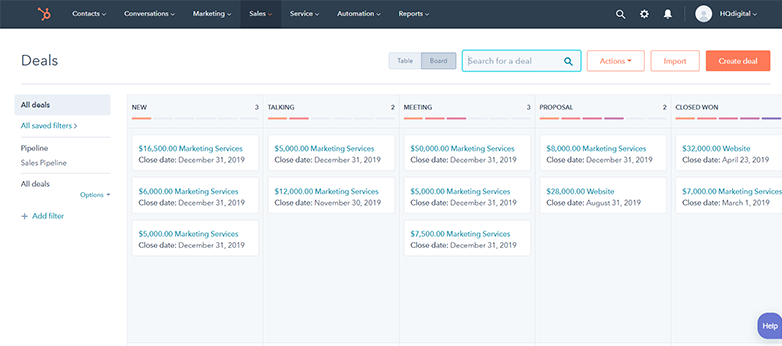
HubSpot is the go-to for B2B revenue teams that need marketing, sales, and service connected in one platform. Its free CRM is genuinely powerful, and the paid tiers unlock some of the most sophisticated sales funnel automation available at this price point — including predictive lead scoring, customer journey analytics, and dynamic product recommendations.
Standout features:
- AI-powered and predictive lead scoring
- Visual deal pipeline with automation triggers
- Email health reporting and A/B testing
- Customer journey analytics (Enterprise tier)
- Dynamic product recommendations
Pricing: Free CRM available; Starter from $15/month; Professional from $800/month; Enterprise from $3,600/month
Free trial: Free plan available
Key limitation: The cost jump between tiers is steep. Most of the advanced funnel features — the ones that actually differentiate HubSpot — are locked behind the Professional and Enterprise plans.
Best fit: Revenue teams managing complex B2B sales cycles that need a single platform connecting marketing automation, sales pipeline, and customer service.
3. ActiveCampaign
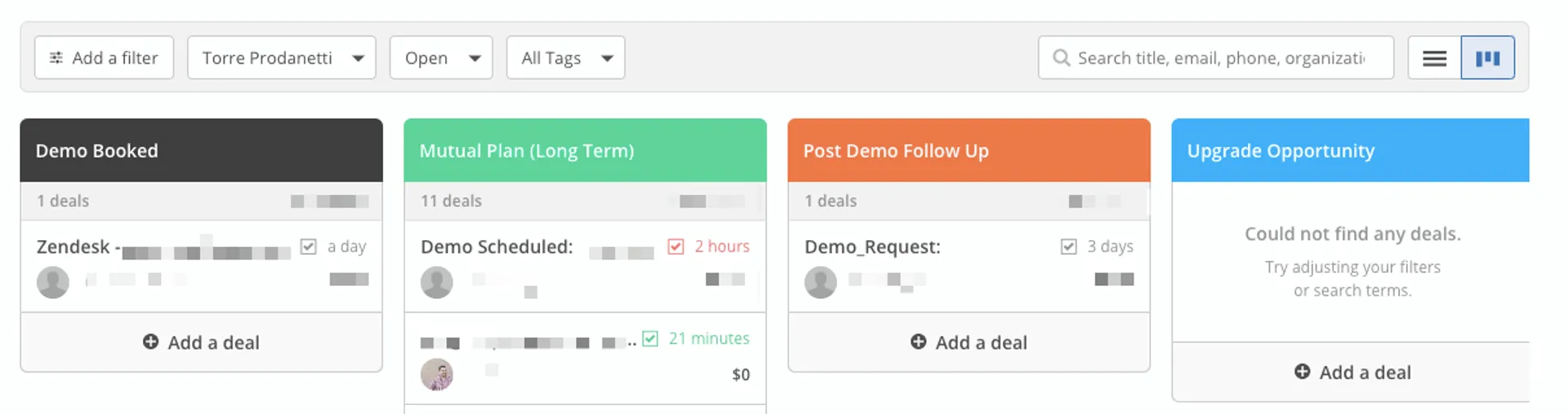
ActiveCampaign is where automation depth really shines. With 900+ pre-built workflow templates and fully customizable triggers and conditions, it's the strongest sales funnel automation tool for teams running complex, behavior-driven nurture campaigns.
Standout features:
- 900+ pre-built automation workflow templates
- Fully customizable triggers, conditions, and branching logic
- AI predictive analytics for lead scoring and send optimization
- Built-in CRM with sales pipeline tracking (ActiveCampaign Sales)
- Sales and marketing automation in a single platform
Pricing: Starter from $15/month; Plus from $49/month; Professional from $79/month
Free trial: 14-day free trial available
Key limitation: There's a steeper learning curve here than with most dedicated funnel builders. The entry-level Starter plan also limits automations to 5 actions per workflow — which will frustrate anyone who needs more sophisticated sequences right out of the gate.
Best fit: Mid-market B2B companies and agencies running complex, multi-step nurture campaigns where automation logic matters more than template aesthetics.
4. GetResponse
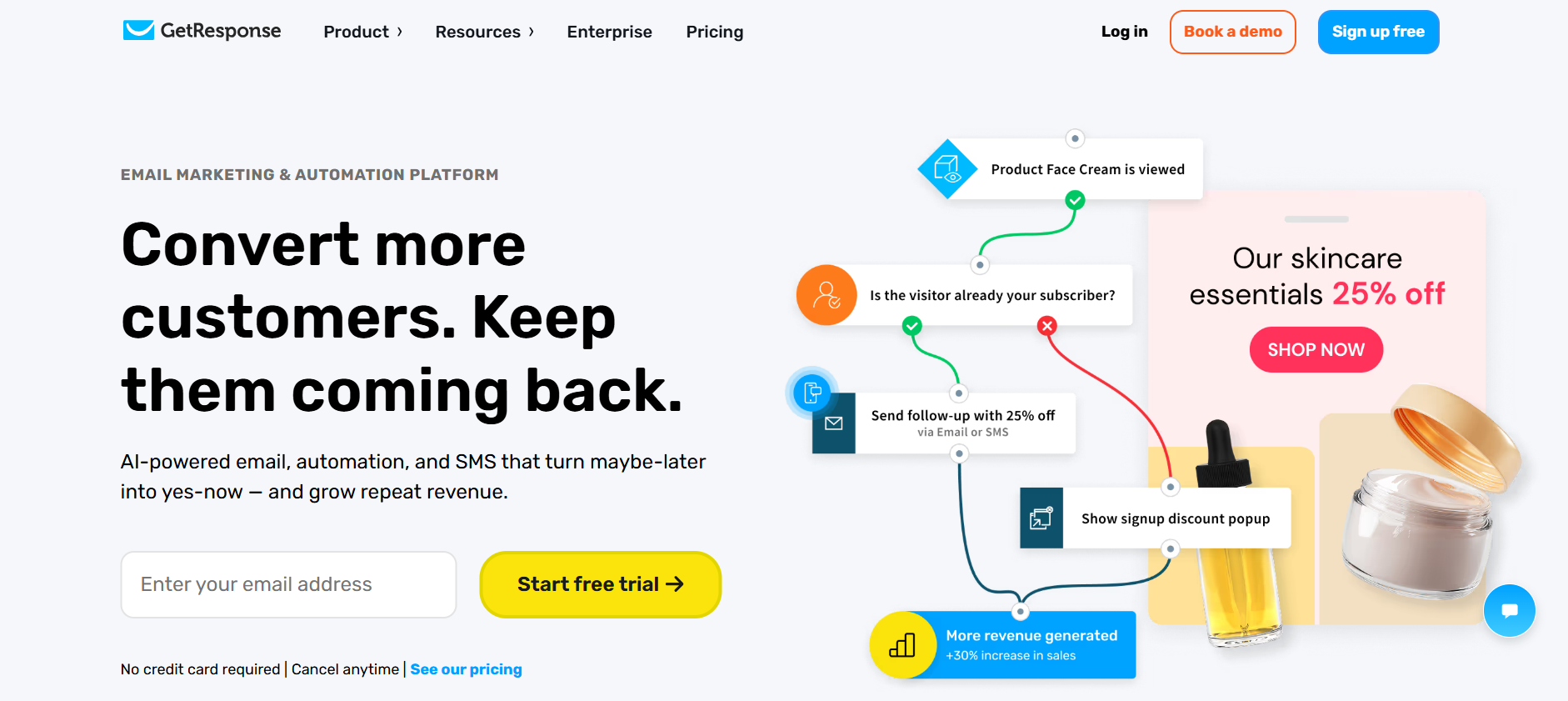
GetResponse's Conversion Funnel feature is the standout — it connects social ads, landing pages, webinars, and email automation into a single end-to-end flow, which is unusual at this price point.
Standout features:
- Conversion Funnel feature: social ads → landing pages → webinars → email automation in one flow
- Pre-built funnel templates for lead magnets, product launches, and webinars
- Abandoned cart triggers for ecommerce workflows
- AI-powered website generator
- One-click integrations with major ecommerce platforms
Pricing: Free plan (500 contacts); Starter from $16/month; Marketer from $54/month
Free trial: Free plan + 14-day free trial available
Key limitation: Independent deliverability testing has clocked GetResponse at around 91% — lower than the platform claims. Advanced features are also gated behind higher-tier plans.
Best fit: Course creators, coaches, and influencer marketers who run webinars and want everything — from lead capture to follow-up to payment — in a single platform.
5. Kartra
Kartra is the most feature-complete all-in-one platform on this list. Funnels, email marketing, membership hosting, video hosting, a helpdesk, and affiliate management — all under one roof. For digital businesses selling courses, programs, or subscriptions, that consolidation is genuinely valuable.
Standout features:
- Full funnel builder with behavioral automation
- Membership site and video hosting built in
- Checkout with upsells, downsells, and coupons
- Helpdesk and affiliate management system
- Done-for-you campaign templates
Pricing: Essentials from $59/month; Starter from $119/month; Growth from $229/month
Free trial: 14-day trial available
Key limitation: Kartra has a real complexity problem for first-time users. Setup takes time, pricing scales steeply based on contacts, and it's overkill for anyone who just needs a simple funnel.
Best fit: Digital businesses that want to consolidate marketing, delivery, and community all in a single system — without stitching together 5 different tools.
6. Systeme.io
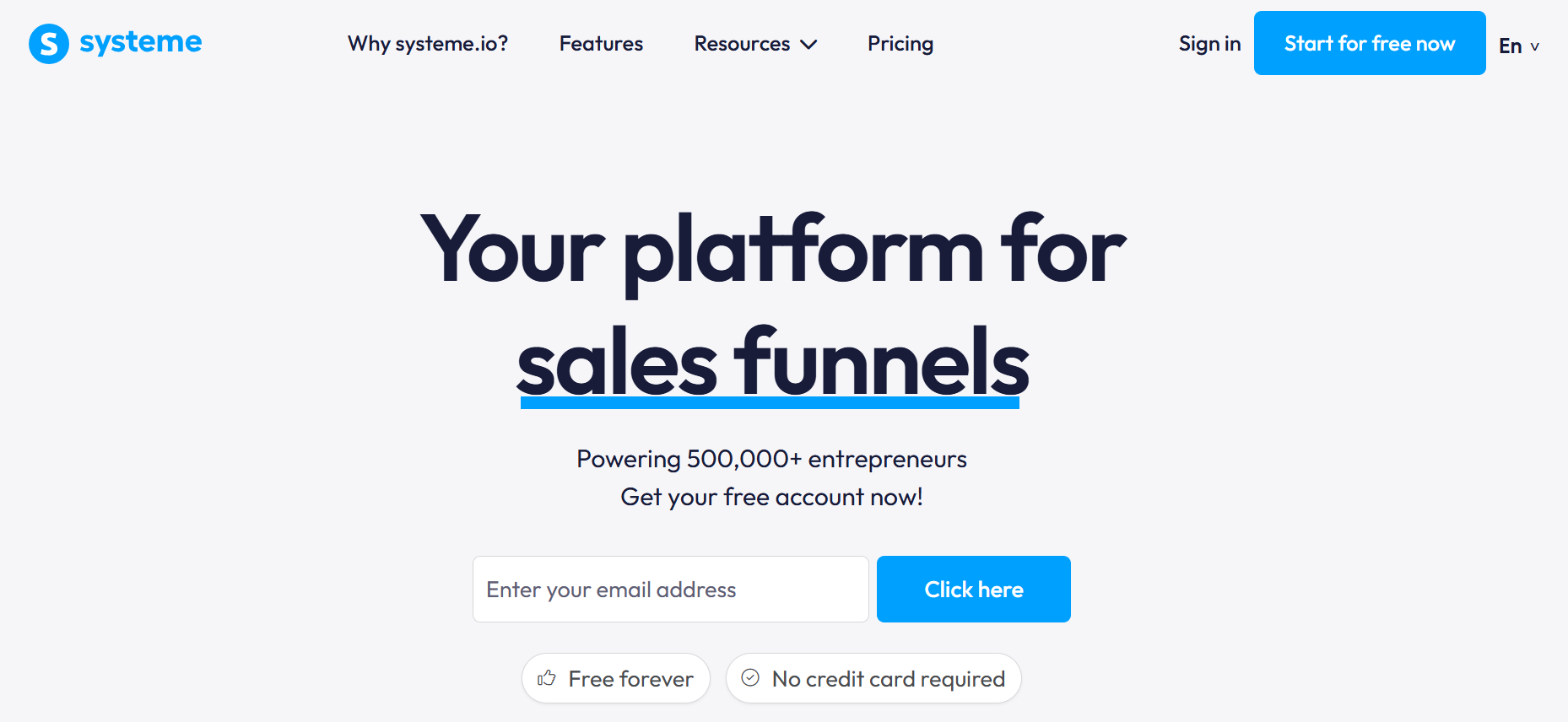
Systeme.io is the most generous free plan on this list. You get funnels, email marketing, membership sites, and automation — all for $0. For founders validating an offer before investing in a more capable platform, it's hard to beat.
Standout features:
- Free plan includes 2,000 contacts, 3 funnels, and unlimited emails
- Simple drag-and-drop interface with pre-built funnel templates
- Email marketing, automation, and affiliate program management all included
- Membership site builder on the free tier
Pricing: Free plan available; paid plans from $27/month
Free trial: Free plan available (no credit card required)
Key limitation: Design customization is limited compared to premium funnel builders, and it's not built for complex enterprise workflows.
Best fit: Bootstrapped founders and solopreneurs who are validating their offer and want to launch fast without spending anything upfront.
7. Pipedrive
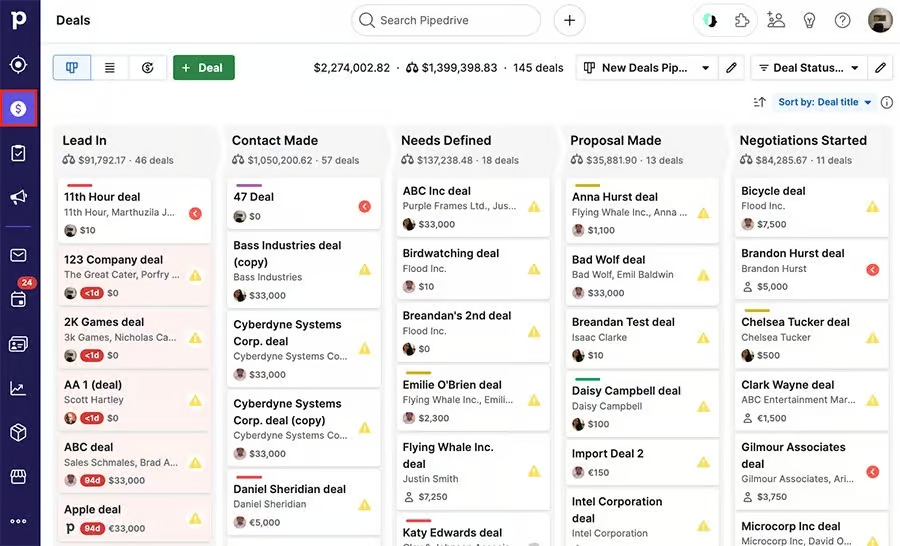
Pipedrive is built from the ground up for sales teams — not marketers. The visual drag-and-drop pipeline is intuitive, and the automation features keep deals moving without manual follow-up. It's one of the cleanest B2B sales pipeline tools available at this price point.
Standout features:
- Drag-and-drop visual pipeline with deal tracking
- Workflow automations and email drip campaigns
- Real-time sales insights and activity reporting
- LeadBooster add-on: chatbot, live chat, prospector, and web forms
- Slack integration via Dealbot
Pricing: Essential from $14/month; Advanced from $29/month; Professional from $59/month
Free trial: 14-day free trial available
Key limitation: Pipedrive is primarily a CRM tool. Landing page building and marketing automation are limited compared to dedicated funnel builders — you'll need supplementary tools if content-driven lead capture is part of your strategy.
Best fit: B2B sales teams managing high-volume deal pipelines who want simplicity, solid automation, and strong CRM functionality without the complexity of a full marketing suite.
8. Zoho CRM
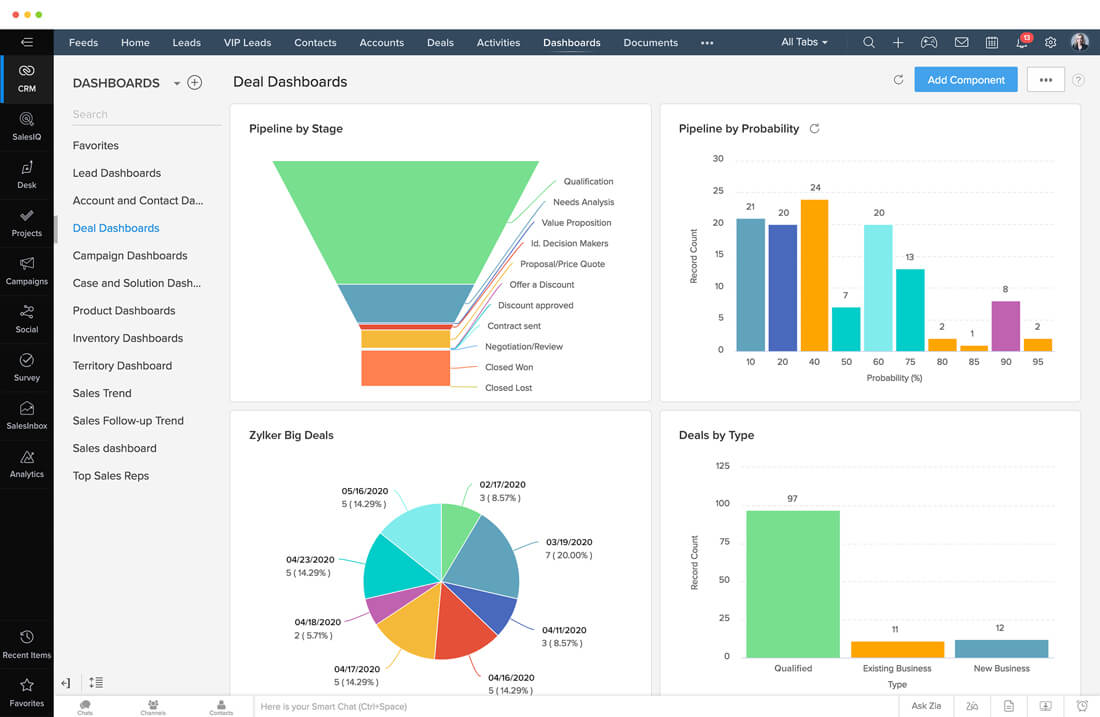
Zoho CRM brings enterprise-level capabilities to an SMB-friendly price point. Its Zia AI engine handles predictive lead scoring, sales forecasting, and anomaly detection — features that typically sit behind much higher paywalls.
Standout features:
- Zia AI: predictive lead scoring, sales forecasting, and anomaly detection
- Visual pipeline management with workflow automation
- Multichannel lead capture: email, social, web forms, and phone
- Deep analytics with territory and team performance reports
- Native integration with Zoho's broader product suite (Zoho Campaigns, Zoho Desk, etc.)
Pricing: Free plan (up to 3 users); Standard from $14/user/month; Professional from $23/user/month
Free trial: 15-day free trial available
Key limitation: The UI feels dated compared to HubSpot or newer CRM tools. Advanced automation also has a steeper setup curve than the marketing would have you believe.
Best fit: SMBs and growing sales teams that want CRM, lead scoring, and workflow automation without paying HubSpot's Professional tier pricing.
Free Sales Funnel Software — What You Can (and Can't) Expect
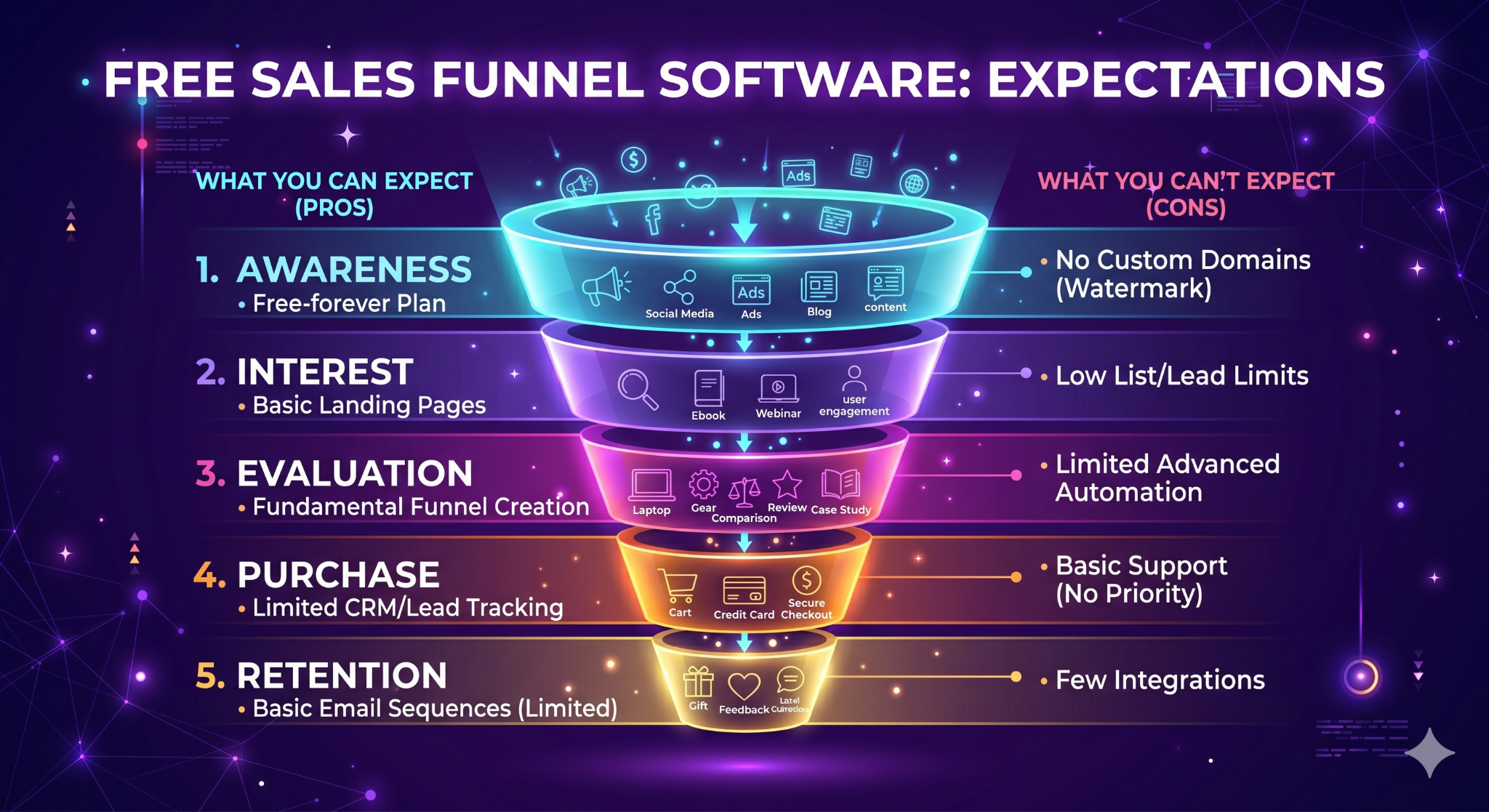
Free plans exist. But most of them have real limitations that will slow you down once you start driving traffic.
What you typically get on a free plan:
- Basic landing pages and lead capture forms
- Limited contact volume (usually under 2,000)
- Simple automations (one or two triggers)
- A handful of funnel templates
What you usually won't get:
- A/B testing
- Advanced workflow automation
- CRM integrations or payment processing
- Priority support
The best free sales funnel software options worth your time are Systeme.io (most generous free tier — includes funnels, email, and membership sites), HubSpot (best free CRM with solid pipeline management), and Zoho CRM (free for up to 3 users with AI lead scoring included).
When should you upgrade?
Once you're driving consistent traffic and need conversion optimization, automation depth, or team features. Trying to scale on a free plan creates bottlenecks fast.
Which Sales Funnel Software Is Right for Your Business?
No single tool wins for everyone. The right choice depends on your business model, team size, and where your funnel is actually breaking down.
A quick decision guide:
📌 Solo founder or bootstrapped startup → Systeme.io or GetResponse.
Low cost, fast setup, and enough functionality to validate your offer and start capturing leads without overcomplicating things.
📌 Course creators and coaches → Kartra or GetResponse.
Both handle the full digital product lifecycle — funnels, payments, webinars, and email — without requiring a multi-tool stack.
📌 B2B sales teams → HubSpot, Pipedrive, or ActiveCampaign.
These are built for pipeline management, deal tracking, and behavior-driven nurturing across longer sales cycles.
📌 Ecommerce brands → Kartra or ClickFunnels.
Both are optimized for checkout flows, upsells, and product-driven conversion sequences.
📌 Budget-conscious SMBs → Zoho CRM.
You get AI lead scoring, pipeline management, and automation at a price point that doesn't hurt.
The real insight here: don't choose a tool based on feature count. Choose it based on your biggest growth bottleneck. A team that struggles with deal velocity needs a CRM-first platform.
A team that struggles with top-of-funnel conversion needs a landing page and automation-first tool. Know your constraint first.
Best Sales Funnel CRM Software for B2B Teams
For most B2B teams, HubSpot, Pipedrive, and Zoho CRM are better starting points than a dedicated landing-page funnel builder.
Choose HubSpot when marketing, sales, and customer-service data need to live in one system. Choose Pipedrive when the main priority is straightforward opportunity management and sales activity tracking. Choose Zoho CRM when you need lead scoring, automation, and pipeline controls at a lower per-user cost.
ActiveCampaign is a better fit when sophisticated nurturing is the main requirement, but teams may still need a separate CRM as the sales operation becomes more complex. ClickFunnels, Kartra, and Systeme.io are better suited to businesses that convert visitors through landing pages, checkout flows, subscriptions, or digital products.
How Cleverly Helps B2B Companies Fill Their Sales Funnel with Qualified Leads
Sales funnel software solves the middle and bottom of your funnel. But it can't fix an empty top.
That's the gap most B2B teams run into. They invest in HubSpot or Pipedrive, build out their sequences, and then wait for leads that never show up in the volume they need. The funnel is ready. The pipeline isn't.
At Cleverly, we handle the part that comes before the software: getting qualified, ICP-matched prospects into your funnel in the first place.
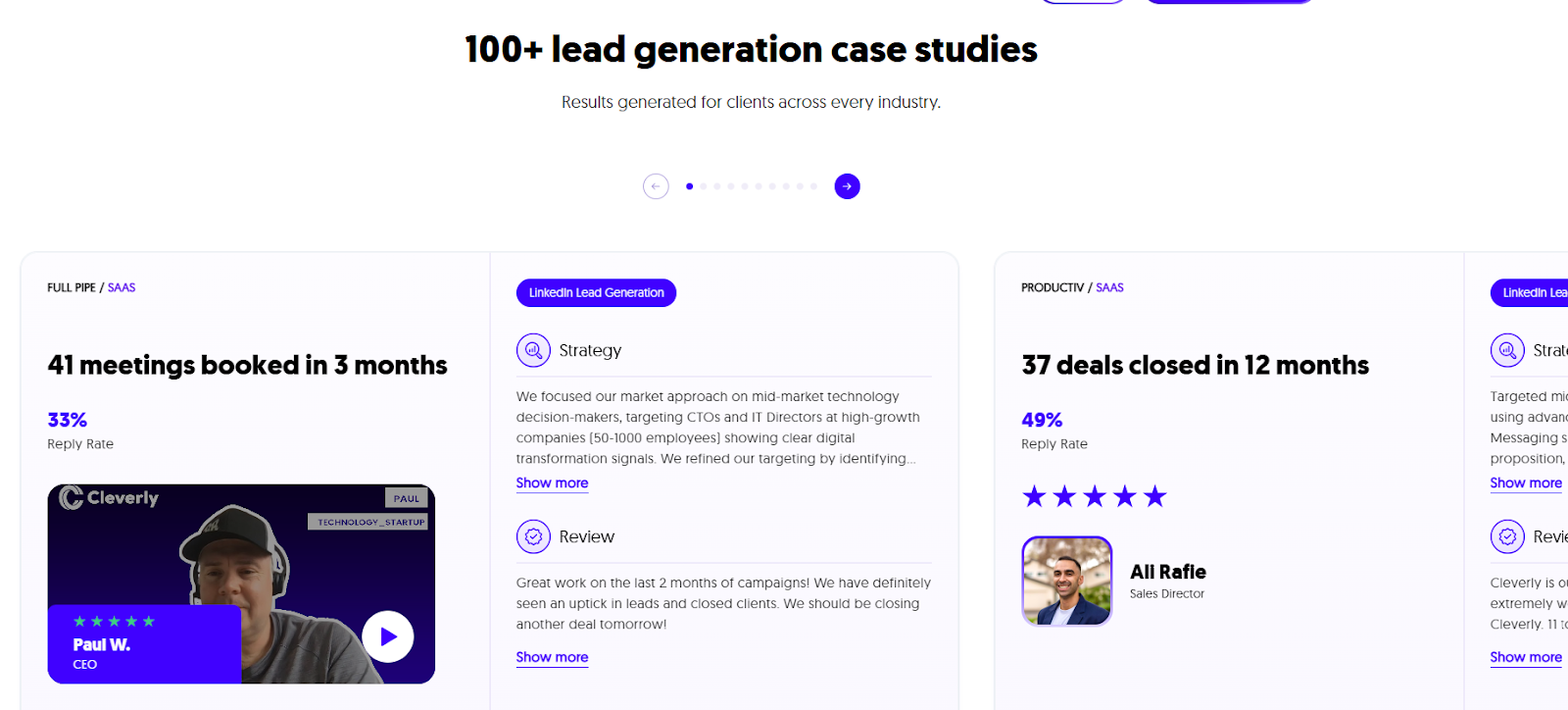
Our LinkedIn lead generation, cold email outreach, and cold calling services build targeted lists, craft personalized outreach, and deliver sales-ready meetings directly into your pipeline.
Why it matters for funnel performance: when leads enter already pre-qualified, your funnel software does what it's designed to do — nurture and convert. You stop wasting automation cycles on low-intent contacts. Conversion rates improve because the right people are entering the top.
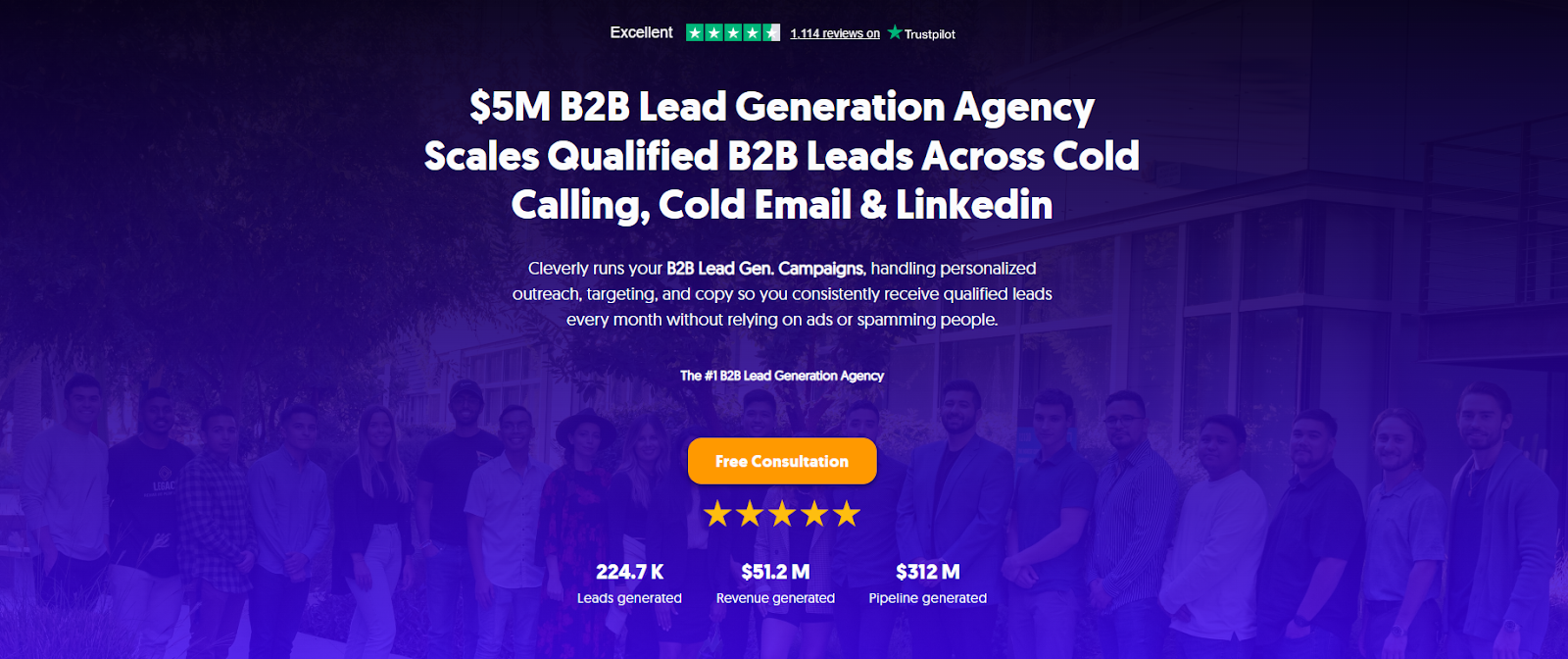
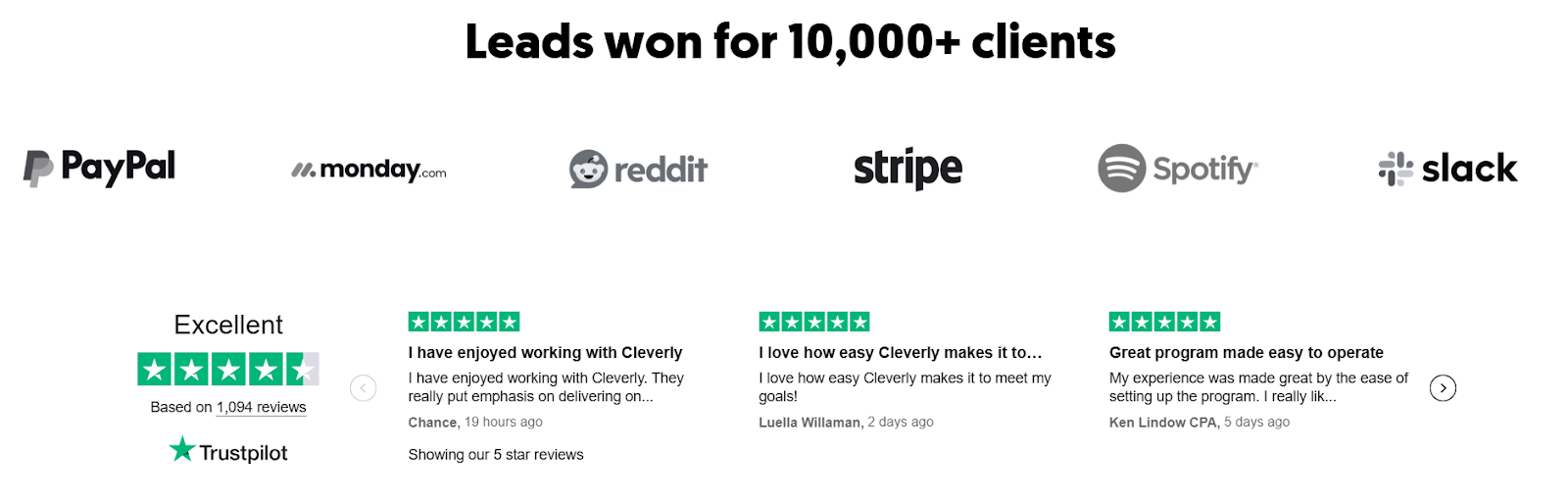
We've helped 10,000+ B2B companies generate $312M in pipeline and $51.2M in closed revenue. Our LinkedIn service starts at just $397/month. Cold email runs on a pay-per-performance model with no long-term contracts.
Want qualified leads consistently filling your funnel? Book a strategy call with Cleverly.
Conclusion
The best sales funnel software depends on what your team needs the system to control.
Choose ClickFunnels or Systeme.io when landing pages and conversion flows are the priority. Choose HubSpot, Pipedrive, or Zoho CRM when your team needs stronger pipeline management. Choose ActiveCampaign when behavior-based nurturing is central to the sales process, and consider Kartra or GetResponse when you want more of the funnel managed inside one platform.
Before buying, identify the stage where prospects are dropping out, confirm which integrations are essential, and calculate the cost at your expected contact volume and team size. A focused platform that fixes a known bottleneck will create more value than a larger product with dozens of features your team never uses.
The software can manage the journey, but it still needs qualified people entering the funnel. Pair the right system with a consistent source of ICP-matched leads, then measure whether those leads progress into opportunities and revenue.
Frequently Asked Questions
Free Resource
How to Scale a Profitable Cold Call System
Get the complete guide — download it instantly now.
Free Ebook
Download the Free Guide
Enter your details to get instant access.
You're all set! 🎉
Your ebook is downloading now.
Click below if the download didn't start automatically.