Table of Contents
What Is Sales Acceleration?
The Sales Acceleration Formula Explained
Why B2B Sales Acceleration Matters More Than Ever
8 Sales Acceleration Strategies to Boost Your Sales
How to Accelerate Sales: Building Your Execution Plan
How Cleverly Helps B2B Companies Accelerate Their Sales Pipeline
Conclusion
Frequently Asked Questions
Modified On :
June 30, 2026
Key Takeaways
- Sales acceleration is about velocity, not volume. It's the process of shortening every stage between first touch and closed deal using better targeting, faster follow-up, and smarter prioritization.
- The acceleration formula has three levers: pipeline value, win rate, and deal velocity. Improving even one moves revenue; improving all three compounds it.
- Speed wins meetings. Reps who respond to leads within an hour are dramatically more likely to qualify them than reps who wait even one hour longer.
- The 8 strategies that move the needle range from consistent outbound prospecting to account-based selling, but they all attack the same problem: friction.
- Acceleration isn't a one-time project. It's a system you build with the right data, the right tools, and the right follow-up discipline, then measure and adjust weekly.
Your pipeline isn't thin, it's slow. You've got opportunities sitting in CRM stages for weeks, sometimes months, with no real reason other than nobody followed up fast enough or talked to the right person at the right time.
That's a velocity problem, not a lead problem. And it's a big one.
The average B2B sales cycle has stretched 25% over the last five years, and 43% of sales leaders say their cycles are still getting longer. Meanwhile, companies that contact a lead within an hour are roughly 7 times more likely to qualify it than those who wait just one more hour. Speed and precision now decide who wins the deal, not who has the biggest list.
Sales acceleration is how you fix that. It's not about cramming more leads into the top of the funnel. It's about moving the leads you already have through the funnel faster, with fewer drop-offs and less wasted rep time.
This guide breaks down what sales acceleration actually means, the formula behind it, why it matters more in 2026 than it did even two years ago, and 8 strategies you can put into motion this quarter.

What Is Sales Acceleration?
Sales acceleration is the process of using strategies, tools, and data to move prospects through your sales funnel faster and increase the rate at which deals actually close.
It's the difference between a pipeline that looks healthy on a dashboard and a pipeline that's actually converting on schedule.
The key distinction: acceleration isn't about generating more leads. It's about making every lead you already have count more and convert sooner. You can have a great quarter from lead volume and still miss your number because deals are stalling at proposal or because reps are spending too much time chasing dead contacts.
The Core Components of Sales Acceleration
A few things drive acceleration more than anything else:
- Speed of follow-up — how fast a rep responds after a lead shows interest
- Quality of outreach — whether messaging is personalized and relevant or generic and ignorable
- Rep efficiency — how much of a rep's day goes toward selling versus admin and prospecting
- Data accuracy — whether your CRM reflects real, current contacts or stale records
- Pipeline visibility — whether you can actually see where deals are stalling, by stage, in real time
Sales Acceleration vs. Sales Enablement vs. Sales Optimization
These terms get used interchangeably, but they're not the same thing.
You can have great enablement and a well-optimized process and still be slow. Acceleration is the layer that's laser-focused on velocity specifically.
Why It Matters More in 2026
B2B buyers move faster and expect more from every interaction. They have more vendor options, more self-serve research tools, and less patience for generic outreach. Recent Gartner research found that 70% of buyers prefer a completely digital, self-service buying experience, and 67% would rather avoid talking to a sales rep at all if they can help it.
When buyers do decide to engage, they expect the rep on the other end to already understand their problem. Slow, generic outreach gets ignored. Fast, relevant outreach gets a reply.
🚀 Close Deals Faster With 15–30 More Qualified Meetings Every Month
Our LinkedIn, cold email, and cold calling campaigns keep your pipeline full so your sales team can focus on closing—not prospecting.
The Sales Acceleration Formula Explained
If you want to manage acceleration instead of just talking about it, you need a formula. Here's the one we use:
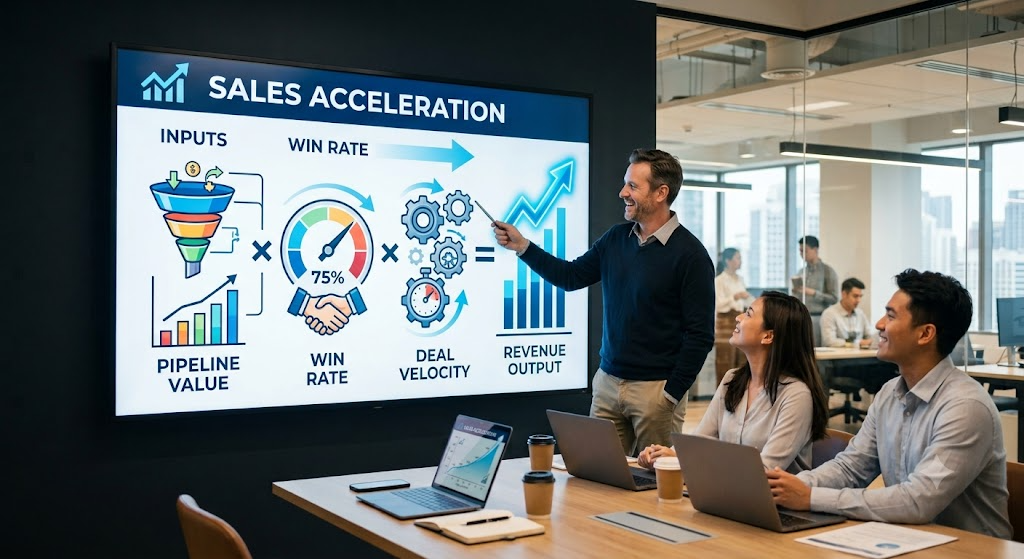
Pipeline Value × Win Rate × Deal Velocity = Revenue Output
Every acceleration strategy you implement should move at least one of these three levers. The strongest strategies move all three at once.
Breaking Down Each Lever
Pipeline value is the total dollar value of opportunities in your pipeline at any given time. More qualified pipeline means more revenue potential, but only if it's real pipeline and not inflated by deals that should've been disqualified weeks ago.
Win rate is the percentage of opportunities you actually close. The average B2B team wins around 21% of all deals, rising to roughly 29% when you only count qualified opportunities. That 8-point gap matters: it represents deals that consumed rep time and CRM space without ever having a real shot.
Deal velocity measures how fast deals move through your pipeline, typically calculated as total days in pipeline divided by total deals closed. Shorter cycles, all else equal, mean more revenue per rep per quarter.
Where Most Teams Go Wrong
Most sales teams obsess over pipeline volume and largely ignore win rate and velocity. They add more SDRs, run more campaigns, and generate more top-of-funnel activity, but the deals already in motion keep stalling at the same stages they always have. More volume on top of a leaky funnel just means more leaks.
Pro tip: Before picking any of the 8 strategies below, diagnose which lever is actually weakest in your process. If your win rate is healthy but deals take forever to close, you have a velocity problem. If deals move fast but rarely close, you have a qualification or win rate problem. Don't guess. Pull your stage-by-stage CRM data and look for where time piles up.
The mindset that works here: automation handles the volume side of the equation, and human judgment handles the value side. You don't accelerate by replacing reps with tools. You accelerate by giving reps the right leads, at the right time, with the right context.
Why B2B Sales Acceleration Matters More Than Ever
It's worth slowing down for a second to understand why this conversation is happening now, in 2026, and not five years ago.
Buyers research most of the decision before a rep ever gets involved.
Recent industry data puts the number at roughly 70% of the B2B buying journey completed before a buyer speaks to a sales rep. By the time your team gets on a call, the prospect has usually already formed an opinion about your category and your competitors. That changes what "acceleration" even means. You're not accelerating a cold conversation anymore.
You're accelerating a conversation with someone who already has context, and your job is to confirm fit and remove friction fast.
Speed is a measurable, quantifiable advantage.
Companies that try to contact a lead within an hour of an inquiry are nearly 7 times more likely to have a meaningful conversation with a decision-maker than those who wait even one more hour. That's not a soft "best practice." That's a direct multiplier on your qualification rate.

Competitive markets reward the fastest, most relevant responder.
In a market where buyers are evaluating multiple vendors at once, often without telling any of them, the rep who shows up first with something specific and useful tends to win the meeting. Generic, slow outreach gets buried.
Omnichannel, data-backed outreach outperforms single-channel volume plays.
Teams that combine multiple outreach channels with accurate data and consistent follow-up consistently outperform teams running a single channel at higher volume. Acceleration today is less about working harder and more about working with better information, faster.
Put simply: acceleration used to be a competitive edge. Now it's the baseline cost of staying in the game.
📈 $312M+ in Pipeline. 53,000+ Meetings Booked.
Sales acceleration starts with consistent opportunities. Let our outbound team build the pipeline while you close the deals.
8 Sales Acceleration Strategies to Boost Your Sales
These aren't theoretical frameworks. Each one targets a specific point of friction in the funnel, and you can put most of them into motion within a quarter.
1) Build a Consistent Outbound Pipeline With Targeted Prospecting
Inconsistent pipeline is the number one cause of revenue volatility. Teams that prospect in bursts, heavy one month and quiet the next, end up with feast-or-famine quarters that make forecasting nearly impossible.
The fix is ICP-based prospecting built on verified, enriched contact data. Reaching the wrong person, or a contact who left the company six months ago, wastes a touch and damages sender reputation if you're doing cold email.
Your outbound channels (LinkedIn outreach, cold email, cold calling) each serve different deal sizes and segments of your total addressable market, so the mix matters as much as the volume.
Pipeline consistency requires a system: defined ICP criteria, a steady cadence of new prospecting, and a process that runs whether or not this month's deals close on time. Activity alone doesn't fix this. A system does.

2) Speed Up Lead Follow-Up With Automation
The rep who responds first and most relevantly almost always wins the meeting. As covered above, the qualification advantage from responding within the hour versus an hour later is significant, and it only gets worse the longer you wait.
Set up automated follow-up sequences triggered by form fills, email opens, or intent signals so leads never sit idle in a queue. CRM workflows and sales engagement platforms can handle the timing piece automatically.
The part that gets missed: automation should handle when you follow up, not what you say. A fast, generic response loses to a slightly slower, personalized one in most B2B contexts. Use automation for timing, and keep a human in the loop for tone and relevance.
3) Prioritize Leads With Intent Data and Lead Scoring
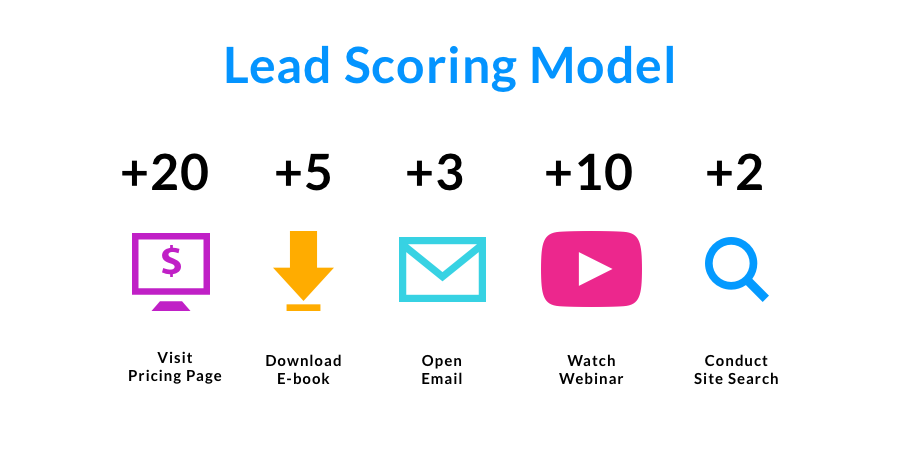
Not all leads deserve equal attention. Intent signals (content consumption, competitor research, hiring activity, funding events) reveal which accounts are actively evaluating solutions right now versus passively existing in your database.
Lead scoring models that combine firmographic, behavioral, and intent data help reps focus their limited time on the highest-probability accounts instead of working a flat, unfiltered list top to bottom. But scoring is only as good as your underlying data. Enriched, accurate records produce reliable scores. Stale or incomplete data produces noise that looks like signal.
Reps working a scored, prioritized list consistently close faster than reps working raw, unsegmented lists, simply because they're spending their hours on accounts more likely to convert.
4) Use Sales Engagement Tools to Increase Rep Efficiency
Sales engagement platforms like Outreach, Salesloft, and Apollo automate sequencing, track engagement, and surface which leads are actually warming up. The practical impact: reps spend less time on manual admin work and more time in actual sales conversations.
Cadence management matters more than most teams realize. A structured, multi-touch sequence (not a single email and a prayer) prevents premature drop-off on leads that just needed one more relevant touch.
Conversation intelligence tools like Gong or Chorus add another layer by analyzing live calls and surfacing what's actually working. Teams using AI-powered conversation intelligence report meaningfully higher win rates, largely because reps get specific, real-time coaching instead of generic feedback after the fact.
5) Align Sales and Marketing Around Shared Pipeline Data
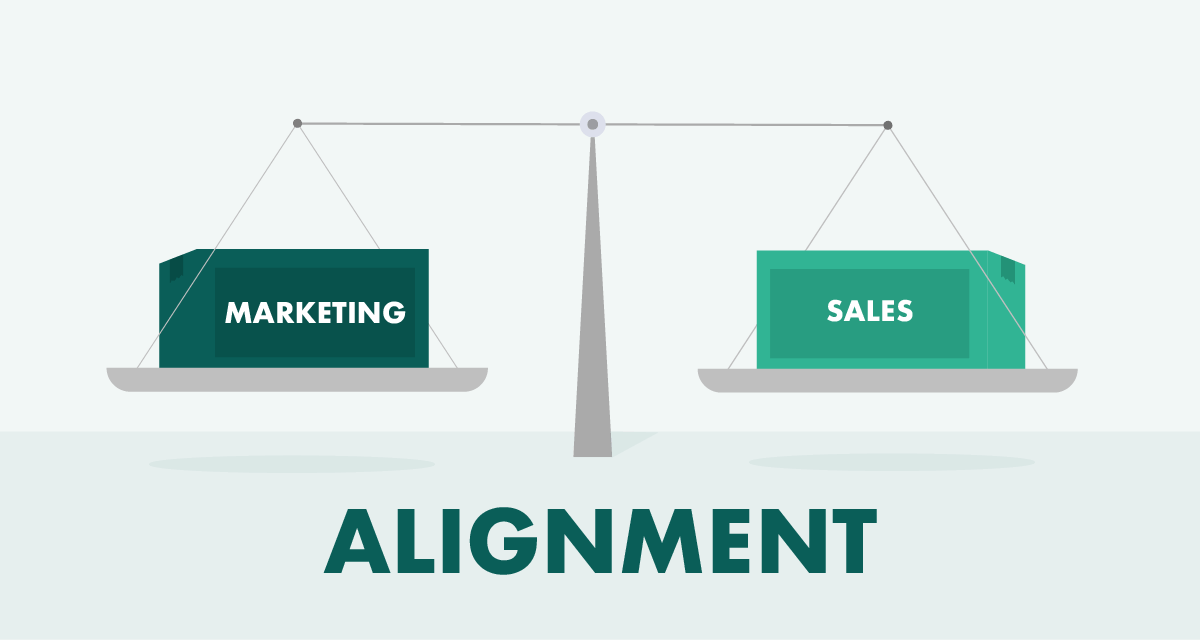
Misalignment between sales and marketing remains one of the biggest sources of pipeline leakage. Marketing thinks they're sending qualified leads. Sales thinks marketing is sending junk. Both are usually partly right, and the disagreement itself slows everything down.
The fix is a single source of truth for lead data, attribution, and pipeline stage definitions. When both teams work from the same numbers, finger-pointing drops and accountability becomes clear.
Set a joint SLA on lead handoff speed and follow-up cadence. Marketing agrees to deliver leads that meet defined qualification criteria. Sales agrees to follow up within a set window. Without that agreement in writing, "alignment" stays a buzzword instead of a process.
6) Shorten the Sales Cycle With Better Discovery and Qualification
Long sales cycles are often less about the prospect being slow and more about reps chasing the wrong people or skipping real discovery in favor of jumping straight to a pitch.
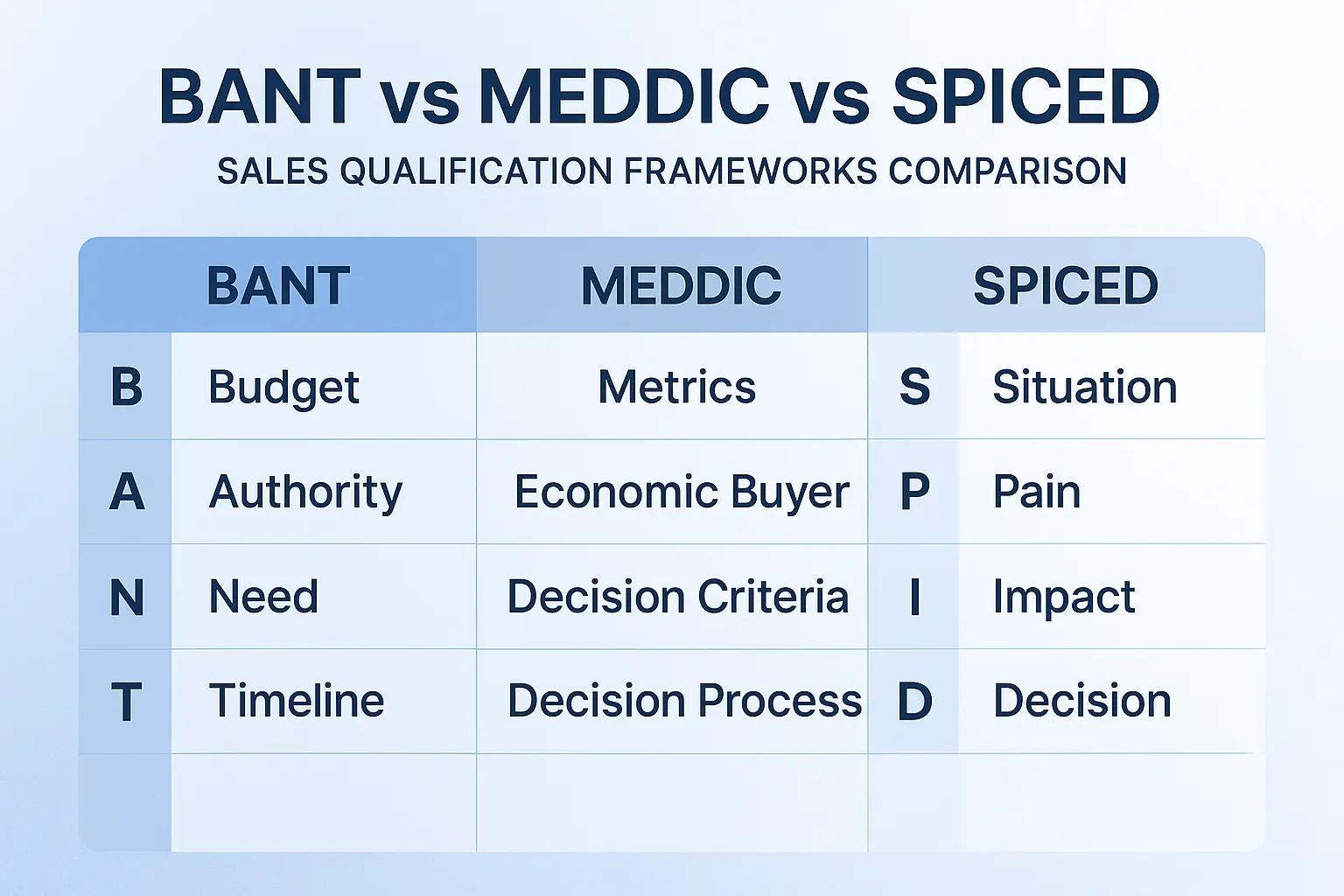
Strong qualification frameworks like MEDDIC, BANT, or SPICED force reps to confirm budget, authority, need, and timeline before investing serious time. Deals that exceed your average cycle length by more than 50% have a dramatically lower probability of ever closing, which means the discipline to walk away from a bad-fit deal early actually protects your overall velocity.
For enterprise accounts, build a stakeholder map early. Enterprise deals now average around 13 decision-makers, and discovering a blocker in month three because nobody mapped the buying committee in month one is a self-inflicted delay.
7) Reduce Friction in the Buying Process
Buyers increasingly want self-serve options for research, pricing, and initial evaluation before they're willing to talk to anyone. Forcing a "book a call to see pricing" gate on every step adds friction that pushes self-directed buyers toward a competitor with more transparency.
Make it easy to book a call, request a demo, or get a proposal without unnecessary steps. Use proposal and contract automation tools to compress the closing stage instead of letting redlines sit in someone's inbox for two weeks.
Don't forget internal friction either. Your champion has to sell your solution internally after your call ends. Give them prepared business case templates and ROI calculations so they're not building a pitch deck from scratch to convince their own CFO.
8) Leverage Account-Based Selling for High-Value Deals
For larger, more strategic accounts, account-based selling (ABM) concentrates resources on a defined list of high-fit accounts instead of spreading effort thin across a broad list.
This works best when sales and marketing coordinate outreach across multiple stakeholders within the same account at the same time, rather than relying on a single champion to carry the deal internally. Personalized, multi-threaded outreach at the account level consistently outperforms generic volume plays once you're dealing with enterprise-size deals and six-figure ACVs.
Combine ABM with signal-based triggers like funding rounds, leadership changes, or hiring sprees in relevant departments. Timing an account-based push to coincide with one of these events gives you a real reason to reach out beyond "checking in."
How to Accelerate Sales: Building Your Execution Plan
Knowing the strategies is one thing. Building them into an actual execution plan is another. Here's a practical sequence:
✅ Assess where deals are actually stalling. Pull stage-by-stage data from your CRM. Are deals dying at the top of funnel (not enough qualified pipeline), mid-funnel (deals going quiet after the first call), or at close (proposals sitting unsigned)?
✅ Pick one or two strategies that target your specific bottleneck. Don't try to implement all 8 at once. If your problem is top-of-funnel volume, strategies 1 and 8 matter more right now than strategy 7.
✅ Build the supporting infrastructure. That means the right tools, clean and enriched data, trained reps who know the qualification framework you're using, and shared metrics that sales and marketing both look at.
✅ Set velocity targets, not just volume targets. Track deal cycle time weekly by stage, not just total pipeline value at the end of the month.
✅ Review and iterate. Sales acceleration isn't a project with an end date. It's an ongoing process. The teams growing fastest right now are the ones combining outbound consistency, accurate data, and rep efficiency into one connected system instead of treating each as a separate initiative.
How Cleverly Helps B2B Companies Accelerate Their Sales Pipeline
One of the most impactful levers in sales acceleration is consistent, qualified outbound pipeline, and that starts with getting outreach right from day one. A lot of the velocity problems we just walked through trace back to the same root cause: reps spending too much time on unqualified or poorly targeted prospects instead of real conversations.
That's the gap we close. We run done-for-you B2B lead generation across LinkedIn outreach, cold email, and cold calling, targeting verified, ICP-matched prospects so your reps spend their time on conversations instead of prospecting.
We've generated $312 million in pipeline for clients across industries by treating outreach as a precision system rather than a numbers game.
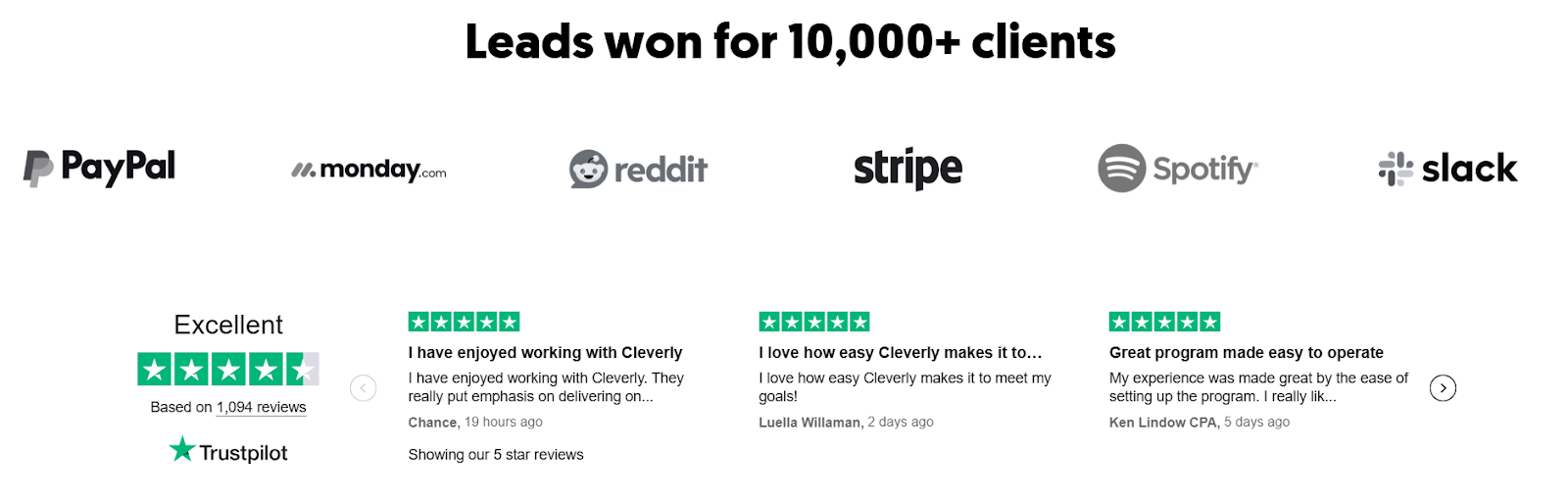
When outreach is targeted and personalized from the first touch, prospects show up to the first sales call already warmer, which means your team's deal velocity improves before they even pick up the phone.
We handle the targeting, the data accuracy, the messaging, and the execution end to end, removing the single biggest time sink in most SDR workflows.
Want to accelerate your pipeline with a done-for-you outbound system instead of building it in-house? Book a strategy call with Cleverly and we'll walk through where your funnel is losing speed.
Conclusion
Sales acceleration was never about doing more. It's about removing friction at every stage of the funnel, from the first touch to the signed contract. The teams that win combine three things: speed in following up, precision in who they're targeting, and tools that let reps spend their time on selling instead of admin.
Start by figuring out which lever, pipeline, win rate, or velocity, is weakest in your process right now. Pick one or two strategies that target that specific gap and build from there. The companies growing fastest aren't the ones with the biggest headcount. They're the ones that built sales acceleration into their process instead of trying to outspend a slow system.
Frequently Asked Questions
Free Resource
How to Scale a Profitable Cold Call System
Get the complete guide — download it instantly now.
Free Ebook
Download the Free Guide
Enter your details to get instant access.
You're all set! 🎉
Your ebook is downloading now.
Click below if the download didn't start automatically.