Table of Contents
What Sustainable Business Growth Actually Means
Warning Signs Your Sales Engine Is Breaking
The Four Components of a Scalable Sales Engine
A Framework for Scaling Without Breaking
Building Sustainable Lead Generation (The Engine Behind the Engine)
Metrics That Tell You Whether Growth Is Sustainable
Common Scaling Mistakes That Break Sales Engines
How Cleverly Helps B2B Teams Build Predictable Pipeline While They Scale
Conclusion
Frequently Asked Questions
Modified On :
September 10, 2026
Key Takeaways
- Sustainable business growth isn't about growing slower. It's growth your systems can repeat next quarter without more heroics, more burnout, or more spend than the growth is worth.
- Most "growth problems" are actually systems problems. Adding reps, budget, or channels to a broken engine just breaks it faster and more expensively.
- The order you fix things matters more than the fixes themselves. Diagnose the real constraint, fix your unit economics, document your playbook, build pipeline coverage, then hire. Do it out of order and you'll pay for it in missed quarters.
- Lead generation is where sustainability breaks first. Every other part of your sales engine, forecasting, hiring, ramp, depends on a steady, predictable flow of pipeline coming in the door.
- Watch trend lines, not single-month snapshots. Rising revenue with rising CAC and slipping forecast accuracy isn't a win. It's an early warning most teams miss until it's a crisis.
The pattern that catches almost every growing B2B company off guard: things are working, then they stop working, and nobody can point to the exact day it happened. Pipeline that used to arrive steadily now shows up in unpredictable waves.
The new rep you hired to help you scale is taking twice as long to ramp as your first one did. Your CAC is climbing even though your team is doing more, not less.
That's not a performance problem. It's a sustainable business growth problem, and the numbers back this up. B2B customer acquisition costs are up 40 to 60% since 2023, and the average B2B SaaS buying cycle now exceeds 134 days.
At the same time, sales rep ramp time has climbed to 5.7 months on average, up 32% since 2020. Growth is more expensive and slower to convert than it was even two years ago.
This guide breaks down what sustainable growth actually means, the warning signs your sales engine is cracking, the components that hold it together, and a practical framework for scaling one without breaking it.
If you're a founder, CRO, or revenue leader trying to move from early traction to repeatable scale, this is written for you.
What Sustainable Business Growth Actually Means
Let's define this in a way you can actually use. Sustainable business growth is growth you can repeat next quarter, with the same or better unit economics, without relying on a heroic effort or a one-off event to get there.
That's a very different thing from "growth." Growth just means the number went up. It doesn't tell you anything about whether the thing that produced it will still work in three months.
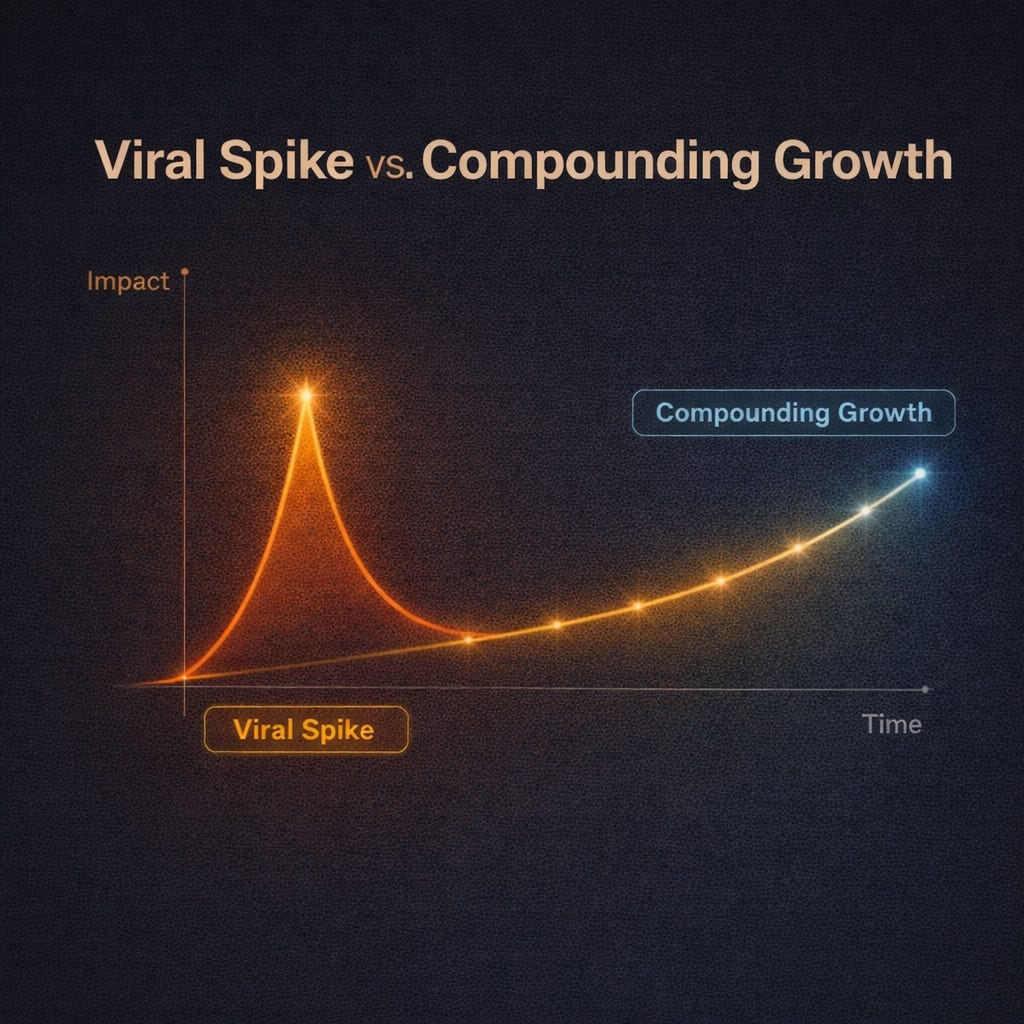
Spike Growth vs. Compounding Growth
There are two growth modes, and most companies experience both without realizing they're different:
- Spike growth looks like a viral LinkedIn post, a huge conference quarter, or a founder calling in favors from their network. It feels great. It's also not a system, it's an event, and it doesn't come back on command.
- Compounding growth is a system that produces pipeline on a known cadence, week after week, whether or not anyone gets lucky.
Spike growth gets celebrated in the board deck. Compounding growth is what actually lets you plan headcount, set a forecast, and sleep at night.
The Three Tests of Sustainability
Ask these three questions about any growth you're currently seeing:
- Is it repeatable? Could you produce the same result again next quarter using the same process, or did it depend on a one-time event?
- Is it economically sound? Are you spending less to acquire a customer than that customer is worth, with room to spare?
- Does it survive the people who built it? If your best rep or your founder left tomorrow, would the pipeline still show up?
If the answer to any of those is no, what you have isn't a system. It's a lucky streak with a forecast attached to it.
Why This Matters More Right Now
Sustainable growth mattered before, but 2026 makes it non-negotiable. Acquisition costs have surged, with B2B SaaS CAC now up as much as 31.2% year over year in some segments, and buyer behavior has gotten more cautious, with deals now requiring far more internal sign-off before they close.
Meanwhile, capital is less patient with long payback periods than it used to be. Inefficient growth used to be forgivable. Now it gets punished fast.
This is why the sales engine matters so much. Every growth investment you make, content, ads, headcount, product, eventually routes through your sales engine to become revenue. If the engine can't handle volume without breaking, none of those investments pay off the way you're modeling.
🚀 Scale Without the Chaos
Cleverly helps 10,000+ businesses build predictable B2B pipeline through done-for-you LinkedIn, cold email, and cold calling.
Warning Signs Your Sales Engine Is Breaking
Before you can fix a sales engine, you need to know it's actually the engine that's broken, not the people running it. Go through this list honestly:
- Pipeline arrives in unpredictable waves instead of a steady, plannable cadence.
- Your forecast accuracy is getting worse even though activity metrics are climbing.
- New hires take noticeably longer to ramp than your first few reps did.
- Revenue is concentrated in one or two reps, one channel, or a handful of accounts.
- CAC is rising while your conversion rates stay flat or slide.
- You or your top performer still have to personally step in to close deals.
- Marketing and sales are stuck arguing about lead quality instead of fixing it.
- Reps spend more time building lists and doing admin work than actually selling.
- Every new quarter starts with a scramble because there's no coverage built in advance.
If you recognized your company in three or more of these, that's the signal. Each one of these is a symptom of a system that was never actually designed to scale.
It's not that your reps got worse. It's that the engine was built for the volume you had a year ago, not the volume you're pushing through it now.
The Four Components of a Scalable Sales Engine
Think of these as load-bearing walls. Any one of them can fail under added volume, and when it does, it takes the whole engine down with it.
1. Demand Generation and Pipeline Sources
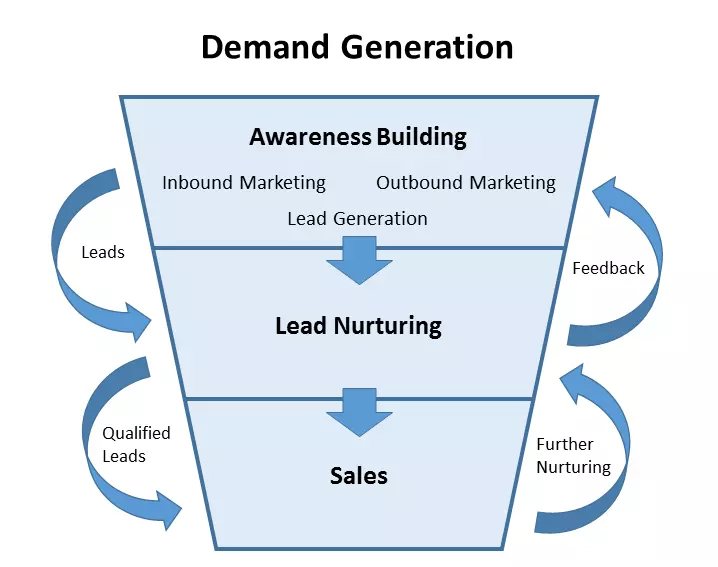
You need a defined mix of channels producing pipeline on a known cadence, not a single dependency you're hoping holds.
There's an important distinction here between owned channels and rented channels. Outbound and content are assets you build and control. Paid and marketplace listings are attention you're renting, and the moment you stop paying, it disappears.
A sustainable engine leans on owned channels for its baseline and uses rented channels as an accelerant, not a foundation.
2. Process and Playbooks
This is documented qualification criteria, clear stage definitions, and messaging frameworks that live outside any one person's head.
Undocumented process is the single biggest barrier to ramping new hires. If your top rep closes deals through instinct they can't explain, that instinct doesn't transfer. Every new hire has to rediscover it themselves, which is exactly why ramp time keeps stretching out across the industry.
3. People and Capacity
This means hiring ahead of demand, realistic ramp timelines, and coach-to-rep ratios that actually let managers coach.
Capacity planning has to be tied to your pipeline targets, not your headcount budget. A common trap is hiring because the budget allows it, not because there's enough qualified pipeline to actually feed the new hire. That's how you end up with reps sitting idle in month two, wondering why nothing's converting.
4. Data, Systems, and Measurement

Clean CRM data, clearly defined metrics, and reporting your leadership team actually trusts enough to act on.
Bad data doesn't just make your dashboards wrong. It makes every other component on this list unmeasurable, which means it's also unfixable. You can't diagnose a broken playbook or a capacity problem if you can't trust the data telling you where the breakdown is happening.
📈 Build a Sales Engine That Scales
With $312M+ pipeline generated and 53,000+ meetings booked, Cleverly helps B2B teams turn outbound into consistent growth.
A Framework for Scaling Without Breaking
Here's the part most teams get wrong: they do these steps out of order, or skip straight to hiring and spending without doing the diagnostic work first. Follow this sequence instead.
Step 1: Diagnose Before You Add
Find your actual constraint first. Is it pipeline volume, conversion, capacity, or retention? Adding budget or headcount to the wrong constraint doesn't just fail to help, it actively makes the real problem worse by masking it with more noise.
Step 2: Fix Unit Economics Before Volume
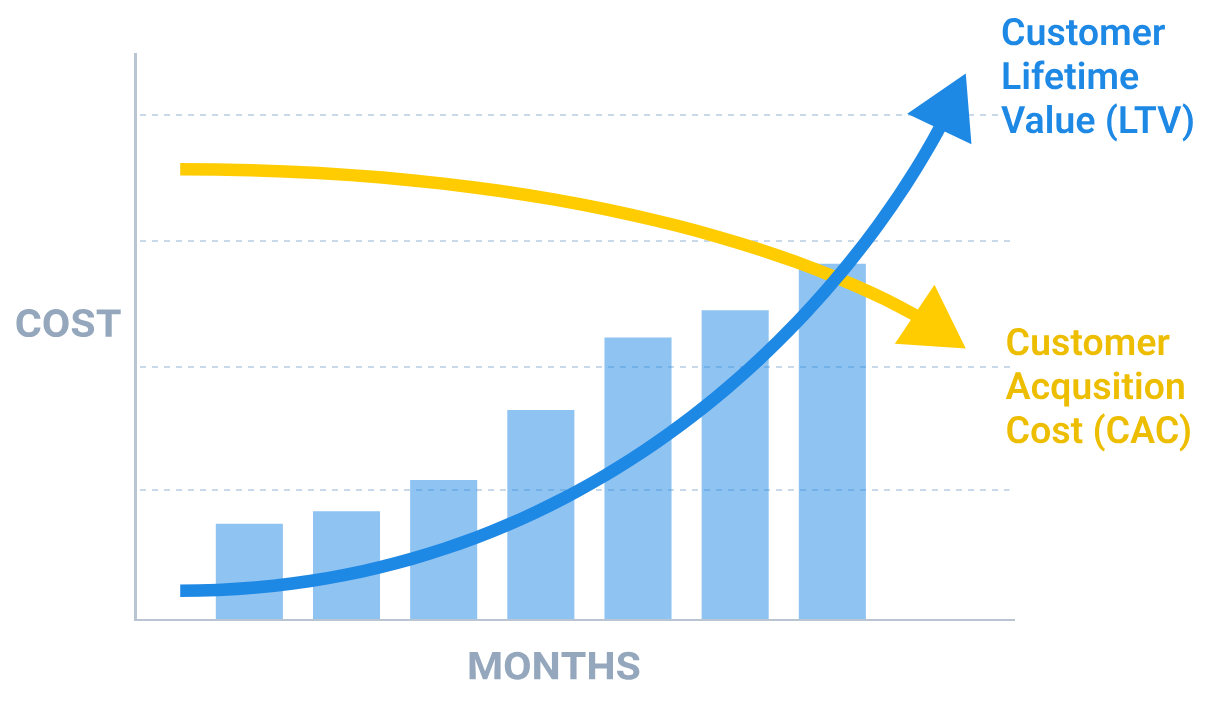
Your CAC, payback period, and LTV:CAC ratio need to work at your current scale before you multiply the inputs. Scaling a model with broken unit economics doesn't fix the model. It just means you lose money faster and with more confidence.
Step 3: Document What Already Works
Take your top performer's behavior and turn it into a written playbook before you hire against it. This single step is what makes ramp time predictable instead of hopeful. It's the difference between "we hope the new hire figures it out" and "we know exactly what they need to learn and by when."
Step 4: Build Pipeline Coverage Ahead of Capacity
Pipeline needs to lead your headcount plan, not follow it. New reps with no pipeline waiting for them don't ramp, they churn. Given that median B2B win rates have fallen to around 19%, the old "3x coverage is fine" rule of thumb no longer holds for most enterprise motions, closer to 4x to 5x is realistic for lower win-rate segments.
Step 5: Concentrate Channels Before Diversifying
Double down on the one or two channels with the best CAC-to-LTV ratio instead of spreading budget across five channels for the sake of "diversification." Diversify only once your primary channel is genuinely saturated or clearly at risk.
Step 6: Hire and Ramp Deliberately
Stagger your hiring so onboarding capacity doesn't get overwhelmed. Build in sales coaching, scorecards, and a defined ramp curve with real checkpoints, not just a vague expectation that things will click by month three.
Step 7: Instrument, Review, and Correct
Set up a monthly and quarterly review rhythm tied to leading indicators, not just closed revenue. This is the feedback loop that makes the whole system self-correcting instead of something you're only diagnosing after it's already broken.
Building Sustainable Lead Generation (The Engine Behind the Engine)
If you had to pick one place where sustainability breaks first, it's here. Every other part of your sales engine, forecasting, hiring, ramp planning, idles the moment top-of-funnel input gets inconsistent.
The owned vs. rented distinction from earlier applies directly to sustainable lead generation. Outbound and content are assets you control. Paid and marketplace placements are attention you're renting, and you lose it the moment you stop paying for it.
Recent volatility makes this concrete: algorithm changes, rising ad costs, and attribution loss from cookie deprecation can wipe out a channel you never actually controlled to begin with.
This is also where the founder-led sales ceiling shows up. The most common growth stall isn't a bad market or bad product. It's a business whose pipeline still depends on one founder's personal network and personal time. That ceiling is real, and it caps growth at exactly the size of that one person's calendar.
A sustainable channel mix, in practice, looks like this:
- A reliable outbound motion for deterministic reach you don't have to hope shows up.
- Inbound and content for compounding returns that build over time.
- Paid used as an accelerant, not the foundation the whole plan rests on.
One cadence principle matters more than almost anything else here: consistent weekly outbound volume beats sporadic campaign bursts. Pipeline math only works when the input is steady. A huge push one month followed by silence the next doesn't average out, it just creates the exact lumpy pipeline pattern covered in the warning signs above.
And one dependency people underestimate: your lead generation quality is capped by list accuracy and ICP clarity long before it's capped by your messaging. You can write the best cold email in the world and it won't matter if it's landing on the wrong desk.
Metrics That Tell You Whether Growth Is Sustainable
These metrics only mean something when you read them together. Any one of them in isolation can mislead you.
A reading rule that matters most: rising revenue with rising CAC and falling forecast accuracy is a warning sign, not a win. It means you're buying growth you can't repeat at the same price, and you won't see the bill until a few quarters out.
The two metrics teams most commonly ignore are CAC payback period and revenue concentration. Both are quiet until they aren't. A payback period that's crept from 12 months to 18 months doesn't look urgent on a single monthly report, but it's a slow leak on your cash runway. And revenue concentration in one channel or one rep is invisible right up until that channel or rep disappears.
Review these on a rolling window rather than reacting to any single month's movement, and keep the attribution caveat in mind: reported CAC can be inflated by measurement gaps from cookie deprecation and multi-touch attribution loss, even when your real B2B customer acquisition economics haven't actually changed.
Common Scaling Mistakes That Break Sales Engines
Most of these show up as good decisions in the moment and expensive mistakes two quarters later.
1. Hiring reps before the pipeline exists to give them. This guarantees a slow ramp and early churn, because the new hire has nothing to actually work.
2. Scaling spend on a channel whose unit economics never worked at small scale. More volume on a broken model just loses money faster.
3. Spreading budget across many channels for "diversification." This dilutes the one or two channels that actually convert instead of doubling down on them.
4. Leaving the playbook in the founder's head. Nothing transfers to new hires, so every hire relearns what already exists somewhere, just not on paper.
5. Treating a great quarter as the new baseline. Building next year's plan on top of an outlier sets a target the underlying system was never built to hit again.
6. Chasing new logos while ignoring expansion revenue. Existing customers are almost always cheaper to grow than net-new acquisition, and this gets skipped constantly.
7. Building a plan disconnected from actual sales capacity. A target no realistic headcount could deliver isn't a stretch goal, it's a forecast built on fiction.
8. Cutting outbound or marketing during a strong quarter. This creates a pipeline gap that doesn't show up until it hits two quarters later, by which point it's much harder to trace back to the cause.
9. Adding tools instead of fixing process. Complexity grows, but output doesn't, and now you have a broken process running through more software.
10. Measuring activity instead of conversion. This hides the real constraint behind a busy-looking dashboard.
How Cleverly Helps B2B Teams Build Predictable Pipeline While They Scale
If there's one breakage point that shows up across almost everything in this guide, it's pipeline consistency. Reps get hired, spend goes up, but top-of-funnel input stays lumpy, and every downstream metric, ramp time, forecast accuracy, revenue concentration, inherits that volatility.
The bind most growing teams face is timing. Building an in-house outbound engine, hiring, sourcing data, setting up deliverability infrastructure, writing playbooks, coaching reps, takes quarters to get right. The pipeline is needed now, not in three quarters.
This is what we run at Cleverly. We handle outbound lead generation end to end: ICP definition, verified list building, LinkedIn outreach, cold email, and cold calling, delivering booked meetings on a consistent, weekly cadence. That consistency is the whole point. Predictable weekly volume is what makes pipeline math actually work, and predictability is the definition of sustainable growth this entire guide has been building toward.
For a team in the middle of scaling, an outsourced motion like ours can cover baseline pipeline while your internal engine is still being built, so your hiring and capacity planning aren't gambling on a channel that hasn't proven out yet.
We've generated 224.7K leads and $51.2 million in client revenue across our client base by staying focused on one thing: qualified meetings with decision-makers in a defined ICP, not just filling a calendar with noise. That focus is what makes forecasting off our pipeline reliable instead of hopeful.
If you want a pipeline you can actually forecast against, talk to Cleverly about building a predictable outbound engine.
Conclusion
Sustainable business growth isn't slower growth. It's growth backed by a system that can survive the volume you add to it. The sequencing matters as much as the fixes themselves: diagnose your actual constraint, fix your unit economics, document the playbook, build pipeline ahead of capacity, then hire, in that order, not backwards.
Pipeline consistency is the foundation everything else in this guide rests on, and single-channel dependency is the most common hidden fragility we see in growing B2B companies. So start simple. Run the warning-signs checklist honestly this week, identify the single biggest constraint in your engine, and fix that one thing before you add any new spend, any new headcount, or any new channel.
In a market where acquisition costs keep climbing and capital keeps getting less patient, the companies that win aren't the fastest growers. They're the ones whose growth doesn't break the moment it accelerates.
Frequently Asked Questions
Free Resource
How to Scale a Profitable Cold Call System
Get the complete guide — download it instantly now.
Free Ebook
Download the Free Guide
Enter your details to get instant access.
You're all set! 🎉
Your ebook is downloading now.
Click below if the download didn't start automatically.