Table of Contents
What Is Founder-Led Sales?
Why Founder-Led Sales Matters More Than Ever in 2026
Step 1 — Define Your ICP Before You Pitch Anyone
Step 2 — Build a Targeted Prospect List
Step 3 — Craft a Pitch That Leads With Their Problem, Not Your Product
Step 4 — Run Discovery Calls That Qualify, Not Just Engage
Step 5 — Demo the Outcome, Not the Features
Step 6 — Handle Objections Like a Founder, Not a Sales Rep
Step 7 — Follow Up With a System, Not Good Intentions
Step 8 — Document Your Wins and Build the Playbook
How Cleverly Supports Founder-Led Sales With Done-for-You B2B Lead Generation
Conclusion
Frequently Asked Questions
Modified On :
June 11, 2026
Key Takeaways
- Founder-led sales is a deliberate go-to-market strategy, not a gap-filler — it's how the best early-stage B2B companies validate product-market fit and build a repeatable sales playbook before their first hire.
- 92% of B2B buyers already have a vendor in mind before formal evaluation begins — founders who show up in that research phase win deals before competitors even know they exist.
- The 8-step framework covers ICP definition, prospect list building, pitch construction, discovery, demos, objection handling, follow-up systems, and playbook documentation.
- The biggest founder sales mistake isn't a weak pitch — it's not having enough qualified conversations in the calendar to build momentum and recognize patterns.
- Done-for-you B2B lead generation through Cleverly solves the top-of-funnel bottleneck, so founders spend time closing deals — not chasing connection requests.
You built the product. You know the problem better than anyone in the room. And yet somehow, pipeline is thin, deals drag on forever, and the few conversations you do get don't close.
That's not a product problem. That's a sales motion problem — and it's one of the most common and most fixable issues early-stage B2B founders face.
Founder-led sales isn't what you do until you can afford a real sales team. It's the highest-leverage sales motion available to early-stage companies — and it's what separates founders who close their first 20 customers and build real traction from the ones who burn runway trying to figure out why nobody's buying.
Here's what makes 2026 different from any previous year: B2B buyers spend 70% of their buying journey doing their own research before talking to vendors.
Forrester's 2024 Buyers' Journey Survey found that 92% of buyers start with at least one vendor in mind, and 41% already have a single preferred vendor selected before formal evaluation even begins.
If you're not showing up in that research window — on LinkedIn, in industry content, through referrals — you're being eliminated before the conversation starts.
This guide covers what founder-led sales actually is, why it's more valuable than ever, and an 8-step framework for running it well — from nailing your ICP to documenting the playbook that lets you eventually scale beyond yourself.
If you're a B2B founder personally responsible for closing deals right now, this is for you.
What Is Founder-Led Sales?
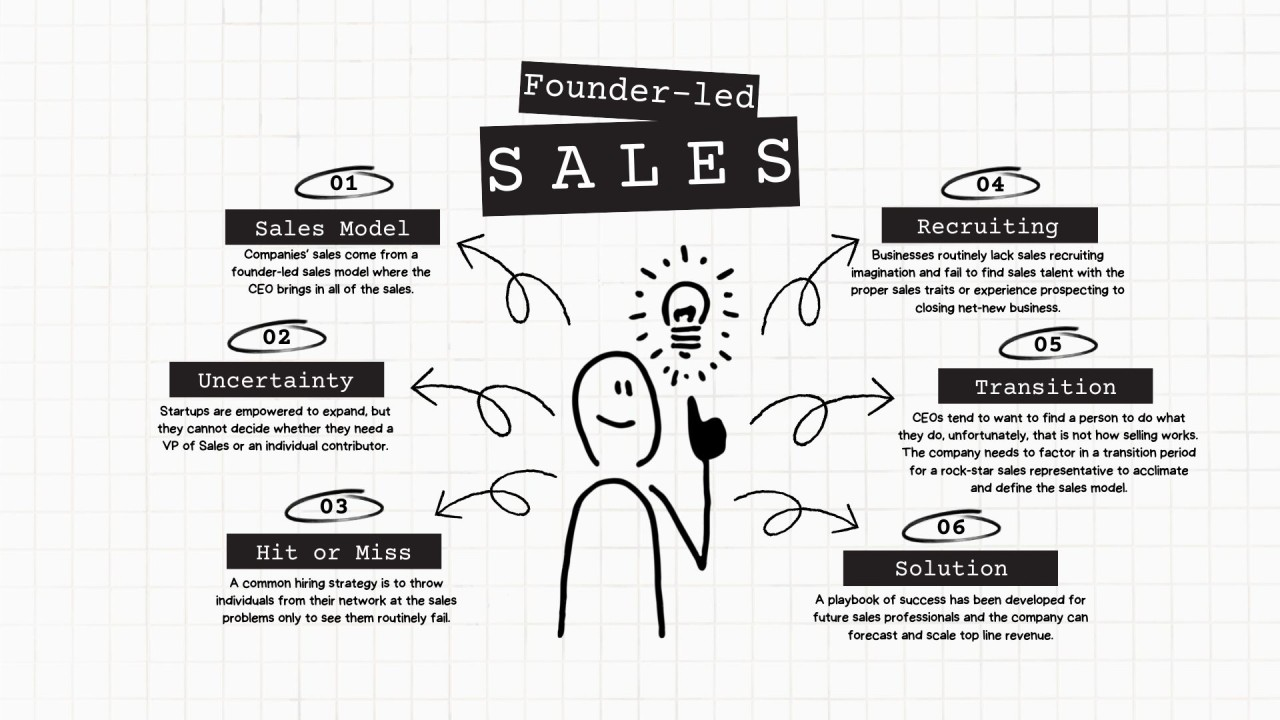
Founder-led sales is a go-to-market approach where the founder personally runs the sales function — prospecting, running discovery calls, demoing the product, handling objections, and closing deals — rather than delegating to a dedicated sales team.
In practice, it looks like this: you're the one reaching out to prospects, taking the first call, running the demo, following up after silence, and negotiating the final terms. That's founder-led sales. No layer of SDRs between you and the buyer. No account executives who half-understand the product. You, directly in the room (or on the Zoom).
Why Founders Are Uniquely Positioned to Sell
No early-stage sales hire can replicate what you bring to a sales conversation. You understand the problem being solved at a level no rep can match. You can adjust the pitch in real time when a prospect reacts unexpectedly.
You can make commitments and product decisions on the spot. And you carry the kind of credibility that only comes from having built the thing you're selling.
Every discovery call you run is simultaneously a revenue opportunity and a product research session. You learn what language resonates, what objections signal a product gap, and what buying triggers are actually pulling people to the market. That intelligence is priceless.
What Founder-Led Sales Is Not
It's not cold-calling strangers all day at the expense of product and company leadership. It's a focused, structured sales effort with a clearly defined ICP, a documented process, and defined criteria for when to hand off.
The goal isn't just to close deals. It's to build the repeatable system that your first sales hire will run — and to prove that it works before you pay someone else to do it.
🚀 Founders Should Be Closing Deals—Not Prospecting
Your time is too valuable for list building and follow-ups. We fill your calendar so you can focus on selling.
Why Founder-Led Sales Matters More Than Ever in 2026
The B2B buying process has fundamentally shifted, and it shifts the founder advantage into overdrive.
Buyers Are Already Forming Opinions Before You Reach Out
80% of the B2B buying journey now happens without direct vendor contact. By the time a prospect agrees to take your call, they've read your website, checked your LinkedIn, looked at G2 reviews, and formed a working opinion about whether you're worth their time.
A founder who has been consistently visible — writing about the problem space, sharing case studies, engaging with the right audience on LinkedIn — shows up to that first call with a structural advantage that no cold outreach from an unknown SDR can replicate.
Trust Has Become the Differentiator
AI-generated spam has flooded inboxes, making buyers increasingly defensive. Generic outreach from reps who don't fully understand the product gets filtered out fast. Founder-led conversations carry conviction and depth that buyers can feel.
When you explain why you built the product, what problem you've lived firsthand, and what you've seen work — buyers listen differently.
It's a Signal Investors Pay Attention To
Founders who show traction from personally-led deals demonstrate product-market fit, pricing discipline, and sales IQ that no pitch deck can substitute.
By 2026, Gartner predicts that 80% of B2B sales interactions will take place across digital channels. Investors know the founders who've figured out the digital-first sales motion are the ones building companies that scale.
Every Deal Builds the Playbook
Warm introductions close at 30–50%. Cold outreach closes at 2–5%. A founder working a warm network and personal brand can close at multiples of what a cold-calling SDR produces. And every deal you close adds a data point — patterns in objections, buying triggers, and decision timelines — that become the repeatable sales playbook you eventually hand off.
Step 1 — Define Your ICP Before You Pitch Anyone
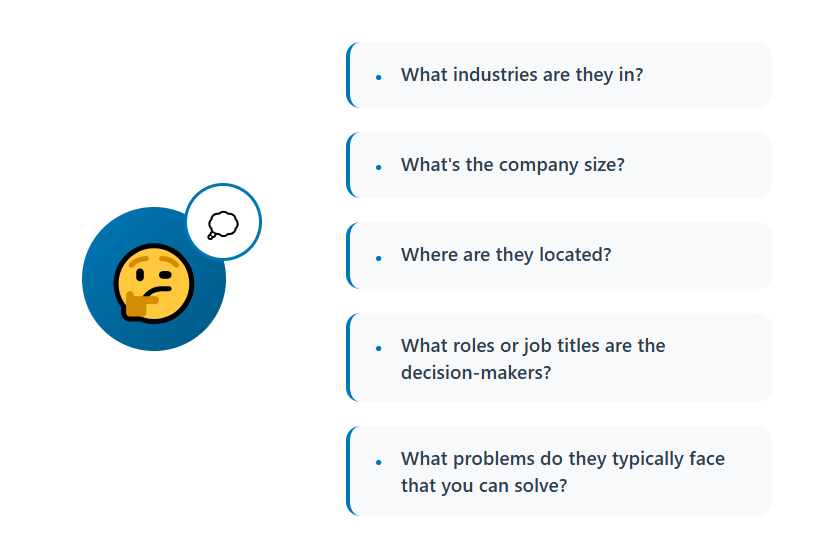
The most common founder-led sales mistake is pitching everyone who will take a meeting. This produces a pipeline full of tire-kickers, a product roadmap pulled in five directions, and zero pattern recognition.
Before you reach out to a single prospect, get specific.
ICP Definition Checklist for Founder-Led Sales
- Industry and sub-vertical
- Company size (revenue range or headcount)
- Geography
- Job title of the economic buyer (who controls the budget)
- Job title of the champion (who feels the problem most acutely)
- The specific trigger event that makes them ready to buy now
That last one is often overlooked. Trigger events are what separate a moderately interested prospect from an actively looking buyer. Recently funded companies. New hires in a relevant leadership role. Companies expanding into a new market. Organizations that just had a competitor fail them. Targeting prospects who just experienced a trigger event cuts your sales cycle dramatically.
Validate Your ICP Against Reality
Look at your first 3–5 customers. What do they actually have in common? Not who you think should buy — who has already bought. Those patterns are your ICP.
Narrow to a specific, reachable segment and you'll close faster, generate more referrals, and build category authority faster than founders who try to sell everyone simultaneously.
💼 The Best Founder-Led Sales Strategy? More Qualified Meetings.
We handle LinkedIn, cold email & calling end-to-end. You show up to conversations. We create them.
Step 2 — Build a Targeted Prospect List
Founder-led sales doesn't mean founder-scattered sales. You need a structured list of the right people before you start outreach — otherwise you're just burning your most limited resource: time.
LinkedIn Sales Navigator is the highest-leverage prospecting tool at this stage. Filter by title, company size, industry, geography, and seniority. Build a saved list of 50–100 ICP-matched profiles per week as your prospecting baseline.
Three Tiers of Founder Prospecting
Tier 1 — Warm Network
Former colleagues, existing connections, mutual introductions. These conversations start with trust already in place. Warm introductions convert at 30–50%, making them the highest-ROI conversations you can possibly have. Work this list first, always.
Tier 2 — Semi-Warm
LinkedIn connections, newsletter subscribers, event attendees, people who have liked or commented on your content. Outreach here has context — they know your name, or at least your face — and it converts significantly better than cold.
Tier 3 — Cold Outreach
Highly targeted cold outreach to ICP-matched prospects using LinkedIn, cold email, or cold calling. Lower conversion rate but scalable with the right infrastructure or a partner who handles execution.
The 50-Prospect Rule
Focus each week on 50 high-quality, ICP-matched prospects rather than 500 loosely targeted contacts. Founder time is the constraint. Quality is the lever.
And from day one, track everything in a CRM — even a spreadsheet works. Without it, follow-up falls through the cracks and the pipeline data you need to build your playbook never accumulates.
Step 3 — Craft a Pitch That Leads With Their Problem, Not Your Product
Founders love their product. That's the trap.
The moment you start a sales conversation by explaining what your product does, you've lost the room. Prospects care about their problem. The fastest way to lose a call is to start with features.
The Problem-First Framework
Open every outreach and every conversation by demonstrating you understand the prospect's specific situation before introducing anything about what you do:
"We work with [ICP profile] who typically struggle with [specific problem]. Is that something your team is dealing with?"
That single framing question changes the dynamic of the entire conversation. Now the prospect is talking. You're listening. And you're gathering the intelligence you need to pitch with precision.
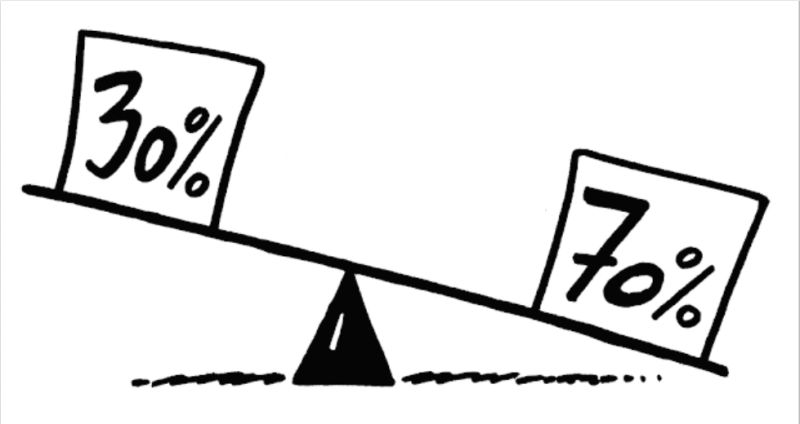
The 30/70 Rule for Discovery Calls
On your first call, you should talk 30% of the time and the prospect should talk 70%. That call's job is to understand whether the problem exists and whether the fit is real — not to sell.
What Your Pitch Must Answer
For every prospect, your pitch needs to address four things:
- What is the cost of the problem you're solving?
- What will their world look like once it's solved?
- Why is now the right time to act?
- Why should they trust this founder and this product?
Personalization Converts
A founder who references a specific detail from the prospect's LinkedIn, a recent company announcement, or a shared industry challenge in the first 15 seconds of an outreach message produces measurably higher reply rates than any templated opener.
The story structure that works: problem → insight (what you discovered) → solution → proof (a specific result a similar customer got) → ask.
Step 4 — Run Discovery Calls That Qualify, Not Just Engage
Discovery is the most important step in founder-led sales. A great discovery call makes the demo, proposal, and close significantly easier. A poor one wastes both parties' time and gives you false confidence about pipeline health.
What Every Discovery Call Must Establish
- Does the prospect actually have the problem you solve?
- Is the problem painful enough to justify buying?
- Do they have the authority — or direct access to authority — to make a decision?
- Is there a real timeline?
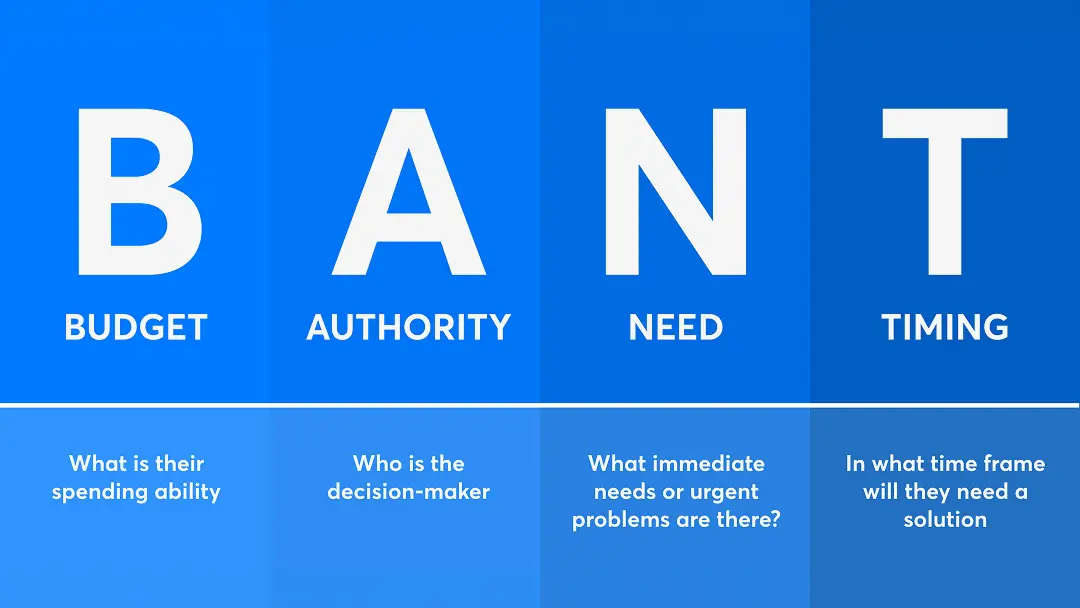
You can use the BANT framework here — Budget, Authority, Need, Timeline — but don't treat it like a checklist to interrogate. Weave these questions naturally into the conversation.
The Disqualification Mindset
The goal of discovery is not to find a reason to proceed. It's to find out quickly whether this is a real opportunity. Disqualifying fast saves your time and builds a reputation for not wasting buyers' time — which itself becomes a sales advantage.
Two questions that separate real buyers from tire-kickers:
- "What would need to be true for you to move forward in the next 30 days?"
- "What's the cost of NOT solving this problem this quarter?"
If a prospect can't answer either of these, the opportunity isn't real yet.
Document everything during discovery — pain points, the specific language the prospect uses, and every objection raised. This becomes the raw material for your sales playbook.
Step 5 — Demo the Outcome, Not the Features
Walk into most founder demos and you'll see the same pattern: a product tour that shows everything the product does, in the order it was built. The prospect sits through 30 minutes of features they didn't ask about, and leaves unsure whether any of it solves their problem.
The best founder-led sales demos aren't product tours. They're outcome narratives.
The Pre-Demo Setup That Doubles Close Rates
Before you touch the product, recap what you heard in discovery:
"You mentioned [specific problem]. You've tried [what they tried before]. And the goal is [the outcome they described]. I want to show you exactly how we get you there."
This framing accomplishes two things: it shows the prospect you actually listened, and it reframes everything you're about to show as a direct answer to their stated need.
Structure for a High-Converting Demo
- Restate the problem in their exact words
- Show only the features that solve their specific problem
- Pause and ask: "Does this solve what you described?"
- Handle any objections before moving to next steps
The Two Questions That Set Up the Close
End every demo with:
- "Based on what I've shown you, does this solve the problem you described?"
- "What would need to be true for you to move forward?"
These two questions surface objections early and create a natural path toward close. Don't skip them.
What to avoid: showing every feature, using internal terminology the prospect doesn't know, starting with setup and configuration, and running over time. Every minute past the agreed end time costs you trust.
Step 6 — Handle Objections Like a Founder, Not a Sales Rep
Here's the founder's edge in objection handling: you can make commitments no sales rep can make. You can explain product decisions with authority. You can adjust pricing or terms in the room. Use these advantages intentionally.
The Four Most Common B2B Objections
"We don't have budget right now."
Probe for the real constraint. This usually means "I don't have budget approved" — not "we can't afford it." Ask what the approval process looks like and who needs to be in the room. Offer to join that conversation.
"We need to think about it."
This is almost always a hidden objection. Ask: "What specifically would you need to see or know to feel confident moving forward?" Get the real concern on the table and address it directly.
"We're talking to other vendors."
Treat this as a gift. Ask: "What criteria are you using to evaluate them?" Then reframe your differentiation around their stated priorities — not your standard feature list.
"Can you reduce the price?"
Never discount without something in return. Offer a trade — annual prepay, expanded scope at the same price, or a reference customer commitment — rather than discounting on demand. Unilateral discounts signal that your original price wasn't real, which erodes trust.
The Founder's Objection Superpower
You can say: "Let me tell you why we built it this way."
Product decisions explained by the person who made them carry authenticity that eliminates objections that would stop a sales rep cold. Use that card deliberately.
Step 7 — Follow Up With a System, Not Good Intentions
More deals are lost to no follow-up than to competitive losses. The average B2B deal requires 5–8 touches before closing. Founders typically stop at 2.
The Follow-Up Framework
Within 24 hours of demo: Send a recap email that covers what was discussed, what you agreed on, and the explicit next step — with a specific date. Not "let's reconnect soon." A date.
Day 3–5: Follow up with a relevant case study, data point, or resource tied directly to the specific problem the prospect described in discovery. Not a generic piece of content. Something that proves you remembered what they said.
Day 10–14: Short, direct check-in: "Any updates on your end? Happy to answer any questions that came up internally."
Day 21+: A break-up message that creates urgency without desperation: "Wanted to check in one last time — if timing isn't right, no worries at all. If it is, I'd love to reconnect."
CRM Discipline as Pipeline Insurance
Set a task for every open deal with a "next action" date. If there's no next scheduled action on an open deal, that's a deal at risk. No exceptions.
If your champion goes quiet, reach out to another stakeholder — finance, operations, a peer — with a different angle. Single-threaded deals die when the champion loses internal momentum. Multi-threading your follow-up keeps deals alive through organizational noise.
Step 8 — Document Your Wins and Build the Playbook
Closing deals is the objective. But the purpose of founder-led sales is bigger than any individual deal — it's to build the repeatable system that makes your first sales hire successful and eventually lets you step back from the day-to-day selling.
What to Document After Every Closed Deal
- Who was the buyer (title, company profile, industry)
- What triggered their search
- What objections came up and what overcame them
- What the decision timeline looked like
- What closing language worked
What to Document After Every Lost Deal
- Why they didn't buy
- Who they chose instead (and why)
- What would have needed to be different
Losses teach you more than wins. Document them with the same discipline.
The Five Components of a Founder Sales Playbook
The Handoff Milestone
Close 10–30 deals and document the full playbook before making your first sales hire. The playbook is what you're hiring someone to run, not to invent. Founders who skip this step pay for it — usually in a failed first sales hire, a reset timeline, and lost runway.
Even after hiring reps, stay in the largest deals and enterprise conversations. Founder credibility in those conversations creates leverage no rep can replicate.
How Cleverly Supports Founder-Led Sales With Done-for-You B2B Lead Generation
The biggest bottleneck in founder-led sales isn't the founder's ability to close. It's pipeline volume. You can be exceptional at discovery calls and demos, but if you only have 3 qualified conversations on the calendar each week, you won't close fast enough to build momentum, recognize patterns, or develop the sales muscle that makes the framework above actually compound.
That's where we come in.
At Cleverly, we handle the entire top-of-funnel for B2B companies — ICP-targeted list building, LinkedIn outreach, cold email, and cold calling — so founders can spend their time in the only conversations that matter: discovery, demos, and closes.
The founder-Cleverly partnership is straightforward. We fill your calendar with qualified meetings. You run the calls and close the deals. The data from those calls builds the playbook. The playbook makes your first sales hire successful. Every piece connects.
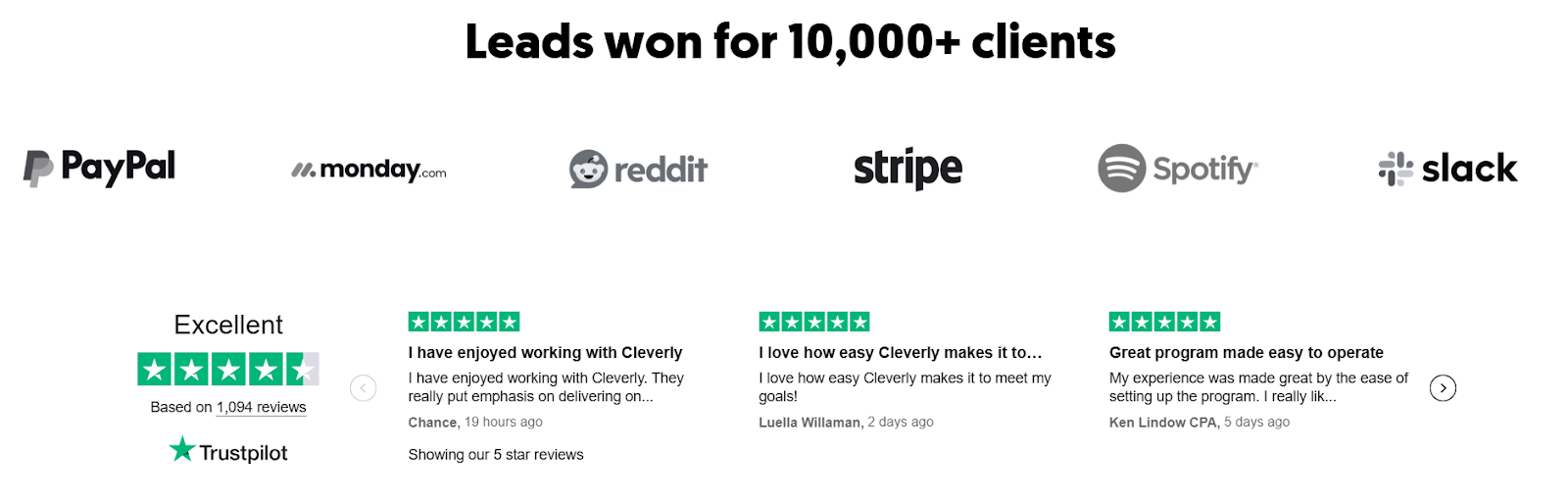
We've helped 10,000+ B2B clients build that kind of pipeline — generating $312M in pipeline and $51.2M in closed revenue across companies at every stage, from pre-revenue startups to growth-stage teams scaling before their first sales hire.
Our B2B lead generation services start at $397/month, which means you can have a real outbound engine running before you've built a sales team.
Want qualified meetings on your calendar so you can focus on closing, not prospecting? Book a free strategy call with Cleverly.
Conclusion
Founder-led sales is the highest-leverage sales motion available to an early-stage B2B company. No one sells the vision, the product, and the team better than the founder who built it — and no playbook you hand off to a sales rep will work unless you built it yourself first.
The 8-step framework — define your ICP, build a targeted list, pitch the problem not the product, qualify in discovery, demo outcomes not features, handle objections with founder authority, follow up with a real system, and document everything into a playbook — is a compounding asset.
Every conversation makes the next one better. Ninety days of structured selling will give you more clarity on what works than any sales consultant, any book, or any tool can substitute for.
The founders who master the sales motion before they hire are the ones who build companies that scale. Start closing.
Frequently Asked Questions
Free Resource
How to Scale a Profitable Cold Call System
Get the complete guide — download it instantly now.
Free Ebook
Download the Free Guide
Enter your details to get instant access.
You're all set! 🎉
Your ebook is downloading now.
Click below if the download didn't start automatically.