Table of Contents
What Is Revenue Enablement?
Revenue Enablement vs. Sales Enablement — What's the Difference?
Why Revenue Enablement Matters in 2026
Core Components of a Revenue Enablement Strategy
Revenue Enablement Strategies That Drive Results
Benefits of Revenue Enablement for B2B Businesses
How to Build a Revenue Enablement Function From Scratch
How Strong Pipeline Fuels Revenue Enablement Success
Conclusion
Frequently Asked Questions
Modified On :
July 21, 2026
Key Takeaways
- Revenue enablement isn't sales training with a new name. It's a structural shift that connects sales, marketing, and customer success around one shared revenue outcome instead of three separate scorecards.
- The strategy works because it raises the floor, not just the ceiling. Middle and lower performers close the gap with top reps when they get the same playbook, coaching, and content.
- A revenue playbook only stays useful if someone owns it and updates it every quarter. A stale playbook is worse than no playbook, because reps stop trusting it.
- Win-loss analysis is the highest-leverage, lowest-cost activity in the entire function. It feeds every other piece of enablement, from messaging to training to content.
- Enablement makes your existing pipeline convert better. It doesn't create pipeline. You still need enough qualified opportunities flowing in for any of this to show up in your revenue numbers.
Most B2B companies have a sales team. Fewer have a revenue enablement function. That gap shows up directly in win rates, ramp time, and quota attainment, and it's not subtle.
According to Gartner's research organizations that shift to revenue enablement are at least 75% more likely to exceed targets for seller revenue, cross-sell, and overall growth compared to teams stuck at the sales-enablement level.
Revenue enablement isn't a rebrand of sales training. It's a structural shift in how you equip every customer-facing team, not just reps, to drive growth that you can actually predict quarter over quarter.
This guide covers what revenue enablement is, how it's different from sales enablement, the core strategies that make it work, the measurable benefits, and how to build the function from the ground up.
If you're a sales leader, a RevOps lead, or a B2B executive trying to decide whether this is worth the investment in 2026, this is written for you.
What Is Revenue Enablement?
Revenue enablement is a cross-functional strategy that gives every customer-facing team, sales, marketing, and customer success, the tools, content, coaching, and data they need to engage buyers well and drive predictable revenue across the whole customer lifecycle.
The distinction that matters: revenue enablement is built around the customer journey, not the sales rep. Every touchpoint counts as part of the revenue system, from the first marketing impression all the way through post-sale expansion.
It covers content management, sales training and onboarding, coaching, technology alignment, performance measurement, and coordination between teams that historically didn't talk to each other much.
Why this matters right now: B2B buying committees average 6-10 stakeholders on enterprise deals. Buyers complete 60-70% of their research before they ever talk to a rep. And competition for attention keeps climbing. Consistent, coordinated execution across every revenue team isn't a nice-to-have anymore. It's the baseline.
📈 Alignment Doesn't Create Revenue—Pipeline Does
Generate 15–30 qualified meetings every month with Cleverly's done-for-you LinkedIn, cold email, and cold calling campaigns.
Revenue Enablement vs. Sales Enablement — What's the Difference?
Sales enablement focuses only on the sales team, reps and managers, and gives them content, training, and tools to close deals.
Revenue enablement widens that scope to every revenue-generating role: sales, marketing, SDRs, account managers, and customer success, all aligned around one shared goal.
Sales enablement asks: how do we make reps more effective? Revenue enablement asks: how do we make the entire customer-facing organization more effective?
In practice, revenue enablement breaks down the silo between what marketing promises, what sales delivers, and what customer success actually retains, so the buyer gets one consistent experience instead of three disconnected ones.
Why Revenue Enablement Matters in 2026
The Business Case — What the Data Says
The numbers back up what practitioners already feel in their pipeline reviews. Companies with formal sales or revenue enablement strategies see win rates roughly 9 percentage points higher than teams without one. 76% of companies see a 6-20% increase in sales after implementing a formal program.
Here's the part that gets overlooked: revenue enablement's biggest impact isn't on your top performers. It's on the middle and lower tier of your team. It raises the floor, not just the ceiling.
The Cost of Not Having a Revenue Enablement Strategy
Without it, reps ramp slowly. Messaging drifts between teams. Marketing and sales work from different playbooks without realizing it. Customer success inherits accounts with zero context about what was promised during the sales process.
The result is predictable: deals lost to competitors who showed up more prepared, higher rep turnover because there's no real development path, and weak retention because of handoff gaps between sales and CS.
Without a formal function owning this, the responsibility falls informally on sales managers who are already stretched thin, which means coaching becomes reactive instead of structured. And the cost compounds.
One quarter of poor enablement means one quarter of underperforming reps, and a pipeline that's harder to recover than it looks on the dashboard.
🚀 Build a Revenue Engine That Actually Scales
With 53,000+ meetings booked and $312M+ in pipeline generated, Cleverly helps 10,000+ businesses turn outbound into predictable growth.
Core Components of a Revenue Enablement Strategy
Content and Sales Collateral Management
Reps need a centralized, searchable library where they can find the right asset at the right deal stage: case studies, one-pagers, battlecards, proposal templates, objection handling guides.
Content should map to the buyer's stage. Awareness-stage assets go to SDRs. Evaluation-stage assets go to AEs. Decision-stage assets go toward closing the deal.
Run content audits at least quarterly. Outdated or off-message collateral actively hurts sales conversations, and most teams don't notice until a rep gets caught using it in front of a prospect.
Platforms like Highspot, Seismic, and Showpad exist specifically to surface the right asset automatically based on deal stage, industry, or persona.

Sales Training and Onboarding
A structured onboarding program gets new reps to their first deal within a defined timeframe. "Shadow a senior rep for a few weeks" is not a program, it's a hope.
A real curriculum covers product knowledge, ICP and buyer personas, competitive positioning, objection handling, sales methodology, and tool proficiency. Companies with formal onboarding programs cut ramp time by 30-50% compared to ad hoc approaches.
Pro tip: In 2026, AI-powered onboarding platforms like Mindtickle and Highspot use adaptive learning paths, role-play simulations, and quiz-based reinforcement to get new hires productive faster than a static slide deck ever could.

Coaching and Continuous Development
One-time training doesn't stick. Revenue enablement builds coaching directly into the sales motion: call reviews, deal strategy sessions, skill-specific workshops.
Conversation intelligence tools like Gong and Chorus record and analyze calls, surfacing coaching moments, flagging at-risk deals, and showing you exactly what your top performers do differently from everyone else.
In 2026, that's extended into real-time in-call coaching, automated post-call scorecards, and predictive alerts that flag a stalled deal before it's dead.
And this cuts both ways. Revenue enablement is as much about coaching managers to coach well as it is about training reps directly.
Technology and Tool Stack Alignment
The 2026 revenue enablement stack typically looks like: CRM (Salesforce, HubSpot) + sales engagement platform (Outreach, Salesloft) + content management (Highspot, Seismic) + conversation intelligence (Gong, Chorus) + intent data (6sense, Bombora) + a learning platform (Mindtickle, Allego).
A disconnected stack creates data silos, and reps end up manually updating five systems instead of selling. Your CRM should be the source of truth, with every other tool syncing into it so pipeline, rep performance, and buyer engagement all live in one place.
More tools isn't better. A tight, well-integrated stack beats a sprawling one that half your team doesn't use.

Performance Measurement and Revenue Intelligence
Revenue enablement is only as good as the data behind it. Instrument everything: content usage, training completion, call quality scores, pipeline velocity, win rate by segment.
Leading indicators worth tracking: ramp time to first deal, content engagement by stage, coaching session frequency, call quality scores. Lagging indicators: win rate, average contract value, quota attainment, net revenue retention.
Run systematic win-loss analysis on every closed deal, won or lost, to spot patterns: which messages win, which objections consistently cause losses, which competitors you're beating or losing to.
Cross-Functional Alignment — Sales, Marketing, and Customer Success
This is the feature that actually defines revenue enablement: it connects marketing (demand generation), sales (pipeline conversion), and customer success (retention and expansion) around shared revenue goals instead of separate departmental scorecards.
Set shared KPIs across all three: pipeline sourced, win rate, average deal size, time to close, net revenue retention. Run monthly cross-functional pipeline reviews with all three teams in the room, not three separate meetings producing three conflicting sets of priorities.
Build the feedback loop in both directions. Sales tells marketing what messaging actually resonates with buyers, so marketing can refine content. CS tells sales what customers actually use day to day, so sales stops overpromising during the pitch.
Revenue Enablement Strategies That Drive Results
Build a Unified Revenue Playbook
A revenue playbook is the single source of truth for every customer-facing team: ICP definition, buyer personas, stage-by-stage messaging, objection handling, competitive positioning, and process maps for each team.
A good playbook answers four questions clearly: who do we sell to, what problems do we solve for them, what do we say at each stage, and how do we handle every common objection.
The playbook has to stay a living document, updated whenever messaging gets tested, the ICP gets refined, or a competitor changes the landscape. The most common mistake teams make is building a great playbook once, then letting it go stale.
Assign ownership and put a quarterly review on the calendar, or it becomes shelfware within two quarters.
Implement AI-Powered Coaching and Training
AI coaching tools analyze call recordings and pull out specific, measurable coaching moments: talk-to-listen ratio, filler word frequency, objection handling quality, how often competitors get mentioned.
In 2026, real-time AI coaching from tools like Mindtickle and Highspot surfaces prompts during live calls. A competitor gets mentioned, and the relevant battlecard pops up automatically, no rep memory required.
The bigger shift is adaptive learning. AI identifies each rep's specific skill gaps and serves personalized training instead of running everyone through the same generic module regardless of where they actually struggle.
The outcome: reps get productive faster, bottom performers improve in ways you can measure, and top performers keep sharpening technique instead of plateauing.
Align Content to Every Stage of the Buyer Journey
Content marketing creates should map to specific deal stages and buyer roles, not get produced and dumped into a shared drive that nobody searches.
- Awareness stage (SDR use): short, insight-led content that opens conversations, industry stats, provocative points of view, original research.
- Evaluation stage (AE use): case studies, ROI calculators, competitive comparison guides, technical documentation.
- Decision stage (deal acceleration): proposal templates, security and compliance docs, procurement FAQs, executive summaries the champion can share internally.
Track which content actually gets used in deals and correlates with wins. Cut whatever doesn't get touched, no matter how much effort went into making it.
Establish Shared Revenue KPIs Across Sales, Marketing, and CS
Team-level metric silos create misaligned incentives fast. Marketing measures MQLs, sales measures quota attainment, CS measures CSAT, and nobody's actually optimizing for the same outcome.
Shared metrics everyone should own: pipeline generated, win rate, revenue closed, net revenue retention, customer lifetime value. Run shared pipeline reviews where marketing, sales, and CS look at the same numbers together monthly, which surfaces handoff gaps and attribution disagreements before they cost you a deal.
Where you can, align comp structures too. Reward CS for expansion revenue and marketing for pipeline that actually closes, not just leads generated regardless of quality.
Run Systematic Win-Loss Analysis
Win-loss analysis is one of the highest-ROI activities in the entire function, because it directly informs messaging, positioning, and competitive strategy.
Interview recently won and lost customers, or their champion, within 30 days of the deal closing. Recency gets you the most accurate answers before memory gets fuzzy.
Ask why you won or lost, what the buyer valued most, which competitors were in the mix, and what almost derailed the deal along the way. Then actually feed those findings back into the playbook, the training curriculum, and marketing's messaging. Skip that last step and you've just done market research nobody uses.
Benefits of Revenue Enablement for B2B Businesses
Higher Win Rates
Formal revenue enablement programs average win rates about 9 percentage points higher. That improvement comes from more consistent messaging, better objection handling, the right content showing up at the right deal stage, and faster reactions to competitive pressure.
A 9-point win rate improvement on a $10M pipeline is meaningful incremental revenue, and you didn't have to add a single new lead to get it.

Faster Rep Ramp Time
Structured onboarding and continuous training cut ramp time by 30-50% compared to informal, shadow-a-senior-rep approaches.
Faster ramp means an earlier first deal, earlier quota contribution, and a lower effective cost per rep over the year. This matters most at growth-stage companies hiring several reps at once. Standardized onboarding scales cleanly. Informal ramp does not.
Consistent Performance Across the Entire Team
The biggest systemic benefit is that it raises the floor, not just the ceiling. Bottom and middle performers improve measurably once they get structured playbooks, coaching, and the right content, which narrows the gap between your best and worst reps.
Top performers benefit too, through AI-assisted coaching and better tools that free them up to focus on the highest-value parts of their pipeline instead of administrative busywork.
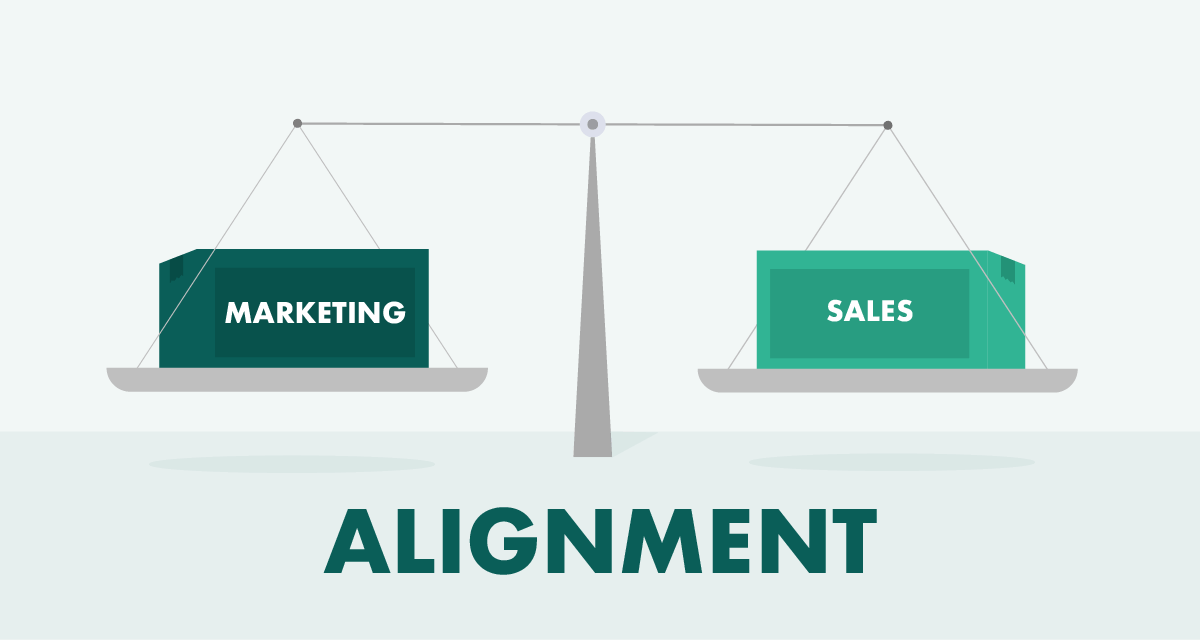
Stronger Sales-Marketing Alignment
Revenue enablement structurally fixes the sales-marketing handoff by making both teams accountable for pipeline quality and revenue outcomes together, not separately.
Marketing sees which content and campaigns actually produce SQLs and closed revenue, not just MQLs. Sales uses marketing's content with actual context, knowing which asset works at which stage, which kills the classic "I never use anything marketing makes" complaint. The result is less wasted content production and faster pipeline velocity.
Better Customer Retention and Expansion Revenue
Revenue enablement extends into customer success, giving CS teams the same level of content, training, and buyer context that sales gets.
CS teams with real deal context, what was promised, what pain was identified, what the buyer actually values, deliver better onboarding and drive higher retention. Enabled with cross-sell and upsell playbooks, competitive positioning, and ROI proof points, CS also generates real incremental revenue from accounts you already have.
Net revenue retention is the metric that ties it all together, and it's the one that separates sustainable SaaS growth from a business that's constantly replacing churned revenue with new logos.
How to Build a Revenue Enablement Function From Scratch
Step 1 — Audit Current State
Map what already exists: sales training, marketing content, onboarding programs, coaching cadences, tech tools. Find the gaps: where reps struggle, where content goes unused, where the sales-marketing-CS handoff breaks down. Benchmark current win rate, ramp time, quota attainment, and content usage as your baseline.
Step 2 — Define Scope and Ownership
Decide which teams are in scope at launch. Most organizations start with sales, then expand to marketing and CS in later phases. Assign a dedicated owner at manager or director level. Enablement owned by no one gets deprioritized by everyone. Define the charter clearly: what enablement owns versus what sales management owns versus what marketing owns.
Step 3 — Build the Foundational Tech Stack
Start with what you already have: CRM (non-negotiable), email and call tracking, basic content storage. Add conversation intelligence and a content management platform in phase two, then a learning platform. Integration is the priority. Every tool should feed the CRM so pipeline, performance, and content usage are visible in one place.
Step 4 — Build the Revenue Playbook
Start with ICP, buyer personas, and your messaging framework. These inform everything else. Document what your best reps actually do, not what the ideal process on paper says they should do. Build it out stage by stage, with templates and real examples at each one.
Step 5 — Measure, Iterate, and Expand
Set a 90-day checkpoint. Measure leading indicators (content usage, coaching frequency, training completion) and lagging indicators (win rate, ramp time, quota attainment). Share the results cross-functionally, because enablement's credibility comes from measurable impact, not activity metrics. Expand scope incrementally from sales into marketing and CS as each phase proves out.
How Strong Pipeline Fuels Revenue Enablement Success
Revenue enablement makes the pipeline you already have convert better. It doesn't create that pipeline in the first place. Even the best-enabled sales team can't hit target if the top of funnel is thin or full of leads that were never a real fit.
This is where a lot of enablement investments quietly underdeliver. A team gets a great playbook, solid coaching, and a clean tech stack, but there simply aren't enough qualified conversations coming in for any of it to show up in the revenue numbers.
We work with B2B teams on exactly this gap. Cleverly runs LinkedIn outreach, cold email, and cold calling to keep qualified prospects flowing into your pipeline, so an enabled sales team has enough volume to actually apply everything it's been trained to do.

Cleverly has generated over $312M in pipeline for more than 10,000 clients, including teams at Amazon, Google, Uber, PayPal, and Slack. A revenue-enabled sales team paired with a consistent, done-for-you pipeline is what turns enablement investment into a number your CFO actually sees.
See how Cleverly generates qualified pipeline for B2B sales teams!
Conclusion
Revenue enablement is the structural investment that turns a group of individual sales performers into a consistent, scalable revenue organization.
It comes down to six core pieces: content management, training and onboarding, coaching, technology alignment, cross-functional coordination, and performance measurement, all working together instead of living in separate departments.
The data backs it up. 9-point higher win rates, 76% of companies reporting a 6-20% revenue lift, 75% more likely to exceed targets according to Gartner.
The ROI compounds the longer the function runs. Start with an honest audit of where you stand today, assign someone real ownership, and build the playbook. Everything else follows from that foundation.
Frequently Asked Questions
Free Resource
How to Scale a Profitable Cold Call System
Get the complete guide — download it instantly now.
Free Ebook
Download the Free Guide
Enter your details to get instant access.
You're all set! 🎉
Your ebook is downloading now.
Click below if the download didn't start automatically.