Table of Contents
What Is a Sales Enablement Strategy?
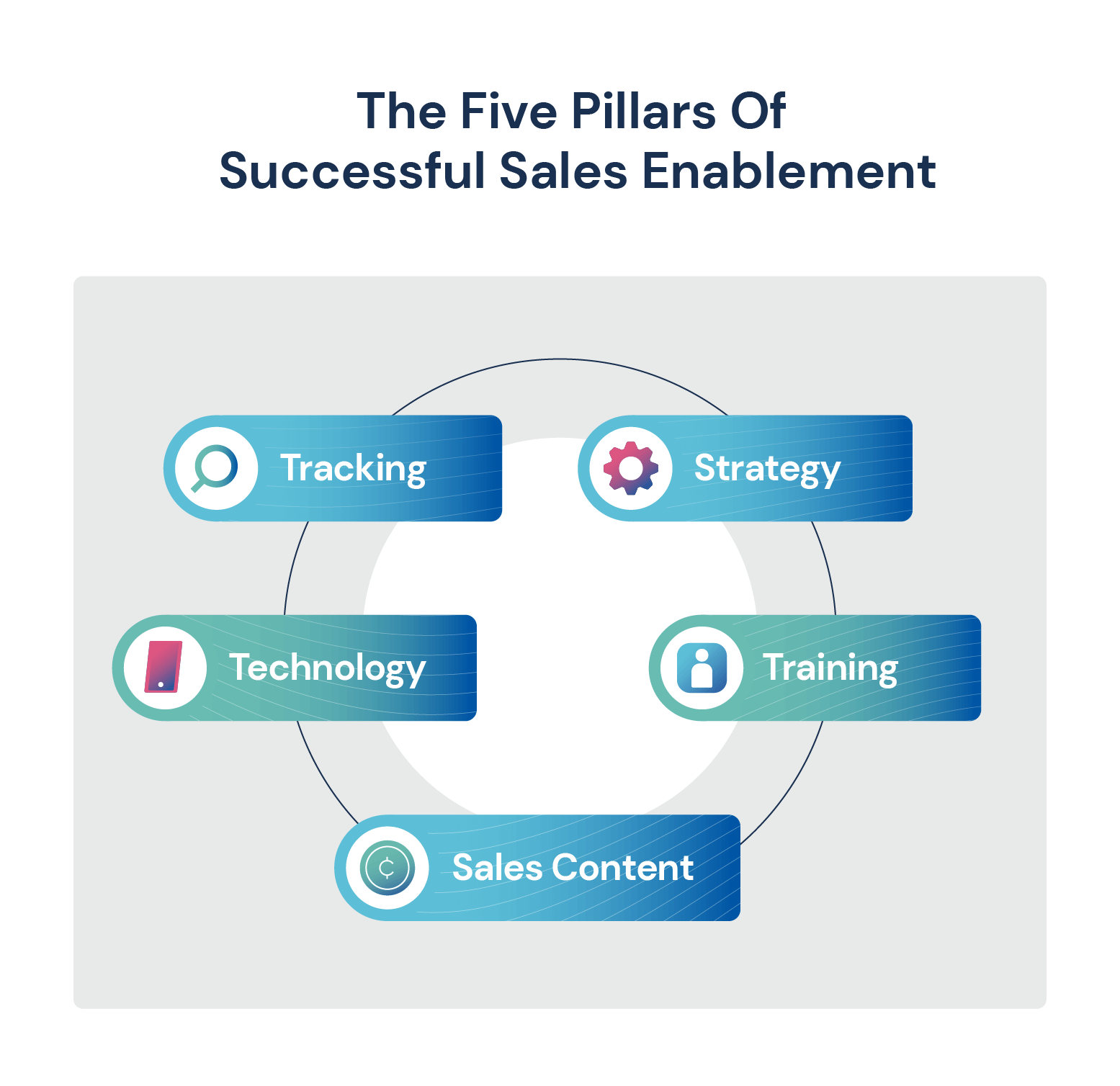
Core Pillars of an Effective Sales Enablement Strategy
Sales Enablement Content Strategy
Building a Sales Enablement Strategy Step by Step
How Sales Enablement Supports Lead Generation & Pipeline Growth
How Cleverly Supports Sales Enablement for B2B Teams
Frequently Asked Questions
Modified On :
August 31, 2026
Key Takeaways
- A sales enablement strategy aligns people, process, content, and systems to help reps close deals consistently
- Build enablement by role: SDRs need speed and scripts, AEs need discovery frameworks and battle cards, leadership needs data and coaching tools.
- Your sales enablement content strategy should focus on assets reps actually use.
- Map content to your real buyer journey, identify where deals stall, then build enablement that fixes those exact gaps with proven talk tracks and processes.
- Enablement only works with pipeline to enable - great lead conversion starts with having qualified opportunities your reps can actually close.
- Measure what matters: content usage, conversion rates at each stage, time-to-close, and rep feedback to continuously iterate and improve your system.
A rep can have a strong product, a healthy account list, and a full calendar, then still lose deals because the sales system breaks between stages. Discovery calls vary by rep. Useful case studies are buried in folders. Marketing and sales describe the same product differently. Managers coach from memory instead of call evidence.
That is a B2B sales enablement problem.
A B2B sales enablement strategy gives sellers the content, coaching, tools, data, and processes needed to handle complex buying decisions consistently. It connects prospecting, discovery, demos, objections, follow-up, and measurement so reps do not have to invent the next step while a deal is live.
After supporting more than 10,000 B2B clients, Cleverly has seen the same pattern repeatedly: pipeline volume matters, but teams convert more of it when reps have clear talk tracks, qualification standards, follow-up rules, and feedback loops.
This guide explains how to build that operating system by role, buyer stage, and measurable sales outcome.
What Is a Sales Enablement Strategy?
A sales enablement strategy is your playbook for giving reps everything they need to close deals - at the exact moment they need it.
It's built on four pillars:
- People: Who owns enablement (sales ops, RevOps, or dedicated enablement team).
- Process: Your sales methodology, from prospecting to close.
- Content: Case studies, battle cards, email templates, demo scripts.
- Systems: Your CRM, content library, coaching tools, and tech stack.
Where most teams get it wrong: They think sales enablement = sales training. It's not.
Sales training is a one-time event. You run a workshop, reps nod along, then forget everything by next week. Sales enablement strategies are ongoing systems that evolve with your buyers, market, and product.
Think of it this way - training teaches your rep how to run a discovery call. Enablement gives them the talk tracks, qualifying questions, objection responses, and follow-up sequences to actually nail that call every single time.
That's the difference between hoping your team improves and building a system that guarantees it.
Also Check: The Perfect B2B Sales Strategy to Close More Deals (Proven Methods)
🔥 Enable Your Sales Team With Leads
Cleverly fuels reps with LinkedIn, cold email, and cold calling leads—so sales focuses on closing, not prospecting.
Core Pillars of an Effective Sales Enablement Strategy
Your sales enablement strategy only works if it's built for how your team actually sells, not some generic framework pulled from a webinar.
Enablement by Role
Different roles need different support:
- SDRs: Scripts, objection handling, personalization frameworks, and daily call/email volume targets. They need speed and consistency.
- AEs: Discovery frameworks, demo flows, pricing conversations, and competitive battle cards. They need depth and flexibility.
- Leadership: Pipeline visibility, rep performance data, win/loss analysis, and coaching frameworks. They need insights to scale what works.
Cookie-cutter enablement fails because an SDR booking calls has completely different needs than an AE negotiating a $100K deal.
How Sales Enablement Changes as B2B Teams Scale
A small sales team does not need the same enablement structure as a company with dozens of SDRs and AEs. The operating model should become more formal as headcount, product complexity, and buying committees grow.
For an early-stage team, the founder or sales leader may own enablement directly. The first priorities should be documenting the ICP, sales messaging, discovery questions, qualification rules, and objection responses.
As the team grows, sales enablement should become a shared operating process across sales, marketing, and RevOps. This stage requires structured onboarding, content governance, recurring coaching, CRM standards, and clear ownership for every enablement asset.
Larger teams usually need a dedicated enablement owner. Their job is to keep training, content, coaching, and technology aligned while measuring whether reps adopt the system and improve sales outcomes.
Regardless of company size, avoid building the entire program at once. Start with the stage where deals stall most often, fix that problem, and expand the system after the result is measurable.
Cross-Functional Alignment
Your sales enablement strategy dies in silos. Here's what alignment actually looks like:
- Marketing creates content based on real objections sales hears daily.
- Sales feeds back which assets actually move deals forward.
- RevOps tracks what's working with data, not opinions.
When these teams operate independently, you get generic whitepapers no one reads and reps creating their own materials from scratch.
Clear sales and marketing alignment keeps campaign messaging, discovery language, and sales collateral consistent from first touch through close.
Systems That Actually Connect
Enablement content buried in Slack threads or scattered across Google Drives is useless. Your tech stack should give reps:
- One source of truth for all sales content.
- Real-time visibility into where deals stand.
- Automatic tracking of what content gets used and what closes deals.
If your AE can't find the right case study in under 30 seconds, your system's broken.
Sales Enablement Content Strategy
If you look closely, most sales enablement content strategies are just marketing assets with a new label slapped on them.
Your reps don't need another thought leadership eBook. They need content that helps them close deals right now.
What Sales-Enabling Content Actually Looks Like
Real sales enablement content strategy means building assets your team actually uses:
- Sales call scripts and talk tracks: Word-for-word openers, discovery questions, and transition phrases.
- Objection handling docs: Proven responses to "too expensive," "not the right time," "already using [competitor]".
- ICP briefs: Who you sell to, their pain points, buying triggers, and deal-breakers.
- Battle cards: Quick-hit competitor comparisons and differentiation points.
- Email templates: Personalized sequences for every stage (cold outreach, follow-up, nurture, breakup).
- Demo scripts: What to show, when to show it, and what questions to ask before diving in.
Notice what's missing? Generic PDFs about "industry trends" that sit in a folder untouched.
Sales Enablement Content and Copywriting
Sales enablement copywriting turns positioning into language reps can use during real buyer conversations. It should help sellers explain the problem, connect it to business impact, handle objections, and move the prospect toward a specific next step.
The highest-value sales enablement copy usually includes:
- Cold call and discovery talk tracks
- Prospecting and follow-up email templates
- Objection-handling responses
- Competitive battle cards
- Demo transitions and product explanations
- Case-study summaries by buyer pain point
- Proposal and next-step language
Write these materials using language taken from sales calls, customer interviews, CRM notes, and successful emails. Marketing language often sounds polished but fails during live conversations. Rep-tested language is more direct because it reflects how buyers actually describe their problems.
Review sales copy quarterly and whenever the offer, ICP, pricing, or competitive landscape changes. If reps consistently rewrite a template before using it, treat that as evidence that the original version needs work.
Content Mapped to the Buyer Journey

Your sales enablement content strategy should match how buyers actually move through your pipeline:
- Prospecting stage: Cold call scripts, LinkedIn messages, pain-point-driven emails
- Discovery stage: Qualifying frameworks, needs assessment questions, multi-threading guides
- Demo stage: Product walkthroughs, use case examples, ROI calculators
- Negotiation stage: Pricing justification docs, case studies, executive summaries
If you're handing AEs prospecting content during contract negotiation, you're wasting their time.
How Enablement Content Supports Consistent Discovery Calls
Enablement content makes discovery calls consistent by giving every rep the same minimum standard without forcing them to follow a rigid script. The goal is not to make every conversation identical. It is to ensure every rep collects the information needed to qualify the opportunity and recommend the right next step.
A useful discovery-call kit should include:
- A pre-call brief with account context and known stakeholders
- Required questions covering pain, impact, decision criteria, timing, and budget
- Role-specific prompts for users, managers, technical evaluators, and economic buyers
- Qualification rules for advancing, nurturing, or disqualifying an opportunity
- A CRM recap template for priorities, objections, commitments, and next steps
- Call clips showing how experienced reps ask follow-up questions
Managers should review calls against the same framework. This creates a feedback loop where missed questions become coaching topics and recurring objections become new enablement content.
Use a documented sales call structure as the foundation, then adapt the questions and proof points to each role in the buying committee.
Keep It Fresh and Findable
The best content is useless if reps can't find it or it's outdated. Your system needs:
- One central hub: CRM-integrated library or dedicated enablement platform
- Regular audits: Review quarterly based on win/loss data and rep feedback
- Easy search: Reps should find what they need in seconds, not scroll through 47 folders
Dead content kills momentum. If that objection response hasn't worked in 6 months, update it or delete it.
Know More: Multithreading in Sales - The Complete Guide to Closing More Deals
🚀 From Enablement to Revenue
We power your sales stack end-to-end and deliver meeting-ready leads you only pay for—turning strategy into predictable pipeline.
Building a Sales Enablement Strategy Step by Step
You don't need a fancy sales enablement strategy template, you need a clear process. Here's how we build one that actually drives revenue.
B2B Sales Enablement Framework
A practical B2B sales enablement framework follows seven stages:
- Define the outcome: Choose the sales result you need to improve, such as ramp time, discovery conversion, win rate, or sales-cycle length.
- Map the buyer journey: Document how opportunities progress and which stakeholders appear at each stage.
- Identify execution gaps: Find where reps lack the right skills, content, data, or tools.
- Build role-specific support: Create different resources for SDRs, AEs, managers, and other customer-facing roles.
- Place resources in the workflow: Make content and guidance available inside the tools reps already use.
- Reinforce the behavior: Use call reviews, role-play, certifications, and manager coaching.
- Measure the outcome: Compare adoption, rep behavior, and sales performance against the original baseline.
The framework should begin with a measurable sales problem, not a new tool. If the team cannot name the problem, baseline, target, and accountable owner, the enablement plan is not ready to launch.
Step 1: Map Your Buyer Journey and Sales Stages
Start with how deals actually flow through your pipeline:
- What stages does every deal go through? (Prospecting → Discovery → Demo → Proposal → Close)
- What questions do buyers ask at each stage?
- Where do deals typically stall or die?
Your sales enablement strategy template should mirror your real sales process, not some theoretical funnel.
Step 2: Identify the Gaps
Pull your team together and audit what's breaking:
- Where are reps winging it because they don't have the right content?
- What objections keep coming up that we don't have good answers for?
- Which stage has the worst conversion rate?
Look at your data: if 60% of deals die after demo, your demo enablement is the problem. Fix the biggest leak first.
Step 3: Align Content, Scripts, and Messaging
Now build the assets that fix those gaps:
- Create talk tracks for every stage
- Write objection responses based on what actually works
- Build templates for every email and call scenario
- Ensure messaging is consistent across SDRs, AEs, and customer success
Pro tip: Don't write this in a vacuum. Use language and examples from your best reps' actual calls.
Step 4: Enable Execution with Systems
Content doesn't work if reps can't access it. Set up:
- Centralized content library (integrated with your CRM)
- Automated sequences and email templates
- Call recording and coaching tools
- Slack channels or daily standups for quick enablement wins
Make enablement frictionless. If finding a battle card takes 5 minutes, reps won't use it.
Step 5: Measure and Iterate
Your sales enablement strategy template isn't set-it-and-forget-it. Track:
- Content usage: What's getting opened? What's ignored?
- Conversion rates: Are deals moving faster through each stage?
- Rep feedback: What's actually helping close deals?
Review monthly. Kill what's not working. Double down on what is.
Pair enablement adoption data with the B2B sales KPIs leadership already reviews so the program stays tied to pipeline and revenue outcomes.
How Sales Enablement Supports Lead Generation & Pipeline Growth
You can work with the best lead generation agency in the world, but if your reps can't convert those leads into meetings, you're burning money.
Here's the reality: lead quality matters, but what your team does with those leads matters more.
Lead Quality Alone Won't Save You
We see this constantly: companies invest in outbound campaigns, buy intent data, or hire a lead generation agency, then wonder why pipeline stays flat.
The problem isn't the leads. It's what happens after they respond:
- SDR sends a generic calendar link with zero context.
- Rep waits 3 days to follow up on a hot reply.
- Discovery call feels like an interrogation instead of a conversation.
Great leads die from poor execution. Every single day.
Enablement Fixes Your Response-to-Meeting Rate
A solid sales enablement strategy bridges that gap between lead and booked meeting:
- Fast follow-up frameworks: Reps know exactly what to send within 2 hours of a reply.
- Personalization at scale: Templates with room for customization based on lead source and intent.
- Qualification scripts: SDRs ask the right questions to book qualified meetings, not just any meeting.
When your team has proven talk tracks and immediate next steps, response rates jump. We've seen teams go from 8% response-to-meeting conversion to 25%+ just by tightening up their enablement.
The Pipeline Predictability Connection
Here's where enablement becomes a revenue multiplier:
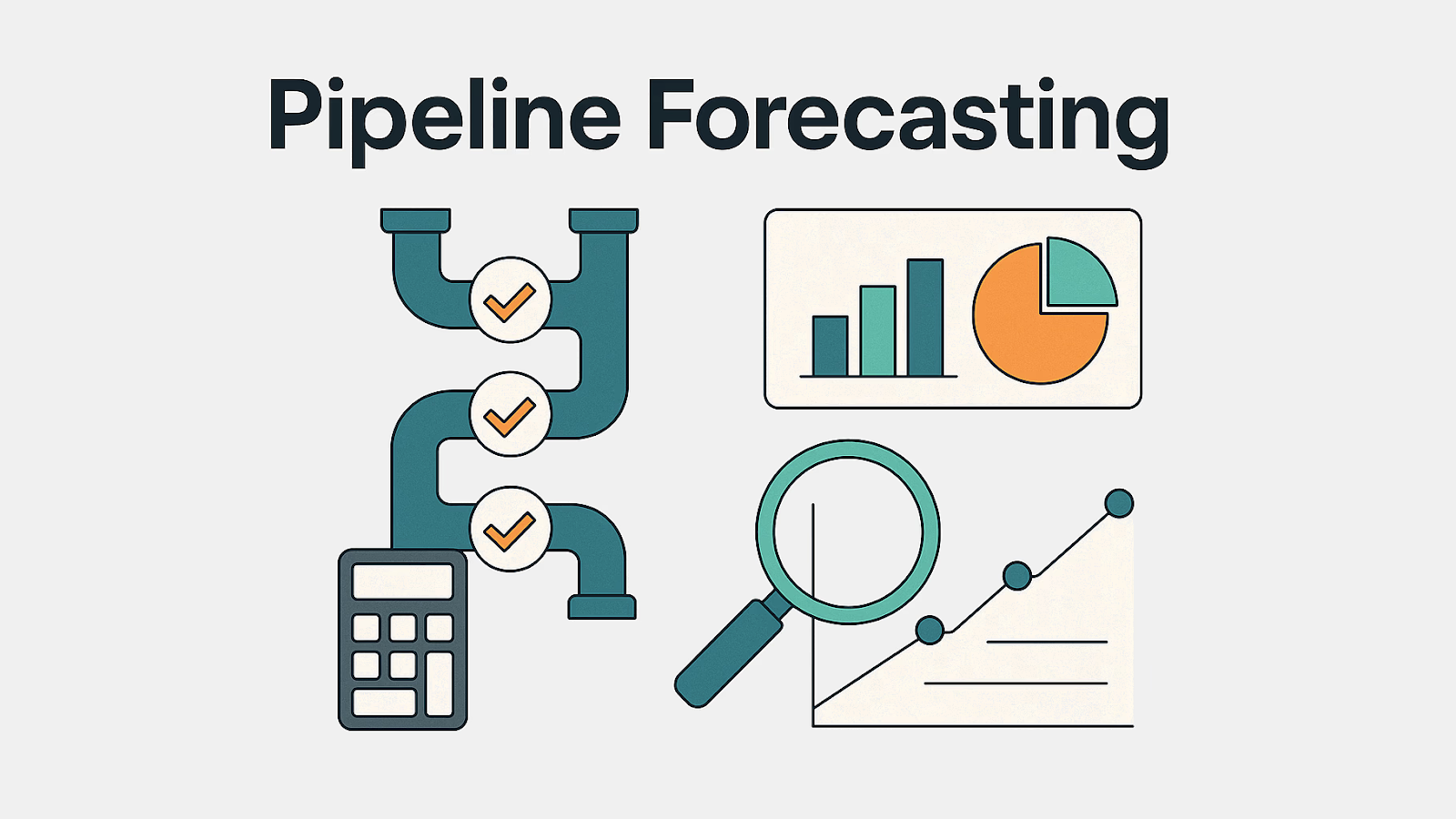
Without it, your pipeline is chaos—some reps crush it, others struggle, and you have no idea why. With enablement, you create a repeatable system that turns leads into pipeline consistently.
You know exactly how many leads you need to hit quota. You know your conversion rates at each stage. And when something breaks, you know where to fix it.
That's the difference between hoping for a good quarter and engineering one.
Better discovery, stakeholder coverage, and follow-up can shorten the sales cycle by reducing repeated conversations and late-stage surprises.
How Cleverly Supports Sales Enablement for B2B Teams
You can't enable your sales team if your pipeline's empty.
That's where we come in. At Cleverly, we don't just send leads—we send meeting-ready opportunities that your reps can actually close.
We Fill Your Pipeline While You Build Enablement
As a lead generation agency, we've helped 10,000+ B2B teams (including Amazon, Google, Uber, PayPal, Slack, and Spotify) generate consistent pipeline through three proven channels:
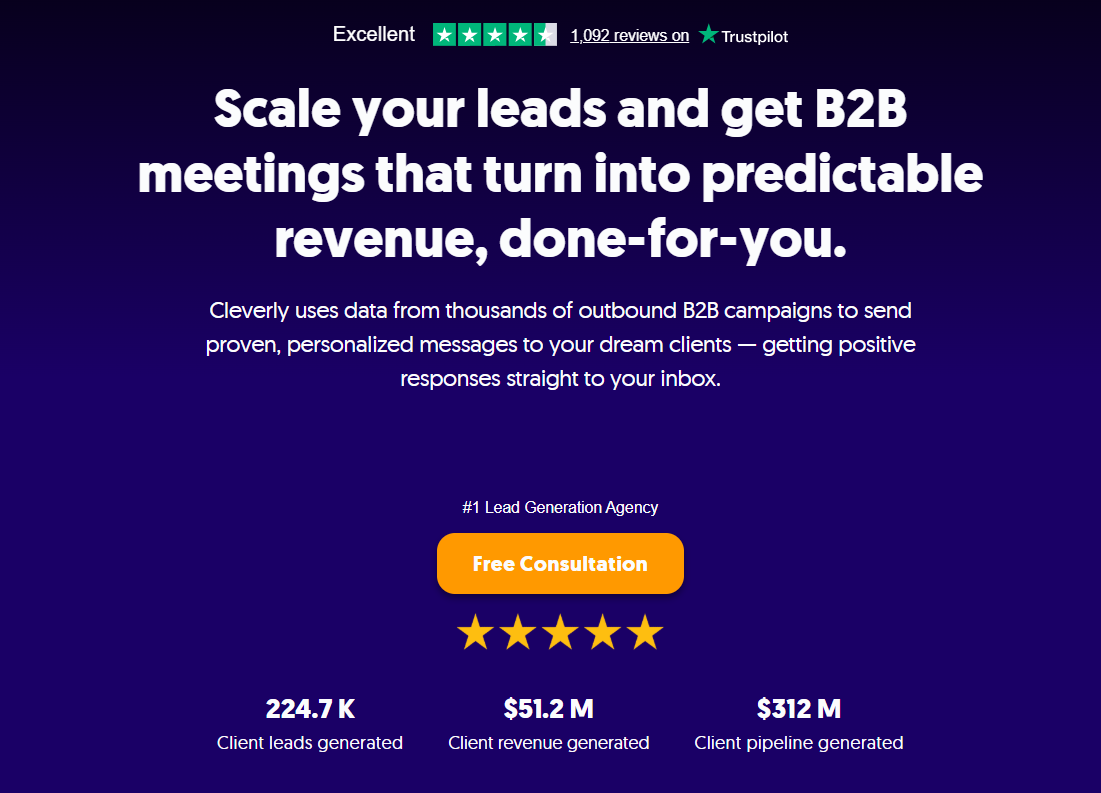
🚀 LinkedIn Outreach – Starting at just $397/mo, we run personalized campaigns that generated $312M in pipeline revenue and $51.2M in closed deals for our clients.
🚀 Cold Email Lead Gen – You only pay for meeting-ready leads we deliver. No wasted spend on unqualified contacts.
🚀 Cold Calling Lead Generation – Our $5M system places a trained, no-accent appointment setter who books 10-30 qualified sales calls per month—guaranteed. We've made 1M+ cold calls, set 53K appointments, and generated $312M in pipeline. If we don't hit your targets, we replace your SDR.
Why B2B Teams Choose Us
- Half the cost of building an in-house SDR team.
- Guaranteed results or we make it right.
- Meeting-ready leads, not just names in a spreadsheet.
- Proven scripts and systems that work across industries.
Your team doesn't need more "leads." They need qualified conversations with buyers who actually fit your ICP. That's what we deliver!
Ready to fill your pipeline? Let's talk about which channel fits your goals!

Conclusion
A sales enablement strategy works when it changes what reps do during real opportunities. That requires more than a content library or an annual training session. Reps need clear standards, accessible resources, regular coaching, and feedback tied to sales outcomes.
Start with the point where deals stall most often. Build the content and process needed to fix that problem, assign an owner, and measure whether rep behavior and conversion improve.
Once that system works, expand it across other roles and sales stages. The result is a B2B sales team that runs more consistent conversations and converts more of the pipeline it already has.
Frequently Asked Questions
Free Resource
How to Scale a Profitable Cold Call System
Get the complete guide — download it instantly now.
Free Ebook
Download the Free Guide
Enter your details to get instant access.
You're all set! 🎉
Your ebook is downloading now.
Click below if the download didn't start automatically.