Table of Contents
What Is a Revenue Intelligence Tool?
What to Look for in the Best Revenue Intelligence Tools
Quick Comparison: Top 10 Revenue Intelligence Tools
10 Best Revenue Intelligence Tools in 2026
How to Choose the Right Revenue Intelligence Tool for Your Team
How Cleverly Helps B2B Teams Generate the Pipeline That Revenue Intelligence Tools Depend On
Conclusion
Frequently Asked Questions
Modified On :
June 3, 2026
Key Takeaways
- A revenue intelligence tool goes well beyond your CRM — it captures, analyzes, and surfaces insights from every sales interaction to improve forecasting, deal execution, and rep performance.
- Gartner predicts that by 2026, over 60% of B2B sales teams will use ML-derived intent scoring as a core component of pipeline qualification — making these tools a category you can't afford to ignore.
- The best tool for your team depends on your primary pain point: conversation intelligence, forecasting accuracy, or deal risk visibility.
- Revenue intelligence only works when you have qualified pipeline feeding into it — without consistent meetings hitting the CRM, even the best platform becomes a dashboard of empty fields.
- This guide covers the top 10 revenue intelligence tools for 2026, what each does best, who it's built for, and how to choose the right one.
Your CRM has a pipeline problem — and it's not your reps' fault.
62% of sales reps say stale data has cost them a deal. Only 29% of revenue teams have a formal data quality process. That gap is where pipeline disappears. Deals slip, forecasts miss by 20%+, and managers spend half their week chasing status updates instead of coaching.
Revenue intelligence tools close this gap by automating data capture, continuously scoring deal health, surfacing early-warning signals, and giving every stakeholder — from frontline reps to CROs — a real-time view of what the pipeline actually looks like.
The difference between a CRM and a revenue intelligence platform is significant. A CRM records what your reps tell it. A revenue intelligence platform captures everything — calls, emails, meetings — and tells you what it means for your forecast before you lose the deal.
This guide breaks down the 10 best revenue intelligence tools in 2026: what they do, who they're built for, honest pricing context, and the real tradeoffs.
Whether you're running a 10-person sales team or managing a 200-rep org, there's a tool on this list that fits your situation.
What Is a Revenue Intelligence Tool?
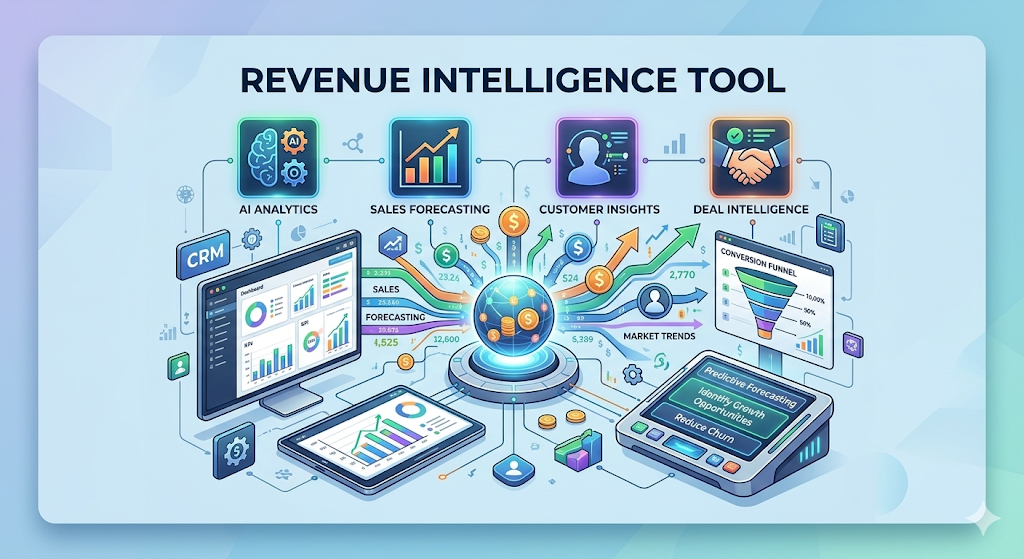
A revenue intelligence tool is a platform that automatically captures sales activity data — calls, emails, meetings, CRM updates — and uses AI to surface insights that help teams forecast more accurately, close deals faster, and coach reps more effectively.
Revenue intelligence platforms pull from CRM to understand where deals stand and how they're trending. But CRM data alone is incomplete. Missing contacts, outdated titles, and company changes create blind spots. Revenue intelligence platforms deliver value through core capabilities that turn data into action.
The core capabilities most platforms cover:
- Conversation intelligence — recording, transcription, and AI analysis of calls and meetings
- Pipeline forecasting — AI-driven predictions at the rep, team, and company level
- Deal risk scoring — flags at-risk deals before they slip off the forecast
- CRM activity capture — auto-logs rep activity so your data actually reflects reality
- Rep coaching tools — surfaces what top performers do differently
AI has made these tools dramatically more capable in 2025 and 2026. What used to require manual review of call recordings now happens automatically — and the insights go directly into the workflow, not a dashboard nobody checks.
Who needs one: sales teams with 5+ reps, deal cycles longer than two weeks, and any meaningful forecasting accountability. If your VP of Sales is still working off gut feel and spreadsheet math, a revenue intelligence platform changes that fast.
📈 Want Better Forecasts? Start With More Opportunities.
We run LinkedIn, cold email & calling campaigns end-to-end. More qualified meetings. More pipeline. More predictable growth.
What to Look for in the Best Revenue Intelligence Tools
Before comparing specific platforms, get clear on what your team actually needs. Here's what separates the best tools for revenue intelligence from the ones that become shelfware:
Conversation Intelligence Depth
Does the platform just record calls, or does it identify what matters in them? Look for AI that flags competitor mentions, pricing objections, next-step gaps, and buyer sentiment — not just a transcript.
Pipeline Visibility and Deal Risk Scoring
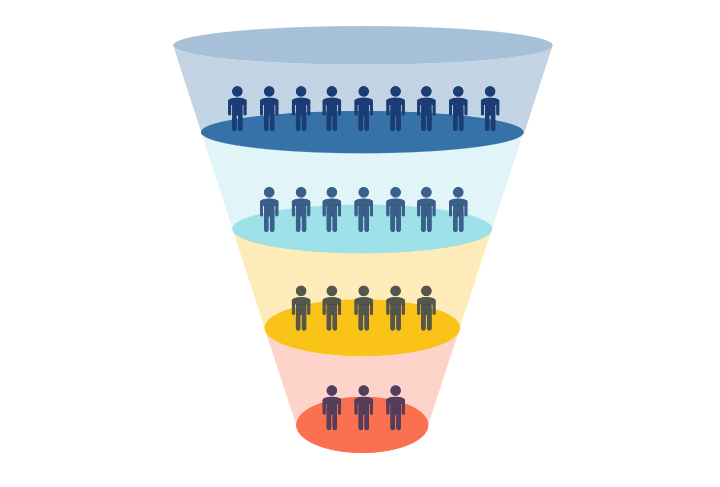
Can managers see in real time which deals are at risk, single-threaded, or stalling? The best platforms surface this automatically — no rep input required.
Forecasting Accuracy
Look for AI-driven predictions that account for historical deal patterns and rep behavior, not just what's in the CRM pipeline. The difference between a tool with "forecasting" and one with genuinely accurate forecasting is measurable in quota attainment.
CRM Integration Depth
Bidirectional sync with Salesforce or HubSpot is non-negotiable. If activity captured in the tool doesn't push clean data back into your CRM, you're creating two sources of truth — which is worse than one bad one.
Coaching and Rep Performance Features
Scorecards, call playlists, AI feedback, and manager dashboards. These features determine whether the tool actually changes rep behavior or just gives leadership something to look at.
Time to Value
Some platforms go live in days. Others take months of implementation. Know which one you're signing before the contract goes to legal.
Pricing Transparency
A lot of enterprise tools in this category require demo calls just to see pricing. That's fine — but factor it into your evaluation timeline and push for clear per-seat numbers before you get two weeks into a procurement process.
Quick Comparison: Top 10 Revenue Intelligence Tools
Quick orientation:
- Call-intelligence-focused: Gong, Chorus.ai, Jiminny, Revenue.io
- Forecasting-focused: Clari, Revsure.ai
- Full-stack (engagement + intelligence): Salesloft, Outreach, Revenue Grid
- CRM automation layer: People.ai
Transparent pricing available (at least partially): Jiminny, Revenue Grid, Revenue.io. Everything else requires a demo.
🚀 Revenue Intelligence Is Useless Without Revenue
The best insights in the world won't create pipeline by themselves. We turn data into booked meetings through done-for-you outbound.
10 Best Revenue Intelligence Tools in 2026
1) Gong
Best for: Conversation intelligence and deal execution
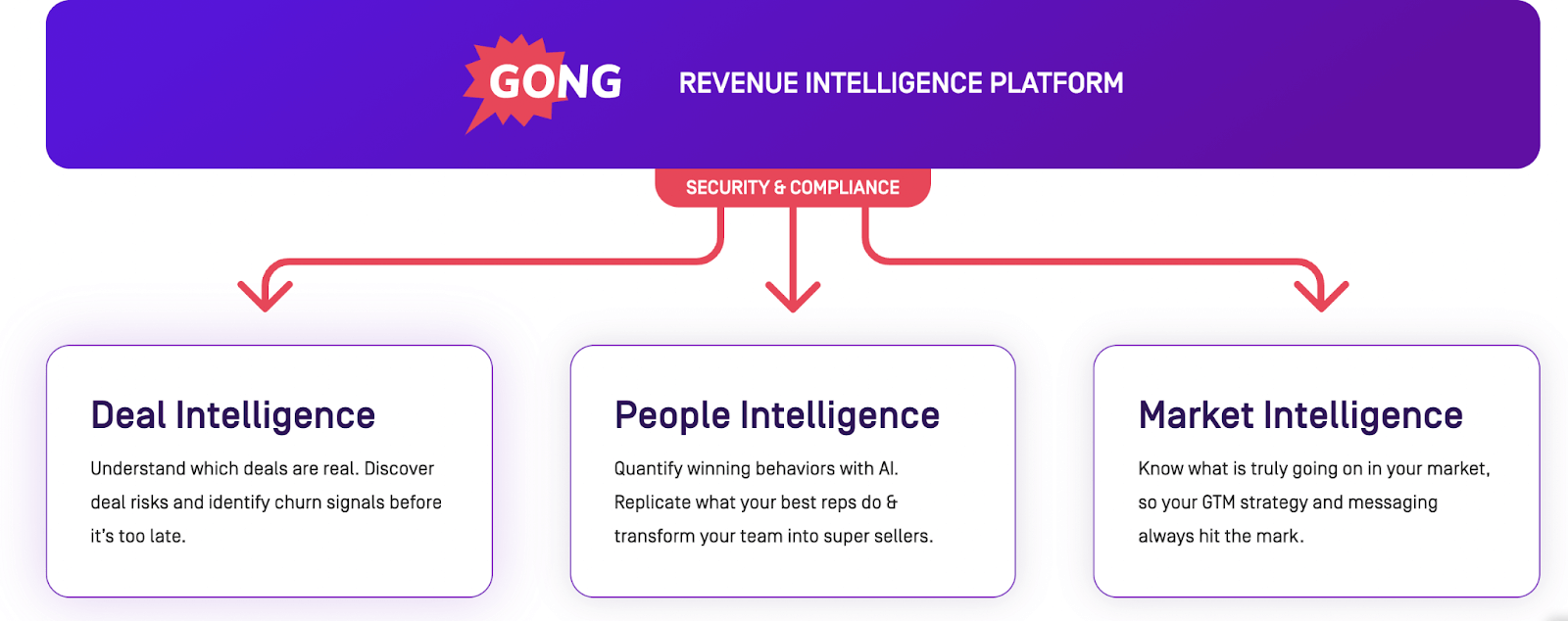
Gong is the category leader — and for good reason. It records, transcribes, and analyzes every sales interaction across calls, video meetings, and emails, then uses AI to surface what actually matters: deal risks, competitor mentions, pricing objections, and gaps in next steps.
Key features:
- AI conversation analysis across calls, emails, and meetings.
- Gong Forecast: AI-powered pipeline predictions at the rep and team level.
- Deal intelligence dashboards for RevOps and sales managers.
- Coaching tools including scorecards, call snippets, and rep-level performance tracking.
- Deep integrations with Salesforce, HubSpot, Outreach, and Salesloft.
Standout capability: The conversation AI is genuinely best-in-class. Gong doesn't just transcribe — it identifies objection patterns, sentiment shifts, and buying signals across every call automatically. Managers stop watching recordings and start acting on structured insight.
Pricing: Gong does not publicly list prices, but based on industry sources and proposals, Gong pricing runs $5,000 (base fee) plus $1,600 per user per year for teams under 50. For a 10-person team, expect $21,000+ annually before add-ons.
Limitations: It does not tell you who to call next. No buying signal detection, no lead enrichment, no outbound triggers. Revenue teams need both the analysis layer and the pipeline generation layer. And the platform fee plus per-seat costs make the effective price $300–$500 per user per month for small teams.
Best for: Mid-market and enterprise sales teams with 50+ reps, a healthy call volume, and the budget to match.
2) Clari + Salesloft
Best for: Revenue forecasting and pipeline orchestration
Clari and Salesloft announced a definitive agreement to merge in August 2025, forming what they called a Revenue AI powerhouse. The combined company serves over 5,000 organizations globally with $10 trillion in annual revenue under management.
In practice, this means you're getting Clari's forecasting depth combined with Salesloft's sales engagement and conversation intelligence in a single (though still integrating) platform.
Key features:
- AI-powered forecasting at the rep, team, and company level.
- Pipeline inspection with deal health scoring and engagement signals.
- Sales engagement (sequences, cadences, dialer) via Salesloft.
- Conversation intelligence through Salesloft Conversations.
- Salesforce and HubSpot integration.
Standout capability: Forecasting confidence. For VP of Sales and RevOps leaders who need to commit to a number, Clari's forecasting models have been the most trusted in the enterprise category for years.
Pricing: The combined Clari-Salesloft platform runs $200 to $310 per user per month or more when Forecast, Copilot, and Groove are bundled.
Limitations: The merger raised questions from Forrester around product overlap, with the firm noting it "raises more questions than answers" from a product standpoint. Platform unification is expected "over the coming years." Teams that need only one capability — forecasting or engagement — may be paying for a lot they won't use.
Best for: Enterprise revenue teams running complex forecasting motions who want a single platform to manage both engagement and pipeline intelligence.
3) People.ai
Best for: AI-powered pipeline intelligence and CRM automation
People.ai solves a specific and extremely common problem: your CRM data is wrong because reps don't log activity. The platform auto-captures every email, call, and meeting and maps it to the right accounts and opportunities in Salesforce — no rep input required.
Key features:
- Automatic activity capture from email, calendar, calls, and meetings.
- AI-powered deal health scoring based on engagement data.
- Buyer engagement visibility — who's engaged, who's ghosting, and what's changed.
- MEDDICC scorecard support for enterprise qualification frameworks.
- PeopleGlass: a spreadsheet-like interface for bulk Salesforce updates.
Standout capability: The activity data layer. Companies like OpenAI, ClickUp, Notion, Databricks, and Palo Alto Networks rely on People.ai to power trillions of dollars in pipeline and revenue. When reps know activity is captured automatically, behavior shifts — and so does CRM data quality.
Pricing: People.ai pricing starts at approximately $23K per year median, placing it at roughly $50–100 per user per month — mid-range for the enterprise category.
Limitations: Deep Salesforce dependency. Teams not on Salesforce or with smaller rep bases will find it over-engineered for their needs. CRM automation is the core use case — it's not a standalone coaching or forecasting platform.
Best for: Enterprise sales teams with 50+ reps and significant CRM data quality problems that undermine forecasting.
4) Revenue Grid
Best for: Guided selling and revenue intelligence combined
Revenue Grid takes a different angle from most tools in this category. It's not just about surfacing what's happening — it tells reps and managers what to do next. That shift from insight to action is the core differentiator.
Key features:
- Revenue Signals: automated alerts that recommend specific actions to advance deals.
- AI-powered deal health scoring and pipeline inspection.
- Salesforce-native bidirectional sync with full activity capture.
- Sales engagement (sequences, cadences, multi-channel outreach).
- Team performance dashboards and coaching tools.
Standout capability: Guided selling. Most revenue intelligence tools show you a problem. Revenue Grid tells you how to fix it — with specific, next-action recommendations at the deal level.
Pricing: Revenue Grid pricing starts at $30 per user per month for Activity Capture 360 and goes up to $149 per user per month for the Ultimate plan. Most advanced features including forecasting, cadences, and deal guidance are locked in the $149 tier.
Limitations: The full feature set requires the top-tier plan, which adds up quickly for larger teams. Teams not on Salesforce will face significant integration friction.
Best for: Salesforce-heavy sales teams that want actionable deal guidance alongside pipeline intelligence — not just dashboards.
5) Chorus.ai (by ZoomInfo)
Best for: Call-based revenue intelligence and rep coaching
Chorus was one of the original conversation intelligence platforms. Now fully embedded in ZoomInfo, it gives sales teams deep call analysis combined with ZoomInfo's contact data — making it a natural fit for teams already in the ZoomInfo ecosystem.
Key features:
- Automatic call recording and transcription across Zoom, Teams, and phone.
- Smart Trackers: flags pricing discussions, objections, competitor mentions, and next steps.
- Talk-to-listen ratio analysis and question tracking.
- Coaching playlists: managers can clip and share best-in-class call moments.
- ZoomInfo data integration for richer buyer context inside call data.
Standout capability: ZoomInfo integration. Having contact intelligence and firmographic data surfaced inside your call analysis is a real workflow advantage — you know who's on the call and what their company looks like without switching tools.
Pricing: Chorus Platform Access typically starts around $8,000 per year for up to three seats, with additional seats around $1,200 per user per year billed annually.
Limitations: Chorus AI by ZoomInfo remains a strong solution for call recording, transcription, and post-call coaching — but many sales organizations require more than retrospective analysis. They need tools that connect conversations directly to pipeline outcomes.
Best for: Sales teams already using ZoomInfo for data who want call intelligence without buying a separate platform.
6) Jiminny
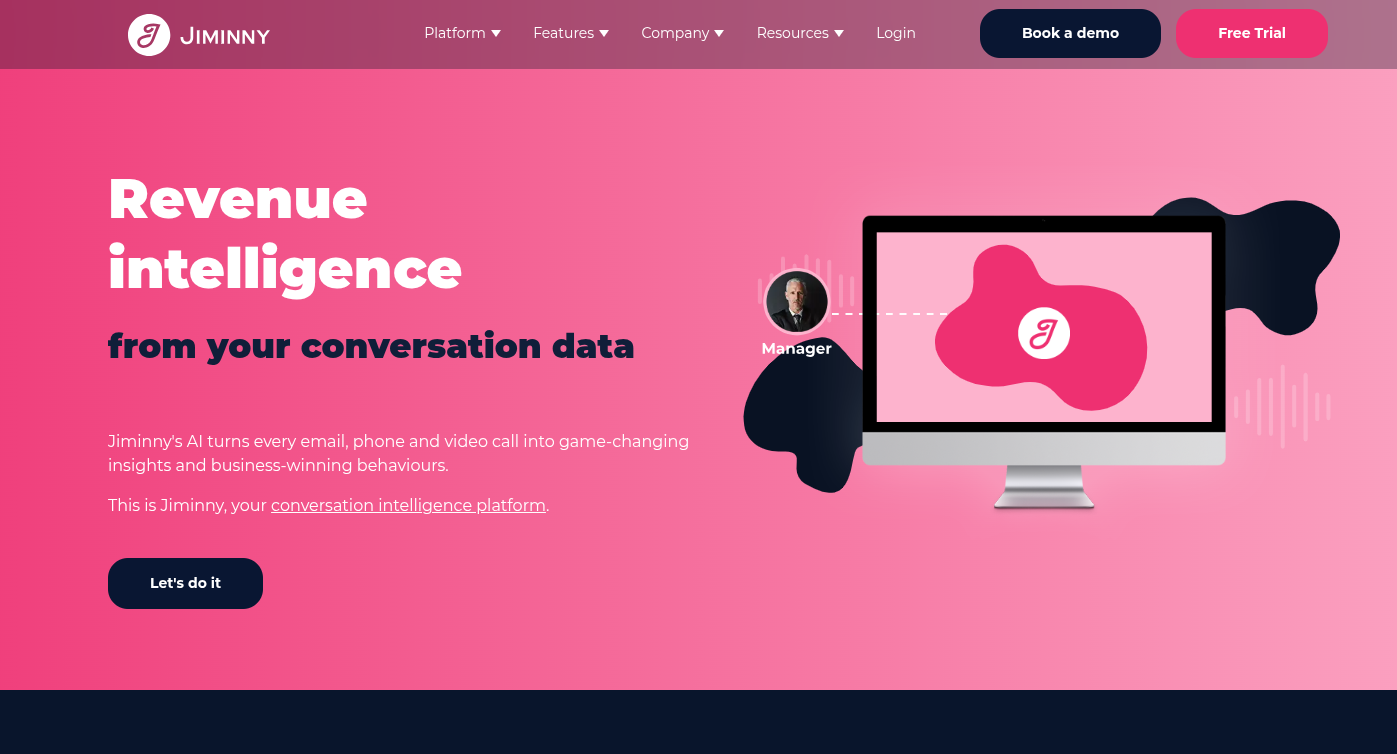
Best for: Conversation intelligence for growing B2B sales teams
Jiminny is what you evaluate when you want Gong-quality conversation intelligence without Gong-level pricing. It's a coaching-first platform that records, transcribes, scores, and analyzes calls — then syncs everything back to your CRM automatically.
Key features:
- Call recording, transcription, and AI scoring across phone, video, and email.
- Automated CRM sync (Salesforce and HubSpot) — no manual logging.
- Deal hub: connects call activity to pipeline stages and surfaces gaps.
- Incognito coaching: managers can observe and coach reps live without the prospect knowing.
- Team performance dashboards and coaching playlists.
Standout capability: The incognito coaching feature is genuinely unique. No other major player in this category offers live, invisible coaching — and for ramping reps, it's a meaningful accelerator.
Pricing: Jiminny is priced at approximately $85 per user per month with no mandatory platform fees, delivering strong conversation visibility at a fraction of enterprise pricing from Gong or Chorus. A 14-day free trial is available.
Limitations: Teams that need pipeline forecasting depth or advanced revenue intelligence should look upmarket — Jiminny is a conversation intelligence and coaching platform, not a full forecasting stack.
Best for: Fast-growing SMB and mid-market sales teams who want high-quality call intelligence and coaching tools without enterprise complexity or pricing.
7) Revenue.io (RingDNA)
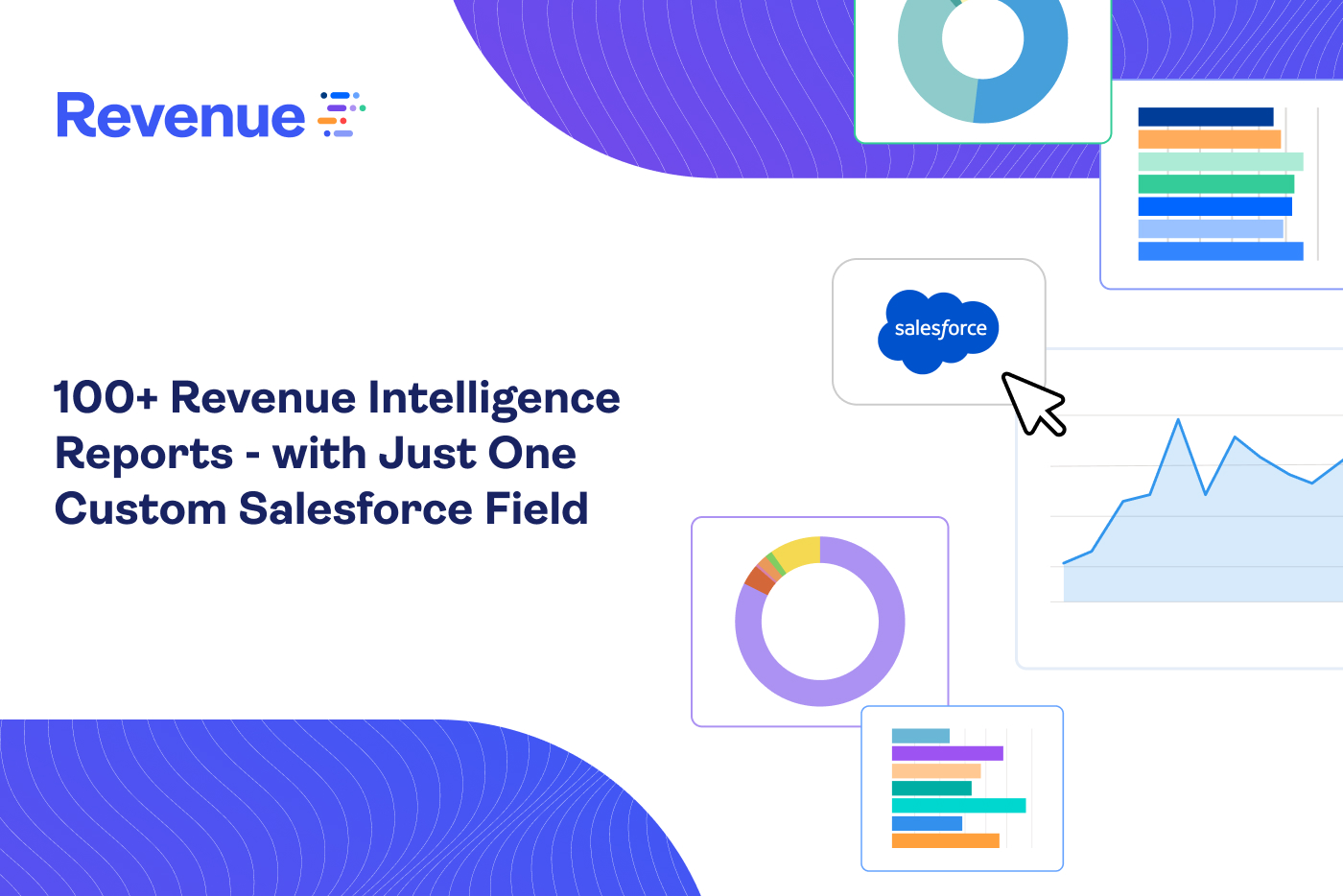
Best for: Real-time sales coaching during live calls
Revenue.io has a capability no other platform in this list matches: it coaches reps in real time, mid-call. Not after the call. Not in a recap email. During the conversation — when coaching can actually change the outcome.
Key features:
- Moments™: AI-triggered real-time coaching prompts during live calls.
- Full conversation intelligence suite: recording, transcription, and post-call analytics.
- RingDNA Salesforce-native dialer with local presence.
- Guided Selling cadences with multi-channel sequence support.
- Revenue Intelligence dashboards and forecast analyzer built in Salesforce.
Standout capability: Moments™ real-time coaching is genuinely differentiated. Gong is primarily post-call analysis. Revenue.io prompts reps during the conversation. For ramping SDRs, that's a meaningful difference — the coaching happens when it can actually change the outcome of a deal, not after the prospect already hung up.
Pricing: The median contract lands at $59,460 per year across 20 verified purchases. It carries a 4.7/5 on G2 from 574 reviews. Entry pricing starts around $95/user/month.
Limitations: Heavily Salesforce-dependent. Teams not on Salesforce will not get the same experience. Best justified for teams with high outbound call volume — the real-time coaching advantage doesn't apply to low-volume email-heavy motions.
Best for: Inside sales and high-volume outbound teams on Salesforce where in-call coaching directly impacts connect rates and discovery quality.
8) Salesloft
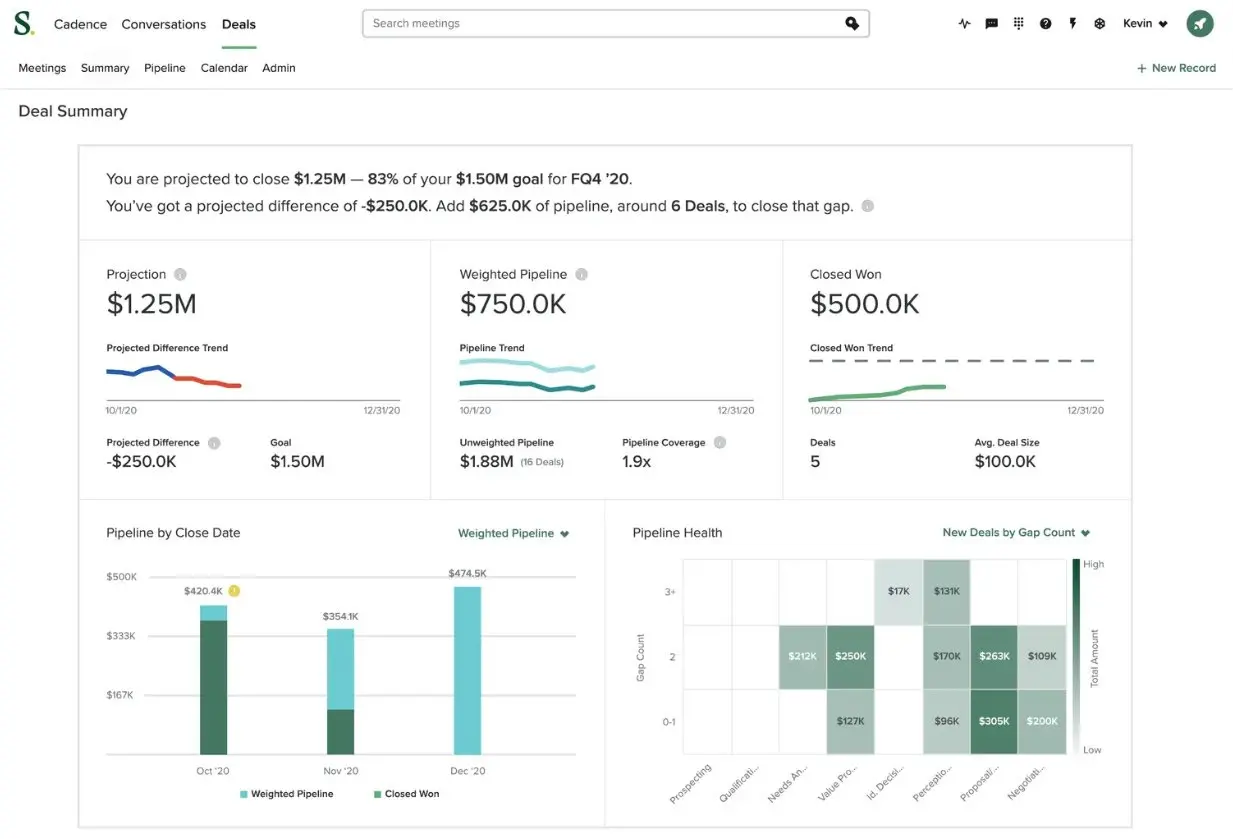
Best for: Sales engagement with built-in revenue intelligence
Salesloft merged with Clari in late 2025, combining $10 trillion of revenue under management and positioning itself as a full revenue orchestration platform. As a standalone product, Salesloft is known for its sales engagement depth — and the intelligence layer has grown significantly.
Key features:
- Salesloft Conversations: call recording, transcription, and conversation intelligence.
- Rhythm: AI-powered signal-to-action workflow that prioritizes rep activities by revenue impact.
- Pipeline management and deal health scoring.
- Sequences, cadences, dialer, and email integration.
- Forecasting (via Clari integration post-merger).
Standout capability: Rhythm. It takes signals from across the platform — call outcomes, email engagement, deal stage — and surfaces the highest-priority actions for each rep each day. Less "what happened," more "what do next."
Pricing: Enterprise tier with modular pricing. Expect $100–$200+ per user per month depending on modules. Custom quotes required.
Limitations: The Clari merger means you're buying into an integration roadmap, not a finished product. Teams evaluating Salesloft today should ask hard questions about which features are native vs. still being connected.
Best for: Teams looking for a unified sales engagement plus revenue intelligence stack — and willing to buy into the long-term vision of the combined Salesloft + Clari platform.
9) Outreach (Kaia + Revenue Intelligence)
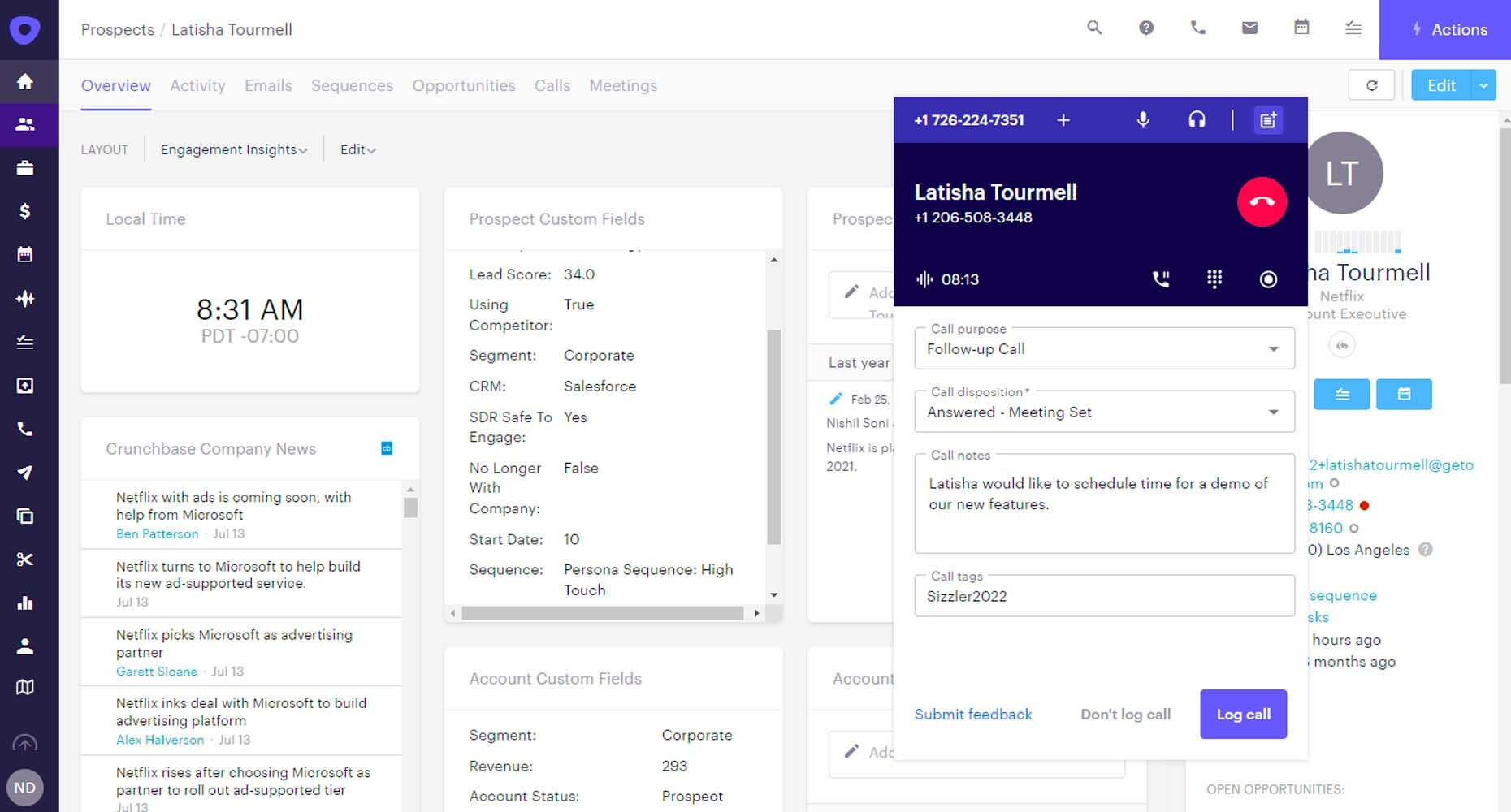
Best for: Outreach revenue intelligence for enterprise sales teams
Outreach has been the dominant enterprise sales engagement platform for years. Its revenue intelligence capabilities — centered on Kaia, its real-time AI meeting assistant — have matured significantly, making it a credible full-stack option for teams already on the platform.
Key features:
- Kaia: real-time AI assistant that surfaces battlecards, answers, and coaching cues during live calls.
- Deal health scoring with AI-driven risk identification.
- Success Plans: collaborative deal management workspaces shared between rep and buyer.
- Outreach Commit: AI-powered forecasting with pipeline signal integration.
- Deep Salesforce and HubSpot integration.
Standout capability: Kaia joins live meetings, transcribes in real time, and surfaces Content Cards triggered by competitor mentions or pricing questions during the call — not after it. Combined with Outreach's sequencing engine, it's a strong full-cycle platform for enterprise teams.
Pricing: Outreach with Kaia sits in the mid-tier range of $1,200–$1,800 per user per year depending on modules — custom quotes required.
Limitations: Outreach's deal intelligence is strong for enterprise complexity but requires significant setup and admin. The intelligence is better at managing existing deals than identifying new pipeline opportunities.
Best for: Enterprise sales teams of 50+ reps already using Outreach for engagement who want revenue intelligence baked into the same platform.
10) Revsure.ai
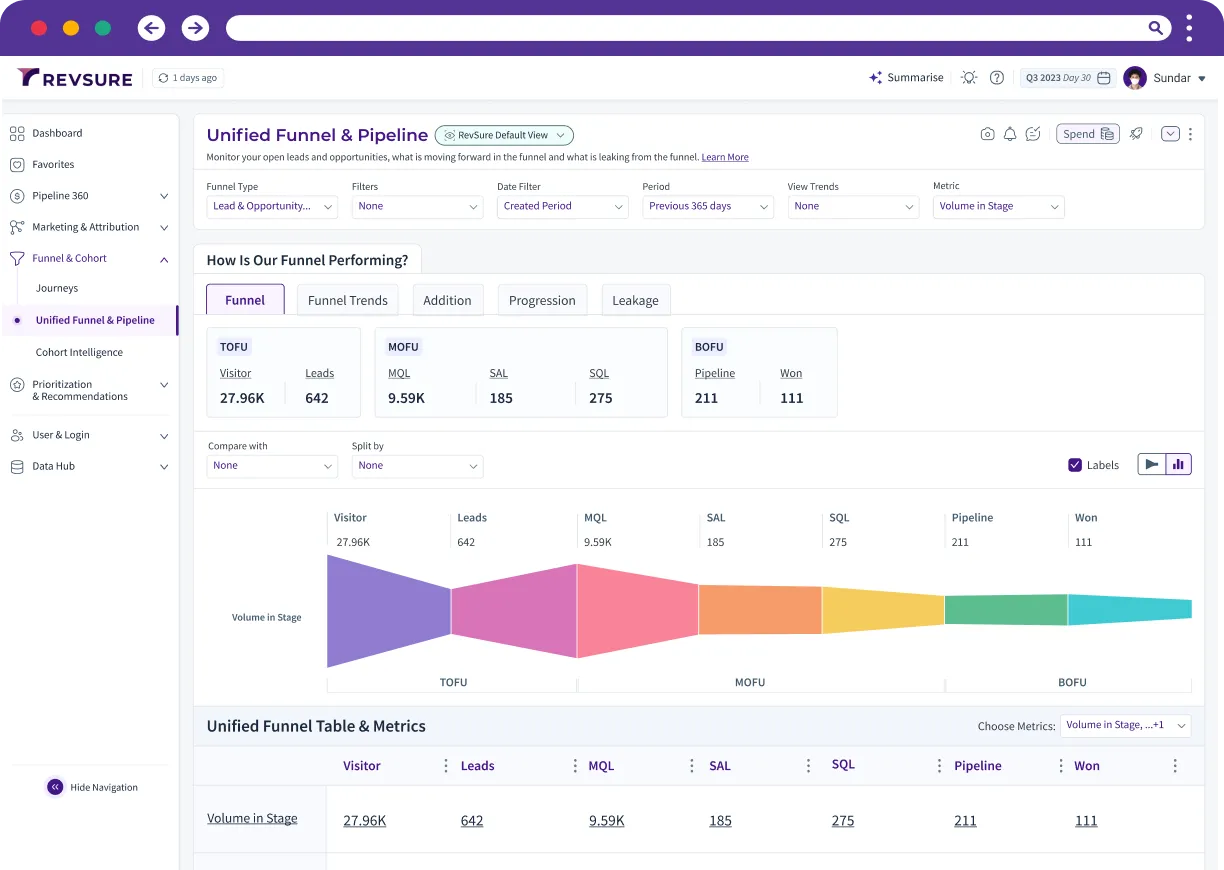
Best for: Pipeline prediction and revenue forecasting for B2B teams
Revsure.ai is an AI-native platform built specifically for pipeline-to-revenue prediction and full-funnel attribution. It answers a question most tools don't: where exactly do deals accelerate, stall, or die — and what's driving it?
Key features:
- AI-powered pipeline flow analysis by stage, rep, and segment.
- Multi-touch attribution across inbound and outbound channels.
- Full-funnel visibility connecting marketing activity to closed revenue.
- Pipeline health scoring with early-stage risk indicators.
- Connects CRM and marketing automation data in a unified revenue view.
Standout capability: Full-funnel attribution. Revsure focuses on account-level attribution and revenue analytics, reconstructing the buyer journey across channels, helping teams understand how marketing and sales efforts contribute to revenue. RevOps and demand gen teams who want to tie top-of-funnel campaigns directly to closed deals will find this particularly useful.
Pricing: Mid-market to enterprise pricing. Demo required. The platform needs 1–2 years of historical CRM and marketing automation data to train its models effectively, so it's a better fit for established teams than early-stage orgs.
Limitations: Not a conversation intelligence tool — Revsure is a forecasting and attribution layer. Teams needing call analysis or coaching should pair it with a dedicated CI platform.
Best for: RevOps and demand generation teams building forecasting infrastructure and needing full-funnel pipeline visibility from first touch to closed revenue.
How to Choose the Right Revenue Intelligence Tool for Your Team
You don't need the most expensive platform. You need the one that solves your actual problem.
Step 1: Define your primary pain point

Every tool in this category covers multiple capabilities, but most are strongest at one thing. Narrow it down:
- Struggling with forecast accuracy? Start with Clari or Revsure.ai.
- Reps need coaching? Look at Gong, Jiminny, or Revenue.io.
- Deals are slipping with no warning? Revenue Grid and People.ai are built for that.
- Want one platform for engagement and intelligence? Salesloft or Outreach.
Step 2: Audit your existing stack
What CRM are you on? What engagement tools are already in place? An outreach revenue intelligence tool should layer on top of your existing workflow, not require you to rip and replace a stack that's already working.
Tools like People.ai and Revenue.io are Salesforce-native — if you're on HubSpot, shortlist accordingly.
Step 3: Match the tool to your team size and motion
Some tools are genuinely enterprise-only. Others are built for smaller, faster-moving teams. Spending $300/user/month on a 5-rep team that doesn't have the call volume to justify it is a fast way to create expensive shelfware.
Step 4: Evaluate integration depth carefully
Bidirectional CRM sync sounds basic. But poor integration means activity data lives in the tool while your CRM stays stale — defeating the whole purpose. Ask every vendor for a specific walkthrough of their Salesforce or HubSpot sync, not just a feature checklist.
Step 5: Pilot before committing
Most platforms in this category will offer a demo, trial, or pilot. Take them up on it. Run it on a defined set of deals or a specific rep cohort. Measure two things: adoption rate and one concrete outcome (forecast variance, call quality score, deal progression rate).
🚩 Red flags to avoid:
- Tools that require replacing your full engagement stack with no clear migration path.
- Platforms with no transparent pricing that can't give you a ballpark until week three of the procurement process.
- Vendors who sell the AI story but can't show you actual model accuracy numbers from your industry.
How Cleverly Helps B2B Teams Generate the Pipeline That Revenue Intelligence Tools Depend On
Revenue intelligence tools are powerful — but they're only as useful as the pipeline feeding into them. A forecasting platform with 12 open opportunities and no consistent new meetings coming in isn't a forecasting problem. It's a pipeline problem.
This is the gap most teams miss when they invest in a revenue intelligence tool: the platform analyzes deals, but it can't create them. If your reps aren't generating a steady flow of qualified meetings, the dashboards are just showing you a slower version of what you already know.
That's exactly where Cleverly comes in.
We're a fully done-for-you lead generation agency that builds and runs outbound systems across LinkedIn outreach, cold email, and cold calling — so your team has consistent, ICP-matched meetings hitting the CRM every week.
We've helped 10,000+ B2B clients generate pipeline with companies including Amazon, Google, Uber, PayPal, Slack, and Spotify.
The way it works: we handle ICP targeting, verified contact data, personalized outreach sequences, and ongoing optimization. You get qualified meetings on the calendar. Your revenue intelligence platform then does what it's built to do — track, score, forecast, and coach around pipeline that's actually there.
We've generated $312M in pipeline revenue for our clients across LinkedIn and cold email alone. LinkedIn lead gen starts at $397/month. For cold calling, our $5M Cold Calling System books 10–30 qualified sales calls per month with a dedicated appointment setter trained and live within two weeks.
The loop that drives predictable revenue growth is simple: consistent outbound pipeline in, revenue intelligence doing its job on the other side.
Ready to fill your pipeline with qualified meetings? Book a strategy call with Cleverly

Conclusion
Revenue intelligence is no longer a nice-to-have for B2B sales teams. It's the difference between guessing at your forecast and actually knowing where it's going to land.
The right tool depends entirely on your team's specific problem — not which platform has the best demo or the most name recognition. Start with your biggest pain point, match it to the tools built for that use case, and pilot before you commit.
Better data in, better decisions out — and paired with consistent outbound pipeline from a source like Cleverly, that's how you build revenue you can actually count on.
Frequently Asked Questions
Free Resource
How to Scale a Profitable Cold Call System
Get the complete guide — download it instantly now.
Free Ebook
Download the Free Guide
Enter your details to get instant access.
You're all set! 🎉
Your ebook is downloading now.
Click below if the download didn't start automatically.