Table of Contents
What Is Multi-Touch Attribution?
Why Multi-Touch Attribution Matters in B2B
Common Multi-Touch Attribution Models (And What They Miss)
The Real Problem: B2B Buying Is Multi-Touch and Multi-Channel
Why Attribution Breaks Down in Outbound & Revenue-Led Growth
What B2B Teams Should Measure Instead of "Perfect Attribution"
How Cleverly Approaches Multi-Touch Attribution in B2B Outbound
Conclusion
Frequently Asked Questions
Modified On :
September 9, 2026
Key Takeaways
- Multi touch attribution tries to credit multiple interactions, but no model perfectly captures complex B2B buying journeys.
- B2B deals involve long cycles, multiple stakeholders, and offline conversations that attribution tools can't track.
- Common multi touch attribution models (linear, time-decay, U-shaped, W-shaped) all have limitations and miss critical context.
- Outbound channels like LinkedIn, email, and calls work together as a system, not as competing touchpoints fighting for credit.
- Focus on account-level engagement, qualified conversations, and pipeline influence instead of chasing perfect attribution percentages.
- Use attribution as a directional signal to spot patterns, not as absolute truth for budget decisions.
You closed a deal last month. Great. But which touchpoint actually did the heavy lifting?
Was it the LinkedIn message that started the conversation? The follow-up email with the case study? Or that phone call where your rep finally addressed their budget concerns?
Multi touch attribution in B2B is messy. Most companies are still crediting the last click or the first touch, while the real buyer journey involves 7, 10, sometimes 15 interactions across multiple channels.
We're not buying shoes online here. We're talking about six-figure contracts with procurement teams, multiple stakeholders, and months-long sales cycles.
The problem isn't that you're bad at tracking. The problem is that B2B buying doesn't happen in a straight line. And most attribution models weren't built for that reality.
Let's break down why measuring what actually worked is harder than it looks, and what you can do about it.
The real problem with all these models
What Is Multi-Touch Attribution?
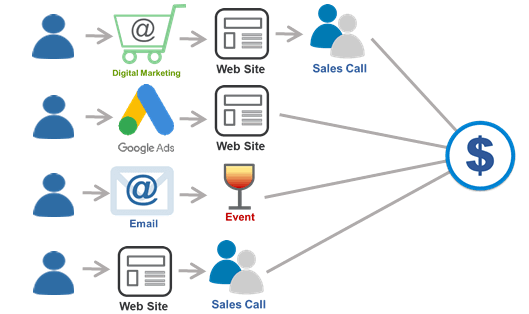
Multi touch attribution marketing is the practice of assigning credit to multiple customer interactions that lead to a conversion, instead of just one.
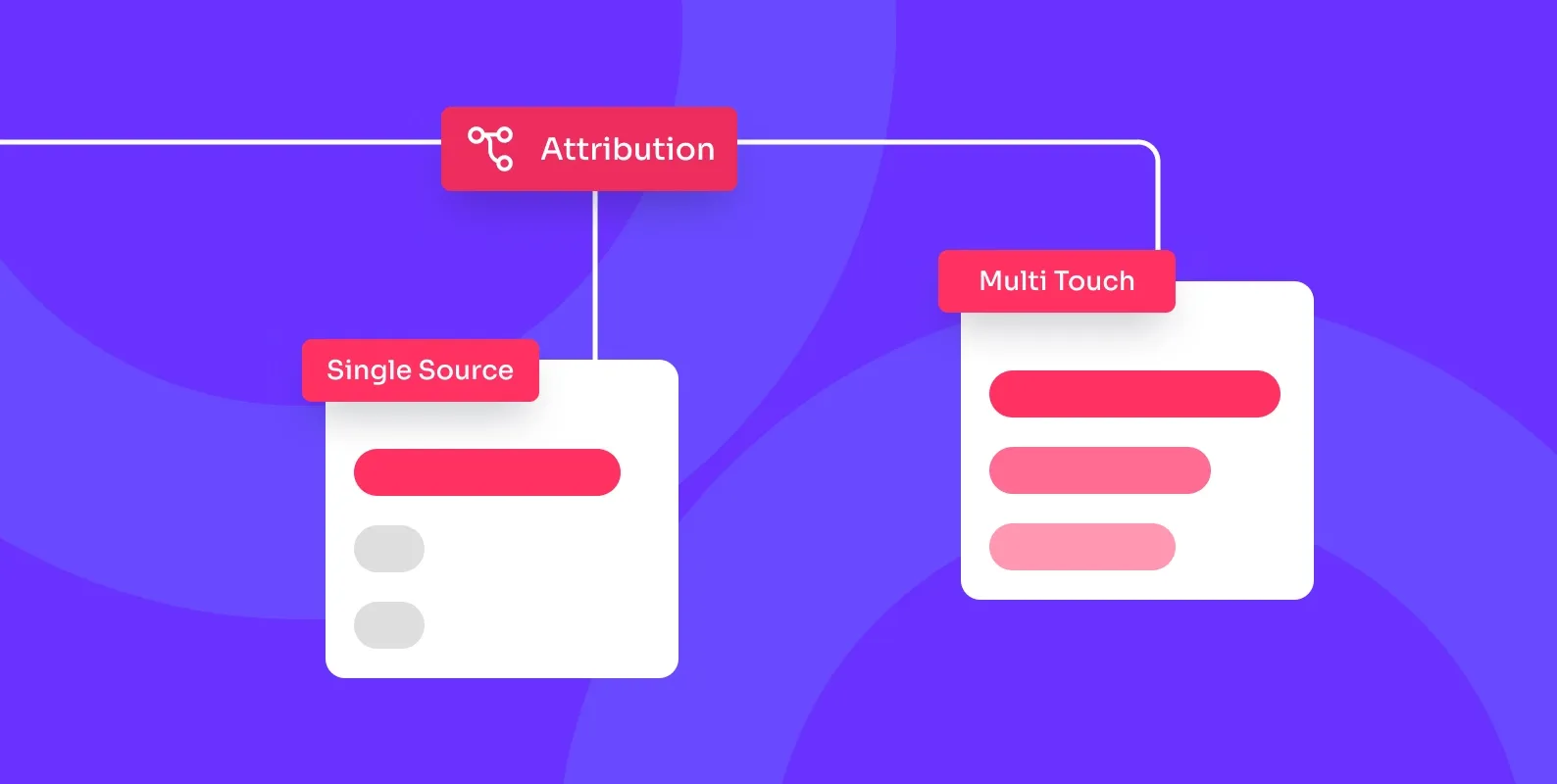
Think of it this way: single-touch attribution says "this one thing closed the deal." Multi touch attribution says "actually, it was a combination of things."
Here's the difference:
- Single-touch models give 100% credit to one touchpoint (usually the first or last interaction).
- Multi-touch models spread credit across several touchpoints that influenced the decision.
Why does this matter in B2B?
Because your prospects don't just see one thing and buy. They interact with you multiple times across different channels before they're ready to talk.
It might seem like your webinar moved the needle. Or was it SEO that helped attract organic prospects? You’ll never know unless you actually track your touchpoints.
Common B2B touchpoints include:
- LinkedIn outreach and InMail messages
- Cold email sequences
- Sales calls and discovery meetings
- Paid ads (LinkedIn, Google, display)
- Website content (blogs, case studies, whitepapers)
- Webinars and demos
- Retargeting campaigns
Multi touch attribution exists because B2B buyers need multiple proof points before committing. They're not impulse buying. They're researching, comparing, getting internal buy-in, and checking references.
Your job is to figure out which interactions actually moved the needle.
The challenge? Most attribution models still can't tell you that accurately.
Also Check: Perfect B2B Sales Strategy to Close More Deals (Proven Methods)
📊 Track Every Touchpoint. Close More Deals.
Cleverly executes across LinkedIn outreach, pay-per-meeting cold email, and guaranteed cold calling, so attribution connects directly to booked meetings.
Why Multi-Touch Attribution Matters in B2B
B2B attribution models aren't just a marketing nice-to-have. They directly impact how you spend money, where your team focuses, and whether you're scaling the right channels.
B2B buying is complicated
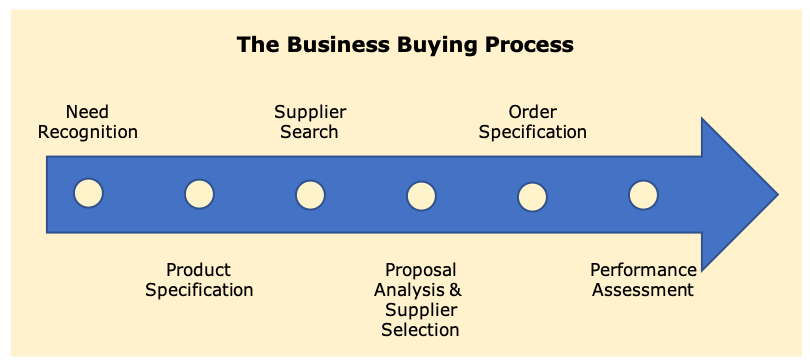
Your deals don't close in a day. They take weeks, sometimes months. And it's rarely one person making the call.
Here's what a typical B2B sales cycle looks like:
- A marketing manager sees your LinkedIn ad.
- They visit your website and read a blog post.
- Two weeks later, they get a cold email from your SDR.
- They book a call, loop in their VP.
- The VP asks for a case study, which you send via email.
- Three follow-up calls later, they're ready to buy.
Now tell us, which touchpoint "caused" the sale?
The problem with single-touch attribution
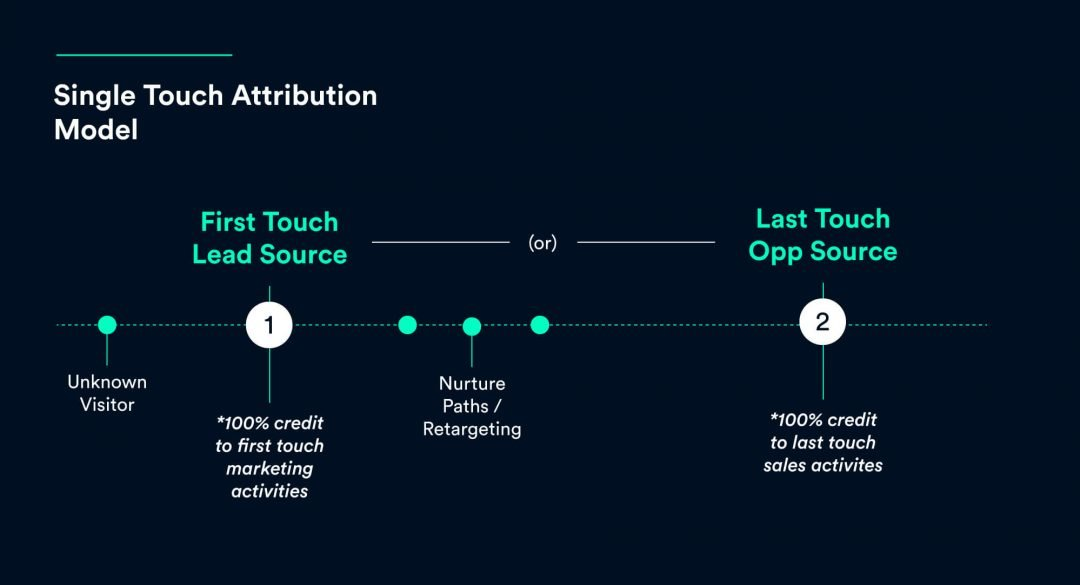
Most companies still use last-touch attribution. That means the final interaction (usually a demo or sales call) gets 100% of the credit.
But here's what that ignores:
- The LinkedIn message that started the conversation
- The email that kept them engaged
- The content that built trust early on
Last-touch attribution makes it look like your outbound team is doing all the work, while your top-of-funnel efforts get zero credit. That's not reality. That's just lazy tracking.
What happens when attribution is wrong
Poor B2B attribution models create real problems:
- Bad budget decisions: You cut spend on channels that are actually working because they don't get credit for closes.
- Channel bias: Sales blames marketing. Marketing blames sales. Everyone's looking at different data.
- Misaligned teams: Your LinkedIn team thinks they're underperforming. Your email team thinks they're crushing it. Both could be wrong.
If you're making decisions based on flawed attribution, you're basically guessing where to invest next quarter. And in B2B, that's expensive.
Tools that Help: Best Marketing Attribution Software (We Use #1 Personally)
Common Multi-Touch Attribution Models (And What They Miss)
Let's walk through the most common multi touch attribution model options out there. We're not saying any of these are perfect. We're just showing you what's available and where each one falls short.
First-Touch Attribution
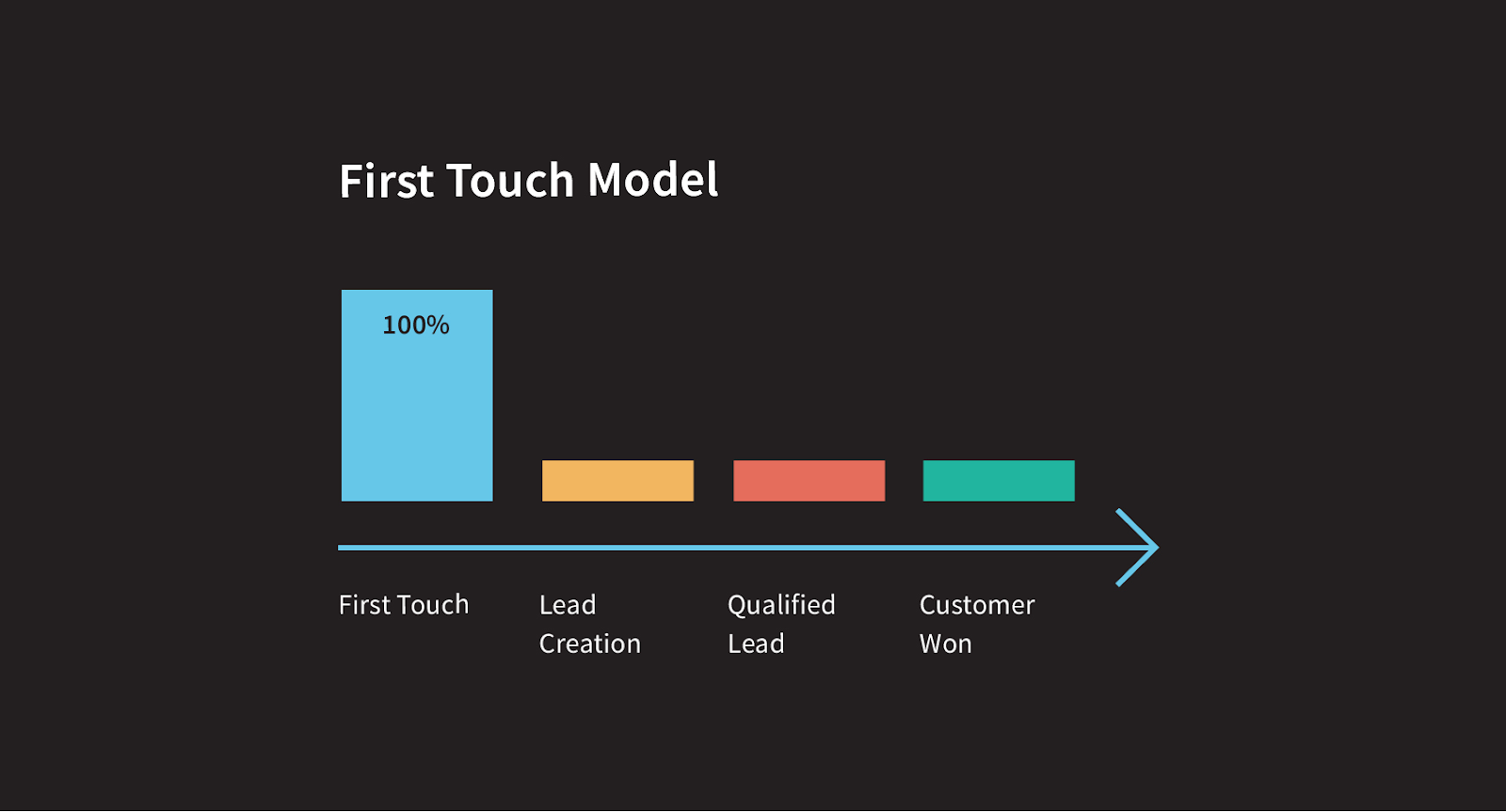
How it works: 100% credit goes to the first interaction (like an ad click or website visit).
Where it's useful: If you want to know what's driving initial awareness.
What it misses: Everything that happened after that first touch. Your nurture emails, sales calls, and follow-ups get ignored completely.
Last-Touch Attribution
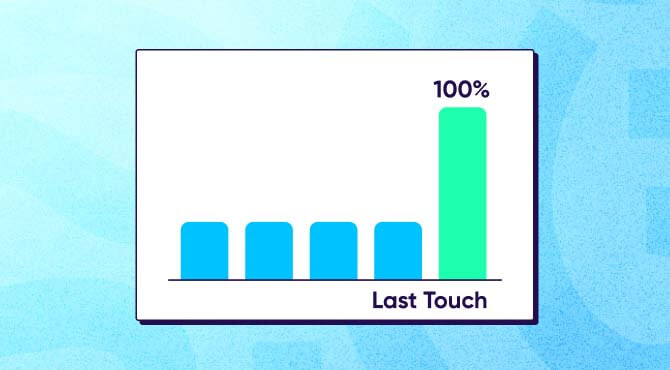
How it works: 100% credit goes to the final interaction before conversion (usually a demo or call).
Where it's useful: If you only care about what closed the deal.
What it misses: All the work that happened upfront to get the prospect interested in the first place.
Linear Attribution
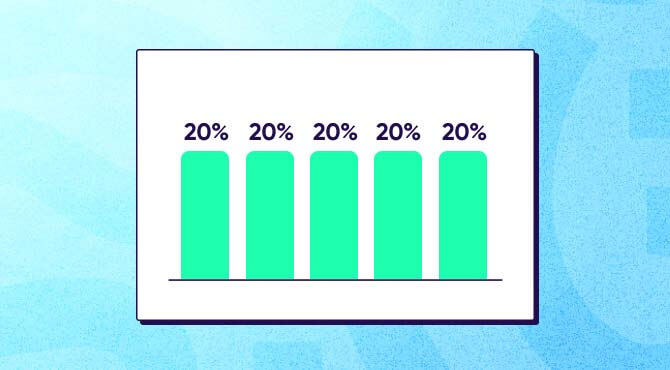
How it works: Every touchpoint gets equal credit. If there were 10 interactions, each gets 10%.
Where it's useful: When you want a simple, "fair" distribution.
What it misses: Not all touches are equal. The discovery call that addressed objections probably mattered more than the third retargeting ad they saw.
Time-Decay Attribution
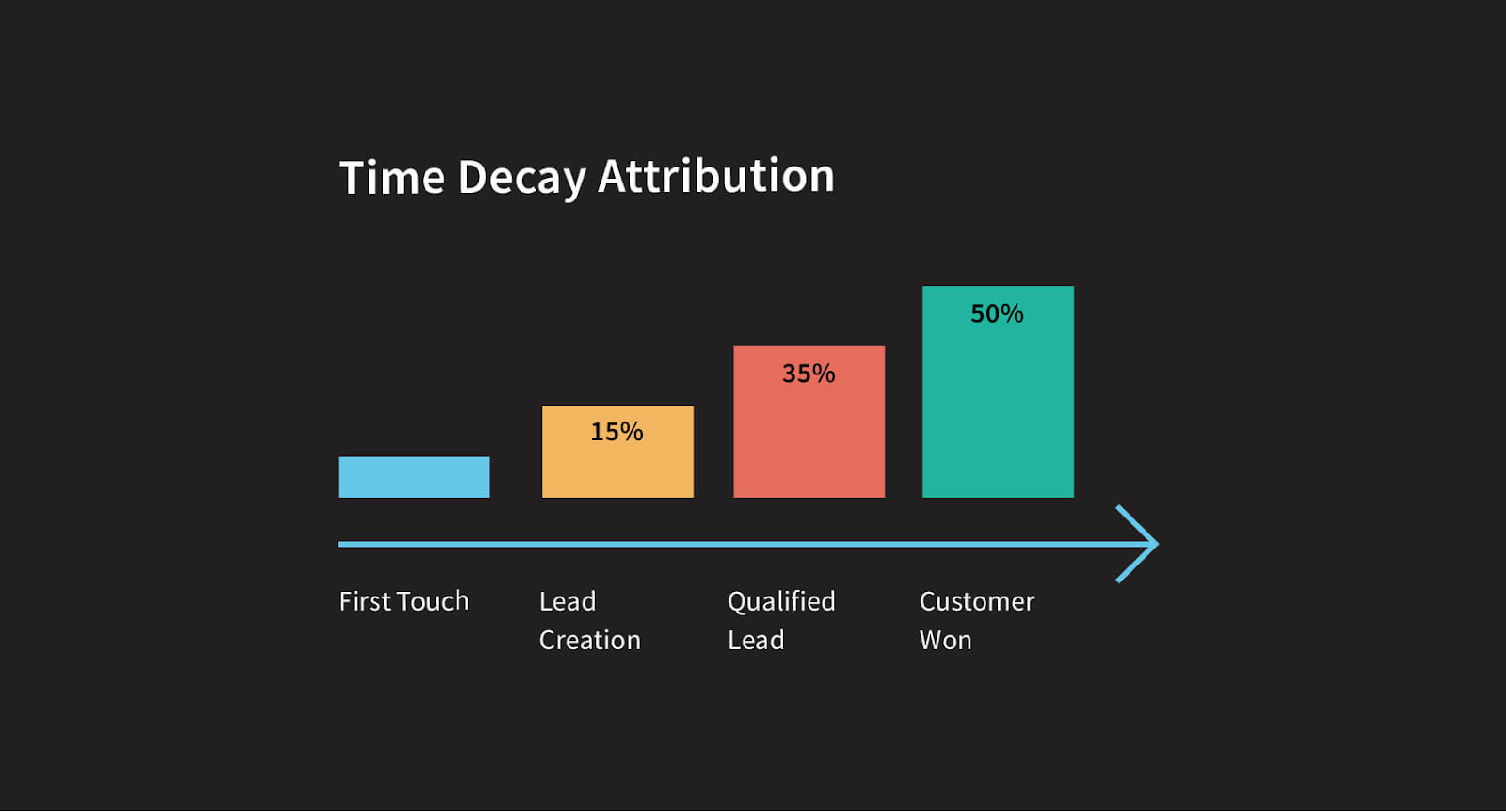
How it works: Touchpoints closer to conversion get more credit. Recent interactions are weighted heavier than early ones.
Where it's useful: When you believe later-stage activities (like demos and proposals) drive more impact.
What it misses: The early touches that got them into your pipeline in the first place.
U-Shaped (Position-Based) Attribution
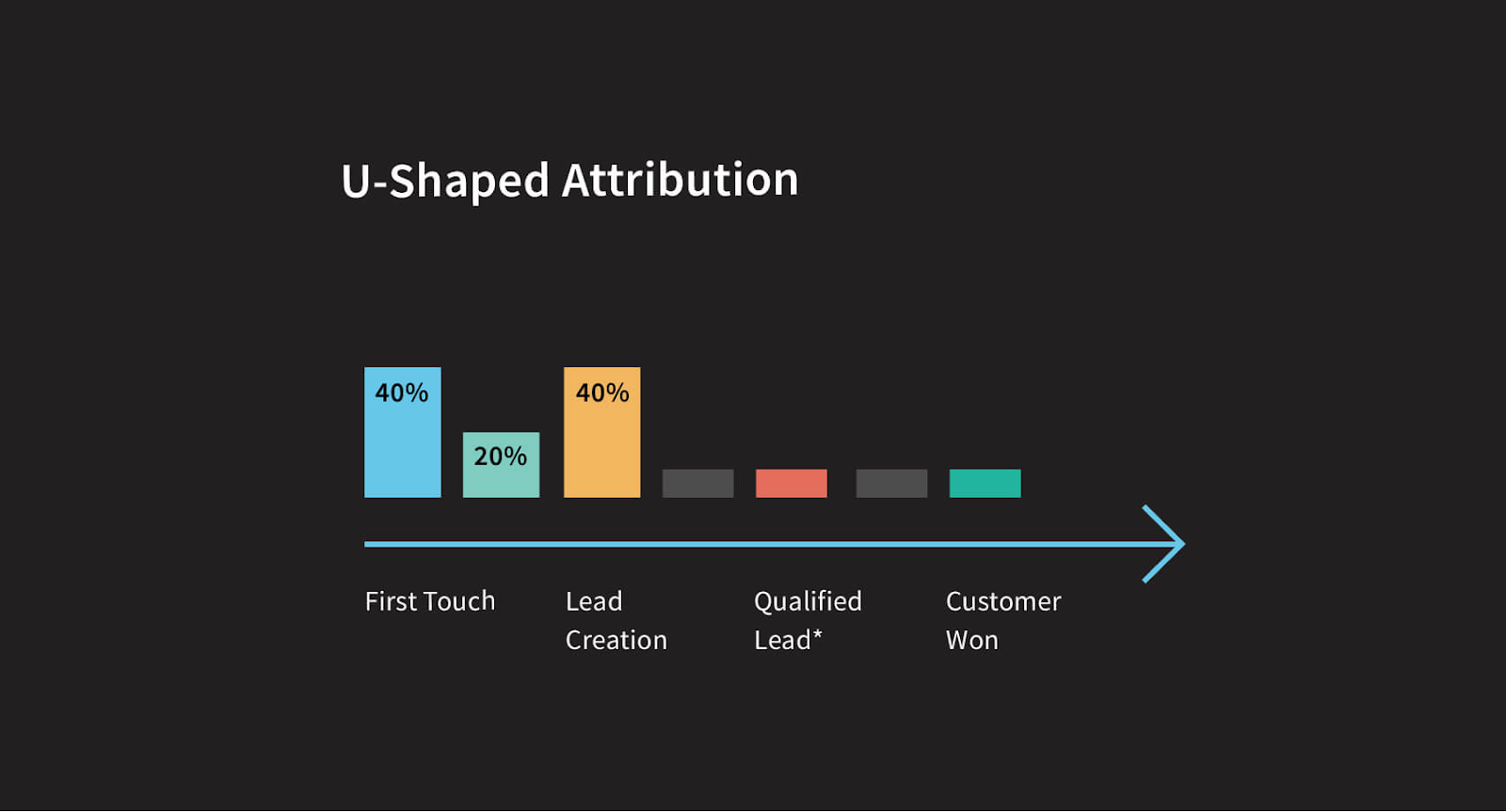
How it works: 40% credit to the first touch, 40% to the last touch, and 20% split across everything in between.
Where it's useful: If you want to credit both initial awareness and final conversion.
What it misses: Mid-funnel engagement that kept the deal alive.
W-Shaped Attribution
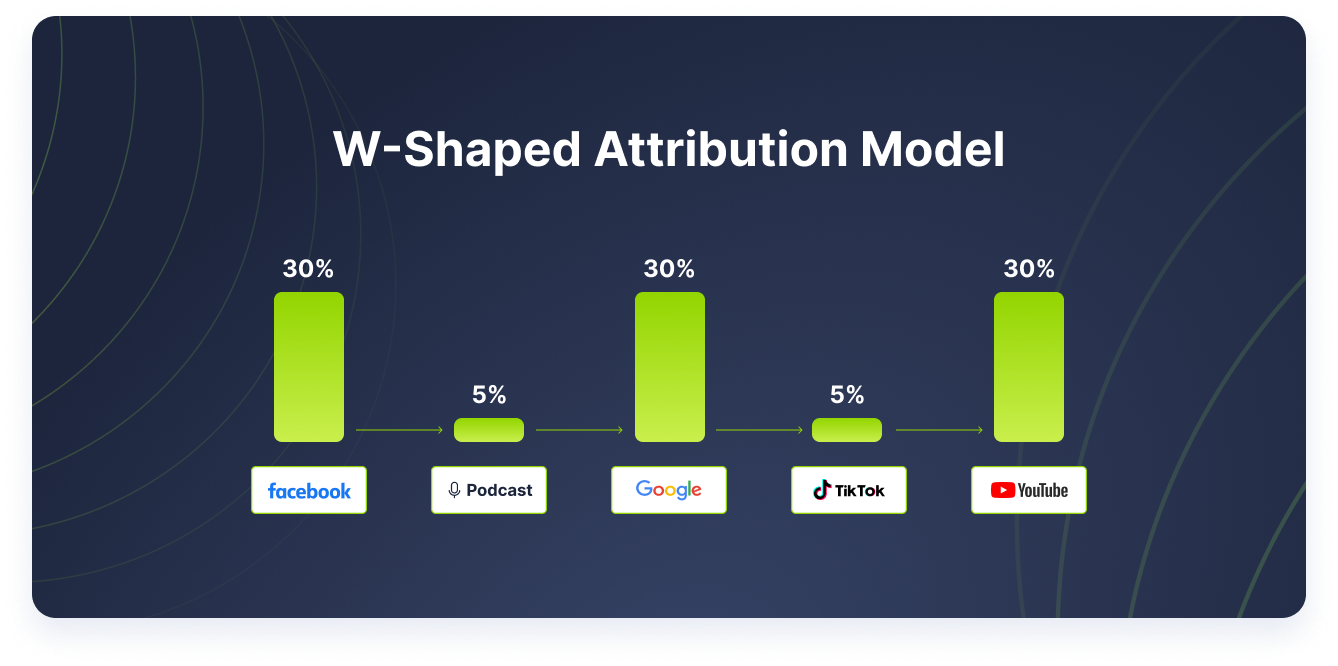
How it works: 30% to first touch, 30% to lead creation (like a form fill), 30% to opportunity creation, and 10% split across other touches.
Where it's useful: When you want to highlight key milestone moments.
What it misses: Everything happening between those milestones.
Algorithmic (AI-Driven) Attribution
How it works: Instead of locking in fixed percentages, this model uses machine learning to look at thousands of past deals and calculate how much each touchpoint actually correlated with a close. The weighting isn't fixed. It shifts based on real patterns in your own data.
Where it's useful: If you've got the volume, algorithmic models can surface things rule-based models never will. Maybe the data shows accounts touching both LinkedIn and email close weeks faster than email alone. A rigid W-shaped model would never catch that. Gartner research on attribution shows custom algorithmic multi-touch attribution typically delivers 15 to 25 percent more accurate ROI measurement than rule-based models, which is a real improvement if you're set up to use it.
What it misses: Here's the catch. Algorithmic attribution still runs entirely on the data you're able to capture. It doesn't know about the conversation at the trade show or the mention in a private Slack channel any better than linear or W-shaped models do. Feed it an incomplete picture, and it just gets confidently wrong instead of obviously wrong.
Why most B2B teams shouldn't rush into it: This kind of multi touch attribution b2b analytics setup needs serious data volume to be reliable. Data-driven algorithmic models typically require 10,000 or more conversions per month to produce trustworthy results, and roughly two-thirds of mid-market firms don't generate enough conversion volume for reliable data-driven attribution. If you're closing 15 or 20 deals a month, the model doesn't have enough signal to find real patterns. It'll just overfit to noise and hand you a confident-sounding number that doesn't mean much.
Algorithmic attribution looks more sophisticated. It doesn't fix the underlying visibility problem. It just moves where the guesswork happens.
The real problem with all these models
Multi touch attribution models are trying to solve a math problem that isn't really about math.
The trade-off is always the same:
- Simple models (like first or last-touch) are easy to implement but wildly inaccurate.
- Complex models (like W-shaped or algorithmic) look sophisticated but still can't account for offline conversations, dark social, or stakeholder influence.
None of these models can tell you that the CEO's golf buddy recommended your product. Or that your prospect was already familiar with your brand from a podcast interview. Or that three internal stakeholders had to align before the deal moved forward.
B2B buying is human. Attribution models are not. And that's the gap we're all trying to figure out.
Learn More: B2B Sales KPIs Every Revenue Team Should Track
🚀 From Touchpoints to $312M+ in Pipeline
10,000+ companies trust Cleverly to turn multi-channel outreach into sales-ready conversations across LinkedIn, email, and phone.
The Real Problem: B2B Buying Is Multi-Touch and Multi-Channel
Here's what actually happens when someone buys from you: they don't see one thing and convert. They bounce around. They go dark. They come back weeks later through a completely different channel.
Multi channel attribution tries to track all of this. But the reality is messier than any model can handle.
What a real B2B buyer journey looks like
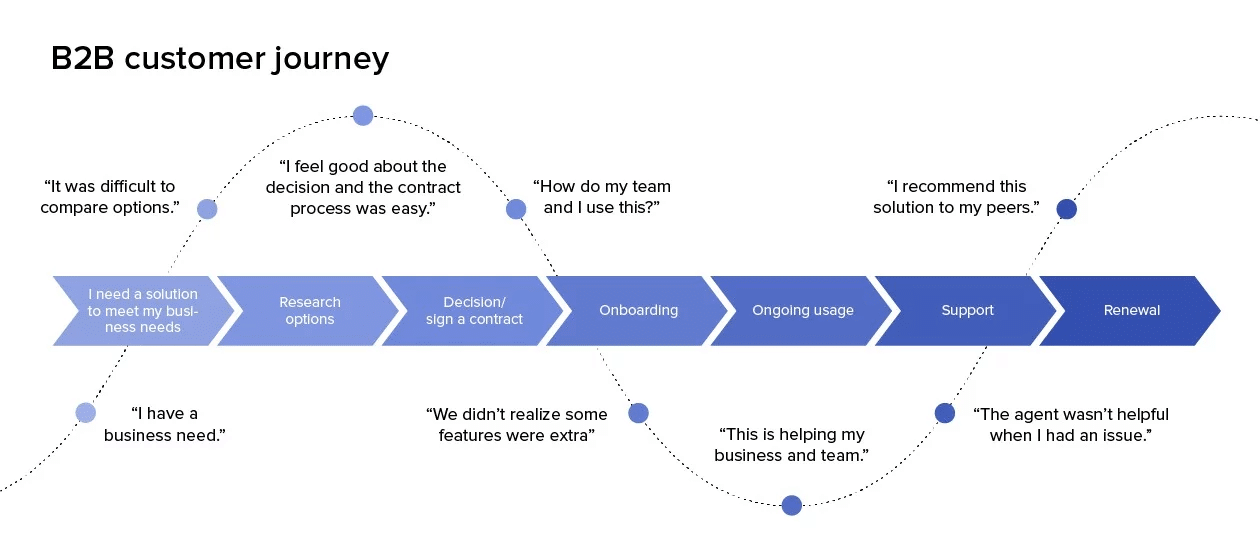
Let's say you're selling marketing software. Here's how your prospect actually found you:
- Week 1: They see your LinkedIn post about lead generation. Don't engage, but they remember the brand name.
- Week 3: Your SDR sends them a cold email. They open it but don't reply.
- Week 5: They Google "best lead gen tools" and land on your comparison blog post. Read it. Leave.
- Week 7: They get another email with a case study. This time they click through and book a demo.
- Week 9: Sales calls them. They mention they've "been seeing you guys around."
- Week 12: Deal closes.
Now, your attribution tool might capture the email click and the demo booking. But it has no idea about:
- The LinkedIn post they saw but didn't interact with
- The Google search that brought them back
- The internal conversation where their colleague said "I've heard of them"
- The review site they checked before the sales call
Multi channel attribution is trying to connect dots that don't all live in your CRM.
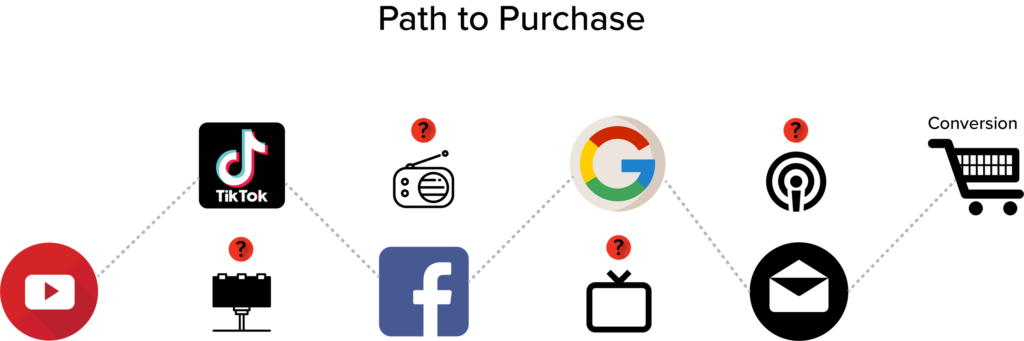
What attribution tools can't see
Even the best tracking setup misses big chunks of the real journey:
- Dark social: Slack messages, private group chats, text threads where your brand gets mentioned.
- Offline influence: Conference conversations, referrals from existing customers, podcast mentions.
- Passive research: Prospects reading your content without filling out forms or clicking tracked links.
- Stakeholder influence: The CFO who said "I trust this vendor" without ever showing up in your data.
Your prospect might have interacted with you 15 times across 5 channels, but your attribution report only shows 6 touches.
Why LinkedIn engagement is especially hard to attribute
LinkedIn deserves its own callout here, because more of the real influence happens on LinkedIn than almost any tracking tool will admit.
Profile views and passive research never leave the platform. A prospect can look at your rep's profile five times, check out the company page, skim a few posts, and none of that shows up anywhere in your CRM. That kind of passive activity is part of why understanding LinkedIn impressions vs. members reached matters when you're trying to gauge real visibility, not just clicks.
Connection acceptance is a real signal with no clean "conversion" event attached to it. Someone accepting a connection request means something. They recognized the name, or they were curious enough to say yes. But there's no equivalent of a form fill or a demo booking tied to it, so most attribution models just treat it as noise instead of the early-stage signal it actually is.
InMail opens and reads don't generate a trackable click. A prospect can open an InMail, read the whole thing, and never click anything inside it. InMail open rates run 42 to 48 percent, noticeably higher than cold email, which means a large share of that engagement gets absorbed and acted on without ever registering as a tracked touch in your reporting.
This is why LinkedIn's real influence almost always looks smaller than it actually is. Your attribution report might show LinkedIn contributing to a small slice of your pipeline. Meanwhile your SDRs know it's warming up half their calls. Both things are true. The dashboard just isn't built to catch the part that happens before someone clicks anything. If you want a fuller picture of what's actually "normal" on LinkedIn, our LinkedIn engagement benchmarks breakdown is a good reference point.
Why "what worked" is the wrong question
Most people approach multi channel attribution by asking: "Which channel gets credit for this deal?"
But that's not how B2B works. The better question is: "Which combination of touches created enough trust and urgency for this account to move forward?"
Because here's the truth: LinkedIn didn't close the deal. Your cold email didn't close the deal. The sales call didn't close the deal.
All of them together created the conditions for the deal to happen.
Trying to pick a winner is like asking which ingredient in a recipe was responsible for the meal tasting good. It's a fundamentally flawed question.
The sooner we stop treating attribution like a competition between channels, the sooner we can focus on what actually matters: building a system where multiple touchpoints work together to move accounts through the pipeline.
More Tools: Best Lead Scoring Tools for B2B Sales Teams
Why Attribution Breaks Down in Outbound & Revenue-Led Growth
If you're running an outbound motion, you've probably noticed something frustrating: your attribution reports don't match what's actually happening in your pipeline.
That's because most attribution tools were built for inbound marketing, not B2B lead generation strategy that involves direct outreach.
Outbound doesn't play by attribution rules
The problem - traditional attribution tracks clicks, form fills, and website visits. But outbound works differently.
Your outbound flow looks like this:
- SDR sends a LinkedIn connection request
- Prospect accepts but doesn't reply
- SDR follows up with a message
- No response
- SDR sends a cold email three days later
- Prospect opens it, still doesn't reply
- SDR calls them
- Prospect finally books a meeting
Your CRM might log the call and the meeting. But everything before that? The LinkedIn touches, the email opens, the persistence? That context is invisible to most attribution tools.
LinkedIn and email influence without getting credit

Let's be real: most B2B prospects don't click a link and book a meeting on the spot.
What actually happens:
- They see your LinkedIn message and check out your profile.
- They open your email but wait to respond.
- They Google your company separately.
- They visit your website directly (not through a tracked link)
- Days or weeks later, they reply and agree to talk
Your B2B lead generation strategy created the meeting. But your attribution dashboard shows "direct traffic" or "sales sourced" as the source. Your outbound team gets zero credit.
Sales conversations live outside marketing platforms

Here's another gap: the real selling happens on Zoom calls, phone conversations, and follow-up emails that marketing automation tools don't track.
Attribution can't tell you:
- Which objections your rep handled on the first call
- Whether the prospect mentioned seeing your content before
- How many follow-ups it took to get the decision maker involved
- What the prospect said about competitors during discovery
These interactions matter. But they don't show up in your linear attribution model or your U-shaped report. So you're left guessing which parts of your B2B lead generation strategy are actually working.
Data privacy adds another layer attribution can't see
There's a piece of B2B marketing attribution that doesn't get talked about enough: some of what attribution tools can't see, they're not supposed to see.
GDPR and CCPA change what you're allowed to track, not just what you're able to track. If a prospect in the EU never gave consent for cross-channel tracking, a compliant marketing stack shouldn't be stitching their LinkedIn views, email opens, and website visits into a single profile in the first place. That's not a tooling gap. That's the point.
B2B tracking has different consent norms than B2C, and treating them the same is a mistake. A shopper browsing a retail site expects some tracking. A VP at a target account getting profiled across five channels without a clear lawful basis is a different risk profile entirely, especially once that data gets centralized for account-level attribution. Enforcement isn't hypothetical either. GDPR fines can reach 4 percent of global annual revenue, and CCPA penalties run up to $7,500 per intentional violation.
Centralizing prospect data for attribution creates a compliance surface, not just a reporting one. The more channels you stitch together into one account-level view, the more places a data subject access or deletion request has to reach. A tagging system that only lives in your CRM notes is a lot easier to audit than five tools all holding fragments of the same person's activity.
The practical fix is proportionality. Track what you'll actually use to make decisions, and skip the rest. You don't need to capture every scroll and hover to understand that an account is engaged. A smaller data footprint is both easier to defend legally and easier to actually act on.
None of this means you should stop tracking. It means the attribution gaps you can't fix with better tooling aren't always a technology problem. Sometimes they're a compliance boundary working exactly as intended.
Flag: No confirmed Cleverly blog post exists on GDPR/CCPA compliance specifically for outbound or attribution data. I checked the index and ran a site search; nothing came back on-topic. Not inserting a placeholder link here since there's nothing to point to yet. This is a content gap worth a note to the team if a compliance-focused pillar post is ever on the roadmap, but that's outside this brief's scope.
Meetings don't happen because of one click
In inbound marketing, you can sometimes trace a demo request back to a specific ad or blog post. In outbound, it's never that clean.
The meeting happens because:
- Your prospect saw your LinkedIn profile and thought you looked credible.
- They received three emails over two weeks and finally had time to respond.
- Your rep called at the right moment when they were actually thinking about this problem.
- They'd heard your company name before (maybe from a referral, maybe from content).
It's cumulative exposure. Not a single touchpoint. But attribution tools want to assign credit to one thing.
Why revenue teams don't trust attribution dashboards
Ask any sales leader if their attribution report reflects reality. Most will laugh.
Here's what they'll tell you:
- "Marketing says LinkedIn ads drove this deal, but our SDR had been emailing them for a month"
- "The dashboard credits last-touch, but we know this account was in play for six months"
- "We closed three deals last quarter that came from referrals. Attribution shows zero influence"
When your attribution data doesn't match the stories your revenue team is telling, you have a trust problem. And when teams don't trust the data, they ignore it and make decisions based on gut feel instead.
If your B2B lead generation strategy involves outbound, you need a different way of thinking about attribution. One that values account-level engagement and qualified conversations, not just trackable clicks.
What B2B Teams Should Measure Instead of "Perfect Attribution"
Stop trying to build the perfect multi touch attribution model. You'll drive yourself crazy and still won't have accurate data.
Instead, shift your focus from giving credit to understanding patterns.
Stop asking "which touch gets credit?" Start asking better questions
Multi touch attribution was supposed to tell you exactly what worked. But in B2B, that's not realistic. What you can measure is trends and signals that guide smarter decisions.
Here are better questions to ask:
- Which channels consistently create conversations? Not just clicks or opens, but actual replies and booked meetings.
- Which accounts engage across multiple touchpoints? Are they seeing your LinkedIn content, opening emails, and visiting your site? That's a buying signal.
- How long does it take from first touch to meeting? This tells you if your nurture is working or if prospects need more exposure.
- Which combinations of channels work together? Maybe LinkedIn + email performs better than email alone.
- What's the quality of conversations each channel generates? Are these qualified prospects or tire kickers?
These questions won't give you a neat percentage breakdown. But they'll actually help you make decisions.
Focus on outcomes, not credit
Instead of obsessing over multi touch attribution scores, track things that matter to revenue:
- Pipeline influence: Did this channel touch accounts that eventually became pipeline? You don't need to know if it "caused" the deal. You just need to know it was present.
- Account engagement: Are target accounts interacting with you across multiple channels? That's intent. Track it at the account level, not the lead level.
- Conversion quality: Which channels bring you meetings that actually go somewhere? A channel that books 50 demos with a 5% close rate isn't better than one that books 20 demos with a 25% close rate.
- Time to value: How long does it take from first meaningful interaction to closed deal? Shorter cycles mean your touches are more effective.
Treat attribution as a directional signal
Multi touch attribution will never be 100% accurate in B2B. Too much happens offline. Too many stakeholders are involved. Too many dark social interactions influence decisions.
But that doesn't mean it's useless.
Use attribution data to spot patterns:
- "LinkedIn outreach seems to warm up accounts before sales calls"
- "Deals that touch both email and phone close 30% faster"
- "Accounts that engage with content before talking to sales have higher ACV"
These are directional insights. They're not mathematical proof. And that's okay.
The goal isn't perfection. The goal is better visibility.
If you know that accounts engaging across three or more channels are twice as likely to close, you don't need to know which specific touch deserves 40% of the credit. You just need to make sure your B2B lead generation strategy creates multiple touchpoints.
Stop chasing the attribution holy grail. Start measuring things that actually help you understand what's working and where to invest next.
Multi-Touch Attribution Software and Tools for B2B Teams
Once you accept that no model gives you a perfect answer, the next question is practical: what are the right solutions for managing multi-touch B2B campaigns without drowning your team in dashboards?
CRM-native reporting vs. dedicated attribution platforms
Most B2B teams start with whatever's already sitting inside their CRM. Salesforce and HubSpot both have built-in attribution reporting that tracks campaign influence on opportunities and closed deals. It's already there, it's free, and it's good enough for a lot of teams.
Dedicated attribution platforms go further. They pull data from your ad platforms, website, CRM, and outbound tools into one place, then run whichever model you pick across the combined data set. That's useful if you're running campaigns across a lot of channels and need one source of truth instead of five dashboards telling five different stories.
The trade-off is setup time and cost. Dedicated platforms need clean data feeding in from every channel, and that takes real work to maintain.
What to look for if you go the dedicated route
Most attribution software is built for inbound: ad clicks, form fills, page visits. If your growth is outbound-heavy, that's the wrong starting point.
Before you commit to a platform, check:
- Outbound channel support. Can it ingest LinkedIn touches, cold email opens, and call logs? Not just ad-click tracking.
- CRM-native depth. Does it show account-level engagement across every stakeholder, not just one contact record?
- Sales activity logging. Can reps log calls and meetings without extra clicks, or will the data just never get entered?
- Flexibility on models. Can you run linear, U-shaped, or W-shaped side by side to compare, instead of being locked into one view?
If a platform's demo is entirely about ad campaigns and pixel tracking, it's probably not built for how your pipeline actually works.
Where a lighter system wins
Here's something most attribution vendors won't tell you: if you're a smaller team with a shorter deal list, a complex platform can actually make things worse. You end up spending more time maintaining the tool than using its output.
For teams running 5 to 15 deals a month, a simple tagging system inside your CRM (custom fields for "source touch" and "influencing channel," plus CRM notes logged by reps after every call) often gives you more usable insight than a full platform. It's not automated, but it's accurate, because the person who was on the call is the one entering it.
Match tool complexity to team size and deal volume
A rough guide:
- Under 20 deals a month: CRM-native reporting plus manual notes. Don't overbuild this.
- 20 to 75 deals a month: A dedicated attribution platform that supports outbound channels, run alongside sales notes for context.
- 75+ deals a month with multiple stakeholders per account: Account-level attribution with algorithmic modeling starts to make sense, since you finally have the conversion volume to make it reliable.
The tool should fit the team, not the other way around. A five-person outbound team running an enterprise attribution platform is spending more on software than they're gaining in insight.
How Cleverly Approaches Multi-Touch Attribution in B2B Outbound
At Cleverly, we don't fight over which channel gets credit. We know that's not how deals happen.
As a B2B lead generation agency running LinkedIn outreach, cold email, and cold calling for 10,000+ clients, we see the reality every day: these channels work together, not in isolation.
Our approach to attribution
- LinkedIn, email, and calls are a system. Not competitors fighting for credit.
- No single touch wins. The message warms them up. The email keeps them engaged. The call books the meeting.
- We track account-level engagement. Did we create a qualified conversation? That's what matters.
- Pipeline creation over vanity metrics. We've generated $312M in pipeline and $51.2M in closed revenue by focusing on outcomes, not attribution percentages.
Why this works better
Your prospects don't experience your outreach one channel at a time. They see your LinkedIn profile, read your email, and take your call as part of one connected experience.
That's how B2B buying actually works. And that's why we built our B2B lead generation agency model around multi-touch coordination, not single-channel attribution.
If your attribution reports don't reflect how deals actually happen, it's time to rethink the model.
Let's talk about building a lead generation system where all your channels work together.
🔥 Book a strategy call with Cleverly.

Conclusion
Multi touch attribution is necessary. But it'll never be perfect.
B2B deals don't happen in straight lines. They involve multiple channels, multiple stakeholders, and multiple conversations that your tracking tools will never fully capture.
Stop trying to build the perfect attribution system. Start building a B2B lead generation strategy where multiple channels work together to create conversations.
Because at the end of the day, your prospects don't care about your attribution model. They care about whether you showed up enough times, in enough places, with enough value to earn their attention.
Focus on that. The pipeline will follow.
Frequently Asked Questions
Free Resource
How to Scale a Profitable Cold Call System
Get the complete guide — download it instantly now.
Free Ebook
Download the Free Guide
Enter your details to get instant access.
You're all set! 🎉
Your ebook is downloading now.
Click below if the download didn't start automatically.