Table of Contents
What Is Community-Led Growth?
Community-Led Growth vs. Product-Led and Sales-Led Growth
Why Community-Led Growth Works Right Now
How Community-Led Growth Actually Drives Revenue
How to Build a Community-Led Growth Strategy
Community-Led Growth Best Practices
Community-Led Growth Examples: What Great Actually Looks Like
Community-Led Growth Needs the Right Customers to Start
How Cleverly Helps B2B Teams Build the Foundation for Community-Led Growth
Conclusion
Frequently Asked Questions
Modified On :
July 23, 2026
Key Takeaways
- Community-led growth turns existing customers into your acquisition channel instead of relying only on ads, outbound, and sales reps to bring in new business.
- The strategy works because peer trust beats vendor messaging. When customers vouch for you, prospects listen in a way they never listen to a sales deck.
- CLG touches every stage of the funnel at once. The same engaged community that reduces churn also generates referrals, surfaces upsell signals, and feeds your product roadmap.
- Building a community around vague brand affinity fails. Building one around a specific professional problem, with a clear purpose and a small group of well-matched seed members, succeeds.
- Community-led growth is a 12 to 18 month investment, not a campaign. The companies that start now compound an advantage competitors can't catch up to later.
Community isn't a marketing channel anymore. It's a growth model. Here's a number that should bother every B2B growth leader: acquiring a new customer costs five to seven times more than keeping one. And most companies still pour the majority of their budget into acquisition while their existing customer base sits there, mostly untapped.
Community-led growth flips that. Instead of leaning entirely on ads, outbound, and sales reps to drive acquisition, CLG turns your existing customers into a self-sustaining engine for referrals, advocacy, and organic expansion.
The numbers back it up. Companies with strong communities grow revenue 2.1x faster than those without one. Brands with active communities see 46% higher customer lifetime value. And research shows retention rates run up to 26% higher for companies with engaged user communities compared to those relying on traditional sales and marketing alone.
This guide breaks down what community-led growth actually is, why it's working right now, how it drives revenue at every stage of the customer lifecycle, and how to build a CLG strategy step by step.
If you're a B2B SaaS founder, marketing leader, or growth strategist trying to build a lower-CAC growth model, this is for you.

What Is Community-Led Growth?
Community-led growth (CLG) is a go-to-market strategy where a structured user community drives acquisition, retention, and product adoption through peer advocacy, rather than relying primarily on paid marketing or outbound sales.
It’s like your product gets customers in the door. Your community keeps them there, helps them succeed, and turns them into the people who bring in the next wave of customers.
And to be clear, community in this context isn't a Slack channel with 40 people posting memes, or a Facebook group nobody moderates. It's a strategically designed ecosystem where customers share knowledge, solve each other's problems, co-create content, and actively refer people in their network.
CLG isn't a channel you bolt onto your existing funnel. It's a growth model that touches every stage of the customer lifecycle: acquisition, activation, retention, and expansion, all at once.
🚀 Communities Build Trust. Outbound Builds Pipeline.
Pair customer advocacy with outbound campaigns that generate 15–30 qualified meetings every month.
Community-Led Growth vs. Product-Led and Sales-Led Growth
Every B2B growth motion falls somewhere on this spectrum:
- Sales-led growth (SLG): Growth driven by sales reps and outbound. High-touch, high-CAC, and it scales roughly in proportion to headcount.
- Product-led growth (PLG): Growth driven by the product itself, through freemium models, trials, and self-serve onboarding. Scales without adding headcount, but it demands a genuinely strong product experience from day one.
- Community-led growth (CLG): Growth driven by the network effects of an engaged customer community. Once momentum builds, it scales without a proportional increase in cost.
None of these models cancel each other out. The strongest B2B growth strategies right now combine all three: sales seeds the customer base, product delivers the core value, and community amplifies retention and referrals on top of both.
Why Community-Led Growth Works Right Now
The stats are consistent enough at this point that they're hard to dismiss as hype:
- Companies with active user communities report retention rates up to 26% higher than companies relying on traditional sales and marketing alone.
- Brands with active communities see 46% higher customer lifetime value.
- Companies with strong communities grow revenue 2.1x faster than companies without one.
- Community-sourced deals tend to close faster, at higher values, with stronger win rates than leads sourced through traditional outbound.
One honest caveat worth stating up front: community-led growth needs a 12 to 18 month runway before it produces meaningful returns. This isn't a campaign you launch in Q1 and measure by Q2. It's a long-term asset.
Companies that pull the plug at month four because engagement looks flat are killing something that was never designed to work that fast.
Why Buyers Trust Peers More Than They Trust You
B2B buyers have gotten a lot more skeptical of vendor-produced content and sales pitches, and for good reason. They've been burned by "case studies" that read like ad copy.
A community member who genuinely advocates for your product is credible in a way no sales rep can replicate. They've actually lived with the problem. They've actually used the solution. Nobody is paying them to say it works.
That matters more now because B2B purchase decisions involve an average of 6 to 10 stakeholders. Every one of those stakeholders needs something to point to internally when they're building consensus. Peer validation from a community gives them exactly that.
And buyers now complete an estimated 60 to 70% of their research before they ever talk to a vendor. A thriving community puts your existing customers in front of prospects at the exact moment those prospects are forming their opinion, long before your sales team ever gets a call on the calendar.
📈 Build a Growth Engine That Never Stops
With 53,000+ meetings booked and $312M+ in pipeline generated, Cleverly helps 10,000+ businesses turn consistent outreach into predictable revenue.
How Community-Led Growth Actually Drives Revenue
Acquisition: Customers Who Sell for You
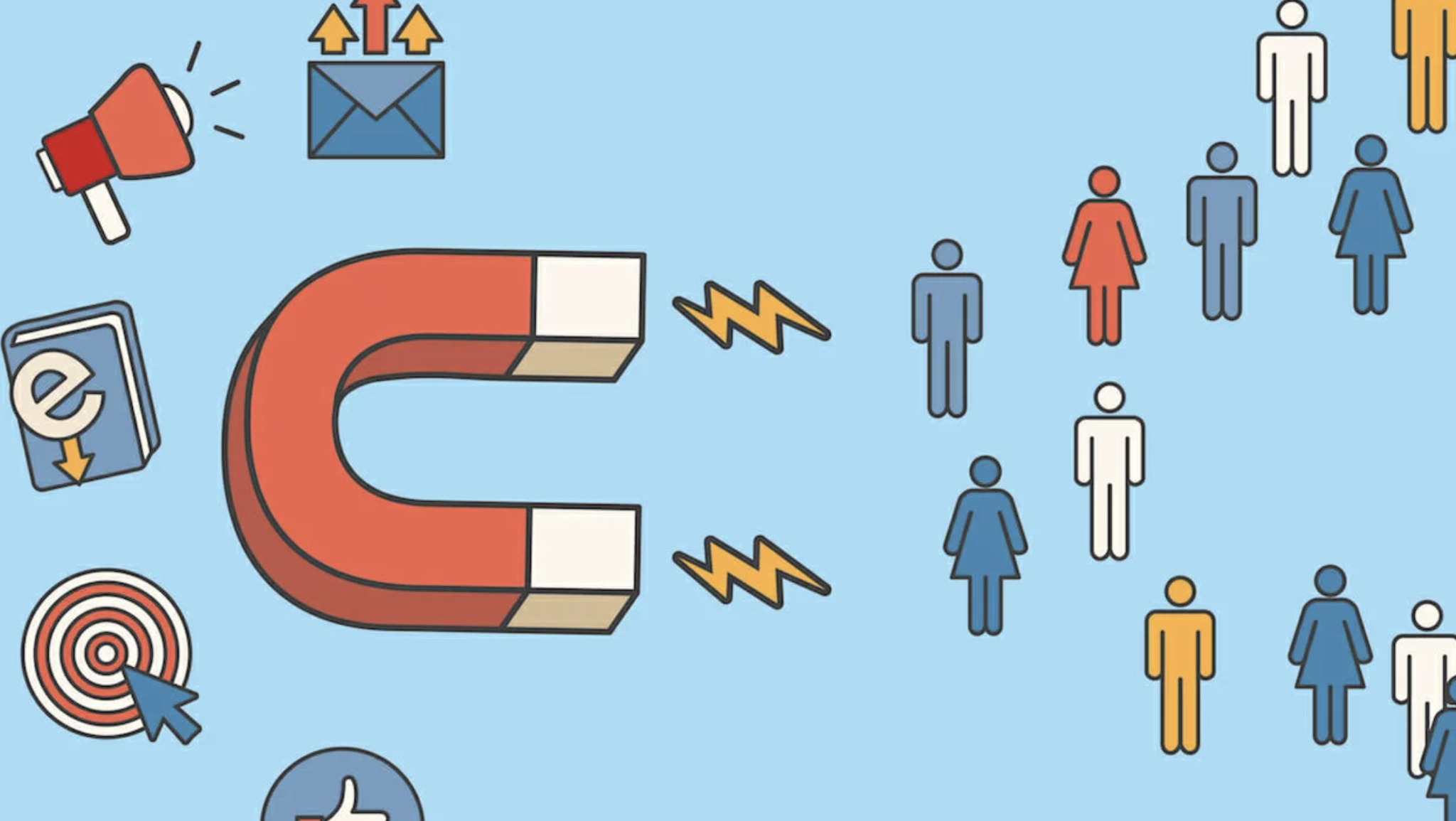
Community members who genuinely love your product refer colleagues, share your content, and recommend you in forums and on LinkedIn. That's organic acquisition that costs nothing incremental per lead.
It compounds too. Community-generated content like case studies, tutorials, and forum answers ranks in search and shows up in G2 and Capterra reviews, extending your reach into channels you don't directly control.
The referral mechanics are simple: a community member who refers a peer who converts generates expansion revenue at zero acquisition cost. The best referral program isn't a program at all. It's a community where members feel genuinely proud to recommend you.
Companies like Atlassian, HubSpot, and Figma attribute a measurable share of new business directly to community-driven word of mouth.
Retention: Community as the Stickiness Layer
Customers embedded in a community are significantly harder to churn. They've built peer relationships, accumulated institutional knowledge, and tied part of their professional identity to your platform, well beyond whatever features you ship.
That's a big part of why active communities correlate with retention rates up to 26% higher. The community creates switching costs that never show up in your product roadmap.
There's also an operational win here. When customers hit a problem, peer-to-peer support in the community often resolves it faster than customer success can, which reduces support burden while actually improving satisfaction.
The loop looks like this: active community member → deeper product usage → higher LTV → lower churn → more advocacy. Each stage feeds the next.
Expansion: Upsell and Cross-Sell Without a Sales Motion
Community members who regularly engage with advanced content, webinars, and power-user discussions naturally surface use cases where more product access would help them. That's an organic upsell opportunity you didn't have to go looking for.
Community is a zero-cost channel for spotting expansion signals. Members discussing integration gaps, workflow limitations, or team-level needs are telling you they're ready to upgrade. And when they do upgrade, they often become internal advocates inside their own organization, driving seat expansion and multi-team adoption without your sales team lifting a finger.
Every community-driven expansion is revenue generated without a traditional sales motion attached to it.

Product Feedback: Community as the Voice of the Customer
An engaged community is the richest source of product feedback you'll ever get. Members describe real use cases, workarounds, and pain points in ways that formal surveys almost never capture, because they're talking to each other, not filling out a form for you.
Community-informed product development lowers the risk of building features nobody actually uses, and it builds loyalty at the same time, because members can see their input reflected in what you ship.
Your most engaged power users often become your best beta testers and co-creators. It's a self-selected panel of your most valuable customers, already doing the work for free.
How to Build a Community-Led Growth Strategy

Step 1: Define Your Community's Purpose and Business Objectives
The most common way CLG fails: a company builds a community without a clear business goal attached, and ends up optimizing for vanity metrics like member count and post volume that never connect to revenue.
Map every community initiative to a specific objective: customer success (reduce churn), acquisition (referrals and organic reach), product adoption (deeper feature usage), or expansion revenue (upsell triggers).
Then get specific about the member's side of the deal. What does someone get in your community that they can't get anywhere else? Peer expertise, early product access, networking with people who have the same job title, exclusive content, direct access to your product team?
One clear purpose, tightly scoped around a specific professional problem or role, beats three vague ones every time.
Step 2: Identify and Recruit Your Seed Members
Your first 50 to 100 members set the culture for everything that follows. Choose them deliberately. Don't just open the doors and see who wanders in.
Good seed segments to target:
- Early adopters who already love your product
- Top-tier customers with high LTV and existing advocacy potential
- Influential practitioners in your ICP who already have credibility with their peers
Onboard these people personally. Not with an automated drip sequence. Direct one-on-one conversations, ideally with a founder or a customer success leader, create early ownership and investment in the community's success.
A community of 100 highly engaged, well-matched members will outperform a community of 10,000 passive lurkers on every metric that actually matters.
Step 3: Choose the Right Community Platform
Platform choice comes down to where your audience already spends time and the kind of community you're building.
- Slack works well for real-time, async discussion with tech-forward audiences.
- Circle or Mighty Networks suit structured communities with courses, events, and gated content.
- LinkedIn Groups offer low friction since your audience is already there.
- Discord tends to work for developer and technical communities.
- In-product community gives you the deepest integration, but it's the most expensive to build.
Don't fall into the "build it and they will come" trap. The platform matters far less than the value the community actually delivers inside it.
One thing that does matter regardless of platform: make sure it connects to your CRM, so community engagement signals flow into your revenue data instead of sitting isolated in a separate tool.
Step 4: Build the Content and Engagement Engine
Community value has to show up consistently, not just at launch. Build a content and engagement calendar that runs week over week, especially in the early stages when you can't rely on member-generated content alone.
High-value formats for B2B communities include expert AMA sessions, peer case study spotlights, weekly discussion threads on relevant professional topics, templates and frameworks members can use immediately, and product roadmap previews where they can weigh in.
Keep engagement triggers running between events: weekly discussion prompts, recognition programs like top-contributor badges, and milestone celebrations. And hold the line on one principle: value before ask.
Every piece of content and every event should deliver value to members before you ask them for anything. No upsell pitches. No lead-gen forms disguised as community touchpoints.
Step 5: Activate Advocates and Super Users
Look at who's already showing up consistently, contributing the highest-quality responses, and active across multiple channels. Build a formal advocate or champion program around them.
Give advocates status and perks that actually mean something: early product access, direct access to your product team, speaking opportunities at events, and co-creation opportunities like co-authored content or webinar appearances.
Activated advocates become unpaid ambassadors. They share community content, refer peers, defend your brand in competitor comparisons, and often co-sell inside their own networks without you asking. Track their referral activity in your CRM so you can attribute revenue back to specific advocates. That's how you prove CLG ROI to leadership instead of just describing it.
Step 6: Measure Community Impact on Revenue Metrics
Deprioritize vanity metrics: total member count, post volume, likes. None of that pays the bills.
Track metrics that actually connect to revenue instead:
- Retention rate of community members vs. non-members
- NPS of active community members vs. passive users
- Referral volume and conversion rate from community members
- Expansion revenue from community-active accounts
- Support ticket reduction from peer-to-peer resolution
The most direct way to prove CLG ROI: tag community members inside your CRM and compare their lifecycle metrics, churn rate, LTV, expansion revenue, against non-community accounts. Run a quarterly community health review covering engagement rate, new member activation rate, content quality, and advocate program participation, alongside those revenue numbers.
Community-Led Growth Best Practices
A few principles separate the communities that compound value from the ones that quietly die:
- Treat it as a long-term strategy, not a campaign. Meaningful results take 12 to 18 months. Organizations that pull out before momentum builds never see the return.
- Value before ask, always. The moment a community starts feeling like a marketing channel, members disengage. Keep "members first" as the operating principle for every initiative.
- Invest in real community management. An unmanaged community decays fast. You need dedicated management, full-time or fractional, for consistent moderation, content, and engagement.
- Keep it focused. A community scoped tightly around a specific professional problem builds a stronger member identity than a broad brand community ever will.
- Connect community to product and CS. Your community team needs a direct line to product, to surface feedback, and to customer success, to surface risk signals from disengaged members.
- Celebrate members publicly. Recognition programs, member spotlights, and co-creation opportunities are some of the most cost-effective retention tools you have.
Community-Led Growth Examples: What Great Actually Looks Like
Atlassian: Community as a Scalable Support and Advocacy Engine
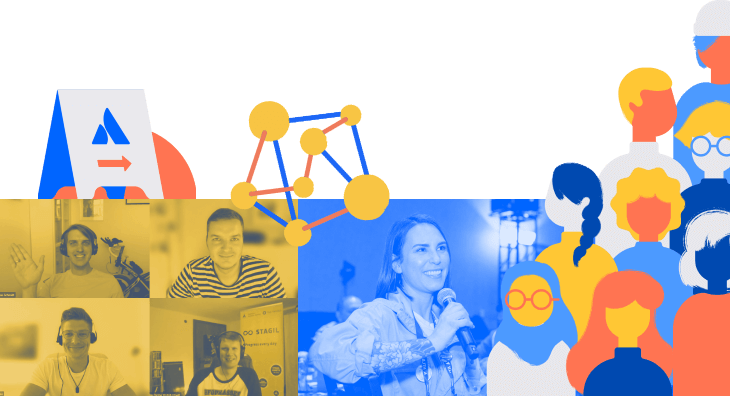
Atlassian's community platform connects partners, developers, and customers around product-specific knowledge, organized into "Product Groups" by industry vertical. Members host peer-moderated AMA webinars, co-create how-to articles, and build integrations that extend Atlassian's ecosystem well beyond what the core product team ships.
The result: Atlassian scaled to massive enterprise reach with a disproportionately small traditional sales team. Community has been central to its low-CAC, high-retention growth model from early on.
HubSpot: Community as a Content and Learning Flywheel

HubSpot combines product forums, a professional certification ecosystem in HubSpot Academy, and an active user community where members share marketing, sales, and CRM best practices.
Many of these members are self-taught HubSpot power users who become internal champions when their company evaluates or expands its HubSpot usage. That community measurably contributes to both acquisition, through prospects discovering HubSpot via community content, and retention, since members embedded in the ecosystem are far less likely to churn.
Figma and Notion: Community as a Product-Advocacy Flywheel

Both Figma and Notion built communities centered on user-generated templates, tutorials, and workflows. Members share exactly how they use the product, which reduces onboarding friction for everyone who joins after them.
That community-generated content drives organic search traffic, G2 reviews, and peer recommendations, acquisition channels operating without any direct marketing spend behind them.
The lesson here: when a community's output actually solves real problems for other members, it becomes a self-sustaining content engine that's aligned with product adoption instead of fighting against it.
Community-Led Growth Needs the Right Customers to Start
Here's the part that gets skipped in most CLG playbooks: community-led growth only works when the underlying customer base is the right fit. A community built on churned, disengaged, or poorly matched customers generates noise, not advocacy.
The quality of your first 100 community members determines the trajectory of your entire CLG strategy. That means acquiring the right customers in the first place matters just as much as anything you do inside the community itself.
How Cleverly Helps B2B Teams Build the Foundation for Community-Led Growth
Community-led growth compounds, but only when it's built on the right customers. If your top of funnel is filled with poor-fit prospects, your community inherits that mismatch, and no amount of engagement programming fixes it.
That's the gap Cleverly fills.
We're a done-for-you B2B lead generation agency that fills your pipeline with well-qualified prospects through LinkedIn outreach, cold email, and cold calling, so the customers who eventually join your community are the ones most likely to succeed with your product and actually advocate for it.
Think of it as sequencing, not a separate initiative. Outbound lead generation brings in the right ICP customers. Those customers succeed with the product because they were a genuine fit from the start. And that success is what forms the foundation of a community that generates its own growth instead of one you have to constantly push uphill.
We've helped 10,000+ clients generate qualified pipeline, working with companies like Amazon, Google, Uber, and Slack along the way, and our LinkedIn services start at just $397/month with no long-term contract required.

If your customer acquisition motion isn't consistently bringing in the right people, your community strategy is starting from a weaker position than it needs to.
See how Cleverly helps B2B companies build a qualified customer base!
Conclusion
Community-led growth isn't a tactic you check off a list. It's a compounding asset that gets more valuable the longer you invest in it, and less valuable every quarter you delay starting.
The business case is straightforward: 2.1x faster revenue growth, 46% higher customer LTV, up to 26% better retention, all stemming from the same underlying flywheel. Acquisition through peer advocacy feeds retention through community stickiness, which feeds expansion through organic upsell triggers, which feeds better products through direct community feedback, which produces more advocates who start the cycle over again.
The 12 to 18 month investment window is exactly why the timing matters. Companies that start building real community in 2026 will have a compounding advantage their competitors won't be able to replicate by next year. The principle underneath all of it stays the same: provide value relentlessly before you ask for anything. The communities that hold to that consistently become the growth engines that redefine their category.
Frequently Asked Questions
Free Resource
How to Scale a Profitable Cold Call System
Get the complete guide — download it instantly now.
Free Ebook
Download the Free Guide
Enter your details to get instant access.
You're all set! 🎉
Your ebook is downloading now.
Click below if the download didn't start automatically.