Table of Contents
What Most Salespeople Get Wrong About Their Pitch
What Actually Works — The Psychology Behind a Pitch That Lands
Real-World Context — Why B2B Buyers Are Harder to Pitch Than Ever
Where You Can Win Big Right Now
What to Avoid — Pitch Mistakes That Kill Conversations
How Cleverly Helps B2B Companies Build Pitches That Actually Convert
Conclusion
Frequently Asked Questions
Modified On :
April 29, 2026
Key Takeaways
- B2B prospects have mentally checked out by sentence two of a generic pitch — the opener is everything.
- Leading with features and buzzwords like "best-in-class" or "scalable" signals nothing to a buyer who's heard it five times this week.
- The most effective sales pitches lead with a surprising insight or trigger event — before a single product feature gets mentioned.
- Making prospects articulate the value themselves, through smart questions, moves deals forward faster than any monologue.
- Hyper-specificity at the role and industry level is where differentiation actually lives — a pitch for "VP of Sales at a 50-person SaaS company" will always outperform one aimed at "sales leaders."
You're Losing Deals Before You Even Finish Talking
96% of B2B buyers research independently before they ever talk to a sales rep. By the time your prospect picks up the phone or opens your email, they already know your category exists. They've probably looked at your website.
And they've already heard your pitch. Not yours specifically — but one that sounds exactly like it.
🙄 "We help companies like yours streamline their workflow."
🙄 "Our solution is best-in-class and fully scalable."
🙄 "We work with teams across every industry."
The rep who called before you said the same thing. So did the one before them.
Sales leaders using unified, differentiated pitch libraries report 46% more meetings booked and 35% higher conversion rates — which tells you the gap between a generic pitch and a sharp one isn't small.
The problem isn't your product. It's not your price, your timing, or even your ICP targeting. It's that your sales pitch sounds identical to every competitor in your space.
This guide covers the psychology of why pitches fail, what actually works in 2026, and exactly how to build a pitch that makes a prospect stop and think: "I hadn't thought of it that way."
Everything here is practical — things you can apply before your next call.

What Most Salespeople Get Wrong About Their Pitch
Leading With Features Instead of Pain
The instinct is understandable. You know your product. You're proud of it. So you lead with what it does.
The problem is that your prospect doesn't care what your product does — they care whether it solves a problem they're actively feeling. Leading with features before establishing relevance is like introducing yourself by listing your hobbies before asking someone's name.
The fix is simple: Flip the sequence. Start with the problem, let them confirm it exists, then introduce the solution.
The Buzzword Trap

"Flexible." "Scalable." "Innovative." "Best-in-class." These words signal nothing because every competitor uses them too.
When your language is identical to everyone else's, you create a cognitive pattern where the prospect's brain files you alongside every other vendor they've talked to this month. You're not standing out — you're reinforcing that you're generic.
Cut these words entirely. Replace them with specifics: numbers, timelines, named outcomes.
Talking At Prospects Instead of With Them
The best pitch "is not even a pitch at all — it's a conversation." One-way monologues, no matter how polished, don't move deals. Buyers need to feel involved, not lectured.
If you've been talking for more than two minutes without asking a question, you've already lost the room.
One Script for Everyone
A VP of Sales at a 200-person SaaS company has completely different pressures than a founder at a 15-person startup — even if both technically fit your ICP. Running the same canned script regardless of role, company stage, or industry signals that you haven't done your homework.
Prospects can feel when an outreach was meant for them. They can also feel when it wasn't.
Launching Into Pitch Mode Without Earning Attention
Most reps start pitching before they've established why the prospect should care. They haven't created relevance first. They haven't given the buyer any reason to lower their defenses.
The pitch should come after the prospect has mentally confirmed that this conversation is worth their time — not before.
🎯 Your Pitch Is Only as Good as Who It Reaches
We craft and run outreach that reaches right people and actually gets replies. LinkedIn, cold email & calling—done for you.
What Actually Works — The Psychology Behind a Pitch That Lands
Lead With Something They Don't Already Know
The single fastest way to break out of the "oh, another sales call" script is to open with something surprising.
Not a compliment. Not a feature. A real insight — a pattern you've noticed across companies in their space, a counterintuitive data point, a silent workflow blocker most teams don't realize is costing them a pipeline.
This works because of pattern interruption. The prospect's brain has a pre-built response to sales calls. An unexpected insight triggers a different response: curiosity. And curiosity is the precursor to a real conversation.
Example opener:
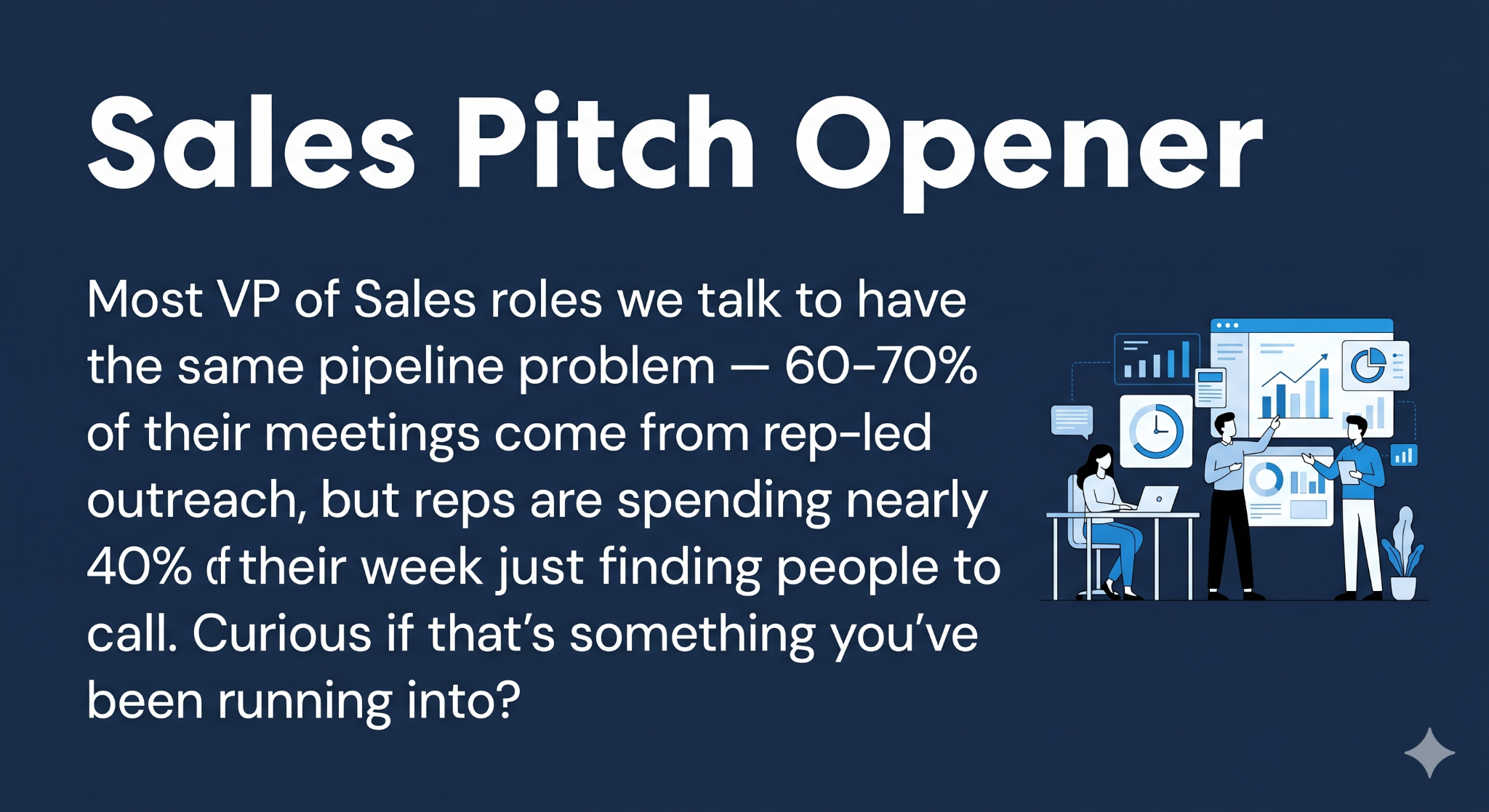
That's not a pitch. It's an observation. And it immediately positions you as someone worth talking to.
Make the Prospect Articulate the Value Themselves
People trust their own conclusions more than yours. That's not cynicism — it's psychology.
When a prospect says out loud, "Yeah, that's exactly the issue we're dealing with," or "We've been trying to fix that for six months," they've self-identified the pain. They've moved from passive listener to active participant. And that shift is worth more than any feature walkthrough you could run.
Ask questions that guide them there: "What does your current prospecting process look like before a rep gets on a call?" or "Where does pipeline tend to slow down for you right now?"
Let them state the problem. Then solve it.
Build Around the "Does" Layer, Not Just the "Is" Layer
Most reps explain what their product is and what it means in terms of value. Very few explain what the prospect can do differently because of it — especially compared to every alternative.
The "is" layer: "We're a B2B lead generation platform."
The "means" layer: "Which means you generate more qualified pipeline."
The "does" layer: "Which means your reps spend Monday morning booking follow-ups from warm replies instead of cold prospecting — and your CAC drops because you're not paying for a full SDR team to find those leads."
Specificity at the "does" layer is where differentiation actually lives. Your competitors can match your "is." They can match your "means." They can't match a specific outcome described in the prospect's exact context.
Use Storytelling as a Strategic Weapon
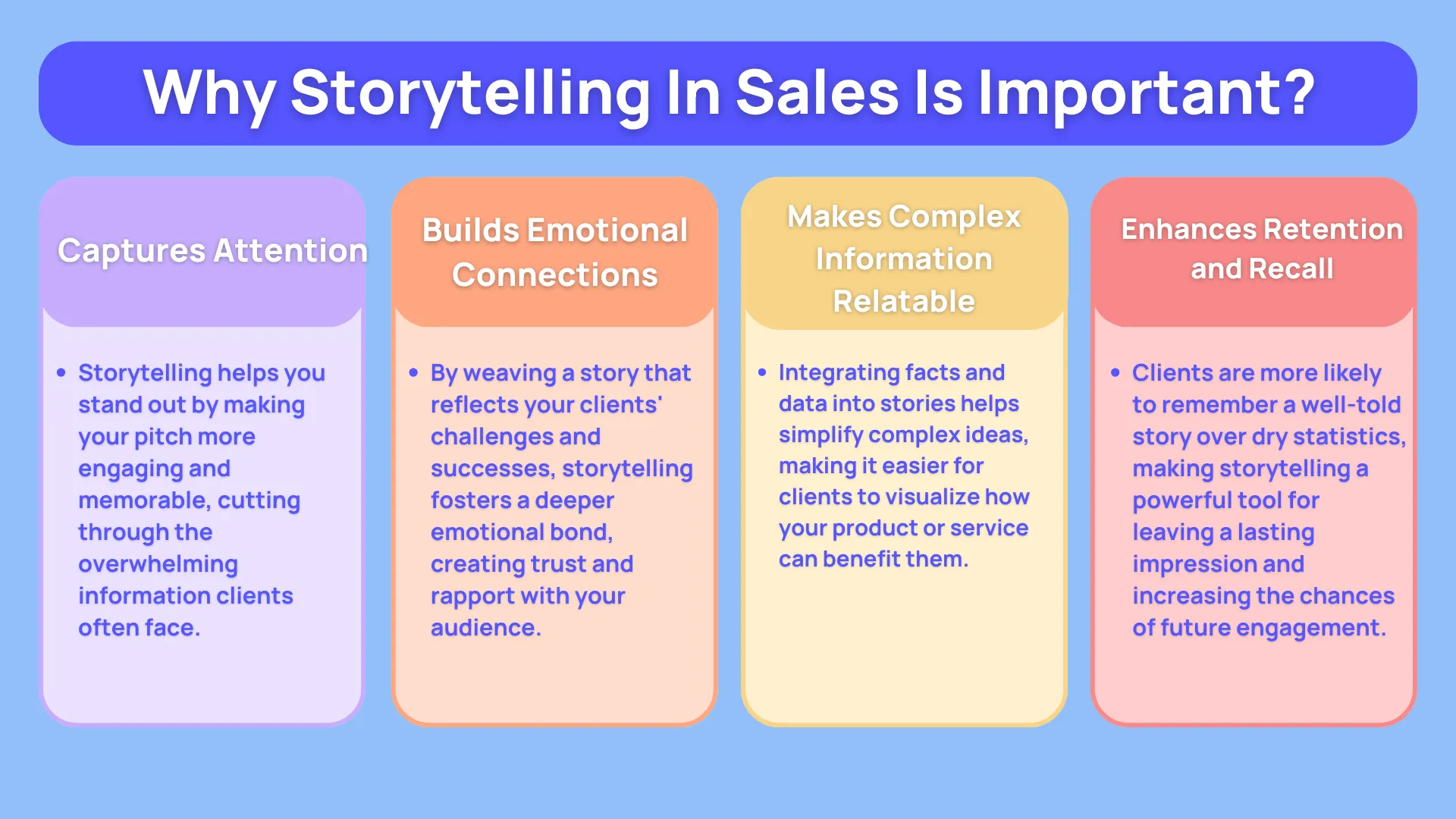
Stories create emotional investment in a way that bullet points never will. When a prospect hears "we worked with a SaaS company your size that had the exact same challenge — here's what happened", they don't hear a case study. They see themselves.
Keep the story tight: Problem → What changed → Specific result. No more than 90 seconds. The more specific the numbers, the better.
"They were generating about 12 qualified meetings a month on LinkedIn. After three months, they were at 47 — without adding a single SDR."
That's not vague social proof. That's a before-and-after that the prospect can mentally map onto their own situation.
Effective Sales Pitch Examples That Break the Pattern
Here are three openers you can use or adapt immediately:
Example 1 — Trigger-Based Opener (Cold Call): "I saw you just posted about scaling your outbound team — curious what your current LinkedIn outreach setup looks like, because a lot of teams we talk to hit a wall around the same point you're probably at."
Example 2 — Insight-Led Opener (Cold Email): "[First name], most [role] teams we work with are spending 35–40% of rep time just on prospecting — not selling. Wondering if that's where your team is bleeding hours right now."
Example 3 — Problem-First Opener (No Product Mentioned): "We've noticed a pattern across [industry] companies at your stage: pipeline looks healthy until Q3, then it gets tight because outbound slows down in summer. Have you figured out how to keep that consistent?"
None of these mention your product in the first breath. All of them create a reason to keep talking.
Real-World Context — Why B2B Buyers Are Harder to Pitch Than Ever

The buying environment in 2026 is genuinely different from five years ago — and most pitch structures haven't caught up.
The average buying group in B2B is now 22 people, up dramatically from earlier estimates of 7–10. A pitch that only resonates with one stakeholder type is a pitch that dies in committee.
And the attention window is shrinking. Millennials and Gen Z now represent 71% of B2B buyers, and they have zero tolerance for generic pitches. They expect you to know their LinkedIn post. Their recent product launch. Their company's current challenge.
The shift that matters: buyers haven't become harder to sell to. They've become harder to pitch at. The reps who treat the pitch as a conversation — and do their homework before starting it — are the ones still booking meetings.
📈 Stand Out in Inbox. Win More Deals.
$312M pipeline generated across outbound channels. We handle messaging → outreach → booking. You close.
Where You Can Win Big Right Now

The Bar Is Embarrassingly Low
Most reps are still using pitch structures from 2019. Feature dump, vague value prop, ask for the meeting. If you fix just the opener and ask one good question, you're ahead of the majority of your competition — immediately.
Hyper-Specificity Is Your Sharpest Edge
A pitch built for "VP of Sales at a 50-person SaaS company that's transitioning from founder-led to team-led outbound" will obliterate a pitch built for "sales leaders."
The more specifically your language mirrors the prospect's exact situation, the less it sounds like a pitch and the more it sounds like a colleague who gets it.
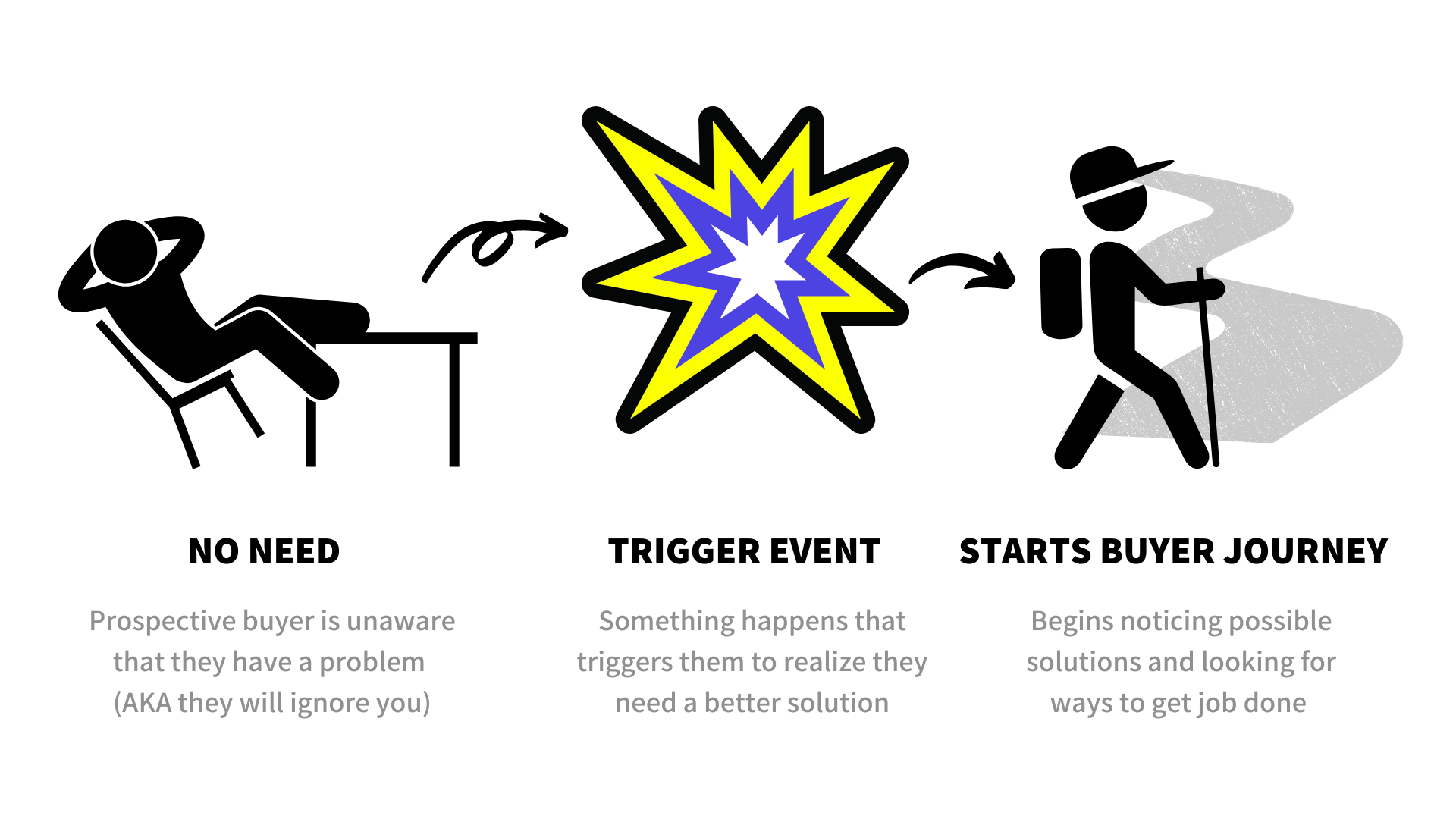
Use Trigger Events as Your Opener
Trigger events are moments when a buyer is most open to change: new leadership hire, funding round, product launch, expansion into a new market, a recently published post about a pain they're feeling.
These aren't just icebreakers. They're genuine signals that the timing is right and the relevance is real. A single follow-up can boost reply rates by 22%, and 80% of sales require at least five follow-up attempts — but the ones that actually land reference something specific, not something generic.
Trigger-based openers you can steal:
- "Saw you just raised a Series B — curious how you're thinking about scaling outbound without ballooning headcount."
- "Noticed you hired three SDRs in the last 90 days — wondering if you've figured out the LinkedIn targeting piece yet or if that's still being built out."
- "Read your post on pipeline predictability — that's exactly the problem we spend our days solving."
Layer Social Proof at the Right Moment
Don't front-load social proof. Drop it after the prospect has confirmed the problem exists.
"Yeah, that's actually what we helped a [company type similar to theirs] fix — they went from 8 qualified meetings a month to 34 in 90 days."
At that point, the proof lands in context. Before they've confirmed the problem, it's just noise.
What to Avoid — Pitch Mistakes That Kill Conversations

❌ Jargon overload
Complex language that sounds impressive but creates confusion. If your prospect has to work to understand what you're saying, they've already mentally moved on.
❌ Reading from a script
Prospects can hear it in your cadence. It kills authenticity instantly and signals that this conversation isn't unique to them.
❌ Talking too much
60% of sales reps' time goes to non-selling tasks — but even in actual sales conversations, over-talking is one of the most common killers. The best pitch is 60% listening, 40% talking.
❌ Saving the "close" for the final slide
Building micro-agreements throughout the conversation — small "does that match what you're seeing?" moments — creates alignment before you ever get to next steps. Reps who do this close faster.
❌ Pitching the wrong stakeholder
Wrong message, wrong level, wrong outcome. A pitch that resonates with a VP of Sales means nothing if you're talking to a coordinator with no budget authority.
❌ Piling on features before confirming the problem
Until a prospect has said out loud that the problem exists for them, every feature you mention is hypothetical noise. Confirm the pain first. Always.
How Cleverly Helps B2B Companies Build Pitches That Actually Convert
A great sales pitch means nothing if it's landing in front of the wrong person at the wrong time — or if it's reaching them through infrastructure that doesn't support the message.
That's the part most teams overlook. Pitch quality and pipeline quality are inseparable.
At Cleverly, we handle the front end of your outbound system — ICP-aligned list building with multi-source verification, role-specific messaging frameworks built around your prospect's actual pain points, and outreach across LinkedIn lead gen, cold email, and cold calling — so your reps step into conversations that are already warmed up and relevant.

We've helped 10,000+ B2B companies generate $312M in pipeline and set 53,000+ appointments. The reps using our pipeline don't start from cold — they start from context.
When your outreach reaches a verified decision-maker with a message that speaks directly to their role and situation, the pitch doesn't have to do as much heavy lifting. That's the difference between a conversation that opens and one that goes nowhere.
Want your outreach to reach the right people with the right message?
🔥 Book a strategy call with Cleverly — we'll show you exactly how we'd approach your outbound.
Conclusion
Your sales pitch isn't failing because your product is weak. It's failing because it sounds like everyone else's — and buyers in 2026 have become very good at tuning that out fast.
Standing out doesn't require a bigger budget or a longer pitch. It requires being more specific, more relevant, and more willing to make the conversation about the prospect's world before you make it about your product. Revisit your opener today. That's where the deal is won or lost.
Frequently Asked Questions
Free Resource
How to Scale a Profitable Cold Call System
Get the complete guide — download it instantly now.
Free Ebook
Download the Free Guide
Enter your details to get instant access.
You're all set! 🎉
Your ebook is downloading now.
Click below if the download didn't start automatically.