Table of Contents
Does Cold Calling Still Work for SaaS in 2026?
How to Build Your SaaS Cold Calling Strategy Before You Pick Up the Phone
The SaaS Cold Call Script Framework That Actually Books Meetings
SaaS Cold Calling Objection Handling: What to Say When They Push Back
Cold Calling Metrics Every SaaS SDR Team Should Be Tracking
Cold Calling Tools for SaaS Sales Teams
How Cleverly's Cold Calling Agency Helps SaaS Companies Book More Qualified Meetings
Conclusion
Frequently Asked Questions
Modified On :
April 20, 2026
Key Takeaways
- Cold calling for SaaS isn't dead — bad data, generic scripts, and zero follow-up system are what's killing results, not the channel itself.
- SaaS buyers are harder to reach than most — longer buying cycles, technical evaluation, and multiple stakeholders mean your script needs to do more heavy lifting upfront.
- The best SaaS cold call script follows a 4-step framework: Opener → Value → Qualify → Ask — and is built around a specific outcome, not a pitch.
- Tracking dials alone is a vanity metric; the numbers that actually matter are connect rate, conversation-to-meeting rate, and dials per booked meeting.
- The sweet spot for SaaS cold calling is Tuesday through Thursday between 10–11 AM and 4–5 PM local time — timing alone can lift connect rates by 47%.
- Teams that outsource to a cold calling agency skip months of list-building, script testing, and SDR ramp time — and start booking qualified meetings in weeks.
Let's get one thing straight: cold calling for SaaS isn't dead. What's dead is the old playbook — 100 generic dials a day with no research, a robotic pitch, and zero follow-up if they don't pick up.
SaaS is a harder environment than most verticals. You're dealing with technical buyers who can smell a bad pitch in the first five seconds, multi-stakeholder decisions that span months, and prospects who are already flooded with outbound from your competitors. That's not a reason to stop calling. It's a reason to call smarter.
The data backs this up. Over 82% of buyers have accepted meetings from cold outreach, and 57% of C-level and VP-level buyers actually prefer phone contact — they just hate bad cold calls. Meanwhile, top-performing B2B teams with strong data, scripts, and coaching are hitting 5–8% dial-to-meeting conversion rates, roughly 3x the industry average.
The gap between SaaS teams that struggle with cold calling and those consistently booking meetings comes down to three things: structure, data, and execution. This guide covers all three.
You'll get a 4-step cold call script for SaaS, word-for-word objection handlers, the exact metrics to track, the right tools, and a clear picture of when it makes more sense to outsource.
Does Cold Calling Still Work for SaaS in 2026?
The short answer: yes. The longer answer: only if you're doing it right.
The Numbers Say Cold Calling Is Alive
Cognism's 2025 State of Cold Calling report, based on 204,000+ cold calls, found a 65.6% conversation rate once a connect happens — meaning if you get a SaaS buyer on the phone, there's a better than 6-in-10 chance you'll have a real conversation. That's significant.
Teams leveraging AI-driven data tools achieved a 6.7% success rate in securing meetings through cold calls — tripling the industry benchmark of 2.3%. The difference? Better data, tighter targeting, and a system behind the call.
The real reason most SaaS cold calling fails isn't the channel. It's bad contact lists, scripts that sound like everyone else's, and reps who give up after two attempts.
It takes an average of 8 call attempts to connect with a prospect, yet more than half of reps stop after 3–5 attempts — leaving a pipeline full of conversations that never happened.
Cold Calling vs. Email vs. LinkedIn for SaaS
Here's an honest breakdown of how the channels compare:
- Cold calling wins when speed of qualification matters. One 3-minute call tells you more than a week of email back-and-forth.
- Cold email wins for scale and async follow-up. Lower friction, easier to personalize at volume, but slower to qualify.
- LinkedIn wins for warming prospects before the call. A connection request + a message before you dial lifts pickup rates meaningfully.
The best SaaS sales cold calling strategy combines all three. Email first, call second, LinkedIn as a parallel touch. The call gets the meeting — the context from the other channels makes it relevant.
What the Modern SaaS Cold Call Actually Looks Like
Forget the 10-minute pitch. The modern SaaS cold call is shorter, more research-driven, and focused on one thing: booking a 15-minute discovery call, not closing the deal on the first dial.
If you walk into a cold call trying to sell your product, you've already lost. The objective is to earn 15 minutes of focused conversation with the right person. That's it.
📞 SaaS Cold Calling That Actually Books Demos
Get a trained SDR, proven scripts & dialer—done for you. 10–30 qualified calls every month. Guaranteed.
How to Build Your SaaS Cold Calling Strategy Before You Pick Up the Phone
Most SaaS teams skip the strategy and jump straight to dialing. That's exactly why their results are inconsistent. The work that happens before the call determines what happens on the call.
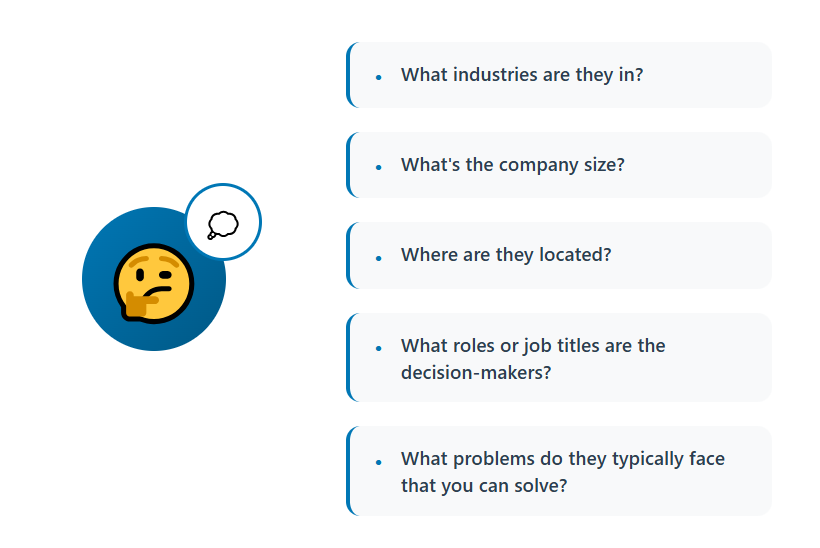
Step 1 — Define Your ICP with Precision
Vague targeting kills cold calling results faster than anything else. "Mid-market SaaS companies" is not an ICP. The version that actually works looks like this: Series B SaaS companies with 50–200 employees, in fintech or HR tech, currently using Salesforce, where the VP of Sales or Head of RevOps is the decision-maker.
Get that specific. The tighter your ICP, the more relevant your opener, and the more relevant your opener, the longer the conversation goes.
Step 2 — Build a Verified Contact List
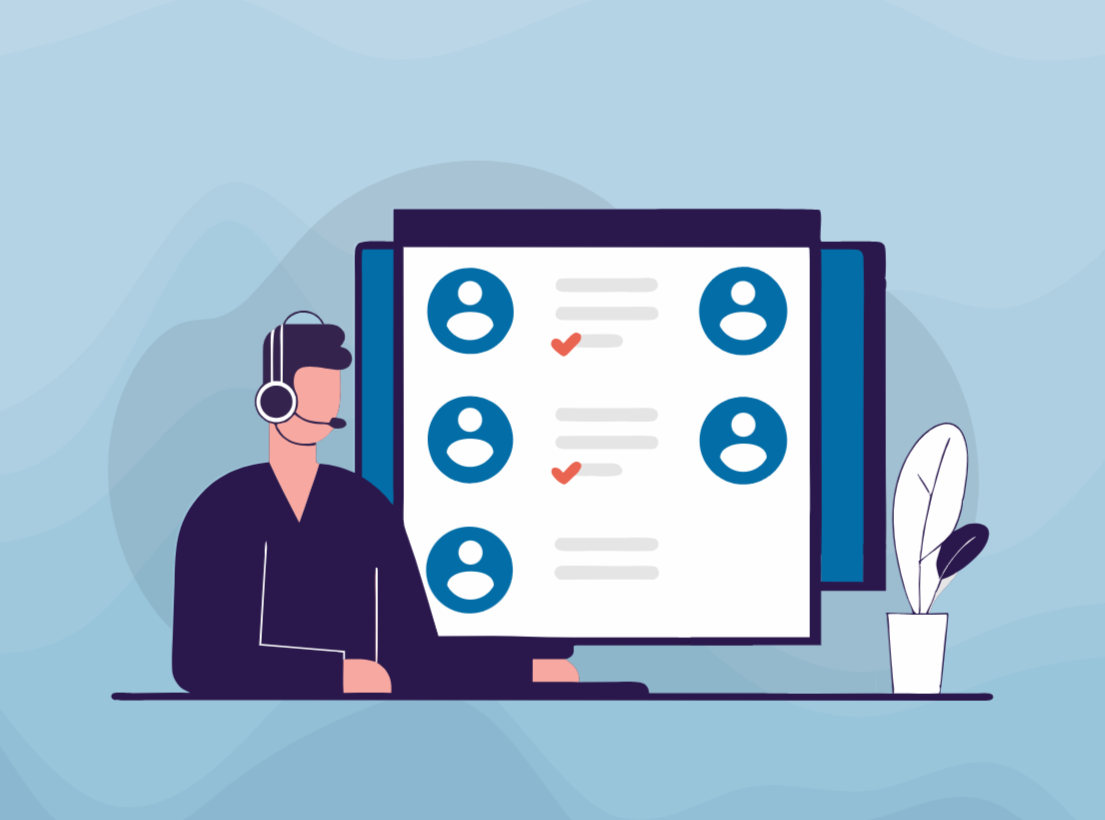
Your cold call list is the foundation of everything. Teams using clean, verified data see conversion rates up to 75% higher than those with outdated lists. A bad list means your reps are burning time on disconnected numbers, wrong titles, and prospects who've moved roles.
Tools like Apollo.io, LinkedIn Sales Navigator, Clay, and LeadIQ let you build lists filtered by company size, funding stage, tech stack, and job title — then verify contact data before it hits your dialer. This step alone will move your connect rate more than any script tweak.
Step 3 — Research Trigger Events Before Each Call
Cold calls that open with a specific, relevant observation book more meetings than any pattern interrupt line. Before dialing, spend 3 minutes checking for:
- Recent funding rounds (the company just got money — now is a great time to solve problems).
- New leadership hires (a new VP of Sales or CRO is almost always evaluating tools).
- Hiring signals (a company posting 10 SDR jobs needs pipeline infrastructure).
- Competitor churn (if you see churn signals from a competitor's G2 reviews, mention it).
The "3x3 research" method — finding 3 relevant facts in 3 minutes before each call — increases conversion by 82%. It's the highest-ROI pre-call activity a SaaS SDR can do.
Step 4 — Define Your Call Objective Clearly
The objective of a cold call is not to demo your product. It's not to explain your pricing. It's to book a 15-minute discovery call. Every word on the call should be in service of that single outcome.
When reps conflate "booking a call" with "pitching the product," calls get longer, buyers get impatient, and conversion rates drop.
Step 5 — Set Up Your Dialer with Local Caller IDs
Using a local area code can significantly lift pickup rates. When a New York prospect sees a 212 number, they're more likely to answer than if they see an 800 number or an out-of-state area code.
Cold call dialers like Aircall and CloudTalk handle local presence automatically. For higher-volume campaigns, a parallel dialer (available in Apollo and some Aircall plans) lets reps call multiple numbers simultaneously and connect to whoever picks up first.
Step 6 — Map Your Multi-Touch Cadence
Cold calls don't work in isolation. The sequence that consistently outperforms: send a personalized email on Day 1, call on Day 2, connect on LinkedIn on Day 3, follow up with a voicemail + email combo on Days 5 and 7. The call gets the meeting. The other touches build the context that makes the call land.
The SaaS Cold Call Script Framework That Actually Books Meetings

Rigid word-for-word scripts fail because they make reps sound robotic, and SaaS buyers can hear it. The best SDRs use a framework — a structure they internalize and adapt in real time based on how the conversation is going.
Here's the 4-step structure that works.
The Framework: Opener → Value → Qualify → Ask
🎯 Step 1 — Opener (First 5–10 seconds)
Your opener has one job: stop the "who is this and why are they calling" reflex. Don't introduce yourself and your company first. Lead with the reason you called.
Pattern interrupt openers that work:
- "Hey [Name], this is [Your Name] at [Company] — quick question before I explain why I'm calling: are you the person handling [specific responsibility] over there?"
- "Hey [Name], I noticed you just hired three SDRs last month — calling because we've helped a few companies in [their space] ramp new reps a lot faster. Worth 15 minutes?"
What doesn't work: "Hi, my name is [X] and I'm calling from [Company], we help businesses like yours..." — this is the script every other rep uses.
💡 Step 2 — Value (15–20 seconds)
If they stay on the line, you have a very short window to connect your value to their world. This is not the time for a product overview. It's the time for one sharp, role-specific outcome statement.
Formula: "We help [role] at [company type] [achieve specific outcome] without [the pain they're currently experiencing]."
Example: "We help VPs of Sales at Series B SaaS companies build a consistent outbound meeting flow without spending six months hiring and ramping an in-house SDR team."
🔍 Step 3 — Qualify (The Conversation)
This is where most reps go wrong — they keep talking. Once you've delivered your value line, ask an open-ended question and then listen.
The average cold call lasts 93 seconds. Top reps use a 55:45 talk-to-listen ratio. The prospect talking more means you're in a real conversation, not a pitch.
Good qualifying questions:
- "How are you currently generating outbound meetings for your sales team?"
- "What's the biggest bottleneck between pipeline generation and the demos you're running?"
- "Has [trigger event — funding/new hire/expansion] changed anything about how you're thinking about pipeline?"
📅 Step 4 — Ask (The Low-Friction Close)
Asking for a demo on the first call is too much friction. Asking for 15 minutes to see if there's a fit is almost always the right move.
Low-friction close: "I don't want to take up more of your time now. Would it make sense to grab 15 minutes this week so I can show you exactly how we'd approach your situation — and if it's not a fit, I'll tell you upfront."
Two-option time close when they're hesitant: "What works better — Tuesday at 10 or Thursday at 2?" Giving two specific options consistently outperforms open-ended scheduling requests.
Copy-Paste Script Templates
Standard SaaS First-Touch Script
Trigger Event Script (Funding / Hiring / New Role)
Competitor Displacement Script
Re-Engagement Script (Previously Cold Prospect)
Handling Gatekeepers
Sound senior. Don't ask permission — state your purpose confidently.
Voicemail Strategy
Leave a voicemail only if it's a high-value prospect. Keep it under 20 seconds. Don't pitch — create curiosity.
🚀 Stop Guessing Scripts. Start Closing Deals.
1M+ calls made. 53K+ appointments set. We handle calling—you just show up and close.
SaaS Cold Calling Objection Handling: What to Say When They Push Back
Cold calling objections are not rejections. They're signals — the prospect is still on the phone, which means the conversation isn't over. Your job is to stay in it.
The framework that works for handling objections in cold calling script SaaS sales situations is LAER: Listen, Acknowledge, Explore, Respond.
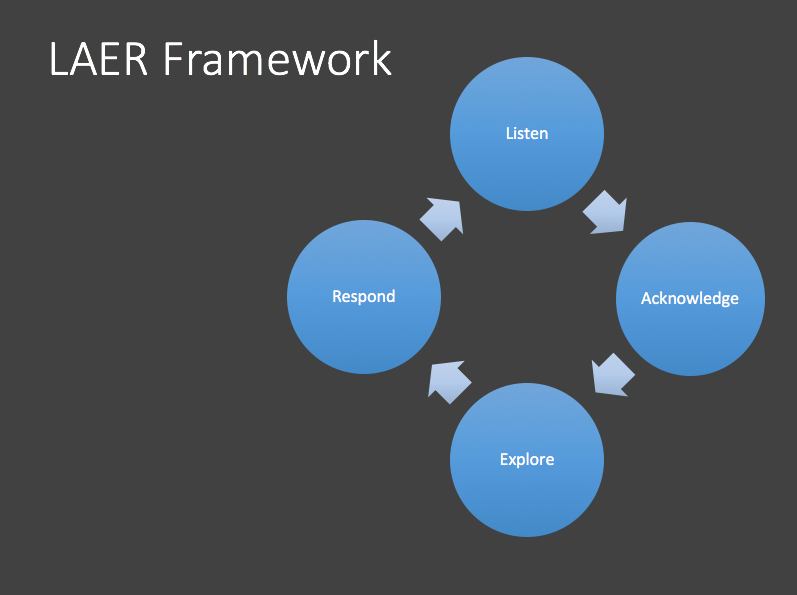
Don't jump to your rebuttal. Hear the full objection, acknowledge it like a human, ask a question to dig deeper, then respond.
The 5 Most Common SaaS Cold Call Objections
1. "Not interested."
This one usually comes in the first 10 seconds — before you've even delivered value. It's a reflex, not a decision.
"Totally fair. Can I ask — is it that it's not relevant to what you're working on, or just bad timing?"
If they say timing: "Got it. When would be a better time — Q3 or after summer?"
If they say not relevant: "Fair enough. We mostly help [role] teams with [outcome] — if that's not on your radar, I'll leave you alone. Is [related problem] something you're even thinking about right now?"
2. "Send me an email."
This is a deflection, not a close. Use it to qualify.
"Happy to — before I do, want to make sure I send the right thing. What specifically would make it worth your 15 minutes to look at? Is it [outcome A] or more about [outcome B]?"
Now you're in a conversation, not a follow-up black hole.
3. "We already use [Competitor]."
Don't attack the competitor. Expose the gap.
"Totally — most of our customers came from [Competitor] actually. Not saying it's a bad tool, but the reason they moved was usually [specific gap]. Is that something you've run into at all?"
4. "No budget right now."
Budget objections are often uncertainty dressed up as logistics. Explore before accepting.
"Understood. Is the budget issue more about timing this quarter, or is it that the ROI case hasn't been made internally yet?"
If it's timing: lock in a future call. If it's the ROI case: that's your 15-minute meeting.
5. "I need to check with my team."
This is a buying group signal. Use it.
"Of course. Who else would typically be part of that conversation — is it [name of likely stakeholder]? I'd actually love to loop them in on a 15-minute intro call so you're both hearing the same thing."
Now you're moving toward a multi-stakeholder meeting instead of a maybe.
When Nothing Works
If you've handled objections and the prospect still isn't engaging — don't burn the bridge. End professionally and lock in the next touch.
"No problem at all. Can I check back in [Q3/next quarter/in two months] when the timing might be better? I'll put a note in my calendar so I'm not bothering you before then."
Most will say yes. You've just booked a future follow-up and left the door open.
Cold Calling Metrics Every SaaS SDR Team Should Be Tracking
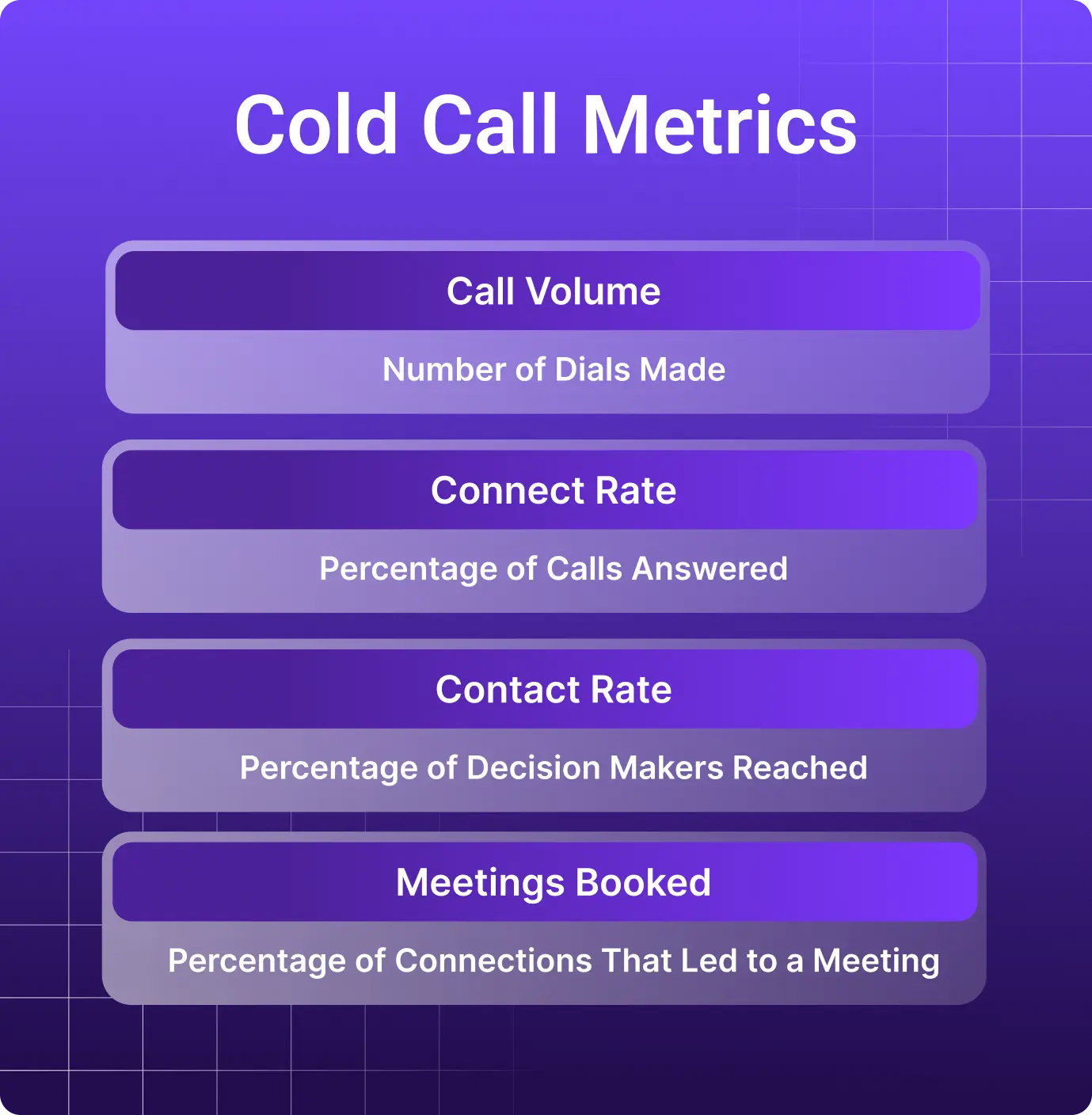
Dials per day is not a performance metric. It's an activity metric. If you're managing to dials alone, you're measuring effort — not results.
Here's what actually tells you whether your SaaS cold calling motion is working.
The Core KPIs
📌 Dials to Connect Rate
One study analyzing over 55,000 dials found a 16.6% connection rate when working with quality data. If your team is below 10%, the list quality is the problem — not the reps.
📌 Connect to Conversation Rate
Cognism's 2025 data found a 65.6% conversation rate from connects. If you're getting connects but conversations are low, the opener or the first 10 seconds of the script needs work.
📌 Conversation to Meeting Booked Rate
Industry average sits around 4–6%. Top performers hit 10–16%. If you're below 4% consistently, the issue is in the value delivery or the ask — not the targeting.
📌 Meetings Booked to Qualified Opportunity Rate
This is the number most teams ignore. If your SDRs are booking meetings but AEs are rejecting them as unqualified, the ICP or the qualification questions on the call need tightening.
📌 Dials Per Booked Meeting
The average is roughly 1 meeting per 40 dials. Top performers land closer to 15–20 dials per meeting. Track this by rep to identify coaching opportunities fast.
📌 Time-to-First Follow-Up After a Call
Following up within 5 minutes of a call that didn't connect (via email or LinkedIn) is one of the highest-leverage moves a SaaS SDR can make. Most teams let days pass.
Analyze by Segment, Not Just Total
Break your metrics down by:
- Role — Are VP-level calls converting differently than Director-level?
- Company size — Are 50–200 employee companies converting better than 200–500?
- Time of day — Tuesdays have the highest success rate for booking meetings from cold calls, and the best time of day is between 10–11 AM, followed by the 2–3 PM block.
Aggregate numbers hide the patterns. Segmented numbers show you where to double down.
Use Call Analytics to Coach
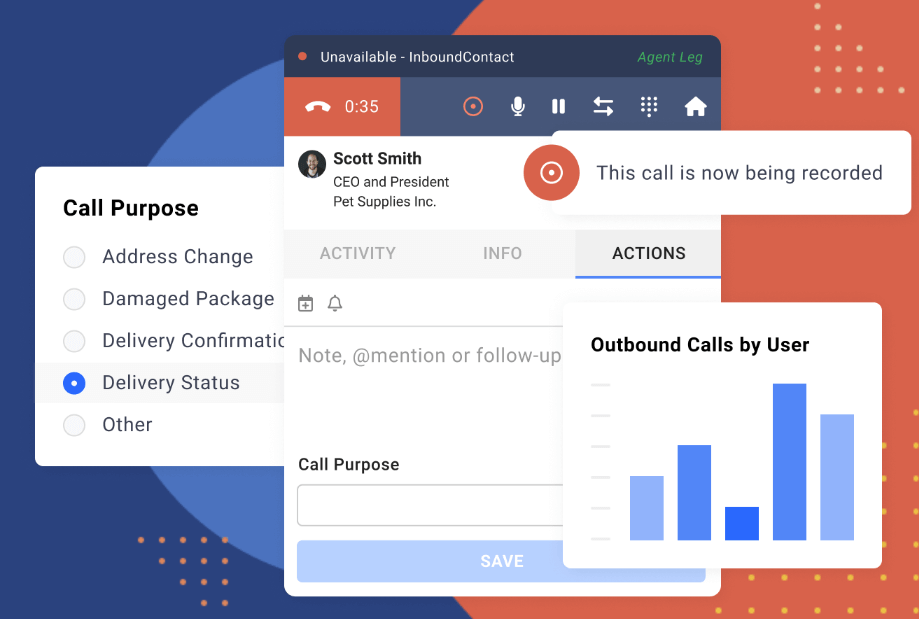
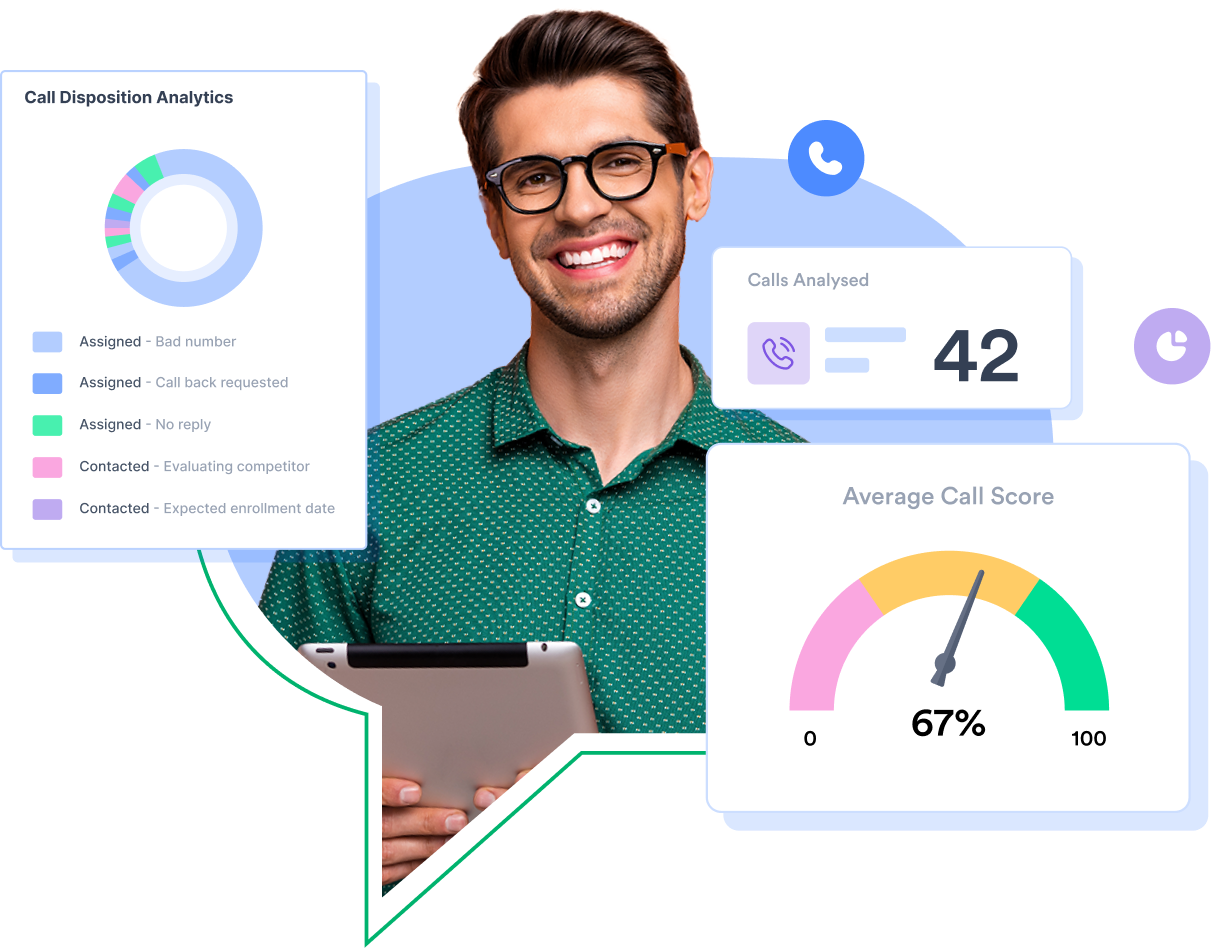
Call tracking tools like Gong and Avoma analyze call recordings to flag objection patterns, talk-to-listen ratios, filler words, and follow-up behaviors. 47% of sales teams now use AI for call coaching, and the teams doing it are pulling away from the ones relying on manager intuition alone.
When a metric drops, look upstream. A dip in conversation rate usually points to a list quality issue or an opener problem. A dip in meeting rate points to a value delivery or ask problem. Don't guess — use the data.
Cold Calling Tools for SaaS Sales Teams
You don't need a 12-tool stack. You need the right 4–5 tools, set up cleanly, with every rep using them consistently.
Dialers
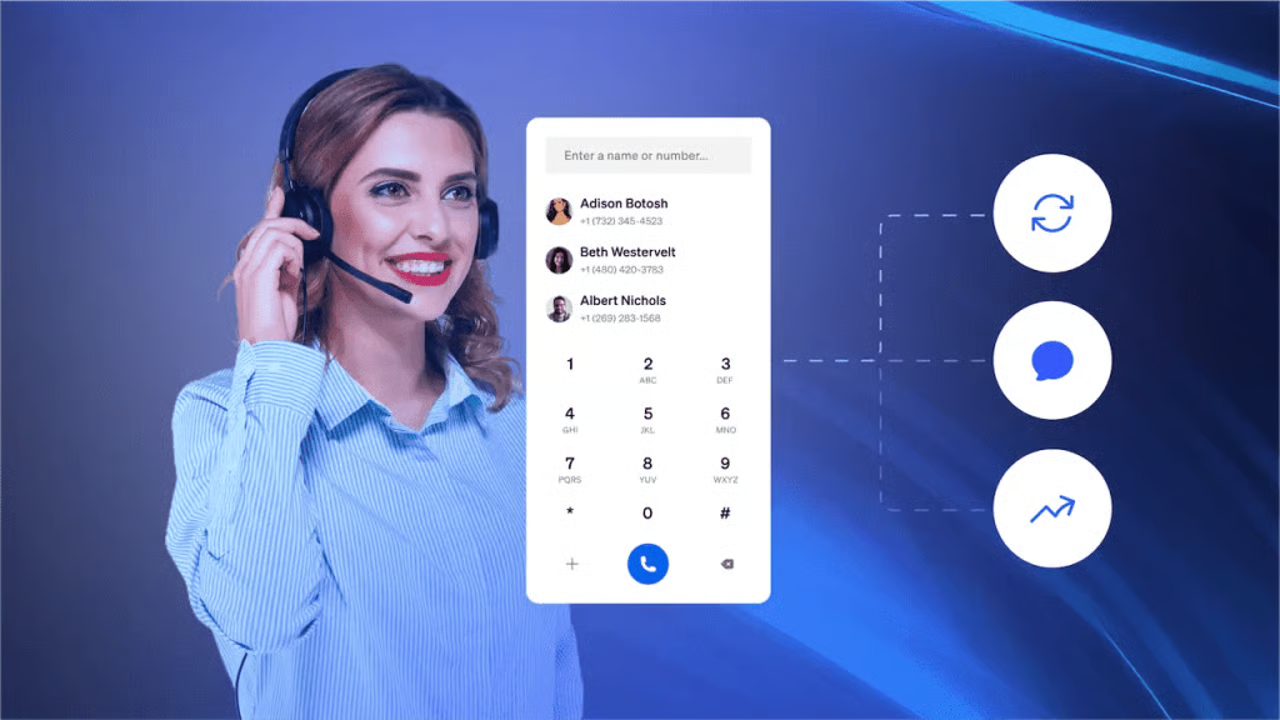
- Aircall — Cloud-based dialer with local caller ID, call recording, and CRM sync. Strong for small-to-mid-sized SaaS SDR teams that need simplicity and reliability.
- CloudTalk — Solid alternative to Aircall with slightly more flexible routing options. Good for teams with international prospecting in their motion.
Both platforms support parallel dialing on higher-tier plans — a meaningful productivity lever for high-volume campaigns.
CRM and Workflow
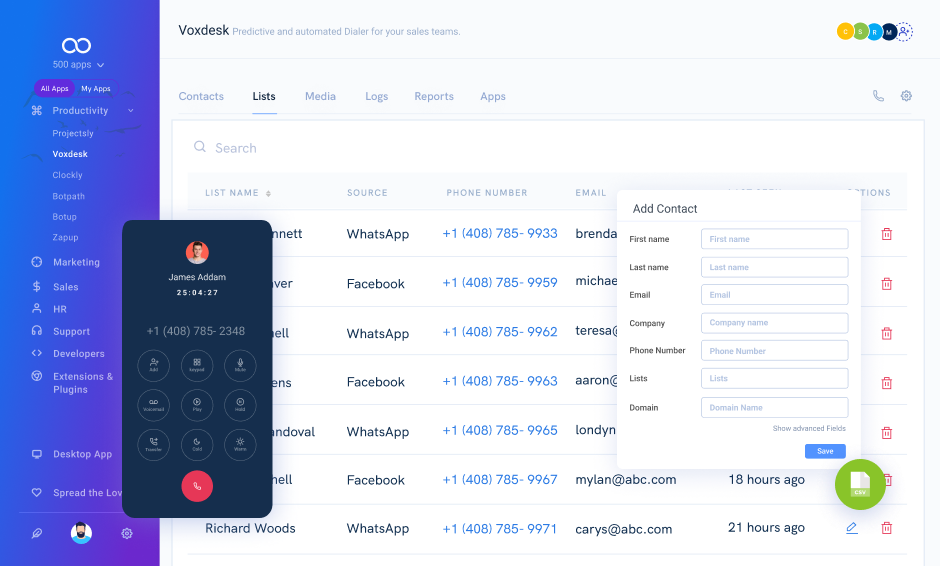
- HubSpot — The default for most SaaS companies at the SMB and mid-market stage. Native call logging, sequences, and pipeline views make it easy to keep cold calling activity tied to revenue outcomes.
- Pipedrive — Leaner than HubSpot. Better for smaller teams that want simplicity over feature breadth.
Prospect Research
- LinkedIn Sales Navigator — The best way to build targeted SaaS lists by title, seniority, company size, industry, and recent activity signals. The "Job Change" filter alone is worth the subscription.
- Apollo.io — Database of 265M+ contacts with direct dial enrichment, email sequencing, and buyer intent signals. The go-to for SaaS teams that want data and sequencing in one place.
Data Enrichment
- Clay — Combines multiple data sources and waterfall enrichment to find verified direct dials and emails. Best for teams building high-precision ICP lists at scale.
- LeadIQ — Great for real-time enrichment off LinkedIn profiles. Syncs directly to Salesforce and HubSpot, which saves reps time on data entry.
Call Analytics
- Gong — The category leader for conversation intelligence. Records calls, transcribes them, and surfaces patterns in objection handling, talk time, and next steps. Ideal for teams serious about rep coaching.
- Avoma — Strong Gong alternative at a lower price point. Solid for SaaS teams that want call analytics without the enterprise price tag.
AI Roleplay and Coaching
Hyperbound — Lets reps practice cold calls against realistic AI buyer personas that push back, throw objections, and escalate difficulty. Teams using roleplay tools before live calls book more meetings in their first 30 days. Worth it especially for new SDR onboarding.
The lean stack that covers everything: Apollo (data + sequencing) → Aircall or CloudTalk (dialer) → HubSpot or Pipedrive (CRM) → Gong or Avoma (call analytics). Add Clay and Hyperbound once you're running at volume.
How Cleverly's Cold Calling Agency Helps SaaS Companies Book More Qualified Meetings
Most SaaS companies know they need a cold calling motion. The hard part is building one that actually runs without constant attention.
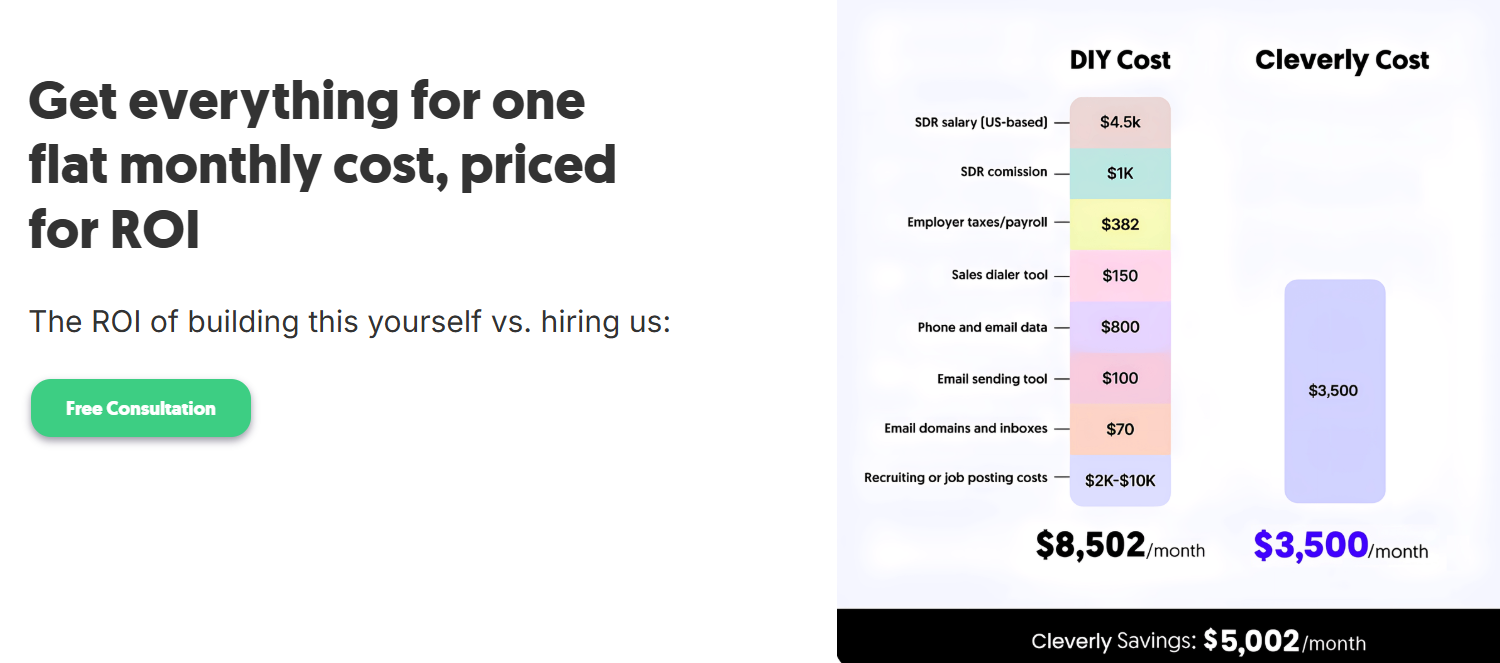
Hiring an SDR takes 2–3 months to recruit and another 3–6 months to ramp. By the time they're productive, you've spent north of $80K and you're still troubleshooting the list quality and the script.
That's the reality most SaaS founders and sales leaders run into before they start looking at a cold calling agency.
At Cleverly, we've made over 1 million cold calls and booked 53,000+ appointments for B2B SaaS and tech companies.
Our cold calling system comes fully built: a dedicated no-accent appointment setter placed and trained in 2 weeks, a custom call script written specifically for your ICP and offer, verified prospect lists built from multiple data sources, a power dialer and full outbound infrastructure managed on our side, and a multi-touch cadence combining calls, email, and LinkedIn to lift connect and response rates.
Our model is simple: 10–30 qualified sales meetings per month, guaranteed — or we replace the SDR. Half the cost of a full in-house team, with results that start in weeks, not quarters.
Want qualified SaaS meetings without building the cold calling system yourself?
🤝 Book a strategy call with Cleverly.
Conclusion
Cold calling for SaaS works. The data is clear on that. What separates the teams booking 20+ qualified meetings a month from the ones grinding through dials with nothing to show for it is execution — a verified list, a script built around a framework, objection handlers that actually keep the conversation going, and a metrics system that tells you where the leaks are.
Start with your ICP and your list. Get those right before you touch the script. Then build the framework, track the metrics, and refine from there. If you want a faster path to pipeline without the build-and-test phase, a cold calling agency removes that entire ramp. Either way — the phone still works. Pick it up.
Frequently Asked Questions
Free Resource
How to Scale a Profitable Cold Call System
Get the complete guide — download it instantly now.
Free Ebook
Download the Free Guide
Enter your details to get instant access.
You're all set! 🎉
Your ebook is downloading now.
Click below if the download didn't start automatically.