

Table of Contents
Why Lead Scoring Fails Before AI Gets Involved
Build the Scoring Model Before You Touch Claude
Claude Lead Scoring at Scale: How to Run It in Batches
Use Claude to Classify Inbound Leads and Replies
How to Qualify Sales Leads With AI: Route Each Tier to a Next Action
Claude Sales Prompts for Lead Scoring and Qualification
How to Keep AI Lead Scoring Accurate
Where AI Lead Scoring Stops Working
How Cleverly Qualifies Leads Before They Reach Your Calendar
Conclusion
Frequently Asked Questions
Modified On :
October 7, 2026
Key Takeaways
- Claude applies a scoring model. It doesn't design one. Your written rubric is the real work.
- Treat fit as a pass/fail gate and intent as the scoring scale, so engaged non-buyers never reach your reps.
- Every score needs written reasoning and a confidence level. That's what makes errors traceable.
- Calibrate against leads with known outcomes before you trust scores on new ones, and review disqualifications on a schedule.
- A tier without an owner and a defined next action is a label, not a decision.
Your best lead from last week is probably sitting at the bottom of your CRM right now. Nobody ignored it on purpose. A newer lead just landed on top.
That's the gap Claude lead scoring can close. Salesforce's State of Sales research found that reps spend only 28% of their week actually selling. Harvard Business Review's study of web leads found that firms contacting a lead within an hour were nearly seven times more likely to qualify it than firms that waited even an hour longer. Among companies that responded at all, the average wait was 42 hours.
Put those together and the problem is clear. You don't lack leads. You lack a fast, consistent way to decide which ones deserve your reps' limited time.
Claude is good at that decision. It applies the same judgment across a whole list without getting tired or drifting. But it executes a scoring model. It doesn't invent one. Vague criteria give you vague scores.
We'll cover how to build the model, score at scale, classify replies, route each tier, check accuracy, and spot where AI scoring breaks. This guide is for SDR managers, RevOps, founders, and agencies.
If you still need the upstream work, start with our claude account research guide and prospect list guide.
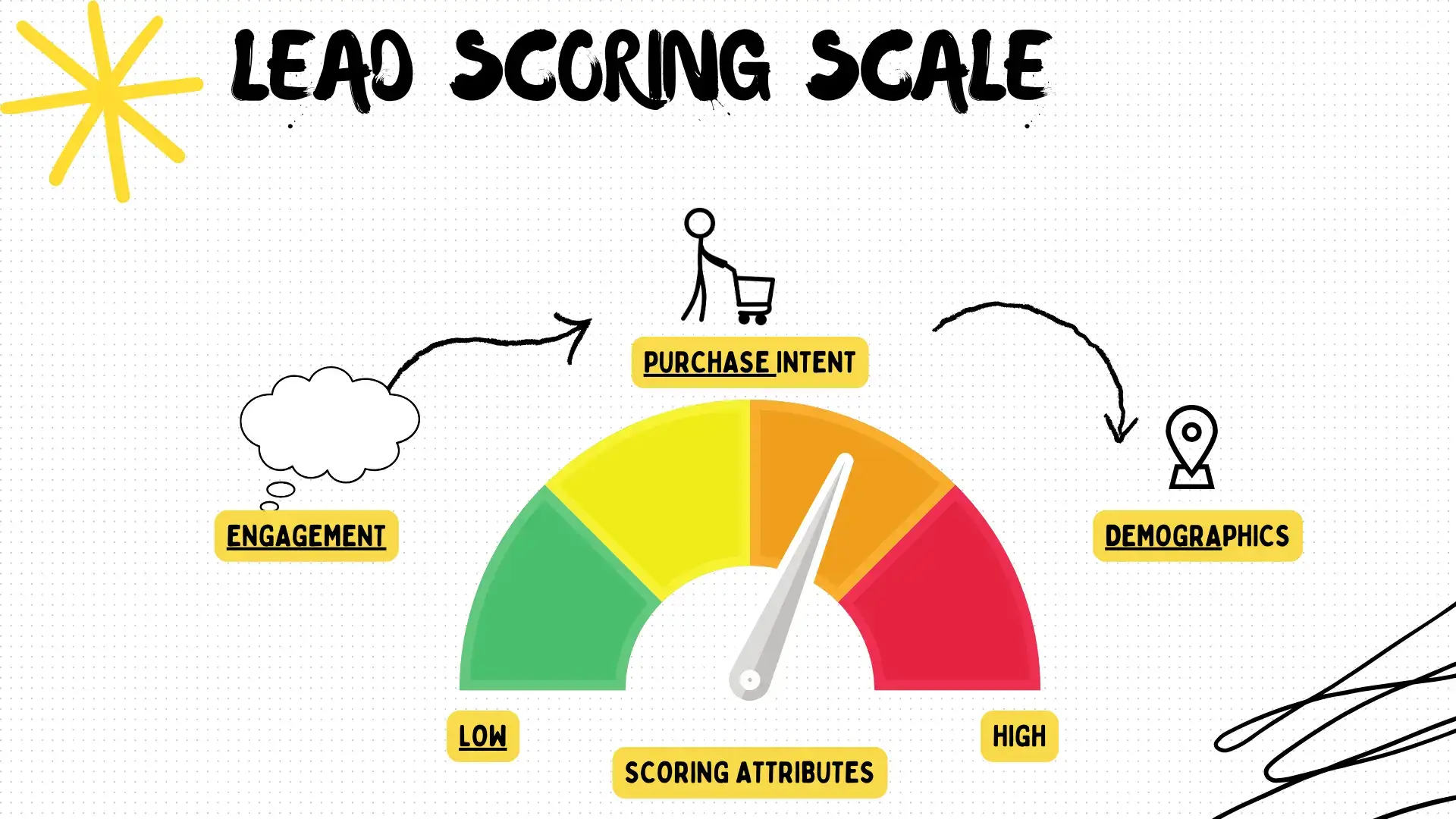
Why Lead Scoring Fails Before AI Gets Involved
Every B2B lead-scoring model we've seen fail, failed for boring reasons. The tool was rarely the problem. Adding AI to a broken model just produces broken scores faster.
Scores That Measure Curiosity, Not Fit
Engagement-only scoring is the most common mistake. A student downloads three ebooks and a competitor reads your pricing page twice. Both look hot. Neither will buy.
A related problem is criteria nobody can verify. "Strong budget" or "innovative culture" sound smart in a planning meeting. But if no field in your data shows them, every rep will guess differently.
Scores Nobody Agrees On or Maintains
Three issues show up again and again here:
- No written definition of a qualified lead. Each rep applies a personal standard, so scores mean different things to different people.
- Marketing and sales disagree on handoff. Marketing counts a form fill as ready. Sales wants a confirmed problem and a real role. The lead bounces between teams.
- Scores never decay. A lead who engaged four months ago still looks hot. Meanwhile their interest moved on long ago.
Machine Learning Before There's Data
Predictive scoring needs a lot of closed deals to learn from. Many teams reach for it with a few dozen wins and an unclean CRM. The model finds patterns in noise.
The takeaway: A clean rule-based model with explicit weights beats an under-trained predictive one. Claude is well suited to running exactly that kind of model. It follows written rules consistently and shows its work.
🎯 Score Better. Sell Smarter.
Cleverly helps 10,000+ businesses target high-fit prospects and generate qualified meetings through done-for-you outbound campaigns.
Build the Scoring Model Before You Touch Claude
The model is the work. The tool just applies it. If you can't hand your rubric to a new SDR and get sensible scores back, Claude won't do better.
Separate Fit From Intent
Fit is who they are. Industry, company size, geography, role, and seniority.
Intent is what they're doing. Pages viewed, replies, trigger events, and hiring activity.
Use fit as a pass/fail gate. Use intent as the scoring scale. This is the core of ICP lead scoring, and it stops engaged non-buyers from ever reaching a rep. A perfect-intent lead at the wrong kind of company still fails the gate.
Define Fit Criteria You Can Actually Observe
Write criteria against fields that exist in your data. Not aspirations.
- Mark each criterion as a hard disqualifier or a soft negative.
- Keep the list short. Five to eight criteria is usually enough.
- If you can't point to the column that proves it, cut it.
Here's an example fit gate for a B2B SaaS company selling to mid-market sales teams:
Weight Intent Signals by Predictive Value
Not all engagement is equal. A pricing page visit outranks a blog read. Trigger events, such as new funding, a new sales leader, or SDR hiring, often predict better than on-site behavior.
Then apply decay. Older signals should lose weight over time. Example weights:
Decay rule for the example: signals lose half their points after 30 days and drop to zero after 90. These weights are illustrative. Your closed-won data should set yours.
Write Down Your Tier Definitions
Decide what each tier means operationally. Then get sales to agree before launch.
Also write the handoff standard in one sentence. For example: "An A-tier lead is a verified decision-maker or influencer at a fit company showing recent buying behavior."
Output: a one-page scoring rubric a human could apply unaided.
Claude Lead Scoring at Scale: How to Run It in Batches
Once the rubric exists, the setup takes minutes. The discipline is what keeps results usable.
Give Claude the Rubric First
Put the ICP, criteria, weights, and tier definitions in one place. Use a Claude Project or a saved prompt so every session starts from the same rules. Don't re-type the rubric from memory each time.
Score in Batches
Feed leads in sets of roughly 25 to 50 rather than one at a time. Scoring one lead per chat invites inconsistency. Scoring thousands in a single paste can hurt attention to detail. A batch keeps the standard steady across the set without overloading it.
Ask for Structured Output
Request a table with five fields: score, tier, reasoning, confidence, and any missing data. Example output:
The reasoning field isn't optional. It's how you audit the model. When a score looks wrong, the reasoning shows which criterion Claude misread.
Make Claude Flag Missing Data
Tell it plainly: if a field is missing, write "missing" and don't guess. Claude can only score what you give it. It won't verify a company's headcount, and it shouldn't fill that gap from guesswork. A flagged gap is useful. An invented number is dangerous.
Run a Calibration Pass
Before scoring new leads, score 20 you already know the answer for. Include clear wins, clear losses, and a few messy ones. Compare Claude's tiers with what really happened.
Fix the Rubric, Not the Prompt
When results look off, resist the urge to add patches to the prompt. Find the criterion that caused the miss and fix it in the rubric. Patching prompts creates a pile of hidden rules nobody remembers.
Output: a tiered, prioritized list with an audit trail.
Pro tip: Before you paste lead data into any AI tool, check your company's data policy. Share only the fields the rubric needs.
🚀 Turn Qualified Leads Into Pipeline
With 224.7K+ leads generated, 53,000+ meetings booked, and $312M+ pipeline, Cleverly helps B2B teams turn better targeting into sales opportunities.
Use Claude to Classify Inbound Leads and Replies
This is where Claude lead qualification pays off fastest. Triaging a full inbox of cold outreach replies is repetitive work, and humans do it inconsistently by Friday afternoon. Claude doesn't have a Friday afternoon.
Define Your Categories Clearly
Give Claude a fixed set of labels and what each one triggers:
Treat unsubscribes as urgent. Under CAN-SPAM, you have 10 business days at most to honor an opt-out. Sooner is better.
Separate Interest From a Qualified Opportunity
This distinction trips up many teams. "Send me some information" is interest. It isn't a qualified opportunity. If you route it as one, reps burn time on polite brush-offs and your pipeline numbers inflate.
Write this rule into the prompt. Treat information requests as Interested, but flag them as unqualified until fit and need are confirmed on a call.
Extract the Useful Detail, Not Just the Label
A category alone loses the best part of a reply. Ask Claude to pull out:
- Timing: "circle back in Q1"
- Named contact: "talk to Priya in RevOps"
- Stated objection: "we already use a vendor," "no budget this year"
Take this reply: "Not now, we're locked into budget until January. Ping me then." Claude should return: Not now, timing January, objection budget cycle, no referral. That one line feeds your nurture calendar directly.
Send Ambiguous Replies to a Human
Don't force a label. A reply like "interesting, who else is doing this?" could be curiosity, a competitor, or a buying signal. Let Claude say "ambiguous" and move on.
Apply the Same Approach to Inbound
Form fills and demo requests work the same way. Score them on arrival against the fit gate and intent rules. Then route them by tier.
Review a Sample Every Week
Pull 20 to 30 classifications each week and check them. Classification drifts as your market, offer, and reply language change. A weekly spot check catches it early.
How to Qualify Sales Leads With AI: Route Each Tier to a Next Action
You can qualify sales leads with AI all day. If a tier doesn't trigger an action, nothing changes. Each tier needs a defined next step.
Set a Speed Expectation on the Top Tier
Response time predicts conversion strongly. The HBR research cited earlier shows how quickly the odds fall. Set a clear standard for A-tier leads, such as first contact within one business hour, and measure it.
Be Willing to Say No to Low-Fit, High-Intent Leads
This feels wrong. The lead is engaged. But a company outside your ICP that books a demo still costs a rep an hour, and often ends in a stalled deal. Saying so out loud protects your reps' calendars.
Give Every Route an Owner
Routing must be automated or owned by a named person. If the rule lives only in a slide deck, scoring changes nothing.
Feed Outcomes Back Into the Rubric
Send closed-won and closed-lost results back into the model. Every quarter, check which criteria actually predicted wins. Then adjust the weights. That's how the model sharpens over time.
Claude Sales Prompts for Lead Scoring and Qualification
These Claude sales prompts are starting shapes. Adapt the brackets, then save them in one shared place so your whole team uses the same versions.
1. Rubric-Building Prompt
Adapt: swap in the fields your CRM actually holds.
2. Batch Scoring Prompt
Adapt: change batch size and tier labels to match your rubric.
3. Disqualification Prompt
Adapt: keep the disqualifier list short and strict.
4. Reply Classification Prompt
Adapt: rename categories to match your CRM statuses.
5. Inbound Triage Prompt
Adapt: add your response-time standard for A-tier leads.
6. Model Review Prompt
Adapt: run it quarterly, or after any ICP change.
How to Keep AI Lead Scoring Accurate
AI lead qualification is only as good as its upkeep. Think of the rubric as a living document, not a launch asset.
Calibrate Before You Trust - Score leads with known outcomes first. Look at the disagreements, not just the overall match. If the misses cluster around one criterion, that criterion is the problem.
Require Reasoning on Every Score - Without reasoning, a wrong score is a mystery. With it, a wrong score is a five-minute fix.
Never Let Claude Infer Missing Facts - Claude shouldn't guess a company's size, funding, or tech stack. Missing data should be flagged, not filled in. Add a line to your prompt that says so, and check for violations during review.
Review a Sample Weekly, Especially Disqualifications - Wrongly qualified leads show up fast, because reps complain. Wrongly disqualified leads never show up at all. That makes them invisible failures. Pull a sample of D-tier leads each week and ask whether any deserved a conversation.
Watch for Drift - If your ICP changes but the rubric doesn't, scores slowly get worse. Launch a new segment, change pricing, or move upmarket? Update the rubric the same week.

Where AI Lead Scoring Stops Working
We'd rather tell you this now than have you find it out in month three.
It Can't Score Data You Don't Have - Most scoring gaps are data gaps. If your CRM lacks company size or role information, no prompt fixes that. Fix the data source first.
It Can't Judge What Only a Conversation Reveals - Budget reality, internal politics, and genuine timing rarely appear in a spreadsheet. A call surfaces them in five minutes. A score can't.
Garbage Criteria Produce Confident Garbage - Claude will score against bad criteria just as smoothly as good ones. The output looks clean. That makes it more dangerous, not less.
It Won't Fix Sales and Marketing Misalignment - If the two teams disagree on what "qualified" means, a score just makes the argument faster. Settle the definition first.
Small Volumes Don't Need Scoring - If you get 15 leads a week, you don't need a model. You need someone to read them.
Over-Automating Disqualification Hides Losses - Auto-suppressing leads with no review quietly removes good accounts. Nobody notices, because nothing alerts you to a deal that never started.
The right split: AI handles consistency at volume. Humans handle judgment on the ones that matter.
How Cleverly Qualifies Leads Before They Reach Your Calendar
Scoring only works if two things are true. Enough leads are flowing to prioritize, and someone acts on the top tier fast. We see teams build a solid scoring model, then hit the real wall: thin volume at the top of the funnel, or no one following up inside the window.
That's the gap Cleverly fills. As a done-for-you B2B lead generation agency, we run the whole outbound chain. That means ICP definition, verified list building, LinkedIn outreach, cold email, and cold calling.
We also handle reply handling and qualification, then book meetings onto your calendar through our appointment setting service.
The part that matters for this guide is qualification. We agree on your criteria in writing, then qualify against them before a meeting is booked. Automation and AI handle the consistency layer you just read about. Trained people handle objections and judgment calls. Your reps stop spending calls deciding who is worth talking to.
We optimize for qualified meetings that actually happen, not lead volume or score counts. Our clients have generated $312M in pipeline and $51.2M in revenue through our outreach.
Want qualified meetings instead of leads to sort through? Get a free consultation from Cleverly.
Conclusion
Claude lead scoring works because Claude is excellent at applying a model consistently. It won't design the model for you. Keep fit as the gate and intent as the scale. Require reasoning on every score. Calibrate against known outcomes, and review your disqualifications.
Your next step is small. Write a one-page rubric, score 50 leads you already know the answer for, and compare before you scale. Then give every tier a defined action and an owner. Otherwise it's a label, not a decision.
Frequently Asked Questions
Free Resource
How to Scale a Profitable Cold Call System
Get the complete guide — download it instantly now.

Free Ebook
Download the Free Guide
Enter your details to get instant access.
You're all set! 🎉
Your ebook is downloading now.
Click below if the download didn't start automatically.


