Table of Contents
What Is a B2B Messaging Framework?
Core Components of a B2B Messaging Framework
How to Build a B2B Messaging Framework Step by Step
Applying the Messaging Framework to Outbound Conversion
How to Measure Whether Your Messaging Framework Is Working
Common Mistakes That Undermine a B2B Messaging Framework
How Cleverly Uses Messaging Frameworks to Improve Outbound Conversion
Conclusion
Frequently Asked Questions
Modified On :
August 7, 2026
Key Takeaways
- A messaging framework isn't a script or a template you fill in once. It's a living, research-backed structure that every rep, campaign, and channel pulls from so your outbound stops sounding scattered.
- Claims without proof points create buyer resistance. Every message in your framework needs evidence attached, not just a confident assertion.
- The same framework has to flex by channel. What works as a cold email opener falls flat read verbatim on a call, and a LinkedIn DM that reads like ad copy gets ignored.
- Segmentation beats one-size-fits-all messaging every time. A VP and a director rarely respond to the exact same pitch, even when you're solving the exact same problem for both of them.
- A framework only earns its keep when someone owns it. Without governance, reps and campaigns quietly drift back to improvised messaging within a few weeks.
A pattern we see constantly when a client comes to us after a failed outbound run: they blame the channel. Cold email doesn't work anymore. LinkedIn is saturated. Cold calling is dead. Almost never is that actually the problem.
The real issue usually surfaces the moment you pull three reps' emails from the same campaign and line them up side by side. Different value props. Different pain points emphasized. Different proof points, if any show up at all.
Nobody's lying, exactly. They're just improvising, because there's no shared source of truth telling them what to say and why it works.
The stakes here are higher than they used to be. Reply rates across B2B cold email have compressed to 1-3% on average, with top performers hitting 5-8% and top decile senders clearing 10%+.
Meanwhile, messages built around specific buying signals and clear, evidence-backed positioning are pulling 18% response rates, more than 5x the generic average. That gap isn't about smarter subject lines. It's about whether the message actually says something specific, provable, and relevant.
This guide walks through what a B2B messaging framework actually is, the components that make one work, how to build one step by step, and how to apply it across cold email, LinkedIn, and cold calling without it turning into a stiff, read-verbatim script.
What Is a B2B Messaging Framework?
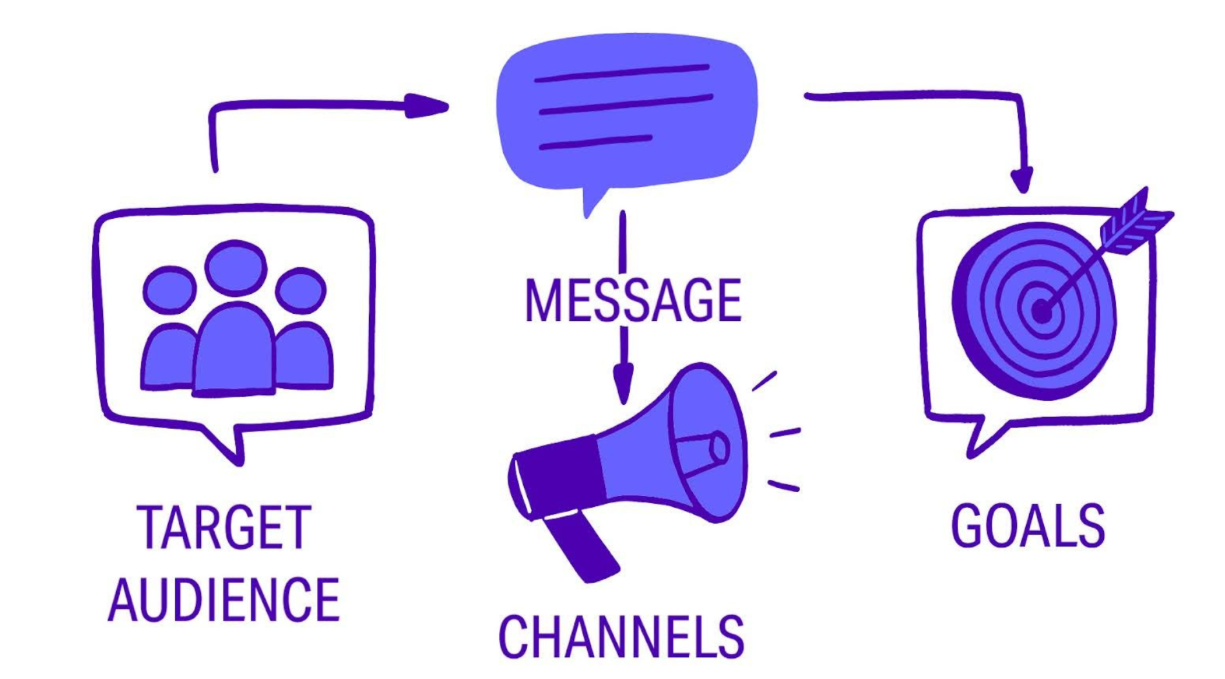
A B2B messaging framework is a structured document that defines your core value proposition, your key messages, and the proof points that back each one up, organized across the audiences and use cases you sell into.
That distinction matters more than it sounds. A script tells someone exactly what to say, word for word. A framework gives them the building blocks and the reasoning behind them, so a rep on a call and a sequence writer building a cold email are both pulling from the same logic, even though the delivery looks nothing alike.
How it's different from brand messaging
Brand messaging is built to protect voice and tone across everything a company publishes. A B2B brand messaging framework built for outbound needs to go further. It has to speak in the buyer's language and stay anchored to outcomes, not identity.
Nobody replies to a cold email because they liked your brand voice. They reply because the message named a problem they actually have.
Why it matters specifically for outbound
Inbound content gets time. A blog post, a webinar, a case study, all of these get read on the reader's schedule when they've already opted in. Cold outreach doesn't get that luxury. You've got a few seconds of attention before a prospect decides whether to keep reading or archive the email.
Without a framework, every rep is improvising that decision under pressure, and most improvised pitches default to generic value language that doesn't earn a second look.
73% of B2B buyers actively avoid sellers who send irrelevant outreach, per Salesforce's State of Sales research cited in recent outbound benchmarking. A framework is what keeps that irrelevance from creeping into every touch.
🎯 Better Messaging. Better Replies. Better Pipeline.
Our LinkedIn, cold email, and cold calling campaigns generate 15–30 qualified meetings every month with messaging that converts.
Core Components of a B2B Messaging Framework
These are the building blocks. Once they're in place, every persona-specific message, every channel variation, and every rep's talking points pull from the same foundation instead of getting reinvented from scratch each time.
Core Positioning Statement
This is the one or two sentences that answer who you help, what problem you solve, and why that problem matters right now. It's not a tagline. It's the thing you'd say if a prospect asked "what do you actually do" and you had exactly one shot to answer well.
Value Proposition
Your positioning statement explains what you do. Your value proposition explains why someone chooses you specifically, over doing nothing or over a competitor. This is where most frameworks get vague. "We help companies grow" isn't a value proposition. "We book qualified sales meetings without you hiring, training, or managing an SDR team" is.
Key Messages and Proof Points
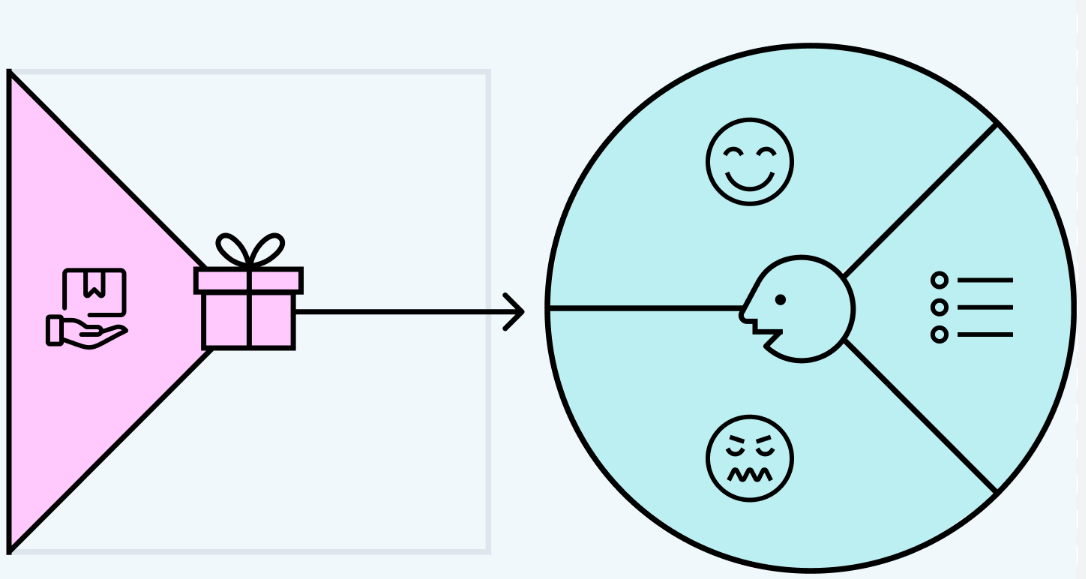
Pick 3 to 5 core claims your outbound will lean on repeatedly. Each one needs a proof point attached: a data point, a case study, a specific client result. A claim with no evidence behind it reads as marketing noise, and buyers have gotten very good at filtering that out.
Audience/Persona Segmentation
One framework, multiple applications. The pain point that gets a VP of Sales to respond isn't the same one that moves a RevOps director. Segment your messaging by persona, industry, or company size, but keep the core positioning consistent underneath it.

Differentiators
State what actually separates you from alternatives, in language a buyer would use, not internal jargon that means something to your team and nothing to them. "AI-powered" and "cutting-edge" aren't differentiators anymore. Specific outcomes and specific process details are.
Voice and Tone Guide
This defines how the brand sounds without forcing every channel to sound identical. A LinkedIn message should feel conversational. A cold email should feel direct and scannable. A cold call needs to sound like a person talking, not a script being read. The voice guide keeps all three recognizably "you" without flattening them into the same format.
How to Build a B2B Messaging Framework Step by Step
Step 1: Start with data, not assumptions
Pull from win/loss analysis, actual sales call transcripts, and customer interviews. The language your best customers use to describe their problem is almost always sharper and more specific than anything your internal team would write from a whiteboard session.
Step 2: Identify the 3-5 recurring pain points
Outcomes that show up across your best-fit customers. If you're pulling from real data, patterns emerge fast. These become the backbone of your key messages.

Step 3: Draft the core positioning statement and value proposition, then stress-test it
Read it back against real buyer language from your interviews. If it sounds like something a marketer wrote instead of something a customer would recognize, rewrite it.
Step 4: Attach proof points to every single claim
No exceptions. If you can't back a claim with data, a case study, or a specific outcome, cut the claim or go find the evidence first.
Step 5: Build persona-specific variations without rewriting the core message from scratch
The positioning stays the same. What changes is which pain point and which proof point you lead with, based on who's reading.
Step 6: Validate with actual reps and live campaigns before rolling it out company-wide
A framework that nobody uses in the field isn't a framework, it's a document sitting in a shared drive. Test it, get feedback from the people actually sending the messages, and adjust before you scale it.
Realistic timeline: a properly researched framework, built from real data rather than assumptions, typically takes 6-8 weeks to do well. Rushing this step is where most frameworks fall apart later.
🚀 53,000+ Meet ings. $312M+ Pipeline. Proven Messaging.
Join 10,000+ businesses that trust Cleverly to turn stronger messaging into predictable outbound revenue.
Applying the Messaging Framework to Outbound Conversion
The framework is the source. Each channel has its own delivery rules for pulling from it.
Cold Email

Lead with the pain point or the outcome, not a description of your company. Your subject line and opening line should mirror the framework's language, not restate your tagline.
Every claim in the body needs its proof point attached right there, because buyers won't go looking for evidence on their own. And keep the ask small. A low-friction CTA converts better than asking for a 30-minute commitment straight out of the gate.
This tracks with the broader data: the first follow-up alone adds roughly 40% more replies than the opener, which tells you the framework needs to hold up across a full sequence, not just message one.
LinkedIn Outreach
Framework messaging needs to read like a person wrote it, not like ad copy pasted into a DM. Use your persona-specific variations here especially. A VP and a director should not get the identical opening line, even if you're solving the same problem for both.
Connection requests with a contextual note tied to a real signal convert at 3-5x the rate of blind requests, which is a direct payoff of having the framework's key messages ready to plug into a specific context instead of sending a generic connect note.
Cold Calling
Reps need the framework's core claims memorized as talking points, not read off a script. Natural delivery matters more on a call than anywhere else in your outbound mix. Objection handling should trace back to the framework's proof points too.
If a prospect pushes back on a claim, the rep should have real evidence ready, not an improvised response that contradicts what the email sequence already said.
How to Measure Whether Your Messaging Framework Is Working
Track reply rate and positive reply rate by message variant, not just overall campaign performance. Aggregate numbers hide which specific version of your messaging is actually landing.
Compare performance across personas and segments too. A framework that converts well for one persona might need real adjustment for another, and averaging the two together will hide that.
Watch for signal-based lift specifically. Messaging tied to a real buying signal, like a new VP hire or a funding announcement, produces a dramatically bigger jump than generic messaging does.
Emails referencing a specific trigger event achieve 18% response rates, more than 5x the generic average. That's not a small optimization. It's evidence that your framework's proof points and pain points are landing at the right moment.
Revisit and refresh the framework regularly. Objections shift, the competitive landscape shifts, and the way buyers describe their own problems shifts. A framework that was accurate eight months ago can quietly go stale if nobody's updating it.
Common Mistakes That Undermine a B2B Messaging Framework
❌ Treating it as a one-time template-filling exercise. A messaging framework is an ongoing, research-led discipline, not a document you write once and forget.
❌ Building it from internal assumptions instead of real data. Win/loss analysis and customer interviews beat a whiteboard session every time.
❌ No proof points attached to claims. This is the fastest way to create buyer skepticism instead of trust.
❌ One-size-fits-all messaging with zero persona variation. Different buyers care about different outcomes, even when they're solving the same underlying problem.
❌ No governance. Without a process to realign, reps and campaigns drift from the framework within weeks, and you end up right back where you started.
How Cleverly Uses Messaging Frameworks to Improve Outbound Conversion
A strong messaging framework only creates value if it's actually applied consistently across every touchpoint of a campaign, and that consistency is harder to maintain than it sounds once you're running outreach across multiple channels and multiple reps.
As a B2B lead generation agency, we build and test messaging frameworks specific to each client's ICP across LinkedIn outreach, cold email, and cold calling. Instead of guessing at positioning, campaigns get built around researched pain points and proof points, then refined based on real reply and meeting data as the campaign runs. That refinement piece matters.
A framework that looked strong on paper sometimes needs adjusting once it's actually in front of real prospects, and that's a continuous process, not a one-time setup.
What's included is message testing across variants, persona-specific messaging built for each segment you're targeting, and ongoing refinement as performance data comes in.
This is a natural fit for companies that already have a strong offer but need outbound messaging built and tested by a team running campaigns at scale every day, across LinkedIn, cold email, and cold calling. We've generated $312M in pipeline for clients running this exact process.
Want messaging built and tested for you across every outbound channel? Book a strategy call with Cleverly to see how it would work for your ICP.
Conclusion
A messaging framework isn't a document that sits in a shared drive collecting dust. It's the foundation every outbound conversion improvement actually builds on top of.
Strong frameworks come from real data, win/loss analysis, and customer interviews, not internal assumptions. They're backed by proof points on every claim, and they're segmented by persona instead of trying to say one thing to everyone.
Just as important: applying the framework differently by channel matters as much as building the framework itself. A cold email, a LinkedIn message, and a cold call all pull from the same source, but none of them should sound identical.
The next time an outbound channel underperforms, check the messaging before you blame the channel. More often than not, that's where the real problem is hiding.
Frequently Asked Questions
Free Resource
How to Scale a Profitable Cold Call System
Get the complete guide — download it instantly now.
Free Ebook
Download the Free Guide
Enter your details to get instant access.
You're all set! 🎉
Your ebook is downloading now.
Click below if the download didn't start automatically.