Table of Contents
How Many Touchpoints Does It Take to Book a B2B Meeting? The Short Answer
What Counts as a Touchpoint (and What Doesn’t)
Why the Published Touchpoint Numbers Disagree
How Many Touchpoints You Need by Deal Size and Lead Type
How to Build an Outreach Sequence That Books Meetings, Step by Step
Three Sample Touchpoint Sequences (Day by Day)
From Positive Reply to Booked Meeting: The Touches That Come After the Reply
How to Measure Touchpoints and Tune Your Cadence
Common Mistakes That Waste Touchpoints
Why B2B Teams Hand Their Touchpoint Sequences to an Appointment Setting Team
Conclusion
Frequently Asked Questions
Modified On :
November 12, 2026
Key Takeaways
- It takes about 8 touchpoints to book a meeting with a new prospect on average. Top performers need about 5.
- Working ranges by segment are roughly 5-8 touches for SMB, 8-12 for mid-market, and 12-20+ spread across several people for enterprise. These are practitioner ranges, not a study.
- Count delivered touches only. A bounced email or a wrong number is logged activity, not reach.
- Multi-channel sequences book more meetings. In Apollo Academy data, 46% of users booked meetings with automated email only, and 60% did with email plus LinkedIn.
- Write your stop rules before launch, then track reply rate by touch number. Your own data beats any published benchmark.
It takes about 8 touches to book a first meeting with a new prospect. Top performers get there in about 5. That comes from RAIN Group’s Top Performance in Sales Prospecting research, and it is still the most-quoted answer to how many touches to book a meeting.
Now the tension.
Gartner’s March 2026 survey of 646 B2B buyers found that 67% prefer a rep-free buying experience. Two months later, Gartner reported that 69% still turn to sales reps to validate what AI tools told them. Buyers resist early contact, but they still want a human at the moments that matter. So every touch has to earn its place.
In this guide, we cover the number, why published sources disagree, three day-by-day sequences, and how to measure your own count.
We run these sequences every day at Cleverly. Our appointment setting service gets qualified leads onto your calendar, so you can skip the heavy lifting.
How Many Touchpoints Does It Take to Book a B2B Meeting? The Short Answer
It takes about 8 touchpoints on average to book a first meeting with a new B2B prospect. Top performers need about 5.
Mid-market cold outreach usually runs 8-12 touches over 14-21 days across three channels. Warm leads need fewer, around 6-10. Enterprise deals need a few touches each to several people, not 8 to one person.
Two things to know about that “8.”
- It measures a first meeting or similar conversion, not a closed deal.
- RAIN’s explanation for the gap is quality, not volume. Top performers had better targeting, messaging, and value offers, so conversations started sooner.
Summaries of the same research report that top performers turned about 52 of every 100 target contacts into meetings. Everyone else turned 19. Same effort, very different output.
🎯 Every Touchpoint Should Move the Deal Forward
One email rarely seals the meeting. Cleverly combines LinkedIn, cold email, and cold calling to keep prospects engaged and interested.
What Counts as a Touchpoint (and What Doesn’t)
A touchpoint in sales is a direct, sales-initiated interaction that the prospect can actually receive. You send it, it arrives, and they could read it, hear it, or see it.
That definition matters because the word gets stretched. Some sources count direct touches only. Others count indirect ones too: ad impressions, website visits, content views, and anonymous activity.
Mixing the two is how you get numbers as far apart as 8 and 266. The 266 comes from HockeyStack’s analysis of 150 B2B SaaS companies. It tracks marketing and sales activity across the entire buying journey, to a closed deal, across the whole buying group. The 8 is direct outreach to book one meeting. Both can be true. They answer different questions.
Here is how we count by channel.
The rule of thumb is to count delivered touches, not logged activity. If your CRM says 8 touches but 2 were bounces and a dead number, the prospect got 5.
Pro tip: Add a “delivered” field to your sequence reports. It shows you quickly how much of your effort never reached anyone.
Why the Published Touchpoint Numbers Disagree
If you search this topic, you will find 5, 8, 12, 20, 50, and 266. Nobody is necessarily lying. There are five usual reasons the B2B sales touchpoints benchmark numbers split.
- Different endpoints. A reply, a booked meeting, and a closed deal need different counts.
- Different samples. Seller surveys, platform data, and agency data behave differently.
- Different channels counted. Email only versus email, phone, and social.
- Different deal sizes. A $10K deal and a $500K deal do not follow the same path.
- Different data quality. Clean lists need fewer touches than dirty ones.
Source hygiene: how to trace a stat
Stats get relabeled as they travel. Several pages present RAIN’s “8 touches” as a fresh 2026 benchmark. It is not. It is older research being repackaged. Always click through to the original.
Two more you will see everywhere:
- “287% higher results with multi-channel.” Apollo’s pages attribute it to a vendor called Landbase. Other pages credit other sources. We could not find an original study, so we do not use it.
- “44% of salespeople give up after one follow-up.” No measured study stands behind it. The earliest version we could trace is a 2009 column, and there it described giving up after one “no,” not one follow-up.
Even good studies can flip each other. Instantly’s analysis says the first email captures 58% of all replies. Belkins’ 2026 study of 7.5M emails sent in 2025 found the opposite split. The first email delivered 41.4% of replies, and steps 2 through 6 delivered 58.6%.
Different datasets, different senders, different stories.
The three-question test
Before you trust any stat, ask:
- What is it measuring? Reply, meeting, or close?
- Who was surveyed or tracked? How many, and what type of company?
- When? Fieldwork date, not publish date.
If a page cannot answer all three, treat the number as a rumor.
🚀 Stop Following Up. Start Booking Meetings.
Get a coordinated outreach strategy built around your ideal buyers. Let Cleverly handle every touchpoint from first contact to booked appointment.
How Many Touchpoints You Need by Deal Size and Lead Type
Deal size changes the math. More money means more stakeholders and more evaluation. Here are working ranges, based on what practitioners and outbound guides converge on. They are not from a single study.
Keep two timelines apart in your head.
- Touches to book a meeting: the 5-12 range above.
- Touches across the full buyer journey: HockeyStack’s 266 for B2B SaaS deals in 2024, including marketing and anonymous activity.
Your SDR sequence owns the first one. Your whole go-to-market owns the second.
Cold outbound prospects
The standard cold window is about 14-21 days, with 8-12 touches across three channels. Many outbound guides land on that same range.
The data on email follow-ups is more nuanced than “send more.” Belkins’ 2026 study found:
- Reply rate per email step falls from 0.59% at step 1 to 0.28% at step 6.
- Even so, follow-ups together bring in 58.6% of all replies.
- Step 3 books more email-sourced meetings than steps 1 and 2 combined.
- Steps 3 to 5 account for 53.5% of email-sourced meetings.
So stopping after one email leaves most replies behind. But beyond step 5, email returns fall off fast. Belkins’ advice is to switch channels. In its data, LinkedIn delivered reply rates above 7%, and cold calls connected with 18.6% of the prospects reached.
Past 8-12 touches, most guides say to move the contact to nurture. We agree.
Warm and inbound leads
Warm leads need a shorter sequence, about 6-10 touches, because intent already exists. Here the highest-leverage touch is speed.
The classic evidence is the 2007 Lead Response Management study by Dr. James Oldroyd with InsideSales.com. It covered 15,000+ leads across six companies. Calling within 5 minutes versus 30 made a lead about 100 times more likely to be contacted and about 21 times more likely to be qualified.
Two cautions. It is old, and we could not find a newer study measuring the same thing. It also measured qualification, not closed deals. Treat the multipliers as directional, and the lesson as solid: the first touch matters more than the eighth.
With cold leads, you are earning attention. With warm leads, you are racing to answer a question they already asked.
Enterprise buying committees
Gartner has long reported that a complex B2B purchase involves 6 to 10 decision makers. Other studies put it higher. The point is the same: one contact cannot carry the deal.
That changes the plan. Instead of 8 touches to one person, think a few touches each to three roles:
- Champion: feels the pain daily and will push internally.
- Economic buyer: owns budget and cares about outcomes.
- Evaluator: checks fit, risk, and technical details.
Coverage across roles beats depth on one contact. A champion who goes silent on touch 6 is a dead end. Three people with two warm touches each is a pipeline.
How to Build an Outreach Sequence That Books Meetings, Step by Step
A sequence is a plan for who gets touched, how, when, and when you stop. Here is how we build one.
Step 1: Start with data quality and ICP fit
Bad data inflates touch counts. Every bounce and wrong number burns a touch with zero reach.
Fit sets the ceiling too. No sequence rescues an account that was never a good match. If the prospect has no need, touch 12 will not create one.
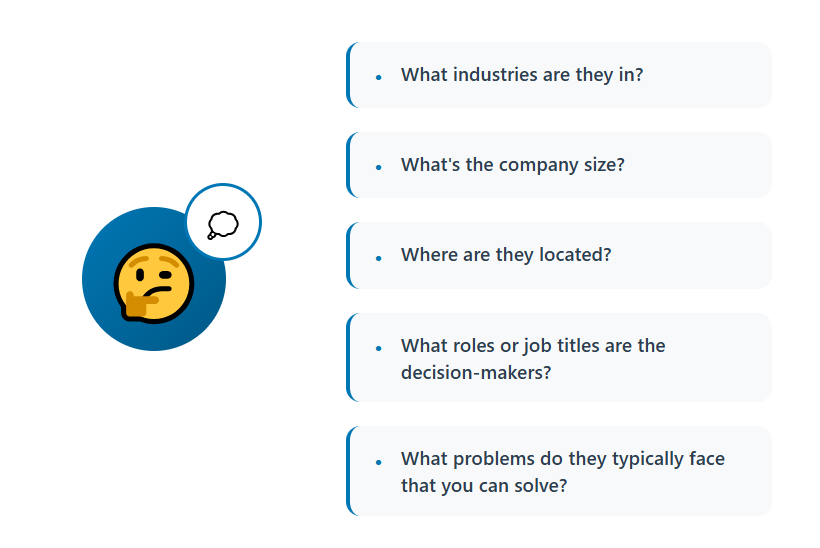
Verify emails and phone numbers before you send. Keep your ICP tight enough that a “no” teaches you something.
Do this today: pull 50 contacts from your next list. Verify them, then count how many are reachable and a true fit.
Step 2: Set the touch count and window
Pick a count from the deal-size table, then pick the window. For mid-market, that is 8-12 touches over 14-21 days.
Space touches tightly early and wider later. A common practitioner rule is gaps of 2-4 days at the start, stretching to 5-7 days near the end. It is a habit that works for many teams, not a law.
Decide the exit before launch. Know what ends the sequence before the first send.
Do this today: write your count, window, and exit rule in one sentence at the top of your sequence doc.
Step 3: Choose the channel mix
Each channel has a job.
- Email for reach. It scales.
- LinkedIn for familiarity. It puts a face to the name.
- Phone for conversation. It is the only channel where you can answer an objection in real time.
Know the limits too. LinkedIn does not publish a weekly invite cap, but practitioners report about 100 per week. Average acceptance sits near 28.5% in Expandi’s data across 13.2M requests. And calls only help if someone answers.
The case for mixing is clear in Apollo Academy’s data. Among Apollo users, 16% booked meetings without sequences, 46% with automated email only, and 60% with email plus LinkedIn.
Do this today: pick three channels for your next sequence and assign each a role.
Step 4: Give every touch a job
A sequence of identical nudges is just noise. Give each touch one purpose.
Length matters, but not the way you might think. Gong Labs analyzed 304,174 follow-up emails in 2021. Very short “just bumping this up” follow-ups booked far fewer meetings than follow-ups that added real content. Gong also found that phrases like “following up” lowered the odds of booking.
Reference the previous touch in every follow-up. Your prospect is not thinking about you between emails, so give them context.
Do this today: rewrite your weakest follow-up so it adds one new fact or one new angle.
Step 5: Write the stop rules
Exit a contact when they reply, book, unsubscribe, bounce, or reach the end of the sequence. No exceptions.
Unengaged contacts go to nurture. Re-enter them after about 90 days with a new angle. Do not recycle the same sequence. It tells them you did not learn anything.
Do this today: list your five exit triggers and confirm your tool enforces each one.
Three Sample Touchpoint Sequences (Day by Day)
Treat these as starting points to test. They are not guaranteed numbers.
8-touch cold sequence for mid-market accounts
This runs over 21 days across three channels.
Touch 2 is the non-pitch LinkedIn touch. Touch 8 hands the contact to nurture.
12-touch multi-threaded sequence for enterprise accounts
This runs over about 28 days. Three contacts, four touches each, spread out instead of stacked on one person.
The account-level insight in touch 3 replaces a generic pitch. It might be a hiring signal, a product launch, or a public goal from an earnings call. It shows you did the work.
6-touch sequence for warm and inbound leads
This runs over about 10 days.
Use the downloaded resource or form answer as your opener. It is the most relevant thing you know about them.
From Positive Reply to Booked Meeting: The Touches That Come After the Reply
A reply is not a meeting. Many “interested” prospects never confirm a slot, and many confirmed slots never show.
SmartReach’s 2026 first-party data suggests about 1 in 5 replies is positive, and about half of positives become booked meetings for a well-run agency. Apollo Academy training data notes that about 30% of booked meetings do not show. Treat both as one-source numbers.
The touches after the reply deserve their own plan:
- Reply fast. Aim for minutes, not hours. The speed-to-lead logic applies here too.
- Propose two specific times in your first response. Open-ended “when works?” adds a round trip.
- Send the calendar invite right away once they confirm.
- Send a confirmation with a one-line agenda.
- Send a short reminder the day before.
- Add a pre-meeting touch. One line stating what you will cover and what you need from them.
The reply is where the money leaks. Most teams track sends and replies and then lose people between “sounds good” and the calendar.
How to Measure Touchpoints and Tune Your Cadence
Track these four:
- Reply rate by touch number. Shows where replies come from.
- Touches per booked meeting. Shows how much effort a meeting costs.
- Meeting-held rate. Shows how many booked meetings actually happen.
- Sequence-to-opportunity rate. Shows whether meetings turn into pipeline.
Here is a worked example with round, hypothetical numbers.
Three things stand out. The 100 unreachable contacts show up before any copy gets tested. Only 12 of 45 replies were positive. And two booked meetings never happened.
Notice also that “8 touches to book a meeting” describes the prospect who converts. The cost side covers every touch sent to everyone else. At 7 delivered touches per reachable contact, that example sends about 6,300 touches to land 8 meetings. That is why targeting and data matter so much.
When to cut a touch: if the last two touches together produce under about 5% of your replies and meetings, cut them. That threshold is our rule of thumb, not a published one.
When to add one: if reply rate at your final touch is still rising, or a later step bumps up the way Belkins saw at step 4, test one more.
Test one variable at a time: subject line, angle, channel order, or spacing. Change three and you will learn nothing.
Common Mistakes That Waste Touchpoints
- Stopping too early. Belkins’ data shows follow-ups bring most replies. Skip the “44% give up” stat, though. It has no study behind it.
- Single-channel sequences. Email-only caps your reach.
- Single-threading enterprise accounts. One contact leaving the company kills the deal.
- Spacing touches too tight or too loose. Daily pings annoy. Monthly pings are forgotten.
- Repeating “just checking in.” It adds nothing. Give a reason to reply.
- Ignoring bounces and wrong numbers. They quietly shrink your real reach.
- Skipping the guardrails. Assuming a US target market: CAN-SPAM requires honoring opt-outs within 10 business days and including a physical address. Google and Yahoo expect low spam complaint rates, with 0.3% as the line. B2B calls are largely outside the National Do Not Call Registry, but state rules and your own do-not-call lists still apply. Rules change and differ by country, so confirm current requirements with counsel before you launch.
Why B2B Teams Hand Their Touchpoint Sequences to an Appointment Setting Team
An 8-touch, three-channel sequence across a full list is a capacity problem, not a copy problem. You need clean data, someone dialing every day, someone handling replies in minutes, and someone tracking it all. We take that work off your plate at Cleverly.
Our B2B appointment setting services put a dedicated SDR on cold calls to 200-300 prospects a day. We also feed the leads already in your CRM into an AI-powered dialer, qualify each one against your ICP before it reaches your calendar, and follow up within minutes. Most clients combine LinkedIn, cold email, and calling.
According to our own numbers, we have generated $312M in client pipeline. VIRC Insurance booked 307 meetings in three months and Full Pipe booked 41, both through our LinkedIn campaigns.
It does not fit everyone. If you have an SDR bench, a small total market, or a founder-led sales motion, keeping this in-house may be the better call.
If not, book a free strategy call and see how appointment setting with Cleverly works.
Conclusion
It takes about 8 touchpoints to book a meeting on average, and about 5 for top performers. But your own data beats any benchmark, because your list, offer, and channels are not anyone else’s.
Count delivered touches, give each touch a job, and cover the buying group. Then pick one sequence, run it on a small list, and watch reply rate by touch number. If the work starts to outgrow your team, our appointment setting team is there when you need it.
Frequently Asked Questions
Free Resource
How to Scale a Profitable Cold Call System
Get the complete guide — download it instantly now.
Free Ebook
Download the Free Guide
Enter your details to get instant access.
You're all set! 🎉
Your ebook is downloading now.
Click below if the download didn't start automatically.