

Table of Contents
What Is Appointment Setting Outsourcing?
Why B2B Companies Outsource Appointment Setting
In-House Appointment Setting vs. Outsourcing: How They Compare
When Does Outsourcing Appointment Setting Make Sense?
What to Look for in an Outsourced Appointment Setting Service
How Outsourced Appointment Setting Works, Step by Step
How to Measure ROI From Outsourced Appointment Setting
Common Mistakes When Outsourcing Appointment Setting
How Cleverly's Appointment Setting Services Work
Conclusion
Frequently Asked Questions
Modified On :
July 15, 2026
Key Takeaways
- Appointment setting outsourcing lets you delegate prospecting, qualification, and meeting booking to an outside team while your AEs stay focused on closing.
- Outsourcing typically costs 40-60% less than building an equivalent in-house SDR function once you account for salary, tools, training, and management time.
- Outsourced programs can go live in 2-4 weeks. In-house SDR teams usually need 3-6 months to ramp before producing consistent meetings.
- The best providers run multi-channel outreach (LinkedIn, cold email, cold calling), report transparently on meeting quality, and have real experience in your industry.
- Companies that treat outsourcing as a partnership, not a hands-off vendor relationship, get meaningfully better results in the first 90 days.
Pipeline doesn't build itself, and most revenue leaders already know their AEs are spending too much time chasing prospects instead of closing them. That tension is exactly why appointment setting outsourcing has become one of the fastest-growing categories in B2B sales.
Sales development turnover sits at roughly 40% annually, about three times higher than the average turnover rate across all US roles. And when you actually load up the true cost of an SDR, including tools, ramp time, and management overhead, you're often looking at $98,000 to $173,000 per year per rep, not the $60K salary line item most budgets assume.
That math is pushing more CEOs, CROs, and VPs of Sales to ask a different question: build the function in-house, or hand it to a team that already has the infrastructure running?
This guide breaks down exactly what appointment setting outsourcing is, when it makes sense, what separates a strong provider from a mediocre one, and how to measure whether the investment is paying off.
We'll also walk through what the process actually looks like week to week, because most of the confusion around outsourcing comes from not knowing what you're supposed to get for your money.
If you're evaluating whether to outsource your outbound function or keep building it internally, this is the guide to work through before you sign anything.
What Is Appointment Setting Outsourcing?
Appointment setting outsourcing means handing off the outbound prospecting, lead qualification, and meeting booking work to an external team, while your internal Account Executives keep ownership of the actual sales conversation.
Here's the clean way to think about the split:
What the outsourced team owns:
- ICP targeting and contact sourcing
- Outreach execution across cold email, LinkedIn, and cold calling
- Qualification and objection handling
- Calendar booking
What stays in-house:
- The discovery call
- The demo
- The proposal
- The close
Everything revenue-critical, everything that requires deep product knowledge and relationship ownership, stays with your team. Everything repetitive, data-heavy, and volume-dependent gets handled by people who do it full time across dozens of accounts.
This isn't a new idea. Outbound has been outsourced in some form for decades. What's changed is the sophistication of the model.
The global outsourced sales development market is projected to exceed $7.2 billion by 2027, and appointment setting specifically is the fastest-growing segment inside that number.
Companies are under more cost and time pressure than ever to build outbound capacity, and building it internally has gotten slower and more expensive, not less.
📅 Need 15–30 Qualified Meetings Every Month?
Our done-for-you appointment setting service builds pipeline while your sales team focuses on closing deals.
Why B2B Companies Outsource Appointment Setting
There isn't one single reason companies make this switch. Usually it's a combination of a few of these.
Cost Efficiency
Outsourcing appointment setting cuts costs by roughly 40-60% compared to an equivalent in-house SDR team once you factor in the full cost stack.
An in-house SDR runs $6,000-$8,500 per month fully loaded (salary, benefits, tools) before you even count management time or the 3-6 month ramp period where they're not yet producing consistent meetings.
A full outsourced appointment setting program, covering the team, the infrastructure, the data, and the execution, typically runs $3,000-$10,000 per month. You're often getting more output for less total spend, and you're not paying for a ramp period where nothing's coming back yet.
Faster Time to Pipeline
In-house SDRs need 3-6 months to ramp before they're generating consistent meetings. That's the reality of hiring, training, and letting someone learn your ICP, your messaging, and your objection handling from scratch.
Outsourced teams skip most of that. They already have infrastructure, tested playbooks, and data sourcing in place. Campaigns can launch within 2-4 weeks of kickoff.
If your board is asking about pipeline next quarter, not next year, that timeline difference matters more than almost anything else in this decision.
Access to Specialized Expertise
Appointment setting agencies run hundreds of campaigns across dozens of industries. They've already tested what works for specific ICPs, specific verticals, and specific offer types, because they've had to.
That knowledge doesn't transfer instantly to a new in-house hire. It gets built slowly, campaign by campaign, over months.
An outsourced team applies proven playbooks from day one across:
- Copywriting that's already been tested against real reply rates.
- Deliverability infrastructure that avoids the mistakes that tank a domain's sending reputation.
- Objection handling scripts refined across thousands of live conversations.
- Multi-channel sequencing that's been optimized, not guessed at.
Scalability Without Headcount
Scaling an in-house SDR team means hiring more people, onboarding them, training them, and managing them. It's slow and it's expensive, and it doesn't flex easily when demand changes.
Outsourced programs scale up or down based on pipeline targets, without you adding permanent headcount. That flexibility matters most for companies with seasonal demand, a new market entry, or a growth stage where pipeline needs shift quarter to quarter.
Focus Internal Resources on Closing
Every hour an AE spends prospecting is an hour they're not running demos or closing deals. That's the simplest argument for outsourcing, and it's often the most persuasive one internally.
Outsourcing the top of the funnel frees your highest-value sales capacity to focus entirely on revenue-generating conversations. The outsourced team fills the calendar. Your team closes what lands on it. That's the cleanest division of labor you can build.
In-House Appointment Setting vs. Outsourcing: How They Compare
Here's how the two models stack up side by side.
Neither model is universally right. A mature sales org with a well-defined playbook and the bandwidth to manage a team might get more long-term value building in-house.
A growth-stage company that needs pipeline in the next quarter, not the next year, is almost always better served outsourcing first and revisiting the build decision once the pipeline motion is proven.
🚀 53,000+ Meetings Booked. $312M+ Pipeline Generated.
See why 10,000+ businesses trust Cleverly to scale outbound without hiring an in-house SDR team.
When Does Outsourcing Appointment Setting Make Sense?
Outsourcing tends to make sense when one or more of these situations apply to your business right now.
You Need Pipeline Faster Than You Can Hire
If your sales team needs meetings in the next 30-60 days, hiring and ramping an SDR won't get you there in time. Outsourced programs can launch campaigns and generate first meetings within 2-4 weeks of kickoff, which is often the only realistic path to hitting a near-term pipeline number.
Your AEs Are Prospecting Instead of Closing
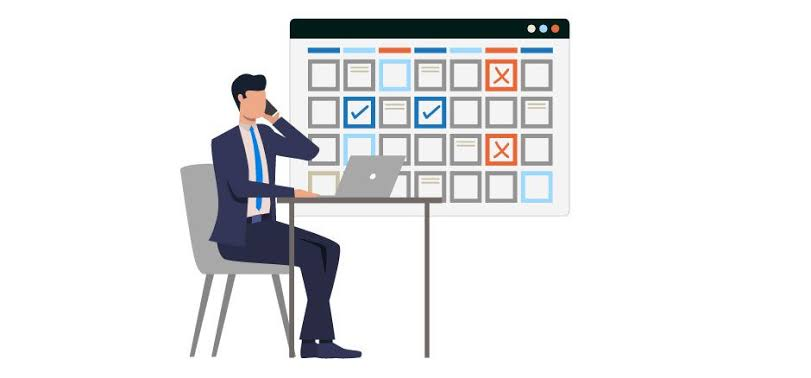
When your highest-cost sales resource is spending time on low-leverage prospecting work, that's a pipeline efficiency problem, not just a workload issue. Outsourcing appointment setting gives your AEs a full calendar and takes prospecting off their plate entirely.
You're Entering a New Market or Vertical
Testing a new ICP or geography in-house means hiring and training reps for a segment you haven't proven yet. That's a lot of commitment for an unknown outcome. Outsourced programs let you test new segments at a lower commitment level. You can pause or redirect based on results without any headcount consequences.
SDR Attrition Is Disrupting Pipeline
SDR turnover averages 35-40% annually. Every departure creates a pipeline gap that takes months to recover from between the exit, the search, the hire, and the ramp. Outsourced appointment setting removes that risk from your side of the table. The agency absorbs hiring and replacement, not you.
You Want Predictable Pipeline Without Variable Headcount Costs
Fixed monthly program costs are far easier to forecast than variable SDR headcount expenses, which fluctuate with hiring cycles, turnover, and ramp timing. Outsourcing converts what's usually a messy people-management cost center into a predictable pipeline investment you can plan around.
What to Look for in an Outsourced Appointment Setting Service
Not every provider in this space delivers the same quality. Here's what actually separates the ones worth hiring from the volume-first vendors chasing quick contracts.
Multi-Channel Outreach Capability
The strongest providers run outreach across LinkedIn, cold email, and cold calling, not just one channel. Multi-channel sequences generate significantly more meetings than single-channel approaches because they reach prospects where they're actually paying attention, and they reinforce the same message across touchpoints.
Before signing, confirm the provider actually has the infrastructure, team capacity, and tested playbooks for all three channels, not just one they're comfortable pitching.
ICP-Specific Qualification Standards
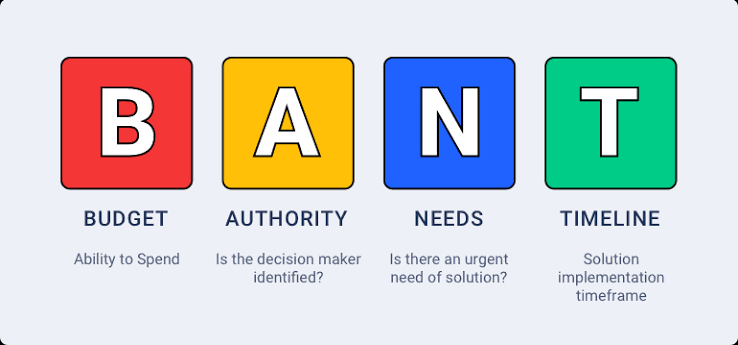
Meetings only have value if they're with the right people. Ask what qualification criteria the provider uses before a meeting gets booked, whether that's BANT (Budget, Authority, Need, Timeline) or an equivalent framework.
Just as important: ask how they define a "qualified meeting" and what happens when a prospect doesn't meet that bar. Vague answers here are a red flag.
Transparent Reporting and Pipeline Visibility
You should be getting weekly reporting on outreach activity, reply rates, meetings booked, and show rate. Good providers also offer CRM integration, so booked meetings flow directly into your pipeline with full context on the conversation.
Be wary of any provider who only reports on activity metrics, emails sent, dials made, without ever connecting that activity back to meeting quality.
Industry and ICP Experience
A provider who's already run campaigns in your industry has tested messaging, objection handlers, and contact data specific to your ICP. Ask for case studies or references from clients in your vertical or a similar deal size range.
Generic, one-size-fits-all providers take longer to ramp and tend to produce lower-quality meetings for specialized audiences.
Onboarding and Ramp Process
Ask directly how long it takes to go from signed contract to a live campaign. Top providers launch in 2-4 weeks. Anything significantly longer usually signals process gaps somewhere in their operation.
A solid onboarding process should walk through ICP alignment, messaging review, sequence approval, and a defined launch date, not a vague "we'll be in touch."
How Outsourced Appointment Setting Works, Step by Step
Here's the typical flow from kickoff to booked meetings, so you know what to expect once you sign.
Step 1: ICP and Targeting Alignment
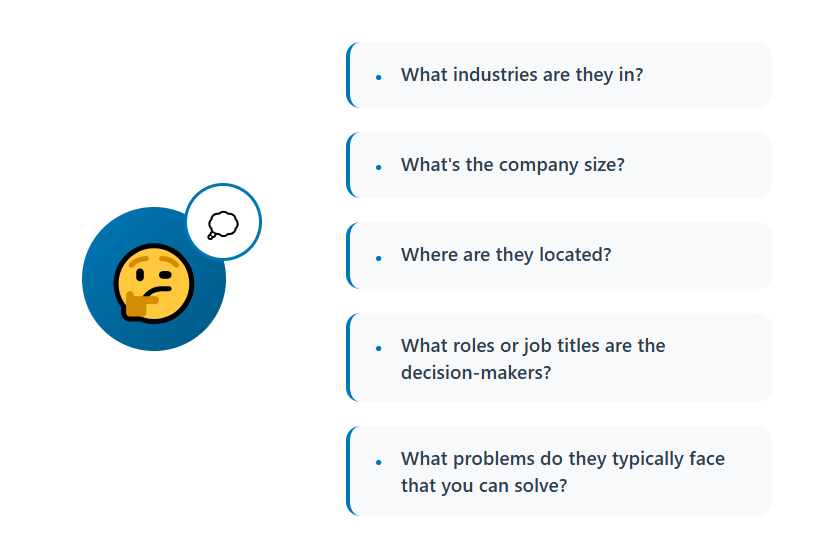
You and the provider align on ICP criteria: industry, company size, geography, seniority, and buying triggers. The provider builds or sources a verified contact list that matches that criteria, and you work together on a messaging brief covering pain points, differentiators, proof points, and the CTA.
Step 2: Sequence and Messaging Build
The provider writes multi-channel outreach sequences, cold email, LinkedIn, cold call scripts, tailored to your ICP and offer. You review and approve everything before it goes live. Behind the scenes, technical setup gets handled too: email infrastructure, domain warm-up, authentication, LinkedIn account setup.
Step 3: Campaign Launch and Outreach Execution
Outreach begins across all channels at the same time. The provider manages sending volume, deliverability, reply handling, and objection navigation as it happens. Qualified prospects move toward meeting booking, while unqualified responses get logged for list refinement down the line.
Step 4: Meeting Booking and Handoff
Qualified meetings land directly on your AE's calendar, along with context on the prospect's situation and pain points. A pre-meeting brief means your AE walks in prepared instead of cold. No-shows and cancellations get followed up by the outsourced team too, so your calendar stays protected without any effort on your end.

Step 5: Reporting, Optimization, and Iteration
Weekly reporting covers outreach performance, meeting volume, and pipeline contribution. Subject lines, openers, and CTAs get A/B tested based on real reply and meeting data. A monthly strategy review refines ICP targeting, messaging, and channel mix based on what's actually working, not what was assumed at kickoff.
How to Measure ROI From Outsourced Appointment Setting
The math here is straightforward:
ROI = ([Revenue from closed deals sourced by outsourced meetings] − [Total program cost]) ÷ [Total program cost] × 100
Companies that use specialized outbound partners see an average ROI of $6.30 for every $1 spent on outsourced appointment setting. That said, the number only means something if you're tracking the right metrics along the way:
- Cost per booked meeting: total program cost divided by meetings booked
- Meeting-to-opportunity rate: the percentage of booked meetings that convert into active pipeline
- Opportunity-to-close rate from outsourced meetings compared to other lead sources
- Average deal size from outsourced pipeline versus your other channels
Set realistic expectations on timeline too. First meetings usually appear in weeks 2-4. Consistent pipeline volume builds over months 2-3. The full ROI picture doesn't really become clear until around the 6-month mark, so don't judge the program off the first 30 days alone.
More Around This: How to Build an Appointment Funnel That Converts
Common Mistakes When Outsourcing Appointment Setting
A few patterns show up over and over with companies that get disappointing results.
❌ Choosing on price alone. The lowest-cost provider almost always delivers the lowest-quality meetings. Evaluate on qualification standards, channel capability, and case studies, not the monthly rate.
❌ Leaving the ICP undefined. A provider can only book good meetings if you've defined what a good prospect actually looks like. A vague ICP produces low-quality meetings no matter how good the provider is.
❌ Not tracking show rate. Tracking meetings booked without tracking show rate and meeting quality only gives you half the picture. A provider booking 20 meetings at a 40% show rate is actually underperforming one booking 12 meetings at an 85% show rate.
❌ Treating it as set-and-forget. Outsourced programs need active involvement from you in the first 60 days. Messaging feedback, ICP refinement, and meeting quality assessment all meaningfully improve performance, and skipping that input slows everything down.
❌ Skipping AE preparation. Booked meetings convert at much higher rates when your AE gets a context brief before the call. Skip this step and you waste a lot of the outsourced team's work.
How Cleverly's Appointment Setting Services Work
Once you've decided outsourcing is the right move, the next question is who actually runs it well.
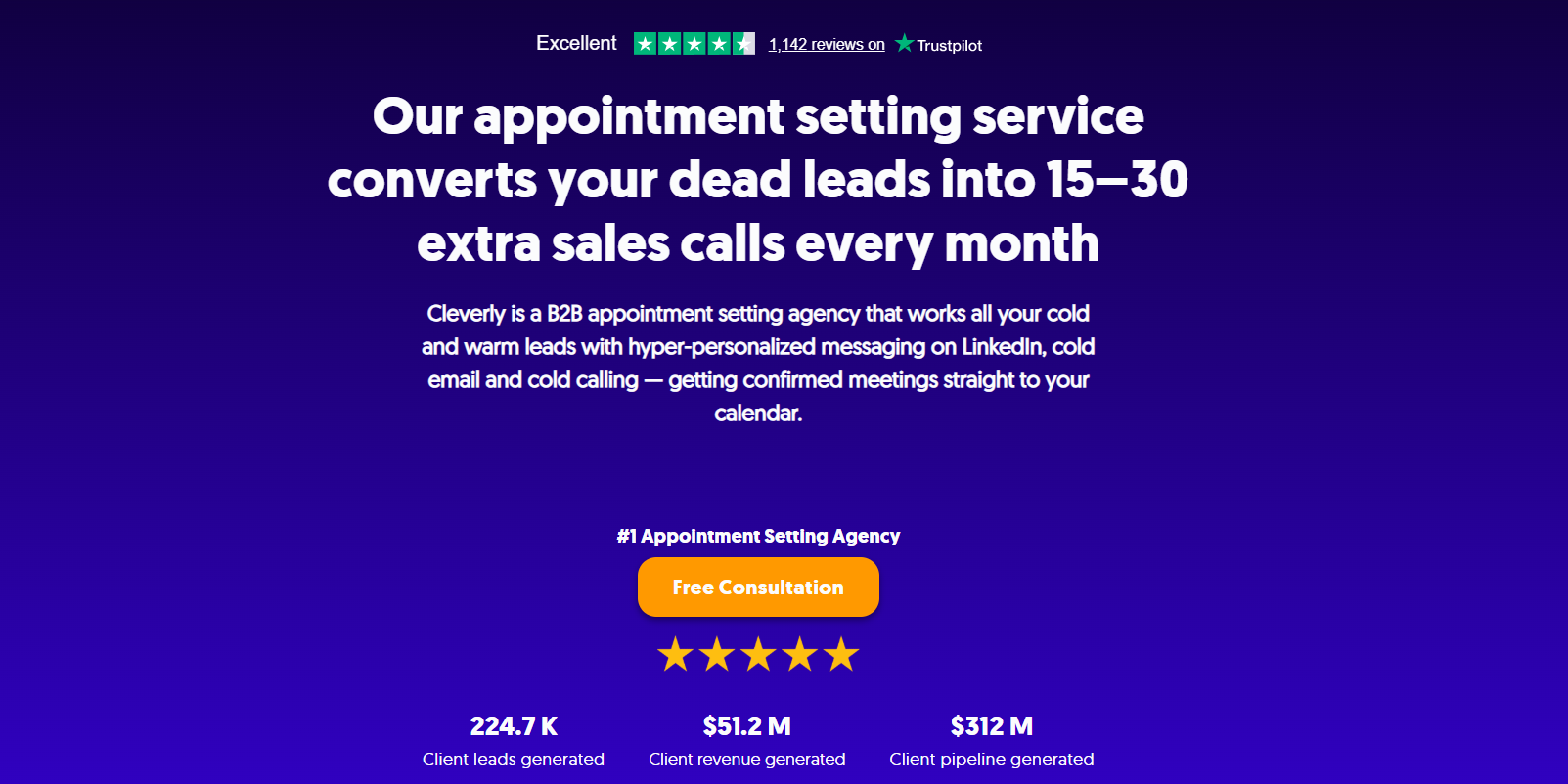
We’re a fully done for you appointment setting agency. Cleverly manages the full outbound motion for B2B companies, from ICP targeting and contact sourcing through multi-channel outreach and qualified meeting booking, so you're not stitching together tools, data, and reps on your own.
What that looks like in practice: verified contact lists matched to your ICP, personalized outreach sequences across LinkedIn and cold email, cold calling capability, real-time reply and objection handling, and qualified meetings booked directly onto your AE's calendar.
Campaigns are built around your specific ICP, offer, and sales cycle rather than a generic playbook applied to every account, and messaging gets tested and refined continuously based on live performance data, not a one-time setup.
You don't manage hiring, training, outreach infrastructure, deliverability, or follow-up. Cleverly's team owns that entire process, and meetings only get booked with prospects who match your defined ICP and have shown genuine interest, which protects your AE's calendar from wasted time.
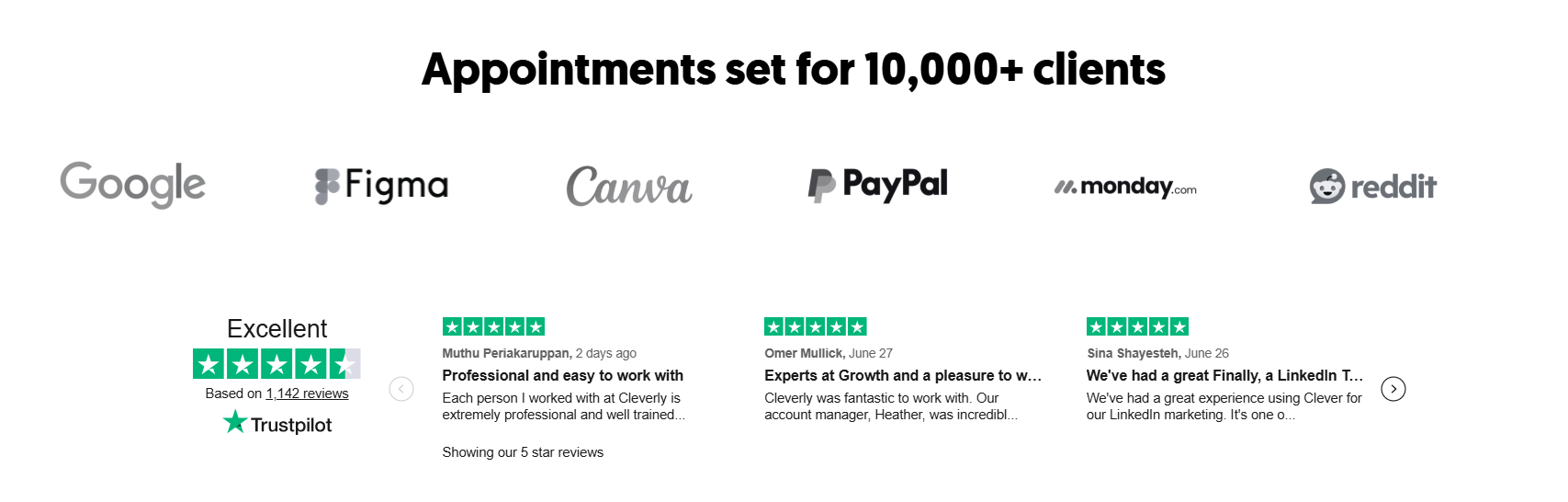
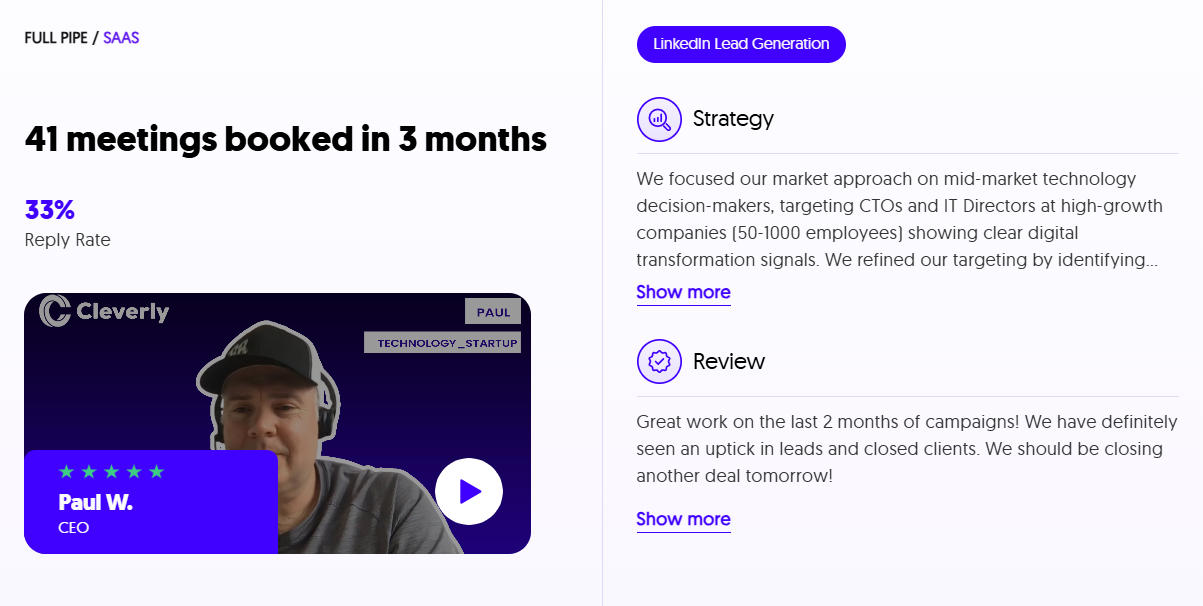
We have set over 53,000 appointments for clients across nearly every B2B industry, and most clients see their first meetings within 2-3 weeks of launch, with consistent pipeline volume building over the first 60-90 days.
Two ways to get started: LinkedIn Appointment Setting at $697/month (600 prospects per month, multi-channel campaigns, dedicated account manager), or Cold Calling Appointment Setting at $2,997/month (10-40 appointments per month, dedicated SDR, parallel and power dialer, call recordings, guaranteed free SDR replacement).
Want a done-for-you appointment setting program that fills your calendar with qualified meetings? Book a strategy call with Cleverly.
Conclusion
Outsourcing appointment setting is, for most growth-stage companies, the fastest and most cost-efficient way to build consistent pipeline without the hiring, ramping, and management burden that comes with an in-house SDR function.
But the companies that get the most out of it treat it as a partnership. They show up with a clear ICP, a strong offer, and active involvement in the first 60 days, not a hands-off vendor relationship they check on once a quarter.
Use the criteria in this guide when you're evaluating providers: multi-channel capability, ICP-specific qualification, transparent reporting, and real industry experience. Those are the things that separate high-performing partners from high-volume vendors chasing a quick contract.
If your AEs need more qualified meetings and your team doesn't have the bandwidth to generate them consistently on its own, outsourcing isn't a shortcut. It's a strategic call worth making deliberately, not defaulting into.
Frequently Asked Questions
Free Resource
How to Scale a Profitable Cold Call System
Get the complete guide — download it instantly now.
Free Ebook
Download the Free Guide
Enter your details to get instant access.
You're all set! 🎉
Your ebook is downloading now.
Click below if the download didn't start automatically.

