

Table of Contents
What Is Technology Lead Generation?
Why a Data-Driven Approach Beats Gut-Feel Lead Gen
How to Build a Data-Driven Technology Lead Generation System
8 Data-Driven Technology Lead Generation Strategies That Work in 2026
Technology Lead Generation Metrics That Actually Matter
How Cleverly Helps Technology Companies Generate Qualified B2B Leads
Conclusion
Frequently Asked Questions
Modified On :
July 2, 2026
Key Takeaways
- Technology lead generation in 2026 rewards precision over volume. Buyers now complete 60-70% of their research before talking to a vendor, so your data and timing matter more than your outreach volume.
- A data-driven system beats gut-feel prospecting because it combines firmographic, technographic, and intent signals to find accounts that are actually ready to buy, not just accounts that fit a broad profile.
- Building the system requires seven steps: nailing your ICP, enriching your account list, layering in intent data, matching channels to buyer type, building real sequences, aligning sales and marketing, then measuring and iterating.
- The highest-performing strategies for tech companies in 2026 combine LinkedIn outreach, intent-based cold email, account-based marketing, and technographic targeting rather than relying on any single channel.
- Vanity metrics like "leads generated" tell you nothing. Track SQL conversion rate, pipeline by channel, and CAC by channel instead, since these are what actually move revenue.
Here's something most tech marketing teams don't want to hear: by the time a prospect fills out your demo form, they've probably already decided who they're buying from. Recent research puts the number at 95%. The vendor that wins the deal was already on the buyer's shortlist from day one, and 80% of sellers end up contacting the vendor they were always going to buy from anyway.
That's the reality technology companies are prospecting into right now. B2B tech buyers complete somewhere between 60% and 70% of their research independently before they ever speak to a rep, and buying committees have swelled to 6-14 stakeholders depending on deal size.
Add in the fact that 83% of buyers now use AI assistants to shape their vendor shortlist before a human ever gets involved, and it's clear the old spray-and-pray outbound playbook doesn't hold up anymore.
This guide breaks down what technology lead generation actually looks like in 2026: why a data-driven approach beats guessing, how to build the system step by step, and the eight specific strategies we've seen consistently generate qualified pipeline for SaaS, IT services, and B2B tech companies.

What Is Technology Lead Generation?
Technology lead generation is the process of identifying, attracting, and converting potential buyers of tech products or services into qualified prospects your sales team can actually work. Simple definition, but the execution in tech is anything but simple.
Why Tech Is Different From General B2B Lead Gen
If you've ever tried applying a generic B2B playbook to a SaaS or IT services company, you already know it doesn't translate cleanly. A few reasons why:
- Longer evaluation cycles. Enterprise tech deals routinely stretch past a year, and even mid-market SaaS deals take months once security review and procurement get involved.
- Technical buying committees. You're not selling to one person. IT wants to know about integrations and security. Finance wants ROI. End users want usability. Each persona needs a different message.
- Heavy self-education. Tech buyers read documentation, watch demos, and check G2 reviews long before they want a call. Show up too early with a hard pitch and you'll get ignored.
The Four Types of Leads You'll Actually See
- MQLs (Marketing Qualified Leads): engaged with content but haven't shown buying intent yet.
- SQLs (Sales Qualified Leads): vetted and ready for a sales conversation.
- PQLs (Product Qualified Leads): relevant if you run a PLG motion, based on in-product usage signals.
- IQLs (Intent Qualified Leads): identified through third-party intent data showing active research behavior.
The Shift Happening Right Now
In 2026, the winning teams have stopped optimizing for how many contacts they can capture. They're optimizing for the right account, at the right moment, with a message that actually reflects what that account cares about. Volume without intent just burns SDR hours and torches your sender reputation.
🚀 Tech Companies Need Pipeline. Not Just More Leads
Our LinkedIn, cold email, and cold calling campaigns generate 15–30 qualified meetings every month for growing B2B tech teams.
Why a Data-Driven Approach Beats Gut-Feel Lead Gen
Gut-feel prospecting looks like this: someone builds a list based on "companies that seem like a good fit," an SDR fires off generic sequences, and everyone hopes something sticks. It's slow, it's expensive, and in 2026 it's genuinely one of the fastest ways to fall behind.
A data-driven B2B technology lead generation approach instead uses:
- Firmographics (company size, industry, revenue, growth stage)
- Technographics (what tools the account already uses)
- Behavioral signals (website visits, content downloads, hiring patterns)
- Intent data (active research behavior on third-party platforms)
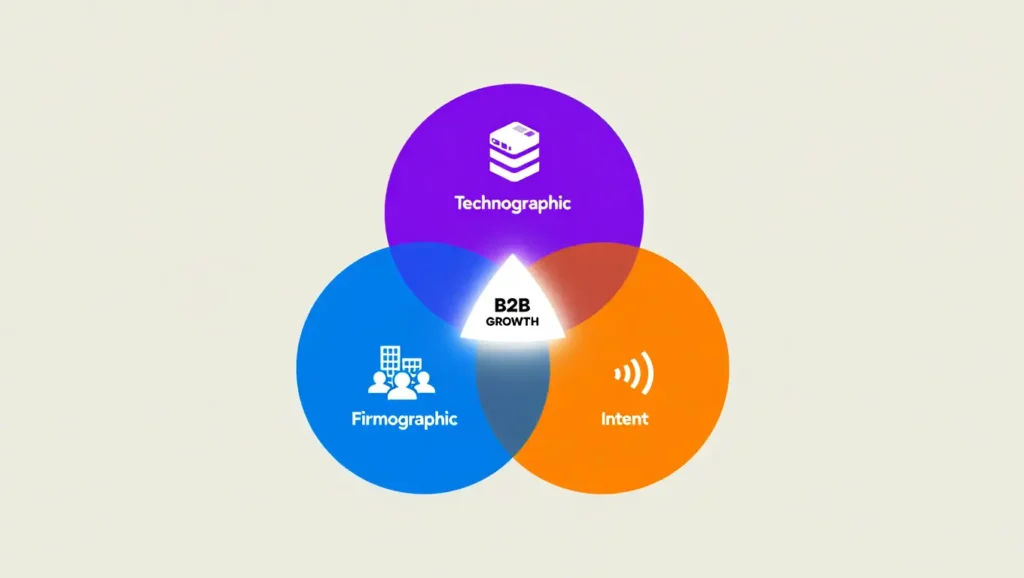
Companies running coordinated, multi-channel, data-backed outreach report meaningfully faster revenue growth, with recent industry benchmarks showing organizations with aligned sales and marketing data-sharing grow revenue roughly 24% faster and see up to 36% higher customer retention than teams working off disconnected channels.
On the flip side, companies still relying on broad, undifferentiated outreach have seen their customer acquisition costs climb by close to 40% over the past year, largely because generic messaging just doesn't convert against a buyer who's already done their homework.
What Guessing Actually Costs You
Chasing the wrong accounts isn't a neutral mistake. It burns SDR hours on prospects who were never going to buy, wastes marketing spend on the wrong ICP segment, and quietly wrecks your domain's sender reputation when your emails go to people who never wanted them in the first place. None of that shows up on a dashboard until pipeline dries up three months later.
What Data-Driven Actually Looks Like Day to Day
It's not a fancier version of "send more emails." It looks like:
- Enriched, verified contact records refreshed on a regular cadence (contact data decays 22-30% per year, so stale lists quietly get worse every month).
- Intent signal monitoring layered on top of your ICP list.
- Account scoring models that rank who to contact first.
- Channel-level attribution so you know what's actually producing pipeline, not just activity.
The 2026 Benchmark Shift
The metric that used to matter, "how many leads did we generate," is being replaced by revenue-aligned metrics: pipeline influenced, deals sourced by channel, and CAC by channel. If your dashboard still leads with lead count, you're measuring the wrong thing.
How to Build a Data-Driven Technology Lead Generation System
Here's the seven-step framework we'd recommend to any tech company building this from scratch.
Step 1: Define your ICP with precision. Go beyond "SaaS companies with 50-500 employees." Layer in tech stack, growth stage, revenue band, and the specific title(s) with actual buying authority, not just influence.
Step 2: Build and enrich your target account list. Combine firmographic and technographic data to identify the right accounts, then enrich with verified contact data before a single message goes out. Bad data at this stage poisons everything downstream.
Step 3: Layer in intent data. Use platforms like ZoomInfo, Bombora, or G2 intent to flag accounts actively researching solutions like yours. Prioritize these accounts first, since they're already moving.
Step 4: Map your channels to your ICP. Not every buyer responds the same way. LinkedIn tends to work well for SaaS decision-makers. Cold email performs for IT procurement teams researching quietly. Cold calling still moves the needle for enterprise accounts and roles that rarely respond digitally.
Step 5: Build sequences that educate before they sell. Tech buyers want relevance and evidence, not a pitch on message one. Multi-touch, multi-channel cadences that build context outperform single-channel blasts every time.
Step 6: Align sales and marketing on pipeline metrics. Agree on what counts as a qualified lead, define the handoff process clearly, and report on pipeline generated per channel jointly, not in separate silos.
Step 7: Measure, iterate, and scale. Track performance by channel, message variant, and ICP segment. Double down on what's converting. Kill what isn't, even if it was working last quarter.
📈 $312M+ Pipeline Generated for B2B Companies
Join 10,000+ businesses using Cleverly's done-for-you outbound lead generation to turn ideal prospects into sales opportunities.
8 Data-Driven Technology Lead Generation Strategies That Work in 2026
These are ranked roughly by impact and how broadly they apply, though the right mix depends on your ICP and deal size.
1) LinkedIn Outreach Targeting Technology Decision-Makers
LinkedIn remains the highest-converting channel for reaching B2B tech buyers. CTOs, VPs of Engineering, IT Directors, and Heads of Product are active there and reachable in a way they're often not through email alone.
The key is targeting precision. Sales Navigator filters (title, company size, tech stack signals, growth indicators like recent funding or hiring surges) let you build genuinely laser-focused lists instead of casting a wide net. Personalized connection requests followed by relevant, non-generic messaging outperform blanket InMail campaigns by a wide margin.
Best for: SaaS, IT services, and tech consultancies with high-LTV deals and a niche, well-defined ICP.
2) Cold Email Outreach with Intent-Based Personalization
Cold email still offers the largest reach at scale, and it's still highly effective when the message is actually relevant instead of a templated pitch with a name swapped in.
The move that separates high-performing cold email from spam is intent-based personalization. Reference the prospect's current tech stack, a recent funding round, a hiring signal, or specific company news in your opening line. It signals you did homework, which is rarer than it should be.
Email infrastructure is just as important as copy here. Domain warmup, sender rotation, and email validation aren't optional extras. Skip them and your deliverability tanks before your message quality even gets tested.
Best for: tech companies with a large addressable market and proven outbound messaging they want to scale.
3) Account-Based Marketing (ABM) for Enterprise Tech Sales
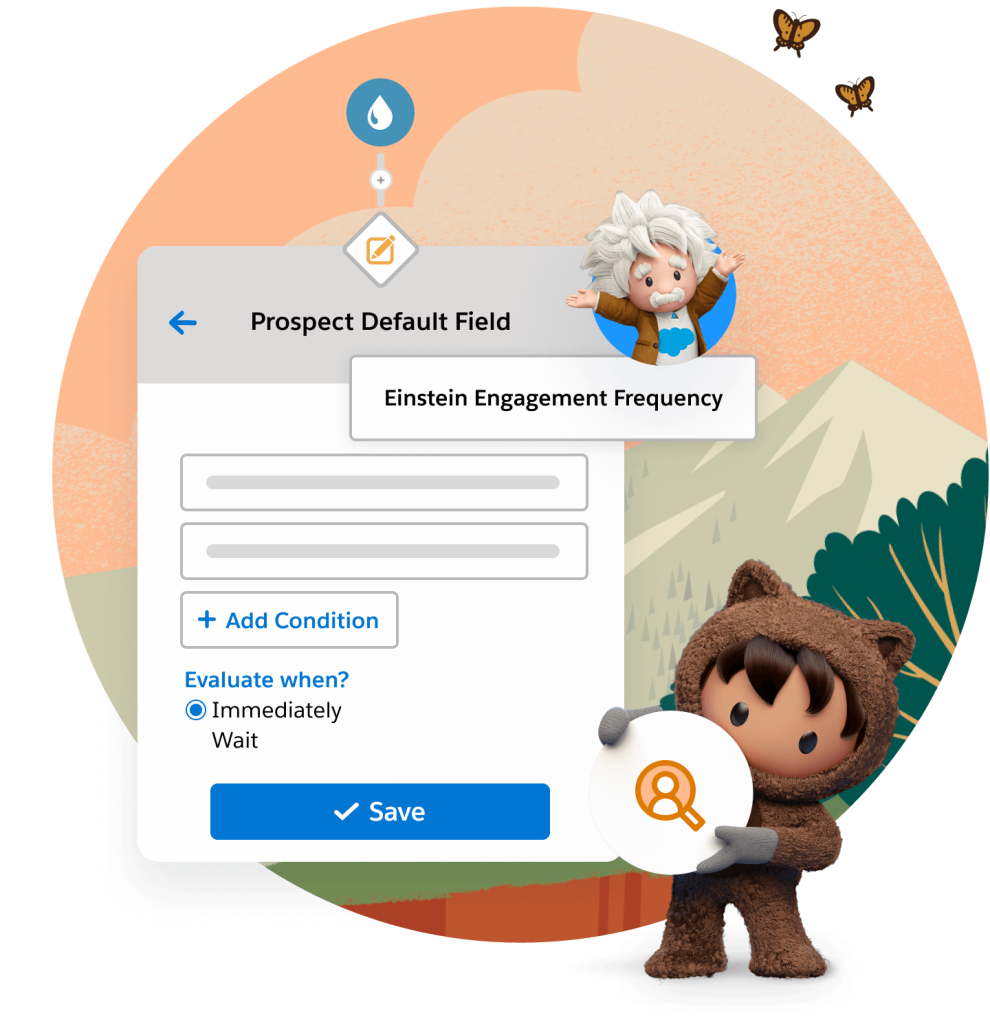
ABM concentrates budget and effort on a defined list of high-fit, high-value accounts, which makes it a natural fit for enterprise tech with long sales cycles and multiple stakeholders in the room.
The multi-stakeholder piece matters most here. Instead of chasing one champion, you engage IT, finance, security, and end-user personas within the same account at the same time, each with messaging relevant to what they actually care about.
Marketers running mature account-based programs report meaningfully better outcomes than broad campaigns, with recent data showing account-based approaches deliver roughly 81% higher ROI and deals that close about 67% faster than traditional broad-based marketing.
Best for: enterprise tech companies selling into accounts with long sales cycles and 5+ stakeholders per deal.
4) Intent Data-Driven Prospecting
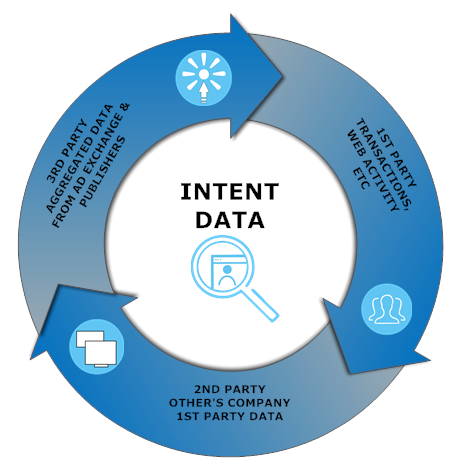
Intent data flags accounts actively researching solutions like yours right now, before they've raised their hand to a single vendor. That's a genuine timing advantage over competitors still working off a static list.
Sources worth looking at include ZoomInfo intent, Bombora, G2 Buyer Intent, and LinkedIn activity signals. Prioritize outreach to high-intent accounts first since they're already in an active buying window, not a cold one.
Best for: teams that want to reach prospects at peak receptivity instead of spraying the entire ICP with equal effort.
5) Content-Led Outbound
Technical buyers self-educate heavily, which is exactly why offering something genuinely useful (a benchmark report, an ROI calculator, a technical comparison guide) in your outreach dramatically lifts reply rates compared to a straight pitch.
The asset itself isn't the offer. It's the entry point to a conversation. This works especially well on cold email and LinkedIn, where a real value exchange lowers a prospect's resistance to engaging at all.
Best for: tech companies with strong existing content assets that can be repurposed specifically for outbound, not just gated on the website.
6) Cold Calling for High-Intent Technology Accounts
Cold calling is far from dead in tech, especially when it's paired with a warm-up touch (email or LinkedIn first) and reserved for genuinely high-intent accounts rather than a cold list.
Direct phone conversations compress qualification time in a way email simply can't. You learn fit, budget, and timeline in one call that might take five email exchanges to surface, if it surfaces at all.
Accurate direct dials matter enormously here. Validated mobile numbers make a measurable difference in connect rates compared to switchboard numbers or outdated contact records.
Best for: enterprise accounts, IT procurement teams, and roles that are notoriously hard to reach through digital channels alone.
7) Technographic Targeting for Competitive Displacement
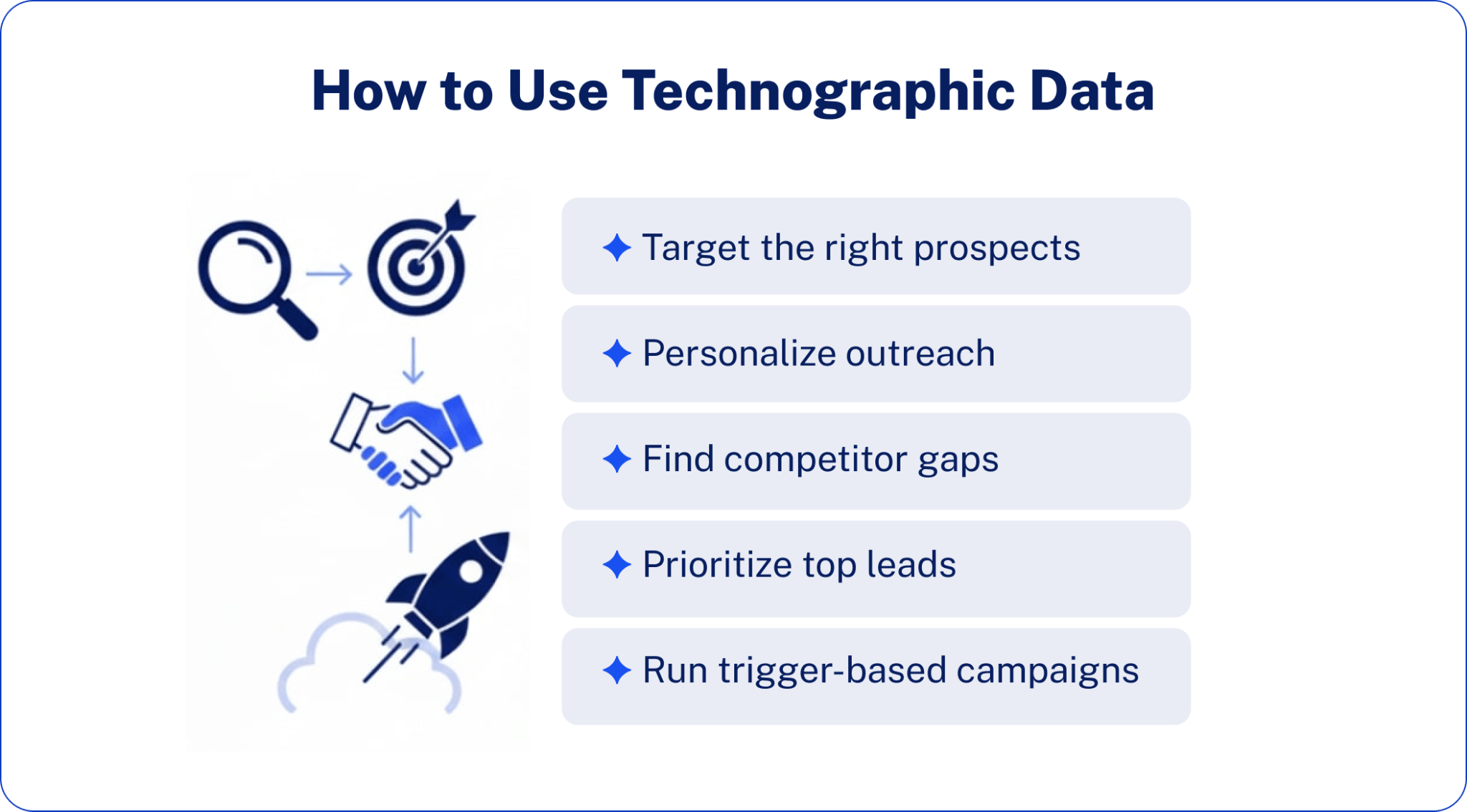
Technographic data tells you what tools a company is currently running, which opens the door to targeted "switch from X to us" messaging that's specific instead of generic.
Identify accounts using a competitor's product or a complementary tool, then build outreach around the specific pain points of that current stack. This converts well because you're solving a known, named problem, not pitching a vague general benefit.
Best for: SaaS companies actively competing for replacement or displacement deals in a crowded category.
8) Referral and Partner-Led Lead Generation

In tech specifically, referrals from trusted peers and integration partners carry disproportionate weight in the final buying decision, more than most outbound programs give them credit for.
Build a structured referral and partner program: define clear incentives, create simple co-marketing assets, and remove friction from the referral process itself. Integration partners (tools already in your buyer's stack) are particularly powerful, since a warm introduction from a tool they already trust converts at a much higher rate than cold outreach ever will.
This channel tends to run lower volume but the highest close rates once it's mature, making it one of the most efficient pipeline sources available.
Technology Lead Generation Metrics That Actually Matter
Move away from vanity metrics. "Number of leads generated" tells you almost nothing about actual revenue impact, and teams that lead with it tend to keep funding channels that don't work.
Track these instead:
Build a simple dashboard that tracks by channel, message variant, and ICP segment, not just total volume. Tech companies with genuinely aligned sales and marketing teams report win rates roughly 38% higher and customer retention around 36% higher than teams operating in silos.
That gap is too large to ignore if you're still running separate reporting for each team.
How Cleverly Helps Technology Companies Generate Qualified B2B Leads
Technology lead generation isn't something you solve with a generic outreach template. It needs ICP precision, messaging that actually reflects how tech buyers evaluate vendors, and execution across the channels where your specific buyer actually shows up. That's a heavier lift than most internal teams have bandwidth for on top of their existing workload.
We built Cleverly specifically to run that motion for tech companies without them needing to hire and manage an in-house team to do it. We handle ICP-based list building using firmographic and technographic data, LinkedIn outreach aimed at the decision-makers who actually control tech budgets (CTOs, VPs of Engineering, IT Directors, Heads of Product), cold email campaigns built around relevance rather than generic tech pitches, and cold calling for enterprise accounts and high-intent prospects who need a human conversation to move forward.
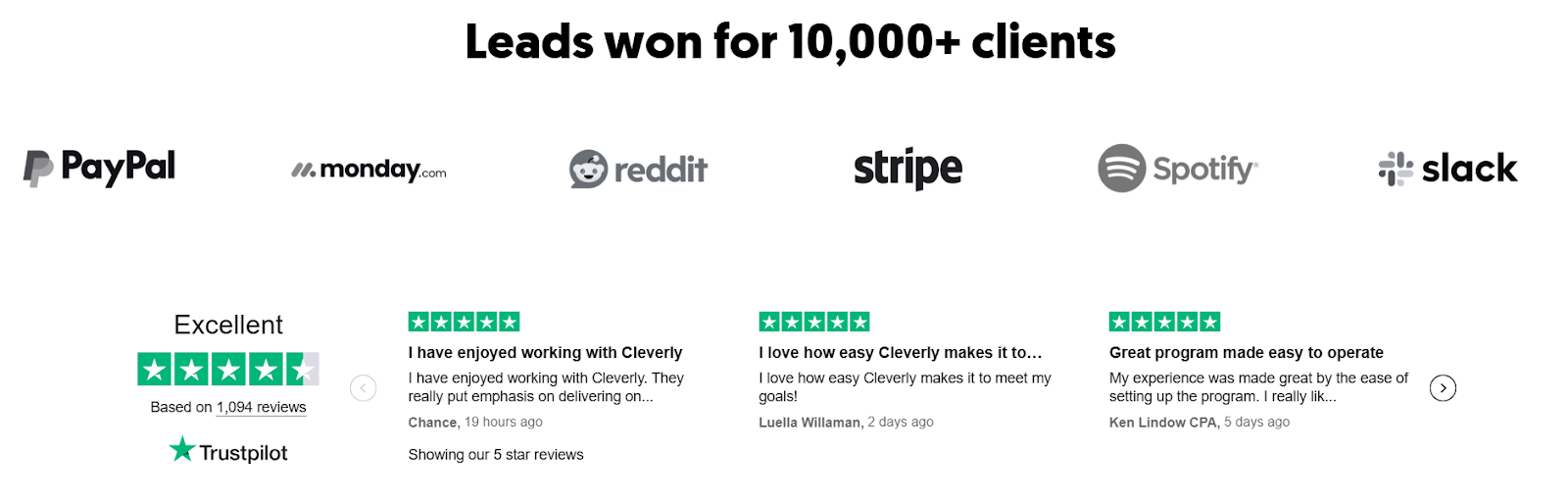
We've run this playbook for over 10,000 clients across LinkedIn and cold email, generating $312 million in pipeline along the way. What separates us from a tool subscription is that you're not managing deliverability infrastructure, writing your own sequences, or troubleshooting a dialer.
You get qualified pipeline from the right accounts, not just a bigger pile of contacts to sort through yourself.
Want a done-for-you lead generation system built specifically for your tech company? Book a strategy call with Cleverly and we'll walk through what it would look like for your ICP.

Conclusion
Technology lead generation in 2026 is won by precision, not volume. The companies generating real pipeline right now are the ones combining clean, enriched data, intent signals, and multi-channel outreach built around how tech buyers actually behave, not how outbound worked five years ago.
The playbook isn't complicated on paper: know your ICP cold, keep your data enriched, choose the channels your buyer actually uses, personalize at scale instead of faking it, and measure what actually moves pipeline instead of what looks good on a slide.
Start with whichever strategy addresses your biggest current gap, whether that's reaching the right accounts, booking more qualified meetings, or simply improving how relevant your messaging feels, and build outward from there.
Frequently Asked Questions
Free Resource
How to Scale a Profitable Cold Call System
Get the complete guide — download it instantly now.
Free Ebook
Download the Free Guide
Enter your details to get instant access.
You're all set! 🎉
Your ebook is downloading now.
Click below if the download didn't start automatically.


