Table of Contents
Sale vs Sell vs Sales — The Basic Language Difference
Selling vs Sales — The Business Difference
Sales and Selling in B2B — Why the Distinction Matters
Selling vs Sales in B2B Lead Generation
Side-by-Side Comparison — Selling vs Sales
Common Misconceptions
How Cleverly Supports Both Selling and Sales Systems
Conclusion
Frequently Asked Questions
Modified On :
August 21, 2026
Key Takeaways
- Sell is a verb, sale is a noun, and sales is a function. They're not interchangeable.
- Selling is an individual skill; sales is an organizational system.
- Selling closes deals; sales creates the conditions for deals to keep happening.
- In B2B, early-stage companies sell - growth-stage companies build sales systems.
- Without selling skill, sales systems fail; without a sales system, selling doesn't scale.
- Great B2B lead generation bridges both - it feeds the system and enables the conversation.
- Confusing sales and selling in practice, not just in language, shows up as chasing closes, neglecting pipeline, and giving up after one follow-up.
Most people use selling vs sales like they mean the same thing. They don't.
In grammar, they're different parts of speech. In business, the gap is even bigger. Mixing them up leads to real strategic blind spots, especially in B2B.
This guide covers:
- The basic language difference between sale, sell, and sales
- The business difference between selling and sales
- Why the distinction matters for your B2B strategy.
Sale vs Sell vs Sales — The Basic Language Difference
Understanding the sale sell difference starts with grammar.
- Sell = a verb. It's the action of offering something in exchange for money.
- Sale = a noun. It's the event or transaction that happens.
- Sales = a plural noun. It refers to the function, department, or results.
Here's how each one looks in practice:
- "We sell software." (action)
- "We made a sale." (transaction)
- "Our sales increased 40% this quarter." (results/function)
A lot of people also get confused around the difference between sales and sells.
Quick clarification: "sells" is just the third-person singular form of the verb sell. ("She sells SaaS products.") It's not a department or a strategy. It's just grammar.
Also Check: Sales-Ready Leads in B2B (Real Definition & Practical Guide)
🚀 Stop “Selling.” Start Booking Meetings.
Cleverly drives real sales conversations through LinkedIn outreach, pay-per-meeting cold email, and guaranteed cold calling—done for you.
When to Use Sale vs Sell in a Sentence
Knowing when to use sale vs sell saves you from some pretty common writing mistakes. Here's a simple cheat sheet:
Common mistakes to avoid:
- Saying "we made a sell" (wrong) instead of "we made a sale" (correct).
- Using "sales" when you mean the act of selling.
- Using "sell" when referring to the department or revenue function.
- Saying "we made a sell" (wrong) instead of "we made a sale" (correct).
- Using "sales" when you mean the act of selling.
- Using "sell" when referring to the department or revenue function.
- Writing "for sell" instead of "for sale." Only "for sale" is correct. There's no version of this phrase that uses "sell."
- Mixing up "on sale" and "for sale." They're not the same thing. "For sale" means available to buy. "On sale" means discounted. A house can be for sale without being on sale, and a jacket can be on sale without technically being "for sale" in the listing sense.
- Asking "who sales this account?" instead of "who sells this account?" Sales is never a verb, no matter who's asking or how casual the sentence is. If you can swap in "handles" or "owns," you need "sells," not "sales."
Quick right vs. wrong examples
Simple rule: if you're asking a question with "who" and the answer is a person's name or role, you need "sells." "Sales" can never answer a "who does X" question, because sales isn't an action a person performs. It's a noun.
Learn More: Proven & Scalable Methods to Increase Your B2B Sales Pipeline
Selling vs Sales — The Business Difference
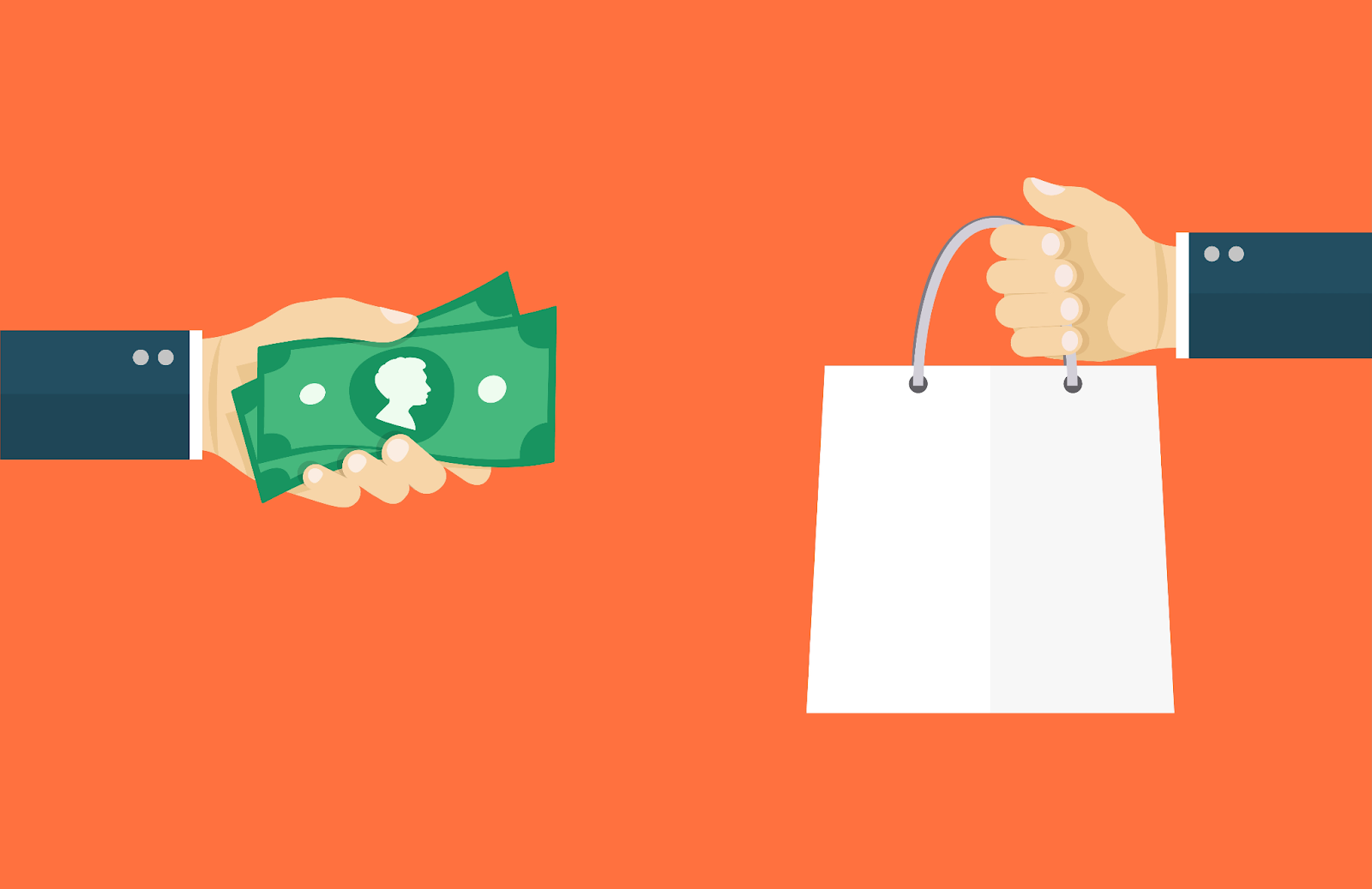
Here's where sales vs selling goes beyond grammar and into strategy.
Selling is:
- The act of persuading or influencing a buyer
- An individual activity
- What happens in a conversation
- Tactical and skill-driven
Sales is:
- The structured function behind revenue generation
- A system, team, and process working together
- Revenue operations at scale
- Strategic and repeatable
The simplest way to think about it: selling is an activity. Sales is a system.
A great rep can close a deal through selling. But a great company builds a sales system that makes those conversations happen consistently, at scale.
Explore More: B2B Sales KPIs Every Revenue Team Should Track
📈 Real Sales = Real Pipeline
10,000+ companies trust Cleverly to generate sales-ready meetings across LinkedIn, email, and phone—fueling $312M+ in pipeline.
Sales and Selling in B2B — Why the Distinction Matters
In B2B, sales and selling play different roles at different stages of company growth.
- Early stage: Founders sell. It's personal, relationship-driven, and tactical.
- Growth stage: Companies build sales systems. Hiring, pipeline, outbound, process.
- Selling closes deals. It's the human skill that converts a conversation into a contract.
- Sales builds predictability. It's the system that makes sure conversations keep happening.

Outbound, in particular, requires both working together:
- Without a sales system, your team is just hoping conversations find them.
- Without selling skill, your pipeline goes cold even when meetings are booked.
One without the other creates a ceiling. That's why the most effective B2B teams invest in both.
Selling vs Sales in B2B Lead Generation
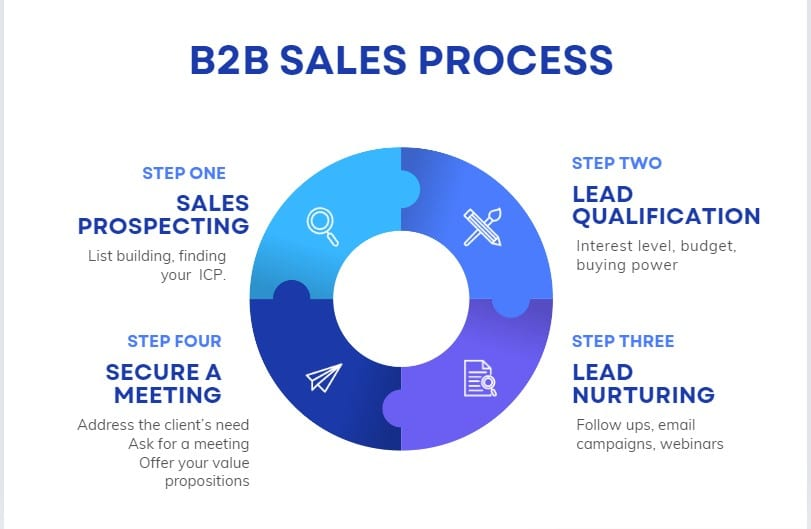
B2B lead generation is where the selling vs sales split becomes very practical.
- Lead generation feeds the sales system. No pipeline, no conversations.
- Appointment setting supports selling. It puts your reps in front of the right people.
- Sales teams convert pipeline. They take qualified leads and close them.
Here's the breakdown of what breaks without each:
- Without a structured sales system, selling becomes inconsistent and reactive.
- Without selling skill, even the best sales system fails to convert.
B2B lead generation is not selling. It's the front-end of your sales system that makes selling possible. The two work together, but they're not the same job.
Why Follow-Up Persistence Separates Selling From Sales Results
Most B2B deals don't close on the first conversation. Recent research puts the number at five or more follow-up touchpoints before a typical B2B deal closes, and yet roughly half of reps never send a single follow-up after the initial contact.
That gap is where selling and sales results diverge the most.
A rep who stops after one or two attempts hasn't finished selling. They've started a conversation and then walked away from it before the buyer had a real chance to decide. In B2B, where multiple stakeholders often need to weigh in before a deal moves forward, that first "no reply" is rarely a real no. It's usually just bad timing.
The reps who get this right aren't just being persistent for its own sake. Each follow-up adds something new, a relevant case study, a quick answer to an objection raised earlier, an update tied to something happening at the buyer's company, instead of just re-asking the same question in a different way. Persistence without added value reads as pressure. Persistence with added value reads as attentiveness.
This is also where selling discipline and sales results connect directly. A sales system can generate perfect pipeline, get the right person on the calendar, and hand your rep a genuinely qualified lead. But if the follow-up stops after touch two, none of that system-building work pays off. Selling is what carries a qualified lead the rest of the way to a closed deal, and follow-up persistence is one of the clearest ways that skill shows up.
Here’s More: Sales Enablement Strategy (How B2B Teams Close More Deals)
Side-by-Side Comparison — Selling vs Sales
The takeaway: Neither is better. Both are necessary. In B2B, the companies that scale are the ones that get good at both, not just one.
Common Misconceptions
A few things worth clearing up around the difference between sales and sells, and what people get wrong about sales and selling in general.
1. "Sales is just talking." No. Sales is a system with data, process, pipeline management, and forecasting.
2. "Selling is manipulation." Not even close. Good selling is about helping buyers make the right decision for their business.
3. "Sales is only about closing." Closing is one part of it. Sales includes prospecting, qualification, nurturing, and retention.
4. "Selling alone can drive scalable growth." It can't. Without a system behind it, even the best sellers hit a ceiling fast.
Common B2B Traps When Teams Confuse Selling and Sales
Confusing sales and selling isn't just a language issue. It shows up in how B2B teams actually run their pipeline, and it tends to show up in the same four ways.
1. The "always be closing" trap
Reps trained to treat every conversation as a closing opportunity end up rushing prospects who aren't ready. This works occasionally in short-cycle, low-consideration sales. In B2B, where buying committees and longer evaluation periods are the norm, it usually backfires. You get pushed-through deals that stall in legal review or ghost after the first follow-up, because the relationship never had room to build.
2. Confusing deal volume with deal quality
A team that measures itself on number of deals closed, without weighting for deal size, churn risk, or fit, will optimize for the wrong thing. Ten small, low-fit deals can look like a great month on a dashboard and still be worse for the business than three well-matched ones. This is a sales system problem as much as a selling problem: if your reporting rewards volume, your reps will chase volume.
3. Treating a closed deal as the finish line
In B2B especially, the close is the start of the relationship, not the end of the effort. Onboarding, expansion, renewal, and referrals all happen after the contract is signed. Teams that treat "closed-won" as the finish line tend to under-invest in what happens next, and then wonder why churn or lack of expansion revenue is eating their growth.
4. Neglecting pipeline-building while focused on closing this month's deals
This is the most common trap, and the most damaging one long-term. When a team goes heads-down on closing this month's number, prospecting quietly stops. Next month's pipeline dries up, and the team spends the following quarter scrambling to refill it. This is exactly why sales and selling need to run at the same time, not in sequence. Closing this month's deals and building next quarter's pipeline are two different jobs, and neglecting either one creates a gap somewhere down the line.
All four of these traps come from the same root cause: treating selling (the individual skill) as if it were the whole job, instead of one half of a system that also needs consistent pipeline behind it.
More on This: B2B Sales Mistakes That Quietly Kill Revenue (Save Your Business)
How Cleverly Supports Both Selling and Sales Systems
At Cleverly, we work on the sales system side so your team can focus on selling.
We're the highest-rated, 100% done-for-you B2B lead generation agency. We've helped 10,000+ clients, including teams at Amazon, Google, Uber, PayPal, Slack, and Spotify, generate $312M in pipeline and $51.2M in closed revenue.
Here's what we actually do for your sales system:
- Build predictable pipeline through multi-touch outbound across LinkedIn, cold email, and cold calling.
- Support appointment setting so your reps are always talking to qualified prospects.
- Enable selling conversations by getting the right people into your calendar.
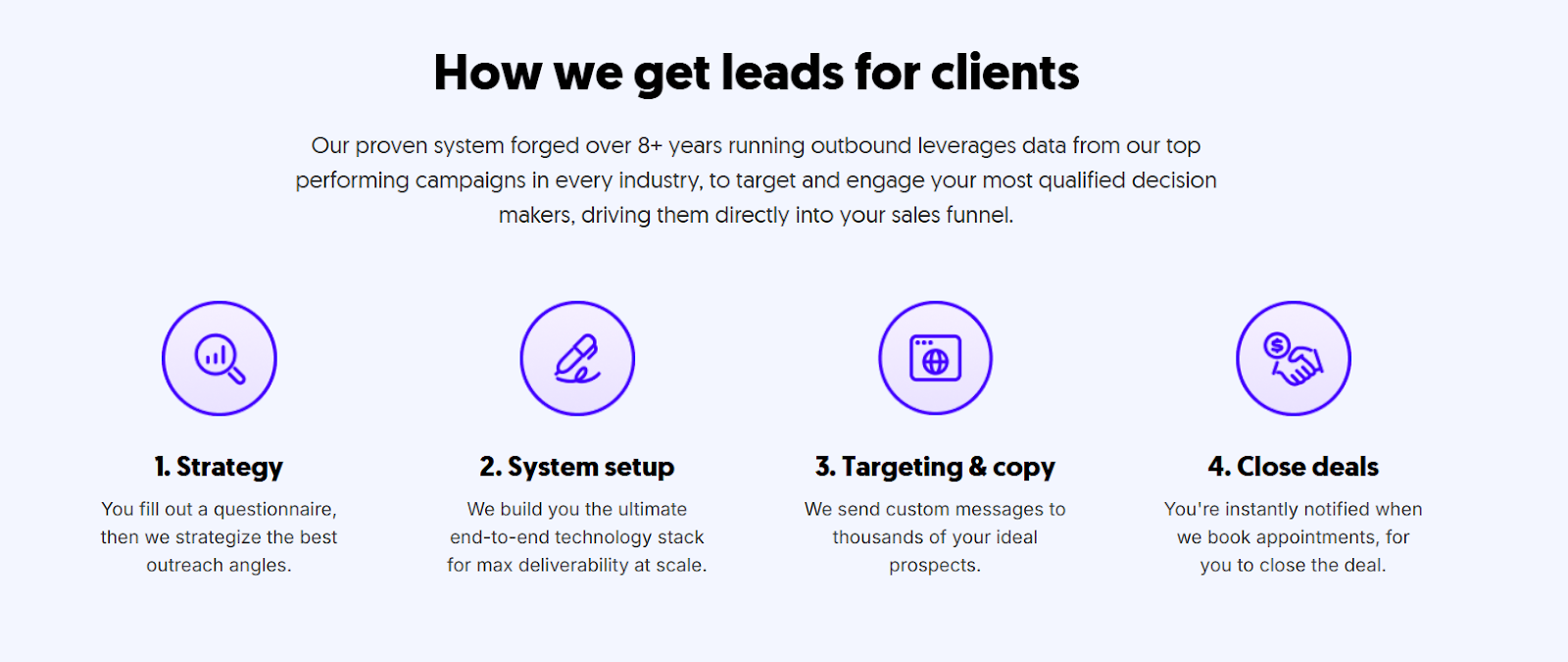
Our outbound channels:
1. LinkedIn Lead Generation — Starting at just $397/mo. We handle targeting, messaging, and outreach so your team wakes up to warm replies.
2. Cold Email Lead Generation — You only pay for meeting-ready leads we send you. No retainer, no guessing.
3. Cold Calling — Our $5M cold calling system books you 10 to 30 qualified sales calls every month, guaranteed. Here's what's included:
- A no-accent appointment setter placed and trained in 2 weeks
- Breakthrough call scripts written for your offer
- Data, tech, and power dialer fully managed
- Half the cost of hiring in-house
- Guaranteed appointments or we replace the SDR
We've made 1M+ cold calls, set 53K+ appointments, and generated $312M in pipeline for our clients.
One thing to be clear about: Cleverly handles the sales system. Your team handles the selling. We make sure your reps always have someone worth talking to.
If your team is great at selling but lacks consistent pipeline, the issue may be your sales system, not your skill.
🤝 Let’s fix it
Conclusion
To conclude: Sell = the action , Sale = the transaction , Sales = the system.
Selling creates deals. Sales creates the conditions for deals to keep happening. In modern B2B, you need both working together. Great sellers without a system burn out. Great systems without skilled sellers go to waste.
Build both. Scale faster.
Frequently Asked Questions
Free Resource
How to Scale a Profitable Cold Call System
Get the complete guide — download it instantly now.
Free Ebook
Download the Free Guide
Enter your details to get instant access.
You're all set! 🎉
Your ebook is downloading now.
Click below if the download didn't start automatically.