Table of Contents
Why Pipeline Has to Come Before Full Market Entry
Step 1: Define the Target Market and ICP Before Any Outreach
Step 2: Identify a Small, Focused Target Account List
Step 3: Run a Pilot Before Committing to Full Scale
Step 4: Localize Only the Highest-Impact Parts of the Funnel
Step 5: Combine Outbound and Content for Different Buying Stages
Step 6: Scale Only Once the Pipeline Is Proven Repeatable
Common Mistakes When Building Pipeline for a New Market
How Cleverly Builds Pipeline Ahead of a Market Expansion
Conclusion
Frequently Asked Questions
Modified On :
September 15, 2026
Key Takeaways
- Pipeline validation should happen before headcount and infrastructure, not after. Building the team first turns market entry into a bet instead of a test.
- A small, tightly qualified account list beats a broad initial blast. Volume without fit just produces noise you have to sort through later.
- The first 90 days in a new market should be treated as a real pilot, not a soft launch you're already trying to scale.
- Localization works best when it follows what the pilot teaches you, not when it's front-loaded before you know what actually matters to buyers.
- A market is ready to scale when results repeat across accounts and cycles, not when you've closed a handful of early wins.
Entering a new market without a pipeline already moving means you're testing two things at once: whether the market works, and whether you can scale in it. That's an expensive way to find out either answer.
Recent research puts the sales failure rate for international and cross-market expansion at roughly 73%, with weak planning and poor localization named as the biggest culprits.
On the sales execution side, the picture isn't much gentler. Enterprise deal cycles now average 218+ days, and companies without aligned sales and marketing operations miss pipeline targets 54% of the time.
Building a new market sales pipeline ahead of a full launch shrinks that risk window. Instead of hiring a team and hoping the market responds, you get a real read on demand, messaging, and buyer behavior before you commit a real budget to it.
This guide walks through how to validate demand, run a genuine pilot, and scale that pilot into a full market-entry sales strategy.
It's written for sales and go-to-market leaders planning a geographic or vertical expansion who want proof before they scale, not a plan built on assumptions.
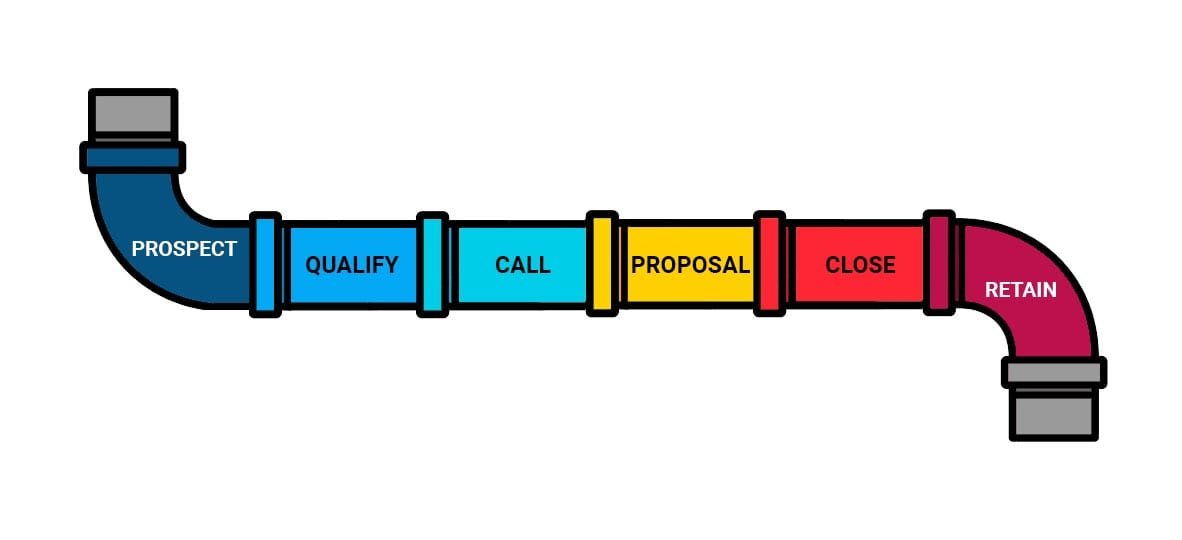
Why Pipeline Has to Come Before Full Market Entry
Scaling headcount and infrastructure into a new market before you've proven demand means building an expensive operation around an assumption nobody has tested yet.
Here's the pattern that trips up a lot of otherwise smart go-to-market teams: a few early deals land, someone calls it market validation, headcount doubles, and six months later the conversion rate that looked so promising turns out to have been a fluke of good timing and a couple of easy accounts. Now there's a team, a quota, and a pipeline that isn't repeatable.
Building pipeline before full entry flips this. It turns market entry into a test-and-learn process instead of a one-way bet. The point of early pipeline isn't revenue.
It's a real signal on whether your positioning, messaging, and buying process actually match how this market's buyers operate. That signal is worth more than the first few closed deals, because it tells you whether those deals are the start of something repeatable or the exception.
This is the foundation of a solid market-entry sales strategy: prove the mechanics work at small scale before you fund them at large scale.
🚀 Build Pipeline Before Launch
Cleverly helps 10,000+ businesses enter new markets with done-for-you LinkedIn, cold email, and cold calling campaigns.
Step 1: Define the Target Market and ICP Before Any Outreach
Before anyone sends a single message, set specific goals for the new market. Revenue targets, pipeline volume, and conversion benchmarks all need a number attached, even if it's a rough one. Without that, you have no way to tell later whether the pilot actually worked.
Next, map the buyer committee for this specific market. This step gets skipped more than it should. The economic buyer, influencer, and champion roles that exist in your current market don't always sit in the same functions somewhere new. A VP of Ops might make the call in one market and barely be in the room in another.
Finally, confirm your ICP actually holds here. It's tempting to assume the profile that works at home transfers directly to a new geography or vertical. Sometimes it does. Often the firmographics look similar on paper but the buying triggers, budget cycles, or decision timelines are different enough that the same targeting criteria point you at the wrong accounts.
This groundwork is what separates real B2B market expansion from guessing with a bigger budget.
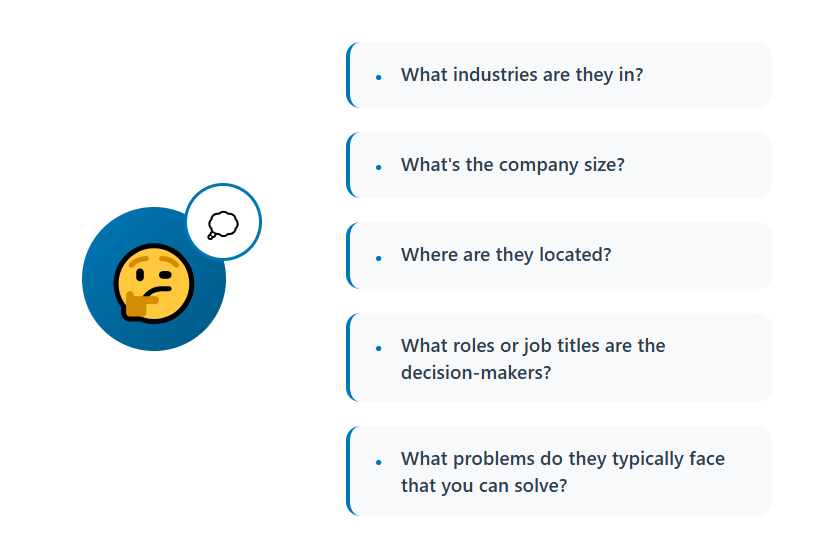
Step 2: Identify a Small, Focused Target Account List
Resist the urge to go wide. Identify 30 to 50 accounts that best match the ICP you just confirmed in the new market segment. A small, focused list beats a broad initial blast every time at this stage, because the goal right now is learning, not volume.
A smaller list also lets you run qualification-first outreach instead of volume-first outreach. You're not trying to fill a funnel yet. You're trying to find out if the funnel makes sense.
Use BANT (budget, authority, need, timeline) or a similar framework as an early viability signal, not a scoring formality you fill out after the fact. If half your list can't clear basic qualification, that's useful information about your targeting before you've burned a quarter on it.
This is where market-entry prospecting earns its name. It's prospecting built for a hypothesis test, not a quota.
📈 Start With a Full Pipeline
With 224.7K+ leads generated, 53,000+ meetings booked, and $312M+ pipeline, Cleverly helps B2B teams create demand before they scale.
Step 3: Run a Pilot Before Committing to Full Scale
Treat the first 90 days in a new market as a genuine pilot. The goal is validating demand and stress-testing your operations, not hitting a revenue number that looks good in a board deck.
Work with a small number of early accounts, somewhere around 2 to 5. That's enough to reveal whether your product or service actually delivers value in this market's specific context, without spreading your team so thin that you can't pay attention to what's happening in each deal.
Pilots typically take 3 to 6 months and require real support investment along the way. This is not a corner to cut. Treating the pilot as a shortcut defeats the purpose of running one at all. If you rush it, you end up with the same early-win problem described earlier: a few closed deals that feel like proof but aren't.
Good sales pipeline development at this stage looks slow on purpose. That's the point.
Step 4: Localize Only the Highest-Impact Parts of the Funnel
Localization is not just translation. It includes messaging, offers, support hours, and compliance norms specific to the new market, and getting all of it wrong at once is easy to do if you try to fix everything upfront.
Prioritize the highest-impact funnel stages first. That usually means pricing pages, onboarding, support resources, and compliance documentation. These are the moments where a mismatch actually costs you a deal. Full-site localization can wait.
Some things aren't optional, though. Confirm must-have compliance requirements for the specific market before you scale outreach volume. Data regulations, tax or VAT registration, and industry-specific rules vary enough between markets that skipping this step can shut down a promising pilot for reasons that have nothing to do with product fit.
Full localization investment should follow what the pilot teaches you, not precede it. That's how you avoid spending months translating and adapting content for a market approach that turns out to need adjusting anyway. This is a core piece of smart international lead generation: spend the localization budget on what the pilot proves matters.
Step 5: Combine Outbound and Content for Different Buying Stages
Not every buyer in a new market is ready at the same time. Account for both outbound and intent-driven tactics for the smaller share of the market that's already actively evaluating options. These are the accounts where a well-timed cold email or LinkedIn message can move a conversation forward quickly.
For the larger share of the market that hasn't entered a buying cycle yet, content and brand-building efforts do the slower work of staying visible until they're ready.
Coordinate sales and marketing around the same target accounts, the same stakeholder roles, and the same industry-specific proof points. Disconnected efforts, where sales is chasing one list and marketing is building content for a different audience, waste the exact signal you're trying to generate during a pilot.
This combination is what a real new territory sales strategy looks like in practice: outbound doing the immediate work, content doing the long game.
Step 6: Scale Only Once the Pipeline Is Proven Repeatable
Look for repeatability across multiple accounts and multiple cycles before you increase headcount or spend. A handful of early wins tells you the concept can work. It doesn't tell you it will work reliably.
The mistake to avoid here is declaring a market validated after 3 or 4 wins and scaling on a pattern that hasn't actually repeated yet. This is the exact trap described earlier, and it's easy to fall into when the pilot is going well and everyone wants to move faster.
Use what the pilot phase taught you: which messaging worked, which objections came up repeatedly, which compliance issues surfaced. That should shape the scaled playbook. Simply repeating the pilot's exact motion at higher volume usually doesn't hold up, because pilots often succeed partly through close attention that doesn't scale linearly with headcount.
Getting this right is what turns a new market sales pipeline from a one-time pilot into a durable growth channel.
Common Mistakes When Building Pipeline for a New Market
❌ Scaling Before the Pipeline Has Proven Repeatable
The root cause here is almost always pressure. A board wants to see progress, a leadership team wants a growth story, and a handful of early wins gets treated as more evidence than it actually is. The consequence is a team and budget built around a conversion rate that doesn't hold once you're working outside the small, hand-picked pilot list.
The fix is straightforward but requires discipline: set a repeatability threshold before the pilot starts, such as a minimum number of closed deals across a minimum number of sales cycles, and don't scale until you hit it.
❌ Assuming Your Existing ICP Transfers Directly
This mistake usually comes from time pressure during planning. Teams reuse the ICP and messaging that work in their home market because building a new one from scratch feels slow, and on paper the firmographics often look close enough. The real-world consequence is outreach that technically fits the profile but misses on buying triggers, decision timelines, or budget cycles that differ by market.
The corrective action is to explicitly test the ICP as part of Step 1, using the pilot's early replies and win-loss patterns to confirm or adjust it, rather than assuming it and finding out six months in.
❌ Fully Localizing Everything Before Testing
The instinct to localize everything upfront usually comes from wanting to look credible and locally native from day one. The consequence is months of translation and adaptation work spent on pages and materials that may not even matter to the buyers you end up targeting, while the pilot itself gets delayed.
The corrective action is sequencing: localize only the highest-impact funnel stages first, pricing, onboarding, compliance, and let pilot data tell you what else is worth the investment.
❌ Treating Market Entry as a Single Launch Event
This mistake stems from how expansion gets framed internally, often as a launch date on a roadmap rather than a phased process. The consequence is a team that ramps to full scale immediately, with no built-in checkpoint to pause, learn, and adjust before committing further.
The fix is structural: build the pilot-then-scale phases into the plan from the start, with explicit go/no-go checkpoints, so market entry is treated as a process with decision points rather than a single event with no way back.
How Cleverly Builds Pipeline Ahead of a Market Expansion
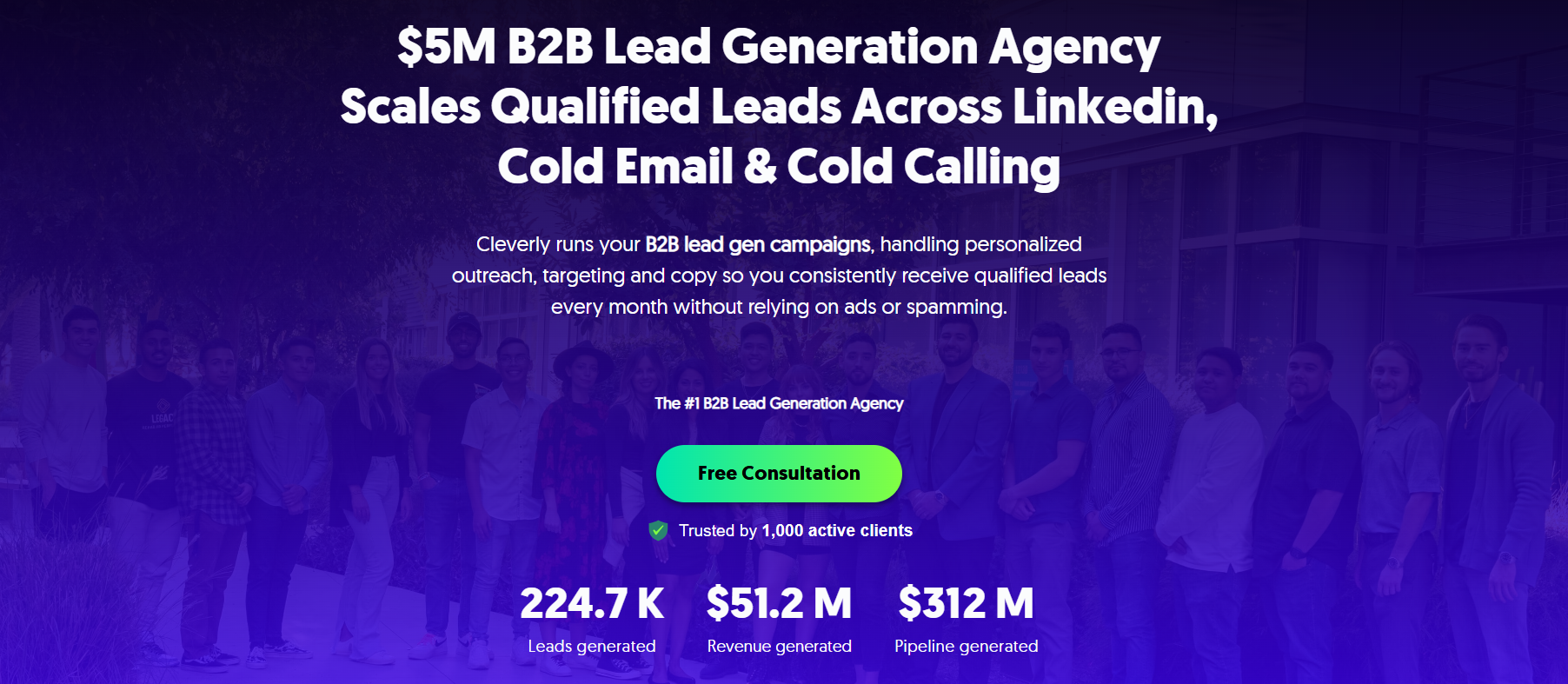
Building a pilot pipeline in a new market or territory takes targeted outreach and real ICP validation before any internal team gets resourced for full-scale entry. That's a different job than running outreach in an established market, and it's one a lot of internal teams aren't set up to do well on a short timeline.
As a B2B lead generation agency, Cleverly runs targeted LinkedIn, cold email, and cold calling campaigns to build and validate pipeline in a new market or vertical before a company commits to scaling headcount there.
The value isn't just the leads themselves. It's the flexibility. An outsourced, flexible outreach motion lets a company test market fit and messaging without the fixed cost and ramp-up time of hiring a full internal team for a market that hasn't been proven yet.
What's included is ICP-aligned targeting built for the new market specifically, pilot-phase outreach designed to generate real signal rather than volume, and scalable campaign expansion once that signal shows fit.
Cleverly has generated $312M in pipeline for clients across industries, and that pipeline work often starts exactly where a market-entry pilot needs it to: before the internal team exists yet.
If you're planning a new market expansion, book a strategy call with Cleverly to build a pipeline before you scale the team behind it.
Conclusion
Building a pipeline before full market entry turns expansion into a test-and-learn process instead of a one-way, high-risk bet.
A small, focused target list and a genuine pilot phase reveal whether your ICP and messaging actually hold in the new market before you've committed real budget to finding out the hard way.
Localization and scaling should follow what the pilot teaches you, not precede it. In the end, repeatable pipeline, not a few early wins, is the real signal that a market is ready for full-scale investment. Get that signal first, and the rest of the expansion gets a lot less risky.
Frequently Asked Questions
Free Resource
How to Scale a Profitable Cold Call System
Get the complete guide — download it instantly now.
Free Ebook
Download the Free Guide
Enter your details to get instant access.
You're all set! 🎉
Your ebook is downloading now.
Click below if the download didn't start automatically.