

Table of Contents
Get the Foundations Right Before Building Sequences
What Each Channel Is Actually For
Build the Sequence: Touch Order and Timing
Orchestration: Making It Read as One Person
Protect the Show Rate
Metrics to Track
Common Mistakes That Sink Multichannel Campaigns
How Cleverly Runs Multichannel Appointment Setting
Conclusion
Frequently Asked Questions
Modified On :
September 25, 2026
Key Takeaways
- Multichannel only works when the channels are coordinated into one sequence with one voice. Running three channels in parallel with no coordination is just three single-channel campaigns competing for the same inbox.
- Each channel has a distinct job. Cold calling converts, cold email scales, LinkedIn builds credibility. Treating them as interchangeable is why most "multichannel" campaigns underperform.
- A booked meeting isn't the finish line. Show rate deserves the same attention as booking volume, because a no-show costs more than a missed dial.
- Orchestration, not touch count, separates real multichannel programs from three uncoordinated campaigns. The sequence should read as one person, not three.
- The teams that book the most qualified meetings aren't running the most touches. They're running fewer, better-sequenced touches against a tighter list.
One uncomfortable part of running outbound on a single channel is that it has a ceiling, and you'll hit it faster than you think.
Email-only campaigns plateau once your list quality caps out. Calling alone can't sustain volume without burning through your list or your SDR. Multichannel appointment setting exists because neither channel alone gets you to a full calendar.
The data backs this up hard.
Coordinated sequences across email, LinkedIn, and phone have been shown to produce up to 287% more responses than single-channel outreach, and multi-channel programs are now outperforming single-channel outbound by 40 to 60% on qualified meetings booked. That's not a small edge.
But here's the misunderstanding this piece is built to correct: running three channels isn't multichannel. If a prospect gets an email from "rep A," a LinkedIn message from what looks like "rep B," and a cold call from "rep C," all in the same week, you haven't built a multichannel campaign. You've built three uncoordinated ones, and prospects notice. The second failure mode is just as costly: booking meetings that never happen.
This guide covers the foundations, what each channel is actually for, how to sequence the touches, how to orchestrate them so they read as one motion, how to protect your show rate, what to measure, and where most B2B appointment-setting campaigns fall apart.
If you're a sales leader, SDR manager, founder, or agency operator building an appointment-setting program, this is written for you.
Get the Foundations Right Before Building Sequences
Before you write a single message, get the groundwork done. This is the part everyone wants to skip, and it's the part that decides whether your appointment-setting strategy actually works.
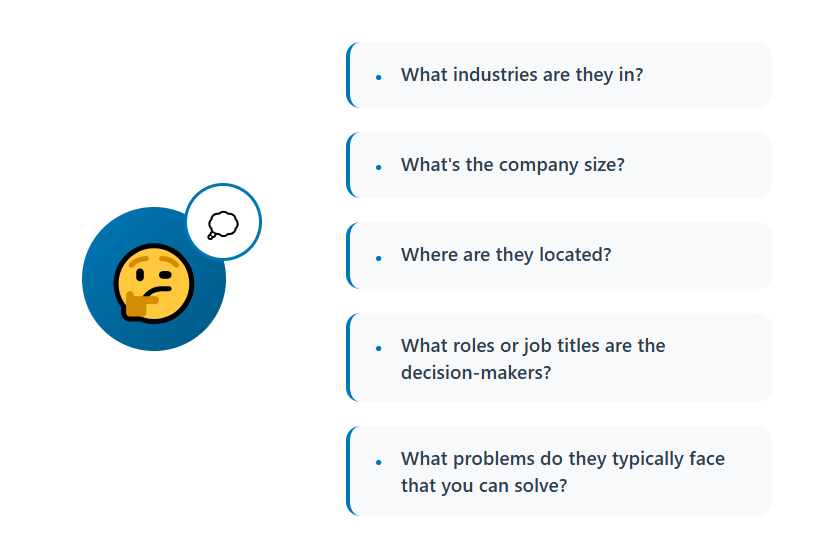
Define the ICP tightly
A multichannel campaign amplifies whatever targeting you feed it. Loose targeting doesn't get fixed by adding channels, it gets amplified across all of them. If your ICP is vague, you'll get 287% more responses from people who were never going to buy.
Build verified lists with multiple contact paths per record
Every prospect on your list needs a verified email, a phone number, and a LinkedIn profile. A record with only an email address can't run in a real multichannel sequence, it just becomes an email-only touch wearing a multichannel label.
Write the qualification bar before you launch
Decide what "qualified meeting" means before the first call gets booked, not after someone complains about lead quality three weeks in. This single step prevents most of the disputes that come up later between marketing, SDRs, and sales.
Set up deliverability infrastructure first
Domains need warming, inboxes need spreading across subdomains, and sending volume needs to ramp gradually. None of this happens overnight, and sending real volume through a cold domain torches your sender reputation before the campaign even gets going.
Decide the offer and the first ask
The first ask should be a conversation, not a demo. Asking a cold prospect to sit through a demo before they've agreed to talk to you is a bigger ask than most people realize.
Assign ownership by stage
Someone owns booking, someone owns confirming, and someone owns actually holding the meeting. Without clear ownership, touches get skipped and nobody notices until the pipeline report looks thin.
One last note: foundations take real time, usually a few weeks before launch. Skipping this stage is the single biggest reason multichannel campaigns underperform in month one.
📅 Book More B2B Meetings
Cleverly combines LinkedIn, cold email, and cold calling to help 10,000+ businesses generate qualified sales conversations.
What Each Channel Is Actually For
Stop thinking about LinkedIn, email, and calling as three separate tactics competing for budget. Think about them as three roles in one sequence, each doing a job the others can't.
Cold Calling: The Conversion Engine
Calling produces the largest share of booked meetings in most multichannel programs, and it's the only channel with real-time objection handling. A prospect can raise a concern and get an answer in the same breath, something no email or LinkedIn message can replicate.
That said, it's also your highest cost per touch, so it works best aimed at prospects who've already seen your name once or twice, not as the opening move.
Cold Email: The Scale Layer
Email is where you get reach. It's the lowest cost per touch by a wide margin, and it carries the follow-up load between call attempts when a prospect doesn't pick up. It also builds context, so by the time your rep calls, the prospect has at least seen the name and the premise before.
LinkedIn: The Credibility Layer
LinkedIn puts a face and a real profile behind your name, and that alone lifts receptiveness on both the email and the call that follow. A profile view or a connection request warms a prospect without asking them for anything yet.
Its limitation is volume: weekly connection caps mean LinkedIn can't carry a campaign on its own, it needs email and calling to do the heavy lifting.
How They Compound
This is the entire argument for multichannel in one sentence: each channel makes the next one work better. A prospect who's seen your LinkedIn profile and read your email answers the phone differently than one who's getting a cold call out of nowhere. The channels aren't competing for credit, they're setting each other up.
Build the Sequence: Touch Order and Timing
A working structure most teams can start from: 10 to 12 touches across four to six weeks, rotating channels rather than stacking them.
Here's a shape you can copy and adapt:
A few rules make this work:
- Open with LinkedIn, not a pitch. A profile view and connection request with no ask attached is the softest possible first touch.
- Start calling only after the prospect has seen you at least twice. Cold-calling someone who's never heard of you converts worse than calling someone who's already seen your name twice.
- Alternate channels instead of stacking them. Three email touches in a row reads as spam. One email, one LinkedIn message, one call, in that rotation, reads as a real sequence.
- Give every touch a new angle. Repeating the same message in a new channel isn't multichannel, it's just noise delivered twice.
- Space touches so the sequence feels persistent, not frantic. A prospect who gets five touches in three days assumes you're desperate. The same five touches over four weeks reads as consistent follow-through.
One thing worth flagging directly: most replies come after several touches, not the first or second. Sequences that stop at touch four or five are leaving meetings on the table that would have come in at touch eight or nine.
🚀One Campaign. More Meetings.
With 53,000+ meetings booked, 224.7K+ leads generated, and $312M+ pipeline, Cleverly helps B2B teams scale multichannel outbound.
Orchestration: Making It Read as One Person
This is the section that actually separates real multichannel from three single-channel campaigns running in parallel. Everything above is sequencing. This is what makes the sequence work.
Channels should reference each other. The call mentions the email you sent. The email mentions the LinkedIn message. This isn't a nice-to-have, it's the difference between a prospect thinking "this person has been trying to reach me" versus "why do three different people keep contacting me."
Keep one consistent identity across every touch. Same tone, same sender, same voice, whether it's an email, a LinkedIn message, or a cold call script. A prospect who reads three completely different personalities across three channels assumes they're dealing with three different reps, or worse, an automated system.
Run one thread of logic through the whole sequence. The problem framing should carry across every channel. If the email pitches one angle and the call pitches a different one, you haven't built a sequence, you've built three disconnected pitches that happen to target the same person.
Avoid the classic failure mode directly: three touches landing on the same day, from what reads as three different people. This is the fastest way to turn a warm prospect cold. Space and coordination both matter here.
Log every touch centrally. The rep making the call needs to know the email already went out three days ago. Without a shared log, channels operate blind to each other, and you end up with the exact fragmentation multichannel is supposed to fix.
Route by persona and seniority. Senior buyers get fewer, sharper touches. A VP doesn't need 12 touches, they need 6 well-placed ones. Practitioners and individual contributors tolerate more volume and more frequent contact.
Adapt on signals. A profile view back, an email open, a website visit, any of these should pull the next touch forward rather than waiting for the scheduled day. A prospect who just opened your third email is a better call target today than the schedule assumed three weeks ago.
Protect the Show Rate

A booked meeting is not a held meeting. Depending on the source and the segment, somewhere between 20% and 30% of booked B2B meetings never happen, and that gap is where a lot of pipeline quietly disappears before anyone notices.
Qualification is your first line of defense. A soft "sure, sounds good" that a rep books just to end the call politely becomes a no-show almost every time. If the prospect didn't actually commit to the time and the reason for the meeting, don't count it as booked yet.
Don't rely on the calendar invite alone. Run a real confirmation sequence: an immediate confirmation right after booking, a reminder a day or two out, and a short touch the morning of. Each one is a small chance to catch a prospect who's already planning to skip.
Add value in the pre-meeting touch, not just a reminder. A quick line of context, a relevant resource, or a one-sentence agenda makes attending feel worth it rather than obligatory.
Make rescheduling frictionless. A prospect who reschedules is still a live opportunity. A prospect who no-shows because rescheduling felt harder than skipping is a lost one. Always give an easy out to move the meeting rather than skip it entirely.
Track show rate per channel and per setter, not just in aggregate. If one setter's meetings show up 85% of the time and another's show up 60%, that's a coaching conversation, not a rounding error.
One pattern worth flagging directly: campaigns that optimize hard for booking volume often quietly let show rate slide. More bookings feels like progress until you notice half of them aren't showing up. Track both, always side by side.
Metrics to Track
Booking volume alone tells you almost nothing. Here's the fuller picture worth tracking every week:
A few notes on using this table well:
- Meetings booked by itself is a vanity metric. Put show rate right next to it, always. A campaign that books 100 meetings at a 50% show rate is worse than one that books 70 at 85%.
- Attribute results to the sequence, not one touch. The call that closes the meeting was set up by the email and LinkedIn message before it. Crediting the call alone undervalues the channels that did the warming.
- Benchmark against your own baseline. Published averages vary wildly by industry, deal size, and list quality. Your own trend line over time tells you more than any external benchmark ever will.
Common Mistakes That Sink Multichannel Campaigns
Most multichannel campaigns don't fail because the strategy was wrong. They fail because one or two of these operational mistakes quietly undermine everything else. Here's the full list, with why each one happens and what it actually costs.
Running channels in parallel with zero coordination.
This is the most common failure, and it usually happens because three different tools or three different reps own email, LinkedIn, and calling, with no shared view of what's already gone out. The prospect experiences this as spam, not sequence, because from their side it looks like three separate people all reaching out the same week. Fix: one owner, one shared log, before launch.
Launching before deliverability infrastructure is ready.
Teams get excited to start sending and skip the domain warming and inbox spreading that protects sender reputation. A cold domain sending real volume on day one gets flagged fast, and once a domain's reputation takes a hit, it can take weeks to recover, sometimes longer than the campaign itself. Fix: build and warm infrastructure two to four weeks before the first send.
Targeting too broadly.
A loose ICP doesn't get fixed by adding more channels, it gets amplified across all of them. Teams sometimes widen targeting mid-campaign to hit volume goals, which just means three channels are now all reaching people who were never going to convert. Fix: narrow the list before you add channels, not after.
Pitching directly on the first LinkedIn touch instead of warming.
The instinct to "get to the point" on the first message kills the exact advantage LinkedIn brings to the sequence: credibility built through familiarity, not a pitch. A connection request with an offer attached reads as a cold email wearing a LinkedIn skin, and prospects treat it that way. Fix: the first touch should have no ask beyond the connection itself.
Stopping the sequence after three or four touches.
This is often a confidence problem more than a strategy problem. Reps assume silence means disinterest, but most replies in a well-built sequence come from touch six onward, not touch two. Cutting a sequence short at the point where fatigue sets in for the rep, not the prospect, leaves real meetings on the table every time. Fix: commit to the full 10 to 12 touch structure before judging the channel or the copy.
Repeating the same message in a new channel.
Sending the identical pitch by email, then LinkedIn, then a call script that says the same thing, isn't multichannel, it's the same touch delivered three times. Prospects notice repetition faster than they notice absence, and it reads as a lack of preparation rather than persistence. Fix: give every touch a genuinely different angle, whether that's a new proof point, a different pain point, or a different framing of the offer.
Booking anyone who says yes.
A soft "sure, sounds good" gets logged as a booked meeting, the number looks good on the weekly report, and then the meeting no-shows. This mistake is seductive because it inflates the metric everyone's watching first. Fix: qualify before you book, not after.
No single owner for the sequence.
When booking, confirming, and holding the meeting sit with three different people or teams, accountability gets diffuse fast. A confirmation touch gets missed, nobody notices until the no-show happens, and there's no clear person to trace it back to. Fix: assign one owner per stage, in writing, before launch.
Measuring activity volume instead of meetings actually held.
Touches sent, emails opened, and connection requests accepted all feel like progress, but none of them are revenue. Teams that report on activity because it's the easiest thing to count often don't notice show rate sliding until a quarter's worth of pipeline turns out to be soft. Fix: report show rate and meetings held alongside every activity metric, not instead of it.
Ignoring engagement signals mid-sequence.
A prospect who opens three emails in a row or views a profile twice in a week is telling you something, and a rigid, pre-scheduled cadence that ignores that signal wastes the momentum. Fix: build in a rule to pull the next touch forward when engagement spikes, rather than waiting for the calendar to catch up.
Treating the sequence as "set and forget."
Copy that worked for one segment gets reused for the next without any review, because building a new sequence feels like more work than it's worth. Reply rates quietly decay over months as the same messaging saturates the same buyer pool. Fix: review sequence performance monthly and retire angles that have stopped converting.
Most of these trace back to one root cause: treating multichannel as "more touches" instead of "better-coordinated touches." Fix the coordination, and most of this list solves itself.
How Cleverly Runs Multichannel Appointment Setting
Everything above is straightforward to design on paper. Running it consistently, across three channels, with the data, infrastructure, and daily discipline it actually requires, is where most in-house programs quietly break down.
Multichannel needs verified contact data across every channel, warmed email domains, a working dialer, trained callers, and someone owning follow-through every single day. That's a real operational lift, and it's usually underestimated until month two.
This is the gap Cleverly fills. We run ICP definition and verified list building, LinkedIn outreach, cold email, cold calling, reply handling, and meeting booking, all as one coordinated motion rather than three separate campaigns bolted together.
Our reps and infrastructure have generated 224.7K leads and $312M in client pipeline by running exactly this kind of sequencing across thousands of campaigns, which means the trial-and-error phase most in-house teams pay for in month one and two has already been done.
What we optimize for is qualified meetings held, not booking volume or activity counts, because a calendar full of no-shows doesn't move revenue. I
If you want a multichannel campaign running without building the infrastructure yourself, book a free consultation and we'll map the sequence for your ICP.
Conclusion
Multichannel appointment setting works for one reason: the channels compound. Coordination is the entire advantage, not the number of channels you're running. Calling converts, email scales, LinkedIn builds credibility, and each one has a job the others can't do. Show rate deserves the same weight as booking volume, because a no-show quietly costs more than a missed dial ever did.
If you're building this for the first time, don't try to scale all of it at once. Map a 10 to 12 touch sequence across four to six weeks for one narrow segment, run it properly, and only then expand. The teams winning at this aren't running more touches than everyone else, they're running fewer, tighter, better-coordinated ones against a list they actually trust.
Frequently Asked Questions
Free Resource
How to Scale a Profitable Cold Call System
Get the complete guide — download it instantly now.
Free Ebook
Download the Free Guide
Enter your details to get instant access.
You're all set! 🎉
Your ebook is downloading now.
Click below if the download didn't start automatically.

