

Table of Contents
What the Agency Is Actually Committing To
Pricing, Payment and Hidden Costs
Ownership, Data and Reporting
Contract Length, Renewal and Exit Terms
Red Flags That Should Stop the Signature
Questions to Ask Before You Sign
How Cleverly Structures Its Lead Generation Engagements
Conclusion
Frequently Asked Questions
Modified On :
September 18, 2026
Key Takeaways
- A lead generation agency contract is only as good as its definition of a qualified lead. If that term is vague, everything else in the agreement becomes a debate.
- Activity metrics (emails sent, calls dialed) tell you the agency is working. Only pipeline-tied reporting tells you if the work is actually paying off.
- Ownership of leads, lists, copy, and domains needs to be settled in writing before launch, not negotiated on your way out the door.
- Absolute guarantees on revenue or closed deals are a red flag. Reasonable lead generation pricing terms include delivery minimums with a defined, proportionate remedy.
- The strongest signal of a trustworthy agency isn't what's in their pitch deck. It's how willingly they put hard terms in writing before you ask.
Most disputes with lead generation agencies come down to one missing sentence: nobody wrote down what a "qualified lead" actually meant. Everything else in the relationship, pricing, reporting, exit terms, tends to trace back to that gap.
Qualification failure is expensive and common. Industry benchmarking from Landbase's 2026 research found that 67% of lost sales opportunities happen because reps never properly qualified the lead in the first place. When an outside agency is the one doing that qualification, and getting paid for it, the definition matters even more.
Here's the part people miss: you're not held to what the salesperson promised on the discovery call. You're held to what's in the lead generation agency contract. If a commitment isn't in writing, it doesn't exist when things go sideways.
This piece works as a checklist you can run against the agreement sitting in front of you. We'll cover what the agency is committing to, how pricing actually works, who owns the leads and data, what a clean exit looks like, the red flags that should stop you from signing, and the questions worth asking before the ink dries.
One note before we start: this is general guidance based on common contract patterns in the lead gen space, not legal advice. Have a lawyer review anything before you sign it.
What the Agency Is Actually Committing To
This is where most agreements fall apart, and it's also where the majority of disputes get prevented if you catch the gaps early.
How a "Qualified Lead" Is Defined
This is the single most important clause in the whole agreement. If you only fix one thing before signing, fix this.
A usable definition of a qualified lead covers three things:
- Firmographic criteria — company size, industry, revenue range, or tech stack
- Persona criteria — job title, seniority, department
- Intent or engagement criteria — did they take a call, express interest, agree to a next step
That definition needs to live in the lead generation agreement itself, not just in a scope-of-work document that can get quietly revised later. It should also be tied to something you can verify in your own CRM, not to form fills or email replies that don't reflect real interest.
Before you sign, confirm two more things: who has final say when you dispute whether a lead met the definition, and whether there's a replacement or credit policy when a lead doesn't qualify. If an agency pushes back on putting any of this in writing, that's worth paying attention to.

Deliverables and Volume Commitments
Separate what the agency does from what it produces. Activity commitments (emails sent, dials made) are not the same as outcome commitments (meetings booked). A contract full of activity numbers and light on outcomes usually means the risk sits entirely with you.
Look for specific numbers tied to a specific time period. "Best efforts" is not a commitment, it's a hedge.
Also check:
- Whether ramp-up months are excluded from delivery commitments, and how long that ramp period runs
- Which channels are actually in scope
- What triggers a change order versus what's included by default
Guarantees and Performance Remedies
Treat any guarantee of a fixed revenue number or a specific count of closed deals as a warning sign, not a selling point. No outbound agency controls your close rate. That's on your sales team.
What's reasonable instead is a minimum delivery threshold paired with a defined remedy. Look for a remediation clause that kicks in after consecutive months of underdelivery, and read closely to see what that remedy actually is: a refund, a credit toward next month, a free extension, or nothing at all.
One more thing worth checking: agency contract checklist items often flag asymmetry here. Late payment on your end triggers penalties. Missed delivery on their end triggers nothing. If that's the setup you're looking at, it's worth renegotiating before you sign.
🔎 Know What You’re Getting
Cleverly gives B2B teams 100% done-for-you lead generation across LinkedIn, cold email, and cold calling, with clear campaign deliverables.
Pricing, Payment and Hidden Costs
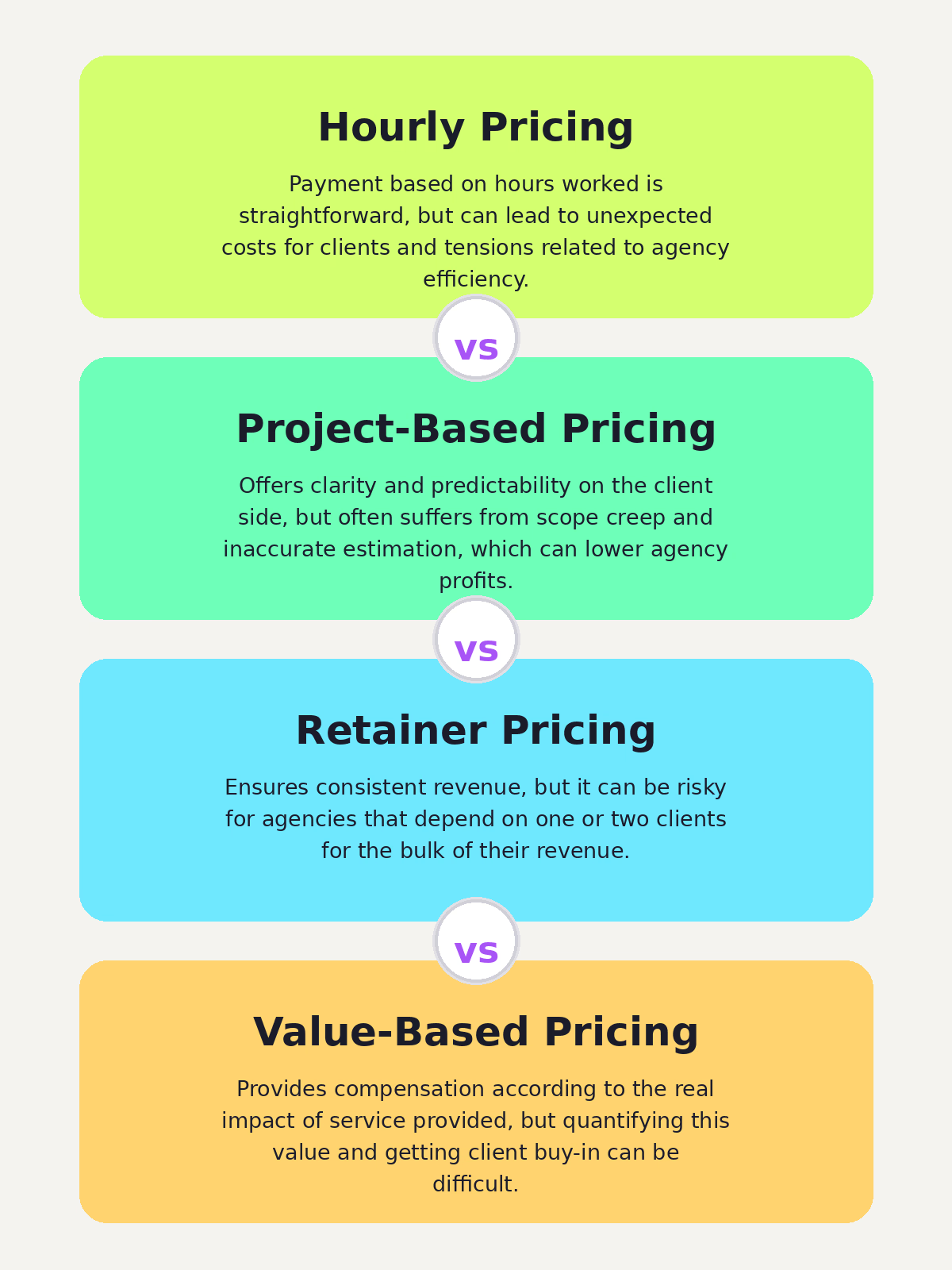
Start by understanding the pricing model, because it tells you what the agency is actually incentivized to do.
- Retainer rewards consistent activity, whether or not it produces results.
- Per-lead rewards volume, which can tempt an agency to loosen the qualification bar.
- Per-meeting ties pay closer to outcomes you actually want.
- Hybrid models blend these, and the blend matters more than either half.
Watch for a retainer stacked on top of per-lead fees. That combination removes the performance alignment that per-lead pricing is supposed to create in the first place.
A few more things to check in the lead generation pricing terms:
- Pass-through costs like data, tooling, domains, or ad spend, and who's actually paying them.
- Setup or onboarding fees, and whether any part is refundable if you leave early.
- Payment timing, late fees, and what triggers a pause in service.
- Automatic price increases built into the renewal.
- What happens to your fees if delivery falls below the committed minimum.
If any of these are missing from the draft, that's not necessarily a dealbreaker. It just means you ask before you sign, not after you're three months in.
Ownership, Data and Reporting
These are the clauses most people skip past during negotiation and only remember when they're trying to leave. They decide what you actually walk away with.
Lead and Asset Ownership
Confirm, in writing, that you own the leads, lists, and contact data generated during the engagement. Also confirm ownership of the copy, sequences, scripts, and other creative built for your campaigns.
Then go one layer deeper: who owns the email infrastructure? The sending domains, inboxes, and dialer accounts matter because losing access to them can quietly kill your outreach continuity, even after you technically own the leads.
Check whether the agency can reuse your lists or your messaging for other clients. And confirm you'll get a full data export on exit, in a format you can actually use, not a PDF summary. Any clause that lets the agency retain rights to your leads or assets after the relationship ends is a red flag worth walking away from.
Reporting, Access and Transparency
Good reporting is tied to your CRM pipeline. Sends, impressions, and open rates are activity, not outcomes.
Before signing, nail down:
- Reporting cadence and format
- Which metrics are mandatory versus nice-to-have
- Direct access to the tools and inboxes actually running your campaigns
- Your named day-to-day contact, and whether the work gets subcontracted out
If the numbers in the agency's report can't be reconciled against what your own CRM shows, that's a real problem, not a formatting quirk.
Compliance, Liability and Risk
Outbound touches real compliance territory: GDPR, CAN-SPAM, TCPA, and Do Not Call rules all apply depending on how and where you're reaching prospects.
Confirm who's responsible for each of these, and check the indemnification language for claims tied to outreach sent on your behalf. Review liability caps to see if they're actually proportionate to what you're paying. Get the agency to warrant that its data is lawfully sourced, and secure approval rights over messaging before anything goes out under your name.
Here's the uncomfortable truth: compliance failures land on your domain and your brand first, even if the outreach was run by someone else.

🚀 Choose Pipeline, Not Promises
With 10,000+ businesses served, 224.7K+ leads generated, and $312M+ pipeline, Cleverly brings proven outbound systems to your sales team.
Contract Length, Renewal and Exit Terms
Most reasonable initial terms fall in the three-to-six month range. Anything longer should come with performance breakpoints that let you exit early if results aren't showing up.
Before signing, check for:
- Auto-renewal, and how much notice you need to give to stop it
- Agency termination clause language covering termination for convenience, and whether the notice window is workable
- A clear definition of termination for cause, including what actually counts as a breach
- Transition assistance, meaning continued data access and export support after you leave
- Confirmation that domains, inboxes, and already-booked meetings transfer to you
- Non-solicit or exclusivity clauses that might limit who you can work with next
Two red flags worth calling out directly: a long mandatory term pushed on you before any results exist, and early termination language that requires paying out the entire remaining contract value regardless of performance.
Red Flags That Should Stop the Signature
Some red flags apply no matter which channel you're buying. Others are specific to how LinkedIn, cold email, or cold calling actually works, so it's worth checking each channel separately before you sign a lead generation agency contract.
General Red Flags
- Refuses to define a qualified lead in writing.
- Pushes a 12-month-plus term before any proven results.
- Guarantees a specific revenue number or a fixed count of closed deals.
- Reports only on activity or vanity metrics, never pipeline.
- Won't name the person actually managing your account.
- Retains ownership of leads, lists, or creative after termination.
- Charges a retainer stacked on top of per-lead fees with no accountability built in.
- Early termination requires paying out the entire remaining term, no exceptions.
LinkedIn Lead Generation Red Flags
- Uses automation tools that violate LinkedIn's terms of service, putting your account at risk of restriction or a ban.
- Won't disclose whether outreach runs through your personal profile, a dedicated profile, or a purchased account.
- No clear cap on daily connection requests and follow-ups, which is what usually triggers LinkedIn's spam detection.
- Sends the same templated message to every prospect regardless of industry or role.
- Doesn't mention profile optimization at all, despite it being one of the first things that affects acceptance rates.
- Won't say whether your account runs alongside other clients' campaigns on shared infrastructure.
- No clarity on what happens to your account access, connections, or conversation history once the contract ends.
Cold Email Red Flags
- Can't explain the domain warm-up process or basic authentication setup (SPF, DKIM, DMARC).
- Wants to send from your primary business domain instead of separate sending infrastructure.
- Doesn't disclose where contact data comes from or how it's verified before outreach.
- No visibility into bounce rate, spam complaint rate, or inbox placement.
- Sends from a shared IP pool with no mention of reputation monitoring.
- No documented opt-out or unsubscribe handling, which is a compliance risk under CAN-SPAM.
- Won't share what a realistic reply rate looks like for your industry before you commit to volume.
Cold Calling Red Flags
- Won't disclose where SDRs are based or what accent and language training they go through.
- No dedicated SDR, calls route through a shared, rotating call center pool instead.
- Can't explain how phone numbers are sourced or checked against Do Not Call lists.
- No power dialer or call recording included despite charging a premium monthly rate.
- Won't let you review or approve call scripts before dialing starts.
- No replacement policy if your assigned SDR underperforms or leaves mid-contract.
- No daily reporting on call volume, connect rate, or appointments set.
Questions to Ask Before You Sign
Bring this into your final call. The first set applies to any lead generation agreement. The rest are specific to whichever channel you're buying.
General Questions
- Exactly what counts as a qualified lead, and who decides in a dispute?
- What are the minimum monthly commitments, and what happens if they're missed?
- Who owns the leads, lists, copy, and domains once we part ways?
- How will results be reported, and can I reconcile them against my own CRM?
- Who specifically will be running my account day to day?
- What does exiting actually look like, and what does it cost?
LinkedIn Lead Generation Questions
- Whose LinkedIn profile will be used, mine or one you manage separately?
- What daily connection and message limits do you stay under to protect my account standing?
- Is messaging personalized per prospect, or built from a shared template with light edits?
- What happens to my account access and connections after the contract ends?
- Is profile optimization part of this engagement, or a separate cost?
Cold Email Questions
- Will outreach run through my primary domain or through separate sending infrastructure?
- What's the domain warm-up process, and how long until we're at full sending volume?
- Where does your contact data come from, and how is it verified for accuracy?
- What bounce rate, reply rate, and spam complaint rate should I realistically expect?
- How are opt-outs and unsubscribe requests handled to stay compliant?
Cold Calling Questions
- Where is my dedicated SDR based, and what training do they complete before going live?
- What dialer technology is included, and is call recording available for review?
- How are phone numbers sourced, and how are they checked against Do Not Call lists?
- If my assigned SDR underperforms or leaves, is there a replacement guarantee?
- Can I review and approve call scripts before outreach begins?
How Cleverly Structures Its Lead Generation Engagements
This checklist exists because vague agreements are common enough to cause real damage. The useful move for any agency is answering these questions before a buyer has to ask them, and that's how we try to run things at Cleverly.
We agree on qualified meeting criteria before a campaign launches, not after the first batch of leads shows up and someone's unhappy with them.
Deliverables are defined up front, and reporting is built around meetings held, something you can check against your own CRM rather than take on faith. Ownership is stated plainly too: you own the leads, lists, and messaging built during the engagement.
Across LinkedIn outreach, cold email, and cold calling, we handle ICP definition, verified list building, outreach execution, and reply handling all the way through to a booked meeting. That end-to-end structure is part of why 10,000+ clients have worked with us, generating $312M+ in pipeline along the way.
A good agency should welcome this level of scrutiny, not get defensive about it.
If you want a partner that answers these contract questions before you have to ask, book a free consultation with Cleverly.
Conclusion
The sales call is not what you'll be held to. The contract is. Everything discussed on that call either shows up in writing or it doesn't exist once a disagreement starts.
Three clauses prevent most of the disputes that come up in this industry: how a qualified lead is defined, who owns the leads and assets, and what exit actually looks like. A good agency negotiates all three openly. An agency that resists writing them down is telling you something, even if that's not what they intended to say.
The practical next step is simple: pull up the agreement you're about to sign, run it against this checklist line by line, and flag every gap before you commit. And again, have counsel review the final version. This piece is a starting point, not a substitute for legal advice.
Frequently Asked Questions
Free Resource
How to Scale a Profitable Cold Call System
Get the complete guide — download it instantly now.
Free Ebook
Download the Free Guide
Enter your details to get instant access.
You're all set! 🎉
Your ebook is downloading now.
Click below if the download didn't start automatically.


