

Table of Contents
Why Getting Clients in Real Estate Is Harder in 2026
The 3 Core Sources of Real Estate Clients
10 Proven Ways to Get Clients in Real Estate
How to Generate Clients in Real Estate Consistently
Real Estate Lead Generation: Inbound vs Outbound
Common Mistakes Real Estate Agents Make
How Cleverly Supports Real Estate Lead Generation
Conclusion
Frequently Asked Questions
Modified On :
August 10, 2026
Key Takeaways
- Referrals are valuable but unpredictable. You need more than word-of-mouth to grow consistently.
- The best real estate agents stack all three client sources: referrals, inbound marketing, and outbound prospecting.
- Most leads need 8-12 touchpoints before responding, so your follow-up system matters more than your first message.
- Inbound builds long-term visibility; outbound creates pipeline on demand. You need both.
- A CRM and structured lead tracking system separates agents who grow from agents who just get by.
- Consistency in outreach always beats short bursts of intense effort.
Real estate has always been a relationship business. But in 2026, relationships alone won't keep your pipeline full.
Competition is up, ad costs are rising, and buyers are doing more research on their own before ever talking to an agent.
If you want to know how to get clients in real estate consistently, you need more than referrals. You need a system.
This guide breaks down proven strategies, both short-term and long-term, to help you build predictable real estate lead flow.
Why Getting Clients in Real Estate Is Harder in 2026
Knowing how to get more clients in real estate starts with understanding what's changed. Here's what's making it tougher:
1. Online platforms are everywhere. Zillow, Realtor .com, and other portals now compete directly with agents for buyer attention.
2. Lead marketplaces resell the same leads. You're often one of 3-5 agents contacting the same prospect.
3. Buyers do independent research. According to NAR, 97% of homebuyers use the internet during their home search. They've already formed opinions before you reach them.
4. Trust takes longer to build. One bad experience, one unanswered call, and a prospect moves on.
5. Decision cycles are longer. Rising interest rates and market uncertainty mean buyers and sellers are taking more time before committing.
The agents winning in 2026 are the ones who show up consistently and early in the research phase.
What Clients Actually Look for When Choosing an Agent
Before you spend another dollar on outreach, it helps to know what actually tips the scale for buyers and sellers. How to get clients as a realtor starts with matching what you offer to what they're actually evaluating.
Your reputation is usually doing the work before you ever get the call. Here's what they're weighing once you're in the room:
- Proven track record. Comparable sales in the same neighborhood or price range matter more than years in the business. A seller wants to know you've sold homes like theirs, recently.
- A visible marketing plan. Professional photos, staging guidance, and MLS exposure aren't extras anymore. They're the baseline sellers expect before they'll sign.
- Responsiveness and availability. A slow reply during the interview stage is a preview of what working together will feel like. Fast, clear communication wins more listings than people assume.
- Negotiation skill. This is often the deciding factor between two agents with similar numbers. Sellers want to know you'll hold the line on price, and buyers want to know you'll get their offer accepted without overpaying.
NAR's data backs this up directly: 35% of sellers named an agent's reputation as a key factor in their decision, and the top priorities they cited were marketing the home effectively, pricing it competitively, and selling within a specific timeframe.
The takeaway: every strategy in this guide works better once these four boxes are checked. Referrals and outreach get you the conversation. Track record, marketing, responsiveness, and negotiation skill get you the signature.
🏡 More Listings. More Appointments.
Cleverly drives real estate growth with LinkedIn outreach, pay-per-meeting cold email, and guaranteed cold calling booking qualified conversations consistently.
The 3 Core Sources of Real Estate Clients
Before we get into tactics, it helps to understand how to find clients in real estate at a structural level. There are really only three places clients come from:
1. Sphere of Influence and Referrals
This is your past clients, family, friends, and local network. It's high-trust and low-cost, but it's also unpredictable. You can't scale it.
2. Inbound Marketing
SEO, content, ads, and social media that pull people toward you. Takes time to build, but creates long-term visibility.
3. Outbound Prospecting
Direct outreach to potential clients through cold email, LinkedIn, cold calling, or door-knocking. Faster to generate conversations, requires more consistency.
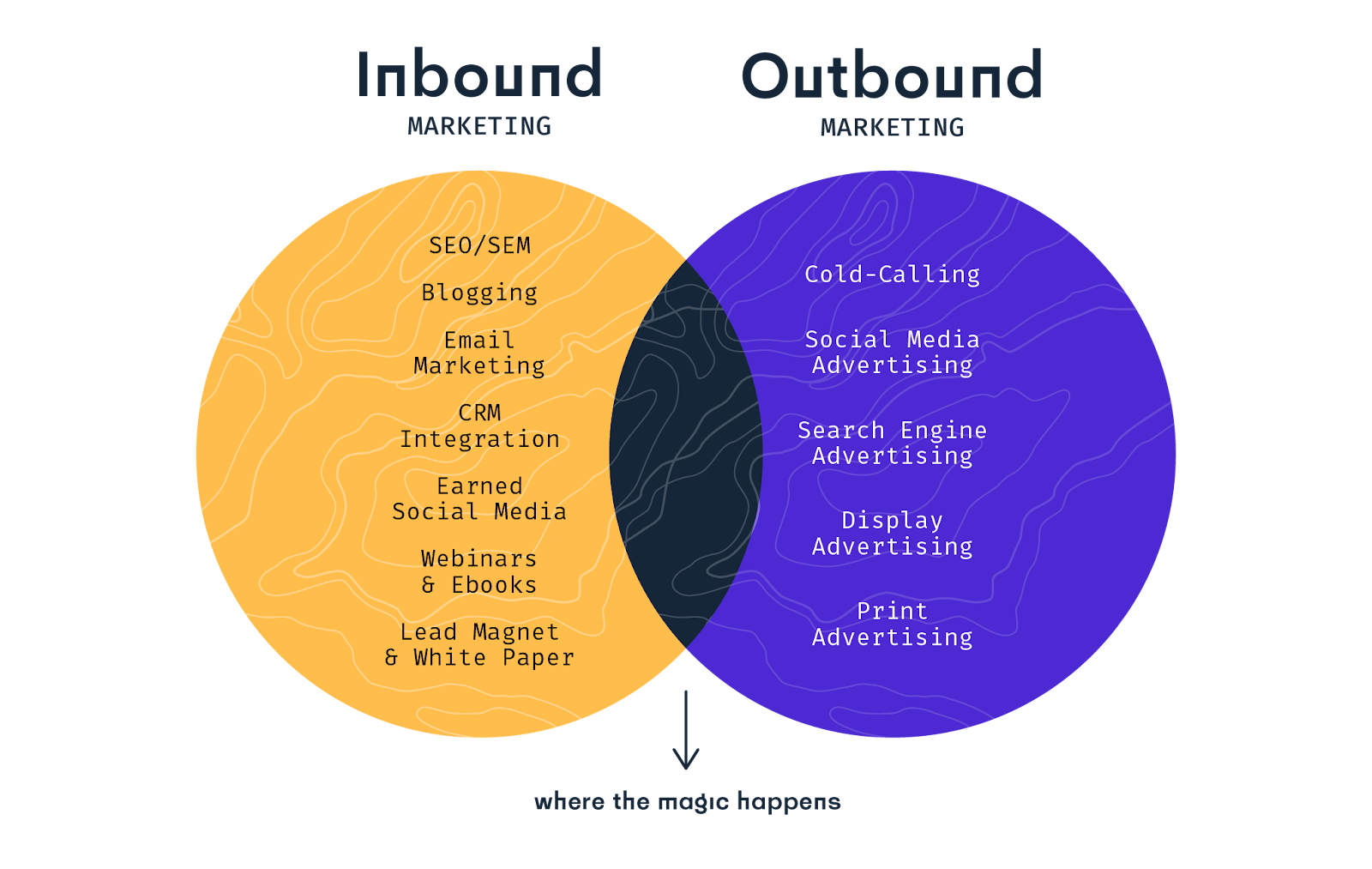
The best agents don't rely on just one. They stack all three.
Learn More: Inbound vs Outbound Lead Generation
13 Proven Ways to Get Clients in Real Estate
1. Strengthen Your Referral Network
Referrals are still one of the best ways to get clients in real estate, but you have to work for them.
- Stay in touch with past clients through email or a quick check-in call.
- Build relationships with local businesses, lenders, and attorneys who can send you referrals.
- Show up at community events and neighborhood associations.
- Ask for reviews on Google and Zillow right after closing.
A simple follow-up 30 days after closing asking "do you know anyone looking to buy or sell?" goes a long way.
Asking for referrals works better when you make the ask specific and back it with a little effort of your own.
- Pop-bys. A pop-by is a short, in-person visit where you drop off a small, thoughtful gift, no pitch attached. Top-producing agents credit referrals for the vast majority of their business, and pop-bys are one of the most reliable ways to stay memorable enough to earn them. That matters more than it sounds like it should: roughly 70% of home buyers forget their agent's name within a year of closing.
- Referral incentives. A small thank-you, like a gift card or a discount on a future transaction, can encourage referrals. Just be careful here: RESPA prohibits paying referral fees to unlicensed individuals, so keep any incentive as a gesture of appreciation rather than a cash payment tied to the deal.
- Time the ask around a high-satisfaction moment. The window right after closing, or right after an offer comes in over asking, is when clients are most likely to say yes. Two to four weeks post-closing tends to be the sweet spot, close enough that the experience is fresh, far enough that they're settled and not overwhelmed.
- Make the ask specific, not generic. "Let me know if you hear of anyone" gets ignored. "Do you know anyone at work relocating this summer?" gets a real answer.
Referred clients tend to close at a much higher rate than cold leads, which is exactly why this small, consistent effort pays off more than another round of paid ads.
2. Optimize Your Online Presence
If someone Googles you and finds nothing, that's a red flag.
- Set up and fully complete your Google Business Profile with photos, hours, and service areas.
- Collect Google reviews consistently. Agents with 20+ reviews rank significantly higher in local searches.
- Use local SEO basics: include your city and neighborhood names in your website content and bio.
- Make sure your website is mobile-friendly and loads fast.

3. Use Social Media for Visibility
You don't need to go viral. You just need to stay visible.
- Post weekly market updates for your area.
- Share local insights like new developments, school ratings, or neighborhood trends.
- Create short educational videos answering common buyer/seller questions.
- Platforms like Instagram Reels and YouTube Shorts are especially effective for organic reach right now.
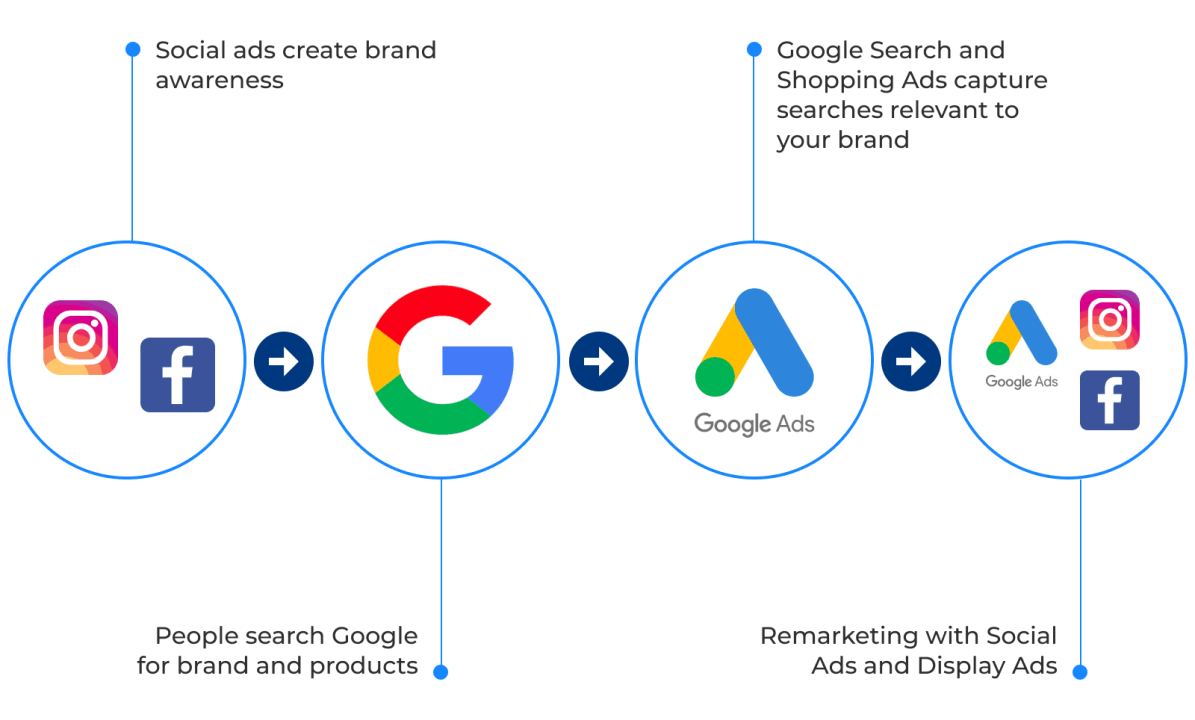
4. Run Targeted Paid Ads
Paid ads can bring in leads quickly, but the setup matters.
- Facebook and Instagram ads work well for buyer lead generation with neighborhood-specific targeting.
- Google Local Service Ads show up when someone searches "real estate agent near me" and are pay-per-lead.
- Keep your lead form short. Name, email, phone, and one qualifying question is enough.
- Always have a follow-up sequence ready before you run ads. Leads go cold fast.
5. Host Educational Events or Webinars
This one is underused and it works.
- First-time buyer workshops attract people early in their decision cycle before they've picked an agent.
- Investment property seminars put you in front of investors who transact more frequently.
- These events position you as an expert, not just another agent.
Even a small Zoom webinar with 15 attendees can generate 2-3 qualified conversations.
6. Use Email Marketing to Nurture Prospects
Most leads aren't ready to buy or sell today. Email keeps you top of mind until they are.
- Send monthly market updates for your target neighborhoods.
- Share neighborhood reports with local stats, sold prices, and new listings.
- Set up property alerts for people who've shown interest but aren't ready to commit yet.
According to HubSpot, email marketing delivers an average ROI of $36 for every $1 spent. It's worth doing right.
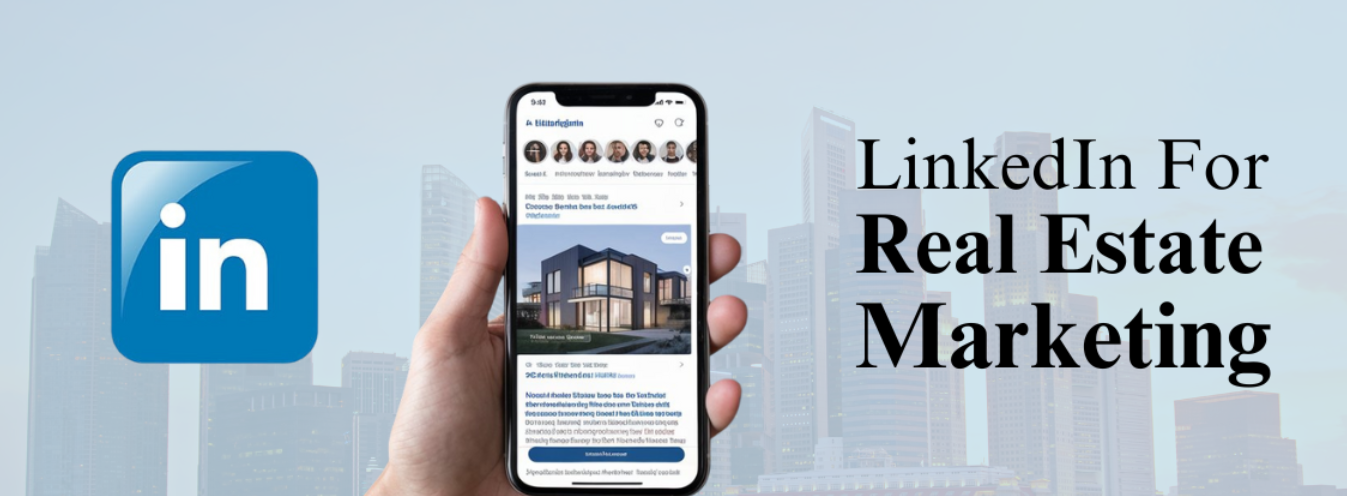
7. Leverage LinkedIn for Investor and High-Value Clients
LinkedIn for real estate is often overlooked bye agents and that's your opportunity.
- Target real estate investors, business owners, and corporate relocation prospects directly.
- Connect with professionals moving into your market from other cities.
- Share market insights and investment property content to build authority.
- LinkedIn outreach converts well for higher-value transactions like investment properties and commercial deals.
8. Cold Outreach to Property Owners and Investors
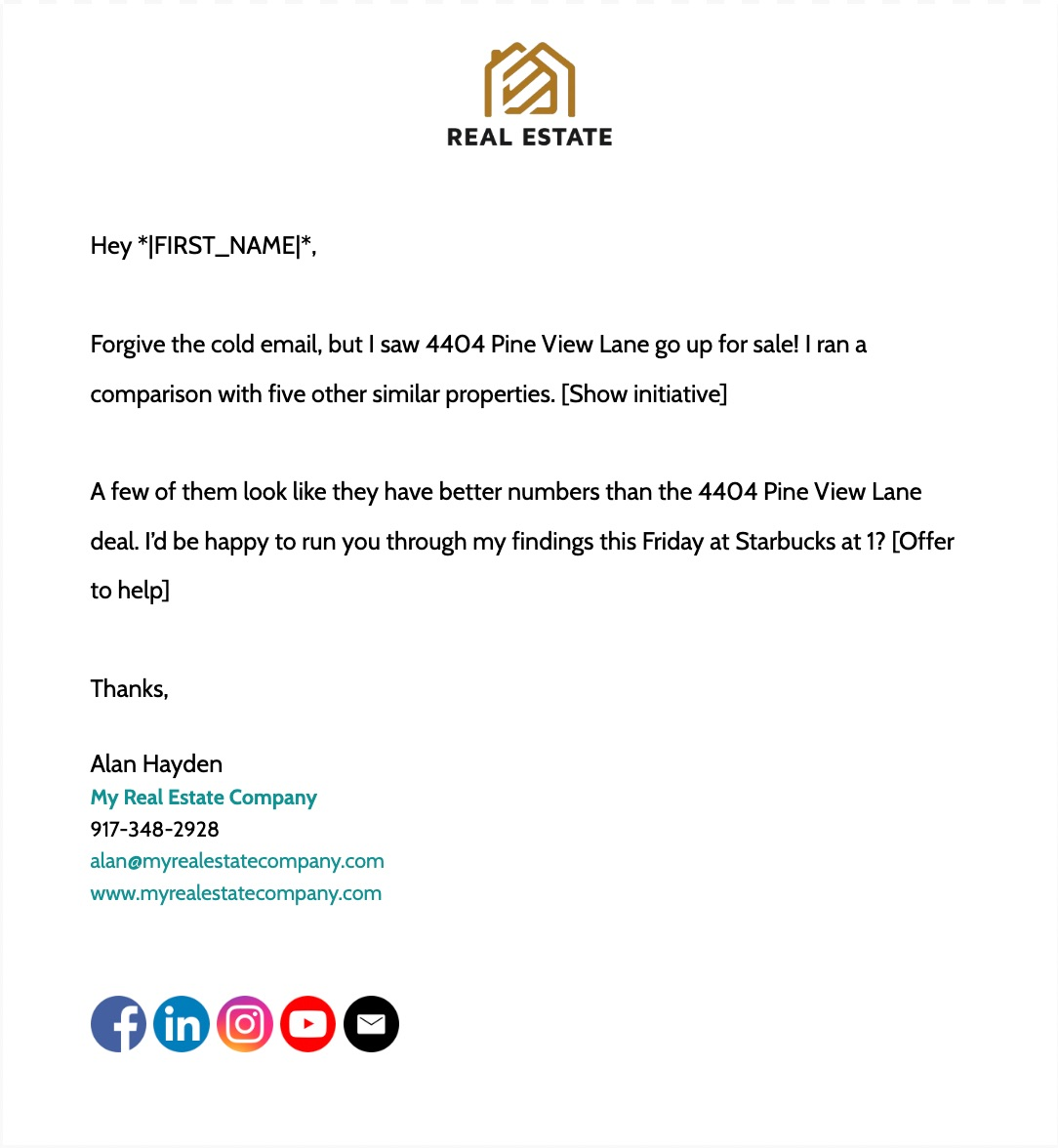
Real estate lead generation through cold outreach is one of the fastest ways to build pipeline.
- Expired listings are homeowners who already wanted to sell. They're warm by definition.
- Rental property owners are often open to selling or upgrading their portfolio.
- Off-market outreach through direct mail or cold calling lets you find sellers before they list.
This is a numbers game, but with the right script and the right list, it converts.
Check this out: Best Email Service for Cold Emails - Here’s What 10,000+ B2B Agencies Chose
9. Build Strategic Partnerships
Some of the best leads come through people who already have the relationships you want.
- Mortgage brokers are talking to buyers before you are.
- Real estate attorneys handle transactions and often refer clients who need agents.
- Property managers work with landlords who may want to sell.
These partnerships take time to build but they compound over time.

10. Implement a Structured Real Estate Lead Generation System
This is what separates agents who get by from agents who grow.
- Use a CRM (like Follow Up Boss or HubSpot) to track every lead and every touchpoint.
- Set up multi-touch follow-up sequences so no lead falls through the cracks.
- Build an appointment funnel: lead comes in, gets nurtured, books a call, converts.
- Track your conversion rate at each stage so you know where to improve.
Without a system, you're just hoping. With a system, you're predictable.
11. Real Estate Farming: Building a Neighborhood Presence
How to get clients as a real estate agent in a specific area comes down to one idea: become the name everyone in that neighborhood already thinks of before they've even decided to sell. That's farming.
- Direct mail campaigns to a target neighborhood. Postcards with recent sales data, just-listed or just-sold announcements, or a quarterly market snapshot keep your name in front of homeowners who aren't actively searching yet but will be eventually.
- Sponsoring local teams or events. A little league team, a school fundraiser, or a neighborhood block party puts your name on something people already care about, which builds goodwill faster than an ad ever will.
- Small branded giveaways to local businesses. Leaving branded notepads, calendars, or coffee cup sleeves at the coffee shop or hardware store people already visit keeps you visible without asking for anything.
- Becoming the recognized go-to agent for one area. This is the compounding payoff. Once enough people in a neighborhood know your name, referrals inside that area start happening without you asking.
Farming is a long game. Most agents give up after a few months because they don't see instant results. The ones who stick with it for a year or more usually end up owning that neighborhood's listings almost by default.
12. Specializing in a Real Estate Niche to Stand Out
Gaining clients in real estate without competing against every other agent in your market often comes down to narrowing your focus instead of widening it.
- Pick a niche. Luxury, farm and land, relocation, and investment properties are some of the most common paths. Each one has a distinct buyer profile, a distinct sales process, and far less competition than the general residential market.
- Less competition, more authority. When you're one of a handful of agents in your market who genuinely understands investment property analysis or relocation logistics, you stop competing on price and start competing on expertise.
- Certifications build credibility fast. A designation like Certified Luxury Home Marketing Specialist (CLHMS) signals to prospects that you're not guessing. Agents who earn it report significantly higher average income than general residential agents, which reflects the size of the deals more than anything else.
- Market yourself as the local expert in that niche. Once you've picked a lane, say so everywhere: your bio, your listing presentations, your social content. Vague positioning ("I help buyers and sellers") gets ignored. Specific positioning ("I specialize in relocations into [city]") gets remembered.
13. Getting Local Press & Media Mentions
Local press does something referrals and ads can't: it makes a third party vouch for you, for free.
- Pitch local journalists for market-expert quotes. Reporters covering the housing market regularly need a local voice for context. A short, specific pitch ("I can speak to why inventory in [neighborhood] is tightening") gets more responses than a generic "I'm available for comment" email.
- Local newspaper ads as a supplementary channel. These won't replace digital outreach, but in smaller markets they still reach an audience, particularly older homeowners, that skews toward using an agent.
- Repurpose press mentions across social media. A single quote in a local paper can become a LinkedIn post, an Instagram story, and a line in your email signature. One placement, multiple touchpoints.
- Credibility compounds. One mention is nice. Three or four over a year starts to look like you're the agent local media actually calls, which is a hard thing to fake and an easy thing to point new prospects to.
This won't generate leads overnight, which is why it works best stacked alongside the outbound and referral strategies above, not as a replacement for them.
Also Check: Mortgage Lead Generation - Proven Strategies for Brokers and Lenders
🚀 Turn Outreach Into Closings
Join 10,000+ companies using Cleverly to generate sales-ready meetings across LinkedIn, email, and phone—fueling predictable pipeline growth.
How to Generate Clients in Real Estate Consistently
Here's the honest truth about how to generate clients in real estate: consistency beats intensity every time.
✅ Most agents reach out once and give up. Studies show it takes 8-12 touchpoints before a prospect responds.
✅ Your follow-up system matters more than your first message.
✅ Multi-touch outreach (email + LinkedIn + phone) increases response rates significantly.
✅ Tracking your pipeline by stage helps you identify exactly where leads are getting stuck.
✅ Combining inbound visibility with outbound outreach gives you stability. When ads slow down, outbound picks up the slack.
Treat your lead generation like a business process, not a sales activity.

Real Estate Lead Generation: Inbound vs Outbound
Understanding real estate lead generation means knowing when to use each approach.
Inbound builds awareness over time:
- SEO and blog content attract buyers and sellers researching online.
- Paid ads generate immediate volume but require a budget.
- Referrals and reviews bring in warm, high-trust leads.
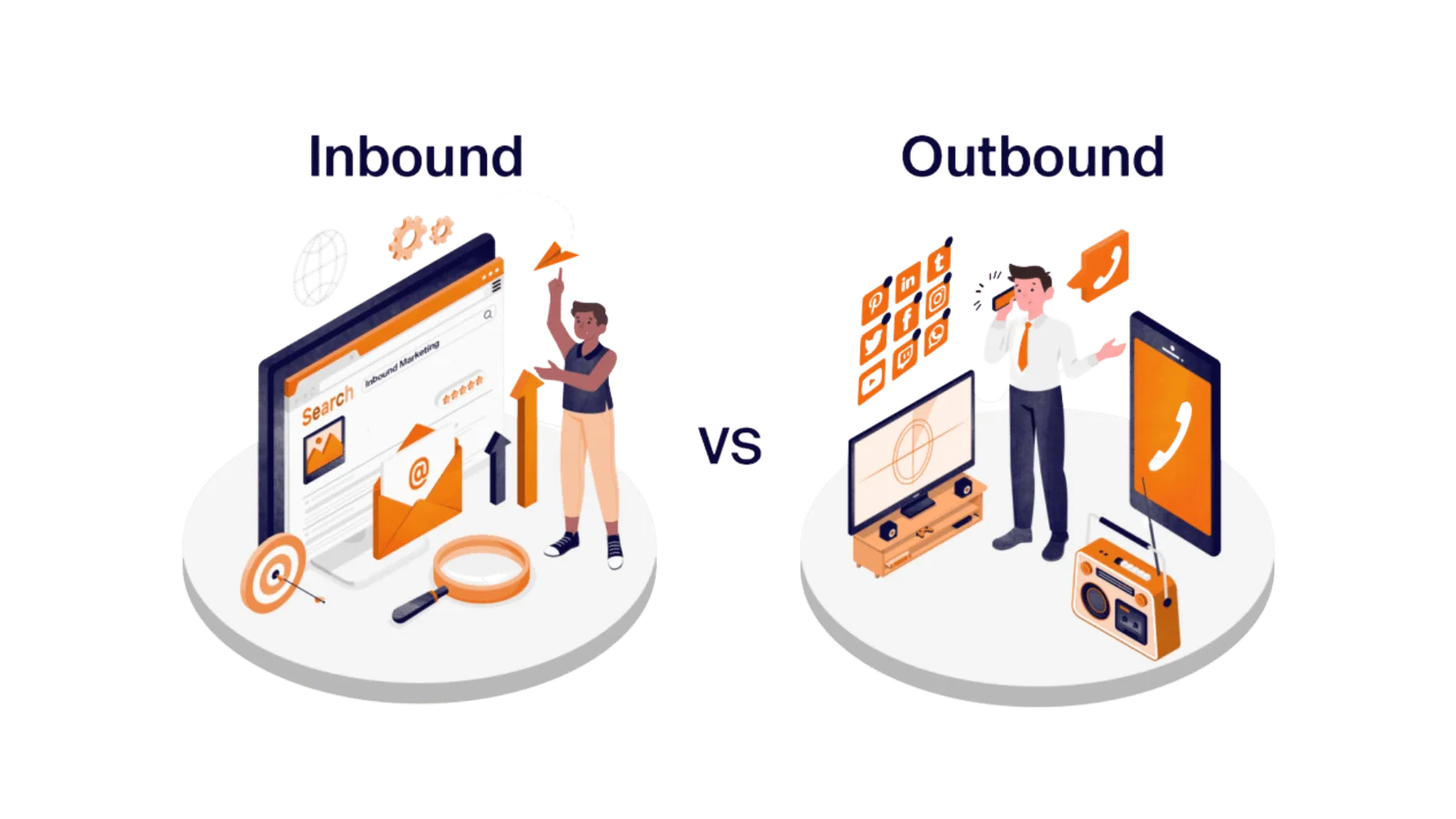
Outbound creates opportunity on demand:
- Direct LinkedIn messaging to investors and relocating professionals.
- Cold email campaigns to targeted property owner lists.
- Cold calling expired listings and rental owners.
- Investor targeting through multi-channel outreach.
The difference is simple. Inbound brings people to you. Outbound lets you go to them. In a competitive market, you need both.
Explore More: Targeted Lead Generation (Complete Guide to Precision Outreach)
Common Mistakes Real Estate Agents Make

If you're wondering how to get clients in real estate and feeling stuck, check if you're making any of these mistakes:
❌ Relying only on referrals. They're great, but they're not consistent enough to build a business on.
❌ Buying low-quality leads. Shared leads from marketplaces are oversold and underperform. You're competing against 4 other agents.
❌ No follow-up system. Most agents follow up once or twice. The ones closing deals follow up 8-12 times.
❌ No CRM tracking. If you can't see your pipeline, you can't manage it.
❌ Inconsistent outreach. Doing outreach for two weeks and stopping is worse than not starting. Volume and consistency are everything.
Fix these, and you'll already be ahead of most agents in your market.
Know More: How to Shorten the B2B Sales Cycle Without Discounting
How Cleverly Supports Real Estate Lead Generation

If you're serious about real estate lead generation, at some point you need a system that runs without you having to do everything manually.
That's where we come in.
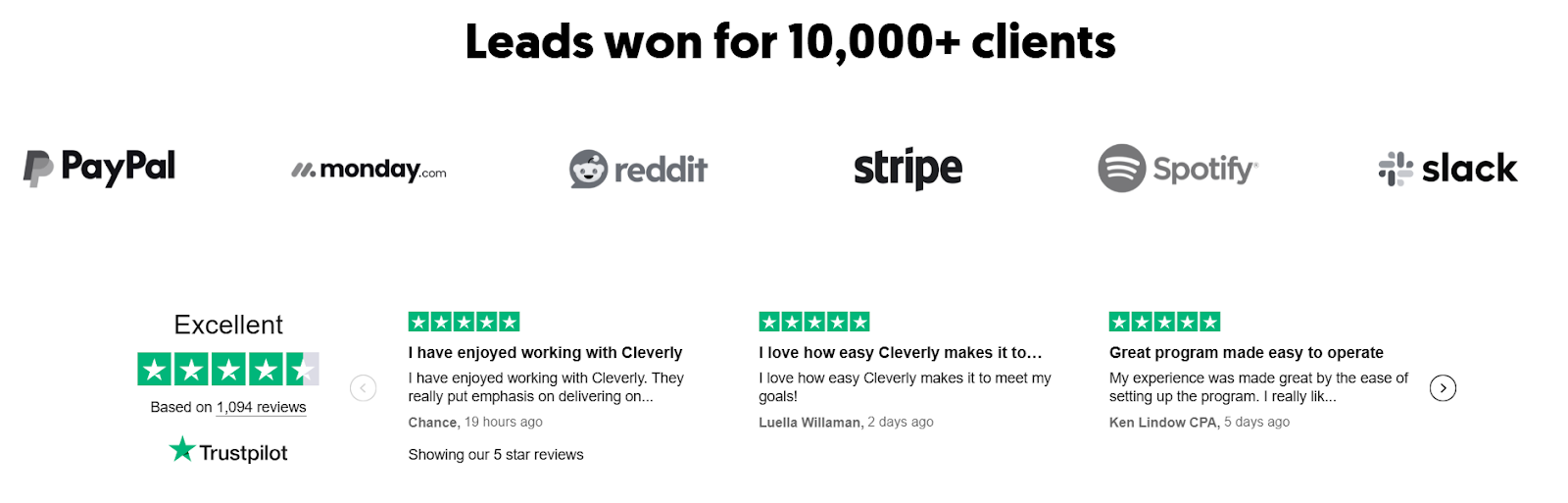
Cleverly is the highest-rated, 100% done-for-you B2B lead generation agency, and we've helped 10,000+ clients generate leads with companies like Amazon, Google, Uber, PayPal, Slack, and Spotify, resulting in $312 million in pipeline revenue and $51.2 million in closed revenue.
For real estate professionals and brokerages, we run:
- LinkedIn outreach to investors, high-net-worth prospects, and professionals relocating to your market.
- Targeted cold email campaigns to property owners, investors, and decision-makers in your niche.
- Cold calling through our proven $5M system that books 10-30 qualified sales calls every month, guaranteed. That includes a no-accent appointment setter placed, rigorous 2-week training, breakthrough scripts, data and power dialer included, and it costs half of what in-house hiring would..
- Multi-touch appointment setting so prospects get nurtured across multiple channels until they're ready to talk
Our focus is always on qualified conversations, predictable pipeline, and outreach that feels relationship-driven, not spammy.
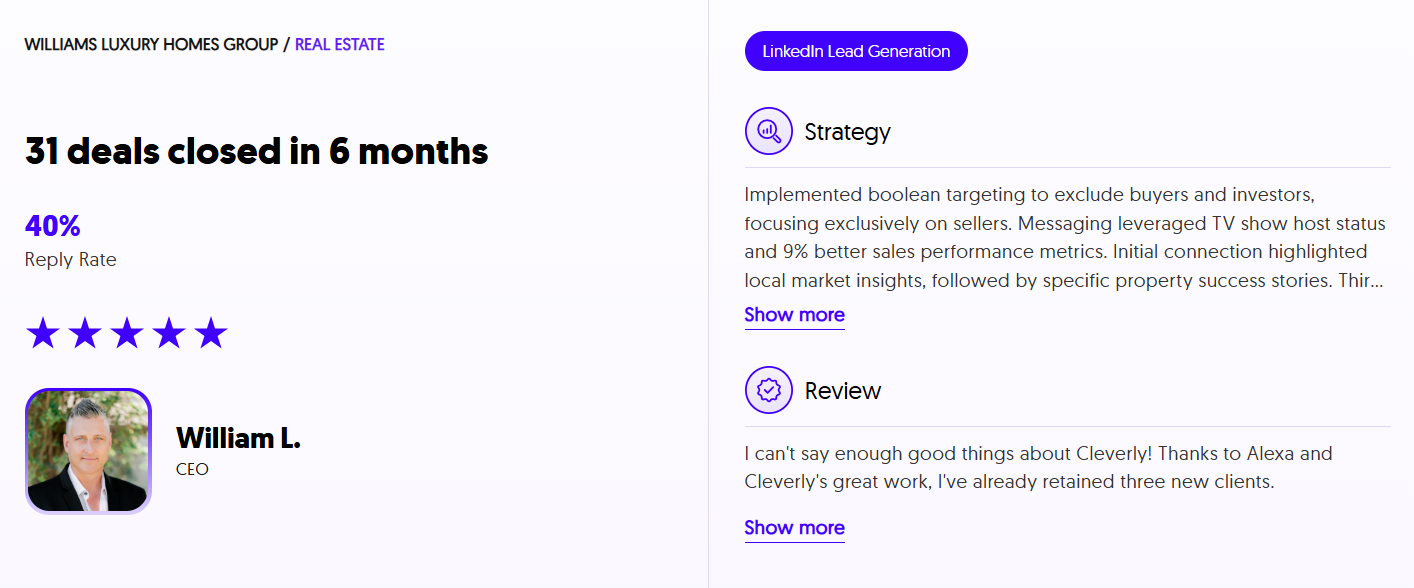
LinkedIn services start at just $397/month. Cold email lead gen is performance-based, you only pay for meeting-ready leads we send you. And, cold calling - half the price of hiring in-house.
If referrals aren't consistent enough to hit your goals, building a structured outreach system may be your next growth lever.
🚀 Talk to us and let's build yours.
Conclusion
There's no single best way to get clients in real estate.
Referrals are powerful but unpredictable. Ads work but cost money. Outbound takes effort but creates opportunity on demand.
The agents who win consistently are the ones who treat lead generation like a system, not an afterthought.
Combine visibility with structured outreach, track your pipeline, follow up more than feels necessary, and you'll build something that grows.
Frequently Asked Questions
Free Resource
How to Scale a Profitable Cold Call System
Get the complete guide — download it instantly now.

Free Ebook
Download the Free Guide
Enter your details to get instant access.
You're all set! 🎉
Your ebook is downloading now.
Click below if the download didn't start automatically.


