

Table of Contents
What Conversational AI Means in Real Estate (and Where Generative AI Fits)
Chatbots vs Voice Agents: Which Does What
Practical Use Cases That Work Today
What Conversational AI Still Cannot Do
Compliance Risks Nobody Talks About
Tools to Consider
How to Implement Without Damaging Your Brand
How Cleverly Helps Real Estate Firms That Sell to Businesses
Conclusion
Frequently Asked Questions
Modified On :
October 26, 2026
Key Takeaways
- Conversational AI for real estate earns its place on speed and coverage. It does not replace the agent relationship.
- Instant lead response and aged lead reactivation deliver the clearest value. Everything else is incremental.
- SMS follow-up usually beats a website chatbot, because most brokerages leak leads in follow-up, not capture.
- Automated qualification carries fair housing and consent risk that scales with every conversation the bot has.
- Start with one use case, read every transcript for the first month, and design the human handoff before anything else.
A buyer fills out a listing inquiry at 9:47 on a Saturday night. Your agent is at dinner. By Monday morning, that buyer has talked to someone else.
That gap is the whole reason conversational AI for real estate took off.
A widely cited Harvard Business Review study of 1.25 million sales leads found that companies contacting a lead within an hour were nearly seven times more likely to qualify it than companies that waited even one hour longer. Meanwhile, NAR’s 2026 data shows 88% of buyers still work with an agent, so the person who answers first has a real shot at the deal.
This guide covers what these tools do, chatbots versus voice agents, use cases, tool categories, implementation, and the compliance risks most vendor content skips.

What Conversational AI Means in Real Estate (and Where Generative AI Fits)
Conversational AI is software that holds a natural conversation with a lead by chat, SMS, or voice, then takes an action. That action might be qualifying the lead, booking a viewing, or routing the lead to an agent.
How it differs from older chatbots
Old chatbots ran on decision trees. If a lead typed something the tree did not expect, the bot broke. Generative AI in real estate changed that. Current systems read free-form replies like “we’re thinking spring, maybe, depends on rates” and respond to them in context.
That flexibility is also the risk. A tree can only say what you scripted. A generative system can say things you never approved.
The three channels
Where it sits in your workflow
Conversational AI sits between lead capture and the agent conversation. It does not replace either one. Your site, portals, and ads still bring leads in. Your agent still closes. The AI handles the stretch in between, when a lead is fresh and nobody is available.
The commercial logic
Response speed affects conversion, and AI covers hours and volume a human team cannot. Be careful with the stats you see on vendor pages, though. Many of the response-time and close-rate figures floating around real estate marketing trace back to vendor content with no verifiable source.
When you build a business case, use your own numbers: how many leads arrive after hours, and how long your team currently takes to reply.
🏡 AI Can Answer Inquiries. But Who Finds the Buyers?
Cleverly helps B2B real estate companies and service providers reach the right prospects and generate qualified leads.
Chatbots vs Voice Agents: Which Does What
A real estate AI chatbot is not one tool. It is three channels with different jobs, and mixing them up is the most common buying mistake we see.
Web Chatbots
A web chatbot answers property questions on your site, captures contact details, and routes inquiries to the right agent. It works best when it is connected to live listing data. Without that, it gives generic answers, and a generic answer to “is this still available?” is worse than no answer.
The limitation is reach. It only talks to people who are already on your site.

SMS and Messaging Agents
These agents follow up on new leads by text and ask about timeline, financing, and motivation. SMS is the strongest nurture channel, because leads reply to texts long after they stop answering calls.
The catch is consent. Automated texting carries legal obligations that are easy to breach once you are sending at volume. We cover that in the compliance section.

Voice Agents
AI voice agents for real estate answer inbound calls, qualify callers, and book viewings, including after hours. They are also used for outbound follow-up on aged or unresponsive leads.
There is a split worth understanding here:
- Shallow voicebots handle routing and scheduling. They are fine for “which listing are you calling about” and “does Thursday at 4 work.”
- Deeper agents run real qualification conversations about timeline, financing, and motivation.
Quality varies enormously. A poor voice agent damages your brand more than a missed call does, because a missed call is neutral and a bad conversation is memorable.

How to Choose Between Them
Match the channel to where your leads actually come from. Pull your last 90 days of leads and sort them by source and by what happened after the first touch.
For most brokerages, the leak is follow-up, not capture. That means SMS follow-up usually returns more than a website chatbot. Fix the leak you actually have.
Practical Use Cases That Work Today
Here are the AI chatbots in real estate lead generation use cases we would take seriously, ranked by how much value they deliver.
Instant lead response
This is the clearest and most defensible use case. A reply in two minutes at 9:47 on a Saturday night is something your team cannot match, and the lead knows it.
Aged lead reactivation
Every brokerage has a database of old leads nobody calls. AI can work those at a scale a human team will not. It is also the highest-risk use case for compliance, which we cover below.
Qualification, booking, and the rest
Qualification captures timeline, budget range, financing status, and motivation before an agent spends time on the lead. Booking puts viewings and consultations on calendars without back-and-forth. Inbound call handling and listing enquiries cut routine questions. Post-viewing follow-up gets feedback that otherwise never gets collected.
Pro tip: Do not try to launch all seven. Instant response and aged lead reactivation carry most of the value. The rest is incremental.
🚀 Stop Waiting for Leads to Come to You
Let Cleverly take your B2B outreach off your plate and help you start more qualified sales conversations.
What Conversational AI Still Cannot Do
This is the part vendor pages skip. Give it real weight when you decide where to deploy.
Conversational AI cannot:
- Build trust. A buyer or seller needs trust before making one of the biggest financial decisions of their life. That trust comes from a person.
- Handle emotional conversations. Most of a real estate transaction is emotional. Divorce, downsizing, a death in the family, a job loss, a first home.
- Negotiate, advise, or exercise judgment about a client’s situation.
- Catch nuance. “Maybe later” can mean “not interested” or “I’m nervous and need a week.” A good agent hears the difference. A model often does not.
- Know when a lead needs a human right now, unless you design that handoff carefully.
- Replace local market knowledge. Clients pay for knowing which streets flood, which school boundary is changing, and what a house will really sell for.
So here is the framing we would give your team. These tools buy agents time and coverage. They do not replace the relationship that closes the deal. If your plan depends on the bot doing the agent’s job, the plan is wrong.
Compliance Risks Nobody Talks About
This is the most important section in the guide, and the one most competing articles leave out. The AI Voice Agents for Real Estate market is moving fast, and the legal exposure moves with it.
(General guidance only, not legal advice. Rules vary by state and jurisdiction, so talk to a real estate attorney before you deploy.)
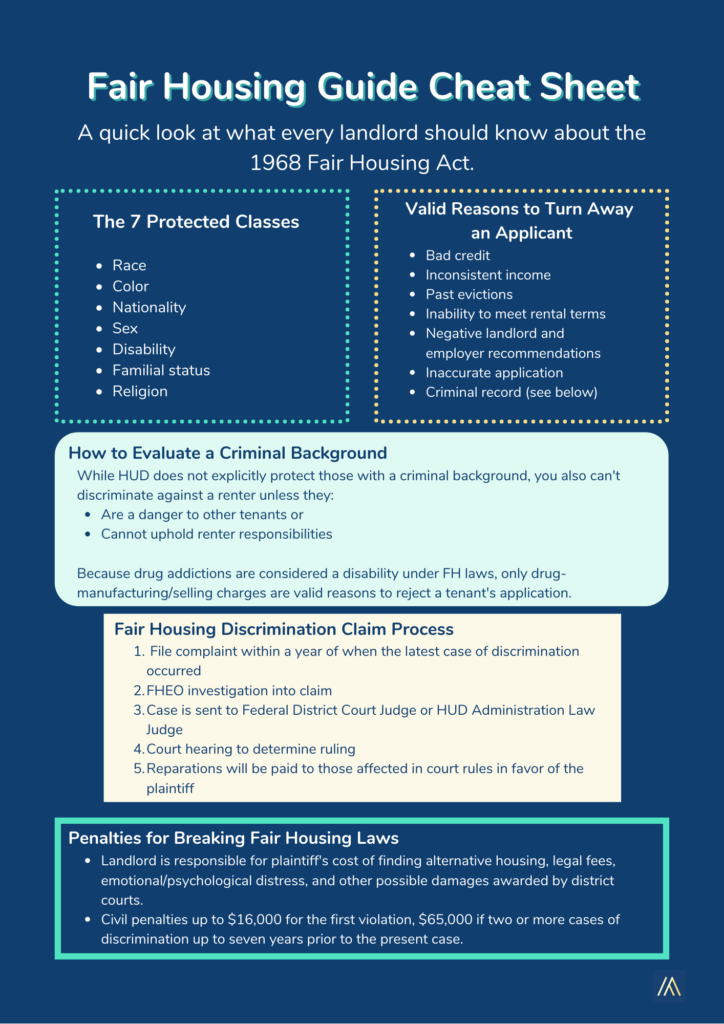
Fair Housing Obligations
Automated qualification screens people. If that screening produces different outcomes for protected groups, you have fair housing exposure, even if nobody intended it.
Watch for three risk areas:
- Qualification criteria that act as proxies. Questions that look neutral but track protected characteristics, such as family composition or where someone is from.
- Differential routing. Sending some leads to your best agents and others to a slower queue based on signals that correlate with protected groups.
- Steering. Automated responses that nudge inquiries toward or away from certain areas.
Practical guidance:
- Review exactly what the system asks and how it routes.
- Keep criteria tied to transaction readiness (timeline, financing status, motivation), not personal characteristics.
- Audit outcomes, not intent. “We did not mean to” is not a defense.
HUD has been clear that the Fair Housing Act applies whether a human or an algorithm makes the decision. In 2024 it issued guidance on AI in tenant screening and in housing advertising. Agents remain responsible for the conduct of tools acting on their behalf. If your bot steers, you steered.
Automated Calling and Texting Rules
Automated calls and texts are regulated, and consent is required before you contact someone. In February 2024, the FCC ruled that AI-generated voices count as “artificial” voices under the TCPA. Marketing calls using an artificial or prerecorded voice generally need prior express written consent.
Three things to keep in mind:
- Do-not-call obligations apply to automated outreach the same way they apply to manual outreach.
- Consent is usually tied to a specific seller and a specific purpose. An old form fill may not cover a new AI campaign.
- Aged lead reactivation is the highest-risk use case here. Consent may have lapsed or never existed in the first place.
Disclosure and Recording
Be transparent that the person is talking to an AI. This is increasingly expected and in some places required, so check your state’s rules. Call recording triggers consent requirements that vary by state, and some states require every party on the call to agree.
Keep a human escalation path available and easy to reach. If someone says “let me talk to a person,” the answer should be yes.
Practical Safeguards
- Document what the system is allowed to ask and do.
- Review transcripts regularly instead of assuming the system behaves as designed.
- Keep consent records you can actually produce.
- Get a lawyer to review your scripts and consent language before launch.
Tools to Consider
This market is crowded and changes monthly, so we are covering categories instead of ranking vendors. A ranked list would be out of date before you finished reading it.
What to evaluate
- CRM integration. Does every conversation land in your CRM with the full transcript?
- Listing data access. Is it live, or a stale feed?
- Handoff quality. What does the agent see when a lead is passed over?
- Transcript access. Can you read every conversation, not just summaries?
- Consent controls. Can you suppress numbers, store consent, and honor opt-outs automatically?
- Pricing model. Per seat, per conversation, per minute, or per lead?
Pricing in this category varies widely, and most published figures come from vendor pages. Verify directly before you build a budget around anything you read.
Six Tools Worth a Look
The categories above are easier to judge with real products next to them. This is not a ranking, and each one fits a different kind of brokerage. Check current pricing and features on each vendor’s site before you decide, because this space changes fast.
1. Structurely
Structurely is an AI sales assistant built around real estate lead engagement. It follows up on new inquiries by SMS, email, and live chat, and it also offers AI calling for qualification. It suits teams that get a steady flow of portal and website leads and need someone to work them around the clock.
Key features:
- AI messaging assistant that replies to new inquiries instantly, including nights and weekends.
- Automated qualification and appointment setting synced to your calendar and CRM.
- Live phone transfers that route qualified leads to your team.
- Custom scripts and integrations with common CRMs.
Pricing note: Third-party reviews list plans from about $499 per month, plus usage-based credits for texts, voice minutes, and emails. Some reviews also mention an onboarding fee. Confirm the total cost with the vendor.
2. Ylopo AI (Text and Voice)
Ylopo AI, formerly called Raiya, is the AI layer of the Ylopo real estate marketing platform. AI Text keeps conversations going with new and old leads, and AI Voice calls leads and tries to hand qualified ones to an agent. It works best for teams that already use Ylopo’s websites and ad-driven lead generation.
Key features:
- AI Text that nurtures leads by SMS around the clock.
- AI Voice that calls new leads quickly and runs structured follow-up.
- Live transfer of interested leads to an agent.
- Integrations with several real estate CRMs, including Follow Up Boss and Lofty.
Pricing note: One third-party roundup puts the base platform at roughly $300 per month for small teams. Most setups with AI and ad spend were reported at $795 or more, plus a setup fee. Treat those as estimates and confirm with Ylopo.
3. Lofty
Lofty, formerly Chime, is an all-in-one real estate CRM with an AI assistant built in. The AI handles early text conversations, helps set appointments, and runs inside the same system as your IDX website and lead routing. It fits teams that want one platform instead of stitching tools together.
Key features:
- AI assistant that responds to new leads and helps book showings.
- Smart Plans that trigger texts and emails based on lead behavior.
- IDX websites and lead routing tied directly to the CRM.
- Call recording with summaries and suggested next steps.
Pricing note: The AI assistant comes with Lofty’s broader CRM plans, which reviews describe as annual commitments with a real setup effort. User reviews on the AI assistant’s quality are mixed, so test it on your own leads.
4. Rechat (Lucy)
Rechat is a real estate platform that combines CRM, marketing, and transaction management. Its AI assistant, Lucy, is mostly agent-facing. It drafts replies, builds campaigns, manages listings, and takes voice commands. Pick it if you want AI to speed up your own work, not to talk to leads on your behalf.
Key features:
- Lucy drafts replies and follow-up messages using your CRM data.
- Campaign and listing marketing creation from simple prompts.
- Voice commands for tasks while you are on the move.
- Deal and contact tools in the same app.
Pricing note: Public pricing details are limited, so ask for a demo and a written quote.
5. Smith.ai
Smith.ai is a virtual receptionist service that pairs AI with live human agents. It answers calls, screens leads, and books appointments. It is a good fit for agents who miss calls during showings and want a person available when a conversation gets complicated.
Key features:
- AI call answering with live-agent escalation when needed.
- Lead screening and appointment scheduling.
- Calendar and CRM integrations.
- Real estate and property management workflows, including showing scheduling.
Pricing note: AI Receptionist plans are advertised from $95 per month. Reviews note that add-ons such as outbound calling and booking can raise the real bill, so price your actual setup.
6. SleekFlow
SleekFlow is a multi-channel messaging platform, not a real-estate-only tool. It pulls SMS, WhatsApp, Instagram, website chat, email, and calls into one inbox linked to CRM profiles. It suits teams whose inquiries arrive across several channels, especially outside the US where WhatsApp matters.
Key features:
- AI agent with scripts for buyer, seller, and renter intent.
- Appointment booking and CRM updates from conversations.
- Long-running automated nurture cadences.
- 60+ integrations.
Pricing note: One 2026 roundup lists a free plan and paid plans from about $149 per month. Check current rates, and confirm how SMS consent and opt-outs are handled for your market.
Pro tip: Run any shortlisted tool through the same test. Send it ten realistic leads, including awkward ones. Check how it handles a frustrated reply, a request for a human, and a question about a protected characteristic like family status. The handoff and the transcripts tell you more than the demo will.
How to Implement Without Damaging Your Brand
Most bad rollouts fail the same way: too much, too fast, with vendor defaults nobody read. Do this instead.
- Start with one use case. Usually that is instant response to new inquiries. Do not deploy everywhere at once.
- Write the qualification questions yourself. Do not accept vendor defaults. Every question is a fair housing decision.
- Design the handoff first. The moment a lead needs a human is the moment the tool either works or embarrasses you.
- Test on a small lead segment. Read every transcript before you scale.
- Set clear escalation triggers. Include any sign of frustration and any direct request for a person.
- Tell your agents what the tool does. Nothing is worse than an agent being blindsided by what a lead was already told.
- Measure what matters. Speed to first response, qualification accuracy, appointments held, and complaints.
- Review monthly. These systems drift, and lead behavior changes.
Pro tip: Count appointments held, not booked. A bot that fills the calendar with no-shows is making your numbers look better while your pipeline gets worse.
How Cleverly Helps Real Estate Firms That Sell to Businesses
Let’s be clear about scope. Everything above mostly applies to residential agents and brokerages working with homebuyers and sellers. This section is for a narrower group: commercial brokerages, property management firms, and real estate service providers whose clients are businesses.
Conversational AI handles inbound inquiries well. But commercial and B2B real estate depends on outbound relationships, not inbound volume. Landlords, developers, facilities managers, and corporate occupiers are reached through targeted outreach, not a website chatbot.
That is where we come in. Cleverly is a fully done-for-you B2B lead generation agency. We define your ideal customer, build verified lists, and run LinkedIn outreach, cold email, and cold calling. We also handle replies through to booked meetings.
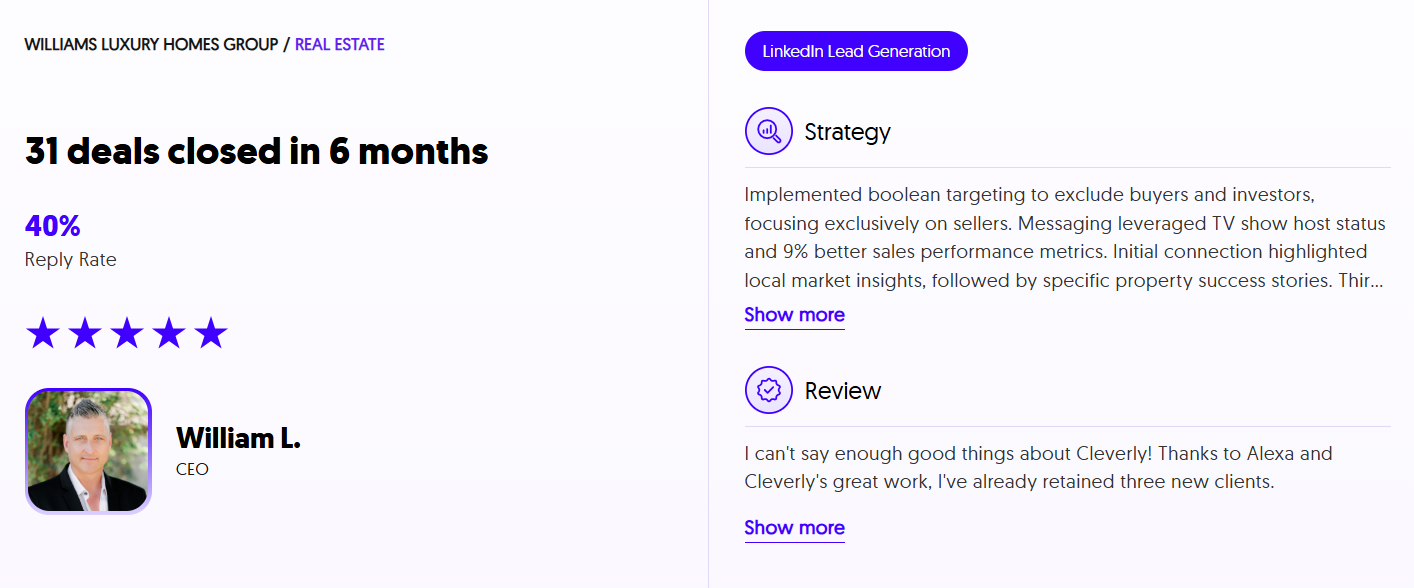
Across clients, our campaigns have generated $312M in pipeline, and for one commercial real estate capital firm, LinkedIn outreach to decision-makers produced $422,000 in revenue in 12 months.
We optimize for one thing: qualified meetings held with real decision-makers. If you would rather not build and manage that machine yourself, that is the job we do.
Selling commercial property or services to businesses? Cleverly books meetings with decision-makers. Book a call to see how.
Conclusion
Conversational AI for real estate earns its place on speed and coverage, not on replacing agents. Instant response and aged lead reactivation deliver the clearest value, and everything else is incremental. The compliance risks are real and under-discussed, especially fair housing exposure in automated qualification.
So your next step is simple. Deploy one use case, read every transcript for the first month, and design the human handoff before anything else. The tools buy your agents time. What they do with that time is still what decides whether deals close.
Frequently Asked Questions
Free Resource
How to Scale a Profitable Cold Call System
Get the complete guide — download it instantly now.

Free Ebook
Download the Free Guide
Enter your details to get instant access.
You're all set! 🎉
Your ebook is downloading now.
Click below if the download didn't start automatically.


