Table of Contents
Why Cold Email Works Differently for Service Businesses
What to Look For in a Cold Email Agency
Red Flags When Hiring a Cold Email Agency
Cold Email Agency Pricing Models Explained
Best Cold Email Agencies for Service Businesses in 2026
How to Choose the Right Agency for Your Service Business
Conclusion
Frequently Asked Questions
Modified On :
October 9, 2026
Key Takeaways
- A service business sells trust before it sells anything else, so pick an agency that does ICP and offer work first, not one that only sends more email.
- Deliverability is infrastructure, not a dashboard. Dedicated domains, verified authentication, and real warm-up come before any live volume.
- You should own your domains, lists, and messaging from day one, with a clean export if you leave.
- Agree in writing what counts as a qualified meeting. Every pricing model has a trade-off, and that definition decides who carries the risk.
- Match the agency to your deal size and buyer. If your buyers answer the phone more than their inbox, email-only may be the wrong channel.
A plumber can show you a fixed pipe. A consultant can only show you a promise. That gap is why cold email agencies for service businesses have a harder job than agencies selling software.
The offer is intangible. The buyer is harder to define. Trust has to exist before anyone agrees to a call.
The channel itself is less forgiving than it used to be. Instantly’s 2026 benchmark puts the average cold email reply rate at 3.43%, with the top 10% of senders reaching 10.7% or more. List size matters too.
We cover what service businesses need from an agency, the criteria that matter, red flags, pricing models, and eight options. They are written to be useful whether or not you ever contact us.
It is for agency owners, consultants, professional services firms, and local service companies hiring a cold email partner.

Why Cold Email Works Differently for Service Businesses
Software has features you can list. Services have people, process, and proof. That changes how B2B cold email lead generation agencies for service businesses need to work.
- Trust comes first. You are selling a promise, so the copy has to earn credibility in two or three lines. Specific results and named niches beat broad claims.
- The buyer is fuzzier. A SaaS company can filter by tech stack. A service firm often sells to “owners who are growing” or “ops leads who feel stretched.” That makes ICP work the highest-leverage part of any engagement.
- Deal values swing widely. A $1,500 monthly retainer and a $60,000 project need different economics. If your average contract can’t absorb the cost of a booked meeting, no agency can fix that.
- Sales cycles are relationship-led. The first ask has to be small. A short conversation works better than a demo or a proposal.
- List quality beats volume. Many service businesses sell to local or regional companies. A smaller, verified list usually outperforms a big blast.
The implication is simple. You want an agency that invests in ICP and offer work, not one that sends more email.
For more on what sells well over email, see the piece on what products and services sell best through cold email.
📧 Turn Cold Emails Into Clients
Cleverly handles prospect lists, email setup, copywriting, and campaign optimization to help service businesses reach qualified B2B buyers.
What to Look For in a Cold Email Agency
This section is meant to be vendor-neutral. Use it on every agency you talk to, including us. A solid B2B cold email agency should pass all six checks below.
Deliverability Infrastructure
Email that lands in spam earns zero replies, however good the copy is.
- They send from dedicated domains, never your primary company domain.
- SPF, DKIM, and DMARC are set up and verified before any sending.
- Each new sender gets several weeks of warm-up before live volume. Instantly’s benchmark says new domains need 4 to 6 weeks of warm-up before handling full sending volume.
- They have a real answer for what happens when deliverability drops. A good answer involves pausing senders and auditing, not pointing at a dashboard.
Who Owns the Domains, Lists and Copy
- You should own the sending domains, the lists, and the messaging, with admin access from day one.
- Confirm you get a full data export when you leave.
- Red flag: any agency that keeps ownership of assets built for you.
Data Sourcing and Verification
- Ask where lists come from and how email addresses are verified.
- Ask for the bounce rate on their last campaign. A specific number is a good sign.
- Multi-source enrichment beats a single database on coverage.
Offer and ICP Work
For service businesses, this matters more than copywriting.
- Ask whether ICP definition and offer positioning are included or assumed.
- If they don’t ask about your best customers on the first call, that tells you a lot.
Reply Handling and Qualification
- Clarify who handles replies and how fast.
- Agree in writing what counts as a qualified meeting before you sign.
- Ask how they handle objections, not just positive replies.
Reporting You Can Verify
- Weekly reporting should cover deliverability, replies, and meetings booked.
- You should be able to reconcile the numbers against your own inbox and calendar.
- Red flag: reporting that stops at open rates.
Red Flags When Hiring a Cold Email Agency
Screenshot this list. It applies to any cold email lead generation services provider you evaluate.
- Sending from your primary company domain.
- Shared sending infrastructure across multiple clients.
- Guaranteed meeting counts with no stated methodology.
- Reply-rate promises well above realistic ranges.
- Vague answers about SPF, DKIM, and DMARC.
- Volume claims in week one, before warm-up could possibly be complete.
- Long lock-in contracts with no performance clause or exit path.
- No written definition of a qualified meeting.
- Generic copy reused across clients.
- Reporting built on opens and impressions instead of replies and meetings.
- Retaining ownership of your domains, lists, or messaging.
Two or three of these in one proposal is a reason to walk away.
🚀 Build a Predictable Pipeline
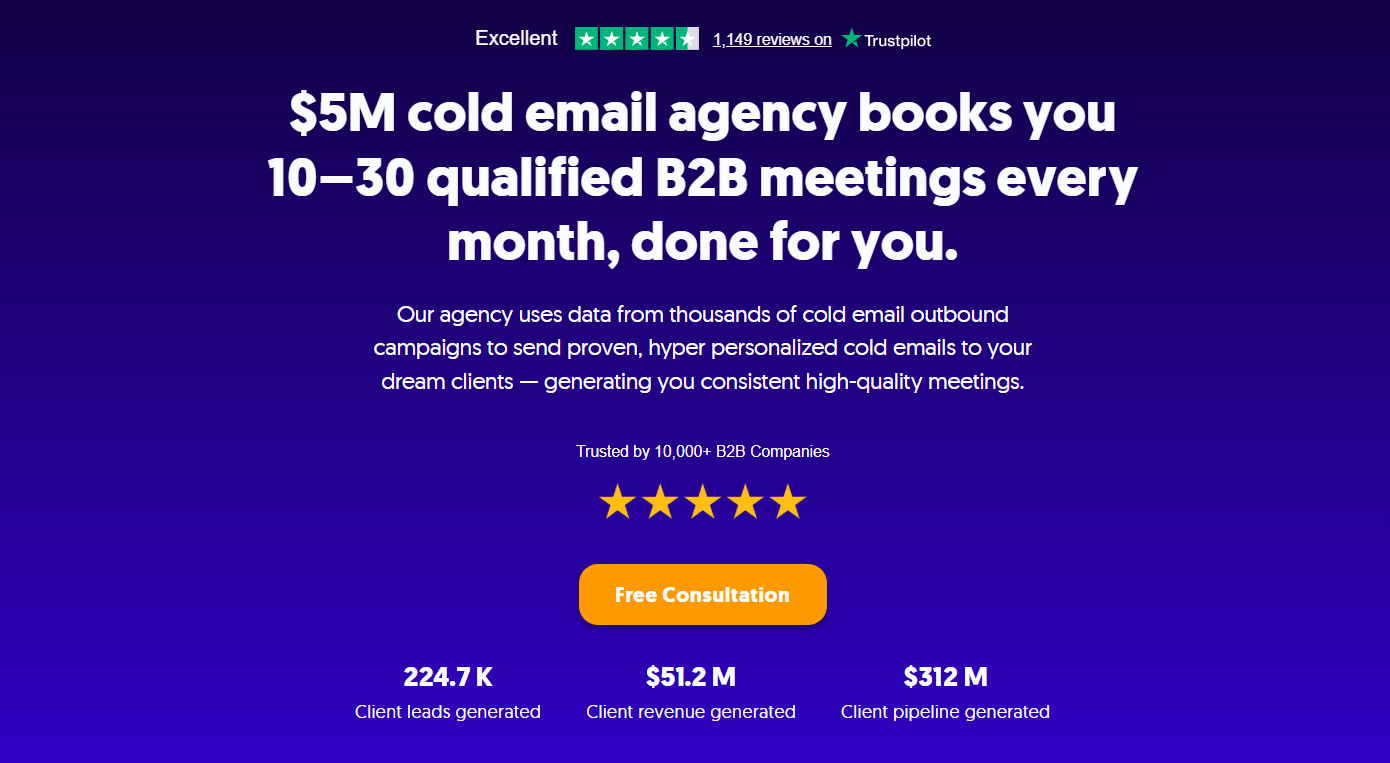
With 224.7K+ leads generated, 53,000+ meetings booked, and $312M+ pipeline, Cleverly helps 10,000+ businesses scale outbound.
Cold Email Agency Pricing Models Explained
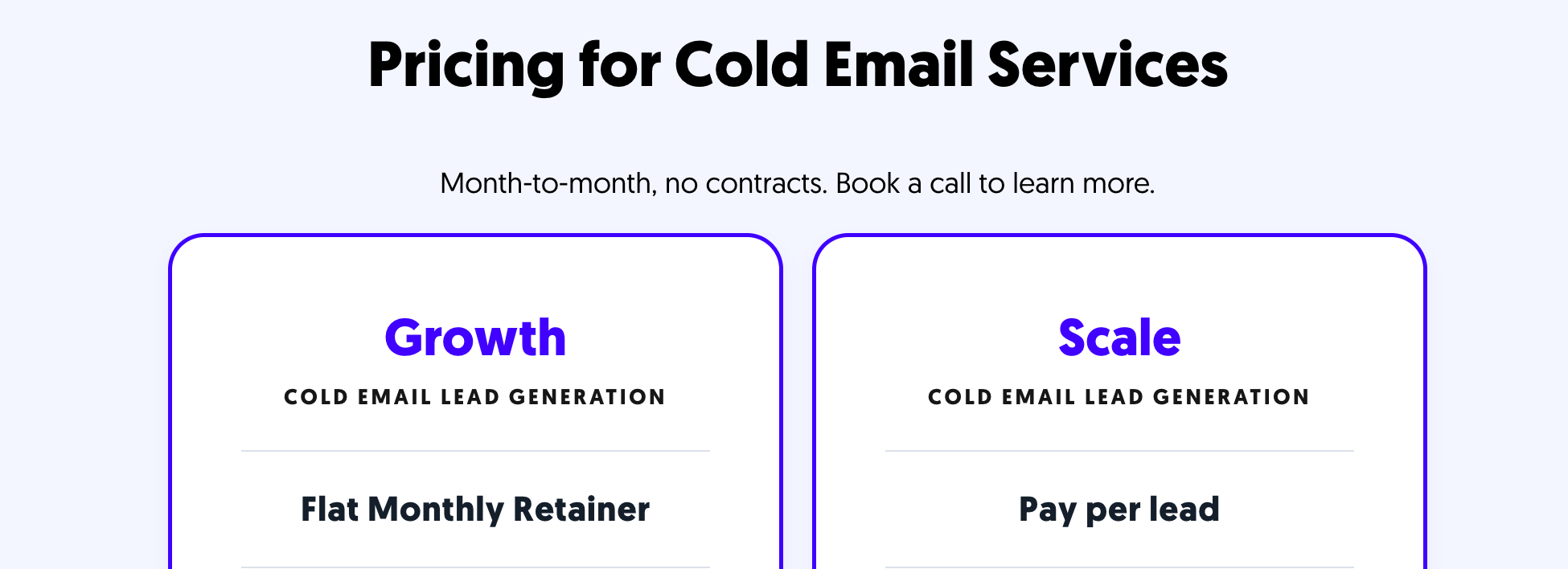
Pricing is where proposals get confusing. These are the three models you will see when shopping for a cold email agency for local businesses or any other service firm.
1. Monthly retainer. This is the most common model. You pay regardless of outcome, but it aligns with building the channel over time. It works best when the agency invests in ICP and copy testing.
2. Per-meeting or per-lead. This shifts risk to the agency. The catch is that the agency usually defines what counts as qualified, which can push toward volume over fit. Get the definition in writing.
3. Hybrid. A smaller base fee plus a per-meeting component. It is often the fairest structure because both sides share the risk.
Market bands vary by source. Secondary roundups commonly put managed email work in the low-to-mid thousands per month, with multichannel and calling programs materially higher. Treat any figure as a starting point and confirm it with the agency.
Watch what the retainer leaves out. Infrastructure, data, warm-up, and copy revisions are often billed separately.
There is also the in-house option. A lean tool stack costs far less per month, but someone has to run it. That means deliverability, list building, copy testing, and reply handling, every week.
Before you sign anything, get the qualified-meeting definition, domain ownership, and exit terms in writing. For a full checklist, see [internal link: the lead generation agency contract checklist].
Best Cold Email Agencies for Service Businesses in 2026
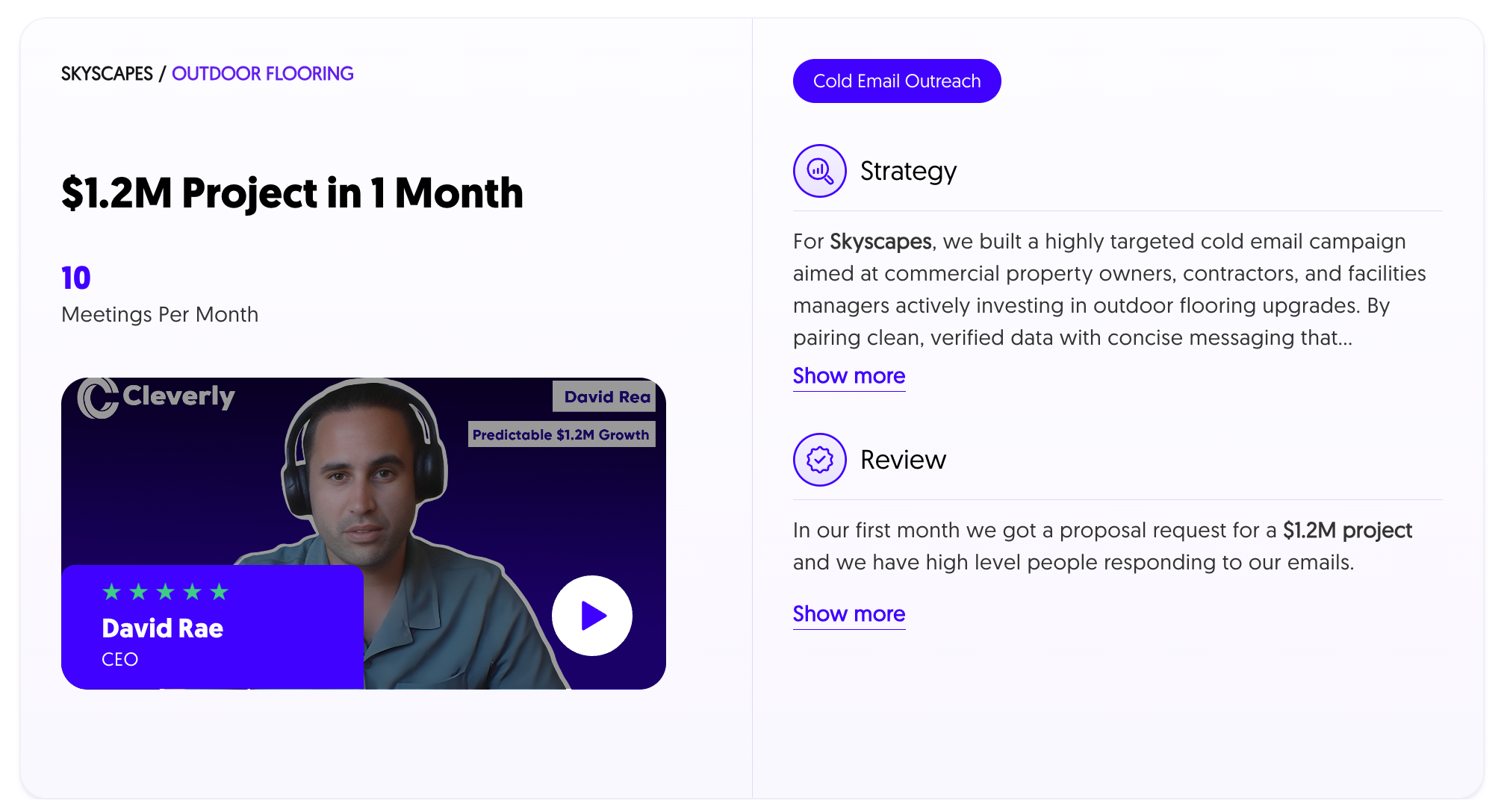
1) Cleverly: Best for Multichannel Outbound Built Around Your ICP
We run LinkedIn outreach, cold email, and cold calling as separate services, and for service businesses we like to run them as one coordinated motion. Your best buyers may ignore a cold email and answer a LinkedIn message or a call. Running the channels together means that if one stays quiet, the others cover it.
Best for: Service businesses that want cold email alongside LinkedIn and calling, handled as one system instead of a single channel.
What’s included end to end:
- ICP definition and offer positioning
- Multi-source verified list building
- Domain and inbox infrastructure with warm-up
- Sequence copywriting
- Reply handling
- Meetings booked straight onto your calendar
Why it suits service businesses: The ICP and offer work comes first. That is the part intangible services need most and the part many agencies assume you have already done. If your positioning is vague, more email won’t fix it.
Ownership and transparency: Clients own the leads, lists, and messaging. Reporting is built on qualified meetings held, not opens or sends.
Track record: We have been running outbound for years across LinkedIn, cold email, and calling, with about $312M in client pipeline and 224.7K leads generated.
Pricing context: LinkedIn lead generation starts at $397 per month. Cold email comes in two models. Growth is a flat monthly retainer. Scale is pay per meeting-ready lead. Both are month-to-month with no long-term contract. Cold calling programs are priced separately.
Want cold email handled end to end by a team that lives in this space? Book a call with Cleverly.
2) Belkins
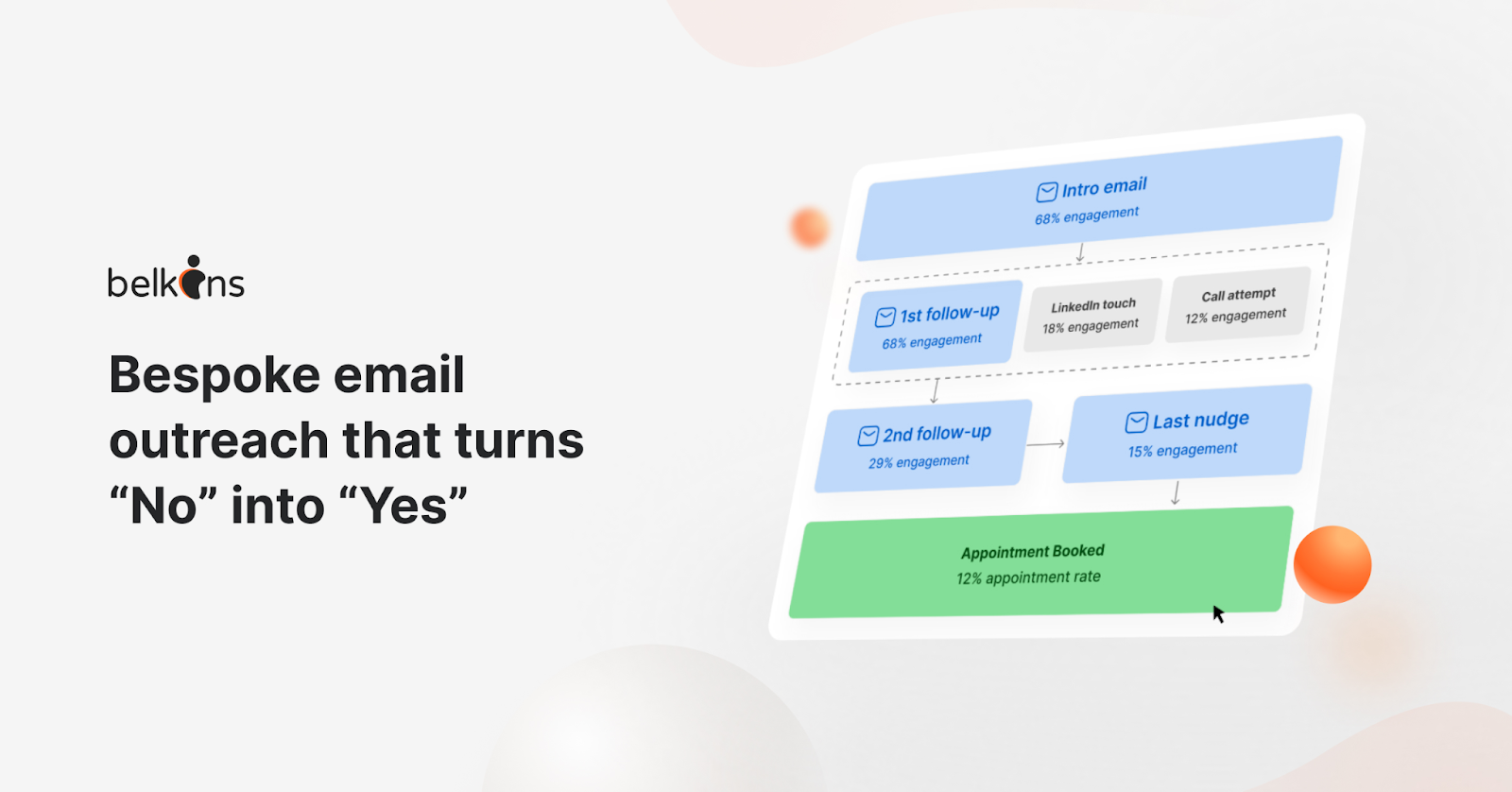
Belkins is one of the largest dedicated appointment-setting agencies. It runs email, LinkedIn, and calling campaigns with dedicated account teams. Its case study library is deep, which helps if you want proof from similar firms.
- Best for: Appointment setting that combines email with calling.
- What they do: Lead research, multi-step sequences, meeting booking, and calendar management.
- Pricing: Not published. Quotes are custom, and third-party estimates run from the low thousands to roughly $10,000 per month with multi-month minimums reported. Confirm with them.
- Limitation: The scope is heavier than a service business needing email only.
3) Martal Group
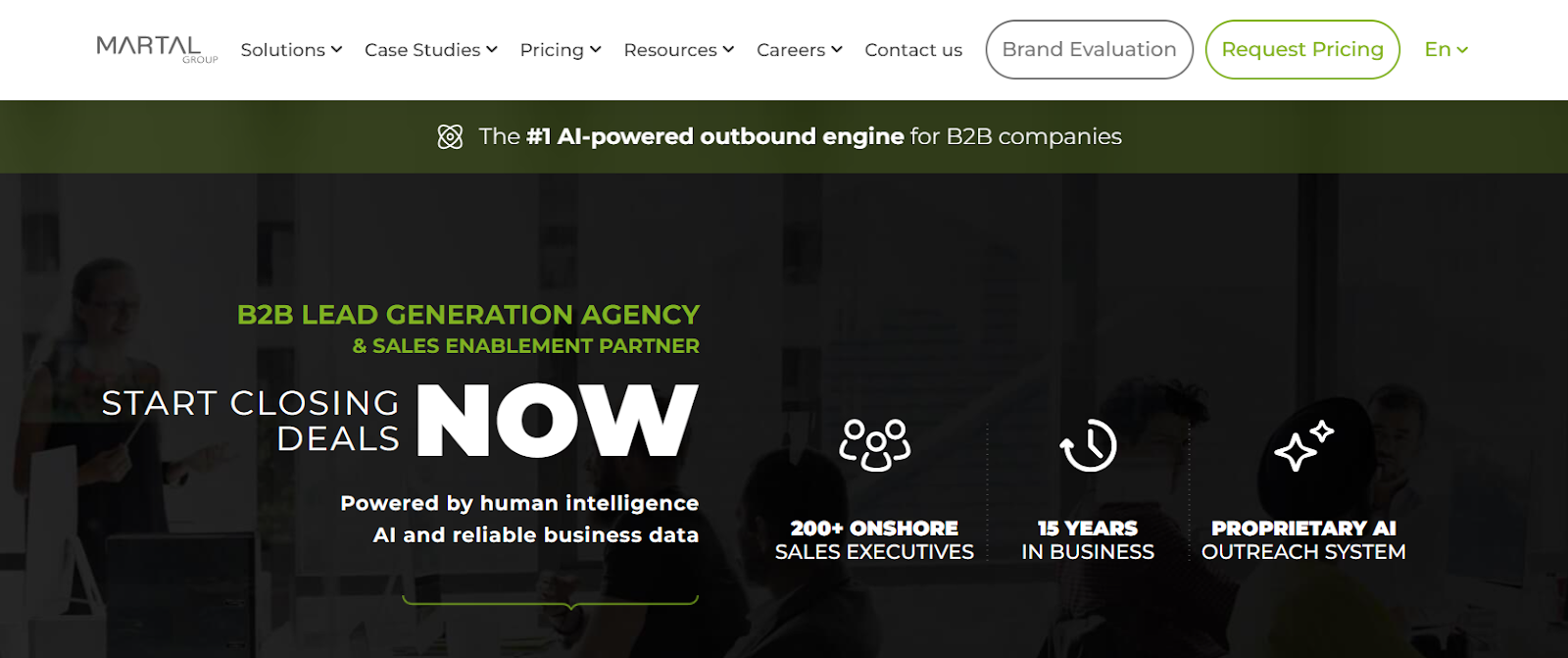
Martal is a Canadian outsourced SDR agency founded in 2009. It pairs sales reps with outbound email, LinkedIn, and calling, mostly for tech clients.
- Best for: Mid-market tech and SaaS-adjacent service firms.
- What they do: Outbound lead generation and SDR appointment setting across email, LinkedIn, and phone.
- Pricing: One 2026 review lists $4,100 to $10,500 per month, with new clients committing to a 3-month or 4-month pilot first. Clutch lists packages starting at $4,500 per month.
- Limitation: The tech-weighted focus makes it a less natural fit for local services.
4) CIENCE
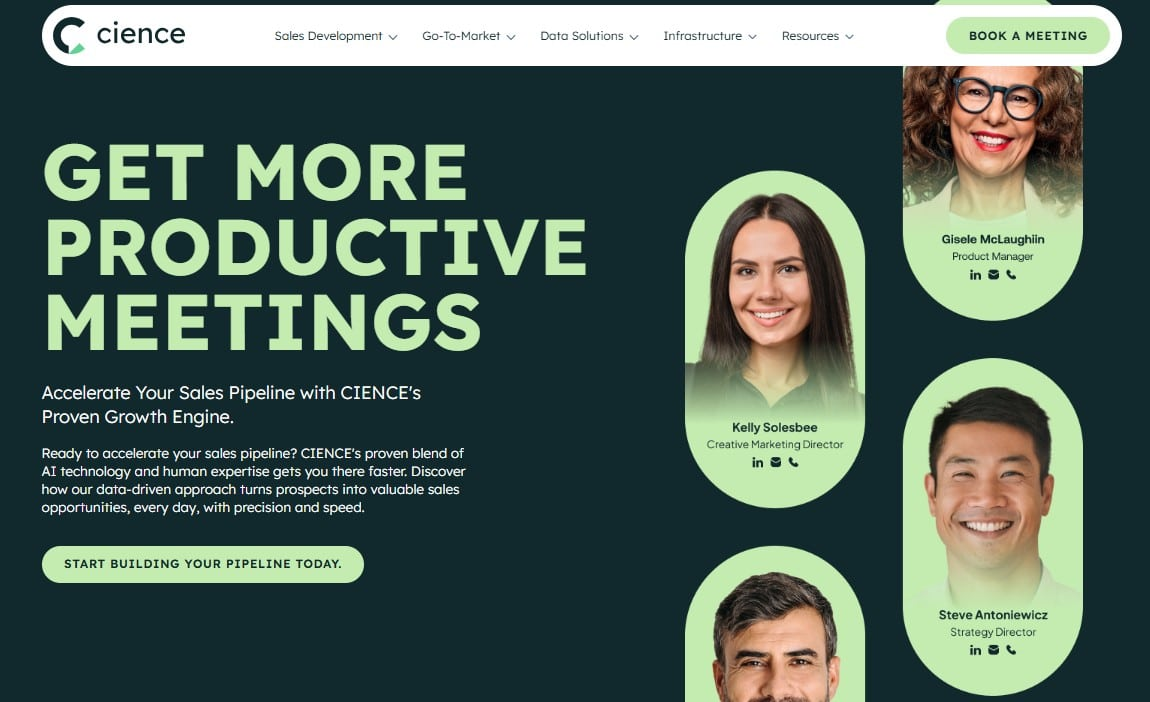
CIENCE runs a systems-led model with a data platform and structured onboarding. It also supports larger programs with added SDR capacity.
- Best for: Enterprise-scale outbound programs.
- What they do: GTM setup, campaign execution, and supervised SDR capacity.
- Pricing: The pricing page shows a $5,000 one-time setup, month-to-month terms, and about $7,499 for the first month all in. The per-meeting fee is tied to an agreed ROI goal. Third-party reports of total cost run higher once SDRs are added.
- Limitation: Cost and complexity put it out of range for smaller service firms.
5) Pearl Lemon Leads
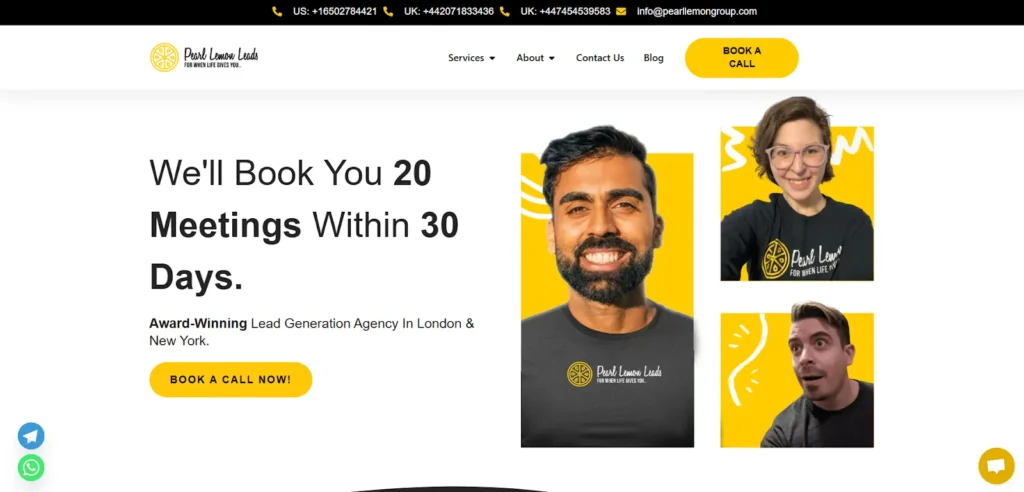
Pearl Lemon Leads is the lead generation arm of a London-based group. It runs cold email, LinkedIn outreach, and appointment setting.
- Best for: UK and EU service businesses.
- What they do: Outbound email, LinkedIn, and appointment setting, with a pay-per-lead option.
- Pricing: Third-party listings cite per-lead pricing in a wide band, from about $200 to $1,000 per lead. Retainer figures differ across pages, so ask for a written quote.
- Limitation: A broad service menu can mean less specialization per channel.
6) OutreachBloom
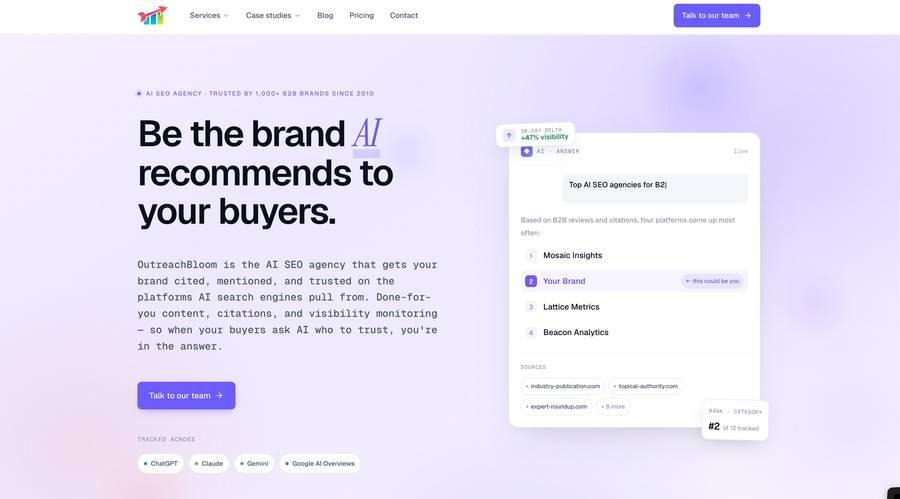
OutreachBloom focuses on cold email only. It handles infrastructure, list building, copy, and reply management.
- Best for: Email-only engagements with month-to-month flexibility.
- What they do: Domain setup, authentication, warm-up, ICP work, copywriting, campaigns, and replies.
- Pricing: Published starting prices are in the low-to-mid $2,000s per month, depending on the source.
- Limitation: Email-only, so there is no LinkedIn or calling layer.
7) Hypergen
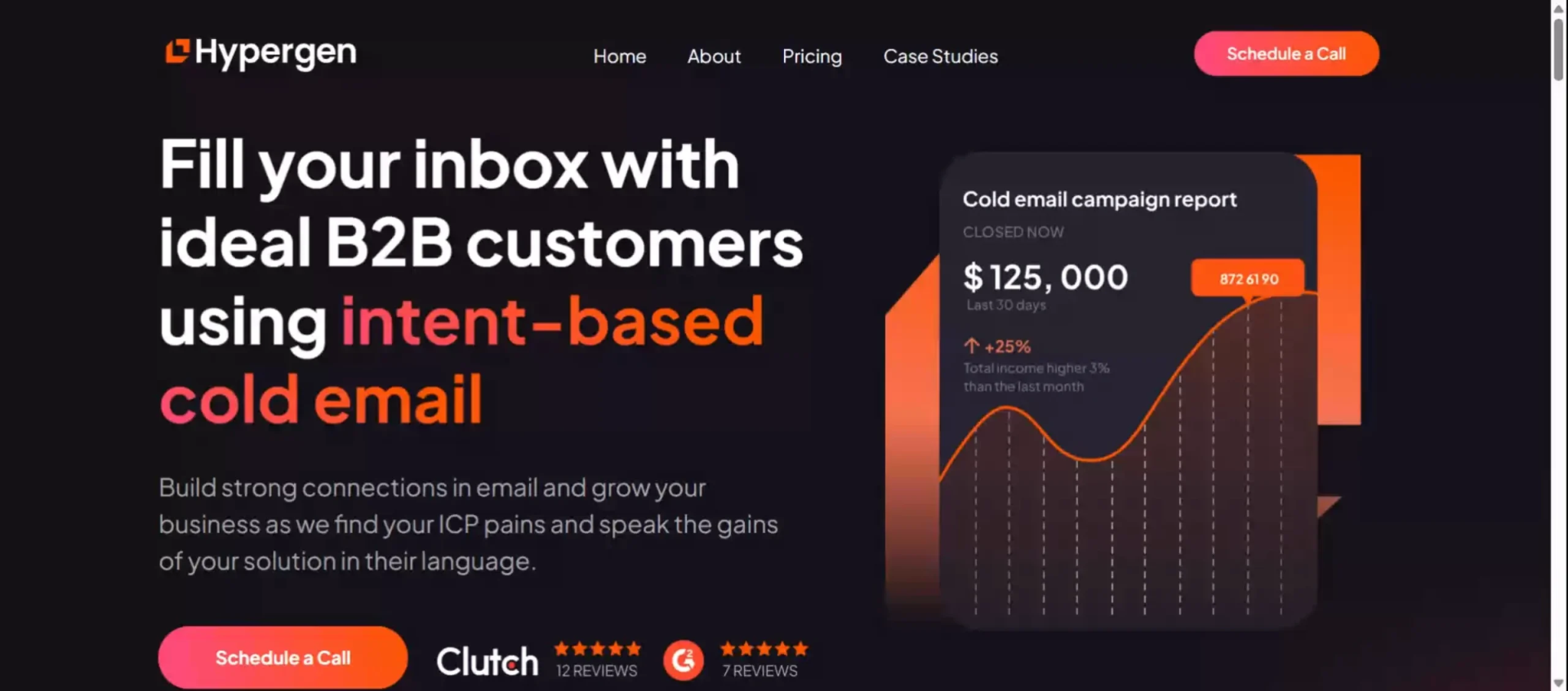
Hypergen specializes in intent-based cold email. It targets prospects showing buying signals and sets up outbound systems quickly, with launches in about 12 to 14 days.
- Best for: Teams that want intent-led email with CRM integration.
- What they do: Personalized campaigns, domain and warm-up setup, and CRM connections.
- Pricing: Not published. Ask about minimum terms upfront.
- Limitation: No public pricing makes early comparison harder.
8) SalesRoads
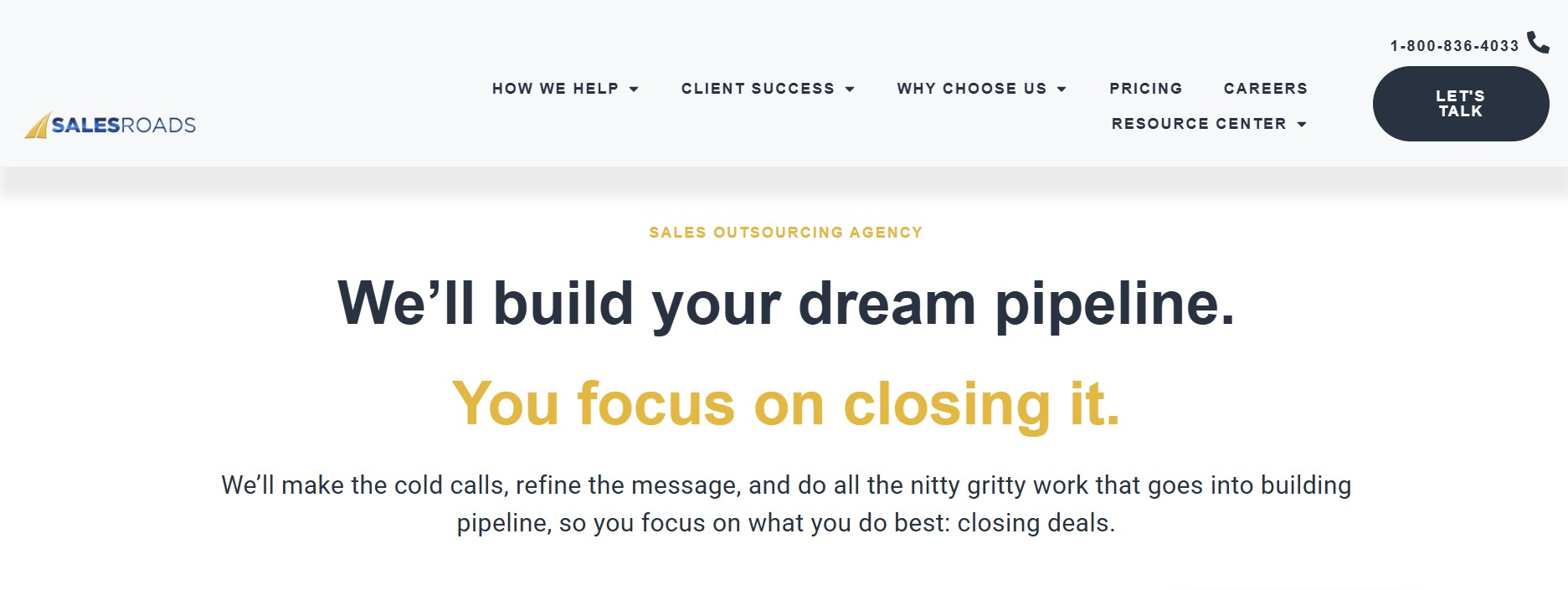
SalesRoads is a US-based appointment-setting firm that built its reputation on calling. Its SDRs work the phone, with an email-led option.
- Best for: Phone-first outbound with email support, especially when your buyers answer the phone.
- What they do: Full SDR appointment setting, smart email appointment setting, and lead generation research.
- Pricing: The pricing page says engagements start at $9,950 per 4 weeks and continue on a retainer basis.
- Limitation: It is priced for calling programs, not email-led ones.
How to Choose the Right Agency for Your Service Business
Run this process before you compare decks.
- Start from deal size. If your average contract can’t absorb the cost of a booked meeting, no agency will make the math work.
- Match channel to buyer. Local and non-desk buyers often respond better to calling than email.
- Decide on email only or multichannel before you compare quotes. Otherwise you will be comparing different products.
- Ask every shortlisted agency the same five questions. Use deliverability setup, asset ownership, list sourcing, qualified-meeting definition, and exit terms. Compare the answers, not the decks.
- Ask for a shorter pilot term before you commit to a long engagement.
- Check references at your size and in your sector. Flagship logos don’t tell you how they treat a firm like yours.
Conclusion
For service businesses, ICP and offer work matters more than copywriting. The right agency makes the first message easy to say yes to, and it only does that if it understands who you sell to and why they would trust you.
Judge every option on deliverability infrastructure, asset ownership, and a written definition of a qualified meeting. Remember that each pricing model carries a trade-off, and hybrid structures usually align incentives best.
A practical next step is to shortlist two or three agencies, ask them the same questions, and start with a pilot term. And one more time, so it’s clear: this guide is published by Cleverly, and the criteria above hold no matter who you hire.
Frequently Asked Questions
Free Resource
How to Scale a Profitable Cold Call System
Get the complete guide — download it instantly now.
Free Ebook
Download the Free Guide
Enter your details to get instant access.
You're all set! 🎉
Your ebook is downloading now.
Click below if the download didn't start automatically.