Table of Contents
Is Buying Email Lists Legal?
Quick Comparison Table
Best Places to Buy Verified B2B Email Lists
How to Protect Your Sending Domain Before Emailing a Purchased List
How to Choose the Right Provider for Your Use Case
Common Mistakes When Buying Email Lists
A Verified List Still Needs the Right Outreach Behind It, How Cleverly Helps
Conclusion
Frequently Asked Questions
Modified On :
September 16, 2026
Key Takeaways
- The real risk in buying email lists isn't legality, it's verification. Providers with weak methodology cost you more in bounced sends and burned domains than the list itself costs.
- Database size is a vanity metric. A smaller, phone-verified database that actually connects beats a massive one full of stale records.
- Match the provider to the workflow you already have. A team that needs data plus sending in one place should not buy from a pure list vendor, and vice versa.
- A purchased list is only as good as the sending infrastructure behind it. Domain protection and warm-up decide whether the list converts or gets you flagged.
- Compliance isn't a checkbox exercise. The rules differ meaningfully across the US, EU, and Canada, and getting them wrong carries real financial exposure.
One uncomfortable part nobody tells you before you buy a list: the data is rarely the problem. The problem is what happens after you hit send with no verification, no domain protection, and no plan for what a 12% bounce rate does to your sender reputation.
Cold outbound isn't going away. Cold email compliant with CAN-SPAM can carry civil penalties as steep as $53,088 per individual email as of the FTC's 2026 inflation adjustment, and Canada's CASL pushes that exposure even higher, with fines reaching $1 million per violation for individuals and $10 million for corporations.
Meanwhile, more sales teams than ever are buying data instead of building it manually, because a good outbound motion depends on volume and accuracy at the same time.
This guide covers whether buying email lists is actually legal (yes, with conditions), which providers we'd trust with real budget, and how to protect your sending domain once the list lands in your CRM. If you're a sales or marketing team that needs verified contacts fast rather than building lists by hand, this one's for you.
Is Buying Email Lists Legal?
Short answer: yes, in the US, EU, and Canada. Longer answer: each region treats buying a B2B email database differently, and the differences matter more than most guides let on.
United States (CAN-SPAM)
CAN-SPAM is the most permissive of the three. You don't need prior opt-in to send B2B cold email to a US recipient, but every message must carry honest headers, an honest subject line, a valid physical address, and a working opt-out you honor within 10 business days. That's the entire bar. No consent requirement, just honest disclosure and a working unsubscribe.
European Union and UK (GDPR)
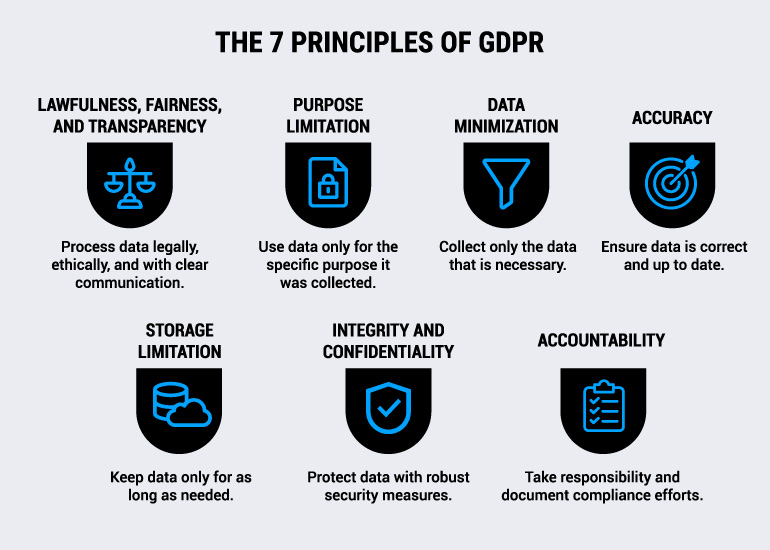
GDPR allows B2B cold email under the "legitimate interest" basis, but it's not a free pass. You need documented origin of the data, a lawful basis, and transparency about how the recipient's data will be used. Practically, that means you should be able to explain why this specific contact is relevant to your offer, not just that you own their email address.
Canada (CASL)
This is where most teams get burned. CASL requires express or implied consent before the first message goes out, and there is no blanket B2B exemption. Implied consent only applies in narrow situations, like an existing business relationship or a recent inquiry, and it expires two years after a purchase or six months after an inquiry.
Cold outreach to a Canadian company you've never dealt with generally doesn't qualify, and a purchased list rarely comes with usable proof of consent for any of these bases. Penalties here are the steepest of the three, up to $10 million CAD for a business.
Pro tip: If your list includes Canadian contacts and you can't document a valid consent basis, pull them out of the campaign entirely. It's not worth the exposure.
The common thread
Across all three regions, you need a clear opt-out mechanism and you need to honor it fast. Beyond that, one thing trips up almost every team using a purchased list: most standard email marketing platforms explicitly ban them. Mailchimp, HubSpot Marketing, and ConvertKit all prohibit importing purchased contacts in their terms of service.
Do it anyway and you risk account suspension mid-campaign. If you're buying a list, you need a dedicated cold email or outbound sending platform built for this, not a newsletter tool repurposed for prospecting.
📧 Skip the List-Buying Headache
Cleverly handles list building, targeting, copy, and outreach to help B2B teams reach qualified prospects through done-for-you cold email.
Quick Comparison Table
Best Places to Buy Verified B2B Email Lists
Each of these made the list for a specific reason, not because it's the biggest. We're covering an overview, best for, key features, limitations, and pricing for each one, in that order, so you can match a provider to how your team actually works.
1. ZoomInfo
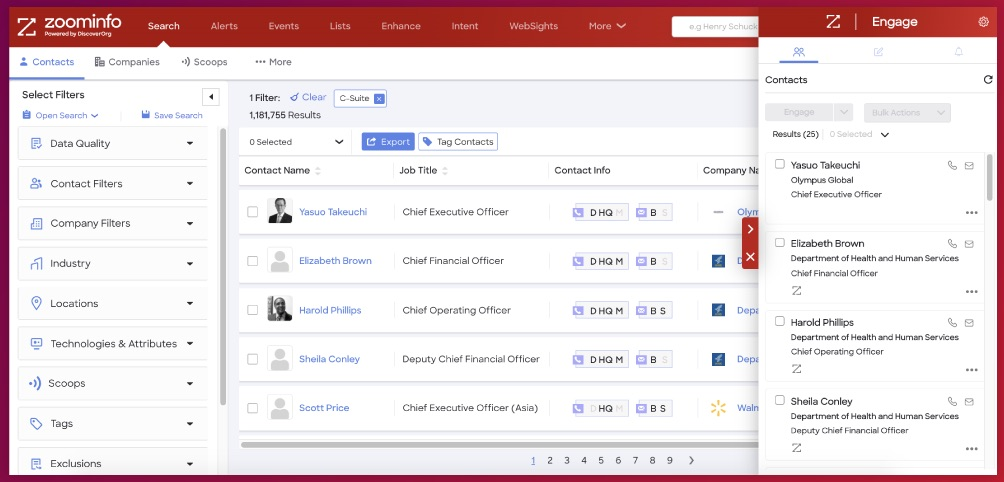
ZoomInfo is the closest thing this category has to an industry standard, and its B2B email list quality reflects that scale. It combines a massive contact database with company-level intelligence, meaning you're not just buying an email address, you're buying context on when that company is actively looking to buy.
For teams running account-based outreach into enterprise accounts, this depth of data (org charts, intent signals, technographics) is hard to replicate with a smaller vendor.
The tradeoff is cost and complexity. ZoomInfo is built for teams with dedicated RevOps resources to manage the platform, not a solo rep who needs a quick list by Friday. If your list is going to feed a coordinated, multi-threaded enterprise sales motion, this is the provider built for that job.
Best For: Enterprise sales teams that need to know which accounts are actively in-market, not just a static contact list.
Key Features:
- 500M+ contacts with intent data and technographic filters.
- Org chart mapping to support multi-threaded outreach into buying committees.
- Large-scale automated data processing combined with human researcher verification.
Limitations:
- Enterprise pricing starts well into five figures annually.
- Onboarding takes weeks, not hours, which is overkill if a clean list is all you need.
Pricing: Custom, contact sales directly.
2. Apollo.io
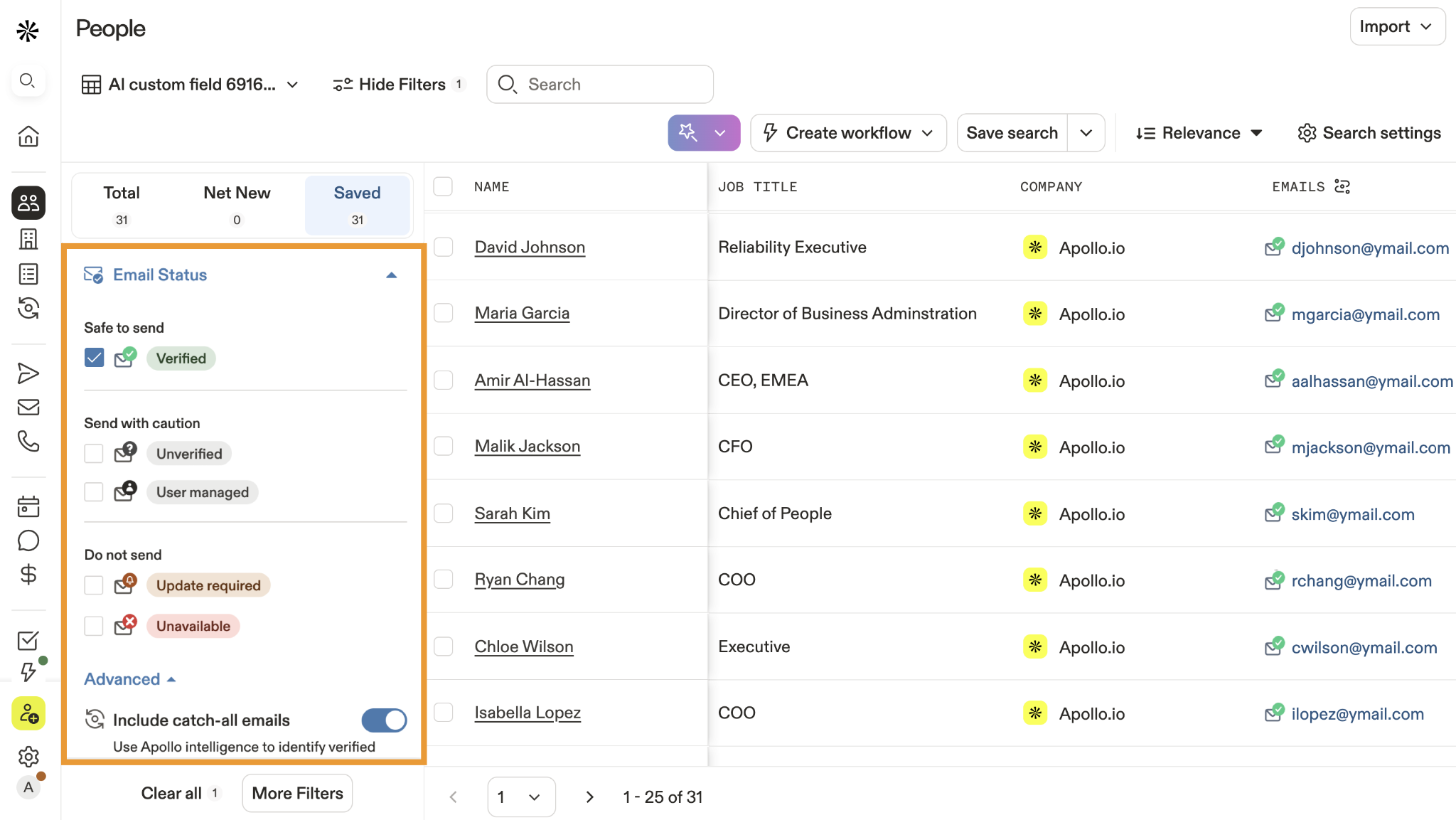
Apollo has become the default starting point for teams buying B2B email lists because it removes the biggest barrier: you can test the data before committing a budget. The free tier gives you real credits against a real database, not a watered-down demo, so you can judge accuracy on your actual target accounts before paying anything.
What sets it apart from a pure list vendor is that sequencing lives in the same platform, so once you've pulled a list, you can start sending without exporting to a second tool.
That convenience comes with a catch, per-seat pricing scales fast once more than one or two reps are prospecting, and data quality outside the US, especially SMB and international contacts, is noticeably less reliable than its US enterprise coverage.
Best For: Teams that want to test data quality before spending anything, with sequencing built into the same platform.
Key Features:
- Free tier includes 900 credits per year with basic filters.
- Built-in email sequences so you can send without exporting to another tool.
- Chrome extension for LinkedIn-based prospecting.
Limitations:
- Data accuracy varies by segment, weaker for SMB and international contacts than US enterprise data.
- Per-user pricing adds up fast for larger teams.
Pricing: Free tier (900 credits/year); paid plans scale up from there.
3. Cognism
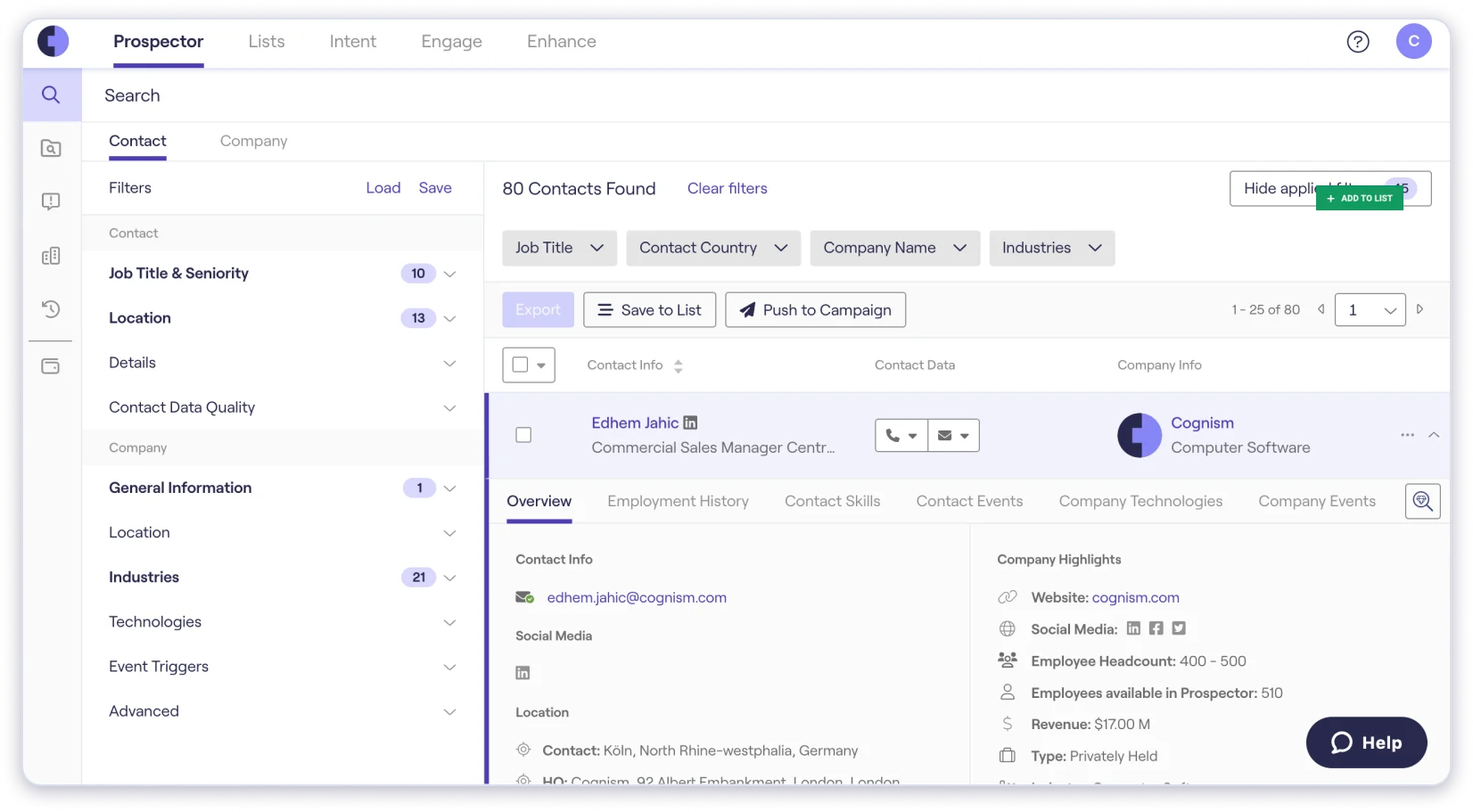
Cognism exists for one reason: most B2B email list providers built their databases around the US market first, and it shows the moment you try to prospect into Europe. Cognism flips that, its entire infrastructure is built around GDPR-first data collection and phone-verified mobile numbers checked by human researchers rather than scraped and left stale.
If your pipeline depends on EU decision-makers, this compliance-by-design approach matters more than raw database size, since a bounced or non-compliant contract in Europe carries real regulatory risk, not just a wasted credit.
The downside is that Cognism doesn't compete on US coverage or self-serve accessibility, you'll need a sales call just to see pricing, and teams prospecting primarily in North America will find better value elsewhere.
Best For: Teams selling into European markets where GDPR compliance isn't optional.
Key Features:
- Covers roughly 90% of EU decision-makers with phone-verified mobile numbers checked by human researchers.
- Documented GDPR and CCPA compliance on every record.
- Do-Not-Call screening built into every plan across European markets.
Limitations:
- US data coverage is thinner than ZoomInfo or Apollo.
- No self-serve free trial, pricing requires a sales conversation.
Pricing: Custom, contact sales.
4. Lusha
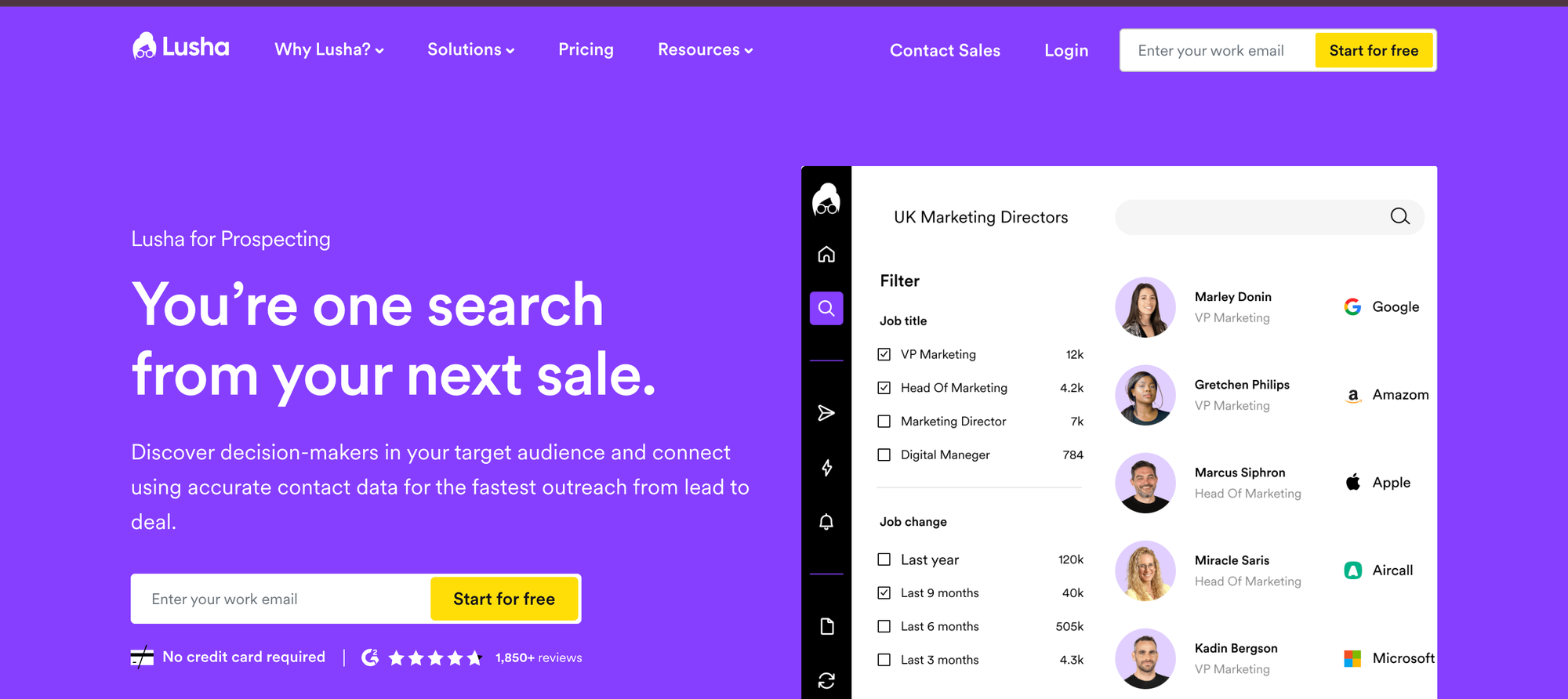
Lusha solves a narrower problem than the other providers on this list, and it solves it well: getting a verified email and phone number the moment you find a promising LinkedIn profile.
Instead of exporting bulk lists and cross-referencing them later, the browser extension pulls contact data directly from the profile you're already looking at, which fits naturally into how most SDRs actually prospect day to day. The free tier is generous enough for individual reps or very small teams to run real campaigns without paying anything upfront.
Where it falls short is scale, Lusha isn't built for pulling 5,000 contacts in a single export, and phone number reveals burn through credits noticeably faster than email-only reveals, so budget accordingly if calling is part of your motion.
Best For: Teams prospecting primarily from LinkedIn who want verified contact info without leaving the browser.
Key Features:
- Browser extension reveals verified email and phone directly from a LinkedIn profile.
- 290M+ contacts with AI-driven prospect recommendations based on your ICP.
- Free tier available for smaller-scale use.
Limitations:
- Phone number reveals cost significantly more credits than email reveals.
- Smaller overall database than ZoomInfo or Apollo outside of LinkedIn-sourced contacts.
Pricing: Free tier (40 credits/month); paid plans start around $37 to $40/month billed annually.
5. UpLead
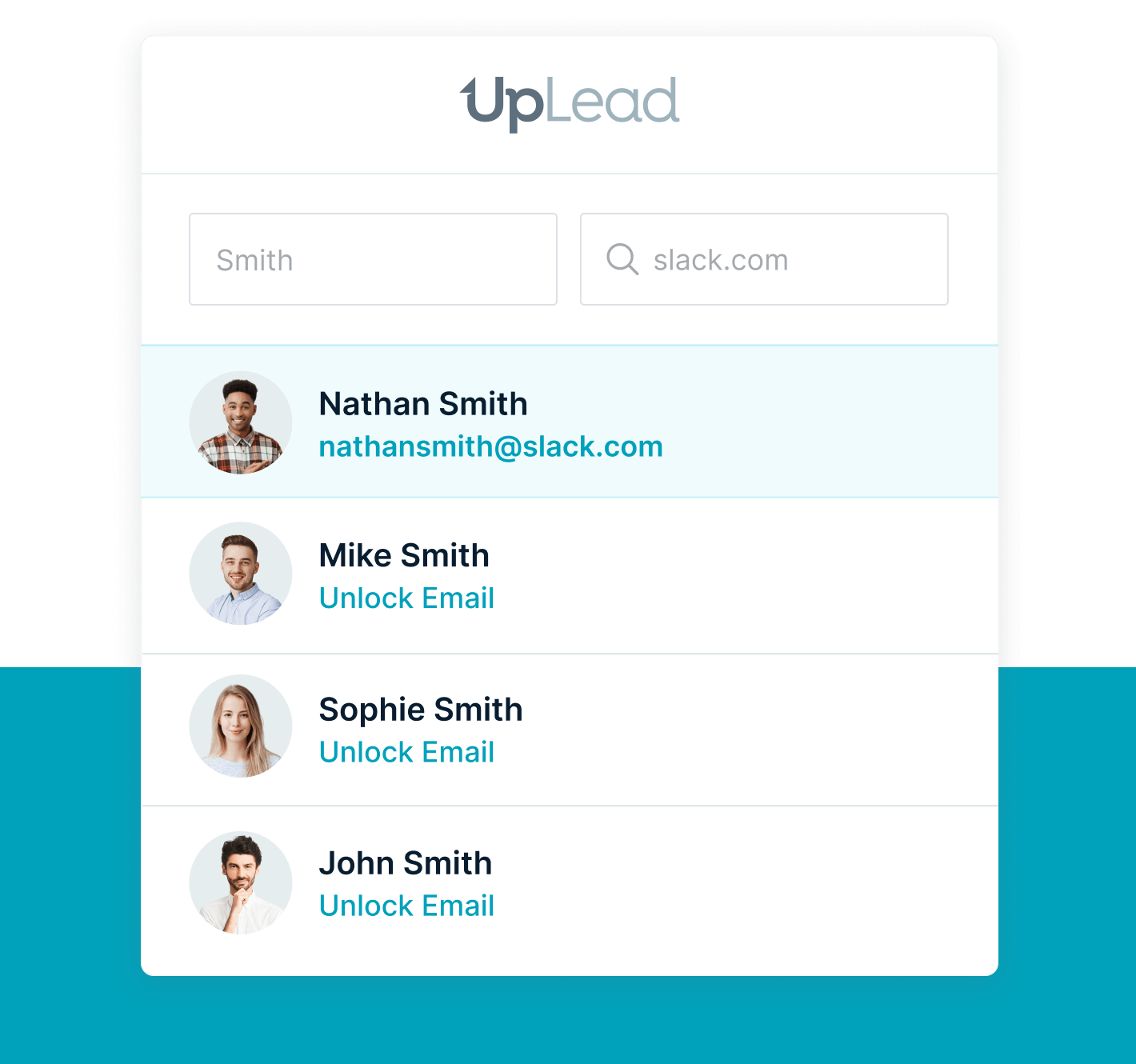
UpLead's entire pitch is built around a problem every buyer of B2B email lists eventually runs into: static databases go stale, and a "verified" contact from six months ago might already be dead.
UpLead verifies each email in real time at the moment you reveal it, rather than relying on a database snapshot, and backs that with a 95% accuracy guarantee that refunds your credit if an email bounces. That's a genuinely rare commitment in this category, most providers don't put money behind their accuracy claims.
The cost of that real-time verification is a smaller overall database than bulk-oriented competitors, and a credit system where unused credits typically expire at the end of the billing cycle, so it rewards teams with steady, predictable list-pulling needs over ones with spiky, unpredictable volume.
Best For: Teams that want verification at the moment of reveal, not a pre-verified static database that goes stale.
Key Features:
- Real-time email verification on every contact reveal, backed by a 95% accuracy guarantee.
- Technographic data included on paid plans, useful for tech-stack-based targeting.
- Straightforward interface without enterprise complexity.
Limitations:
- Smaller database than ZoomInfo or Apollo, especially internationally.
- No built-in sending or sequencing, list export only, and unused credits typically expire at the end of the billing cycle.
Pricing: Essentials starts around $74/month billed annually (or $99/month monthly), Plus around $149 to $199/month, Professional custom.
6. Seamless.AI
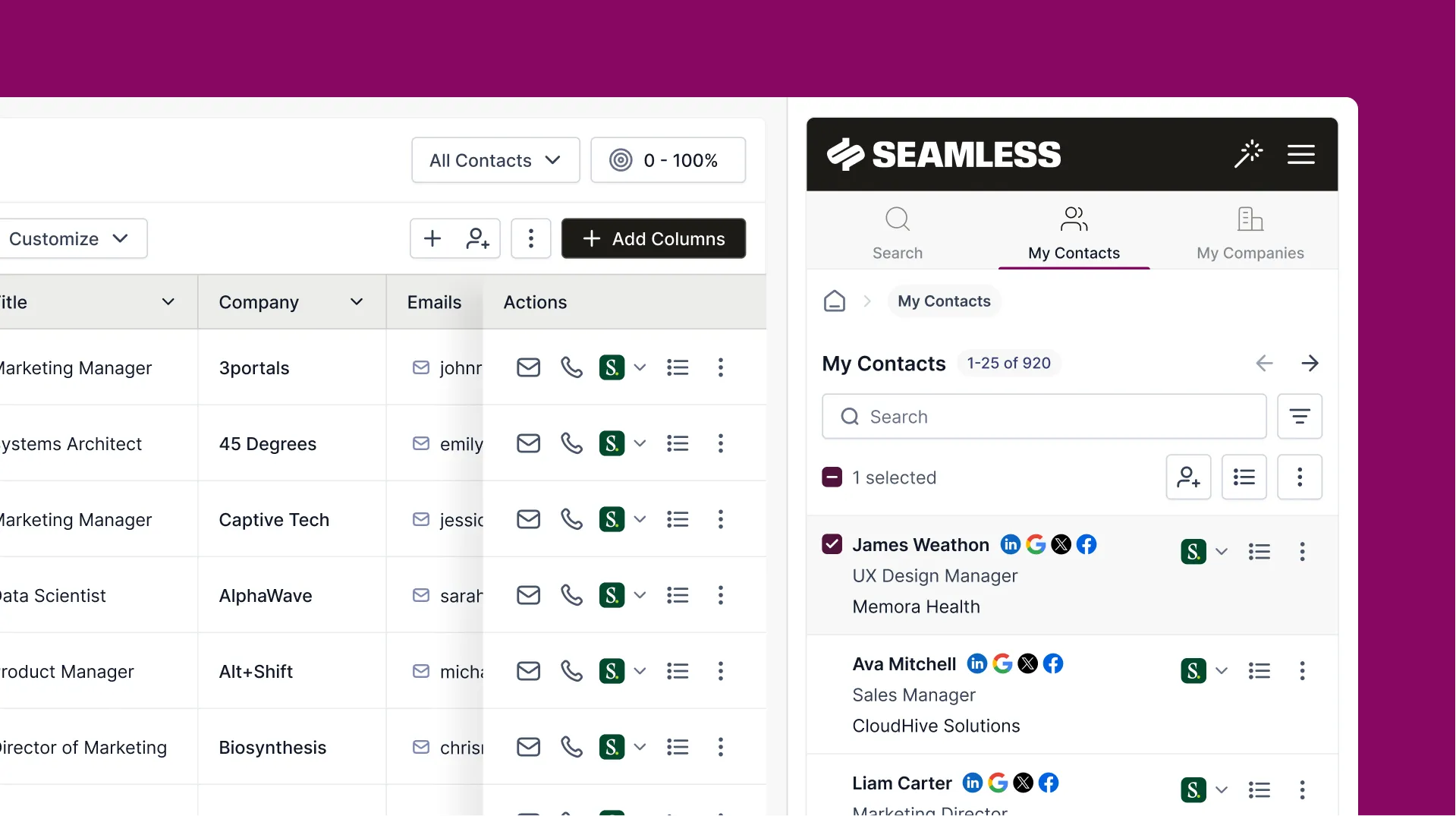
Seamless.AI takes a fundamentally different approach than the other providers here: instead of maintaining a static database you buy access to, it searches and verifies contacts live, every time you run a query.
The pitch is that a search-engine model stays fresher than any pre-built database ever could, and the claimed 1.3B+ records searched gives it enormous reach across obscure or niche titles that smaller databases miss. A credit-back policy on invalid emails softens the risk of the real-time approach not always landing perfectly.
The honest tradeoff is consistency, because contacts are found live rather than pre-verified against a stable dataset, accuracy can vary more from search to search than with providers like UpLead or Cognism, so plan for some manual quality-checking on larger pulls.
Best For: Teams that want a search-engine-style tool that finds and verifies contacts on demand instead of pulling from a static list.
Key Features:
- Reports 1.3B+ contact records searched and verified in real time.
- Credit-back policy on invalid emails.
- SOC 2, GDPR, and CCPA compliance certifications standard across tiers.
Limitations:
- Accuracy can vary since contacts are found in real time rather than pre-verified.
- No built-in sending or sequencing, export only.
Pricing: Free tier available; paid plans require contacting sales.
7. BookYourData
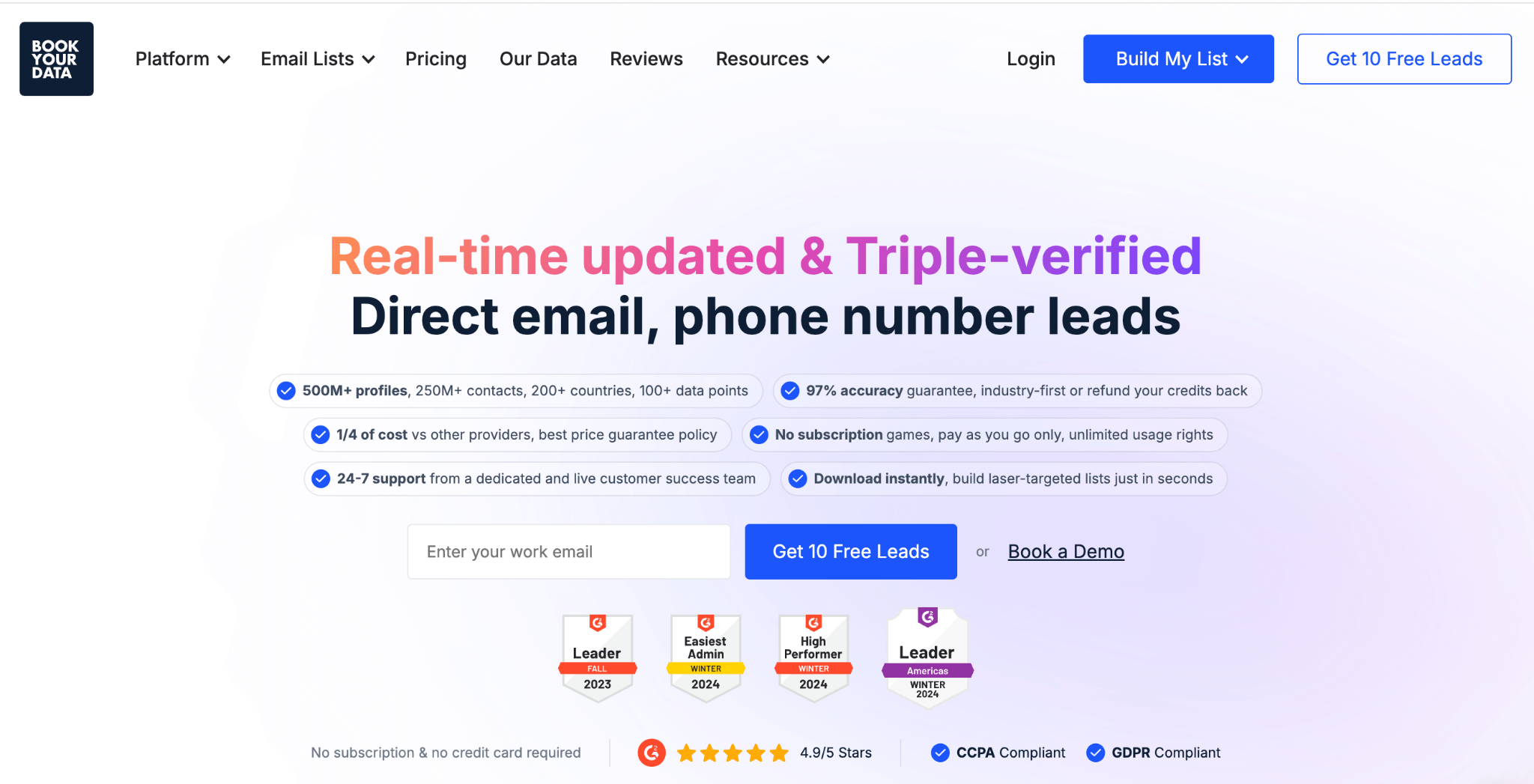
BookYourData is built for a specific kind of buyer: someone who already has sending infrastructure, copywriting, and a campaign strategy in place, and just needs a clean, verified list to load into it, without signing up for another monthly subscription.
You pick your filters (industry, title, company size, location), the platform runs its verification process, and you download the list. No seats, no long-term commitment, no recurring cost sitting on your books between campaigns. Credits also don't expire, which matters if your list-buying needs are irregular rather than a steady monthly habit.
The limitation is that it's purely a data provider, there's no sending, sequencing, or warm-up functionality bundled in, and per-contact costs run higher at small volumes than what you'd pay through a bulk-oriented subscription provider.
Best For: Teams that already have sending infrastructure in place and just need a fresh, verified list to load into it, without committing to a subscription.
Key Features:
- Pick filters (industry, title, company size, location) and download a verified list instantly.
- Multi-step real-time verification before export
- Credits don't expire, and pricing is pay-per-contact rather than recurring.
Limitations:
- List-only, no built-in sending, sequencing, or warm-up tools.
- Cost per contact is higher at low volumes compared to bulk purchases.
Pricing: Starts around $99 for 250 credits, scaling down in per-contact cost at higher volumes.
🚀 Turn Data Into Pipeline
With 224.7K+ leads generated, 53,000+ meetings booked, and $312M+ pipeline, Cleverly helps 10,000+ businesses turn outbound into qualified opportunities.
How to Protect Your Sending Domain Before Emailing a Purchased List
This is the part most guides skip, and it's the part that actually determines whether your list makes you money or gets your domain blacklisted.
Sending cold outreach from your primary business domain using purchased data is a bad idea. If bounce rates climb even a little, you can do permanent damage to a domain your whole company depends on for email delivery, including internal mail and customer support.
What to do instead:
- Use a secondary domain for outbound (something like outreach.yourcompany.com) so your primary domain stays protected no matter what happens.
- Warm up new domains and mailboxes for 2 to 4 weeks before running full-volume campaigns.
- Start at a low daily sending volume per mailbox and increase gradually as sender reputation builds.
- Pause immediately and re-verify the list if hard bounce rates cross roughly 2%. Pushing through a bad list at full volume just compounds the damage.
Pro tip: Treat domain warm-up like ramping a new SDR. You wouldn't hand a brand new rep 300 cold calls on day one. Don't hand a brand new domain 5,000 sends either.
How to Choose the Right Provider for Your Use Case
There's no single "best" provider in this category. The right choice depends on your workflow, your target region, your budget cycle, and how much manual work you're willing to do around the data itself. Here's how we'd think through it.
Start with what you already have
If you already run a sequencing or CRM platform and just need clean contacts to feed it, you don't need a combined data-and-outreach tool, you need the cleanest possible list at the best per-contact price. That points toward a pay-as-you-go provider like BookYourData, since paying for sequencing features you'll never use is a wasted budget.
If you don't have email infrastructure yet, a combined platform like Apollo.io reduces tool sprawl by handling data and outreach in one place, which matters more for a lean team than getting the absolute best database in either category individually.
Match the provider to your target market
Selling primarily into the US? Almost any provider on this list will serve you reasonably well, since US coverage is the strongest category across the board. Selling into Europe changes the calculation entirely.
Cognism's GDPR-first architecture and phone-verified EU mobile numbers solve a compliance problem that US-first databases like Apollo or ZoomInfo simply weren't built to handle well. Sending into a region without the right data foundation isn't just a quality issue, it's a compliance risk, given how differently the US, EU, and Canada treat consent.
Weigh volume against verification depth
If you're pulling hundreds or thousands of contacts a month and speed matters more than perfect verification, a large static database like ZoomInfo or Apollo gets you volume fast.
If your list size is smaller but you need each contact to actually connect, because a bounced email on a small list stings more than on a large one, a real-time verification model like UpLead or Seamless.AI is worth the higher per-contact cost.
Consider your budget structure
Subscription fatigue is real. If your list-buying needs are irregular, a big campaign push once a quarter rather than a steady monthly habit, a subscription model penalizes you for paying every month regardless of usage.
A credit-based, pay-as-you-go model like BookYourData fits better here. If you're prospecting consistently every month, a subscription with predictable monthly credits, like UpLead or Apollo's paid tiers, usually works out cheaper per contact over time.
A quick decision framework
- Need contacts and a way to send in one place? A combined data-and-outreach platform like Apollo reduces tool sprawl.
- Just need a one-time verified list without a subscription? A pay-as-you-go provider like BookYourData fits without locking you into ongoing costs.
- Need to know which accounts are actively in-market right now? An enterprise platform with intent data, like ZoomInfo, is built for exactly that.
- Selling primarily into Europe? Prioritize GDPR-first coverage and phone verification, which is where Cognism specializes.
- Want a free starting point to validate data quality first? Apollo.io's free tier is a low-risk way to test before spending a real budget.
- Prospecting mostly from LinkedIn profiles one at a time? Lusha's browser extension fits that workflow better than a bulk export tool.
- Need fresh contacts on obscure or niche titles a static database might miss? Seamless.AI's real-time search model has broader reach for those edge cases.
Pro tip: Don't pick a provider off a comparison table alone. Pull a small trial list from your top two or three candidates, run it against your actual ICP, and compare real bounce rates before committing a budget. The provider that looks best on paper isn't always the one that performs best against your specific target accounts.
Common Mistakes When Buying Email Lists
We've seen these mistakes tank campaigns before they even had a chance to work. Most of them aren't about picking the "wrong" provider, they're about skipping a step that felt optional at the time and turned out not to be.
Choosing a provider based purely on database size.
A provider advertising 500 million contacts sounds more impressive than one with 50 million, but size tells you nothing about how current or accurate those records actually are. A database that hasn't been re-verified in a year can carry bounce rates well above what your sending domain can absorb safely.
Before comparing headline numbers, check each provider's verification methodology and whether they back their accuracy claims with a credit-back guarantee. If they won't stand behind their own data, that's a signal worth taking seriously.
Importing a purchased list into a standard email marketing platform.
Mailchimp, HubSpot Marketing, and ConvertKit all explicitly prohibit purchased lists in their terms of service, and this isn't a rule they enforce loosely. Import one and you risk account suspension mid-campaign, sometimes without much warning, which means losing access to a platform that might also be running your other email marketing.
If you're buying a list, route it through a dedicated cold email or outbound sending platform built for this use case from the start, not a newsletter tool you're hoping won't notice.
Skipping domain protection steps before sending at volume.
This is the most expensive mistake on this list because the damage doesn't stay contained to one campaign. Sending a freshly purchased list straight from your primary business domain, with no warm-up period and no gradual ramp-up, is how teams end up with a domain that's flagged across major inbox providers for months.
Once that happens, it doesn't just hurt this campaign, it hurts every email your company sends afterward, including support and internal communication. A secondary domain, a proper warm-up period, and a gradual sending ramp aren't optional extras, they're what stands between a list that converts and a domain you have to abandon.
Ignoring region-specific compliance requirements.
Teams often treat CAN-SPAM, GDPR, and CASL as roughly interchangeable, apply US-style rules everywhere, and assume an opt-out link covers every jurisdiction. It doesn't. Canada's CASL, in particular, requires a documented consent basis that a purchased list almost never comes with, and the business-to-business exemption most teams assume applies is read very narrowly by regulators. Before sending into a new region, confirm what that specific region actually requires, not what worked for your last campaign somewhere else.
Treating list purchase as a one-time event instead of an ongoing process.
Buying a list once and running it into the ground over months is a common way to watch a good provider's data quality look bad. Contacts change jobs, companies get acquired, email addresses go stale, often faster than teams expect. A list that performed well in month one can quietly degrade by month four if it's never refreshed or re-verified. Build a re-verification cadence into your process, especially before a major sending push, rather than assuming a list purchased in Q1 is still reliable in Q3.
Not segmenting the purchased list before sending.
Loading an entire purchased list into one blanket campaign, regardless of title, industry, or company size, produces exactly the generic messaging that gets ignored or reported as spam. A verified list is only half the equation, segmentation is what lets your messaging actually speak to the recipient's specific role and situation. Skipping this step wastes the accuracy you just paid for.
A Verified List Still Needs the Right Outreach Behind It, How Cleverly Helps
A verified, accurate list solves the data problem. It doesn't write compelling copy, manage deliverability at scale, or handle the ongoing sending infrastructure a real campaign actually needs to convert.
That gap is where most purchased lists quietly fail, not because the data was bad, but because nobody managed what came after.
As a cold email outreach agency, we build ICP-aligned, verified lists as part of every campaign we run, combining accurate data sourcing with personalized copywriting, domain warm-up, and deliverability management handled end-to-end.
Even a highly accurate purchased list still needs the domain protection, sending cadence, and messaging quality we covered above, and most teams underestimate how much ongoing work that takes to do well and consistently, week after week.
We've generated $312M in client pipeline and $51.2M in closed revenue for the companies we work with, largely because we treat list quality and sending execution as one connected system instead of two separate problems. If you want the result of a verified list, actual replies and booked meetings, without personally managing data sourcing, warm-up, and sending risk, that's exactly what we handle.
Book a strategy call with Cleverly if you want a verified list paired with the campaign infrastructure to safely send to it.
Conclusion
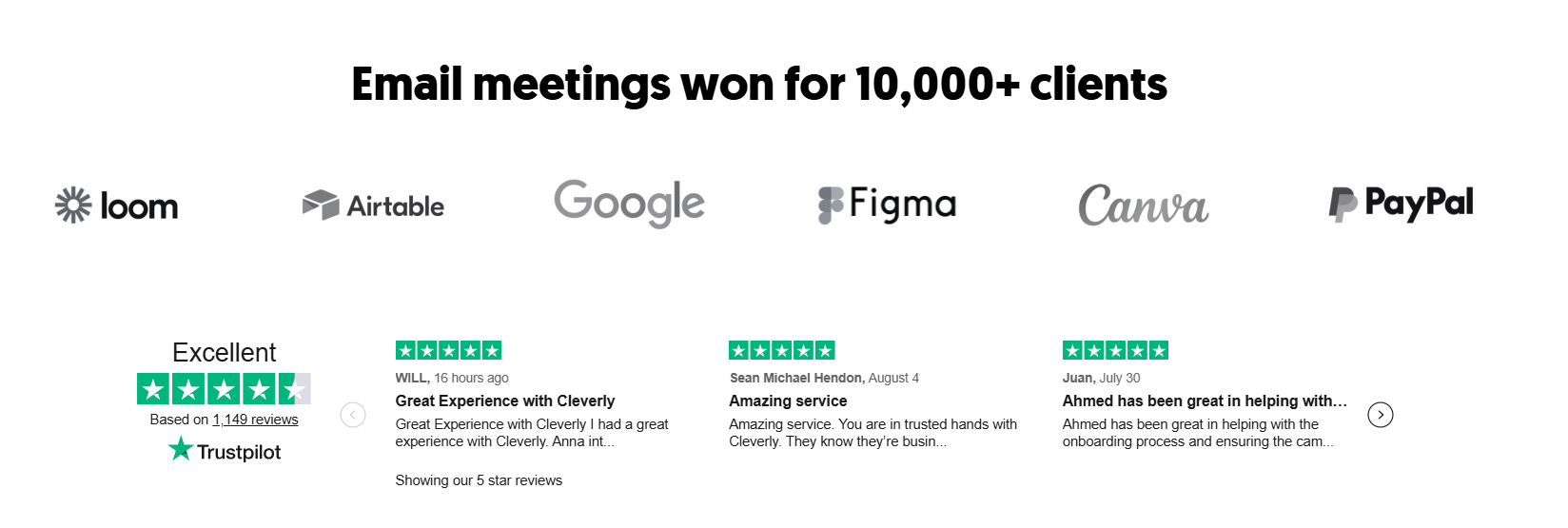
Buying B2B email lists is legal across the US, EU, and Canada, as long as you follow the compliance requirements specific to each region, especially the opt-out mechanisms that all three demand. What actually separates a good purchase from a wasted one isn't the size of the database, it's the verification methodology behind it and the reviews from teams who've actually used it.
A verified list is the starting point, not the finish line. Domain protection, gradual warm-up, and consistent sending discipline are what determine whether that list turns into real replies and real pipeline, or just a fast way to burn a domain you'll need for years.
Frequently Asked Questions
Free Resource
How to Scale a Profitable Cold Call System
Get the complete guide — download it instantly now.
Free Ebook
Download the Free Guide
Enter your details to get instant access.
You're all set! 🎉
Your ebook is downloading now.
Click below if the download didn't start automatically.