Table of Contents
What the Data Actually Says About Cold Calling in B2B
Why Most B2B Cold Calling Campaigns Underperform
Problem #1: You're Calling the Wrong People
Problem #2: You're Calling at the Wrong Time
How to Build a B2B Cold Calling Strategy That Books Meetings
Cold Calling Benchmarks to Measure Your Team Against
When to Consider Outsourcing Cold Calling
How Cleverly's Cold Calling Agency Gets the Right People on the Phone at the Right Time
Conclusion
Frequently Asked Questions
Modified On :
June 18, 2026
Key Takeaways
- Does cold calling work in B2B? Yes — 82% of buyers accept meetings with sellers who reach out to them, and 57% of C-level and VP buyers prefer phone contact over other channels. The channel isn't dead. The execution is broken.
- The two variables that kill most cold calling campaigns aren't the script or the channel — they're who you're calling and when you're calling them.
- The average B2B cold call success rate jumped to 6.7% when teams combine precision targeting with multichannel sequences — up from 2% with generic, spray-and-pray approaches.
- Thursday is the highest-converting day for B2B cold calls, with Tuesday and Wednesday close behind. Monday and Friday consistently lag by 30–50% in connect rate.
- Teams that fix targeting and timing — then layer in multi-touch sequencing and disciplined follow-up — book more meetings with the same number of dials.
Cold calling gets declared dead at least once a year. Has been for 15 years. And yet, the teams that kept dialing kept filling their pipeline while everyone else pivoted to channels that felt safer but performed worse.
The real conversation in 2026 isn't whether B2B cold calling works. It's why your cold calling isn't working — and the answer is almost never the channel itself.
82% of B2B buyers are open to a meeting from a cold call. 57% of executives actually prefer phone contact. Over 50% of B2B leads still originate from cold outreach. That's not a dying channel. That's an underexploited one — particularly for teams chasing complex, high-ACV deals that email alone won't close.
What actually kills cold calling results? Two things that most teams never fix: calling the wrong people, and calling at the wrong time. Add a third — treating the phone as a standalone activity instead of part of a coordinated outbound motion — and you've described the underperformance story of most B2B sales floors.
This guide walks through what the data actually says about cold calling in 2026, how to diagnose exactly where your campaign is breaking down, and how to rebuild a B2B cold calling strategy that consistently books qualified meetings.
What the Data Actually Says About Cold Calling in B2B
Before you fix anything, it helps to understand what good actually looks like — because a lot of teams are comparing their performance to the wrong benchmarks.
The average B2B cold call dial-to-meeting conversion rate sits around 2–3% in 2025–2026, roughly one meeting per 40 dials. Top-performing teams hit 5–8% or higher — and the gap is driven by data quality, coaching, and cadence, not talent.
That 3x+ gap between average and elite isn't a mystery. Teams that combine precision targeting with multichannel sequences see success rates climb to 6.7% — well above the industry average. The same people, calling a better list, at a better time, with a warmer sequence, produce dramatically different results.
Connect rate tells a similar story. Gong Labs analyzed 300M+ cold calls and found the average connect rate sits at 5.4%, while top-quartile reps hit 13.3%. The single biggest driver of that gap? Generic data produces 8–12% connect rates. Verified mobile direct-dials produce 18–22%. Data quality is the most underused lever most teams have.
Then there's the follow-up gap. 93% of conversions happen after six or more follow-up attempts — yet most reps quit after one or two, walking away from the majority of their potential pipeline before the conversion window ever opens.
The conclusion is straightforward: does cold calling work in B2B? It does — when the right person is called at the right time with a message tied to their actual context. It fails when any one of those variables is missing.
📞 What Happens When Every Rep Gets 15–30 More Conversations a Month?
The biggest cold calling gains usually come from better targeting and better execution—not more dials. We help teams optimize both.
Why Most B2B Cold Calling Campaigns Underperform
If you've run cold calling campaigns and found them consistently below expectations, you likely don't have a cold calling problem. You have a targeting and relevance problem.
Most underperforming teams share the same structural failures: calling from a purchased list with no real ICP filtering, using the same script regardless of title, seniority, or industry, calling when it's convenient for the SDR rather than when the prospect is statistically likely to pick up, and treating the call as a first touch rather than part of a warmed sequence.
The result is a pattern of rejection that compounds. An SDR making 60 calls a day to poorly targeted prospects isn't just wasting 60 calls — they're building call reluctance that affects delivery on the handful of good calls they do reach. The few qualified prospects who pick up hear a rep whose confidence has been worn down by hours of rejection from irrelevant dials.
Cold calling not working is almost always a symptom of one or both of the core problems we're about to walk through — not evidence that the channel is broken.
Problem #1: You're Calling the Wrong People
Targeting is the foundation of B2B cold calling strategy, and most teams treat it like an afterthought.
"Decision-makers at mid-market B2B companies" is not a call list. It's a category. The more specific your targeting criteria — title, seniority, company size range, industry vertical, tech stack signals, recent buying triggers — the more relevant every call becomes, regardless of the script.
What "Wrong Prospect" Actually Looks Like
The obvious version is calling someone with no budget authority or ownership of the problem you solve. A rejection from that call is guaranteed, no matter how well the script performs.
But there's a subtler version that costs most teams just as much: calling companies that fit your ICP on paper — right size, right industry — but are in the wrong growth stage, locked into a competitor, or outside your deal sweet spot. They look like the right prospect in a filter. They're not.
67% of outbound failures trace back to targeting the wrong people with the right message — not the wrong channel, not the wrong script. The channel is fine. The list isn't.

How to Fix Your Cold Call Targeting Strategy
Start from ICP backward. Before you build any list, define:
- Title and seniority: Who owns the problem you solve? Who has budget authority for the solution?
- Company profile: Size range, industry, geography, growth stage, and any technographic signals that indicate buying intent
- Negative filters: Who to explicitly exclude — existing customers, competitors, companies outside your deal sweet spot, industries where your product doesn't fit
- Validation against closed-won data: What titles, company types, and deal contexts produced your best customers? Build to replicate that profile, not to maximize list volume.
The output shouldn't be a description. It should be a specific set of filters that your list builder applies every time. "VP of Sales at a 50–500-person SaaS company that uses Salesforce and has raised a Series A or B in the last 18 months" is a targeting brief. "Sales leaders at growth-stage software companies" is not.
Title vs. Authority
Calling a title without verifying they own the problem wastes calls and burns through list faster than necessary. A VP of Marketing at a company where marketing doesn't control the tech stack doesn't have buying authority for a martech solution, regardless of the seniority. Verify role ownership against your ICP, not just the job title in the database.
The Compounding Cost of Bad Targeting
Each rejection from a wrong prospect doesn't just waste that call — it pulls down call reluctance for the rest of the day, affecting script delivery, confidence, and conversion on the few good calls that do come through. Bad targeting has a multiplier effect on SDR performance that goes far beyond the wasted dials.
📌 Pro tip: Validate your ICP against your last 20 closed-won deals before building your next list. The pattern in your best customers is your most accurate targeting brief.
🚀 Need More Meetings Without Building a Calling Team?
Our U.S.-based SDRs handle prospecting, dialing, follow-up, and appointment setting—helping businesses generate qualified sales conversations faster.
Problem #2: You're Calling at the Wrong Time
Fix targeting and you've solved half the problem. The other half is timing — and most teams call when it's convenient for the SDR, not when it's statistically most likely to produce a connect.
The window you call in can swing your connect rate from 4% to 14% without touching the script, the data, or the rep. That's not a small optimization. That's potentially tripling your meeting output from the same number of dials.
Day-of-Week Impact
Based on Cognism's analysis of 200,000+ B2B cold calls, Thursday is the highest-converting day of the week, followed by Tuesday and Wednesday. Monday and Friday consistently lag the mid-week trio by 30–50% in connect rates
Thursday wins for two reasons: Wednesday tends to be heavy with internal meetings — leadership reviews, planning sessions, customer check-ins — making it harder to reach decision-makers. Thursday is more of an "output" day where executives are catching up on their own work and carry an end-of-week urgency that makes them more willing to engage.
Yet most SDR teams distribute calls evenly across the week. They're spending the same dialing energy on a Friday afternoon — when 65% of voicemails happen — as on a Thursday morning when connect rates are at their weekly peak.

Time-of-Day Windows
The highest-converting windows are 10–11 AM and 2–3 PM in the prospect's local time zone. Performance drops before 9 AM, during the 12–1 PM lunch period, and after 4 PM.
Most SDRs start dial sessions at 9–9:30 AM thinking they're being early. The real sweet spot is 10:30 AM, after morning urgencies are out of the way and before the lunch lull starts. Shifting your calling window alone can deliver a 30–50% lift in connect rate in 24 hours — without changing anything else.
The Time Zone Problem
SDRs calling from the US East Coast who don't adjust for West Coast or international prospects are effectively dialing into the wrong part of the workday for a significant portion of their list. A 10 AM ET call hits a West Coast prospect at 7 AM — before most executives have settled in.
Segment your list by region. Stagger your call blocks so the high-converting windows are hit correctly for each time zone group.
Pre-Call Sequencing
Timing isn't just about the clock. A LinkedIn connection request or short email sent 24–48 hours before a call converts a fully cold dial into a semi-warm one. Cold calls that follow a prior touch consistently outperform fully cold dials — the prospect recognizes the name and is more likely to answer or engage.
That pre-call touch doesn't need to be a pitch. A LinkedIn connection with no note, or a single-sentence email referencing a relevant insight with no ask, is enough to establish name recognition before the call.
📌 Pro tip: Track connect rate by day and time block against your own ICP data. Industry benchmarks are a starting point, not a substitute for what works specifically for your buyer.
How to Build a B2B Cold Calling Strategy That Books Meetings
Fix targeting first, fix timing second, then layer in sequence structure and call execution. Here's the full framework.
Step 1: Define Your ICP Before Building Any List
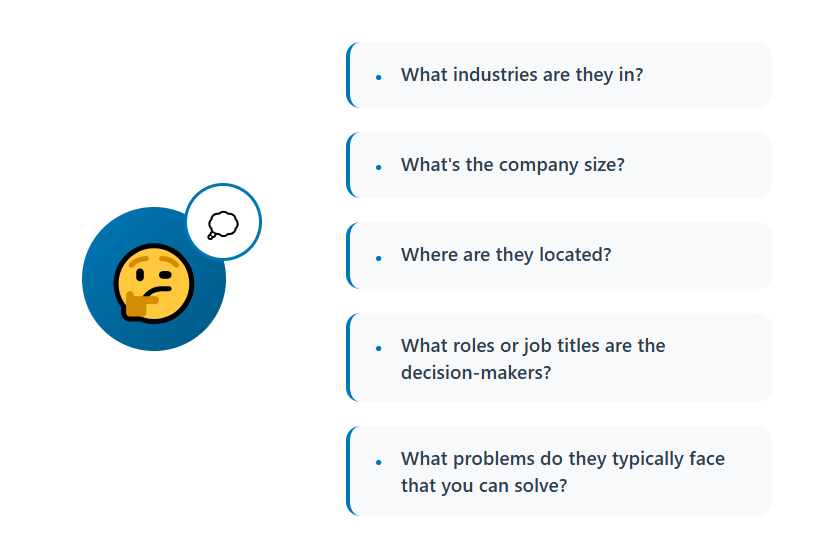
Start with the most specific possible definition of who you're calling: title, seniority, company size range, industry, geography, and any behavioral or technographic signals that indicate buying intent.
Add negative filters explicitly — who to exclude from every list build. Existing customers, direct competitors, companies outside your deal sweet spot, industries where your solution doesn't fit. Negative filtering is as important as positive filtering, and most teams skip it entirely.
Then validate your ICP against closed-won data. What titles, company types, and deal contexts produced your best customers? Your call list should replicate that profile, not maximize total list size.
The output is a tightly defined ICP brief that your list builder works from. Not a general description — a specific set of filters applied consistently.
Step 2: Build Verified, Direct-Dial Contact Lists
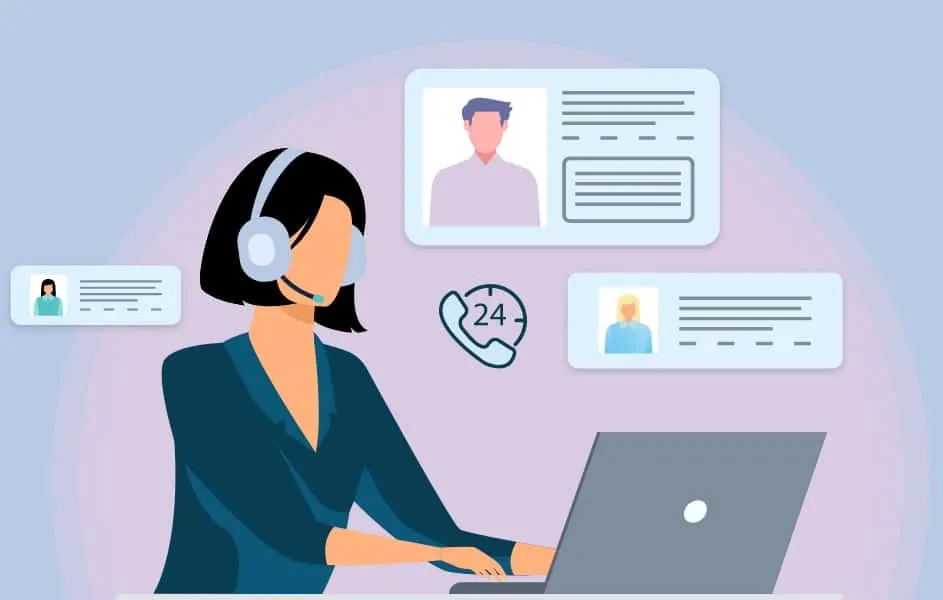
This is where most cold calling not working problems originate and where the fix is fastest to implement.
Generic work numbers produce 8–12% connect rates. Verified mobile direct-dials produce 18–22%. That data quality gap is larger than any script improvement you'll make this quarter.
"Verified" means the number has been recently confirmed as active and reachable for the specific contact — not just a company main line or an auto-populated field from a database. Tools like ZoomInfo, Apollo, Cognism, and Lusha all offer direct-dial data; what you're evaluating is data freshness and the verification methodology behind it.
Before dialing, remove known bad numbers, deduplicate against existing CRM contacts, and segment by title and company type so scripts can be tailored to each segment rather than using a one-size-fits-all opener.
Step 3: Concentrate Calls in High-Converting Windows
Block the highest-converting windows as non-negotiable calling time: Tuesday through Thursday, 10–11 AM and 2–3 PM in the prospect's local time zone.
Build your weekly call schedule around data, not convenience. Front-load Thursday and Tuesday with your highest-priority segments. Reserve Monday for list prep, CRM hygiene, and follow-up admin — not for burning through your best prospects in the worst connect window of the week.
If your list spans multiple time zones, segment by region and stagger call blocks. Track connect rate by day and time block to validate these windows against your specific ICP. Benchmarks are a starting point.
Step 4: Warm the Call With a Prior Touch
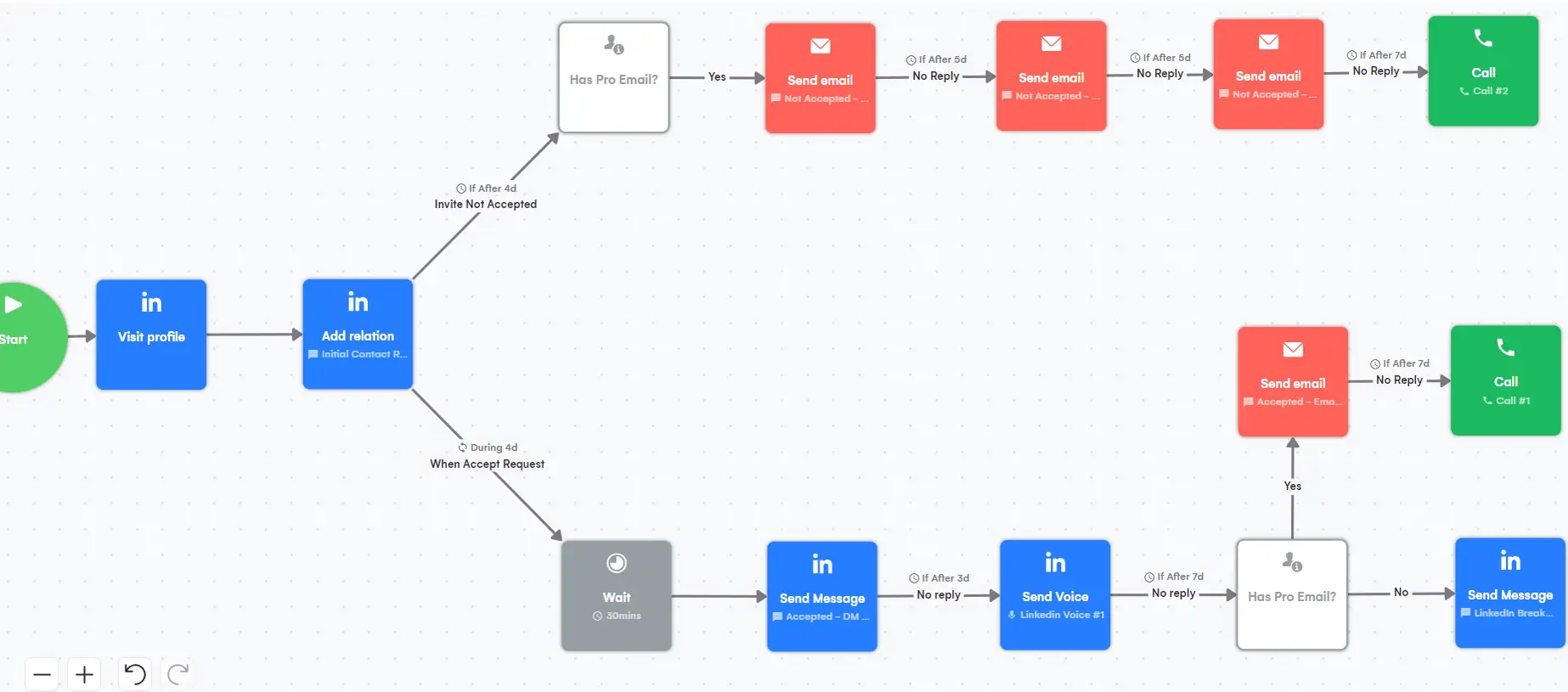
A LinkedIn connection request or short email sent 24–48 hours before the call changes the dynamic of the call itself. The prospect recognizes the name. The call isn't fully cold.
The pre-call touch doesn't need to be a pitch. A connection request with no note, or a brief email with a single relevant insight and no ask, is enough. You're establishing name recognition, not starting a conversation.
Multi-channel sequencing structure that works: Day 1 — LinkedIn connect or email; Day 2–3 — first call attempt; Day 5 — follow-up email; Day 7 — second call attempt; continue across 10–14 business days with varied messages and touchpoints across channels.
Companies that use multi-channel outreach combining calls, email, and LinkedIn report conversions up to 37% higher than single-channel efforts.
Step 5: Lead With Relevance, Not a Script
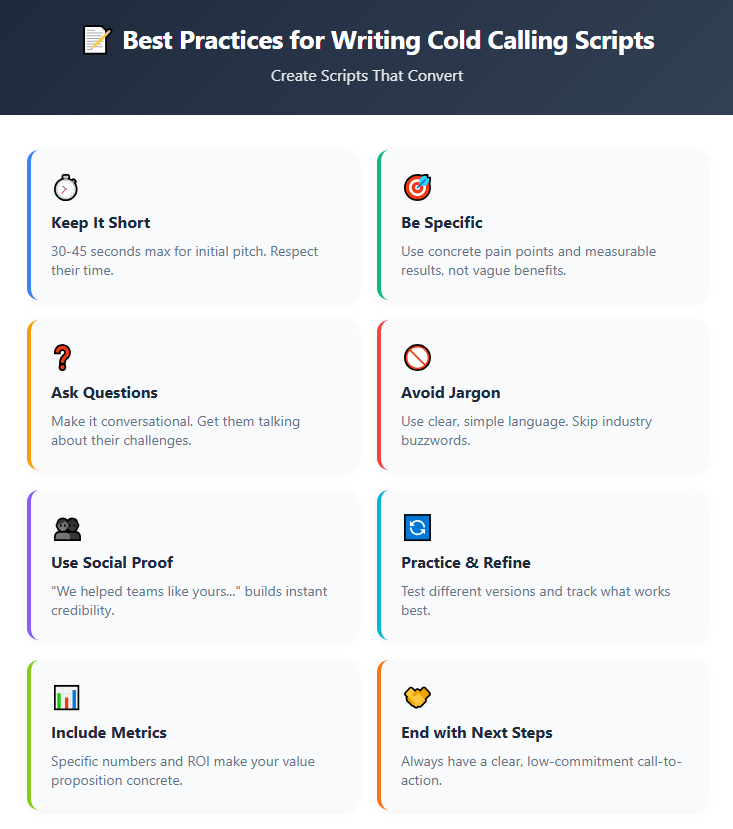
Cold calling scripts fail when they sound like scripts. The goal is a framework that guides the conversation — not a word-for-word read that signals to the prospect you don't actually know who you're calling.
Your opening should reference something specific: their role's actual pain points, their company's current situation, a recent trigger event, or an industry-specific challenge that's real for their title. Not "I wanted to introduce our company."
The average cold call duration in 2026 is 82 seconds. Every second spent on irrelevant setup is a second not spent on the prospect's actual problem. Get to relevance fast.
For objection handling, prepare for the four or five most common objections your SDRs face — but give them the logic and language to respond naturally, not a scripted rebuttal that sounds defensive and rehearsed. The goal is a conversation, not a performance.
Step 6: Follow Up Consistently Across Six or More Touches
93% of conversions happen after six or more contact attempts. Teams that stop at two or three are abandoning the majority of their potential pipeline before the conversion window ever opens.
Each follow-up should add something new — a different angle, a relevant proof point, a timely insight tied to their business. Not the same pitch with different words. The difference between persistence and nuisance is relevance and spacing.
It takes an average of eight call attempts to reach a prospect. Most reps stop after two or three, assuming the prospect isn't interested. In reality, they're just busy — it's delay, not resistance. Only-B2B
Track attempt number per contact in your CRM. If your data shows most meetings come on attempt three or four, you know exactly how costly early drop-off is to your pipeline.
Cold Calling Benchmarks to Measure Your Team Against
Use these as a diagnostic, not a target. The goal is to identify which specific metric is the bottleneck in your funnel.
If your connect rate is below 8%, the problem is data quality, not effort. If you're at or below average conversion with the right ICP, the problem is likely script relevance or timing. If your average attempt count per contact is below four, your SDRs are dropping off before the conversion window.
Each of these metrics points to a different fix. Track them separately so you know which lever to pull.
When to Consider Outsourcing Cold Calling
There's a point where the math on building cold calling in-house stops working — and it's earlier than most companies expect.
Signs it's time to outsource cold calling: your internal team is stretched too thin across activities to dial at real volume, connect rates are stagnant despite script and list changes, or the cost and time to build a fully equipped SDR function exceeds what your pipeline targets can justify.
What a managed cold calling agency provides that in-house teams typically don't comes down to infrastructure and focus. Dedicated SDRs with thousands of hours of cold calling experience. Verified direct-dial data. AI-powered parallel dialer setup. Structured multi-touch sequencing. Performance reporting without the HR overhead of hiring, training, and managing SDRs through inevitable turnover.
What to evaluate when selecting a cold calling agency: proven results in your specific ICP and industry, transparent reporting on connect rate and meetings booked, verified data sourcing, and — critically — no long-term lock-in contracts before results are established.
The risk of outsourcing without doing your part: even the best cold calling agency needs an accurate ICP brief, a strong offer, and clear qualification criteria to produce meetings your AEs will actually close. The agency handles execution. You have to bring the strategic clarity.
How Cleverly's Cold Calling Agency Gets the Right People on the Phone at the Right Time
We built Cleverly's cold calling system around the two problems that kill most campaigns: bad targeting and bad timing. Every engagement starts there — not with the dialer, not with the script.
Before a single call goes out, we define the precise ICP for your campaign. That means verified direct-dial contact lists built from sources like ZoomInfo, Apollo, and Cognism — not generic work numbers that produce 8–10% connect rates. Our SDRs are briefed on the specific pain points, objections, and business context relevant to each target segment before they pick up the phone.
On timing, our dedicated appointment setters cold call 200–300 decision-makers daily using a parallel dialer setup designed to maximize volume in the highest-converting windows — not scattered across a workday when it's convenient. Calls go out Tuesday through Thursday, concentrated in the 10–11 AM and 2–3 PM windows in the prospect's local time zone. That's not a coincidence — it's the structure we run on every campaign.
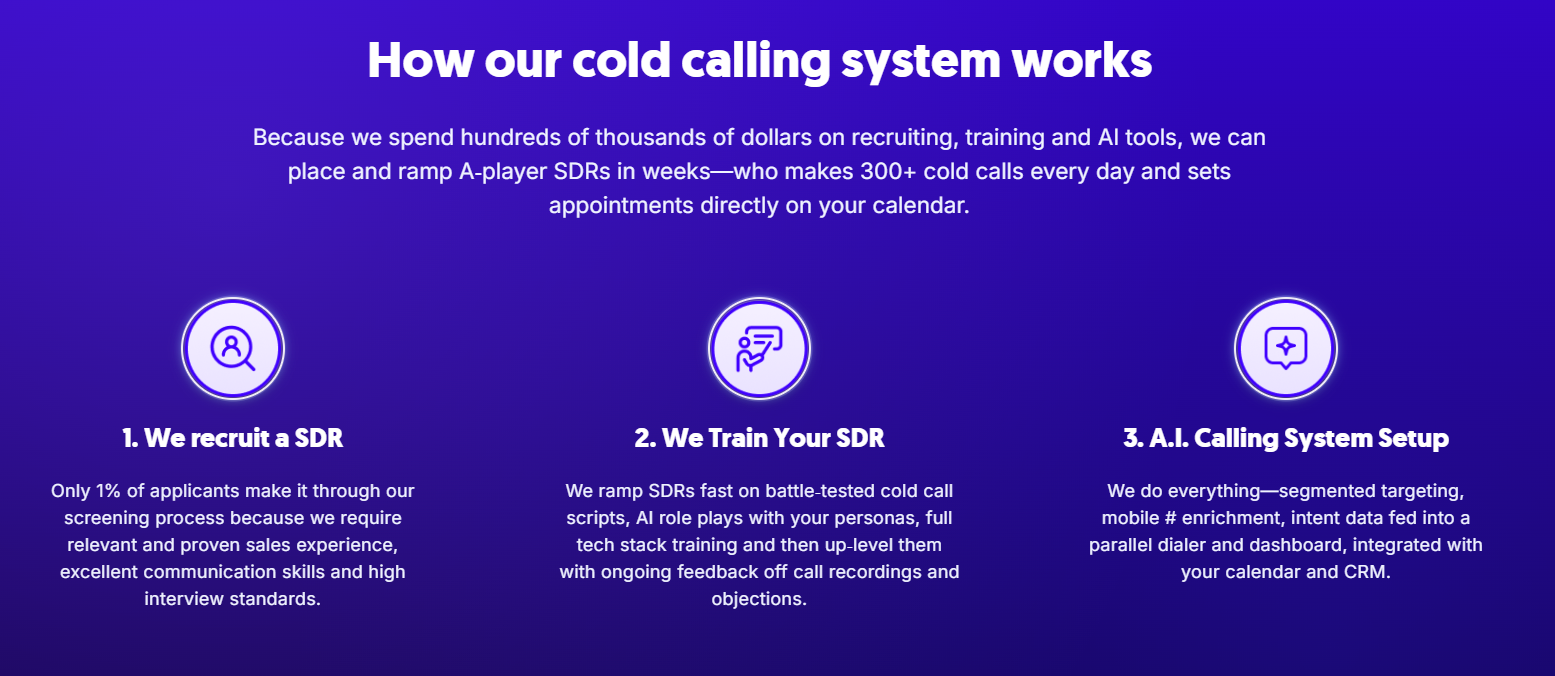
What's included in Cleverly's cold calling appointment setting engagement: dedicated SDR placed and trained to go live in two weeks, breakthrough call scripts written for your ICP, parallel dialer setup, AI role-play training, objection handling frameworks, live call monitoring, call transcripts and recordings, CRM updates after every call, appointment confirmation follow-ups, and full pipeline tracking.
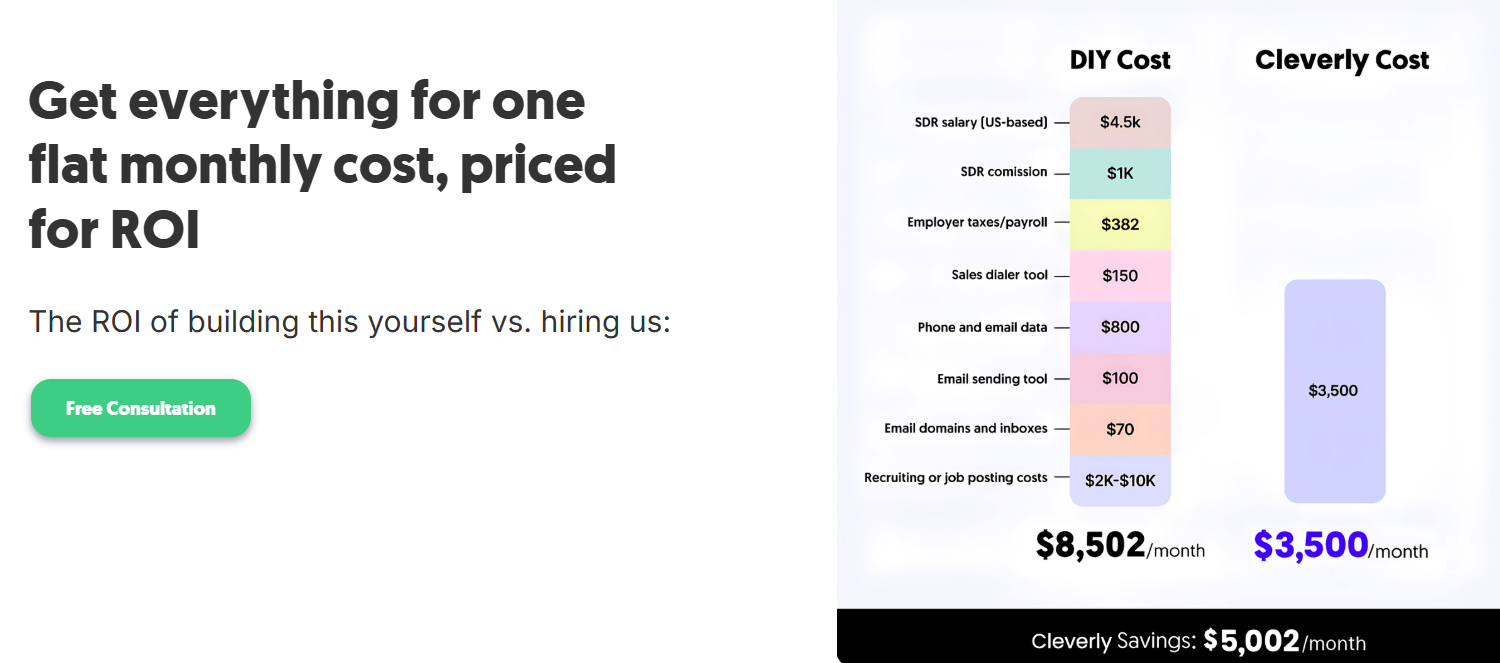
Our track record across 10,000+ clients — including eBay, Airbnb, DocuSign, Loom, and Airtable — speaks to scale: 224.7K leads generated, $51.2M in client revenue, $312M in client pipeline. We're rated 4.6/5 on Trustpilot across 1,136+ reviews.
Your pipeline isn't waiting on a better script — it's waiting on the right people being called at the right time. Book a strategy call with Cleverly and let's fix both.

Conclusion
Cold calling isn't dying. It's being done wrong at scale by teams that haven't fixed the two variables that actually drive results: who they're calling and when.
Fix targeting first. Fix timing second. Build a multi-touch sequence around the call. Measure the right metrics — connect rate, conversion rate, and attempt depth per contact. The pipeline will follow.
The teams winning with B2B cold calling in 2026 aren't doing anything radically new. They're just more disciplined about precision and follow-up depth than the teams that gave up and called it a dead channel. That discipline is available to anyone willing to do the work.
Frequently Asked Questions
Free Resource
How to Scale a Profitable Cold Call System
Get the complete guide — download it instantly now.
Free Ebook
Download the Free Guide
Enter your details to get instant access.
You're all set! 🎉
Your ebook is downloading now.
Click below if the download didn't start automatically.