Table of Contents
What Is a Sales Cadence?
Why a Strong Sales Cadence Is Critical for Consistent Pipeline
Types of Sales Cadences (And When to Use Each)
How to Build a B2B Sales Cadence Step-by-Step
Sales Cadence Examples for B2B Teams
Sales Cadence Templates to Steal and Customize
Sales Cadence Best Practices That Separate Top SDR Teams
How Cleverly Builds Sales Cadences That Drive Qualified Meetings
Conclusion
Frequently Asked Questions
Modified On :
September 1, 2026
Key Takeaways
- Most pipelines are lost to inconsistent follow-up, not a bad offer. A structured sales cadence fixes that.
- Buyers need 6 to 10 touchpoints before they respond, so giving up early is the fastest way to lose leads.
- Multi-channel cadences combining email, LinkedIn, and cold calling consistently outperform single-channel outreach.
- Every cadence needs clear entry, exit, and pause criteria — without them, your CRM and your pipeline both get messy.
- Keep cold emails to 3 to 5 sentences, lead with their pain, and use pattern interrupts after touch 4 to re-engage non-responders.
- A sales cadence is only as good as the data and messaging behind it — build it right, measure it, and keep improving it.
A sales cadence is a planned sequence of outreach activities delivered across a defined period. It tells a seller whom to contact, which channel to use, what each touch should accomplish, and when the prospect should leave or pause the process.
That structure prevents follow-up from depending on memory. It also creates a consistent process the team can measure by audience, channel, message, and outcome.
Cleverly’s teams work with sales cadences at the point where targeting, contact data, messaging, timing, reply handling, and booked meetings meet. That operating view matters because a sequence can execute perfectly while the audience, offer, or qualification standard remains wrong.
This guide explains how to build a B2B sales cadence, choose sales cadence software, combine manual and automated steps, use AI responsibly, and measure whether the process creates qualified pipeline.
What Is a Sales Cadence?
A sales cadence is a structured sequence of outreach touchpoints, across channels like email, LinkedIn, and phone, delivered over a defined time window. Every touch has a purpose, a channel, and a timing rule. Nothing is random.
Here's what separates a cadence from a one-off email blast or ad hoc follow-up:
- A blast is a single message sent to a list. A cadence is a multi-step journey with logic behind every step.
- Ad hoc follow-up depends on a rep remembering to follow up. A cadence removes that dependency entirely.
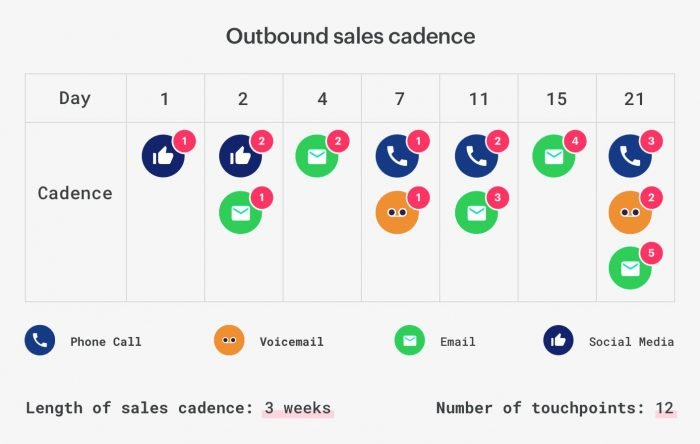
Every solid sales cadence has five core components:
- Channels — email, LinkedIn, cold call, SMS, video
- Touchpoints — the number of individual outreach attempts
- Timing — spacing between each touch (day 1, day 3, day 7, etc.)
- Messaging — channel-specific copy tailored to where the buyer is in the journey
- Exit criteria — rules for when a lead leaves the cadence (replied, booked, opted out)
A simple example: an 8-touch cadence over 14 days hitting email on day 1, a LinkedIn connection on day 3, a follow-up email on day 5, a cold call on day 7, and so on. That's a repeatable system, not a template.
Sales Cadence vs. Sales Sequence: What Is the Difference?
Sales cadence and sales sequence are often used interchangeably, but a useful distinction exists.
A sales cadence is the broader outreach strategy. It defines the audience, objective, channels, timing, message progression, entry rules, pause conditions, and exit criteria.
A sales sequence is the configured series of tasks and messages used to execute that strategy inside a CRM or sales engagement platform.
For example, the cadence may specify:
- Mid-market SaaS finance leaders as the audience
- Email, LinkedIn, and phone as the channels
- Eight touches over 21 days
- A new business problem or proof point at each touch
- Immediate removal after a reply, opt-out, or booked meeting
- Manual review after a meaningful engagement signal
The sequence is the software implementation of those decisions: the scheduled emails, call tasks, reminders, delays, branching rules, and automatic unenrollment settings.
In practice, many teams call both objects a sequence. The label matters less than whether the team has defined the reasoning behind every step. Software can execute a sequence, but it cannot rescue a cadence built for the wrong audience or offer.
🎯 Turn Your Sales Cadence Into Qualified Meetings
Cleverly manages targeting, messaging, LinkedIn outreach, cold email, calling, and reply handling so your team can focus on qualified sales conversations.
Why a Strong Sales Cadence Is Critical for Consistent Pipeline
A prospect may respond to the first relevant message or remain silent through an entire sequence. The required number of touches varies by audience, channel, offer, brand familiarity, deal value, and timing.
The purpose of a cadence is not to force every prospect through a fixed number of attempts. It is to give the team a consistent starting process that can be measured and adjusted by segment.
A structured sales cadence solves this at the team level by:
- Reducing decision fatigue — SDRs don't have to decide who to follow up with or when. The cadence tells them.
- Creating predictable behavior — When everyone runs the same system, you can actually measure what's working and what's not.
- Driving pipeline directly — More consistent follow-up means more meetings booked, better qualification, and faster movement through the funnel.
- Improving accountability — Managers can track cadence completion rates and individual rep performance against a shared standard.
Without a cadence? You're leaving follow-ups to chance. Leads slip through, reps get inconsistent results, and revenue becomes unpredictable month over month.
That's a system problem, not a people problem.
Types of Sales Cadences (And When to Use Each)
Not every B2B sales cadence looks the same. The type you build depends on where the lead is coming from and what your goal is.
1. Inbound cadence — For leads that have already shown interest (demo requests, form fills). These folks raised their hands, so speed matters. Follow up within minutes, not days.
2. Outbound cadence — For cold prospecting to net-new accounts. This is your primary pipeline-building motion and usually requires the most touches.
3. Re-engagement cadence — For dormant leads or previously contacted prospects who went cold. A fresh angle and a different channel can restart a conversation.
4. Post-meeting cadence — For nurturing leads after a discovery call or demo. Most deals die in the follow-up gap here.
5. Account-based cadence — For enterprise deals involving multiple stakeholders. You're running coordinated outreach to the CFO, VP of Sales, and the champion simultaneously.
Quick guide:
📈 Build a Repeatable Outbound Pipeline
Replace scattered follow-up with a managed B2B outreach process built around your market, offer, and sales goals.
How to Build a B2B Sales Cadence Step-by-Step
Here's exactly how to set up a sales cadence that converts leads, from zero.
Step 1: Define Your ICP and Segmentation Criteria
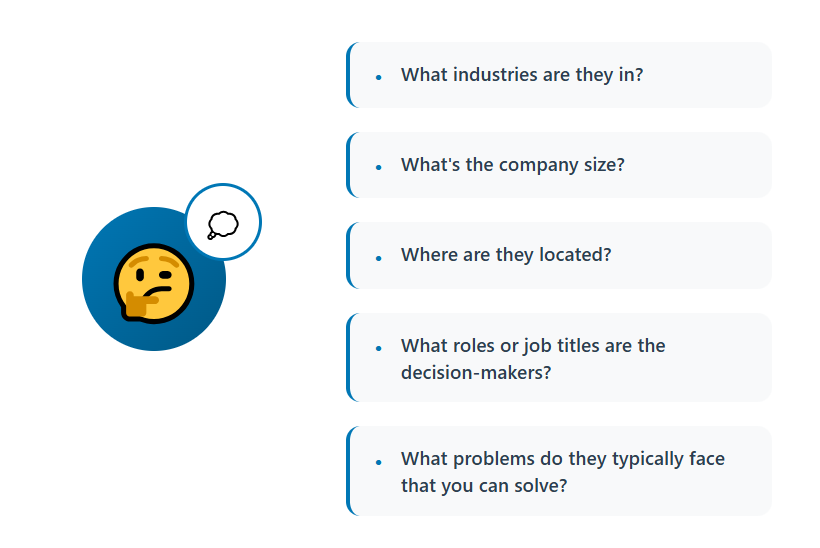
Before you build anything, know who you're building it for. Your ICP includes role, industry, company size, tech stack, and buying signals like funding rounds or hiring activity.
Segmentation determines everything — cadence length, channel mix, and messaging tone. A VP of Sales at a 500-person SaaS company needs a different approach than a founder at a 10-person startup.
Step 2: Choose Your Outreach Channels
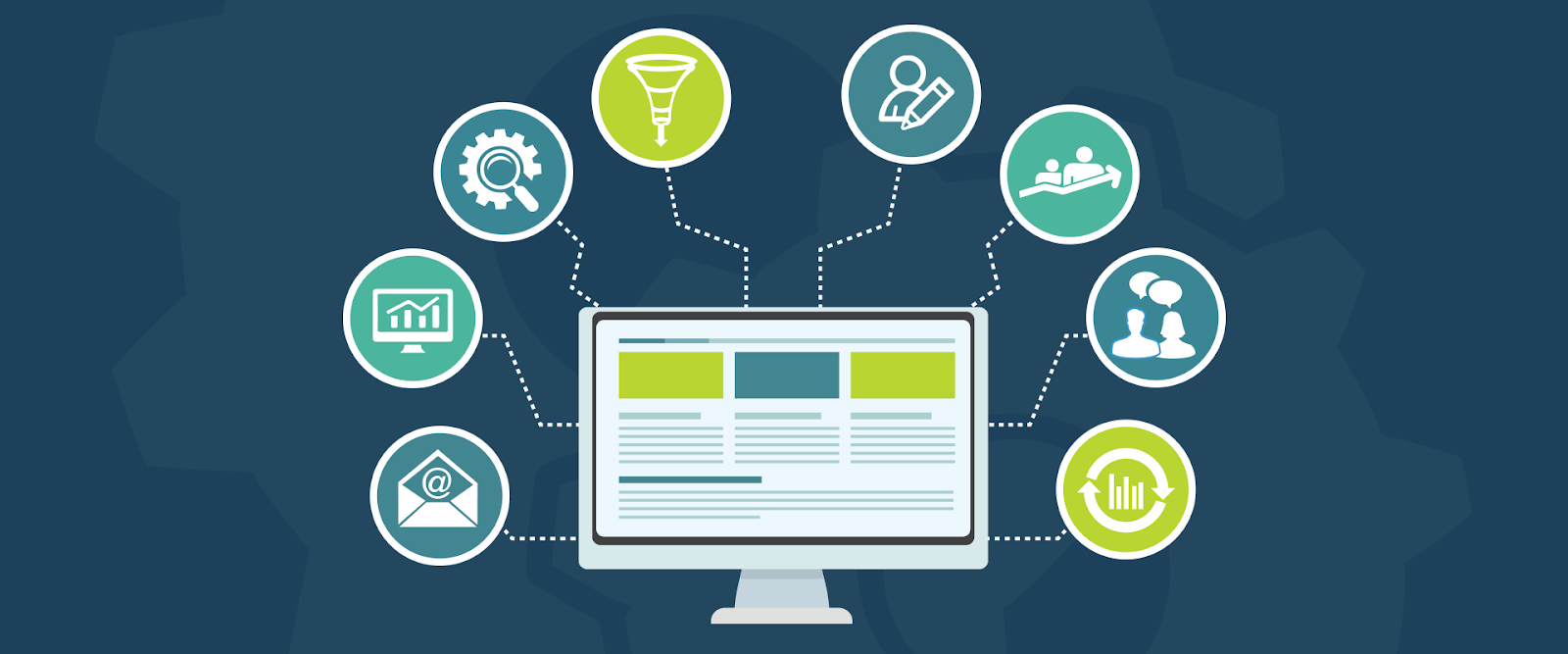
The main channels for a B2B sales cadence are:
- Email — High volume, scalable, great for detailed messaging
- LinkedIn — Warm touchpoint, builds familiarity, works well for mid-funnel
- Cold calling — Highest intent signal when it connects, best for later-stage touches
- SMS and video — Pattern interrupts for re-engagement or high-value accounts
Multi-touch outreach consistently outperform single-channel ones. But don't add a channel just to add it. Use each one where it actually makes sense for your ICP.
Step 3: Map Out Your Touchpoints and Timing
For cold outbound, begin with enough touches to test several relevant angles across the channels your prospects use. A starting cadence might include six to ten total attempts, but that is a test design rather than a universal benchmark.
Review performance by touch number. If later touches continue producing positive replies and meetings, the sequence may justify its length. If additional touches produce only unsubscribes, complaints, or negative replies, stop earlier.
A simple day-by-day structure:
- Day 1 — Email (intro)
- Day 3 — LinkedIn connection request
- Day 5 — Email (follow-up, different angle)
- Day 7 — Cold call
- Day 9 — LinkedIn message
- Day 12 — Email (value add or case study)
- Day 14 — Cold call
- Day 18 — Final email (breakup)
Avoid the "just checking in" trap. Every touch needs a reason to exist.
Step 4: Write Channel-Specific Messaging
Email, LinkedIn, and cold calls are different mediums. Your messaging needs to match.
- Emails — 3 to 5 sentences max for cold outreach. Lead with a pain point, not your product.
- LinkedIn messages — Even shorter. Conversational, no pitching in message 1.
- Call scripts — Crisp opener, clear value prop, one question.
Use these cold email follow-up examples and templates to give each email a distinct purpose instead of repeating the original pitch.
Personalization at scale works when you use triggers — job changes, funding news, company announcements — as your opening hook. Build those into your templates so reps can fill them in fast.
Step 5: Set Entry, Exit, and Pause Criteria
Every lead needs a clear path in and out of your cadence.
- Entry triggers — Demo request, list import, trigger event (new hire, funding), inbound inquiry.
- Exit criteria — Replied, booked a meeting, opted out, or completed the full cadence without response.
- Pause rules — Out of office reply, mid-cadence objection that needs a manual response.
This is what keeps your cadence clean and your CRM accurate.
Step 6: Choose Sales Cadence Software That Fits the Motion
Sales cadence software schedules outreach steps, creates rep tasks, records activity, applies enrollment rules, and reports what happens across the sequence.
The required platform depends on the motion.
CRM Sequence Tools
A CRM sequence tool may be enough when the team already works from one CRM, relies mostly on email and task reminders, and wants activity connected directly to contact and opportunity records.
This option reduces system switching and administration. The tradeoff is that native CRM tools may offer less specialization in dialing, LinkedIn tasks, advanced experimentation, data sourcing, or high-volume outbound management.
Dedicated Sales Engagement Platforms
A dedicated sales engagement platform is better suited to teams running multiple cadences across larger prospect volumes. These products often provide deeper sequence controls, team templates, call tasks, dialers, analytics, governance, and CRM synchronization.
Choose this category when managers need to compare cadence performance across teams, control how prospects enter and leave sequences, or coordinate several manual and automated channels.
Compare the wider category of sales engagement platforms when the team needs sequencing, calling, task management, governance, and analytics in one workflow.
Email Cadence Software
Email cadence software focuses primarily on scheduled email outreach. It can work for a simple email-led motion, but confirm how it handles replies, bounces, opt-outs, suppression, mailbox limits, CRM updates, and manual tasks.
If the team also depends on calling and LinkedIn, an email-only tool may create fragmented reporting and require reps to manage the rest of the cadence elsewhere.
What to Look for in a Sales Cadence Tool
Before buying, check whether the platform supports:
- Email, call, LinkedIn, SMS, or custom manual tasks required by the sales motion
- Automatic removal after replies, meetings, opt-outs, and disqualification
- Out-of-office detection and configurable pause or resume rules
- CRM field mapping and activity synchronization
- Global suppression and do-not-contact controls
- Templates with rep-level personalization
- A/B testing with clean comparison groups
- Reporting by cadence, segment, source, rep, channel, and touch
- Permission controls and change history
- Local-time and working-day scheduling
- Duplicate and ownership controls
- API or native connections with the existing sales stack
- Clear limits for seats, contacts, mailboxes, credits, and automation
Do not choose a platform from the length of its feature list. Run one real cadence through the shortlisted tools and evaluate setup time, rep effort, data quality, unenrollment behavior, reporting, and cost per qualified outcome.
For detailed product comparisons, use this guide to sales cadence tools rather than turning this article into a second software roundup.
Step 7: Test and Improve the Sales Cadence
Begin with one audience, one offer, and one clear conversion event. If the team changes the list, offer, messaging, channel mix, and schedule simultaneously, the result will not explain what caused the improvement or decline.
Establish a Baseline
Record:
- Target segment
- Contact-data source
- Cadence version
- Number of prospects enrolled
- Number of messages delivered
- Positive and negative replies
- Call connections
- Booked and held meetings
- Qualified opportunities
- Pipeline created
- Opt-outs, complaints, and bounces
Use the same definitions across every version. A booked meeting and a held meeting are not the same outcome.
Test One Meaningful Variable
Useful tests include:
- One problem angle against another
- Email-first against call-first
- A shorter cadence against a longer cadence
- One audience segment against another
- Manual first-touch research against a standard first touch
- One call-to-action against another
Do not call a test after a handful of responses. Continue until the sample is large enough to support a decision or treat the result as an early directional signal.
Diagnose the Funnel in Order
If delivery is weak, fix contact data and sending infrastructure.
If messages deliver but positive replies are weak, inspect targeting, relevance, offer, and copy.
If positive replies do not become held meetings, inspect qualification, scheduling, and reply handling.
If held meetings do not create opportunities, inspect ICP fit and the sales conversation.
If opportunities do not produce revenue, the problem extends beyond the cadence into pipeline management and closing.
Review by Segment and Touch
An account-wide average can hide a cadence that performs well for one market and poorly for another. Break the data down by persona, industry, company size, geography, channel, list source, and cadence version.
Also track where positive replies and meetings occur. Remove steps that add activity without improving the outcome, and preserve later touches only when they continue producing worthwhile conversations.
Sales Cadence Examples for B2B Teams
Example 1: 10-Touch Cold Outbound Cadence (SaaS / Tech) — 21 Days
Best for: Cold prospecting to mid-market SaaS buyers
What makes it work: Multi-channel variety prevents fatigue. LinkedIn touches warm up the cold emails. The breakup email often gets the highest reply rate of the entire sequence.
Example 2: 7-Touch Inbound Follow-Up Cadence — 10 Days
Best for: Demo requests, contact form fills, high-intent inbound leads
What makes it work: The cadence responds immediately while the inquiry is current, then combines automated confirmation with human follow-up. Measure response time separately from contact rate, held meetings, and qualified opportunities so the team can see whether faster action improves the outcome for its own inbound sources.
Example 3: 12-Touch Multi-Channel Enterprise / ABM Cadence — 30 Days
Best for: Large accounts, multi-stakeholder deals, high ACV
What makes it work: You're building familiarity across multiple people in the account simultaneously. The champion and the decision maker are getting warmed up in parallel, which mirrors how B2B buying actually works.
Sales Cadence Templates to Steal and Customize
Template 1: Cold Outbound Email Cadence (8 Touches / 14 Days)
Template 2: LinkedIn + Email Multi-Channel Cadence (10 Touches / 21 Days)
Template 3: Re-Engagement Cadence for Cold / Stale Leads (5 Touches / 10 Days)
To customize any of these sales cadence templates: adjust the number of touches based on your deal size (more for enterprise, fewer for SMB), swap in the channels that your ICP actually uses, and rewrite the messaging to match your specific offer and pain points.
Sales Cadence Best Practices That Separate Top SDR Teams
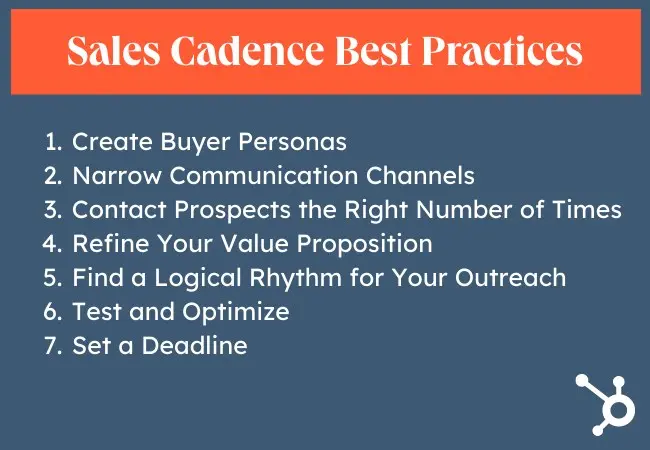
These are the sales cadence best practices that actually move the needle, not the ones that just sound good on paper.
- Lead with value, not your product. The first touch is about them, not you. What problem do they have? What costs them time or money right now?
- Use pattern interrupts after touch 4. If someone hasn't responded, a different format, a voice note, a video, or a direct question, can break the silence.
- Keep emails to 3 to 5 sentences. Cold outreach is not the place for long-form content. Short, specific, and direct wins every time.
- Align cadence length to deal size. SMB deals need a faster, tighter cadence. Enterprise deals warrant longer sequences with more stakeholder coverage.
- Never run a cadence on autopilot. Review reply signals regularly. If someone engaged with touch 3 but didn't reply, that's a signal to personalize touch 4 manually.
- Train SDRs on cadence intent. Your reps need to understand why each touch exists, not just click send. Intent shapes tone.
Define Manual and Automated Steps Before Launch
Every cadence step should be marked as automated, manually reviewed, or fully manual.
Automated steps work well for predictable actions such as sending an approved follow-up, creating a task, waiting a defined period, or removing a prospect after an opt-out.
Manually reviewed steps are appropriate when the system drafts a message but the seller must confirm the facts, relevance, and tone.
Fully manual steps belong where judgment determines the outcome, including account research, live calls, objection handling, high-value personalization, and replies from interested prospects.
This distinction prevents teams from calling a cadence “personalized” merely because software inserts a company name into an automated message.
Common mistakes to avoid:
- Too many touches too close together — you come off as desperate, not persistent.
- Copy-paste messaging across every touch — buyers notice.
- Ignoring data — if your reply rate is under 2%, something needs to change.
- Treating the breakup email as an afterthought — it's often your highest-performing touch.
How Cleverly Builds Sales Cadences That Drive Qualified Meetings
Here's the thing about cadences: a well-structured sequence is only as good as the data behind it, the messaging inside it, and the team executing it.
That's where most in-house outbound programs fall short — not because the team isn't smart, but because building and running a high-performance cadence is a full-time job.
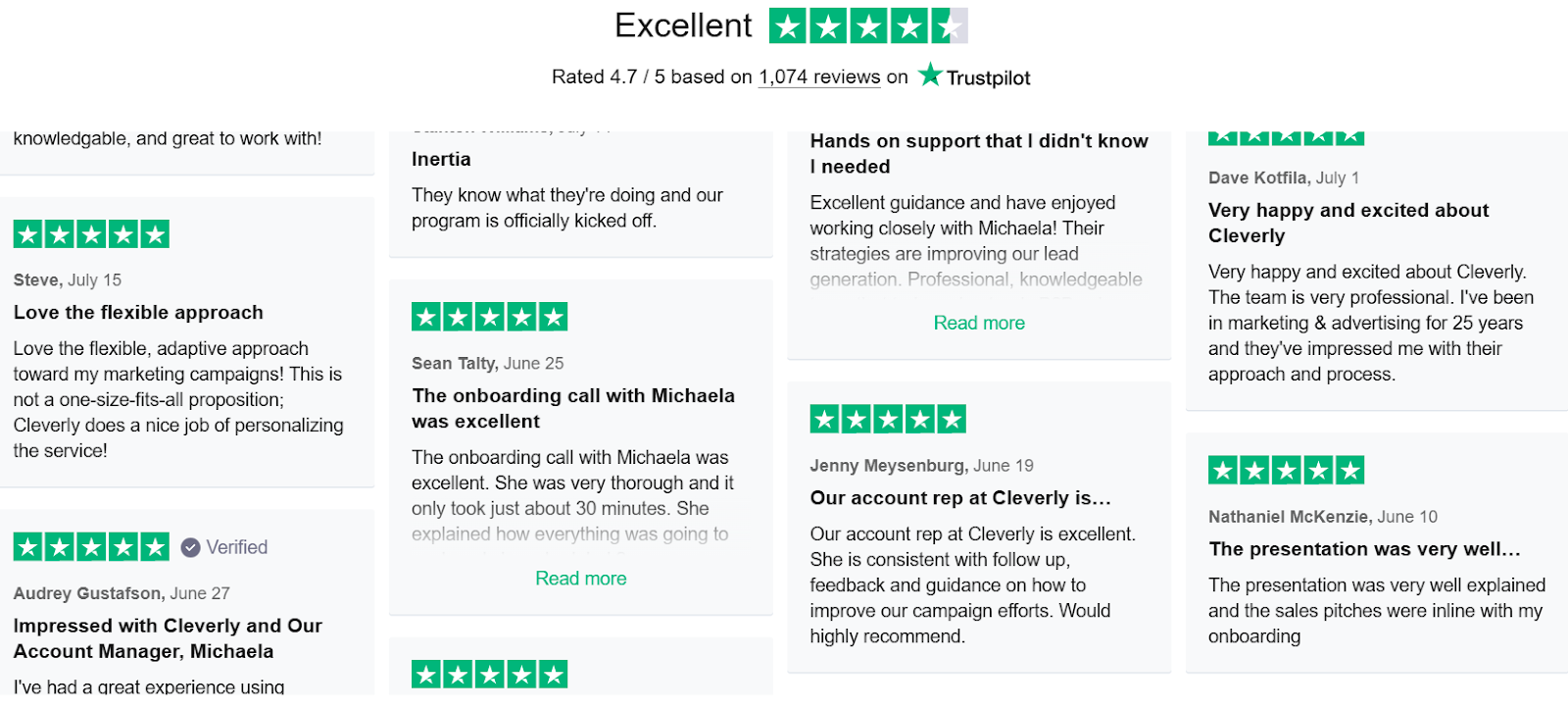
At Cleverly, we're the highest-rated lead generation agency built 100% around done-for-you outbound. We handle the entire cadence operation end-to-end for our clients, so you get meetings on the calendar without building an SDR team from scratch.
Here's what we take off your plate:
- Lead list building — Clean, verified contacts matched to your ICP
- Channel selection — LinkedIn, cold email, and cold calling deployed based on your TAM and deal size
- Sequence writing — Messaging that's specific to your offer, not recycled templates
- Outreach execution — We run the cadence, manage replies, and book meetings for you
- Reply management — We handle objections and keep conversations moving forward
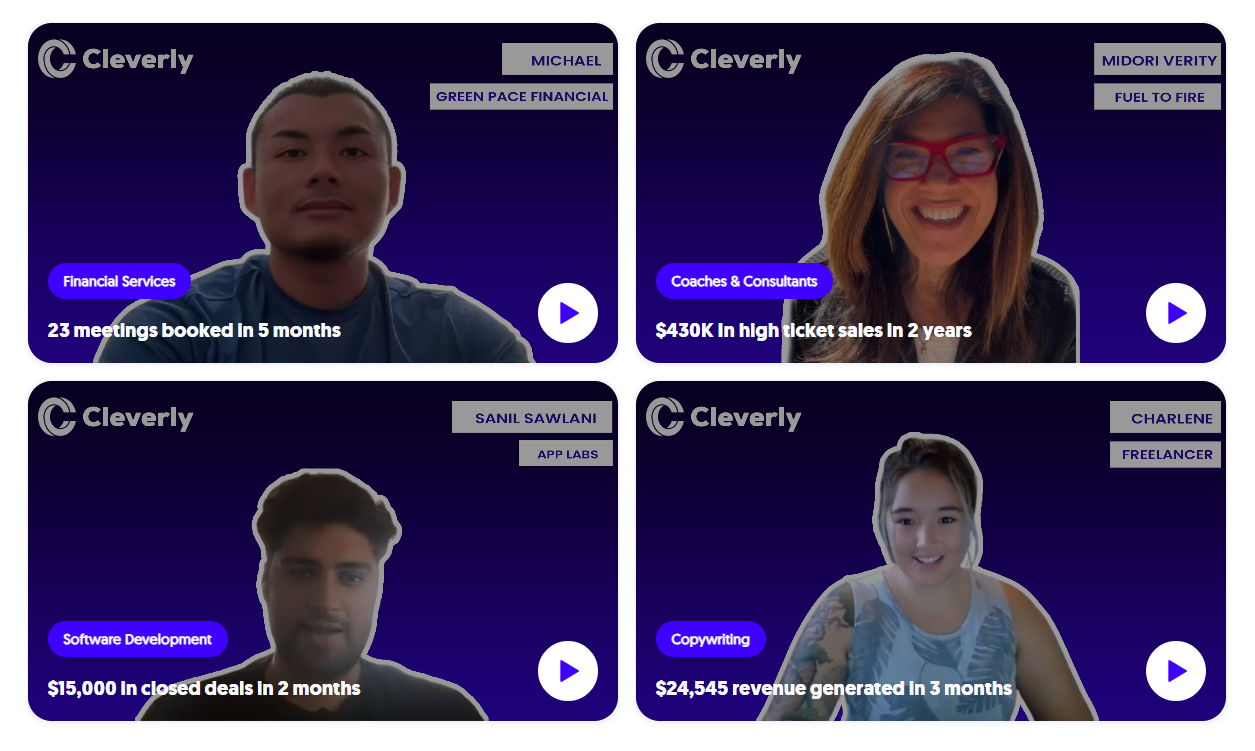
We've worked with 10,000+ clients and generated $312M in pipeline across LinkedIn outreach alone. Our clients include teams at Amazon, Google, Uber, PayPal, Slack, and Spotify.
Our multi-channel cadence system includes:
- LinkedIn outreach starting at $397/month
- Cold email lead gen where you only pay for meeting-ready leads we send you
- Cold calling through our $5M system that books 10 to 30 qualified sales calls every month, guaranteed. No-accent appointment setter placed, breakthrough call scripts written, data and power dialer included, at half the cost of hiring in-house.
The focus is always on qualified meetings, not vanity activity metrics like emails sent or calls dialed.
Want a sales cadence built and run for you — without hiring an in-house SDR team? Book a strategy call with Cleverly.
Conclusion
A sales cadence should make outreach more disciplined, not merely more automated.
Start with one audience and one objective. Choose channels that fit how those prospects communicate, give every touch a distinct purpose, and define the conditions that pause or end the sequence. Then measure what happens beyond the send: positive replies, held meetings, qualified opportunities, pipeline, and cost.
Software and AI can reduce repetitive work, enforce timing, and surface useful patterns. They cannot replace accurate targeting, relevant messaging, or seller judgment.
The best cadence is not the one with the most touches. It is the one your team can execute consistently, diagnose clearly, and improve from real outcomes.
Frequently Asked Questions
Free Resource
How to Scale a Profitable Cold Call System
Get the complete guide — download it instantly now.
Free Ebook
Download the Free Guide
Enter your details to get instant access.
You're all set! 🎉
Your ebook is downloading now.
Click below if the download didn't start automatically.