

Table of Contents
What Is Pay-Per-Appointment Lead Generation?
How Pay-Per-Appointment Lead Generation Works Step by Step
Pay-Per-Appointment Pricing Models Explained
The Real Benefits of Pay-Per-Appointment Lead Generation
The Risks of Pay-Per-Appointment Lead Generation (And How to Mitigate Them)
What Makes a "Qualified" Appointment — And Why It Matters
How to Evaluate Pay-Per-Appointment Lead Generation Companies
Is Pay-Per-Appointment Right for Your B2B Business?
How Cleverly's Appointment Setting Service Delivers 15–30 Extra Sales Calls Every Month
Conclusion
Frequently Asked Questions
Modified On :
July 13, 2026
Key Takeaways
- Pay-per-appointment lead generation means you pay a fixed fee only when a qualified decision-maker shows up on your calendar — not for outreach activity, clicks, or contact data.
- Three pricing models exist: pay-per-scheduled, pay-per-held, and hybrid retainer + PPA — each with different risk profiles and cost benchmarks.
- The most common source of program failure is a poorly defined qualification criteria — get this locked in writing before any outreach begins.
- PPA works best when your ACV is $10,000+ and your ICP is reachable through cold outreach; it breaks down when deal economics don't support the per-appointment cost.
- Provider incentives and quality control standards vary significantly — the questions you ask before signing matter as much as the pricing model itself.
Retainer-based outreach has a secret: you pay every month whether meetings show up on your calendar or not. Your provider sends sequences, logs activity, reports on open rates — and you absorb the cost of every campaign that didn't convert.
Pay-per-appointment lead generation flips that model entirely. You pay when a qualified decision-maker attends a meeting with your team. No meeting, no charge.
It's gaining real traction in 2026 for a concrete reason. LinkedIn CPL now averages $408, with many B2B companies paying $800 or more for a single contact form submission. Traditional demand gen has become expensive and inefficient, and sales teams are under growing pressure to protect AE time and produce pipeline that actually converts.
Two-thirds of B2B sales professionals are close to experiencing burnout — a significant chunk of that comes from chasing leads that were never qualified to begin with.
This guide covers everything you need to evaluate the pay-per-appointment model: how it works, the different pricing structures, what qualifies as a valid appointment, the real risks, and how to select a provider before committing.
If you're a founder, sales leader, SDR manager, or revenue team trying to decide whether PPA is the right model for your pipeline strategy — this is the breakdown you need.
What Is Pay-Per-Appointment Lead Generation?
Pay-per-appointment lead generation is a model in which a company pays a provider a fixed fee for each confirmed, attended sales meeting booked with a decision-maker who meets pre-agreed qualification criteria.
The payment trigger is the meeting itself — not a contact form submission, not a content download, not a demographic match, and not an email reply. That distinction matters more than it sounds.
How It Compares to Other Models
Pay-per-lead hands you a spreadsheet. Retainer-based outreach hands you a report. Pay-per-appointment hands you a calendar invite.
In this context, "appointment" means a booked, confirmed, and attended meeting between a sales rep and a qualified prospect — typically a discovery call or intro meeting with someone who has the authority to evaluate your product or service.
The underlying mechanics: most PPA programs run on multi-channel outbound — cold calling, cold email, LinkedIn outreach, and targeted list building — operated by a specialized agency or SDR team on your behalf.
The provider builds the infrastructure, runs the outreach, qualifies the prospect, and books the meeting. You show up prepared to close.
🎯 Not All “Appointments” Are Created Equal
Anyone can book a meeting. The real challenge is booking buyers. We focus on qualified conversations—not vanity metrics.
How Pay-Per-Appointment Lead Generation Works Step by Step
Step 1 — Define ICP and Qualification Criteria
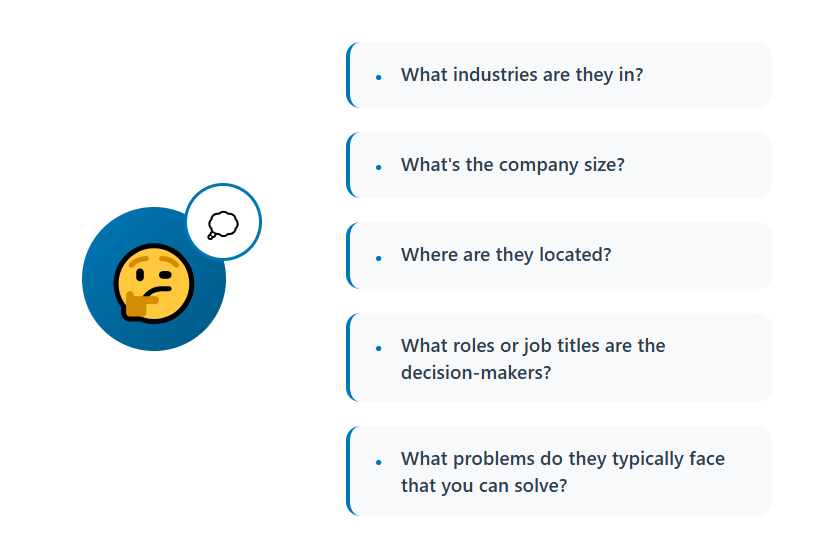
Before any outreach begins, you and the provider align on exactly who qualifies as a valid appointment. This includes industry, company size, geography, job title, seniority level, and any additional filters specific to your buyer profile.
This agreement is the foundation of the entire program. Vague ICP criteria upstream create disputes and low-quality meetings downstream.
Step 2 — List Building and Targeting
The provider builds a targeted prospect list matching your ICP using data sources like LinkedIn Sales Navigator, ZoomInfo, or Apollo. Teams that bring clean, verified contact lists see show rates jump 15–20 percentage points compared to relying entirely on vendor-sourced data.
Step 3 — Multi-Channel Outreach
The provider runs outbound sequences on your behalf — typically a combination of cold email, LinkedIn connection and messaging, and cold calling designed to generate replies and book meetings. Single-channel programs consistently underperform multi-channel ones in both volume and quality.

Step 4 — Qualification Screening
Before a meeting lands on your calendar, the provider verifies that the prospect meets the agreed qualification criteria. This is the step that separates high-quality PPA programs from low-quality booking services. A provider who skips pre-qualification to hit appointment volume is producing activity, not pipeline.
Step 5 — Meeting Confirmation and Handoff
The qualified appointment is booked directly into your calendar with meeting context, prospect background, and any relevant pre-call notes. Your AE shows up informed, not cold.
Step 6 — Payment Trigger
You pay the agreed per-appointment fee once the meeting is held — or once it's scheduled, depending on the pricing structure you've agreed to.
Step 7 — Feedback Loop
Strong providers request post-meeting feedback on appointment quality. This feedback refines targeting and qualification criteria over time. Programs that skip this step plateau. Programs that use it compound.
Pay-Per-Appointment Pricing Models Explained
There's no single pricing structure in this space. Understanding the differences before signing anything is non-negotiable.
Pay-Per-Scheduled (Most Common Entry Point)
You pay when a prospect agrees to a meeting time and it's placed on your calendar — regardless of whether they attend.
This is the lowest-cost entry point. Mainstream B2B ICPs typically see pay-per-meeting ranges of roughly $150–$600, with enterprise and hard-to-reach segments sometimes exceeding $900 per meeting. Pay-per-scheduled tends to sit at the lower end of that range.
The tradeoff: you absorb no-show risk. Prospects who agreed to a meeting may not attend, and you still pay for the booking.
Best for: High-volume ICP targeting where no-show rates are manageable and the cost per scheduled meeting still produces positive ROI.
Pay-Per-Held (Higher Quality, Higher Cost)
You pay only when the prospect actually attends the meeting. No-shows cost the provider, not you.
This model shifts the attendance risk entirely to the provider, which is why it costs more. For teams running high-ACV deals where every calendar slot is genuinely expensive, that premium is well worth it.
Best for: Sales teams where AE time is a real constraint and every meeting needs to be genuinely qualified before it shows up on the calendar.
Hybrid Retainer + Pay-Per-Appointment
Some providers charge a reduced monthly retainer to cover infrastructure — data, tools, team setup — plus a lower per-appointment fee for each meeting delivered.
The hybrid model, typically $2,000–$4,000 base plus $150–$400 per meeting, is the most practical structure for most B2B companies. It reduces per-meeting cost compared to pure PPA while still tying a portion of provider compensation to outcomes.
Best for: Companies running sustained outbound programs at volume where a pure PPA cost would become prohibitive at scale.
Pricing Benchmarks for B2B in 2026
Rule of thumb: if your ACV is $25,000+, pay-per-appointment economics produce a positive ROI even at the higher end of these ranges with a reasonable close rate.
🚀 Paying Per Meeting Sounds Great. Until They're Bad Meetings.
We prioritize quality, targeting, and fit—not just calendar volume. Because pipeline matters more than appointment counts.
The Real Benefits of Pay-Per-Appointment Lead Generation
Predictable Cost Per Pipeline Opportunity
You know exactly what each meeting costs before the program starts. That makes budgeting, ROI forecasting, and scaling decisions straightforward — no surprises at the end of the month because outreach volume was higher than expected.
Zero Spend on Unproductive Activity
Unlike retainer models, you never pay for open rates, sequence steps, or outreach volume that didn't produce a meeting. Every dollar spent is attached to a calendar outcome.
Sales Team Focus
AEs spend their time in qualified conversations, not chasing unresponsive leads. When the input quality is controlled upstream, meeting productivity across the entire sales team improves significantly.

Faster Pipeline Velocity
Meetings booked through pre-qualified outreach move through the funnel faster than inbound leads still in early research mode. The prospect already understands what the meeting is about and agreed to show up — that intent gap doesn't exist.
Lower Execution Overhead
The provider handles targeting, data sourcing, outreach infrastructure, copy, and qualification. Your team focuses on the meeting and what comes after. The average B2B company's typical monthly budget for outbound sales outreach runs around $19,265 — outsourcing PPA programs often delivers meaningfully lower cost per meeting than fully loaded in-house SDR models.
Accountability Alignment
Provider incentives are directly tied to client outcomes. If meetings aren't delivered, the provider doesn't get paid. That alignment is absent in every retainer-based model, and it changes how providers behave.
The Risks of Pay-Per-Appointment Lead Generation (And How to Mitigate Them)
PPA isn't a magic model. Understanding where it breaks down is as important as understanding where it works.
1️⃣ Volume-over-quality incentive. Providers paid per meeting have a structural incentive to book as many appointments as possible — which can produce meetings that technically meet criteria but have no real buying intent.
Mitigation: Define strict qualification requirements before launch and review meeting quality weekly with the provider.
2️⃣ Qualification definition disputes. Vague ICP criteria create disagreements about whether a delivered appointment counts toward billing.
Mitigation: Document exact qualifiers in the contract — job title, seniority, company size, geography, and must-ask pre-qualification questions. Verbal agreements create disputes.
3️⃣ No-show risk. On pay-per-scheduled models, prospects who agreed to a meeting may not attend. You still pay.
Mitigation: Use a pay-per-held model, or negotiate a no-show credit policy upfront.
4️⃣ Brand risk from aggressive outreach. Some agencies may flood pipelines with unqualified prospects to grow revenue, while clients face low conversion rates and wasted sales time. Poor outreach copy at high volume can damage your brand reputation with the same prospects you're trying to sell.
Mitigation: Review and approve all outreach copy before campaigns launch. Ask for sample messaging before signing anything.
5️⃣ Over-reliance on a single pipeline source. If a PPA agency is your only pipeline source, a pause or underperformance event creates a gap that's hard to fill quickly.
Mitigation: Treat PPA as a pipeline supplement, not a replacement for internal demand generation.
Key contract terms to negotiate before launch:
- Written qualification criteria with specific disqualifiers
- No-show or cancellation policy
- Ramp period expectations (first 30–60 days)
- Meeting replacement guarantee for disqualified appointments
- Data ownership of the prospect list at contract end
What Makes a "Qualified" Appointment — And Why It Matters
The most common source of disputes in pay-per-appointment programs is a misaligned definition of what constitutes a qualified appointment. Get this right before outreach begins — not after your third bad meeting.
Minimum Qualification Standards for a Valid B2B Appointment
- Job title and seniority: Matches the agreed ICP profile
- Firmographic fit: Company size and industry within agreed parameters
- Decision-making authority confirmed: Prospect can evaluate or influence the purchase
- Genuine interest or identified pain: Prospect understands what the meeting is about and agreed to discuss it
- Meeting attended or confirmed: Held (pay-per-held) or on calendar with 24-hour reminder (pay-per-scheduled)
What Disqualifies an Appointment
Wrong job title. Company outside the agreed ICP. Prospect was unclear on meeting purpose. Meeting booked under false pretenses. Prospect identified as a current customer or partner.
BANT-Lite Pre-Qualification
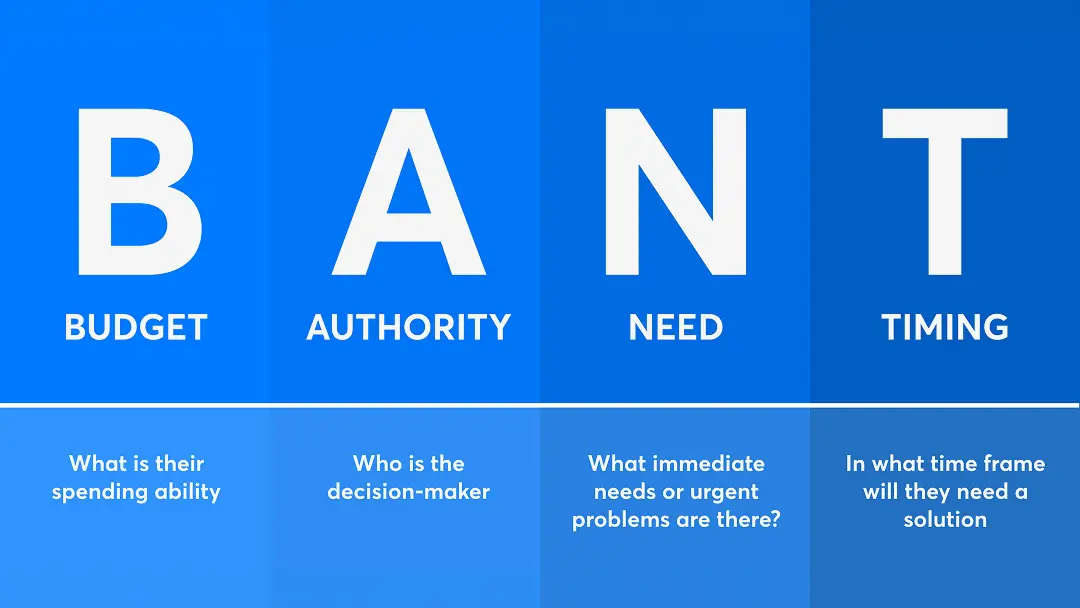
The best PPA programs pre-qualify on Budget awareness, Authority, Need, and Timeline before booking. This extra step significantly improves meeting-to-pipeline conversion rates and reduces the number of meetings your AEs walk out of frustrated.
The Feedback Loop That Compounds Quality
Sharing win/loss and meeting quality data with your provider after each appointment enables continuous ICP refinement. The best programs improve meaningfully over 60–90 days as the provider learns which prospect profiles actually convert — early data informs better targeting, better targeting produces better meetings.
How to Evaluate Pay-Per-Appointment Lead Generation Companies
Not all pay-per-appointment lead generation companies are equal. These are the questions that matter before you commit.
Questions to Ask Before Signing
What channels do you use to generate appointments?
Cold email only vs. multi-channel outreach is not a minor difference. Multi-channel programs consistently outperform single-channel for both appointment volume and quality. If a provider only runs cold email, understand that limitation before signing.
How do you pre-qualify prospects before booking?
Ask for their exact pre-qualification script or checklist. If they can't produce one, they don't have one.
What is your no-show rate on delivered appointments?
Anything above 20–25% is a red flag. Top programs run below 15%.
Can you share sample outreach sequences? Review the copy for quality, personalization, and brand safety before agreeing to anything. Generic copy at high volume is how brand damage happens.
What happens if a delivered appointment doesn't meet the agreed qualification criteria?
Look for a replacement guarantee or credit policy in writing.
Do you have experience in my specific vertical or ICP?
Providers with vertical experience ramp faster and deliver better-qualified meetings from day one.
Who owns the prospect data?
The contact list built during the engagement should belong to you at contract end. Confirm this explicitly.
🚩 Red Flags to Watch For
- No written qualification criteria in the contract.
- Per-appointment pricing below $100 — almost always indicates unverified, low-quality appointments.
- Unwillingness to share outreach copy for review before launch.
- No ramp period or performance expectations in the contract.
- No post-meeting feedback process.
- Guaranteed high volumes with no mention of qualification standards.
Is Pay-Per-Appointment Right for Your B2B Business?
PPA isn't the right model for every B2B company at every stage. These are the conditions where it makes strong economic sense — and where it doesn't.
When Pay-Per-Appointment Makes Strong Economic Sense
ACV of $10,000+ per deal. At this deal size, a single closed meeting pays for dozens of appointments and generates positive ROI even with conservative close rates.
A defined, reachable ICP. If your target buyers are accessible via cold outreach and have a clear job title profile, PPA programs can produce consistent volume. Niche ICPs with a small total addressable market hit a ceiling fast.
A sales team ready to convert meetings. PPA generates pipeline opportunity, not revenue. If your AEs can't close at a reasonable rate, the economics break down regardless of meeting quality.
You need immediate pipeline. PPA produces meetings faster than content-driven inbound. For teams with short-term pipeline gaps, it's one of the fastest ways to fill the calendar.
When Pay-Per-Appointment May Not Be the Best Fit
Very low ACV deals ($1,000–$5,000) where the cost per appointment exceeds the unit economics and even a strong close rate produces negative ROI.
Highly niche ICPs with a small total addressable market — where outreach volume is limited by the size of the list, not the effectiveness of the program.
Products requiring significant education before a meeting makes sense. Some complex enterprise products need meaningful awareness-building before cold outreach generates quality conversations.
Teams without a structured sales process ready to handle incoming meetings. Unworked appointments are wasted spend regardless of how good the pricing model is.
How Cleverly's Appointment Setting Service Delivers 15–30 Extra Sales Calls Every Month
Most appointment setting agencies run one channel and call it a system. Cleverly runs three.
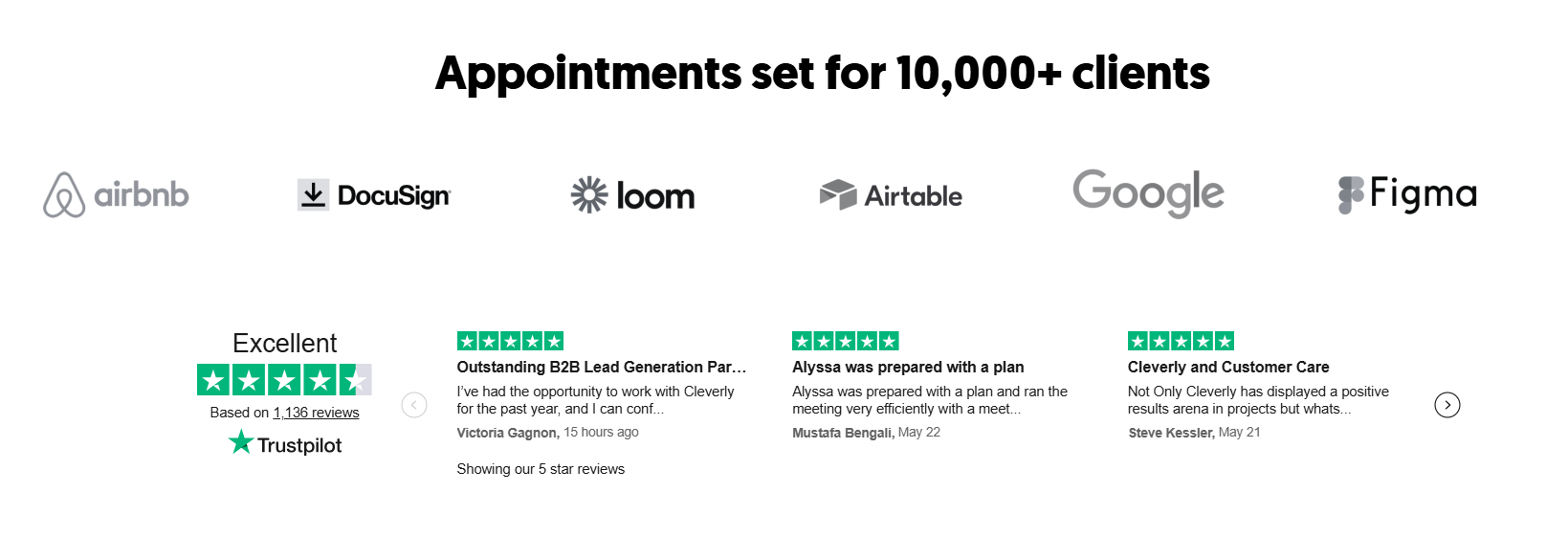
We're a B2B appointment setting agency rated #1 on Trustpilot with a 4.6/5 rating across 1,136+ reviews. What makes our approach different from a standard cold outreach agency is that we work all your leads — cold prospects and warm leads already sitting in your CRM — with hyper-personalized messaging across LinkedIn, cold email, and cold calling simultaneously.
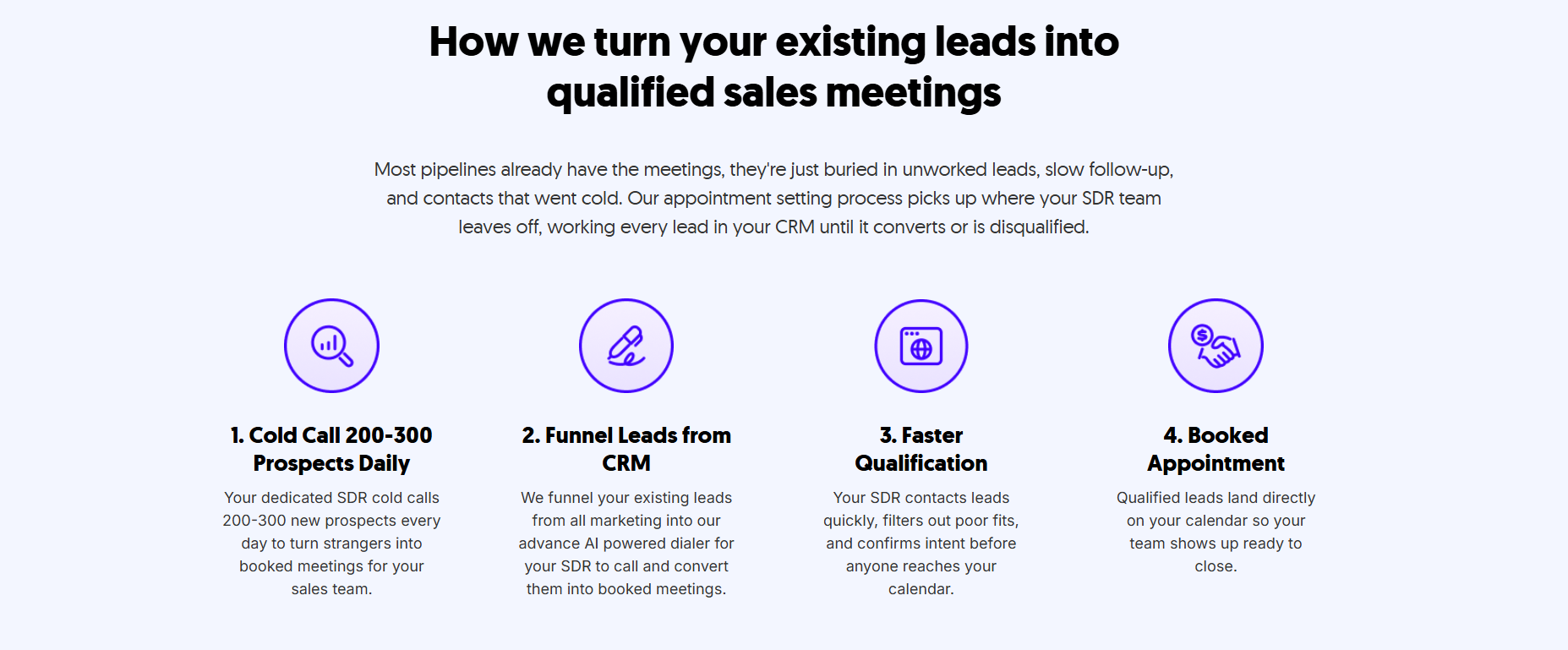
What we handle end-to-end: prospecting, dead list reactivation, lead qualification, and speed-to-lead execution — following up within minutes, handling objections, and nurturing leads across multiple touches until they commit. You don't need to manage the infrastructure, the data, or the outreach. We handle it.
Pricing is built for ROI. LinkedIn Appointment Setting starts at $697/month for 600 prospects per month with multi-channel campaigns and a dedicated account manager.
Cold Calling Appointment Setting is $2,997/month and includes 10–40 appointments per month, a dedicated SDR, parallel dialer, power dialer, call recordings, and a guaranteed free SDR replacement if targets aren't met.
At scale: we've generated 224.7K client leads, $51.2M in client revenue, and $312M in client pipeline across 10,000+ B2B clients in every major industry.
Want 15–30 extra qualified sales calls on your calendar every month? Book a free strategy call with Cleverly!
Conclusion
Pay-per-appointment lead generation is one of the most accountable models in B2B sales development. You pay for outcomes, not activity. Provider incentives align with yours. Every dollar spent is attached to a calendar result.
The model works best when qualification criteria are defined precisely before launch, your ICP has the unit economics to support it, and your sales team is ready to work the meetings that come in.
The risks — quality disputes, volume-over-fit incentives, no-shows — are all manageable with the right contract terms and a provider who invests in post-meeting feedback. Programs improve meaningfully over 60–90 days as targeting sharpens and prospect profiles refine.
If your ACV supports the economics and your ICP is reachable through outbound, PPA is one of the fastest ways to add qualified pipeline to your calendar in 2026.
Frequently Asked Questions
Free Resource
How to Scale a Profitable Cold Call System
Get the complete guide — download it instantly now.
Free Ebook
Download the Free Guide
Enter your details to get instant access.
You're all set! 🎉
Your ebook is downloading now.
Click below if the download didn't start automatically.


