Table of Contents
Why LinkedIn Works for Enterprise SaaS Lead Generation
What Makes Enterprise SaaS Lead Generation Different
The LinkedIn Outreach Framework SaaS Companies Use to Book Demos
LinkedIn vs Cold Email for Enterprise SaaS Demos
Metrics That Matter for LinkedIn SaaS Outreach
Common Reasons SaaS LinkedIn Outreach Fails
How Cleverly Helps SaaS Companies Book Enterprise Demos on LinkedIn
Conclusion
Frequently Asked Questions
Modified On :
September 21, 2026
Key Takeaways
- LinkedIn lead generation for SaaS works because enterprise buyers research and evaluate solutions on the platform, not through ads or search engines.
- Enterprise demos require account-based targeting and multi-threading across buying committees, not spray-and-pray volume outreach.
- Never pitch in connection requests or early messages. Build rapport first, uncover pain points, then introduce solutions naturally.
- Track qualified reply rates and demos booked per 100 conversations, not vanity metrics like profile views or total connections.
- LinkedIn strategies for B2B SaaS succeed through relevance, patience, and conversation quality. Trust converts, volume doesn't.
- Effective outreach takes 2-6 weeks and 5-8 touchpoints before enterprise buyers are ready to book demos.
LinkedIn lead generation for SaaS isn't just another marketing channel. It's become the primary battlefield where enterprise deals are won or lost.
Enterprise buyers aren't scrolling through Facebook ads or clicking on Google search results when evaluating six-figure software investments. They're on LinkedIn, researching solutions, vetting vendors, and building their shortlists.
That's where your outreach needs to happen.
But booking enterprise demos is a different game than landing SMB meetings. You're not pitching a single decision maker who can swipe a credit card. You're navigating buying committees with 6-11 stakeholders, longer sales cycles, and prospects who ignore 90% of the generic outreach flooding their inboxes daily.
The good news? When you get LinkedIn lead generation for SaaS right, you're reaching decision makers exactly where they're already spending time evaluating solutions like yours.
No interruption marketing. No hoping they'll stumble onto your website. Just direct access to the people who control enterprise budgets.
Let's break down exactly how top SaaS companies are using LinkedIn to fill their pipeline with qualified enterprise demos.
Why LinkedIn Works for Enterprise SaaS Lead Generation
LinkedIn lead generation delivers results that other channels simply can't match when you're targeting enterprise accounts. Here's what makes it the go-to platform for SaaS companies:
🤝 Direct access to decision makers. You're not guessing email addresses or hoping your message reaches the right person. LinkedIn puts you one connection away from VPs, Directors, and C-suite executives who actually approve software purchases.
🤝 Professional context matters. When enterprise buyers open LinkedIn, they're in work mode. They're researching solutions, evaluating vendors, and open to business conversations. Compare that to interrupting them on Facebook or hoping they click a Google ad.
Key advantages of LinkedIn lead generation for enterprise SaaS:
- Advanced targeting capabilities let you filter by company size, industry, job title, seniority level, and even technologies they're currently using.
- Social proof is built in through mutual connections, shared groups, and company pages that validate your credibility.
- Warm introductions scale when you leverage your network for referrals and introductions to target accounts.
- Intent signals are visible when prospects engage with your content, visit your profile, or interact with your company page.
The platform also levels the playing field. A scrappy SaaS startup can reach the same enterprise buyers as established competitors, without needing massive ad budgets or brand recognition. You just need the right message and strategy.
🔥 Enterprise Demos (From Just $397/mo)
Cleverly runs done-for-you LinkedIn outreach that targets decision-makers and books enterprise-ready demos - starting at just $397/month.
What Makes Enterprise SaaS Lead Generation Different
SaaS lead generation at the enterprise level requires a completely different playbook than SMB outreach.
Multiple decision makers slow everything down.
You're not pitching one person. You're navigating buying committees with 6-11 stakeholders. IT needs to approve security. Finance wants ROI projections. Department heads need buy-in from their teams. One "no" from any stakeholder can kill your deal.
Risk aversion kills speed.
Enterprise buyers aren't making quick decisions on new software. They're evaluating how your solution integrates with existing systems. They're worried about implementation timelines. They're thinking about what happens if your startup fails in two years. Every concern needs addressing before they'll book a demo.

Volume outreach destroys your credibility.
Blasting 500 connection requests per week works for SMB deals. It's a death sentence for enterprise SaaS lead generation. Send one lazy message to a VP and you've burned that account. Their entire buying committee will hear about the spam you sent.
What works instead:
- Precision targeting over volume. Research accounts before reaching out. Know their tech stack, recent initiatives, and pain points.
- Personalized messaging that shows you understand their business. Reference their industry challenges. Mention their recent company announcements.
- Multi-threading across stakeholders. You need relationships with multiple people in the buying committee, not just one champion.
- Patience with longer nurture cycles. Enterprise deals take 6-18 months. Your LinkedIn strategy needs to sustain engagement over time.
So, the bottom line? Enterprise SaaS lead generation rewards quality over quantity. Ten highly relevant conversations beat 100 spray-and-pray messages every time.
Learn More: How to Generate 30+ Leads On Linkedin Without Spamming People
The LinkedIn Outreach Framework SaaS Companies Use to Book Demos
Here's the exact LinkedIn lead generation for SaaS framework that consistently books enterprise demos without burning accounts or getting flagged as spam.
Step 1: Account-Based Prospecting (Not Spray-and-Pray)
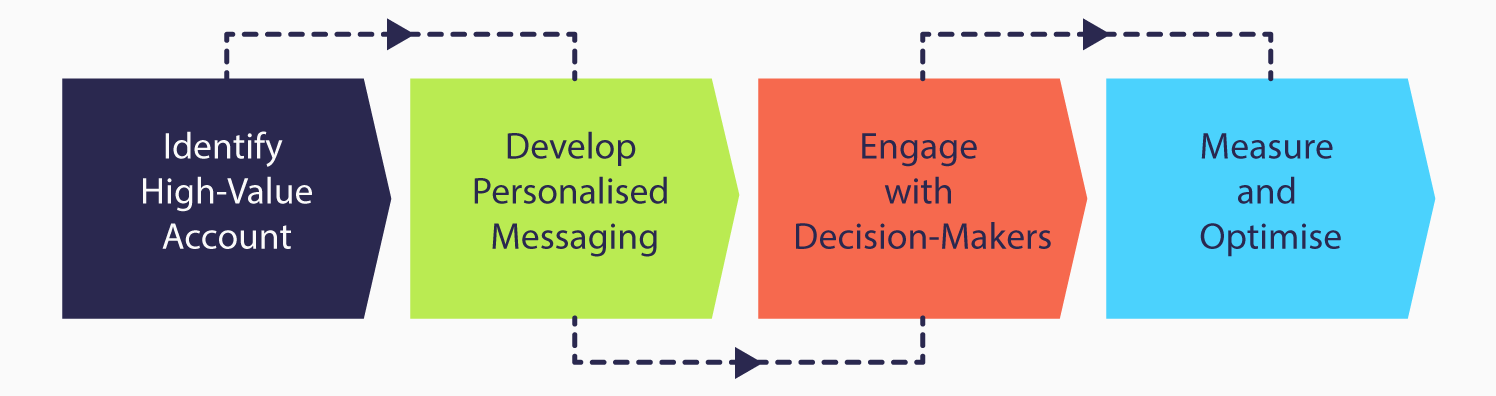
Forget building massive lead lists. LinkedIn lead generation for SaaS starts with a focused account list.
Build your ideal account list first. Start with 50-100 target companies that fit your ICP. Look for indicators like company size, recent funding, tech stack signals, or hiring patterns that suggest they need your solution.
Map multiple stakeholders per account. Enterprise deals need buy-in from several people. Identify 3-5 key decision makers at each target company:
- The economic buyer (VP or C-level who controls budget)
- Technical evaluators (IT, DevOps, Security)
- End users (managers who'll use your product daily)
- Champions (someone who feels the pain point acutely)
This targeted approach beats chasing 10,000 random prospects every time. Quality accounts convert. Random volume just wastes time.
Here’s More: How to Use LinkedIn for Account-Based Marketing
Step 2: Connection Requests That Don't Pitch
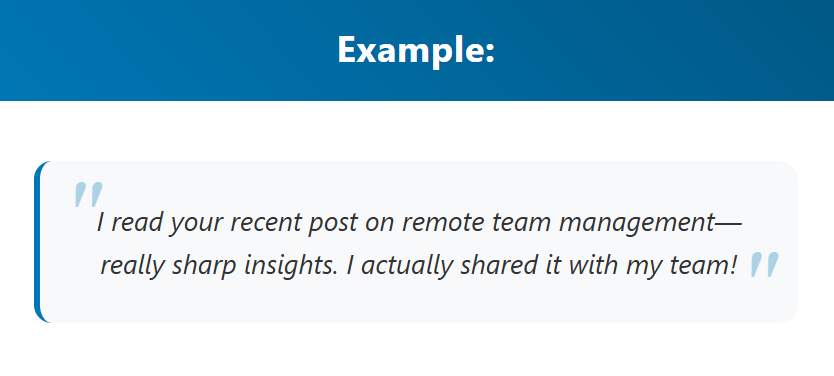
Pitching in your connection request tanks your acceptance rate. Nobody accepts connection requests from strangers trying to sell them something in the first LinkedIn message.
What works instead: Give prospects a reason to accept that has nothing to do with your product.
Personalization signals that actually matter:
- Mutual connections or groups. "I noticed we're both in the SaaS Growth Leaders group."
- Recent company news. "Saw your Series B announcement. Congrats on the Acme acquisition."
- Shared background. "Fellow Penn State alum here."
- Relevant content they posted. "Your post on API security challenges resonated."
Keep it short. Make it about them. Save the pitch for later. Your goal is just getting accepted so you can start a real conversation.
Step 3: Conversation-First Messaging
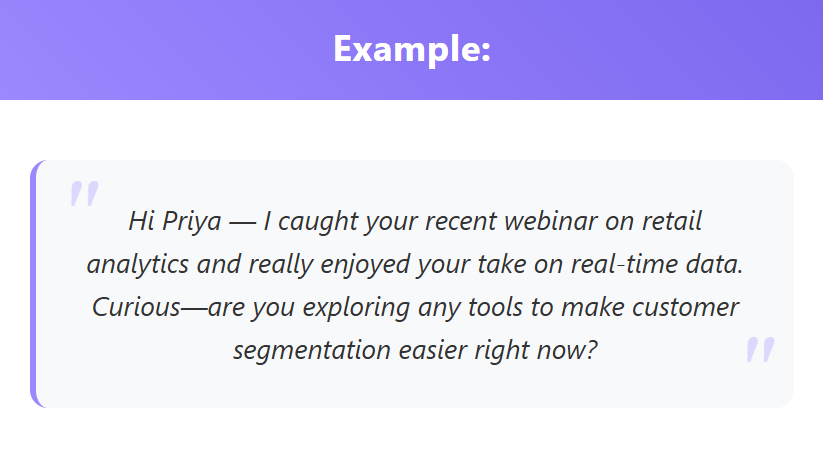
Once connected, don't immediately pitch your demo. LinkedIn lead generation for SaaS works when you start conversations, not sales pitches.
Lead with their problem, not your solution. Ask questions that uncover pain points:
- "How is your team currently handling [specific workflow your product solves]?"
- "What's been your biggest challenge with [pain point your solution addresses]?"
- "Are you dealing with [common problem in their industry]?"
Keep questions low-friction. Don't ask for 30 minutes of their time. Don't send a survey. Ask one specific question they can answer in 30 seconds.
The goal is increasing your LinkedIn engagement. Get them talking about their challenges. Once they share their pain points, you've earned the right to discuss solutions.
Step 4: Value-Based Follow-Ups
Most SaaS companies follow up by sending decks, case studies, or booking links. Wrong move.
Share insights instead of collateral. Send something valuable with zero ask attached:
- Industry benchmark data relevant to their role
- A tactical tip for solving the problem they mentioned
- A relevant article (not your own blog post)
- An introduction to someone in your network who can help them
Timing matters for follow-ups:
- Wait 3-5 days between messages (enterprise buyers are busy)
- Follow up after they engage with your content or visit your LinkedIn profile
- Reference previous conversations to maintain continuity
- Stop after 3-4 touches if they're not engaging
We've helped over 10,000 clients perfect this follow-up cadence. We've learned that patience and value delivery consistently outperform aggressive pitching when booking enterprise demos.
Step 5: Transitioning to Demo the Right Way
Don't ask for a demo. Ask if it makes sense to explore solutions together.
Wait for the right moment: Only suggest a demo after they've acknowledged the problem exists and expressed interest in fixing it. Watch for signals like:
- They ask questions about how other companies solve this
- They mention current solutions aren't working
- They engage multiple times with your messages
- They introduce other stakeholders into the conversation
Frame the demo as a problem-solving session, not a product tour: "Based on what you shared about [their specific challenge], it might make sense to walk through how companies like [similar company] are tackling this. Would a 20-minute conversation make sense?"
Notice the difference. You're not asking them to sit through your pitch. You're offering to help them solve their problem.
That's how LinkedIn lead generation for SaaS converts conversations into booked demos.
Read More: Best Practices for LinkedIn Lead Generation (Ultimate Guide)
🚀 Proven at Scale
Trusted by 10,000+ clients, Cleverly’s LinkedIn system has helped generate $312M in pipeline by turning connections into real enterprise meetings.
LinkedIn vs Cold Email for Enterprise SaaS Demos
Both channels work for enterprise LinkedIn lead generation, but they excel in different situations. Here's how they compare:
The reality for enterprise SaaS: You need both channels working together.
Use LinkedIn lead generation to start conversations with key stakeholders. Use email to follow up, share resources, and coordinate across buying committees. LinkedIn opens doors. Email keeps them open.
Many SaaS companies struggle to manage both effectively. That's where working with specialists makes sense. Our LinkedIn lead generation services start at just $397/mo and we handle the entire outreach process while you focus on closing demos.
The best results come from integrated cold email + LinkedIn lead gen strategies, not choosing one channel over the other.
More In-depth: LinkedIn Lead Generation vs Cold Email - Which is Better for B2B?
Metrics That Matter for LinkedIn SaaS Outreach
Most SaaS teams track the wrong metrics. They celebrate high connection rates while their pipeline stays empty.
Here's what actually matters when evaluating your SaaS LinkedIn outreach agency performance or in-house efforts.
Connection acceptance rate: 30-50% is healthy. Anything below 25% means your targeting is off or your requests are too salesy. Above 60% might mean you're playing it too safe with targeting.
Reply rate tells you nothing without context. A 20% reply rate sounds great until you realize most replies are "not interested" messages. What matters is qualified reply rate.
Qualified reply rate: 5-10% is realistic for enterprise outreach. This counts only replies where prospects acknowledge a problem, ask questions, or express genuine interest. One qualified conversation beats ten polite rejections.
Demos booked per 100 conversations: 8-15 is strong performance. This is your real conversion metric. How many actual meetings land on your calendar from engaged prospects?
Benchmarks for effective LinkedIn outreach:
- 100 connection requests → 35-45 acceptances
- 35-45 conversations started → 3-6 qualified replies
- 3-6 qualified replies → 1-2 demos booked
Vanity metrics that mislead SaaS teams:
- Total connections added. Growing your network means nothing if they're not target accounts.
- Profile views. Impressions don't pay the bills. Booked demos do.
- Messages sent. Volume without conversions is just noise.
- Content engagement. Likes are nice but don't confuse brand awareness with pipeline generation.
Track what ties to revenue: qualified conversations, demos booked, and pipeline created. Everything else is a distraction.
Many SaaS LinkedIn outreach agencies will report inflated metrics to make their work look better. We focus on what actually matters: qualified meetings that turn into pipeline.
If your current agency or in-house team can't clearly explain how LinkedIn activity connects to closed revenue, you're tracking the wrong things.
Explore Further: How SaaS Companies Generate Qualified Demos Using LinkedIn + Cold Email
Common Reasons SaaS LinkedIn Outreach Fails
Even experienced teams make mistakes that kill LinkedIn strategies for B2B SaaS. Here's what tanks most campaigns:
👎 Over-automation and robotic messaging.
Tools that auto-like, auto-comment, and send templated messages at scale get spotted instantly. Prospects can tell when you're using bots. Your acceptance rates crater and your account gets restricted.
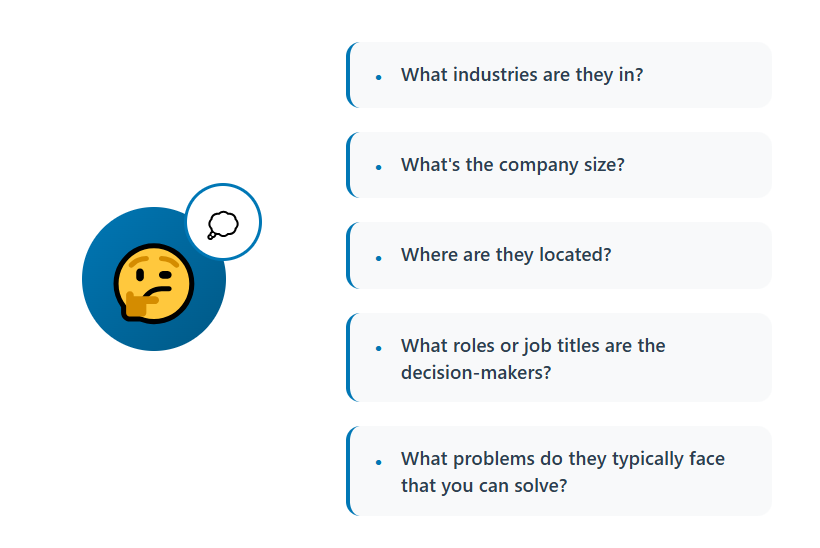
👎 Poor ICP definition ruins everything.
Targeting "marketing managers at tech companies" is too broad. You need specific firmographics, technographics, and buying signals. Vague targeting means irrelevant conversations that go nowhere.
👎 Asking for demos too early.
Most SaaS teams pitch in message two or three. Enterprise buyers need 5-8 touchpoints before they're ready to talk solutions. Rushing the ask kills deals before they start.
👎 Treating LinkedIn like email.
What works in cold email fails on LinkedIn. The platform rewards relationship building, not spray-and-pray volume.
Other fatal mistakes:
- Using Sales Navigator filters incorrectly and missing your actual buyers
- Ignoring your own LinkedIn presence (weak profile = low credibility)
- No follow-up sequence after initial conversation
- Measuring activity instead of pipeline impact
👍 Successful LinkedIn strategies for B2B SaaS focus on:
- Building rapport before pitching
- Engaging with prospect content genuinely
- Multi-threading across accounts strategically
- Maintaining consistent presence without being pushy
The difference between LinkedIn strategies for B2B SaaS that work and those that fail usually comes down to patience and personalization. Shortcuts don't scale at the enterprise level.
How Cleverly Helps SaaS Companies Book Enterprise Demos on LinkedIn
Most SaaS LinkedIn outreach agencies sell you software and leave you to figure it out. We're different. Cleverly is your execution partner, not another tool cluttering your tech stack.
What we do for SaaS companies:
- Done-for-you LinkedIn outreach built specifically for enterprise SaaS sales cycles. We handle targeting, messaging, follow-ups, and conversation management.
- Enterprise ICP targeting and account-based outreach. We map buying committees at your target accounts and engage multiple stakeholders strategically.
- Human-led conversations, not bots. Real people managing your outreach. No automation tools that get your account flagged or send robotic messages.
- Qualification before demo booking. We don't just flood your calendar. We qualify prospects on pain points, budget, and timing before passing them to your sales team.
- Clear reporting on what matters. Track conversations, qualified demos booked, and pipeline impact. No vanity metrics.
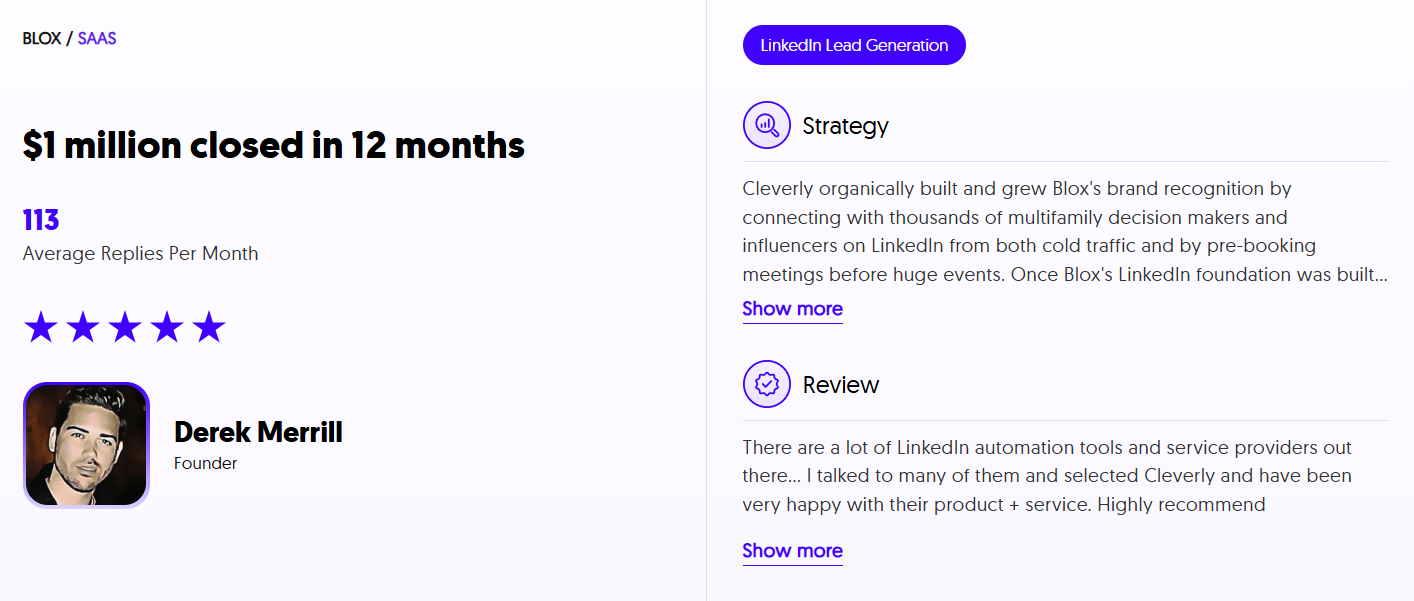
Our track record speaks for itself:
We've helped over 10,000 clients generate leads with companies like Amazon, Google, Uber, PayPal, Slack, and Spotify.
…That's resulted in $312 million in pipeline revenue and $51.2 million in closed revenue through LinkedIn lead generation for SaaS.
Pricing starts at just $397/mo. No long-term contracts. No setup fees. Just qualified enterprise demos landing on your calendar.

Ready to fill your pipeline with enterprise demos?
Book a strategy call with Cleverly and let's build your LinkedIn outreach engine.
🔥 Stop guessing. Start booking.
Conclusion
LinkedIn lead generation for SaaS isn't optional anymore. It's where enterprise buyers research solutions, vet vendors, and build their shortlists. If you're not having conversations on LinkedIn, your competitors are winning deals you never knew existed.
But success doesn't come from blasting connection requests or pitching demos in message two.
Enterprise LinkedIn lead generation for SaaS rewards three things: Relevance, Patience and Conversation Quality.
The final takeaway: Enterprise demos come from trust, not volume. Build relationships. Deliver value before asking for anything. Engage multiple stakeholders strategically. That's how SaaS companies fill their pipeline with qualified enterprise opportunities.
Your move. Start treating LinkedIn like the relationship-building channel it is, and watch your demo calendar fill up with buyers who actually fit your ICP.
Frequently Asked Questions
Free Resource
How to Scale a Profitable Cold Call System
Get the complete guide — download it instantly now.
Free Ebook
Download the Free Guide
Enter your details to get instant access.
You're all set! 🎉
Your ebook is downloading now.
Click below if the download didn't start automatically.