Table of Contents
What a "Too Broad" LinkedIn ICP Actually Looks Like
Why a Broad ICP Tanks LinkedIn Outreach Performance
How to Diagnose Whether Your ICP Is the Problem
How to Tighten Your LinkedIn ICP: Step-by-Step
How a Tighter ICP Changes Every Layer of Your LinkedIn Outreach
Common LinkedIn ICP Mistakes to Avoid
How Cleverly Builds Precision LinkedIn ICPs That Actually Book Meetings
Conclusion
Frequently Asked Questions
Modified On :
June 22, 2026
Key Takeaways
- A low linkedin outreach low reply rate is almost always a targeting problem, not a copy problem — fix the ICP first before touching the message.
- Broad ICP definitions like "VP of Sales at B2B SaaS" describe thousands of people with completely different pain points, budgets, and buying timelines.
- The fastest diagnostic: look at your last 20 positive replies and compare the actual profile pattern to your stated ICP — the gap is your problem.
- Refining your ideal customer profile LinkedIn setup into 3–5 focused segments consistently moves reply rates by 2–5 percentage points.
- Intent signals — funding rounds, job changes, headcount growth — turn a static ICP into a live buying window you can target in real time.
Your LinkedIn reply rate isn't moving. You've rewritten the connection note. You've tested three different message sequences. You've shortened the copy, lengthened it, added social proof, removed it. Nothing works.
Here's the uncomfortable truth: LinkedIn outreach low reply rate is almost never a copywriting problem in the first place. Research from LinkedIn consistently shows that relevance drives responses. And relevance comes from who you're targeting, not what you're saying.
The most common pattern we see: connection requests getting accepted at a reasonable rate, but follow-up messages going completely ignored. Or reply volume that stays flat no matter how many times the sequence gets overhauled.
In both cases, the root cause is the same — an ICP defined broadly enough to build a large list but not precisely enough to make the message feel like it was written for the person reading it.
"VP of Sales at B2B companies with 50–500 employees" is not an ICP. It's a category. There are tens of thousands of people who fit that description, and they have wildly different problems, priorities, and buying timelines. A message that tries to speak to all of them speaks to none of them.
This guide is for founders, sales leaders, and outreach managers whose LinkedIn campaigns have plateaued — decent connection rates, low reply rates, or reply volume without meeting quality.
We'll cover how to recognize when your LinkedIn targeting too broad problem is the actual issue, how it's affecting every metric downstream, and the exact framework to fix it before another month of outreach goes to the wrong people.
What a "Too Broad" LinkedIn ICP Actually Looks Like
A broad ICP passes the obvious filters. Industry, company size, job title — check, check, check. But it doesn't capture the specific conditions that make a prospect actually ready to buy from you right now.
Here are some common ICP definitions that look reasonable on the surface:
- "Sales leaders at SaaS companies"
- "Marketing managers at mid-market B2B"
- "Founders at tech startups"
Every one of those describes thousands of people with completely different situations. A sales leader at a 40-person Series A SaaS company and a sales leader at a 450-person growth-stage company are not the same buyer.
They have different budgets, different approval processes, different pain points, and different tolerance for outbound messages.
The fastest test for whether your ICP is too broad: if your ICP definition would apply equally well to a company that's your absolute best-fit customer and a company that would never buy from you, it's too broad.
What's missing from most broad ICP definitions:
- Buying triggers — what conditions signal this prospect needs your solution right now, not eventually
- Role specificity — exact seniority and ownership scope, not just a general title
- Firmographic precision — the specific headcount band, revenue stage, or growth signal that actually correlates with conversion
- Negative filters — who looks like a fit on paper but consistently doesn't close
That last one is underrated. The prospects who look right but never buy are just as important to identify as the ones who do.
The downstream effect of a broad ICP is almost mechanical: if you don't know specifically who you're writing for, you can't write a specific message. And generic messages get ignored — not because they're badly written, but because they don't feel relevant to the person reading them in their inbox on a Tuesday afternoon.
🎯 Smaller Audiences. Bigger Pipeline.
We narrow your ICP, identify high-intent buyers, and build LinkedIn campaigns that convert.
Why a Broad ICP Tanks LinkedIn Outreach Performance
The performance impact of LinkedIn targeting being too broad isn't abstract. It shows up directly in your numbers, and it compounds over time.
Targeting a broad ICP versus a refined one typically produces 2–3 percentage point lower reply rates. That sounds small until you do the math. If you're running a campaign at 600 messages a month, a 3-point difference is 18 fewer positive replies per month — every month.
That's roughly 4–6 fewer meetings, depending on your conversion from reply to call. At a $50K average deal size, that gap compounds into significant pipeline loss over a quarter.
Beyond the raw numbers, here's what actually happens at each stage:
The relevance problem. When a message lands in front of someone who technically fits your ICP filters but doesn't have the specific pain you're addressing, it reads like noise. LinkedIn's inbox is already full of noise. A message that doesn't immediately connect to something real in that person's world gets scrolled past.
The copy problem. Broad targeting forces generic copy. There's no specific trigger or context to write from, so the message defaults to describing what you do rather than addressing what the prospect is experiencing. Generic copy gets ignored even when it's well-written.
The qualification problem. A broad ICP means your team books meetings with people who fit the surface-level criteria — title, industry, company size — but don't have budget authority, the right problem, or any real buying intent. AE time gets burned on calls that were never going to advance. That's a conversion problem that starts at targeting, not at the close.
The compounding problem. Every irrelevant connection request and ignored message adds up to lower engagement on your profile over time. LinkedIn factors engagement signals into reach and acceptance rates — a pattern of low relevance gradually makes your future campaigns harder to run.
How to Diagnose Whether Your ICP Is the Problem
Before you rebuild anything, you need to confirm the ICP is actually the issue. Here are the four signals that tell you it is.
Diagnostic signal 1 — High acceptance, low reply rate.
People are accepting your connection request but not responding to follow-up messages. The profile and note are doing their job — the message isn't landing because it's not relevant enough to the specific person receiving it. This is a targeting precision problem, not a copy problem.
Diagnostic signal 2 — Replies but low positive reply rate.
You're getting responses, but most of them are "not interested," "not the right fit," or "we already have something." The audience isn't completely wrong, but it's not precise enough to isolate the people with active need. You're catching the category but missing the buying window.

Diagnostic signal 3 — Meetings booked but poor conversion to pipeline.
The ICP is close enough to book meetings but not precise enough to book meetings that advance. AEs are spending time with prospects who were never going to buy. This is the most expensive version of the problem — you're getting volume that looks like traction but isn't converting to anything.
Diagnostic signal 4 — Copy keeps getting rewritten with no improvement.
If three or four rounds of new messaging haven't moved the reply rate, the message isn't the variable. The audience is. This is the clearest signal that you need to fix the targeting before you touch the copy again.
✅ The practical check
Pull your last 20 positive replies — genuine interest, not just questions or brushoffs. What specific titles, company stages, and situations did those prospects share? That pattern is your real ICP. Compare it to your stated ICP and identify the gap between who you're targeting and who is actually responding.
📈 Turn Better Targeting Into 15–30 More Meetings Per Month
Cleverly's done-for-you LinkedIn lead generation service handles prospect research, outreach, follow-up, and optimization—so your team spends less time guessing and more time closing.
How to Tighten Your LinkedIn ICP: Step-by-Step
This framework is diagnostic-first. You start with data from what's already worked, then build the refined ICP from the pattern — not from a theoretical description of who you think your ideal customer should be. The goal is to close the gap between your stated ICP and the ICP that actually converts.
Step 1 — Audit Your Closed-Won Data
Your best customers are already telling you exactly who your B2B ICP LinkedIn audience should be. The goal here is to extract that pattern from accounts that actually closed, not build a new one from assumptions.
Pull your last 20–30 closed-won deals and capture:
- The title of the champion (who drove the deal internally)
- The title of the economic buyer (who signed off)
- Company headcount at time of close
- Industry and specific sub-vertical
- Funding stage or revenue stage
- What triggered the initial conversation
Then look for patterns that aren't in your current ICP definition. Was there a specific headcount band that closed more often than others? A particular industry that moved faster? A title or seniority level that consistently ended up as the champion even if it wasn't who you initially targeted?
Your closed-won data is almost always narrower and more specific than your current stated ICP. That gap is where the targeting opportunity lives. Build your refined ICP from this analysis, not from a fresh brainstorm.
Step 2 — Define Firmographic and Role Filters With Precision
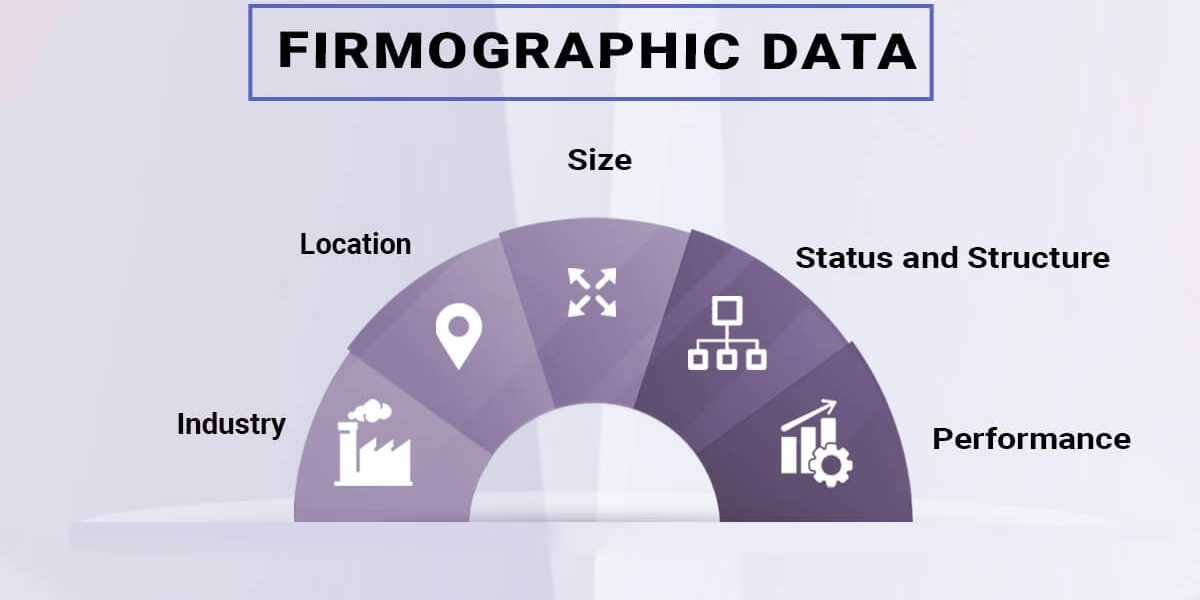
Once you have the closed-won pattern, translate it into precise filter criteria. This is where most refined LinkedIn audience work either gets specific or stays vague.
Company size: don't use wide ranges. "50–5,000 employees" is not targeting — it's a market description. Define the band where your best-fit customers actually cluster. "150–500 employees in Series B–C stage" is a targeting filter. "SMB to mid-market" is not.
Industry: be specific about which sub-verticals within a broader industry convert best. "Technology" is not an industry for ICP purposes. "B2B SaaS companies with a sales-led go-to-market motion and a dedicated outbound team" is an industry definition that generates actual signal.
Title and seniority: define the exact titles that have both the pain and the authority to act on it. A "VP of Sales" at a 200-person company and a "VP of Sales" at a 2,000-person company are dealing with completely different problems and have completely different procurement processes. Note the distinction explicitly in your ICP.
Geography: if deal characteristics vary meaningfully by region — US enterprise vs. EMEA mid-market, or specific metro markets — segment by geography. Context and messaging differ enough to warrant separate targeting.
Revenue stage proxy: for companies that aren't publicly listed, use headcount growth rate, funding stage, or specific tool usage signals as proxies for revenue stage. These are more actionable than revenue estimates pulled from data tools.
Step 3 — Layer in Behavioral and Intent Signals
Static filters tell you who could buy. Intent signals tell you who is actively in a buying window right now. Layering both is what separates LinkedIn outreach optimization that performs from targeting that just checks demographic boxes.
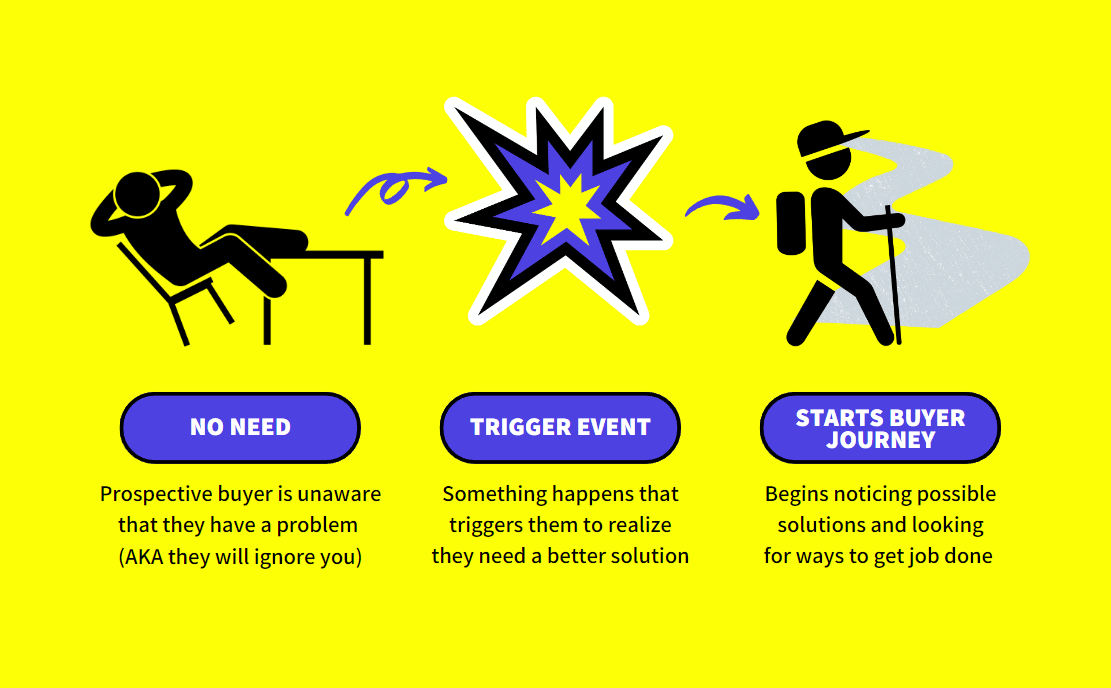
Buying triggers worth prioritizing:
- Recent funding round — growth capital typically precedes investment in outbound infrastructure
- Rapid headcount growth in sales or marketing — signals pipeline pressure and likely openness to tools or services that support growth
- New hire in a relevant leadership role — a new VP of Sales is actively evaluating the stack
- Recent job change by the decision-maker — new leaders assess vendors in their first 90 days at a much higher rate than established ones
LinkedIn Sales Navigator's Spotlights and alert filters surface job changes, company growth events, and recent activity. Use these to create a prioritized layer within your ICP — prospects who match the profile AND are showing a signal get messaged first.
The impact of this is significant. Messaging a prospect who just stepped into a new VP role with a relevant, timely offer is a fundamentally different interaction than messaging someone who has been in the role for three years and is comfortable with their current setup. The ICP profile may be identical. The reply rate won't be.
Step 4 — Build Negative Filters (Who to Explicitly Exclude)
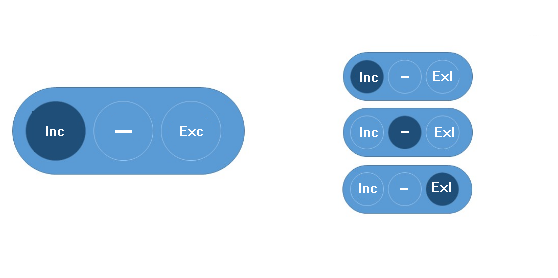
Negative filters are underused and undervalued. They remove prospects who look like a fit on paper but never buy — and every prospect removed from the list who would have ignored your message is a slot available for someone who might actually reply.
Common negative filters worth adding:
- Companies already locked into a direct competitor (where switching cost is high).
- Company sizes outside your actual deal sweet spot, even if they technically fit the industry filter.
- Industries where you've consistently lost deals even when the title and size matched.
- Prospects in roles without real budget authority or decision-making scope.
To identify your negative filters, run the same closed-won analysis in reverse on your closed-lost data. What patterns appear in the deals that went nowhere? The accounts that passed every filter but never advanced? Those patterns are your exclusion criteria.
Add these directly into your Sales Navigator search as excluded filters. This step alone typically produces a meaningful improvement in list quality before you've written a single new message.
Step 5 — Segment Into 3–5 Focused Targeting Buckets
A single monolithic ICP list treated as one audience forces you into one generic message. Segmenting into 3–5 focused buckets lets each group receive a copy written specifically for their situation — their title, their stage, their trigger.
Practical ways to segment:
- By company stage — seed vs. Series B vs. growth-stage, each with distinct pain points and budget realities
- By title level — VP vs. Director vs. Head of, each with different decision-making authority and priorities
- By industry sub-vertical — even within a narrow industry, sub-verticals often have distinct enough pain points to warrant separate messaging
- By buying trigger — recent hire vs. recent funding vs. tool signal, each justifying a different conversation opener
What each segment gets: a unique connection request note and a message sequence written around the specific pain and context of that segment. Not a personalization variable swapped into a shared template — a fundamentally different message written for a different situation.
Research consistently supports 3–7 segments as the practical sweet spot. Enough segments to personalize meaningfully, not so many that the build slows down or the data gets too thin to optimize against.
⭐ Prioritization rule: run the segments that most closely match your closed-won pattern first. Validate performance before expanding to adjacent or adjacent-ish segments. Don't spread budget evenly across segments before you know which ones convert.
Step 6 — Validate With Sales Navigator Before Full Build
Before the full list gets built and the campaign launches, validate your refined ideal customer profile LinkedIn filters in Sales Navigator against actual results.
How to validate: run your filter set and manually review a sample of 50–100 results. Spot-check titles, company sizes, seniority levels, and company descriptions. Do these look like the prospects who showed up in your closed-won analysis? If you're seeing profiles that feel off — wrong stage, wrong role scope, wrong industry fit — the filters need adjustment.
Volume check: if your refined ICP produces fewer than 500 total addressable prospects across all segments, it may be too narrow for a sustained campaign. Either loosen one filter, expand the geography, or plan to work through the segment quickly and refresh to a new one rather than running the same list twice.
Sales team review: the AEs and closers booking meetings from these campaigns often have the most precise intuition about which prospect profiles actually advance to pipeline. Get their sign-off on the refined ICP before the campaign launches. Their feedback often surfaces negative filters that don't show up in CRM data.
The output of this step: a validated, Sales Navigator-ready filter set that produces a list you're confident enough in to write specific, high-relevance copy for each segment. That confidence is what makes the copy good.
How a Tighter ICP Changes Every Layer of Your LinkedIn Outreach
The changes that come from a refined ICP aren't isolated to the list. They flow through every layer of the campaign.
📢 Copy. When you know exactly who you're writing for — their specific title, their company stage, their buying trigger — the message practically writes itself. You're not describing what you do and hoping it resonates. You're addressing a real situation the prospect is actually in, which is a completely different starting point.
📢 Connection request acceptance. A profile and note that speaks directly to a specific type of person — their role, their challenge, their context — gets accepted at a higher rate than a generic request. Relevance signals that the sender actually knows something about the prospect's world, which is the fastest way to earn a click on "Accept."
📢 Reply rate. This is the most measurable impact of LinkedIn outreach optimization built on a refined ICP. Campaigns targeting a tighter ICP consistently produce 2–5 percentage point higher reply rates than the same campaign run against a broad list. At campaign scale, that difference compounds into a meaningfully different number of conversations per month.
📢 Meeting quality. AEs who meet exclusively with prospects that match the closed-won ICP profile close at a higher rate. Fewer wasted calls. More pipeline that advances past the first meeting. Better conversion from conversation to opportunity.
📢 Optimization speed. A tighter ICP makes your performance data cleaner. When all prospects share the same profile, you can test copy and sequence variations knowing the variable is the message — not a mixed audience responding to different things for different reasons. That means faster learning cycles and faster improvement.
Common LinkedIn ICP Mistakes to Avoid
❌ Defining the ICP once and never updating it. Your ICP should evolve with your closed-won data. What converted six months ago may not be the highest-converting profile today. Revisit and update your ICP filters every quarter — especially if your product, pricing, or positioning has changed.
❌ Confusing your total addressable market with a precise ICP. "We can sell to any B2B company in tech" is a market description. Starting narrower than feels comfortable and expanding only after the core segment is converting is how you build a campaign that actually works.
❌ Targeting by title without accounting for company stage. A "Head of Sales" at a 30-person startup and a "Head of Sales" at a 400-person company have completely different problems, completely different budgets, and completely different decision-making processes. Treat them as separate ICPs with separate messaging — not as the same person at different company sizes.
❌ Skipping the closed-won audit. Building a refined ICP from theory instead of from data that already exists in your CRM produces a more polished version of the same broad definition. The closed-won audit is the step that actually makes the ICP specific — don't skip it because it takes an extra hour.
❌ Not sharing the ICP with the person writing the copy. If the copywriter doesn't know the ICP has been refined to Series B SaaS companies with a new VP of Sales, they'll write for the broad definition. And the entire advantage of the refined ICP disappears in the first draft of the message sequence.
How Cleverly Builds Precision LinkedIn ICPs That Actually Book Meetings
A LinkedIn lead generation campaign is only as good as the targeting it's built on. That's the first thing we've learned from running outreach for 10,000+ B2B clients across every industry.
At Cleverly, every campaign starts with an ICP deep-dive before a single message gets written. Not a brief filled in independently and handed over — a collaborative strategy session that surfaces the specific titles, firmographics, buying triggers, and exclusion criteria that define the highest-converting audience for your specific offer.
We run the closed-won analysis, identify the negative filters, define the segments, build the Sales Navigator filters, and review a sample list before anything goes live.
What this produces is a campaign built on lists where every prospect matches a profile that's been validated against real conversion data. Because we build the ICP and write the copy together, the message is written specifically for the validated segments — each sequence references the real pain, context, and trigger of the exact audience receiving it, not a generic version of what that audience might care about.
The results are measurable: $312M in pipeline generated, 224.7K client leads, and a 4.6/5 Trustpilot rating across 1,136+ reviews — with clients including eBay, Airbnb, DocuSign, Loom, and Airtable.
LinkedIn lead generation starts at $397/month with a dedicated account manager and full campaign management.
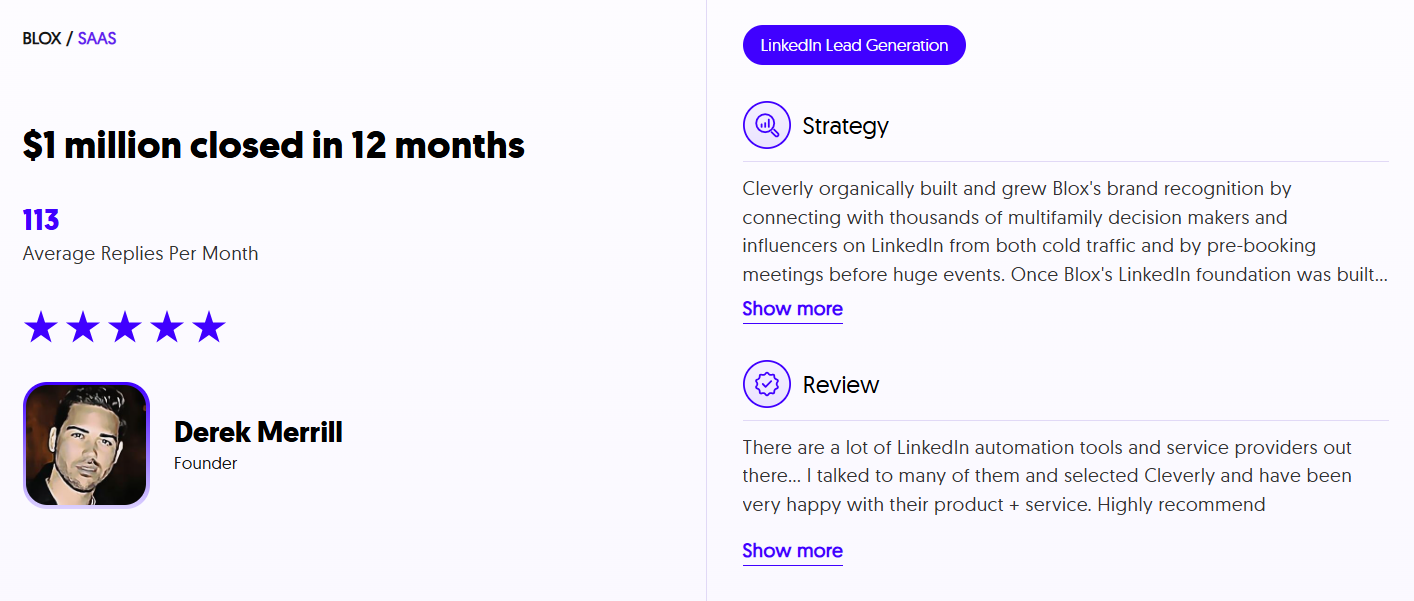
If your LinkedIn outreach low reply rate isn't moving, the ICP is the first place to look — not the copy. Book a strategy call with Cleverly and we'll audit your targeting before we touch a single message.
Conclusion
A broad ICP isn't a minor inefficiency in your LinkedIn campaign. It's the root cause of generic copy, ignored connection requests, low reply rates, and meetings that don't advance to pipeline.
Everything downstream of the targeting — the message, the sequence, the meeting quality — gets worse when the ICP is imprecise.
Tightening the ICP always has more impact than rewriting the message. Run the closed-won audit. Build the refined segments. Layer in intent signals. Add the negative filters. Validate in Sales Navigator before the full build. Then measure the reply rate difference after the first campaign cycle — it will be visible, and it will compound from there.
Frequently Asked Questions
Free Resource
How to Scale a Profitable Cold Call System
Get the complete guide — download it instantly now.
Free Ebook
Download the Free Guide
Enter your details to get instant access.
You're all set! 🎉
Your ebook is downloading now.
Click below if the download didn't start automatically.