Table of Contents
Why LinkedIn Authority Directly Impacts Outreach Acceptance Rate
What LinkedIn Authority Actually Means for B2B Lead Generation
How to Build LinkedIn Authority That 5x's Your Outreach Acceptance
LinkedIn Authority Building Mistakes That Kill Acceptance Rate
How LinkedIn Authority Building Fits Into a Full Lead Generation System
How Cleverly Combines Profile Authority With Done-For-You LinkedIn Lead Generation
Conclusion
Frequently Asked Questions
Modified On :
June 24, 2026
Key Takeaways
- LinkedIn authority building directly impacts outreach acceptance rates — the same message can perform 3x better or worse depending entirely on who appears to be sending it.
- Your profile is evaluated in 10–15 seconds before a prospect decides to accept or ignore your request — every element either builds or destroys credibility in that window.
- A layered system works best: profile optimization first, content strategy second, pre-connection engagement third — each layer compounds the one before it.
- Posting 2–3 times per week with a clear perspective on your ICP's problems builds more authority than daily content with no point of view.
- Combining a strong LinkedIn presence with a structured outreach sequence is what converts authority into pipeline — one without the other leaves results on the table.
Your LinkedIn outreach copy isn't the problem. Your profile is.
That's the uncomfortable truth most B2B teams skip over when they're debugging a low acceptance rate. They tweak the connection request message, test different subject lines, increase send volume — and nothing moves.
Meanwhile, the real issue is that prospects are clicking on the profile behind the request, seeing something that doesn't inspire confidence, and ignoring it.
The data backs this up. Personalized connection requests sent from profiles with strong credibility signals achieve acceptance rates around 45%. Generic outreach from an incomplete or inactive-looking profile sits closer to 15%. Same message. Completely different results depending on the sender profile behind it.
LinkedIn authority building isn't a vanity exercise — it's the credibility infrastructure your outreach runs on. A strong personal presence raises acceptance rates, improves reply quality, generates inbound interest from your ICP, and turns your profile into an asset that works even on days you're not actively sending.
This guide covers a practical, layered framework for building authority on LinkedIn for B2B lead generation — built for founders, sales leaders, and B2B professionals whose acceptance rates are stuck below 25%, or anyone who wants to compound their outreach results with a stronger personal brand.
Why LinkedIn Authority Directly Impacts Outreach Acceptance Rate
When a prospect receives your connection request, the first thing they do isn't read the note. They click your name and spend about 10 seconds scanning your profile. What they see in those 10 seconds determines whether your request gets accepted or ignored.
That profile scan is a credibility check. They're asking: do I recognize this person? Do they seem legitimate? Is there a reason to let them into my network? Authority signals in your profile are what answer those questions before you ever get a chance to make your case.
Building authority on LinkedIn for B2B lead generation also works at the algorithm level. LinkedIn rewards accounts with consistent content activity and high engagement with broader organic reach and higher platform trust signals. Active profiles get surfaced more, seen by more of your ICP, and carry more implicit credibility when their outreach lands in someone's inbox.
The gap between a 15% and 45% acceptance rate comes down to three things: profile credibility, pre-connection engagement history, and personalization quality. Not volume. Not automation. Not send timing. The profile is doing most of the work before you send a single message.
One more thing worth knowing: personal profiles generate 8x more engagement than company pages on LinkedIn, and users are 3x more likely to trust content from an individual than from a brand. LinkedIn authority lives at the personal profile level. A strong company page doesn't move your acceptance rate. A strong personal presence does.
The compounding effect here is real. A LinkedIn presence with genuine authority generates unsolicited connection requests and inbound DMs from your ICP alongside your active outbound campaigns. You're not just making outreach easier — you're creating a second pipeline that runs on its own.
📧 Outsource Email Marketing and Generate 15–30 More Sales Opportunities Per Month
From cold email outreach and deliverability management to campaign optimization and appointment setting, our team handles the execution while you focus on closing deals.
What LinkedIn Authority Actually Means for B2B Lead Generation
Let's clear up a misconception first. LinkedIn authority isn't follower count. It isn't going viral on a post. It isn't being connected to thousands of people. It's the perception a prospect forms in the 10–15 seconds they spend looking at your profile before deciding whether to accept your request.
From a prospect's perspective, authority on LinkedIn looks like this: a headline that immediately communicates what you do and who you do it for, recent content that demonstrates real expertise on topics they care about, social proof from recognizable companies or measurable outcomes, and a presence that looks active rather than abandoned.
There's an important distinction between a content creator and a thought leader on LinkedIn, and it matters for how to build authority on LinkedIn in a way that actually moves outreach metrics. Content creators post frequently. Thought leaders post with a point of view. Followers respond to volume. Buyers respond to perspective and credibility.
If you're posting three times a week but sharing industry news without any opinion attached, you're producing content but not building authority. The prospect checking your profile wants to see someone who knows what they think — not someone who reposts articles with "interesting read" in the caption.
Why does this matter specifically for outreach? Every connection request is a cold ask from a stranger. There's no prior relationship, no referral, no warm context. Authority is what makes a stranger worth accepting. It's the difference between a prospect thinking "I have no idea who this is" and "this person seems to know what they're talking about."
How to Build LinkedIn Authority That 5x's Your Outreach Acceptance
LinkedIn authority building works as a layered system. Profile foundation first. Content strategy second. Engagement tactics third. Each layer compounds the previous one. Skipping the foundation and jumping to content is a common mistake — a strong content strategy on top of a weak profile just drives traffic to something that doesn't convert.
Here's how to build each layer.
Step 1: Optimize Your Profile as a Credibility Asset, Not a Resume
Your LinkedIn profile isn't a CV. When a prospect checks it after receiving your connection request, they're not evaluating your career history — they're deciding whether you're worth their time. Every element of your profile needs to answer that question.
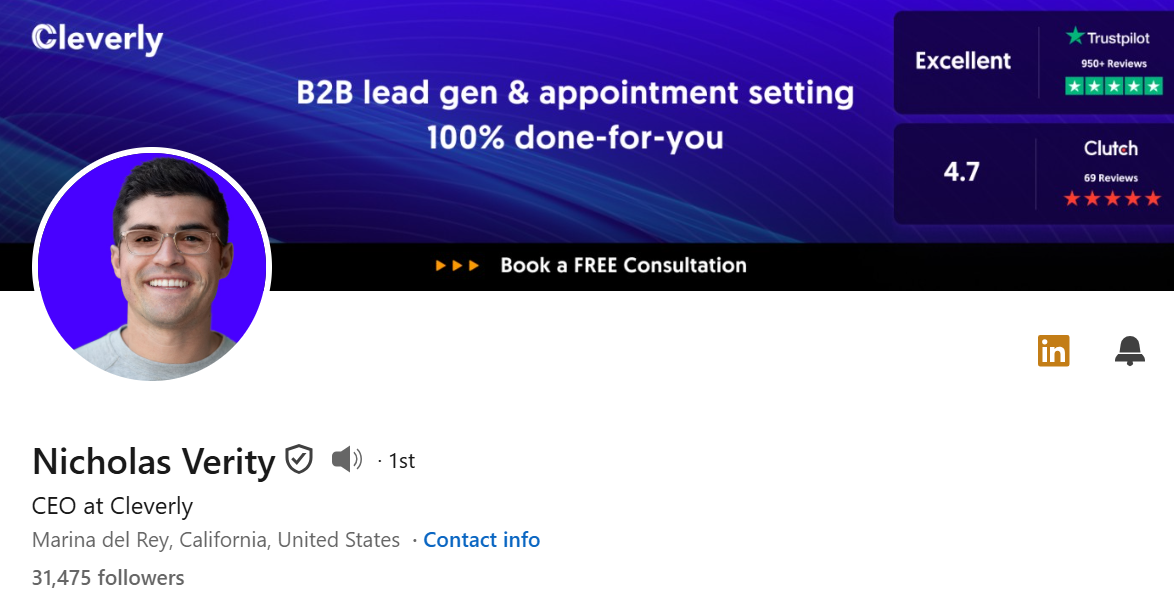
Headline: This is the highest-value real estate on your profile and the most consistently wasted. "CEO at [Company]" tells a prospect nothing about what you do for people like them. Replace your job title with a value-first statement that names your ICP and the outcome you deliver. "Helping B2B SaaS companies book 20+ qualified meetings/month" is a headline that earns the accept. A job title is not.
Profile photo and banner: A professional photo matters because it signals that you take your presence seriously. The banner behind your photo is prime real estate — most profiles leave it blank or use a generic LinkedIn gradient. Use it to reinforce your positioning with a simple, clean visual that supports what your headline says.
About section: Write this for the prospect who just received your connection request, not for a recruiter reviewing your career. Open with the problem you solve. Name who you solve it for. Add proof that you've done it. Keep it short. No buzzwords, no life story, no paragraph about your passion for innovation.
Experience section: Lead each role with outcomes, not responsibilities. "Generated $2M in pipeline through outbound LinkedIn campaigns" is authority. "Responsible for lead generation strategy" is not. Prospects reading your profile want to see that you've produced results — not that you had a job description that included producing results.
Keywords: Embed your ICP's language naturally throughout your profile. This isn't just for searchability — it signals that you speak their language. When a VP of Sales at a SaaS company reads your profile and sees the same terminology they use internally, you feel familiar rather than foreign.
Step 2: Build a Content Strategy That Signals Expertise to Your ICP
LinkedIn content is the layer that keeps your profile looking active and gives prospects something to evaluate when they check you out. The goal isn't reach for its own sake — it's giving a prospect who's on the fence about your connection request a reason to accept.
Posting frequency: 2–3 times per week is the algorithm-supported sweet spot for most accounts. Daily posting without consistent engagement actually reduces your average reach per post over time. Quality and consistency beat volume on LinkedIn.
Content formats by goal: Carousel and document posts generate the most reach and saves — up to 278% more engagement than single-image posts, according to LinkedIn data. Use them for authority building and expanding reach to new ICP members. Text posts with a soft CTA tend to drive the most direct inbound conversations. Mix both formats intentionally based on what you're trying to accomplish that week.
What to post: This is where most people go wrong. They post about their product, their company news, or generic industry content that anyone could have written. None of that builds authority. What builds authority is: perspectives on problems your ICP faces right now, frameworks you actually use in your own work, lessons from client results (anonymized where necessary), and honest takes on what works and what doesn't in your space. Post things that only someone with genuine experience could write.
The authority signal: Don't just share information — share a perspective. Information is everywhere. Opinions from people who've done the work are rare. Prospects accept connection requests from people with opinions, not from people who aggregate and share information. Every post should have a point of view.
Soft CTAs: End posts with a comment trigger or DM prompt that filters your audience toward buyers. "Drop a comment if you're dealing with this" or "Message me if you want the full breakdown" are low-friction ways to start conversations without being pushy. These prompts turn passive readers into active conversations.
Step 3: Engage With Your ICP's Content Before Outreaching
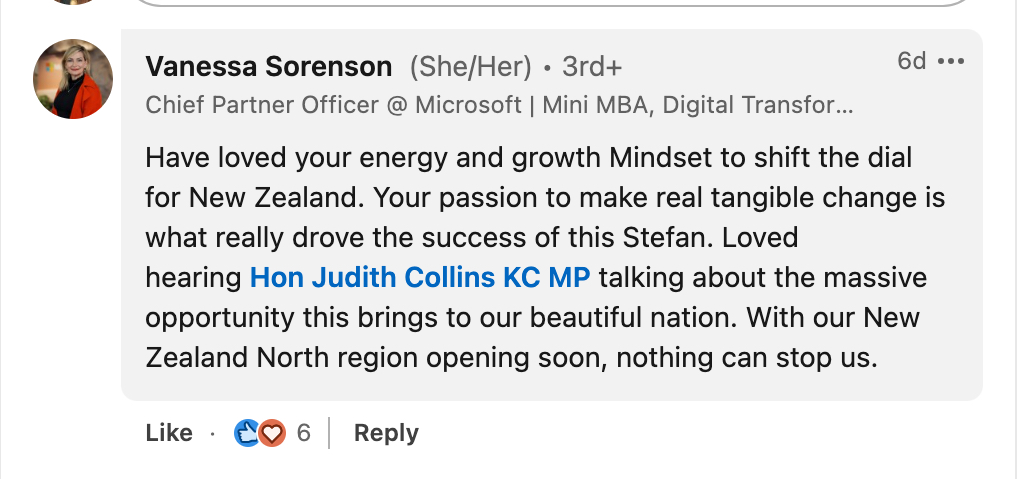
This is one of the most underused levers in LinkedIn outreach and one of the most effective. Engaging with a prospect's posts before sending a connection request can roughly double your acceptance rate.
The mechanism is simple: the prospect sees your name in their notifications, you become a familiar face, and when your connection request arrives a few days later it feels semi-warm rather than completely cold.
What good engagement looks like: a thoughtful comment that genuinely adds to the conversation — not "great point!" but a real response that contributes something. A reaction to something relevant they shared. A reply to their LinkedIn article or newsletter. The bar isn't high. A single genuine comment is enough to create name recognition.
The timing: Engage 2–5 days before sending the connection request. Long enough for your name to register, not so long that they've forgotten you. The goal is that when they see your request, there's a flicker of "I recognize this person."
Scale consideration: You don't need to do this for every prospect. It's highest-ROI for your most valuable ICP segments — the prospects where landing the meeting has the most potential upside. Prioritize your top-tier accounts for pre-connection engagement and let the profile strength carry standard outreach.
What to avoid: Generic, one-word comments that are clearly engagement farming. Prospects see through it immediately, and it can actively damage your credibility rather than build it.
Step 4: Use the Featured Section as a Proof Portfolio
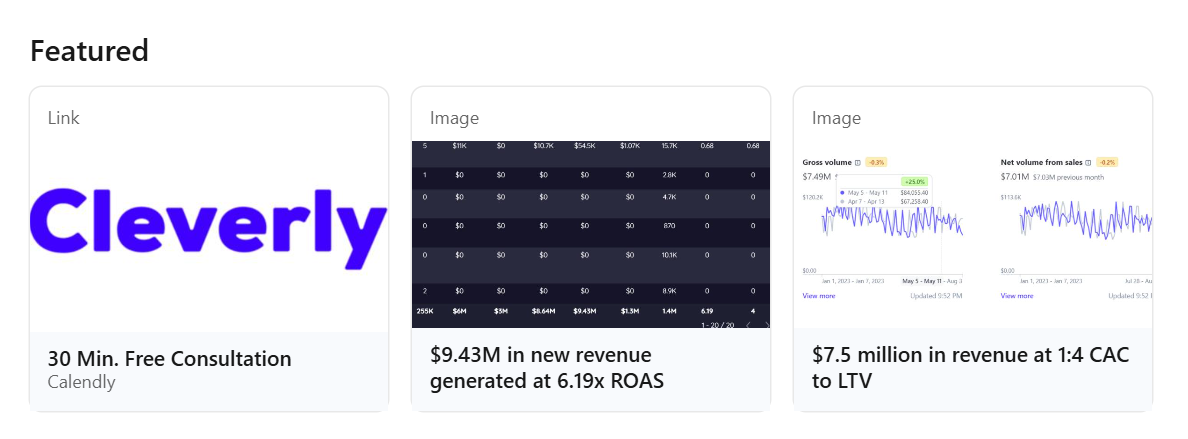
The Featured section sits prominently near the top of your profile and most people leave it completely empty. That's a significant missed opportunity, especially for anyone running active outreach.
When a prospect reviews your profile after receiving a connection request, the Featured section is where they look for proof. It's the moment where your profile either converts their skepticism into acceptance or confirms their instinct to ignore.
What to feature: A case study or client result directly relevant to your ICP. A high-performing piece of content that demonstrates your expertise in action. A free resource your ICP would find useful — a framework, a checklist, a guide they'd actually want. A media feature, podcast appearance, or speaking engagement that adds third-party credibility.
The strategic function is simple: the Featured section does your selling before you ever send a message. A prospect who looks at your profile and sees a case study showing measurable results for a company like theirs is a prospect who's already warm before you follow up.
Keep it current: A Featured section with content from two years ago signals an abandoned presence. Refresh it regularly with recent proof points and high-performing posts.
Step 5: Build Social Proof Through Recommendations and Endorsements
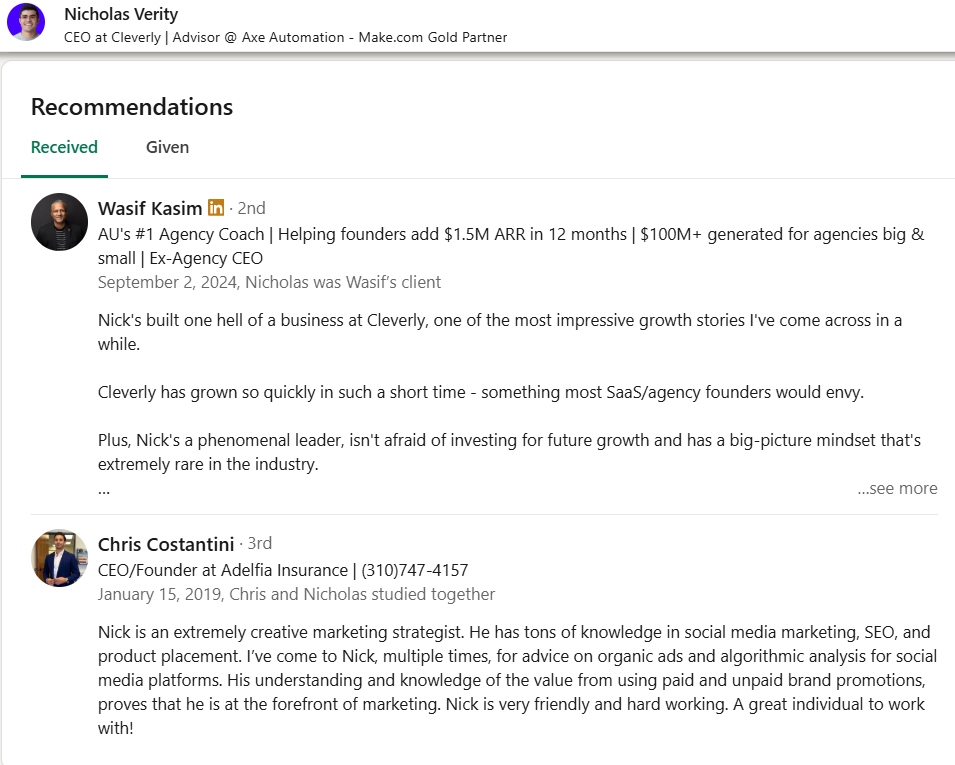
Recommendations are the closest thing LinkedIn has to a verified testimonial. A few strong, specific recommendations from recognizable clients or colleagues add real credibility to a profile a prospect is evaluating.
What makes a recommendation worth having: Specificity and outcomes. "Helped us go from 3 meetings per month to 22 in 90 days" is credibility. "Great to work with, highly recommend" is noise. When you ask for recommendations, guide the person toward specificity — what was the problem before, what changed, what was the measurable result.
How to get them: Give a recommendation first, then ask. Most people reciprocate, and the act of writing a thoughtful recommendation prompts the other person to reflect on what you delivered. It's a natural and low-friction way to generate strong social proof.
Endorsements: Volume matters less than relevance. Ten endorsements from people your prospects would recognize in their industry carries more weight than a hundred endorsements from unknown contacts. Strategically ask peers and clients in your ICP's world to endorse your most relevant skills.
Profile credibility is cumulative. Recommendations and endorsements are one more reason for a prospect to accept rather than ignore — every layer adds up.
Step 6: Combine Profile Authority With a High-Converting Outreach Sequence
LinkedIn authority building is the foundation. Outreach is the activation. A strong profile without outreach is passive brand building. Outreach without a strong profile produces a low acceptance rate and burns through your ICP before you've built the credibility to convert them. Both layers are necessary.
The sequence that produces results looks like this: profile optimization and content activity establish your credibility foundation. Pre-connection engagement creates name recognition. A personalized connection request lands with a strong profile doing the heavy credibility lifting. A multi-touch follow-up sequence converts accepted connections into meetings.
One practical effect of having strong profile authority: your connection request copy can be shorter and more direct. You don't need to over-explain yourself or front-load your message with credentials when your profile already makes the case. A profile with a clear headline, active content, and social proof earns you the right to be concise.
The compounding effect is the most powerful part of LinkedIn lead generation done this way. As your content builds more engagement, your profile gains more proof points, and each outreach campaign performs better than the last.
The teams running this system at 12 months outperform their 3-month selves significantly — not because they changed their outreach, but because the profile behind it kept getting stronger.
🚀 Why Build an Email Team When One Already Exists?
Get access to experienced strategists, copywriters, deliverability specialists, and SDRs who have helped generate $312M+ in pipeline and $51.2M in closed revenue for clients.
LinkedIn Authority Building Mistakes That Kill Acceptance Rate
Even teams that understand the value of LinkedIn authority building make the same avoidable mistakes. These are the ones that do the most damage.
👎 Posting inconsistently: An abandoned profile with posts from six months ago doesn't just fail to help — it actively hurts. A prospect checking your profile after receiving a connection request sees the last post date before anything else. An inactive presence signals that you don't actually operate in this space, which is the opposite of authority.
👎 Posting only about your product: Self-promotional content doesn't build authority. It signals that your presence exists to sell. Prospects don't accept connection requests from brands disguised as people — they accept them from individuals with genuine expertise and perspective. Keep product-focused content to 10–15% of what you post, at most.
👎 Using a job-title headline: "VP of Sales at [Company]" communicates nothing to a prospect who doesn't already know your company. Every character of your headline should answer one question: "Why should I accept this request?" A value-first statement that names the outcome you deliver earns the accept. A title does not.
👎 Ignoring the Featured section: Leaving it empty or outdated is a consistently missed opportunity to convert profile visitors. The Featured section is premium real estate that sits between your About section and your experience — it's one of the first things prospects see. An empty Featured section is a gap in your credibility story.
👎 Scaling outreach before fixing the profile: Increasing send volume before addressing the profile is the fastest way to burn through your ICP with a low acceptance rate. Once a prospect ignores your request, they're unlikely to accept a future one. Fix the profile first, then scale. The sequence matters.
How LinkedIn Authority Building Fits Into a Full Lead Generation System
LinkedIn authority building and outbound outreach aren't separate strategies that run in parallel. They're two layers of the same system. Authority creates the conditions for outreach to work. Outreach activates the pipeline authority makes possible.
⭐ The inbound layer: a strong LinkedIn presence generates unsolicited connection requests and DMs from prospects who discovered you through your content. This is a passive pipeline — it doesn't require active sending. The content you posted last month is still surfacing in your ICP's feed and driving profile visits. Some percentage of those visits convert into inbound connection requests from buyers.
⭐ The outbound layer: a profile with strong authority signals produces higher acceptance rates, better reply quality, and more meetings booked per 100 connection requests. Your outreach budget goes further. The same number of sends produces more conversations when the profile behind them is credible.
The long-term compounding is where this approach really pays off for LinkedIn lead generation. A consistent content and engagement strategy that starts today produces increasingly better outreach results at 3, 6, and 12 months — as profile credibility grows, content reach expands, and social proof accumulates.
Teams that commit to this system don't just generate more meetings; they build a lead generation asset that gets more valuable over time.
How Cleverly Combines Profile Authority With Done-For-You LinkedIn Lead Generation
Running a high-performing LinkedIn outreach system while simultaneously building your personal brand is a lot to manage. Most founders and sales leaders are already stretched — they know the profile work matters, but between running campaigns, managing follow-ups, and handling replies, the content strategy gets deprioritized.
That's exactly the gap we fill at Cleverly. We're a done-for-you LinkedIn lead generation agency that handles ICP targeting, connection request copy, multi-touch follow-up sequences, and reply management — while making sure the profile behind the outreach is set up to support it.
Our strategy sessions include profile optimization guidance as part of onboarding: headline, About section, Featured section recommendations. Campaigns launch from credibility-ready profiles, not half-built ones.
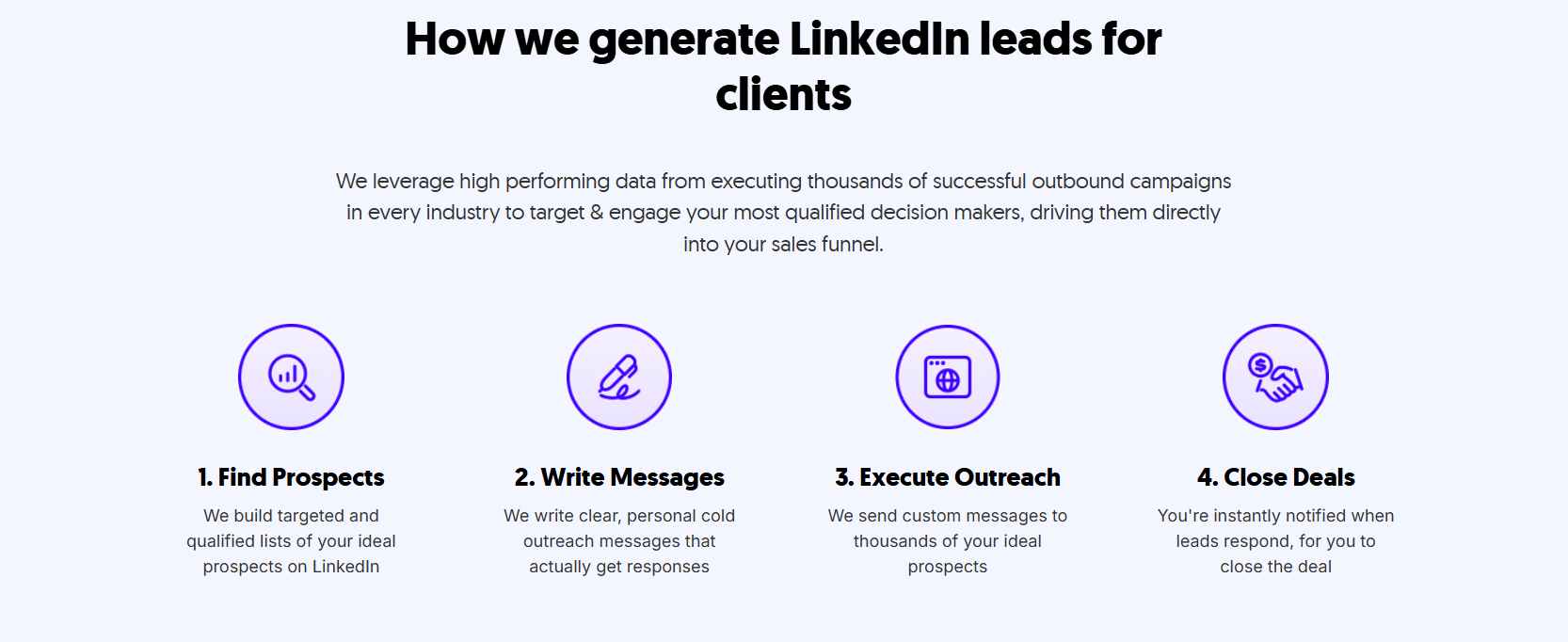
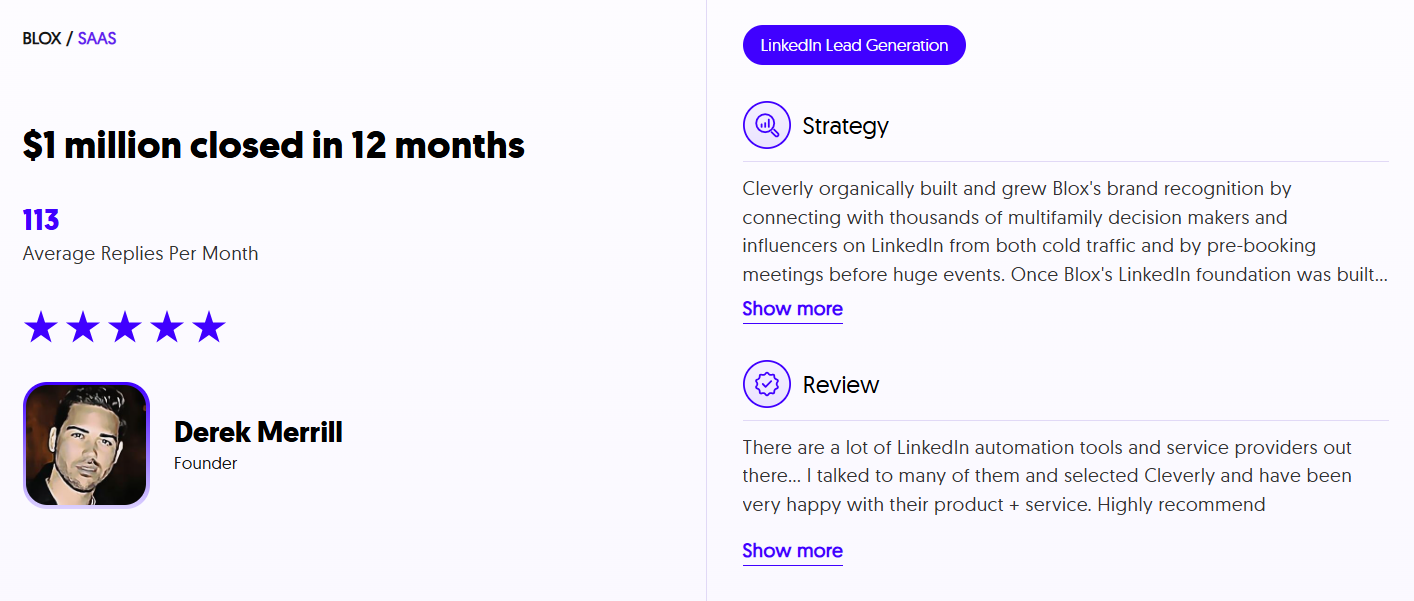
The difference in results is measurable. Outreach running from an optimized profile consistently outperforms the same campaigns running from incomplete or generic profiles. Authority building and outbound outreach compound each other, and we build both sides for clients from day one.
We've helped 10,000+ B2B companies — including eBay, Airbnb, DocuSign, Loom, and Airtable — generate 224.7K leads and $312M in pipeline through our LinkedIn outreach systems. Our LinkedIn lead generation plans start at $697/month for 600 prospects/month, with a dedicated account manager, multi-channel campaigns, and month-to-month pricing.
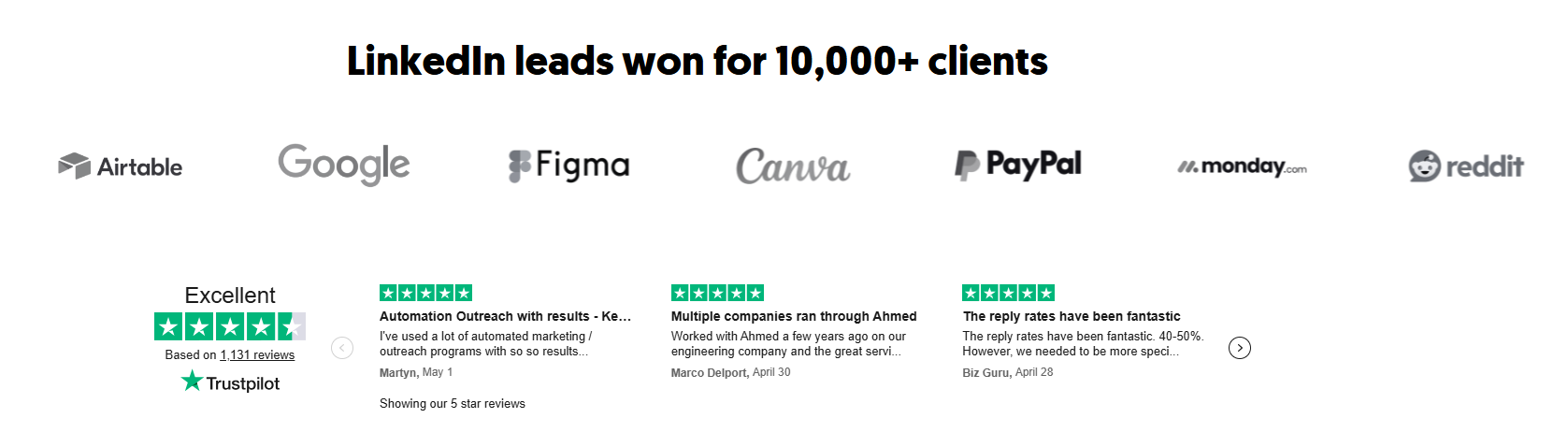
We're rated 4.6/5 on Trustpilot across 1,136+ reviews — not because we promise the most, but because we execute the full system and back it with results.
Want to 5x your LinkedIn outreach acceptance rate? Book a strategy call with Cleverly and we'll audit your profile and show you exactly how we'd build your outbound pipeline from it.
Conclusion
Your LinkedIn profile is either working for your outreach or working against it. There's no neutral. A prospect who checks your profile after receiving a connection request either finds a reason to accept or a reason to ignore — and that decision happens in seconds.
LinkedIn authority building is the work that makes outreach inevitable rather than optional. Fix the profile, build a consistent content presence, engage before you outreach, and layer a structured send sequence on top. Each piece compounds the one before it.
The teams consistently booking meetings from LinkedIn aren't the loudest or the highest-volume senders — they're the ones who built enough credibility that their outreach feels like hearing from someone worth talking to.
Frequently Asked Questions
Free Resource
How to Scale a Profitable Cold Call System
Get the complete guide — download it instantly now.
Free Ebook
Download the Free Guide
Enter your details to get instant access.
You're all set! 🎉
Your ebook is downloading now.
Click below if the download didn't start automatically.