

Table of Contents
Why Lead Generation Is Harder for HR Tech Companies
Define Your ICP Before Any Outreach — HR Tech Edition
How to Craft Messaging That Gets HR Buyers to Respond
7 Best Lead Generation Channels for HR Tech Companies
How to Time Your HR Tech Outreach Around Buying Cycles
HR Tech Lead Generation Tech Stack
Key Metrics to Track for HR Tech B2B Sales
Common HR Tech Lead Generation Mistakes to Avoid
How Cleverly Helps HR Tech Companies Build Predictable B2B Pipeline
Conclusion
Frequently Asked Questions
Modified On :
May 18, 2026
Key Takeaways
- The global HR tech market hit $42.5 billion in 2025 — but buyer fatigue among CHROs and VP People roles has never been higher, making undifferentiated outreach nearly invisible.
- HR tech purchases involve an average of 8+ stakeholders across HR, IT, Finance, and Legal — pitching only to the HR champion gets deals killed at procurement every time.
- Tight ICP definition using firmographic filters, tech stack signals, and hiring velocity data drives dramatically higher meeting rates than broad "200+ employee" targeting.
- LinkedIn is the highest-leverage channel for HR tech lead generation, but the companies consistently booking meetings combine it with cold email and calibrate timing to HR buying cycles.
- Outreach aligned to Q3 budget planning windows and open enrollment periods converts at 2–3x standard cold outreach — most HR tech companies miss this entirely.
The HR technology market stands at $42.5 billion in 2025 and is forecast to reach $76.4 billion by 2030. That kind of growth sounds like opportunity. And it is — but it comes with a catch.
More than 72% of global enterprises have already adopted digital HR systems, and approximately 64% use at least one HR automation platform.
So you're not selling into a market that doesn't know it needs software. You're selling into a market that already has software — and is being pitched by dozens of vendors telling them their current solution isn't good enough.
CHROs and VP People roles receive more vendor outreach than almost any other C-suite function. The messages look the same: reduce attrition, improve employee experience, streamline HR workflows. Buyers have heard all of it.
80–90% of B2B buyers have a vendor shortlist before they start actively researching, and 78% only consider three vendors deeply. If you're not on that shortlist when evaluation starts, you're not in the deal.
That's the real problem with lead generation for HR tech companies in 2026. It's not that there aren't enough buyers. It's that most HR tech companies are doing outreach that doesn't earn attention.
This guide covers exactly why HR tech lead generation underperforms for most vendors, how to define an ICP that actually converts, the seven channels worth investing in, how to craft messaging that gets HR buyers to respond, and how to time outreach around the buying cycles that determine whether deals happen this quarter or nine months from now.
This is written for founders, sales leaders, and marketing teams at HRIS, ATS, payroll, L&D, DEI, benefits, and workforce planning companies ready to build a pipeline that converts.
Why Lead Generation Is Harder for HR Tech Companies
HR tech is one of the most saturated SaaS categories that exists. Every vendor in the space claims to "transform the employee experience" or "empower your people ops function." That language has been used so often it no longer registers.
There are three structural reasons HR tech lead gen underperforms, and they all compound each other.
1. The Buying Committee Is More Complex Than Most SaaS
The average B2B buying decision involves 8.2 stakeholders, up 21% from a decade ago. For technology purchases, that number climbs to 25 people — 13 from IT and 12 from lines of business.
HR tech sits right in the middle of this complexity. A typical HR software buying team spans the CHRO or HR director as sponsor, an internal project manager or senior HR professional as selection manager, IT analysts, HRIS administrators, HR business partners, and often an external advisor.
A pitch that resonates only with the HR team stalls the moment it hits procurement or IT. You need messaging that speaks to multiple stakeholders from the first touch — not after you've already burned the champion's attention trying to get them to "sell internally" on your behalf.

2. Timing Windows Are Narrow
HR tech procurement concentrates in Q3 for budget planning and Q4 for year-end purchasing before budget reset. Marketing campaigns timed to fiscal-year cycles capture demand one to two quarters ahead of always-on competitors.
Beyond that, open enrollment planning (Aug–Oct), compliance deadlines tied to regulations like ACA and GDPR, and rapid headcount events all create short, intense evaluation windows.
Outreach that misses these windows doesn't just underperform — it gets deferred 9–12 months regardless of how good the product is.
3. Generic Messaging Gets Ignored
"Reduce attrition." "Improve employee experience." "Streamline your HR workflows." Every HR tech vendor says a version of this. Buyers have pattern-matched it so completely that it reads as noise.
What HR buyers respond to is specificity. Does this vendor understand our retention problem at the 300-employee mark? Do they know our payroll complexity? Are they aware of the compliance gap we're trying to close before Q1? Generic messaging produces generic results. Operationally specific messaging that references observable signals — hiring spikes, compliance changes, tech stack limitations — consistently drives 3–4x higher reply rates.
🚀 HR Tech Buyers Ignore Generic Outreach
We run LinkedIn, cold email & calling that actually gets replies. Done-for-you outbound built to book meetings.
Define Your ICP Before Any Outreach — HR Tech Edition
The most common mistake HR tech companies make before a single outreach message is sent: targeting too broadly. "Any company with 200+ employees" is not an ICP. It's a database filter.
The right ICP for B2B leads for HR software combines firmographic data, tech stack signals, and real-time workforce indicators — and it's specific enough that every message you send can feel like it was written for that company.
Firmographic Filters
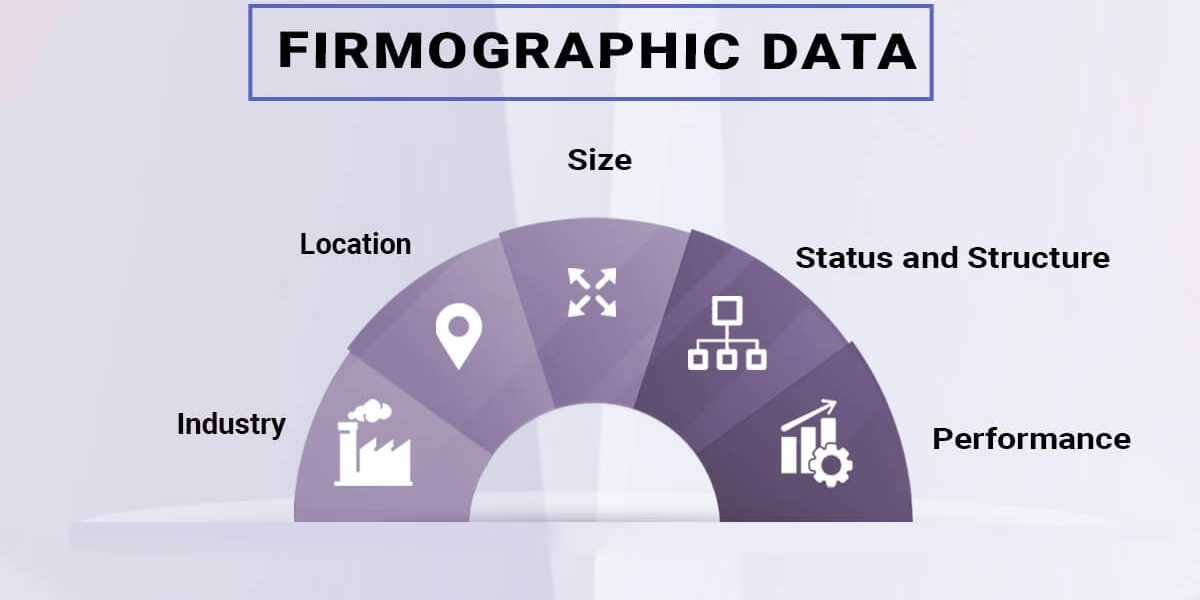
Company size between 200 and 2,000 employees is the sweet spot for most HR tech. Below 200, you're often selling to an HR team of one with limited budget authority. Above 2,000, you're in enterprise territory with a different sales motion entirely.
Beyond headcount:
- Industry — Healthcare compliance, retail shift scheduling, and manufacturing safety training each create distinct HR pain that vertical-specific vendors can leverage directly.
- Geography — Compliance-driven features map to specific markets. ACA outreach targets US companies. GDPR angles apply to European operations or US companies with EU employees. IR35 messaging is relevant for UK entities.
- Growth stage — Rapidly growing companies have urgent need for scalable HR infrastructure. Companies managing reduction in force have completely different pain. These require different messaging, not just different contacts.
Tech Stack Signals
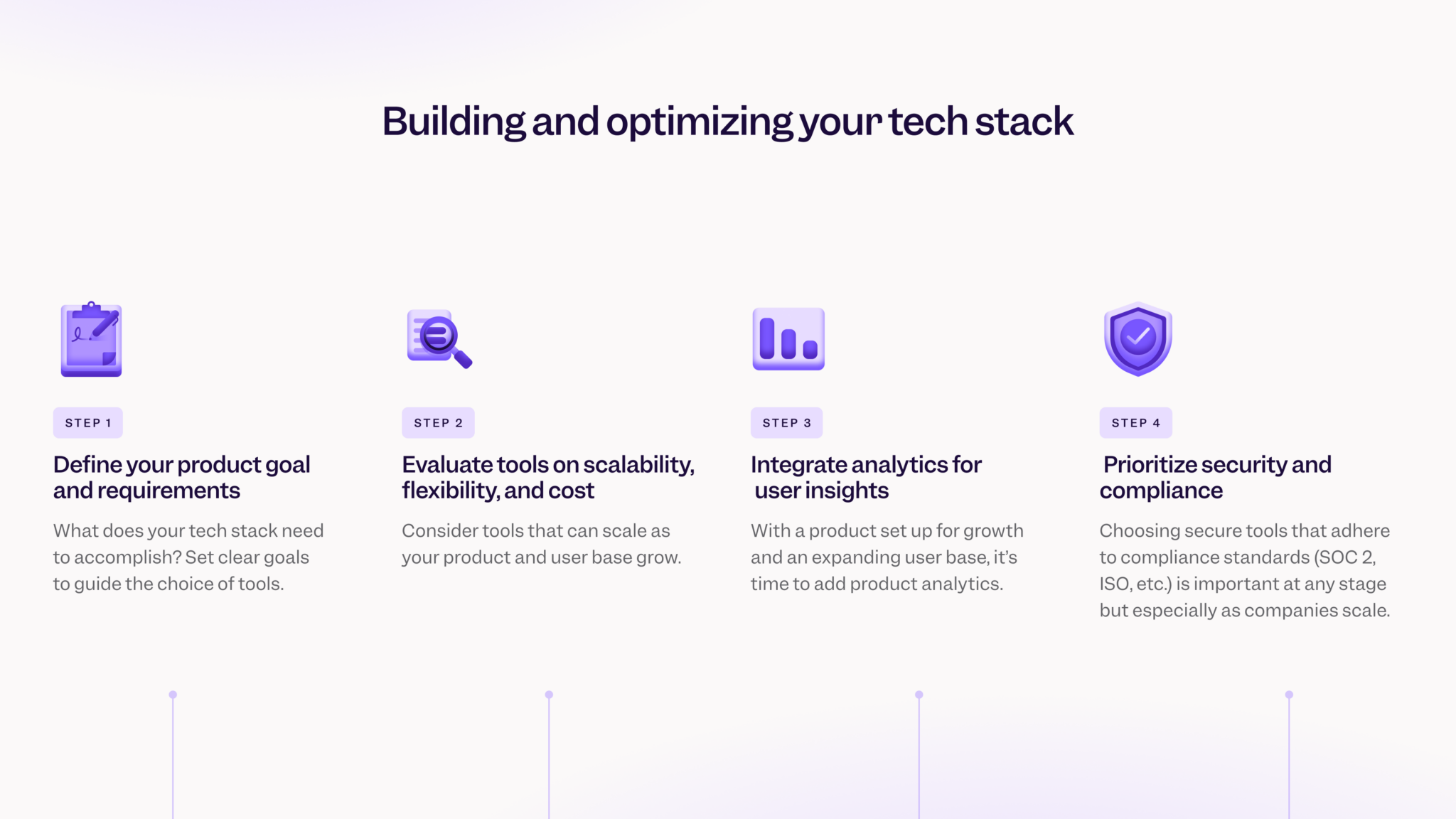
Knowing what HR tech a company already runs is some of the most valuable targeting intelligence you can have. If your product integrates with Workday, BambooHR, SAP SuccessFactors, Rippling, or ADP — or replaces one of them — that's your targeting filter.
Tools like ZoomInfo, Clearbit, and BuiltWith surface tech stack data at the company level. LinkedIn job postings are also a surprisingly reliable source: companies that reference specific platforms in their HR job requirements are telling you exactly what infrastructure they run.
Hiring Velocity and Workforce Signals
These are the signals that indicate urgency, which is what makes outreach convert:
- Headcount growth of 30%+ in six months signals an urgent need for scalable HR tooling.
- Heavy job postings for HR, People Ops, or HR Operations roles indicates a company actively building out its people function — a prime buying window.
- A declining Glassdoor score is a visible signal of a retention or engagement problem. If your product addresses that, mention it specifically.
- A recent funding round means budget exists and scaling pressure is real. This combination consistently produces the highest conversion rates on outreach.
The HR Tech Buying Committee Map
Understanding who's in the deal before you start outreach prevents the most common pipeline killer in HR tech: championing with HR only, then watching deals stall at procurement.
Here's who you need to reach and why:
Multi-thread from the first outreach sequence. Waiting for your HR champion to sell internally on your behalf is how deals get lost at the finish line.
How to Craft Messaging That Gets HR Buyers to Respond
The number one messaging failure in HR tech outreach: leading with what your product does instead of the operational problem the buyer is living with right now.
Buyers are not evaluating features. They're evaluating whether you understand their situation well enough to be worth 30 minutes.
Lead with Their Pain, Not Your Product
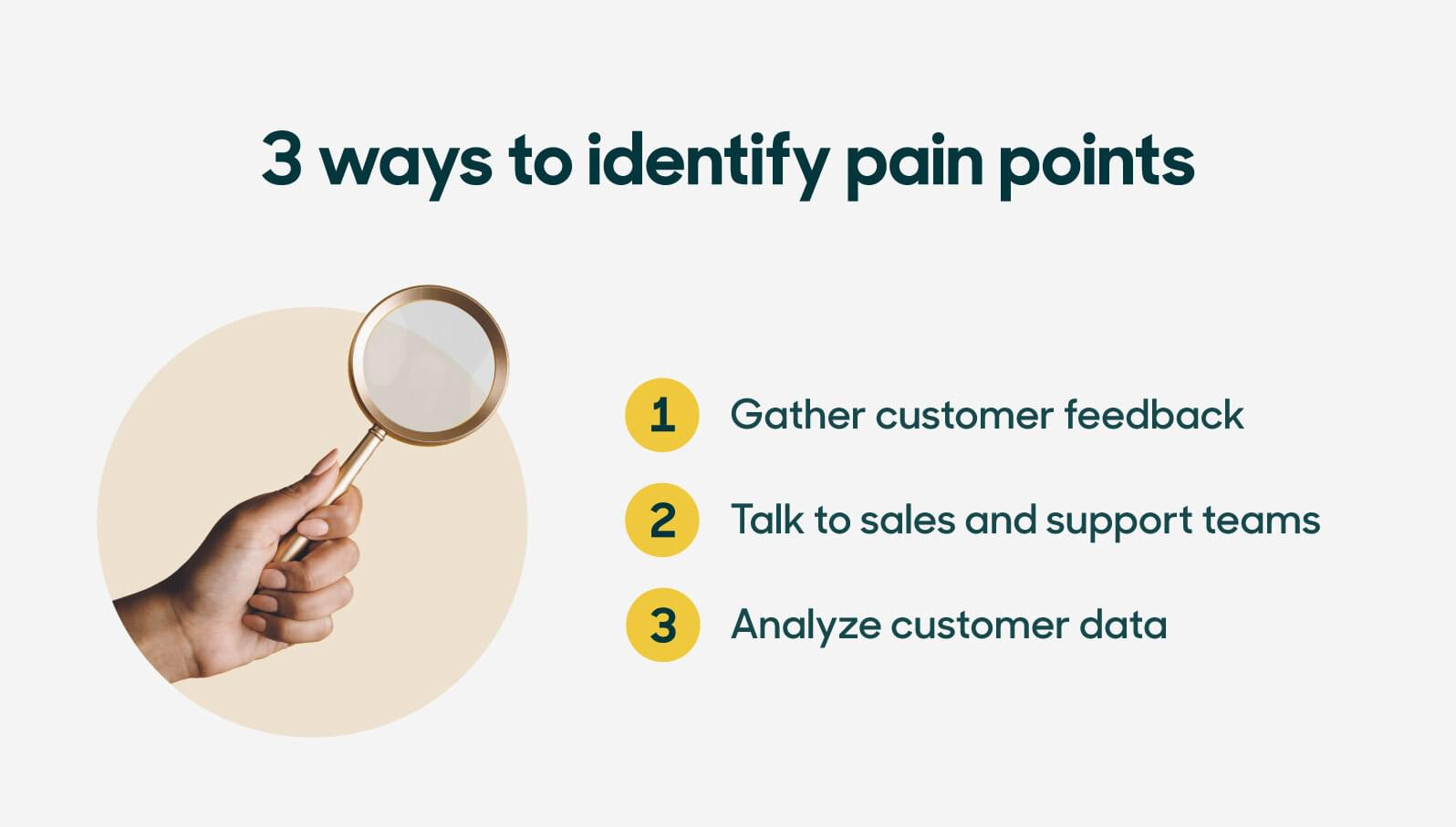
Here's the difference in practice:
❌ Wrong: "Our HRIS reduces admin time by 40%."
✅ Right: "Noticed you're hiring at scale — at the 300-employee mark, most companies your size hit a breaking point with manual onboarding workflows. Is that something on your radar?"
The second message demonstrates observation. It references a real growth signal (hiring activity), connects it to a specific operational pain that appears at a predictable threshold, and asks a question that requires zero commitment to answer. That's the structure that produces replies.
Reference observable signals wherever possible: Glassdoor score, LinkedIn hiring activity, recent funding news, tech stack indicators. When a buyer feels like you've actually looked at their company, the response rate changes completely.
Speak to Each Stakeholder Differently

The same company, at the same moment, needs four different messages depending on who you're reaching:
- CHRO/VP People: Frame around strategic impact — retention rates, compliance exposure, workforce planning capability, cultural outcomes.
- IT: Frame around technical reality — how long does integration take, what security certifications exist, what happens during implementation.
- CFO/Finance: Frame around numbers — cost per hire, benefits admin cost reduction, payroll accuracy, ROI timeline.
- Legal (enterprise): Frame around risk reduction — data residency, employment law compliance, GDPR handling, audit trails.
One message to all four of these roles produces one-quarter the results of role-specific outreach. Write separate sequences for each stakeholder in the buying committee.
Compliance and Timing Triggers
Trigger-based messaging outperforms standard sequence outreach because it connects to something the buyer is already thinking about. HR tech procurement concentrates in Q3 for budget planning and Q4 for year-end purchasing. Build your messaging calendar around these moments:
- Compliance deadline: "With [regulation] taking effect Q1, teams like yours are typically auditing their [specific process] right now."
- Open enrollment: August–October outreach hits when benefits and HRIS platforms are actively being evaluated.
- Annual budget planning: Q3 outreach reaches HR buyers while the next year's budget is still open.
When outreach references a timing trigger that the buyer is already aware of, it stops feeling like a cold pitch and starts feeling like relevant timing.
📈 More Demos Start With Better Prospecting
$312M pipeline generated across outbound channels. We handle targeting → outreach → booking. You close.
7 Best Lead Generation Channels for HR Tech Companies
No single channel owns HR tech pipeline. The companies consistently booking meetings combine two or three channels with enough precision that each touchpoint reinforces the others. Here's where to invest and why.
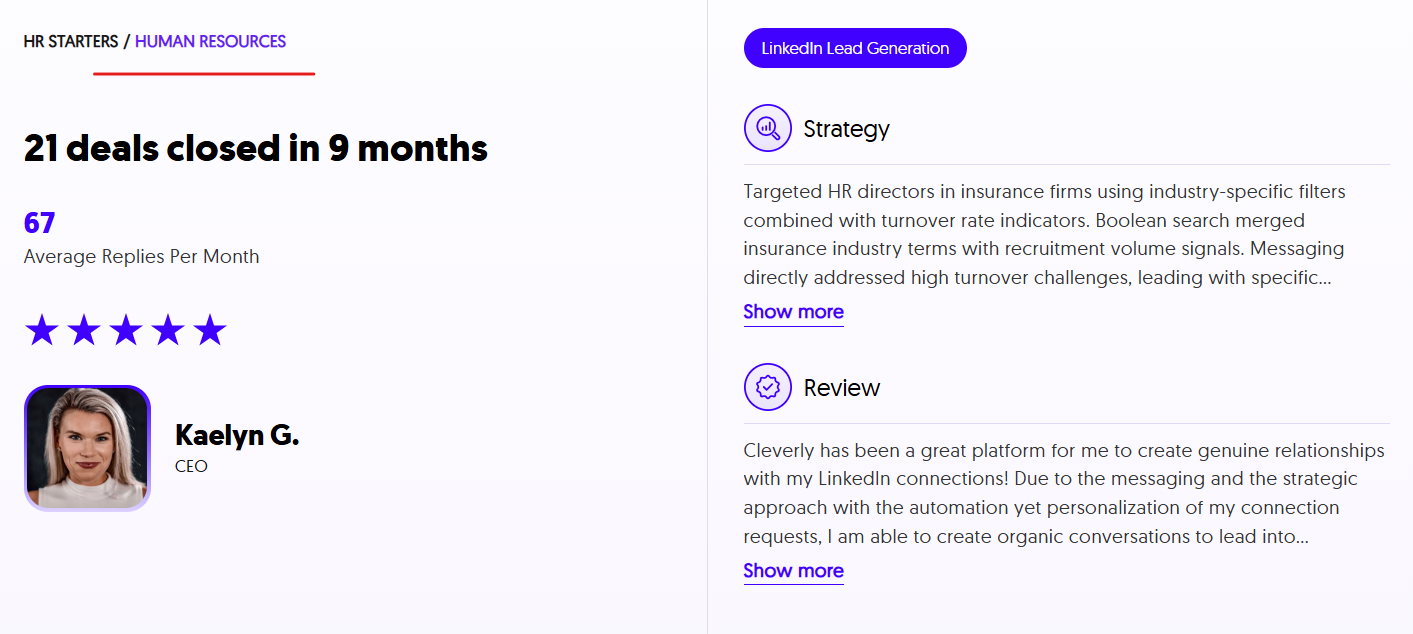
1. LinkedIn Outreach — The Highest-Leverage Channel for HR Tech Lead Generation
HR professionals are among the most active LinkedIn users on the platform. They recruit on it daily, which means they're already in the habit of engaging with connection requests and messages from people in their professional orbit.
LinkedIn gives you direct access to CHROs, VP People, and HR Directors filtered by title, company size, and industry — without an intermediary.
A well-structured connection request followed by a personalized 4-touch sequence over 14 days, timed to HR-specific pain points, consistently outperforms every other cold channel for this buyer persona.
HR professionals see an 8–8.5% reply rate to LinkedIn outreach, among the highest of any professional function — and they're more responsive to relevant outreach overall. With strong targeting and specific messaging, connection acceptance rates reach 30–45% and reply rates climb to 15%+.
LinkedIn also functions as a content channel. Founders and sales leaders posting about HR challenges, workforce trends, or compliance changes warm cold outreach pipeline organically.
When your message lands in someone's inbox after they've already seen your content, the cold outreach stops being cold.
2. Cold Email Outreach — High Volume, High Precision
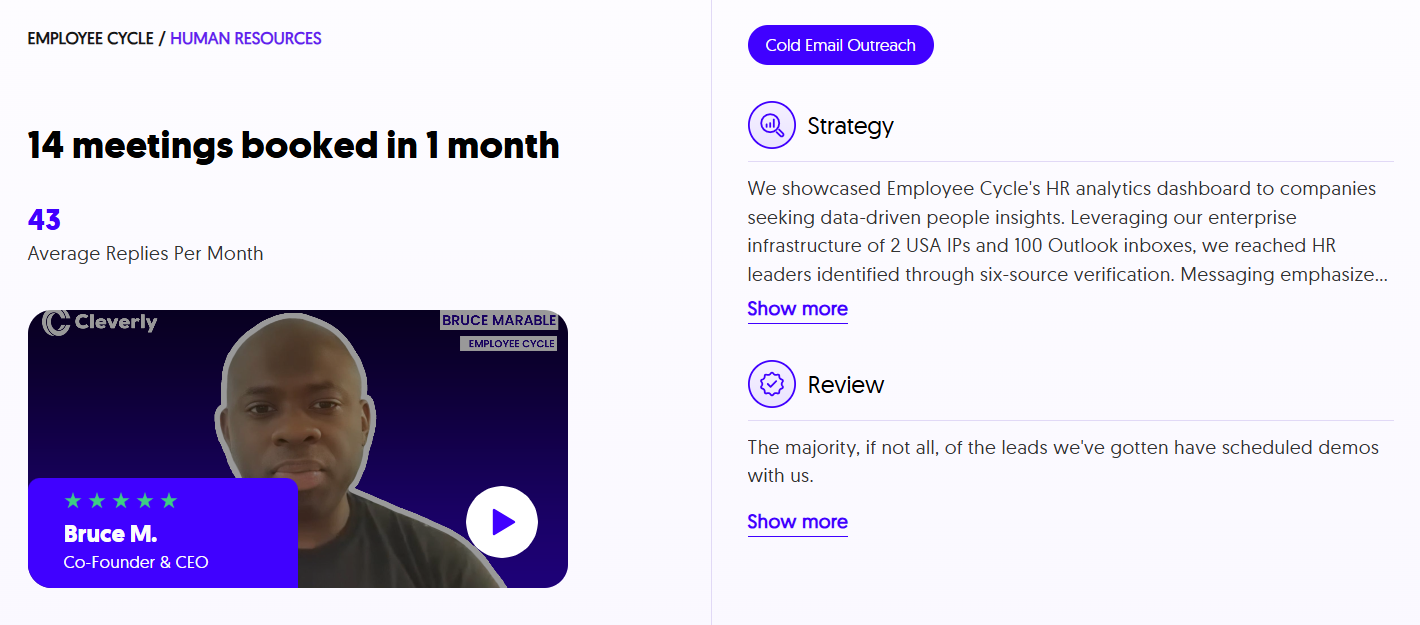
Cold email is most effective for B2B leads for HR software when it runs in parallel with LinkedIn — not as a standalone channel. Email plus LinkedIn together consistently converts better than either channel alone.
The problem is that HR buyers receive a lot of cold email, and most of it looks the same.
Email deliverability matters here. Without proper SPF, DKIM, and DMARC setup on a separate sending domain, your messages don't reach inboxes — and no amount of great copy fixes a technical deliverability problem.
The formula that works in 2026:
- Reference a specific trigger (hiring activity, funding, tech stack, compliance deadline)
- Name one operational pain point tied to that trigger
- State a one-sentence outcome your product delivers against that pain
- End with a low-friction CTA that requires almost no commitment
Send in batches of 20–30 and evaluate reply rates before scaling. What converts for a 400-person healthcare company running BambooHR will not necessarily convert for a 1,200-person tech company on Workday.
3. Cold Calling — Underused and Highly Effective for HR Tech B2B Sales
Here's something most HR tech sales teams don't act on: the majority of competitors avoid cold calling entirely. That means less competition for attention on the channel.
The key word in cold calling is "strategic." A research-led opener that references a specific signal — hiring spike, compliance news, tech stack indicator — before asking a question converts at a completely different rate than a generic product pitch.
Frame calls as a quick question, not a pitch: "I'm curious how you're currently handling [specific process] at your headcount stage." This positions the conversation as a peer inquiry, not a vendor call. Director-level HR buyers are the most reachable by phone.
4. Content Marketing and SEO — The Long-Term Pipeline Builder
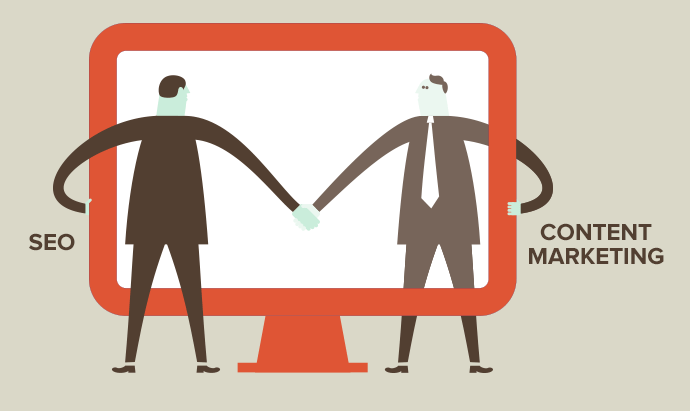
Most B2B buyers are already 69% through their purchase journey before they engage a sales team. That means if your content doesn't exist when they're researching, you're not in the consideration set before the vendor shortlist gets set.
The formats that work for HR tech buyers:
- Compliance guides — "2026 ACA Compliance Checklist" drives searches from HR teams actively trying to close a gap.
- Benchmark reports — "State of Employee Retention 2026" builds authority and generates inbound from buyers in research mode.
- ROI calculators — Payroll accuracy savings, cost-per-hire reduction, benefits admin time savings. These capture buyers mid-evaluation.
- How-to playbooks — "How to manage onboarding at 200+ employees" targets the exact pain your ICP is living through.
SEO targets the specific problems your ICP types into Google, not the features you want to rank for.
LinkedIn content at 2–3x per week builds authority with the HR buyer audience and directly warms cold outreach — people who've seen your posts respond differently than complete strangers.
First meaningful inbound volume typically arrives 3–6 months into consistent publishing.
5. Webinars and Virtual Events — High-Trust Lead Generation

HR professionals attend webinars at above-average rates. Continuing education, compliance updates, and peer benchmarking are genuinely valued in the HR community — and webinars that deliver those things earn real attention.
The formats that convert best for HR tech:
- Compliance deadline briefings — "What your team needs to know before [regulation] takes effect in Q1" captures buyers facing a real deadline.
- Benchmark data reveals — Release proprietary survey data to an HR audience and they'll show up.
- Peer roundtables — HR leaders talking to other HR leaders about shared challenges. Position your brand as the convener, not the pitch.
Attendee-to-meeting conversion for engaged webinar participants runs 15–25% within 48 hours of the event. Co-host with a complementary HR brand and you borrow their audience entirely.
Repurpose everything: clips for LinkedIn, transcript for an SEO blog, slides as a follow-up asset in cold outreach sequences.
6. Strategic Partnerships — Borrowed Credibility

Partner referrals consistently convert at 15–25% versus the 2–3% typical of cold outreach. The reason is simple: trust transfers. When a vendor your buyer already uses recommends you, you bypass the credibility-building phase entirely.
The partnerships worth pursuing for HR technology marketing:
- Complementary HR tech vendors — ATS vendors partner with onboarding tools. Payroll platforms partner with benefits providers. L&D tools partner with performance management platforms. Non-competing, same buyer.
- Integration marketplace listings — Getting listed in the Workday, BambooHR, or Rippling marketplace puts you in front of buyers who are actively evaluating tools that fit their current stack.
- HR consulting firms — Big 4 advisory practices and boutique people advisory firms influence tech decisions at enterprise level. When they recommend you, deals move faster with higher deal values.
The operational cost of partner pipeline is low. A well-structured co-marketing arrangement with one or two complementary vendors can generate warm leads for months.
7. HR Industry Events and Conferences
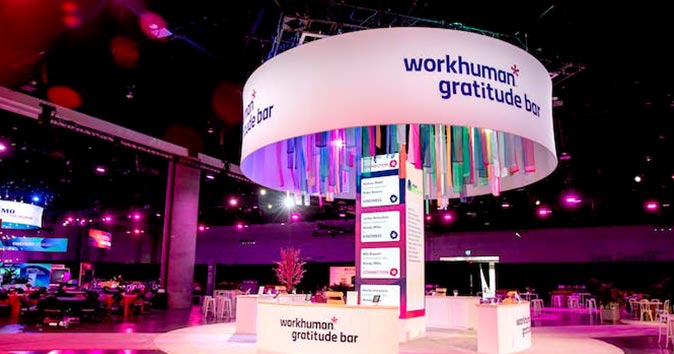
The buyers you want to reach are physically in the same room at specific events: SHRM Annual Conference, HR Tech Conference, Unleash, and People Analytics World. These are not the same as generic B2B trade shows — attendees are specifically evaluating HR technology.
The play that consistently works:
- Identify 15–20 event attendees on LinkedIn who match your ICP and connect before the event with a message referencing it.
- Show up with a clear reason to have a specific conversation — not a generic booth pitch.
- Follow up within 48 hours of the event. Post-event conversion rates run 3–5x cold outreach because context already exists.
- Speaking slots or panel appearances add credibility at minimal cost. Being on a panel about workforce analytics at HR Tech Conference positions you very differently than being another exhibitor.
How to Time Your HR Tech Outreach Around Buying Cycles
HR tech has predictable annual purchasing rhythms. Teams that align outreach to these windows consistently see better meeting rates — not because the outreach is better, but because the timing meets buyers where they already are mentally.
One counterintuitive move that works: don't go dark in Q4. Marketing campaigns timed to fiscal-year cycles capture demand one to two quarters ahead of always-on competitors.
Most HR tech companies slow outreach in October–November because "everyone's heads-down." That means your message faces less competition at exactly the moment budgets are being finalized.
HR Tech Lead Generation Tech Stack
The right stack reduces the time your team spends on research and admin, and increases the time they spend on live conversations. You don't need every tool in the category — you need one strong option per function.
The setup mistake that kills results before a single email sends: skipping deliverability infrastructure. SPF, DKIM, and DMARC configuration on separate sending domains isn't optional — it's the baseline for cold email to function at all in 2026.
Key Metrics to Track for HR Tech B2B Sales
Track by channel. What's working on LinkedIn may not reflect what's happening in cold email, and combining them into one "outbound" number makes it impossible to optimize either.
LinkedIn:
- Connection acceptance rate: target 30–40%
- Reply rate: target 15–25% for well-targeted campaigns
Cold email:
- Open rate: 40%+ indicates healthy deliverability
- Reply rate: target 8–15%
- Positive reply rate (most important): measures actual interest, not just engagement
Cold calling:
- Connect rate: target 8–15%
- Call-to-meeting rate: target 3–5%
Content:
- Organic traffic growth month-over-month
- Demo or contact request rate from content pages
Overall pipeline:
- Contact-to-meeting rate
- Meeting-to-opportunity rate
- Sales cycle length
On sales cycle expectations: mid-market HR tech typically runs 3–6 months. Enterprise runs 6–12 months. Set KPI expectations that reflect those timelines from the start — a pipeline that looks thin at 60 days is often normal at 90.
Common HR Tech Lead Generation Mistakes to Avoid
The same mistakes show up across HR tech companies of every size. Knowing them is half the fix.
❌ One-size-fits-all messaging
Sending the same email to the CHRO and the IT director converts neither. They have completely different concerns, different vocabularies, and different definitions of success.
❌ Ignoring the buying committee
Championing exclusively with HR is the most common reason HR tech deals stall. Procurement and IT have veto power and they don't know you exist until it's too late.
❌ Wrong timing
Cold outreach in January after budgets just locked, or missing the Q3 planning window entirely, means waiting 9–12 months for the next realistic opportunity.
❌ Leading with product features
"AI-powered HRIS" or "next-gen employee experience platform" means nothing to a buyer unless it's connected to a specific operational pain they're managing right now.
❌ Targeting too broad
"Any company with 500+ employees" produces poor reply rates and low meeting quality. Specificity in targeting produces specificity in responses.
❌ No follow-up system
It takes an average of 5–7 touches to reach a contact for the first time. Stopping at two follow-ups leaves the majority of pipeline on the table. Most HR tech companies stop too early.
❌ Skipping social proof
HR buyers are risk-averse. Without case studies or named clients in the same industry vertical, building trust through cold outreach alone is significantly harder.
How Cleverly Helps HR Tech Companies Build Predictable B2B Pipeline
Building and running multi-channel outreach for an HR tech company while also running the company itself is a full-time job. The teams that try to manage both usually do neither well.
At Cleverly, we run end-to-end B2B lead generation built specifically around your HR tech ICP and buying committee.
That means verified list building enriched with HR tech stack data, company size filters, and hiring velocity signals — not a generic contact database.
It means LinkedIn outreach and cold email sequences personalized to HR-specific pain points, timed to buying cycle windows, with multi-stakeholder messaging built in from the start.
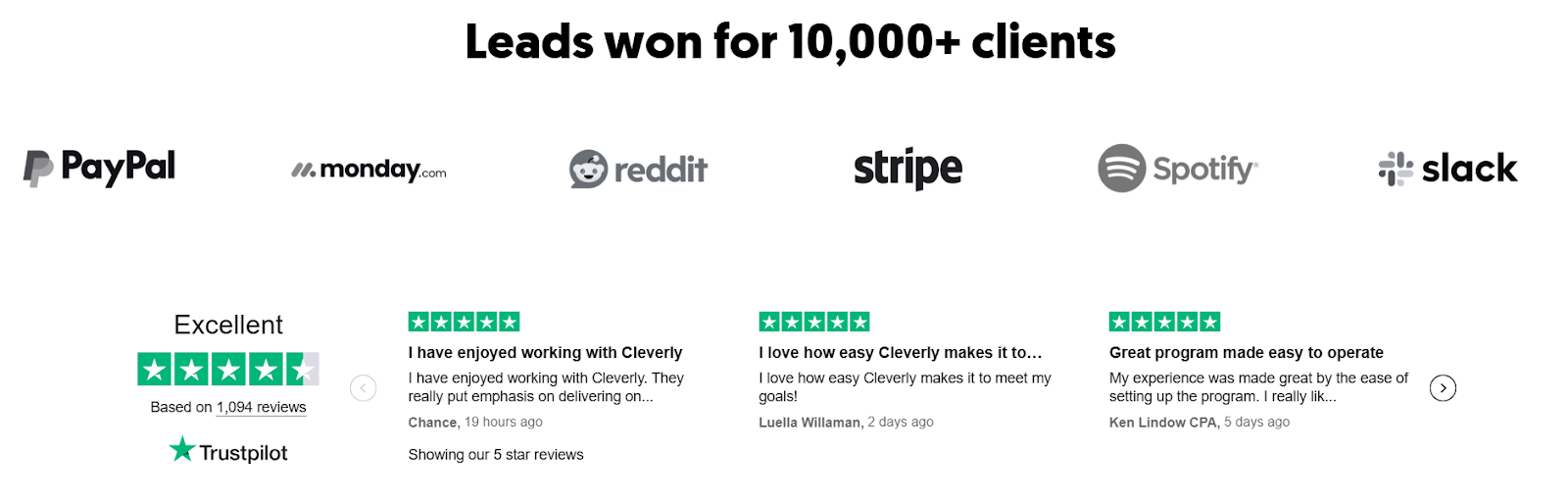
We've helped 10,000+ B2B clients generate pipeline across industries, including companies like Amazon, Google, Uber, PayPal, Slack, and Spotify.
That's produced $312M in pipeline and $51.2M in closed revenue through our outreach systems. LinkedIn outreach starts at $397/month. Cold email is performance-based — you only pay for meeting-ready leads we send you.
What separates Cleverly from a generic outbound tool or a BDR hire is the playbooks. We bring the messaging frameworks, the timing calibration, the deliverability infrastructure, and the ICP precision that HR tech outreach specifically requires — already tested across hundreds of B2B campaigns. You don't have to build that from scratch.
Who it's best for: HR tech companies with a defined ICP and a validated offer that are ready to scale pipeline without building and managing an internal outbound function.

Ready to fill your HR tech pipeline with qualified meetings?
🚀 Book a strategy call with Cleverly.
Conclusion
Lead generation for HR tech companies isn't hard because the market is bad. The market is large and growing. It's hard because most HR tech companies lead with the wrong message, aimed at the wrong person, at the wrong point in the buying cycle.
The fix isn't complicated: tighten your ICP using tech stack and workforce signals, build messaging for the full buying committee instead of just the HR champion, and time outreach to the Q3 budget planning and open enrollment windows where decisions actually begin.
Start with LinkedIn and cold email — then layer in content, webinars, and partnerships as those channels compound over time.
The HR tech companies that consistently fill pipeline in 2026 are the ones treating outreach as a system with defined inputs, tracked metrics, and buying cycle awareness — not a campaign they run once and assess after 30 days.
Frequently Asked Questions
Free Resource
How to Scale a Profitable Cold Call System
Get the complete guide — download it instantly now.
Free Ebook
Download the Free Guide
Enter your details to get instant access.
You're all set! 🎉
Your ebook is downloading now.
Click below if the download didn't start automatically.


