Table of Contents
What Is Healthcare Sales Outsourcing?
Why Healthcare Companies Outsource Their Sales Function
How Healthcare Sales Outsourcing Works
What Healthcare Sales Outsourcing Actually Costs
When to Use Healthcare Sales Outsourcing (and When Not To)
Common Mistakes in Healthcare Sales Outsourcing
How Cleverly Helps Healthcare Companies Generate Qualified B2B Leads
Conclusion
Modified On :
July 2, 2026
Key Takeaways
- Healthcare sales outsourcing lets you tap into built-in networks and specialized expertise instead of spending a year building a team from zero.
- Costs range widely: contract sales organizations run $185K to $240K per rep annually, while outbound lead generation retainers typically land between $3,000 and $15,000 a month.
- The right model depends entirely on your stage. Early-stage companies need pipeline and meetings. Growth-stage companies can layer in full field coverage.
- Outsourcing works best when you treat the provider as a partner who needs context, not a vendor you hand a task to and walk away from.
- The most common failure point isn't the outsourcing decision itself. It's picking a generalist provider who doesn't understand healthcare's compliance and buying cycle.
A fully loaded healthcare SDR costs somewhere between $76,000 and $131,000 a year in salary alone once you factor in Glassdoor's compensation data, plus Sales Navigator licenses, tools, and management overhead.
That's before you've booked a single meeting. Add a 3 to 6 month ramp period and you're looking at real money spent before you know if the hire even works out.
That math is exactly why healthcare sales outsourcing has become the default move for medical device, pharma, healthtech, and healthcare SaaS companies that need pipeline now, not in Q3 next year.
The pharmaceutical contract sales outsourcing market alone is projected to cross $12 billion in 2026, and industry analysts expect large pharma companies to outsource over half their commercial activities within five years.
This guide breaks down what healthcare sales outsourcing actually means, what it costs across different models, when it makes sense (and when it doesn't), and how to avoid the mistakes that turn a good outsourcing decision into a wasted budget line.
What Is Healthcare Sales Outsourcing?
Healthcare sales outsourcing means hiring an external provider to run part or all of your sales process, whether that's prospecting, lead generation, appointment setting, or full-cycle selling, for a medical device, pharma, or healthtech product.
It's not the same thing as hiring a freelancer or a contractor. Outsourcing sales in healthcare means working with an organization that already has built processes, compliance familiarity, and market expertise baked in. You're not training someone from scratch. You're plugging into infrastructure that already exists.
What You Can Outsource
- Outbound lead generation and prospecting
- HCP (healthcare professional) outreach
- Inside sales and appointment setting
- Hospital sales prospecting
- Field rep coverage
- End-to-end pipeline management
What Usually Stays In-House
Product expertise, clinical knowledge, final contract negotiations, and strategic account relationships almost always stay with your internal team. The outsourced partner handles the volume and repetition. Your team handles the close.
🏥 Skip the Hiring. Start Booking Meetings.
Our outsourced SDR teams help healthcare companies generate qualified sales opportunities without the cost of building an in-house team.
Why Healthcare Companies Outsource Their Sales Function
Selling into healthcare isn't like selling into most other B2B verticals. You need to understand HCP workflows, HIPAA and FDA considerations, hospital procurement cycles that can stretch for months, and multi-stakeholder buying committees where the person who says yes isn't always the person who signs.
Building that expertise internally takes time most growth-stage companies don't have. That's the core reason sales outsourcing healthcare decisions get made.
The other reasons show up in nearly every conversation we've had with healthcare GTM leaders:
- Faster market entry. You skip the 3 to 6 month hiring and ramp cycle.
- Lower upfront cost. No recruiting fees, no benefits, no management layer to build.
- Access to existing networks. A specialized provider already has relationships and data you'd spend months building from scratch.
- Reduced hiring risk. A bad sales hire in a specialized healthcare role is expensive to unwind.
Outsourcing can cut sales costs by up to 60% compared to a fully loaded internal team once you add recruiting, training, management, and tooling into the equation.
It tends to matter most during new market entry, product launches, geographic expansion, or any point where you don't have sales infrastructure yet.

How Healthcare Sales Outsourcing Works
The process looks different depending on which provider and model you choose, but most engagements follow the same general path.
Step 1: Define scope
Decide what you're actually outsourcing. Lead generation only? Appointment setting? Full-cycle selling? A single channel like LinkedIn or cold email? This decision shapes everything else.
Step 2: Choose your model
A contract sales organization (CSO), an outbound lead generation agency, or a specialist appointment-setting partner all come with different cost structures and different deliverables. More on this below.
Step 3: Align on ICP and targeting
Your provider needs a precise picture of your ideal customer. Role, organization type, deal size, geography, and any compliance constraints that affect who you can and can't approach.
Step 4: Onboard and transfer knowledge
Product training, messaging frameworks, competitive positioning, and regulatory guardrails get handed off to the outsourced team. This step gets skipped more than it should, and it's usually where campaigns fall apart later.
Step 5: Execute outreach
The provider runs prospecting, outreach, and appointment setting against agreed cadences and targets.
Step 6: Report and hand off
Qualified leads or booked meetings come back to your internal team. Performance gets tracked against KPIs like meetings booked, pipeline generated, and conversion to opportunity, not just activity volume.
📈 53,000+ Meetings. $312M+ Pipeline.
See how our done-for-you outbound campaigns help B2B companies scale pipeline faster with less operational overhead.
What Healthcare Sales Outsourcing Actually Costs
Pricing in this space varies more than most people expect, mostly because "sales outsourcing" covers everything from a full field sales force to a single LinkedIn campaign. Here's how the major models break down.
Contract Sales Organizations (CSOs)
Traditional CSOs charge somewhere between $185,000 and $240,000 per rep annually, depending on therapeutic area, geography, and contract size. That number includes recruiting, management overhead, training, and the CSO's margin. It's the most expensive model, but also the most full-service.
Best for: companies that need field-level reps with real clinical fluency, especially in oncology, rare disease, or other specialty areas where the selling conversation is technical.
Outbound Lead Generation and Appointment Setting
This is usually structured as a monthly retainer, typically $3,000 to $15,000 a month depending on scope, channels, and volume. You get a defined number of qualified meetings or leads each month. Performance-based pricing exists here too.
Best for: companies that need pipeline and booked meetings, not a full sales team.

Pay-Per-Appointment Models
Some providers charge per qualified meeting booked, usually $300 to $800 per appointment in healthcare. It reduces your upfront risk, but if the qualification criteria aren't nailed down in writing, you can end up paying for meetings that go nowhere.
Best for: companies testing outsourced outbound before committing to a retainer.
Contractor Marketplaces
Reps sourced through marketplaces cost 20% to 35% less than CSO reps because there's no management layer or infrastructure markup.
Best for: companies that want rep-level execution without the full CSO price tag.
The Real Build vs. Buy Math
The in-house number looks cheaper on paper until you add the ramp time and the risk of the hire not working out. For early-stage healthcare companies, outsourced lead generation almost always delivers qualified pipeline faster and at a lower total cost.
When to Use Healthcare Sales Outsourcing (and When Not To)

Use It When:
- You're entering a new market or geography with no existing relationships.
- You're launching a product and can't wait 6 months to hire and ramp a team.
- You don't have sales infrastructure yet, and building tools and processes from scratch will eat months.
- You need to validate product-market fit before committing to permanent headcount.
- You're a healthcare startup that needs to protect capital for product development while still generating revenue.
- You need specialist channel expertise, like LinkedIn outreach to hospital administrators or cold email to health system procurement teams.
Think Carefully Before Outsourcing When:
- Your sales process depends on deep technical or clinical expertise that takes months to transfer properly.
- You're selling into highly relationship-driven accounts where continuity and trust drive the deal more than anything else.
- Your sales motion is your competitive edge, and you need full control over every touchpoint.
- You've been burned by low-quality lead gen before that damaged your reputation with the exact buyers you're trying to reach.
There's no universal right answer here. It comes down to what's actually blocking your growth right now.
Common Mistakes in Healthcare Sales Outsourcing
We've seen the same handful of mistakes derail outsourcing engagements again and again:
❌ Picking a generalist provider. If they don't understand healthcare compliance, buyer personas, or procurement timelines, you're paying for outreach that won't land.
❌ Vague qualification criteria. If "qualified lead" isn't defined in writing, you'll end up with meetings that waste your team's time.
❌ Expecting instant results. Healthcare sales cycles are long. Outsourced outreach still needs a ramp period, even when the provider is good.
❌ Skimping on onboarding. If your provider doesn't get enough product and ICP context upfront, the output reflects it. Garbage in, garbage out applies here more than almost anywhere else.
❌ Tracking the wrong KPIs. Meetings booked matters less than pipeline quality and how many of those meetings actually convert to opportunities.
How Cleverly Helps Healthcare Companies Generate Qualified B2B Leads
We specialize in outbound lead generation built around who actually buys in healthcare, not generic outreach templates recycled across every industry. That means ICP-aligned targeting built for the specific roles, organizations, and deal types that show up in healthcare sales cycles.
For healthcare clients, we build verified lead lists around the right roles and organizations, then run LinkedIn outreach to decision-makers like CMOs, hospital administrators, IT leads, and procurement heads.
We layer in cold email built around education-first, compliance-aware messaging, since healthcare buyers respond to relevance, not pressure. Where it fits, we add cold calling for appointment setting on top of that.
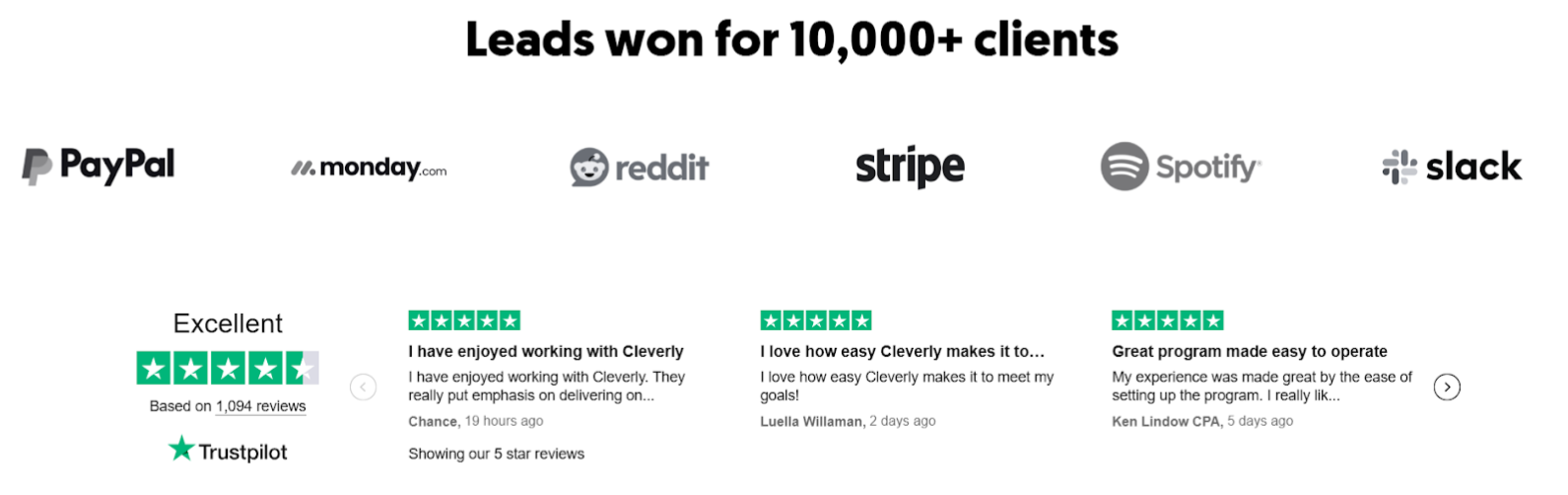
We've worked with 10,000+ clients across industries and generated $312 million in pipeline revenue in the process, and healthcare is one of the verticals where targeting precision matters most.
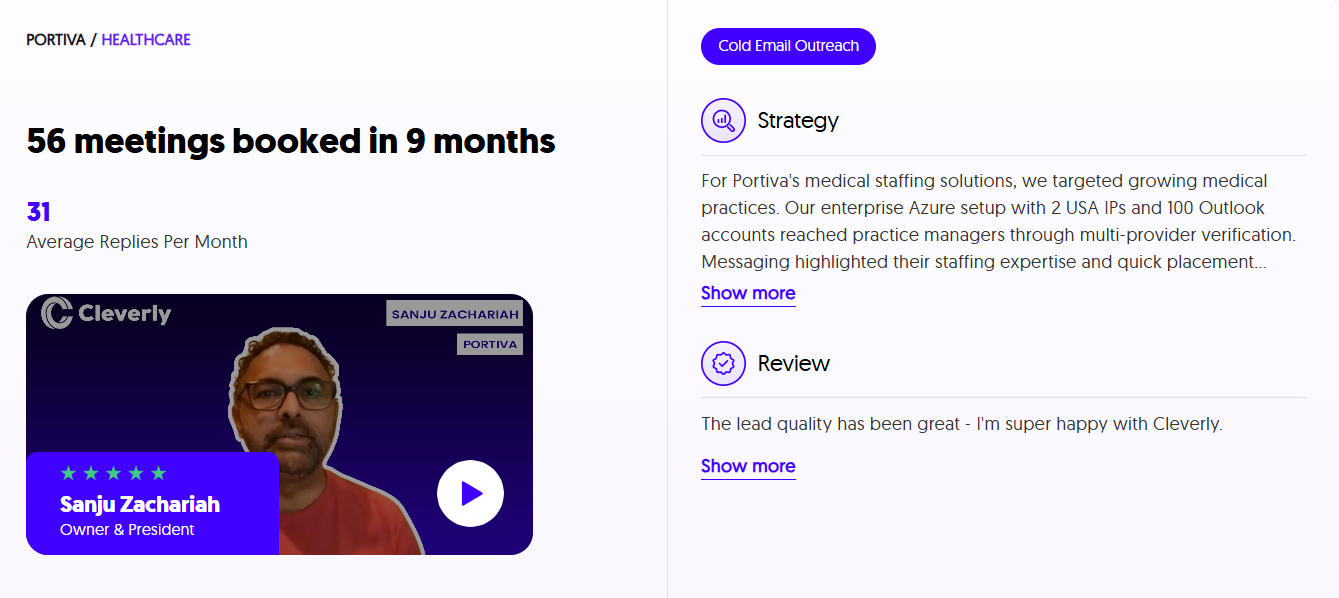
You can see specific outcomes in our healthcare sales outsourcing case studies by visiting our case studies page and filtering for healthcare in the industry dropdown.
If you're trying to build qualified pipeline in healthcare without standing up an entire outreach function from scratch, book a strategy call with us and we'll walk through what that could look like for your team.
Conclusion
Healthcare sales outsourcing works best when you treat it as a partnership, not a task you hand off and forget about. The more context, ICP clarity, and product knowledge you give your provider upfront, the better the results you'll see on the other end.
The right model depends on where you are. Early-stage companies usually get the most value from outbound lead generation and appointment setting, while growth-stage companies can layer in CSO-style field coverage as the need arises.
Start with whatever function is actually blocking your pipeline today, then evaluate providers on healthcare expertise and track record first, price second. The goal was never to hand off your sales motion entirely. It's to move faster than you could on your own.
Frequently Asked Questions
Free Resource
How to Scale a Profitable Cold Call System
Get the complete guide — download it instantly now.
Free Ebook
Download the Free Guide
Enter your details to get instant access.
You're all set! 🎉
Your ebook is downloading now.
Click below if the download didn't start automatically.