Table of Contents
What Are Growth Marketing Tools and Why Do They Matter?
What to Look for in the Best Growth Marketing Tools
Quick Comparison: 7 Best Growth Marketing Tools in 2026
7 Best Growth Marketing Tools to Implement Tactics in 2026
How to Build Your Growth Marketing Stack Without Wasting Budget
How Cleverly Helps B2B Companies Implement Growth Marketing at Scale
Conclusion
Frequently Asked Questions
Modified On :
May 25, 2026
Key Takeaways
- Growth marketing tools are built for speed and experimentation — not just campaign execution. The right stack helps you acquire, activate, and retain customers faster with less guesswork.
- Tools like HubSpot, Clay, and Apollo.io cover the full acquisition-to-retention loop when connected properly — siloed stacks kill growth loops.
- The best tools for growth marketing teams share four traits: strong integrations, data accuracy, automation depth, and real scalability as your team grows.
- You don't need all seven tools on day one — start with the biggest bottleneck in your funnel and build outward from there.
- For B2B teams focused on pipeline, pairing the right stack with a done-for-you outbound engine like Cleverly fills the top of the funnel without hiring extra headcount.
Execution speed is the gap between growth teams that hit targets and ones that don't. 56% of B2B marketers expect budgets to grow in 2026 — but budget alone doesn't close deals.
Buying committees are larger, sales cycles are longer, and the self-directed buyer journey has effectively swallowed the early funnel. And yet, 96% of prospects do their own research before speaking with a human sales rep — which means your stack has to be working long before a sales conversation starts.
Growth marketing tools in 2026 aren't just marketing software. They're experiment infrastructure. The difference between a team running three tests a week and one running three tests a quarter often comes down to one thing: the stack they're using.
Generic marketing platforms weren't built for this. They're campaign-first, not experimentation-first — and they don't give growth teams the feedback loops they actually need.
We uncover seven tools for you that collectively address every growth pillar: analytics, SEO, lead generation, enrichment, CRO, automation, and full-funnel visibility.
What Are Growth Marketing Tools and Why Do They Matter?
Growth marketing tools are software built specifically to help teams acquire, activate, retain, and expand their customer base through rapid testing, behavioral data, and repeatable systems — not just one-off campaign blasts.
The difference from traditional marketing software is structural. Traditional tools are campaign-first: you set up an email, you run it, you move on.
Tools for growth marketing teams are experimentation-first: you form a hypothesis, test it, measure the signal, iterate, and scale what works.
The AARRR framework maps this well:
The right tools map directly to each of these stages. When they're integrated, they create compounding loops — data from retention informs acquisition; activation data improves outreach targeting.
The most common mistake? Buying too many tools that don't talk to each other. B2B marketers believe the biggest opportunities in lead nurturing lie in data-driven personalization, engagement tracking, and better sales-marketing alignment.
All three of those break down when your stack is siloed.
🚀 Growth Tools Don’t Create Pipeline Alone
We run LinkedIn, cold email & calling that actually books meetings. Done-for-you outbound from strategy to execution.
What to Look for in the Best Growth Marketing Tools
If you're evaluating the best marketing tools for small business growth or scaling a mid-market team, here's what actually matters — beyond the feature list on a pricing page.
✅ Integration capability - Does it connect natively with your CRM, analytics platform, and outreach stack? If you're building manual exports between tools, you're already losing time and data integrity.
✅ Data accuracy - Poor-quality contact data skews your experiments, tanks deliverability, and wastes outreach spend. This one's non-negotiable.
✅ Automation depth - Can the tool remove manual steps so your team focuses on strategy and creative — not data entry? Automation creates scale without headcount.
✅ Scalability - The best marketing tools for small business growth have usable free tiers and enterprise-grade features when you get there. You shouldn't have to rip and replace.
✅ Time-to-value - For lean teams, a tool that takes three months to implement is a liability. Short ramp-up time matters.
✅ Experiment and testing support - A/B testing, behavioral triggers, variant tracking — if the tool doesn't support structured experimentation, it's not a growth tool, it's a marketing tool.
✅ Pricing transparency - Hidden seat fees, mandatory onboarding costs, and per-action charges are common. Understand the true total cost of ownership before signing.
Quick Comparison: 7 Best Growth Marketing Tools in 2026
📈 Most Teams Collect Tools. We Generate Revenue.
$312M pipeline generated across outbound channels. We handle targeting → outreach → booking. You close.
7 Best Growth Marketing Tools to Implement Tactics in 2026
Not every team needs 25 tools. But every growth team needs the right ones. Here's the stack that covers every growth pillar — acquisition to retention, outbound to SEO, enrichment to automation.
1. HubSpot — All-in-One CRM and Marketing Automation
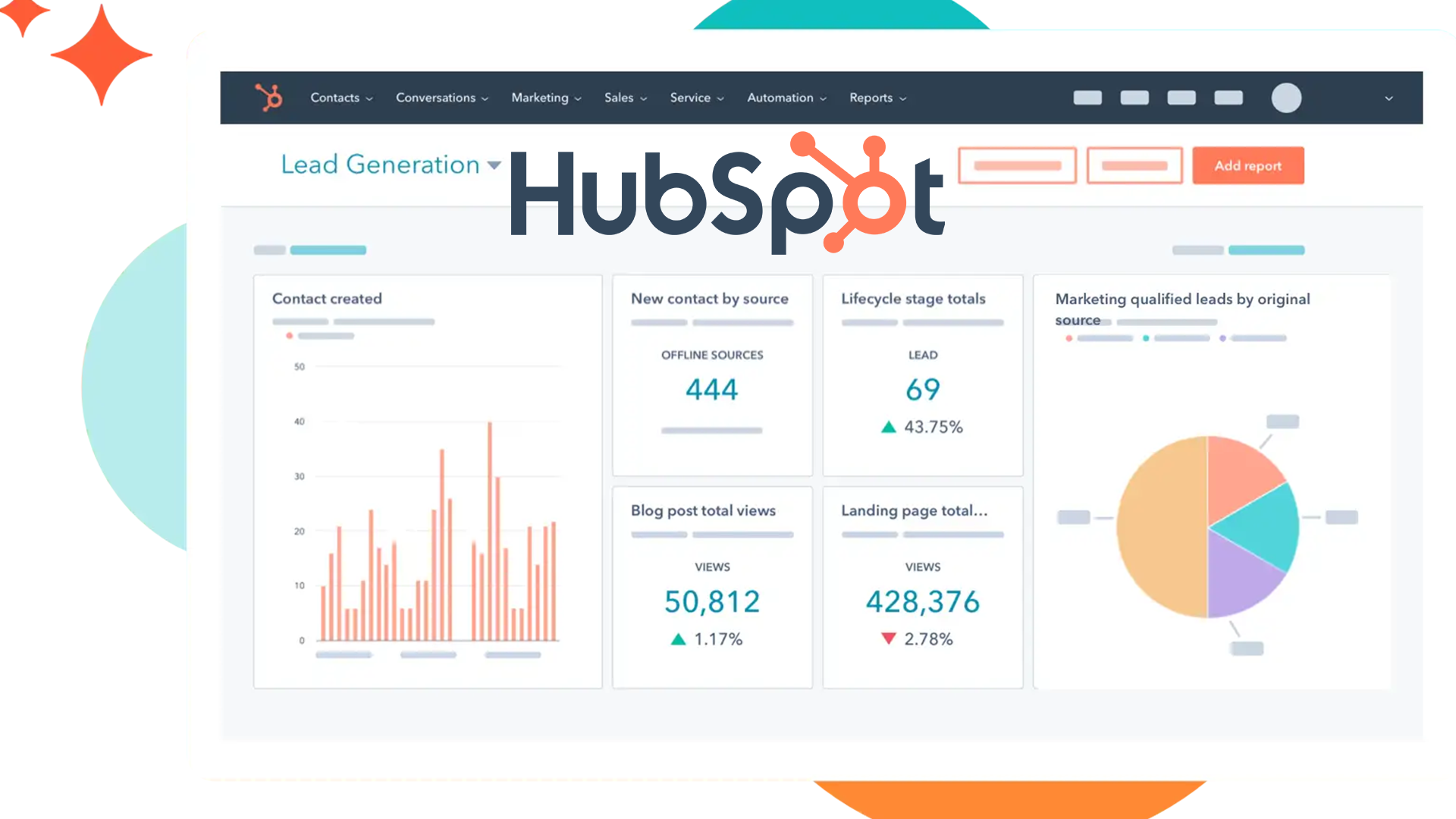
HubSpot remains one of the strongest tools for growth marketing teams at the CRM and automation layer. It gives marketing and sales a shared source of truth — no data silos, no "whose list is this" arguments, no losing leads in the gap between departments.
Core growth use cases: Lead capture forms, automated lifecycle workflows, deal pipeline tracking, landing pages, and attribution reporting — all in one platform. The built-in A/B testing for emails and pages is genuinely usable without a developer.
Standout features:
- Free CRM with unlimited contact storage
- AI-assisted content and email generation
- Automated lifecycle workflows
- Built-in A/B testing for emails and landing pages
- Native integration with 1,500+ tools
Why it works for growth teams: Marketing and sales work from the same contact record. Lead history, email opens, deal stage — all visible without switching platforms. That single source of truth is what makes handoff between acquisition and activation clean.
Pricing: HubSpot Marketing Hub has four tiers: Free ($0), Starter ($20/seat/month on annual billing), Professional ($890/month annual), and Enterprise ($3,600/month annual). Note that Professional and Enterprise include mandatory onboarding fees of $3,000 to $7,000 — factor that into your first-year budget.
Best for: Teams that want a single system connecting contacts, email marketing, landing pages, and sales pipelines without duct-taping five tools together.
Limitations: Costs scale fast as contact lists grow. Teams that outgrow the free tier and need full automation will feel the jump to Professional pricing.
2. Semrush — SEO and Content Growth
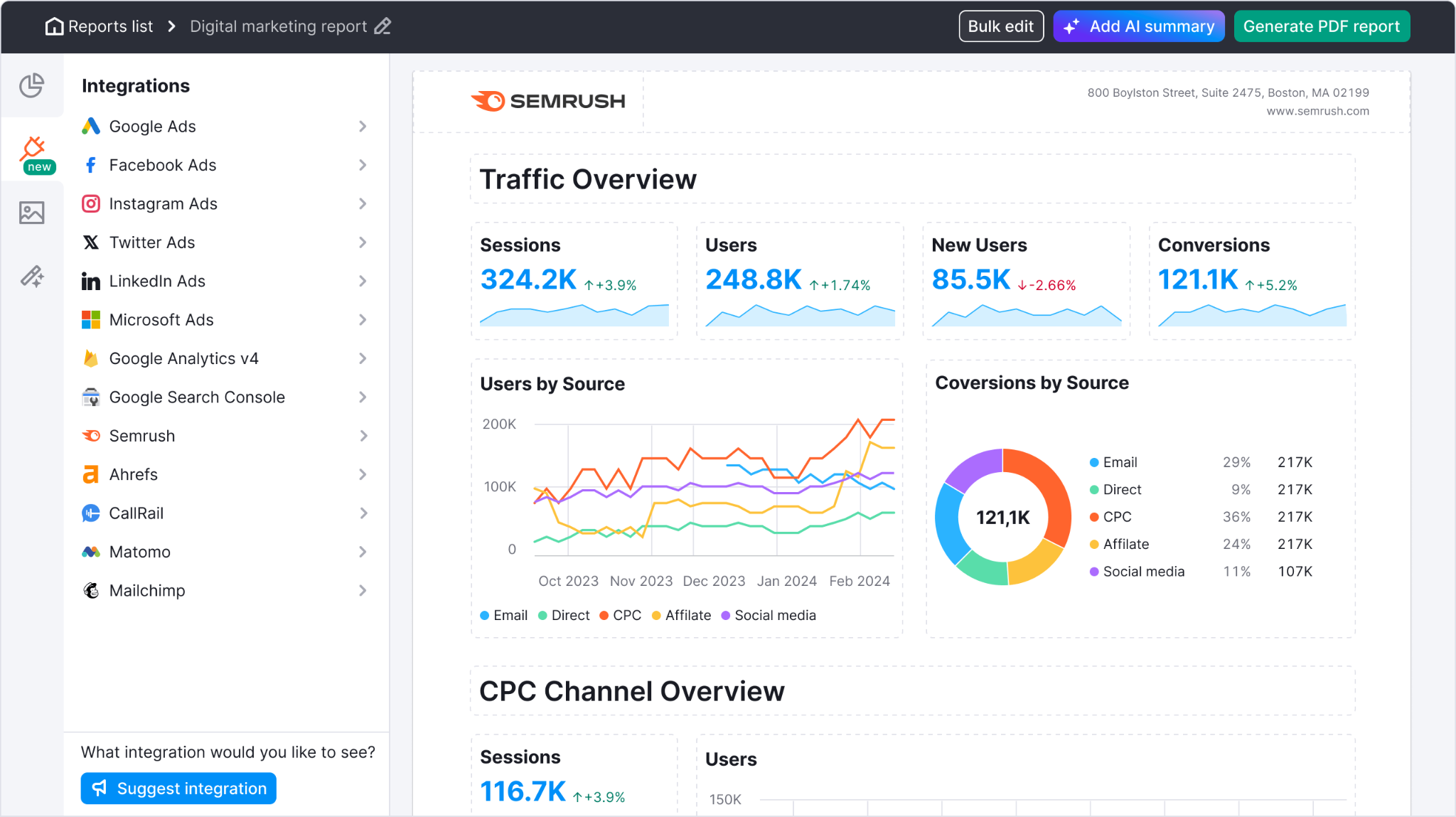
If content-led growth is in your playbook, Semrush is one of the best AI tools for growth marketing for the SEO layer. It tells you exactly which content angles are winning in your market, where competitors are underinvesting, and what keywords are worth targeting.
Core growth use cases: Keyword research, content gap analysis, technical SEO audits, competitor intelligence, PPC research, and position tracking.
Standout features:
- AI-assisted writing and content optimization
- Competitor keyword and backlink intelligence
- Position tracking across search engines
- Content gap identification vs. top-ranking pages
- AI Visibility Toolkit for LLM/AEO search presence
Why it works for growth teams: It surfaces the organic opportunities your competitors haven't captured yet. In 2026, that includes visibility in AI-generated answers — not just traditional Google rankings.
Pricing: Semrush offers three plans: Pro at $139.95/month ($117.33/month annual), Guru at $249.95/month ($208.33/month annual), and Business at $499.95/month ($416.66/month annual). Annual billing saves 17% across all tiers. Docket
Best for: Teams driving organic visibility alongside paid and outbound — especially in markets where buyers research heavily before ever talking to sales.
Limitations: Content Marketing Toolkit, historical data, and multi-location tracking are not available on the Pro plan — teams that need those features have to jump to Guru, which is a meaningful price increase. Docket
3. Clay — Data Enrichment and Personalized Outbound

Clay is one of the most powerful best AI tools for growth marketing in the outbound layer. It pulls from 150+ data providers simultaneously, runs AI-generated personalization, and syncs enriched records directly to your CRM. One marketer can do what used to take a full BDR team.
Core growth use cases: Waterfall enrichment from multiple data sources, AI-generated personalized first lines, programmatic prospect list building, and CRM sync.
Standout features:
- 150+ data provider waterfall enrichment
- AI message and personalization generation
- Job change and signal tracking
- Email campaign integrations (Instantly, Smartlead, Lemlist)
- CRM sync on Growth plan and above
Why it works for growth teams: Replaces hours of manual research per prospect. Instead of a human copy-pasting LinkedIn bios into a spreadsheet, Clay pulls tech stack, funding status, recent news, and job changes — then generates a personalized opening line automatically.
Pricing: Clay's Launch plan starts at $185/month with 2,500 Data Credits and 15,000 Actions. The Growth plan costs $495/month with 6,000 Data Credits and 40,000 Actions. Data marketplace costs dropped 50-90% across most enrichment providers in 2026, making it more cost-effective for high-volume enrichment than it was a year ago.
Best for: Outbound-focused growth teams building precise prospect lists with AI-personalized messaging at scale — without a full research team.
Limitations: There's a real learning curve. Credit math still surprises teams, and CRM integration requires the Growth plan ($495/month). Solo operators or teams without GTM engineering support may find the setup friction high.
4. Amplitude — Product Analytics and Behavioral Intelligence
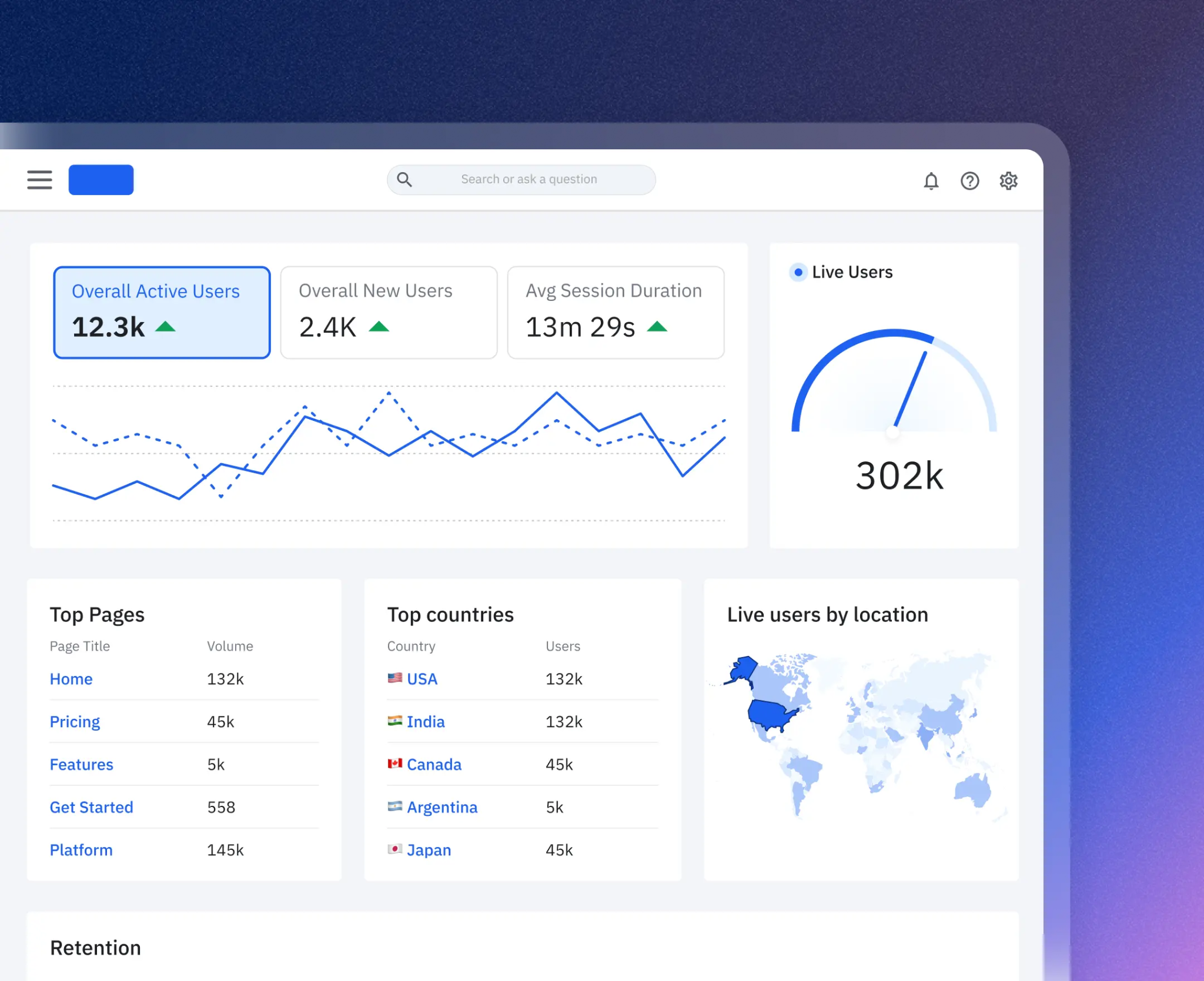
Amplitude sits at the behavioral analytics layer — one of the most underutilized pillars in most growth stacks. It answers the questions your web analytics tool can't: Why do users who activate in week one churn in week four? Which features correlate with paid conversion? What's the drop-off point in the onboarding flow?
Core growth use cases: Cohort analysis, retention tracking, funnel visualization, A/B test analysis, user journey mapping, and feature adoption measurement.
Standout features:
- Behavioral cohort segmentation
- Built-in experimentation engine
- AI-generated insights and anomaly detection
- Predictive analytics for churn and retention
- Journey analysis across product touchpoints
Why it works for growth teams: It closes the loop between your product and your marketing. When you know which activation events drive long-term retention, you can build acquisition campaigns specifically targeting users who'll hit those moments.
Pricing: Amplitude has a generous free plan for smaller teams. Paid plans scale with data volume and feature access — pricing is custom at growth and enterprise tiers. Contact Amplitude directly for current plan pricing based on your monthly tracked users.
Best for: SaaS and PLG companies that want to use product usage data to fuel both marketing and sales — and need more than Google Analytics can offer.
Limitations: For teams without a technical growth function, the implementation complexity and setup investment can delay time-to-value significantly.
5. Hotjar — CRO and User Behavior Intelligence
Hotjar answers the question every growth team eventually asks: "We know users are dropping off at step three. But why?" It closes the gap between quantitative data and actual human behavior, and it's one of the most practical CRO tools in any growth stack.
Core growth use cases: Heatmaps, session recordings, on-site feedback surveys, rage-click analysis, and funnel drop-off visualization.
Standout features:
- Click, scroll, and move heatmaps
- Real session replay recordings
- NPS and feedback surveys
- Funnel analysis with drop-off visualization
- Integration with Google Analytics, Segment, and HubSpot
Why it works for growth teams: It makes experiment design smarter. Instead of guessing what to test on a landing page, you watch ten session recordings and find the friction in five minutes. That's the difference between running meaningful A/B tests and running random ones.
Pricing: Hotjar has a free basic plan for low-traffic use cases. Paid plans start at $32/month for Plus and scale based on session volume. Business and Scale plans are available for higher-traffic teams with advanced features.
Best for: Marketing teams running CRO experiments on landing pages, onboarding flows, and product pages — especially teams that want qualitative context alongside their quantitative data.
Limitations: Hotjar is a diagnostic tool, not an execution tool. You still need a separate A/B testing platform (like Google Optimize or VWO) to run the experiments it helps you design.
6. Apollo.io — Outbound Prospecting and Sequencing
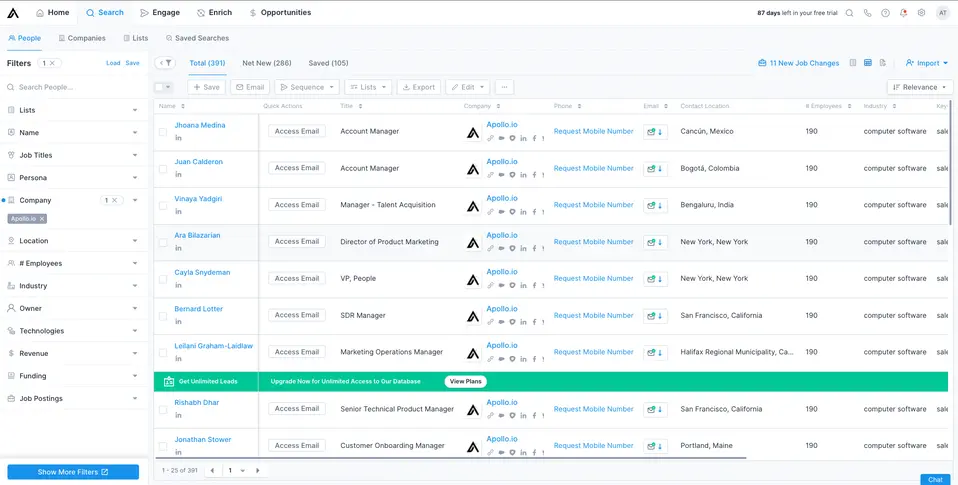
Apollo.io is one of the most widely used growth marketing tools in the outbound prospecting layer. It combines a massive contact database with built-in sequencing, intent data, and a power dialer — so your team can go from prospecting to outreach without leaving the platform.
Core growth use cases: B2B contact database search, automated email and call sequences, buying intent signals, dialer for cold calling, and CRM sync.
Standout features:
- 275M+ contact database with email, phone, and LinkedIn data
- Buying intent signals based on online behavior
- Built-in sequencer with A/B testing
- Power dialer (Professional plan and above)
- Waterfall email verification
Why it works for growth teams: It closes the loop between lead discovery and outreach execution. You find a prospect, verify their contact data, add them to a sequence, and track responses — all in one place. No jumping between a data tool, a sequencer, and a CRM.
Pricing: Apollo pricing in 2026 ranges from free to $119 per user per month on annual billing. Paid plans range from $49 to $119 per user per month on annual billing — monthly billing increases that to roughly $59, $99, and $149 per user.
Best for: B2B growth teams and SDR orgs running outbound prospecting at scale who want one platform over three separate tools.
Limitations: Apollo's listed $49-$119/user/month understates real costs once credit overages and mobile number reveals kick in. Budget carefully if your team is doing heavy outbound or pulling large volumes of phone numbers.
7. Zapier — Workflow Automation and Stack Integration
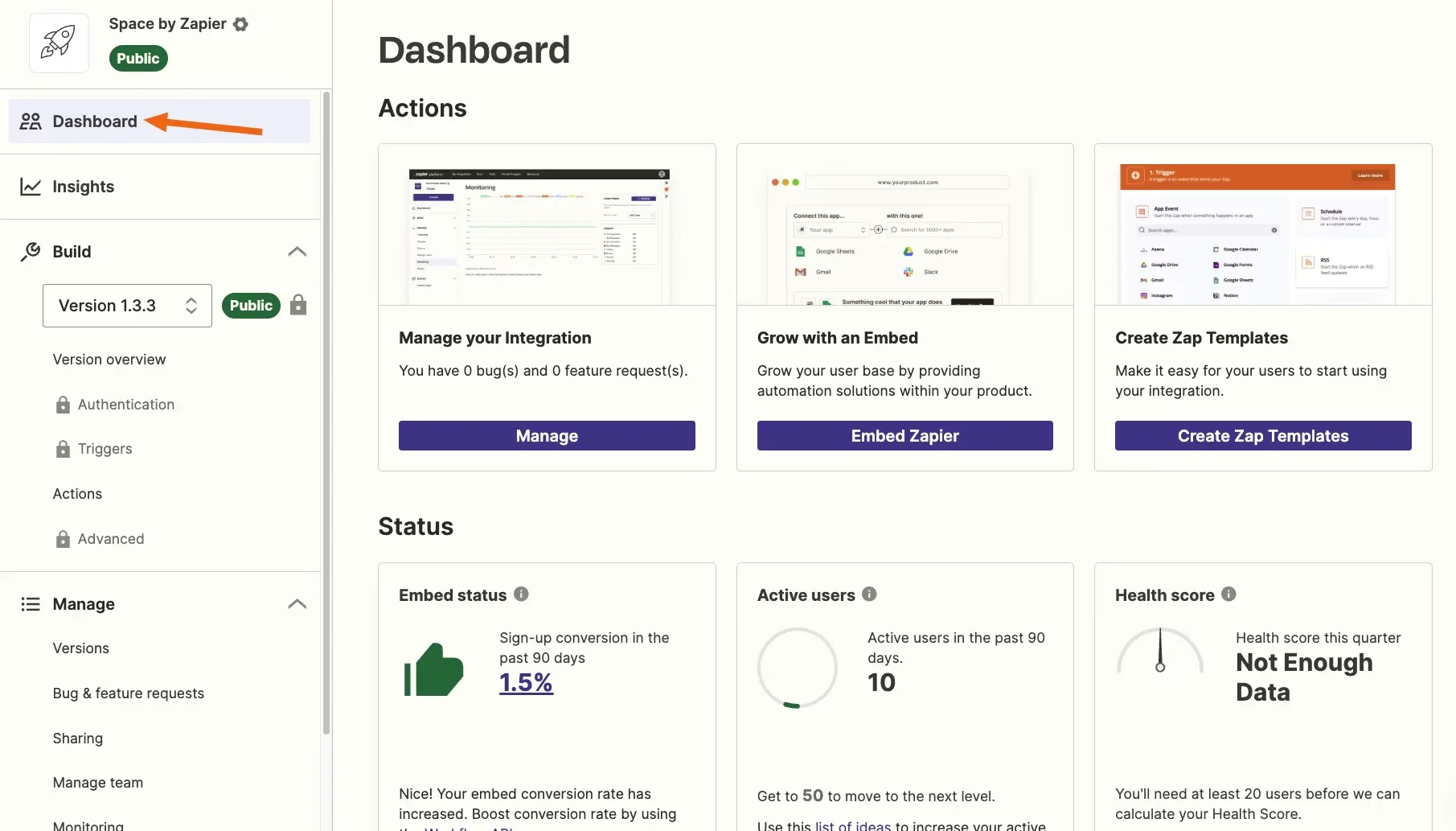
Zapier is the connective tissue of a modern growth stack. It doesn't generate leads or run experiments on its own — but it makes sure every other tool in your stack works together without manual intervention. When a lead fills out a form, Zapier routes it to your CRM, Slack, and your sequencer automatically. No dropped leads, no lag.
Core growth use cases: Auto-routing new leads to CRM, triggering Slack alerts on deal stage changes, syncing data between outreach tools and analytics, and automating repetitive handoffs between platforms.
Standout features:
- 6,000+ app integrations
- Multi-step Zaps with conditional logic
- No-code workflow builder
- Built-in tables and data interfaces
- AI-powered workflow suggestions
Why it works for growth teams: It removes the "lost lead" problem. Every form submission, every intent signal, every new contact gets acted on automatically — no human required to copy-paste between tools.
Pricing: Zapier has a free tier for basic single-step workflows. Paid plans start at $19.99/month for the Professional plan (billed annually) and scale up to Team and Enterprise tiers based on task volume and team size.
Best for: Any growth team with a multi-tool stack. Specifically valuable when you're using tools that don't have native integrations — common with newer or more specialized platforms.
Limitations: Complex multi-step Zaps can get expensive at scale. For high-volume automation, task limits push teams toward higher pricing tiers quickly.
How to Build Your Growth Marketing Stack Without Wasting Budget
The teams that waste money on tools usually do one of two things: they buy everything at once before they've earned the right to use it, or they build a stack where the tools don't talk to each other.
Here's a smarter sequence for small business growth:
👉 Start with one core problem. What's the biggest constraint in your funnel right now? If you're losing leads between form submission and follow-up, start with HubSpot or Zapier. If you can't find quality prospect data, start with Apollo or Clay. Fix the biggest bottleneck first — everything else comes after.
👉 Follow this build sequence: Analytics foundation first (so you can measure anything you do), then CRM, then lead generation, then automation, then enrichment, then CRO, then SEO. You need measurement before you need optimization.
👉 Use free tiers aggressively. HubSpot, Apollo, Hotjar, Amplitude, and Zapier all have usable free tiers. There's no reason to pay for a tool you haven't validated. Run your first campaigns on free plans, then upgrade when volume or features become the actual bottleneck — not before.
👉 Run an integration audit before buying anything new. Before adding a tool, check: does it connect natively with my CRM? Does it sync to my analytics platform? If the answer is no to both, budget for a Zapier connector or reconsider the purchase. Fragmented data is the silent growth killer.
👉 Match tools to team size. A solo growth marketer or a two-person B2B team needs lean, high-ROI tools with short ramp-up times. Mid-sized teams can afford specialization — a dedicated enrichment layer, a separate CRO tool, a sequencer with advanced logic. Don't buy a mid-market stack if you're running a small team.
The goal isn't a bloated stack. The goal is a connected one.
How Cleverly Helps B2B Companies Implement Growth Marketing at Scale
Growth marketing tactics only work when the underlying lead quality is high. You can have the best A/B testing setup in the world, but if the contacts entering your funnel are wrong-fit, wrong-title, or wrong-company — the math never works. That's where most B2B teams hit a ceiling.
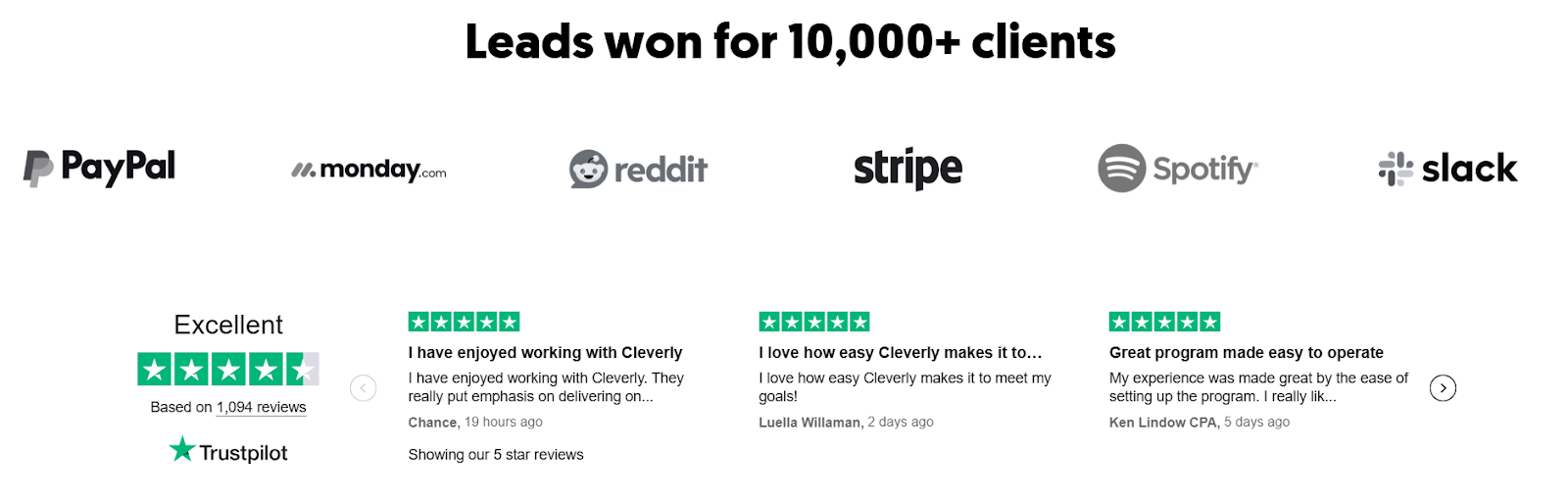
At Cleverly, we handle the acquisition layer end-to-end so your team doesn't have to. We've worked with 10,000+ B2B clients — including teams at Amazon, Google, Uber, PayPal, Slack, and Spotify — building and running LinkedIn outreach, cold email, and cold calling systems that put qualified meetings directly on your calendar.
No sequence-building, no list management, no deliverability troubleshooting.
🚀 Our cold email service runs on a performance model — you only pay for meeting-ready leads.
🚀 Our LinkedIn outreach starts at $397/month.
🚀 And for companies that want a fully managed cold calling function, our $5M Cold Calling System books 10-30 qualified sales calls per month with a dedicated no-accent appointment setter, custom scripts, data, and dialer infrastructure included — at half the cost of building it in-house.
The reason growth teams come to us is simple: they want their internal team focused on conversion, retention, and experimentation — not spending 60% of their week managing outbound infrastructure. We fill the top of the funnel. They work the bottom.
Want qualified B2B leads flowing into your pipeline without building an in-house outbound team?
Book a strategy call with Cleverly and let's build a system that feeds your growth stack from day one!
Conclusion
Growth marketing tools in 2026 are more capable than ever — but the stack only matters if it's integrated and focused on the right problems. The seven tools above cover every core growth pillar, from behavioral analytics and SEO to outbound prospecting and workflow automation.
You don't need all seven on day one. Start with the tool that directly unblocks your biggest constraint, get signal, and build outward from there.
A lean, connected stack will always outperform a bloated, siloed one — and the teams moving fastest in 2026 are the ones who figured that out early.
Frequently Asked Questions
Free Resource
How to Scale a Profitable Cold Call System
Get the complete guide — download it instantly now.
Free Ebook
Download the Free Guide
Enter your details to get instant access.
You're all set! 🎉
Your ebook is downloading now.
Click below if the download didn't start automatically.