Table of Contents
The Real Truth About Agency-Managed vs. Software-Only Cold Email
What Is Software-Only Cold Email?
What Is Agency-Managed Cold Email?
Agency-Managed vs. Software-Only Cold Email: Side-by-Side Comparison
Choose Software-Only If…
Choose Agency-Managed If…
Common Mistakes When Choosing Between the Two
Where Cleverly Fits as a Cold Email Agency
Conclusion
Frequently Asked Questions
Modified On :
August 19, 2026
Key Takeaways
- The real difference between agency and software isn't the tool, it's who owns strategy, copywriting, list building, and deliverability day to day.
- Software gives you sending infrastructure. It doesn't write your copy, research your prospects, or fix your deliverability problems.
- The reply-rate gap between DIY and managed cold email almost always comes down to personalization depth and ongoing deliverability discipline, not the platform.
- The right choice depends on your team's actual bandwidth and expertise, not just the monthly price tag.
- Switching models too early, before either approach gets a fair runway, is one of the most common and costly mistakes teams make.
Cold email in 2026 punishes lazy execution harder than it used to. The average platform-wide reply rate has dropped from 5.1% in 2024 to 3.43% in 2026, driven by inbox saturation, tighter spam enforcement from Gmail and Outlook, and a flood of low-effort AI-generated outreach.
At the same time, B2B campaigns run as a tight system, with real targeting, genuine personalization, and structured follow-ups, are regularly hitting 10 to 18% reply rates. The gap between average and elite has never been this wide.
That gap is exactly why this decision matters more than it used to. This question usually shows up once a team has already decided cold email is worth doing and now has to figure out how to actually run it: buy a tool and run it yourself, or hand execution to a cold email agency.
This guide breaks down what each model really includes, what it actually costs once you factor in time, and how to decide which one fits your team.
If you're a founder, a RevOps lead, or a sales leader weighing a cold email agency vs software decision, you'll walk away knowing exactly where you stand.
The Real Truth About Agency-Managed vs. Software-Only Cold Email
This isn't a "better tool vs. worse tool" debate, and framing it that way is where most people get stuck. Software isn't a replacement for strategy, copywriting, list building, and deliverability management. And an agency isn't just software with a markup slapped on top.
DIY software gives you sending infrastructure. That's it. It doesn't write your copy, research your prospects, or manage your deliverability for you. Someone still has to do all of that, and in a software-only setup, that someone is your team.
Here's where it actually shows up in the numbers: most DIY users sending template emails with basic merge fields land well under a 1% reply rate. Done-for-you setups running enrichment and real personalization commonly hit 3 to 5%, with strong campaigns pushing past that.
A well-run outbound cold email campaign in 2026 should land between 3% and 5% as a realistic average, with top performers reaching 8 to 12%.
Quick verdict before we go deeper: software-only fits teams with real in-house expertise and the time to manage it properly. Agency-managed fits teams that want the output without owning the process.
📅 Make Booking Easy. Make Selling Easier.
Our LinkedIn, cold email, and cold calling campaigns generate 15–30 qualified meetings every month with your ideal buyers.
What Is Software-Only Cold Email?
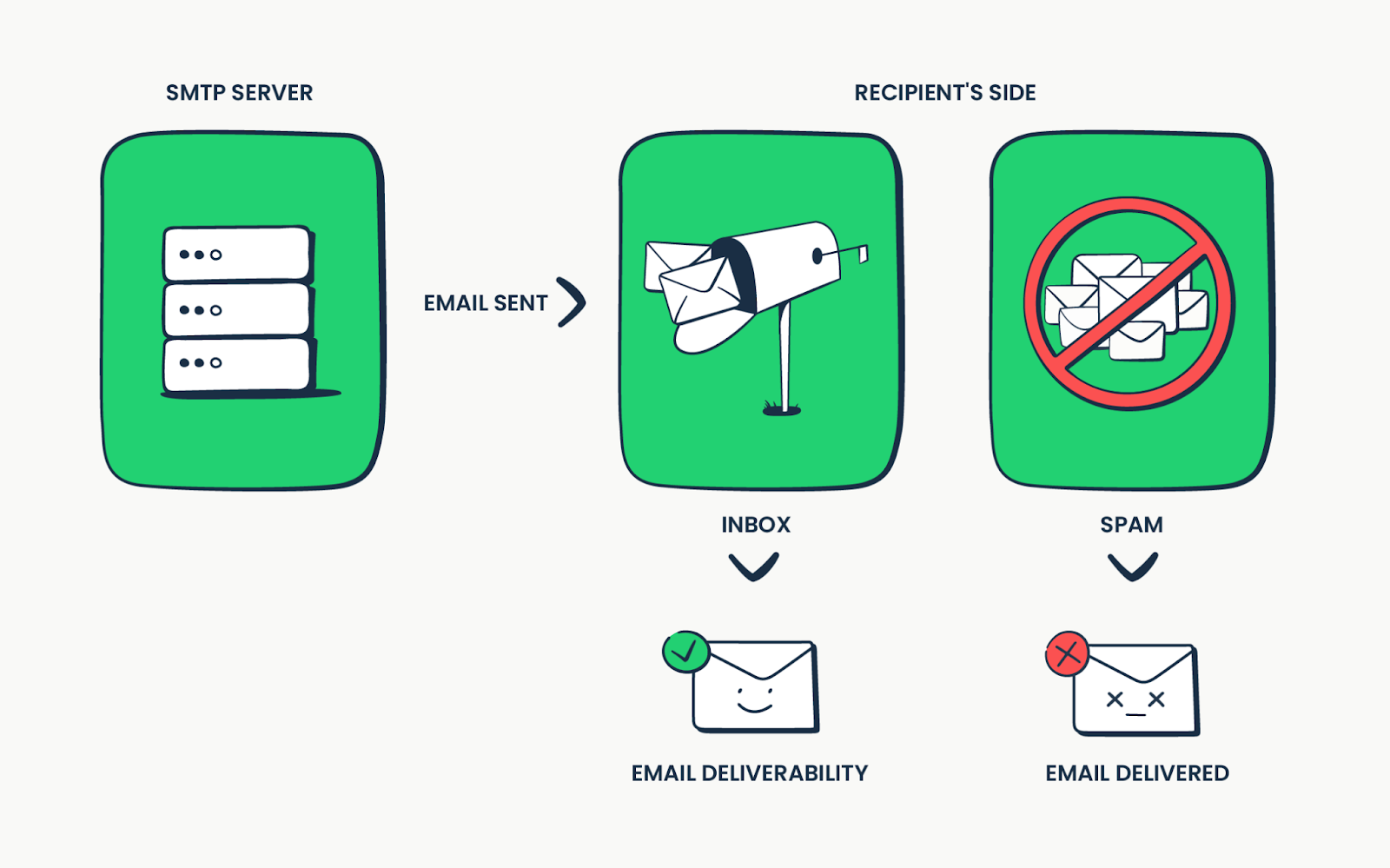
Software-only cold email means running everything in-house using a cold email platform (Instantly, Smartlead, Lemlist, Apollo, and similar tools) while your own team manages strategy, copywriting, list building, and deliverability.
What's included:
- Sending infrastructure
- Inbox warmup
- Basic sequence automation
- Sequence building tools
What's NOT included, and this is the part people underestimate:
- Strategy and positioning
- Copywriting
- Prospect research and list building
- Ongoing deliverability troubleshooting
- Account and campaign management
All of that falls on your team. The platforms are known for flat, predictable pricing with unlimited email accounts, which is genuinely appealing if you want full control over the process and have someone who can actually run it well.
What Is Agency-Managed Cold Email?
Agency-managed cold email means a done-for-you cold email provider handles strategy, list building, copywriting, sending infrastructure, deliverability, and ongoing optimization as one full-service engagement.
What's included:
- ICP-aligned list building
- Personalized, tested copy
- Domain and inbox setup plus warmup
- Ongoing deliverability monitoring
- Reporting and campaign optimization
This model is built to require close to zero hours of internal time to run day-to-day. Your job is reviewing results and giving input, not managing infrastructure or writing sequences.
It's best known for full-service outbound campaigns, and pricing across the agency market for this kind of scope typically ranges from $3,000 to $10,000 a month depending on volume and channels involved.
🚀 More Meetings. Less Calendar Chasing.
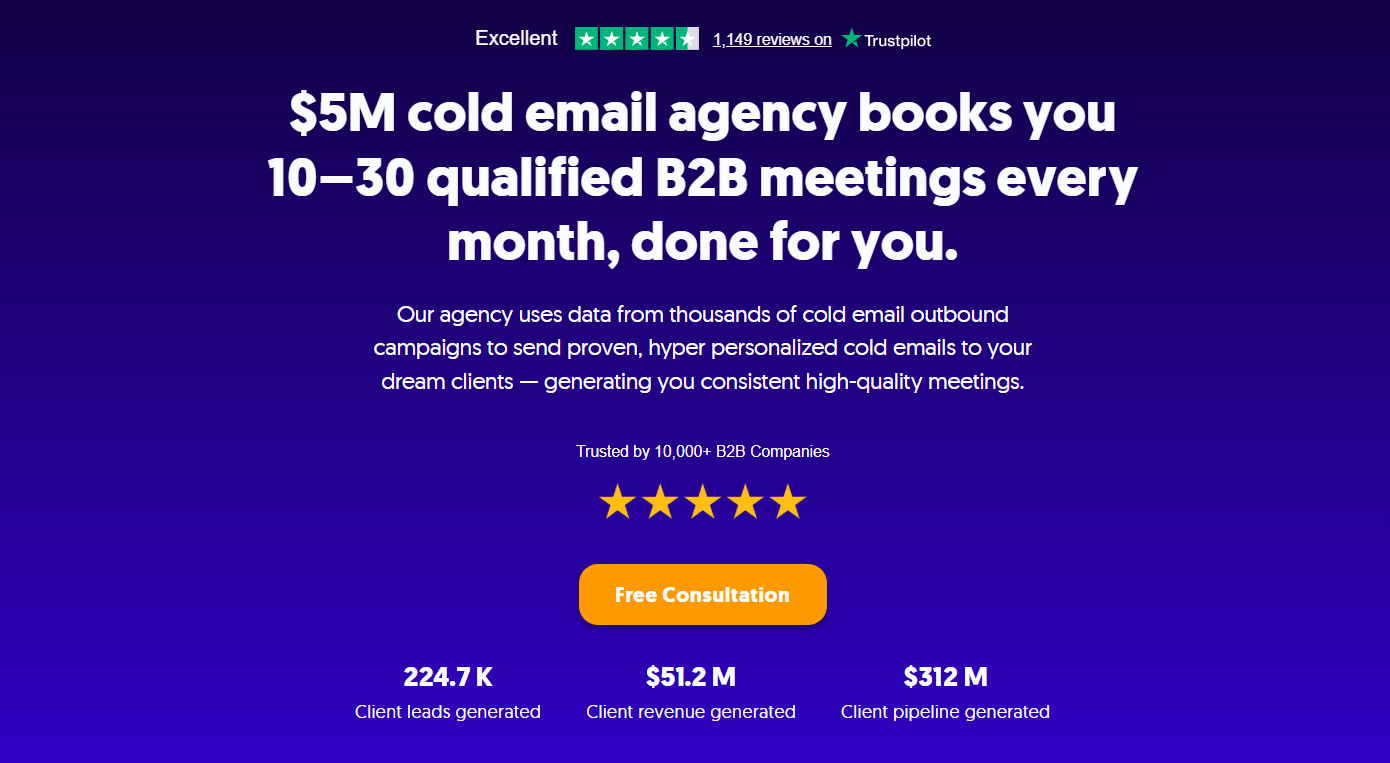
With 53,000+ meetings booked and $312M+ in pipeline generated, Cleverly helps 10,000+ businesses build predictable outbound pipeline.
Agency-Managed vs. Software-Only Cold Email: Side-by-Side Comparison
Think of this as a decision matrix, not a sales pitch. Here's how the two models actually stack up:
Choose Software-Only If…
Software-only makes sense in specific situations, not as a default. Here's when it's the right call:
You're Budget-Conscious and Sending Low Volume
If you're sending under roughly 200 emails a day and want to keep monthly spend under $500, software-only keeps costs predictable. Just go in expecting a slower ramp-up while your team learns deliverability fundamentals the hard way.
You Have In-House Expertise and Time
This works when someone on your team already understands SPF, DKIM, and DMARC setup, knows how to warm up a domain properly, and can write a cold email copy that doesn't sound like a template. It also requires a real commitment, usually 15 to 20 hours a week managing sequences, lists, and inbox health.
You Want Full Control Over Every Variable
Some teams genuinely prefer owning strategy, targeting, and messaging directly instead of handing it off. If that's you, and you're comfortable troubleshooting deliverability issues like spam placement or domain reputation problems on your own, software-only lets you keep that control.
Choose Agency-Managed If…
Agency-managed makes more sense the moment your team's bandwidth becomes the actual bottleneck. Here's when that's the case:
You Lack the Time or Internal Expertise
If no one on your team has the bandwidth to manage deliverability, run copy tests, and build lists all at once, forcing it in-house usually means it gets done poorly or not at all. Agency-managed cold email lets you get outbound running without adding another full-time responsibility to an already full plate.
You Need to Scale Quickly
Scaling volume in-house means scaling internal hours and expertise right alongside it. That's a hard ceiling for most teams. An outsourced cold email partner scales sending and strategy without you adding headcount every time volume needs to go up.
You Want Multi-Channel Outreach, Not Just Email
Cold email performs noticeably better when it's paired with LinkedIn and cold calling touchpoints, but coordinating three channels in-house adds real operational complexity fast. Agencies typically run this as one coordinated outbound motion instead of three disconnected efforts that never quite line up.
Common Mistakes When Choosing Between the Two
A few patterns show up again and again when teams get this decision wrong:
- Choosing software-only purely to save money without accounting for the real cost of the internal hours it takes to manage it well.
- Assuming any agency automatically outperforms DIY. Results still depend on the agency's actual process, not just the label on the invoice.
- Switching models too early, before giving either approach enough time to generate real reply-rate data.
- Ignoring deliverability setup entirely in a DIY stack, which tanks results no matter how good the copy is.
Where Cleverly Fits as a Cold Email Agency
The tradeoff here is real. Software gives you control and a lower sticker price. Agencies give you expertise and your time back. Cleverly is built for teams that decide the second one matters more.
As a cold email agency, we handle ICP-aligned list building, personalized copywriting, deliverability setup and monitoring, and ongoing campaign optimization as one managed service, not a bundle of disconnected tasks you have to stitch together yourself.
Most of the reply-rate gap between DIY and agency-managed outreach comes down to two things: how deep the personalization actually goes, and how disciplined the deliverability management is. Both require ongoing attention most internal teams simply don't have time for on top of everything else on their plate.
That's the gap we exist to close. Our cold email outreach service covers the full pipeline from list to inbox, backed by infrastructure built for deliverability at scale and reporting that shows exactly what's working.
We've generated $312 million in client pipeline across thousands of campaigns, and that scale is what lets us spot what actually moves reply rates instead of guessing.
Want cold email running without managing it yourself? Book a strategy call with Cleverly and see what a managed setup could look like for your team.
Conclusion
Software-only works well for budget-conscious, low-volume senders who have the time and the in-house expertise to run it properly. Agency-managed works better for teams that want scale and real results without adding another job to their own workload.
The real comparison here was never tool price versus agency fee. It's total cost, including the internal hours a DIY stack quietly eats up, weighed against the reply-rate gap between the two approaches.
Match the model to your team's actual bandwidth and expertise, not just what looks cheaper on paper, and you'll end up with the setup that actually gets you meetings.
Frequently Asked Questions
Free Resource
How to Scale a Profitable Cold Call System
Get the complete guide — download it instantly now.
Free Ebook
Download the Free Guide
Enter your details to get instant access.
You're all set! 🎉
Your ebook is downloading now.
Click below if the download didn't start automatically.