Table of Contents
Why Cold Calling QA Matters for SDR Teams
What to Include in a Sales Call Scorecard
How to Score Each Category
Building Your Scorecard From What Top Performers Actually Do
How Often and How Many Calls Managers Should Review
Common Mistakes When Running Cold Call QA
How Cleverly's Cold Calling Agency Builds QA Into Every Campaign
Conclusion
Frequently Asked Questions
Modified On :
August 10, 2026
Key Takeaways
- A sales call scorecard only works when it's built from what your best reps actually do, not generic sales advice pulled from a template.
- Consistency matters more than complexity. A simple 1–5 scale applied the same way every time beats an elaborate rubric nobody finishes.
- Weight the categories that carry the most downstream risk. A missed compliance disclosure or a skipped discovery step costs more than a slightly awkward close.
- The scorecard's real job is coaching, not grading. If a manager isn't turning scores into specific, one-skill-at-a-time feedback, the scorecard is just paperwork.
- Calibration across managers is what keeps scoring fair. Without it, the same call gets rated three different ways by three different people.
Sales managers only pull up a call recording when something's already gone wrong. A deal stalls, a rep misses quota, and suddenly it's time to go digging. That's reactive coaching, and it means feedback depends entirely on which calls a manager happens to remember, not what's actually happening across the team.
The numbers explain why this matters. Cold calling converts at roughly 2 to 3% dial-to-meeting on average, while top performers hit 5 to 8% or higher on the exact same volume of dials.
The gap between average and top-performing teams is driven by data quality, coaching, and cadence, not talent. That gap is coaching, not talent. And you can't coach a gap you're not measuring.
This guide covers what a sales call scorecard should actually include, how to score it consistently, how often managers should review calls, and how to build a scorecard from real top-performer behavior instead of a generic checklist.
It's built for sales managers, SDR leads, and RevOps teams trying to turn call quality into a repeatable system instead of a gut feeling.
Why Cold Calling QA Matters for SDR Teams
Small execution gaps compound fast at cold calling volume. If your team makes a few hundred dials a week, a 1-point improvement in dial-to-meeting conversion is the difference between a flat quarter and a strong one.
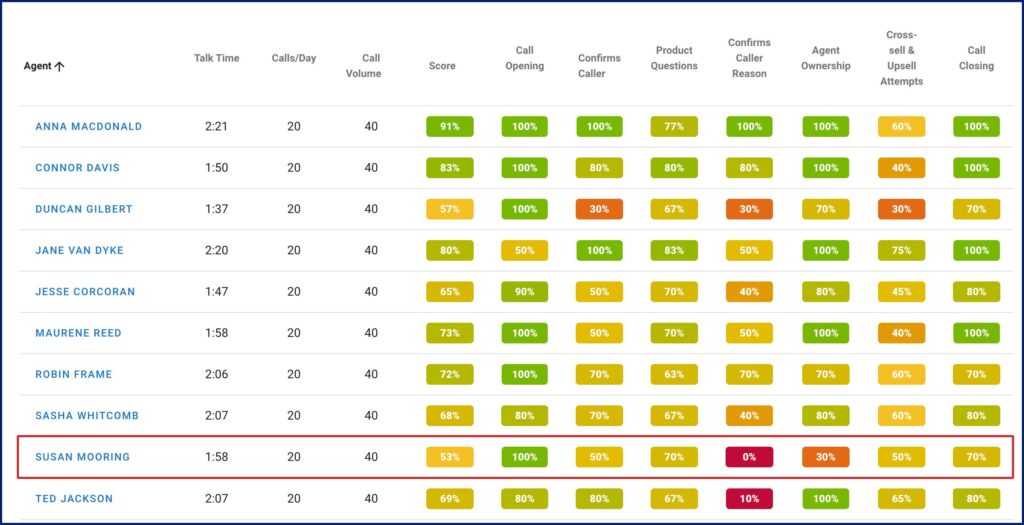
Here's the problem with skipping structured QA: coaching becomes anecdotal. A manager remembers the one call where a rep froze on an objection, not the pattern across the last 50 calls where the same objection kept coming up unhandled.
Without a consistent scorecard, feedback shifts based on whatever stood out that week, and it's inconsistent between reps and between managers reviewing the same rep.
A cold calling scorecard fixes this by turning "that call felt off" into something specific: which section of the call broke down, and what to fix next.
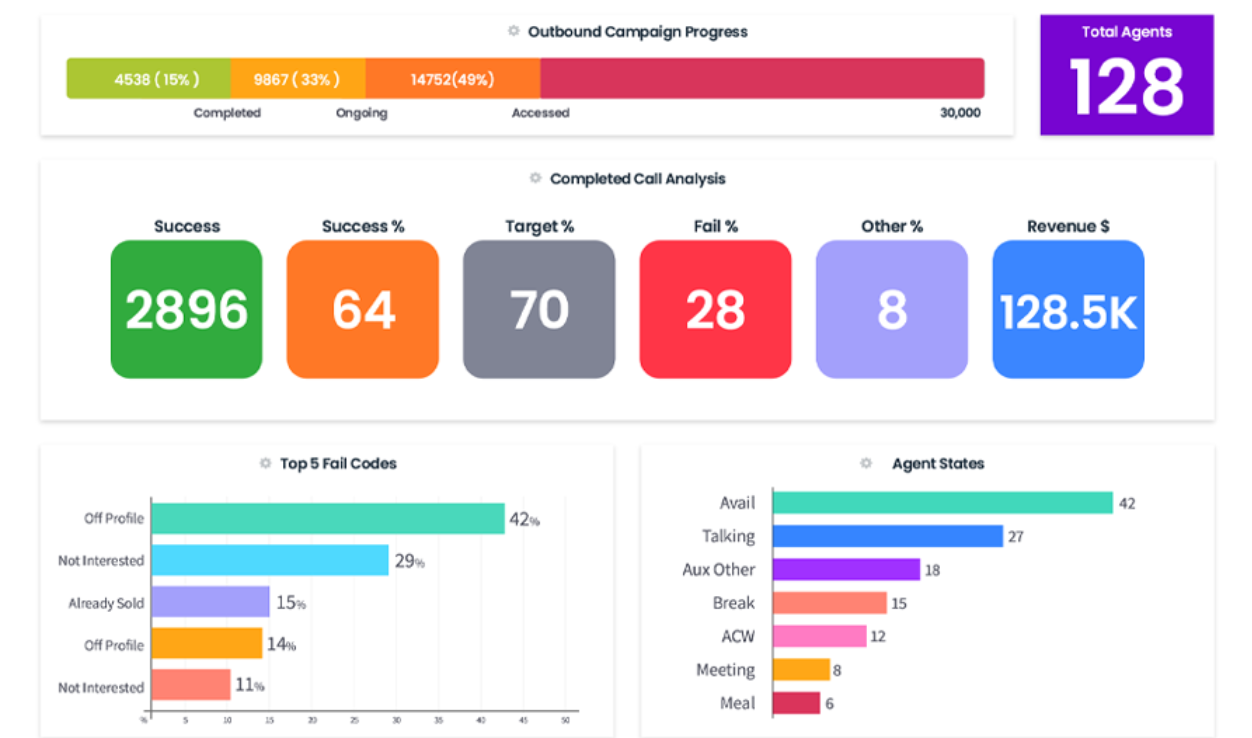
Pro tip: Track a few leading indicators alongside your scorecard, not just the score itself:
- Connect rate — how often dials reach a live person
- Opener survival — how many calls make it past the first 10 seconds
- Objection-handling rate — how often an objection gets resolved versus ending the call
- Talk-to-listen ratio — how much airtime the rep takes up versus the prospect
These metrics tell you where to look before you even open the scorecard.
📞 Better Calls. Better Coaching. More Meetings.
Our done-for-you cold calling campaigns generate 15–30 qualified meetings every month with trained SDRs and proven call frameworks.
What to Include in a Sales Call Scorecard
A good sales call scorecard template doesn't read as one long checklist. It's grouped into sections that follow the actual arc of a call, so a manager can score in order while listening instead of jumping around.
Opening and Disclosures
- Did the rep introduce themselves and the reason for the call clearly and confidently, without a rushed or scripted-sounding opener?
- Was any required disclosure or compliance language included where applicable?
Discovery
- Did the rep ask open-ended questions instead of jumping straight into a pitch?
- Did they uncover real pain, timing, and decision context, or just get a surface-level "yeah, we might be interested"?
Pitch / Product Presentation
- Was the pitch shaped around what the prospect actually said, or was it the same generic pitch regardless of the conversation?
- Did the rep tie the offer directly to the pain they uncovered in discovery, or pivot to a script?
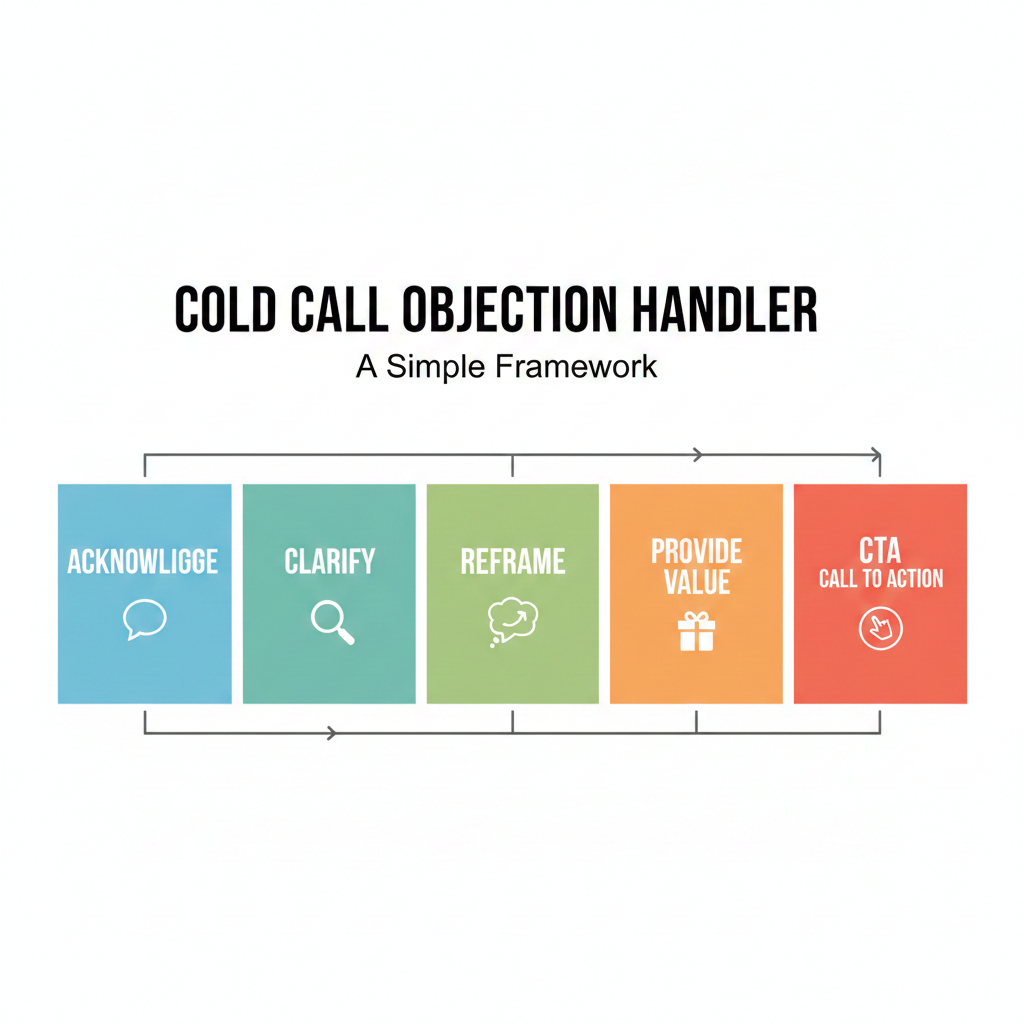
Objection Handling
- Did the rep acknowledge the objection before responding, instead of talking over it or steamrolling into a rebuttal?
- Was the response specific to what the prospect raised, not a generic scripted deflection?
Closing Behavior
- Did the rep ask for a clear next step, like a meeting or specific follow-up, rather than ending the call vaguely?
- Was the close low-friction (a specific date and time) instead of open-ended ("let me know when works for you")?
Compliance and Process Adherence
- Did the rep follow the required call flow or script guidelines where applicable?
- Was the call outcome and notes logged accurately in the CRM afterward?
Six sections, each with 2 to 3 criteria, gives you full coverage of the call without turning the review into an hour-long audit.
How to Score Each Category
The scoring method matters as much as the categories themselves. Here's how to keep it usable:
1. Make every criterion measurable. "Was the rep professional?" is a judgment call that two managers will score differently. "Did the rep reference something specific from discovery in the pitch?" has a yes or no answer anyone can verify by relistening to the call.
2. Use a simple, consistent scale. A 1–5 scale or a straight pass/fail per item both work. What matters is applying the same scale the same way every time. Consistency beats granularity here. A 10-point scale sounds more precise, but in practice it just gives managers more room to disagree with each other.
3. Weight categories by risk, not by feel. Compliance and discovery usually deserve more weight than a smooth close. A missed disclosure creates legal exposure. A skipped discovery step means the rep is pitching blind for the rest of the call. A slightly clunky close, by comparison, is a minor miss.
4. Keep it short. Three to four sections with 2 to 5 criteria each covers the full call. Past that, you end up with a scorecard so long that managers start skipping fields, which defeats the point of having one.
🚀 1M+ Calls. 53,000+ Meetings. Proven Results.
Cleverly helps 10,000+ businesses build predictable pipeline with cold calling, LinkedIn outreach, and cold email.
Building Your Scorecard From What Top Performers Actually Do
The fastest way to build a scorecard that actually reflects what "good" sounds like on your team is to start with your best reps, not a template.
Pull calls from your top 2 to 3 performers and listen for specific, repeatable behaviors. Maybe your best rep always references the prospect's job title in the first 15 seconds. Maybe they never ask a closed-ended question during discovery.
Whatever it is, that's a scorecard criterion, because it's a behavior that's already proven to work on your calls, with your script, against your actual objections.
This matters because generic sales advice doesn't account for what's specific to your product, your ICP, or your objections.
A scorecard built from real top-performer behavior gives reps something concrete to copy. A scorecard built from a generic sales training deck gives them abstract advice that doesn't map to what's actually happening on their calls.
One more thing worth building in from the start: revisit the criteria periodically. Messaging changes, objections shift, and what counted as a strong opener six months ago might sound stale today.
A scorecard that never gets updated slowly turns into a checklist for a call style your top reps have already moved past.
How Often and How Many Calls Managers Should Review
Review 3 to 5 calls per rep per week. That's enough volume to catch a real pattern instead of overreacting to one bad call, without turning QA into a full-time job for the manager.
A few things to keep in mind when you're running this on a weekly cadence:
- Focus each coaching session on one skill. If a rep's discovery and objection handling both need work, don't hit both in the same conversation. Pick one, fix it, then move to the next.
- Pair recorded review with live listening where you can. Whisper coaching in real time catches things a recording review misses, and it lets a rep adjust mid-call instead of waiting until next week's feedback session.
- Calibrate across managers regularly. If you have more than one manager scoring calls, have them independently score the same call and compare notes. If the scores land far apart, that's a sign your criteria need to be more specific, not that one manager is wrong.
The structured version of this pays off. Structured coaching programs are associated with a 28% higher win rate compared to unstructured coaching, and reps coached weekly hit quota at meaningfully higher rates than those coached monthly or quarterly.
Common Mistakes When Running Cold Call QA
Even teams that mean well tend to fall into a handful of predictable traps:
❌ Reviewing reactively instead of on a schedule. If QA only happens after a deal is lost, you're not catching the pattern until it's already cost you a meeting.
❌ Scoring without specific criteria. Vague scoring categories create feedback that varies wildly between reps and between reviewers.
❌ Treating the scorecard as a grading tool only. A score with no follow-up coaching conversation attached to it doesn't change behavior. It just becomes a number in a spreadsheet.
❌ Using one scorecard for every call type. A cold call, an objection-heavy follow-up, and a demo call each need different criteria. Scoring them all the same way misses what actually matters in each context.
❌ Skipping calibration between managers. Nearly half of reps already rate the coaching they get as below average. 45% of reps rate the coaching they receive as below average, up sharply from 29% the year before Inconsistent scoring between managers is one of the fastest ways to make that worse.
How Cleverly's Cold Calling Agency Builds QA Into Every Campaign
Consistent call quality doesn't happen by accident. It takes the same structured review process this guide walks through, run at scale, week after week, across every caller on a team.
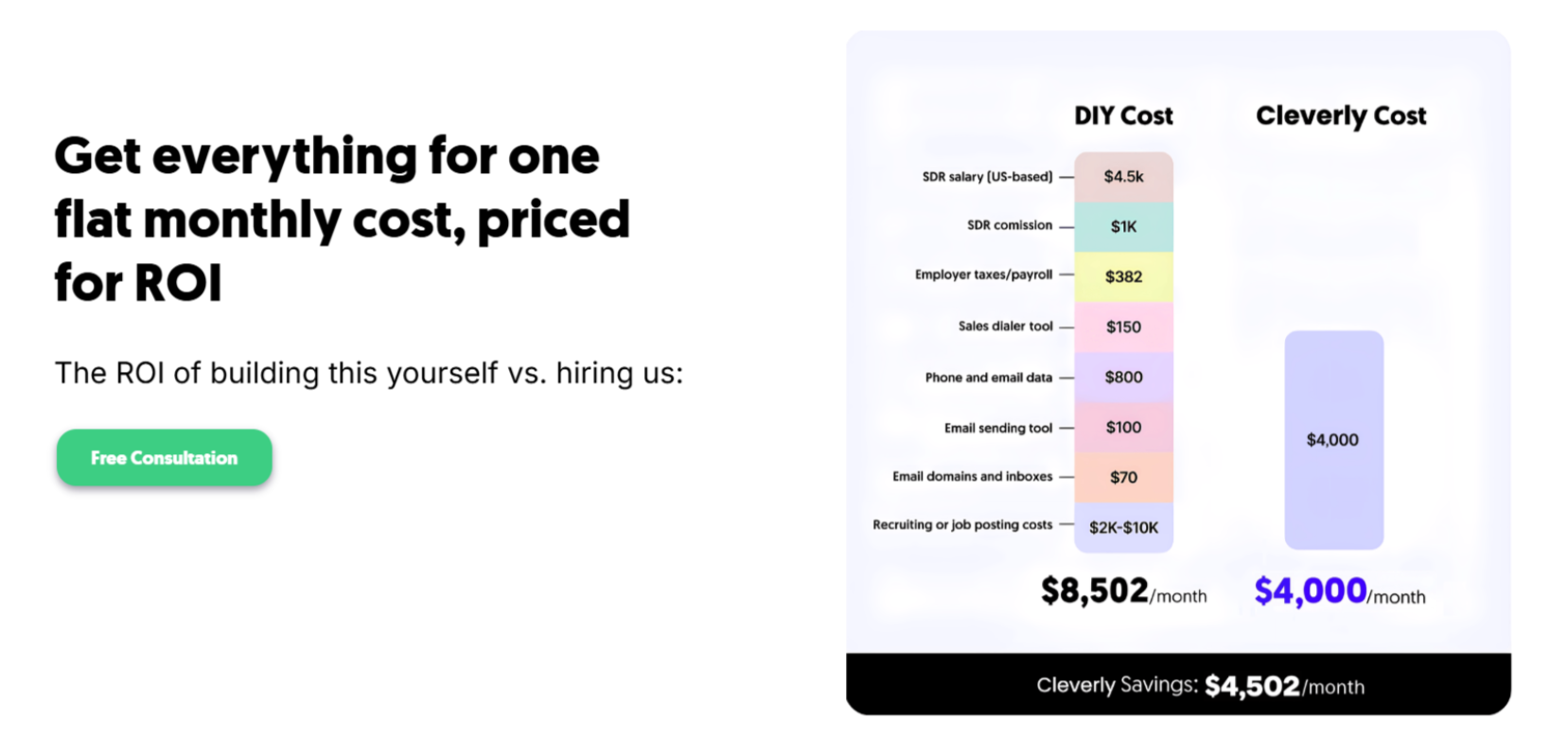
That's the operational reality most B2B teams underestimate when they decide to build cold calling in-house. It's not just hiring an SDR. It's building the scorecard, training managers to score it consistently, calibrating across reviewers, and doing it every single week without letting it slip when things get busy.
As a cold calling agency, we run structured QA scoring on every caller's calls as a built-in part of the campaign, not an add-on. Clients get access to call recordings and performance dashboards directly, so you can see exactly how calls are being scored and coached, not just how many dials went out.
Our $5M Cold Calling System pairs a dedicated, no-accent appointment setter with scripts built for your specific offer, and that setter is fully trained and live within two weeks.
For B2B teams that want cold calling with quality assurance built in from day one, rather than managing caller performance and calibration internally, this is exactly the gap we fill.
Want cold calling with QA built in, not bolted on? Book a strategy call with Cleverly to see how it works.
Conclusion
A cold calling QA scorecard turns feedback that used to be reactive and inconsistent into a system you can actually repeat week over week.
The scorecards that work aren't the most detailed ones. They're built from what your real top performers do, scored on a simple and consistent scale, and weighted toward the categories that carry the most risk if they're missed.
Review 3 to 5 calls per rep every week, calibrate scoring across your managers, and keep the coaching conversation focused on one skill at a time. The score itself isn't the point. It's the specific, consistent coaching that a good scorecard makes possible.
Frequently Asked Questions
Free Resource
How to Scale a Profitable Cold Call System
Get the complete guide — download it instantly now.
Free Ebook
Download the Free Guide
Enter your details to get instant access.
You're all set! 🎉
Your ebook is downloading now.
Click below if the download didn't start automatically.