Table of Contents
What Is TCPA and Why It Applies to B2B Calling
Where B2B Gets Relief and Where It Does Not
The 10-Step TCPA Compliance Checklist
State Laws That Go Further Than Federal TCPA
AI Voice Calling Carries Additional Risk
How to Run a TCPA Audit
How Cleverly Runs Compliant Cold Calling Programs
Conclusion
Frequently Asked Questions
Modified On :
October 27, 2026
Key Takeaways
- B2B status gives you relief on some TCPA provisions, but not on the ones that drive most lawsuits.
- Treat every direct dial as a possible mobile number until you have verified the line type.
- How you dial matters as much as who you dial. Manual dialing carries far less risk than automated dialing.
- Federal rules are the floor. Build your program to the strictest state you call into.
- A checklist only protects you if it runs on every rep and campaign, and you test it on a schedule.
The call that gets a B2B team sued is usually the one they were sure was exempt. Plenty of sales leaders skip a TCPA compliance checklist because they believe the law stops at the consumer line, then dial at scale on that belief. It gets expensive fast.
TCPA filings reached 2,788 in 2024, up 67% from 2024, and class actions through September 2025 hit 1,636 versus 800 the year before. Statutory damages run $500 per violation, and up to $1,500 if a court finds the violation willful or knowing. Multiply that by a call list and your dialer becomes a balance sheet problem.
The truth sits in the middle. Some provisions give B2B calling relief. Several do not, and those are the ones that generate litigation.
This guide covers what the TCPA is, where B2B relief starts and stops, a 10-step checklist, state rules, AI calling, and how to audit.
What Is TCPA and Why It Applies to B2B Calling
The Telephone Consumer Protection Act (TCPA) is a federal law from 1991, backed by FCC rules. If someone asks you what is TCPA compliance, the short answer is this: following the rules on how, when, and whom you can call, and being able to prove it.
What the TCPA Governs
- Automated dialing technology
- Prerecorded and artificial voice messages
- Calling time restrictions
- Do-not-call obligations
Why B2B Calling Is Still in Scope
Relief for B2B calls applies to certain provisions, notably the national Do Not Call registry. It does not carry over to the wireless and autodialer provisions.
That distinction matters because of how B2B data works. A large share of direct dials you buy or source are mobile numbers. Mobile numbers are exactly where the stricter rules apply. Your prospect being a CFO instead of a homeowner does not change that.
Who Enforces It
Regulators enforce the TCPA, but private plaintiffs do most of the damage. Individuals and class action firms can sue for statutory damages per call. That per-call exposure is what makes this serious for a calling program that dials thousands of numbers a month.
Other Rules That May Apply
Depending on where you call, other regimes can sit on top of the TCPA:
- State telemarketing and “mini-TCPA” statutes
- State registration and bonding requirements
- Separate data protection and telemarketing rules for non-US contacts
📞 Call Smarter. Book More Meetings.
Cleverly helps B2B teams turn targeted cold calling into qualified sales conversations.
Where B2B Gets Relief and Where It Does Not
This is where the biggest misconception lives, so let’s be specific.
Where B2B Calling Has Relief
The national Do Not Call registry generally does not cover business-to-business solicitation calls. Business lines cannot be registered on it. Some sources identify a carve-out for certain supply categories, such as nondurable office or cleaning supplies. Confirm the current scope before you rely on the exemption.
Where No B2B Exemption Exists
- Internal do-not-call requests. The strict federal rules center on residential and wireless numbers. In practice, you should honor every request on every call. It is the only operating standard that holds up.
- Autodialed and prerecorded calls to wireless numbers. Prior express consent applies, and that includes business mobiles.
- Personal mobiles of decision-makers. A call to a founder’s personal cell is not exempt because the topic is business.
The Mobile Number Grey Area
Direct dials from data providers are frequently mobile, and often unlabeled. Some litigation has treated numbers like these as residential. So the safe assumption is that an unidentified number could be a mobile.
The practical takeaway: manually dialing unverified mobile numbers carries materially less risk than running them through an automated dialer.
Pro tip: If you cannot tell whether a number is mobile, route it as if it is. You lose a little speed. You avoid the expensive mistake.
The 10-Step TCPA Compliance Checklist
This is the section to save and share with your SDR managers. Here is how to comply with the TCPA in practice, step by step.
1) Maintain an Internal Do-Not-Call List
- Keep one for all telemarketing calls, with no B2B carve-out in how you run it.
- Honor requests promptly, within the required window, and retain records for the required period. Federal rules have set that period at five years, so confirm it with counsel.
- Suppress across every campaign, rep, and channel, not just the one where the request came in.
A rep who logs “not interested, don’t call” in one campaign while another rep dials the same person next week is how a complaint starts.
2) Scrub Against the National and State DNC Registries
- Even with B2B relief on the federal registry, scrubbing protects you when a number turns out to be residential or a personal mobile.
- Several states keep their own lists with different scope. Add those to your scrub.
3) Identify and Flag Mobile Numbers Before Dialing
- Line-type identification is the single most practical risk reduction step you have.
- Treat unverified numbers as potentially mobile and route them to manual dialing.
- Re-check periodically, since numbers get ported between landline and mobile.
4) Control How You Dial
- Automated dialing, prerecorded messages, and artificial voice carry heavier requirements.
- Manual dialing of unknown or mobile numbers substantially reduces exposure.
- Document what your dialer actually does. A vendor’s marketing language is not a legal characterization. Ask your vendor to explain, in writing, how the dialer selects and places calls.
5) Respect Calling Hours
- Federal rules set a window, generally 8 a.m. to 9 p.m. in the recipient’s local time. Several states are narrower.
- Use the recipient’s time zone, not yours.
- Build the restriction into the dialer instead of trusting rep judgment.
6) Identify Yourself Properly on Every Call
- State your name, the company you are calling on behalf of, and a way to contact them.
- This applies even if nobody answers and you leave a message.
7) Handle Opt-Out Requests Immediately and Broadly
- Honor any clear request to stop without argument or a retention attempt.
- Apply it across channels and campaigns.
- Confirm it reaches any agency or partner calling for you.
Consent revocation rules have been shifting. The FCC pushed the effective date of its “revoke all” rule to January 31, 2027, but other parts of the revocation rules already apply. Ask counsel what applies to you today.
8) Document Consent Where You Rely on It
- If you use automated or prerecorded calls on consent, keep proof of when and how it was obtained.
- The burden of proving consent sits with the caller, not the person who got the call.
9) Train Reps and Keep Records
- Write a policy, train people on it, and keep records that show the program runs as designed.
- A compliance policy nobody was trained on is weak evidence.
10) Audit Regularly and Oversee Vendors
- Review call records, suppression lists, and dialer configuration on a schedule.
- If an agency or dialer vendor calls for you, you remain exposed. Oversight is part of compliance.
- Before you sign with any outsourced calling partner, read our lead generation agency contract checklist.
🎯 Your Next 10–30 Sales Calls Start Here
Let Cleverly handle prospecting and outreach while your team focuses on closing.
State Laws That Go Further Than Federal TCPA
If you want a real TCPA compliance guide, this is the section that saves you. Teams build to the federal rules, then call into stricter states and get caught.
Where States Go Further
- Several states run their own DNC registries with broader scope than the federal one.
- Calling hour windows differ by state, and some are narrower than the federal restriction.
- A number of states give people a private right of action, which drives litigation volume.
- Some state statutes apply standards stricter than federal law regardless of B2B status.
Florida, Oklahoma, Maryland, and Texas are examples of states with their own telemarketing or “mini-TCPA” rules. The details differ, so verify each one against current statute text.
Build a State Matrix
Keep one document that covers every state you call. Then apply the strictest applicable standard to the whole program. It is simpler than managing exceptions.
This area keeps changing, so a matrix set once and forgotten is worse than no matrix. Put a review date on it.
AI Voice Calling Carries Additional Risk
AI voice agents look like an efficiency upgrade on manual dialing. Legally, they are a different category.

Why AI Voice Is Higher Risk
Artificial and prerecorded voice provisions are among the strictest parts of the TCPA. The FCC has said AI-generated voices count as “artificial” voices. That removes much of the relief teams assume they have, because the call is no longer treated like a human rep dialing a number.
Disclosure Matters
Transparency about speaking to an AI is both a legal and a reputational issue. A prospect who feels tricked by a synthetic voice does not need a lawyer to hurt your brand.
How to Approach an AI Pilot
- Treat it as a higher-risk category that requires consent.
- Do not run it on unverified numbers.
- Confirm the current position with counsel first, since this area is still developing and courts do not always follow the FCC’s interpretations.
How to Run a TCPA Audit
A TCPA audit does not need to be elaborate. It needs to be real, repeatable, and documented.
What to Review
Test, Do Not Assume
Opt-outs that fail to propagate are the most common failure found in audits. Pull a sample of recent calls and check each one against the standard. Take a few numbers that opted out and confirm they are suppressed everywhere, including with any agency calling for you.
Review Vendors the Same Way
Apply the same scrutiny to agency and vendor practices as you do to your own.
Document and Schedule It
- Write down what you reviewed and what you fixed. Evidence of a functioning program matters if you are ever challenged.
- Set a cadence, such as quarterly, instead of auditing only after a complaint.
- Involve counsel. A TCPA audit run only as an operations exercise misses legal questions.
How Cleverly Runs Compliant Cold Calling Programs
Most teams can read a checklist. Running it consistently across every rep and every campaign is where programs break.
One risk matters here. Hiring an agency does not transfer your liability, so how your calling partner operates is your exposure too. Ask hard questions before you sign.
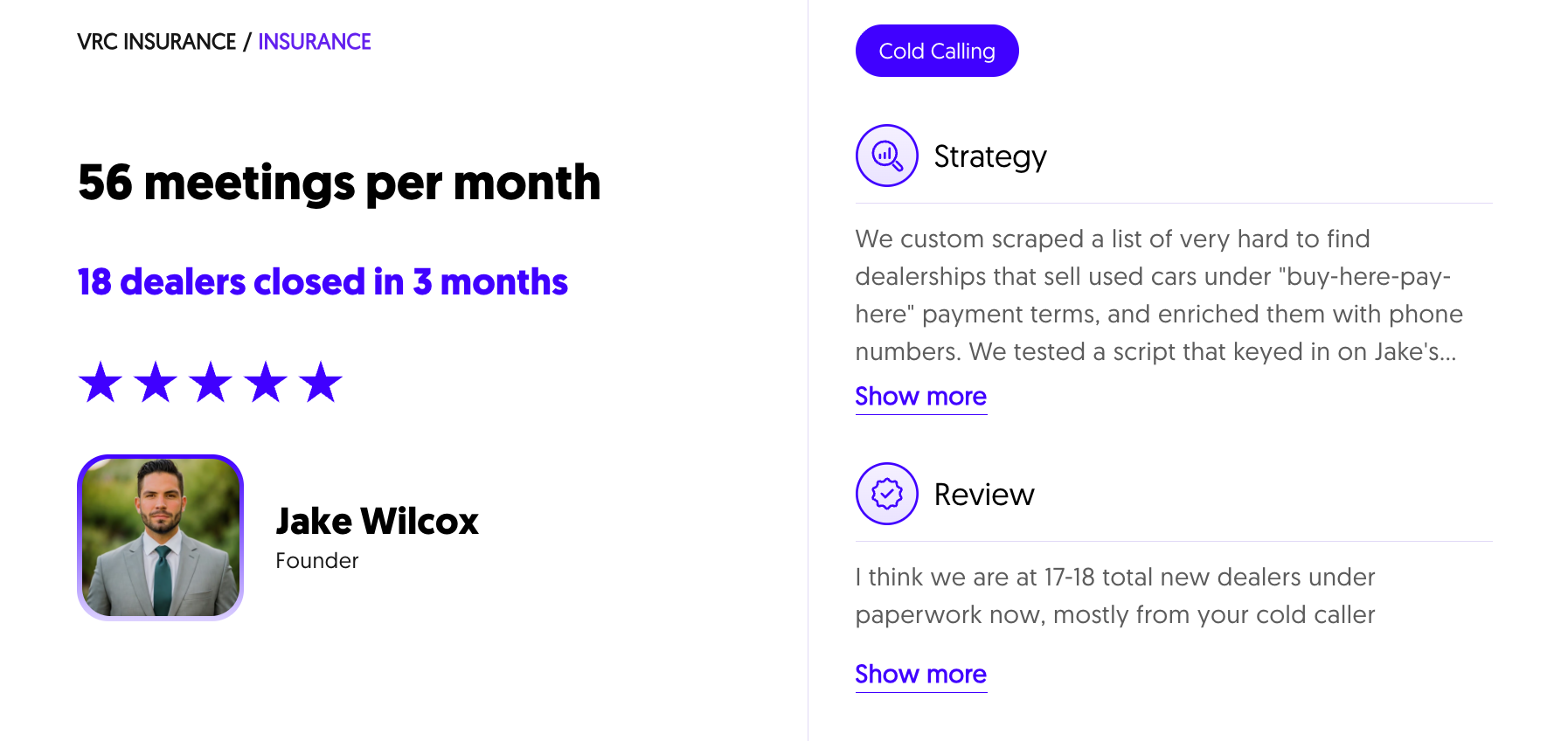
At Cleverly, our cold calling service runs the program end to end. We source and verify contact data, build ICP-aligned target lists, train dedicated SDRs, test call frameworks, and put booked appointments on your calendar.
Our SDRs make 200 to 300+ calls a day, and compliance is built into operations, not bolted on. Suppression is handled across campaigns, calling hours follow each recipient’s time zone, and opt-outs are actioned immediately. Data sourcing and verification happen upstream, because list quality and line-type accuracy are the foundation of compliant dialing.
We optimize for qualified appointments held with decision-makers, not dial volume. That is what 1M+ cold calls and 53K appointments set have taught us. We cannot promise legal outcomes, and you should still have counsel review your program. What we can promise is a disciplined operation you can inspect.
Want cold calling that performs without the compliance headache? Book a free consultation with Cleverly.
Conclusion
The correction worth repeating: B2B status gives you relief on some provisions and none on the ones that generate most litigation. Mobile numbers and automated dialing are where the real exposure sits. State rules are stricter than federal in several places, and building only to the federal standard is how teams get caught.
Your next step is simple. Identify line types in your current list, check your dialer configuration, and confirm opt-outs propagate across every campaign. Then put your TCPA compliance checklist on a calendar. This is general guidance, the rules change, and a qualified attorney should review your specific program.
Frequently Asked Questions
Free Resource
How to Scale a Profitable Cold Call System
Get the complete guide — download it instantly now.
Free Ebook
Download the Free Guide
Enter your details to get instant access.
You're all set! 🎉
Your ebook is downloading now.
Click below if the download didn't start automatically.