Table of Contents
What to Look for in an AI Voice Agent Platform
Quick Comparison Table: 12 Best AI Voice Agents in 2026
12 Best AI Voice Agents in 2026 (Ranked and Reviewed)
How to Choose the Right AI Voice Agent for Your Business
AI Voice Agents by Use Case
Where Cleverly Fits Alongside AI Voice Agents
Conclusion
Frequently Asked Questions
Modified On :
July 31, 2026
Key Takeaways
- Match the platform to your call pattern, not the demo. A tool that sounds great on a scripted walkthrough can fall apart on a messy, interrupted, real customer call. Test on your own transcripts before you commit.
- Pricing model matters as much as pricing. Usage-based platforms reward low, predictable volume; flat enterprise pricing rewards scale. Picking the wrong model for your call pattern is where budgets quietly blow up.
- Compliance isn't a checkbox you add later. If you're in healthcare, legal, or finance, the platform's data handling and call recording rules need to be built in from day one, not retrofitted after a rollout.
- Voice-only and omnichannel solve different problems. If your customers move between chat, SMS, and phone in the same conversation, a voice-only tool creates gaps a prospect will notice.
- AI voice agents are built for volume, not for high-stakes outbound. They're excellent at routine, repeatable calls. For B2B cold calling and appointment setting, where reading context and handling objections still decides whether a meeting gets booked, a trained human caller still outperforms a script.
Businesses used to route every call through a scripted IVR menu or an overworked support team. That's changing fast.
Voice-AI now handles 19% of inbound contact center volume in 2026, up from just 6% in 2024, with banking and telco leading the surge, and Forrester projects that share climbing past 33% by 2027.
The reason is simple economics: AI minutes cost roughly $0.08 compared to $7.16 for a human-handled call, and a 2026 Gartner survey found 91% of customer service leaders are under direct pressure from executives to implement AI.
But here's the problem with most "best AI voice agent" lists: they're built off pricing pages and polished demos, not actual usage. A vendor's landing page rarely shows you how the tool handles a caller who interrupts, mumbles, or asks something off-script. That's the gap this guide fills.
We tested and researched 12 AI voice agent platforms across enterprise, mid-market, and SMB use cases, covering features, pricing, and real limitations, not just marketing copy.
This is for customer service, sales, and ops leaders evaluating ai voice agents for 2026, including teams in regulated fields like law and healthcare where compliance isn't optional.

What to Look for in an AI Voice Agent Platform
Before you compare tools, know what actually separates a good deployment from a frustrating one.
Natural language understanding and speech quality. Does the agent sound human, or does it trip over interruptions and accents? This is the single biggest driver of customer trust in a voice interaction.
Omnichannel coverage. Some platforms handle voice, chat, and SMS from one system. Others are voice-only. If your customers bounce between channels mid-conversation, voice-only creates blind spots.
Integration depth. Your voice agent needs to talk to your CRM, scheduling tool, and existing telephony stack, not sit next to them as a separate system.
Compliance and data handling. Healthcare, legal, and finance all have specific rules around call recording, data retention, and consent. Confirm certifications directly with the vendor; don't assume.
Real-time monitoring and analytics. You need visibility into what the agent is actually saying and where calls break down, not just a monthly summary report.
Multilingual support. If you serve customers outside a single language market, this isn't optional.
Deployment speed. No-code builders get you live in days. Technical, API-first platforms take longer but give you more control.
Pricing model. Per-minute, per-agent, or flat platform fee, each rewards a different call volume and growth pattern.
🚀 More Market Share Starts With More Conversations
Our LinkedIn, cold email, and cold calling campaigns generate 15–30 qualified meetings every month with your ideal buyers.
Quick Comparison Table: 12 Best AI Voice Agents in 2026
12 Best AI Voice Agents in 2026 (Ranked and Reviewed)
We ranked these by overall capability and versatility, not just price.
1. PolyAI
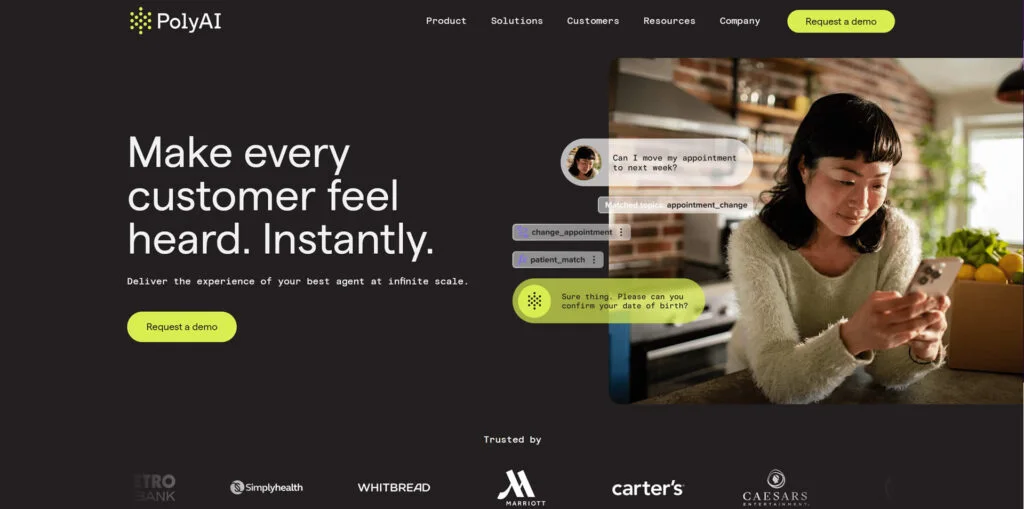
Best For:
- Enterprises needing large-scale, multilingual voice conversations across industries.
- Teams wanting complete control plus real-time interaction monitoring.
- Businesses that need voice, chat, and SMS coverage from one platform.
Key Features:
- Custom AI voice agents built for natural, multilingual customer conversations.
- Omnichannel coverage built in: voice, chat, and SMS from one platform.
- Real-time interaction monitoring and reporting.
- Unlimited scale with complete control over agent behavior.
- Seamless integration with existing CX tech stack.
Limitations:
- Pricing isn't published; you'll need a custom quote.
- Best suited for larger teams; smaller businesses may find it more than they need.
Pricing: Custom, quote-based.
2. Talkdesk
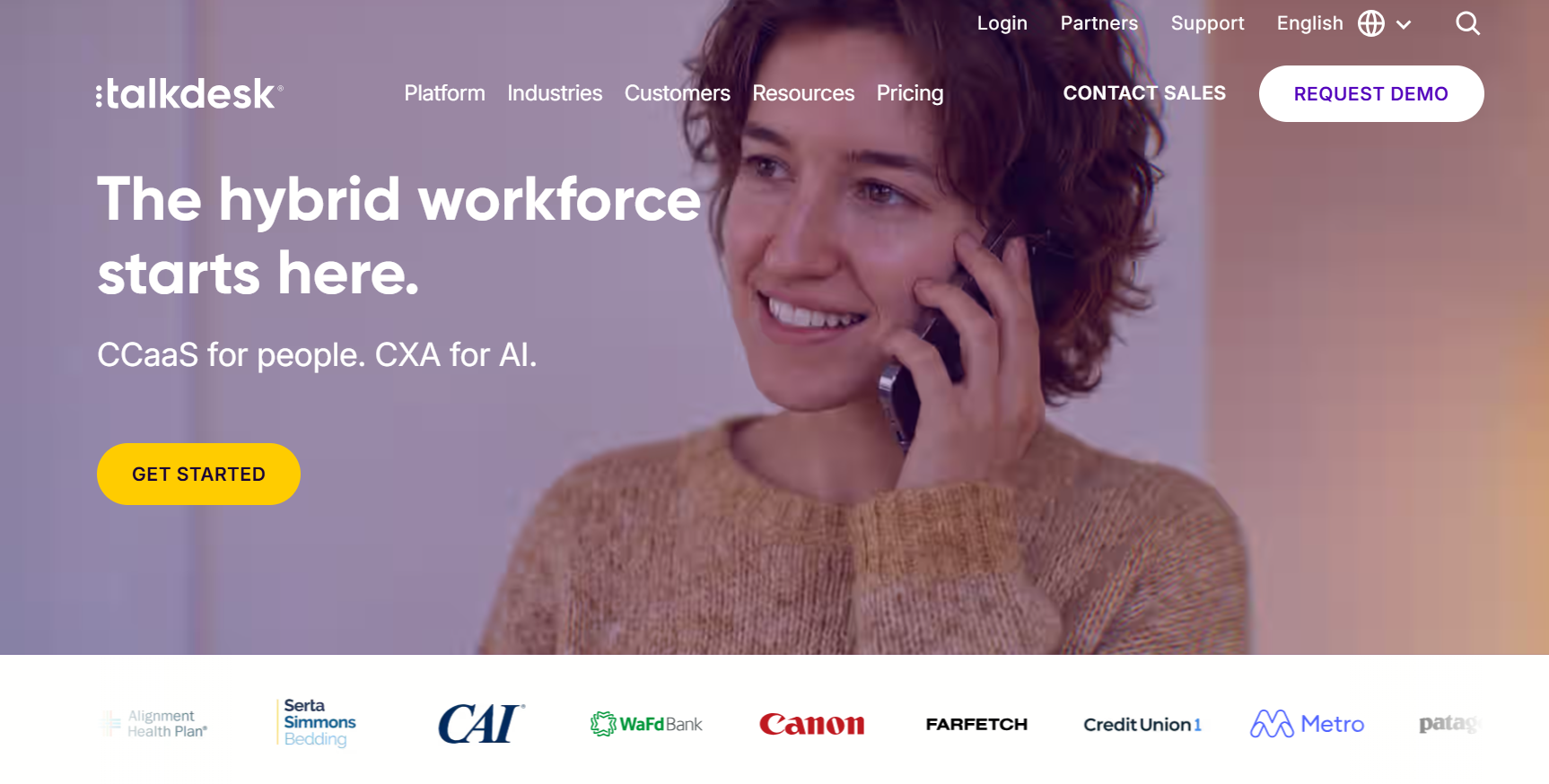
Best For: Call centers and CX teams wanting end-to-end AI automation across the customer journey.
Key Features:
- AI-powered customer experience automation.
- Multi-agent orchestration platform.
- Omnichannel engagement tools.
- Industry-specific solution packages for banking, insurance, healthcare, and retail.
Limitations:
- Standard pricing assumes a 36-month contract; month-to-month costs significantly more.
- AI features like Copilot, Autopilot, and voice routing are priced as add-ons even on the top tier.
- True omnichannel (voice plus digital together) is only available on the most expensive plan.
Pricing: CX Cloud Digital Essentials starts at $85 per user per month; Voice Essentials runs $105/user/month; the Elite plan is $165/user/month.
3. Nurix AI
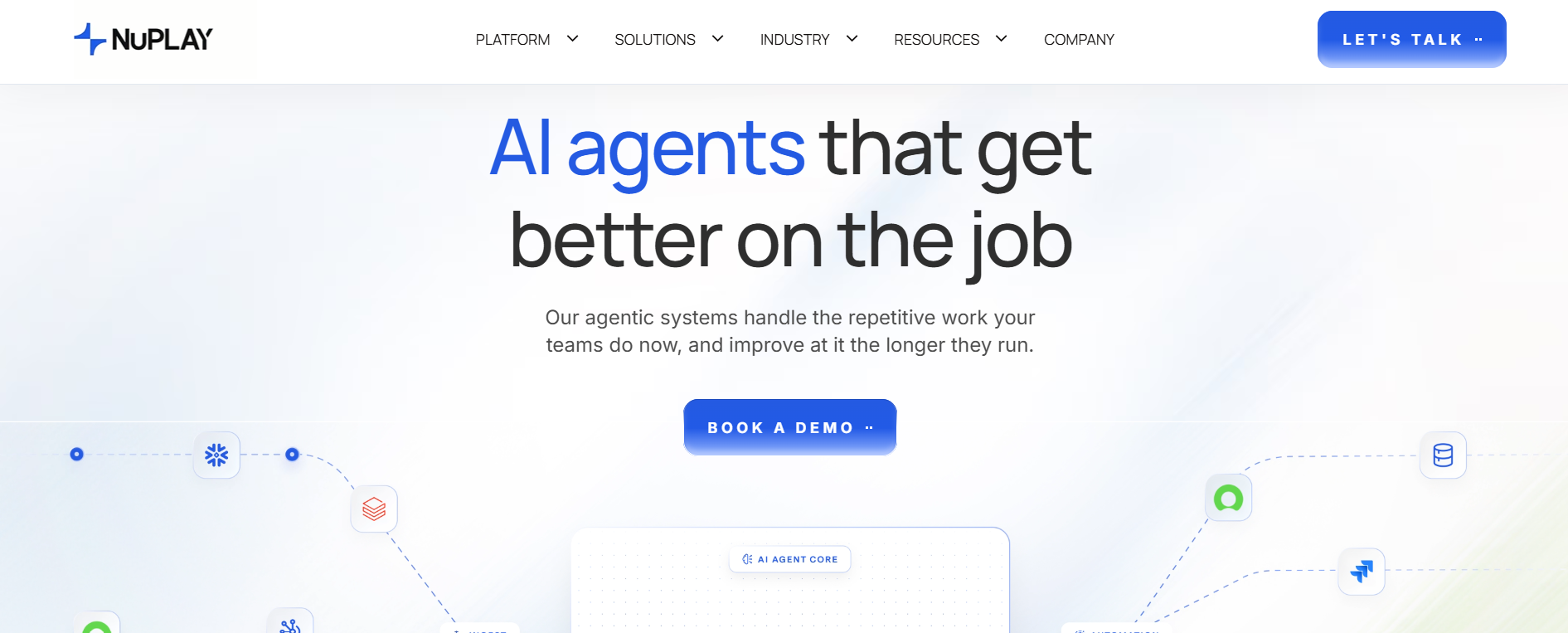
Best For: Sales teams wanting always-on voice agents that qualify leads and support reps.
Key Features:
- Human-like, brand-aligned voice agents.
- Always-on customer support plus on-demand sales assistance.
- Rapid deployment and easy integration with existing systems.
Limitations:
- Pricing isn't published; requires a custom quote.
- Newer entrant with a smaller public review base than more established competitors.
Pricing: Custom.
4. Cognigy
Best For: Mid-market and enterprise contact centers wanting generative AI agent assist plus voice connectivity.
Key Features:
- AI-powered agent assist for live human reps.
- Multichannel chat and messaging.
- Voice connectivity solutions built for contact centers.
Limitations:
- Pricing isn't published; requires a custom quote.
- Implementation may need technical support to configure well.
Pricing: Custom.
5. Haptik
Best For: Enterprises needing human-like, multilingual customer experiences across voice and chat.
Key Features:
- Human-like customer experience design.
- Multilingual voice and chat AI agents.
- Omnichannel engagement and smart automation.
Limitations:
- Pricing isn't published; requires a custom quote.
- Best fit for scale-ups and larger teams, not solo or small businesses.
Pricing: Custom.
6. Plivo
Best For: Technical teams wanting to build and customize their own voice agents without a heavy engineering lift.
Key Features:
- Build, train, and manage AI agents for calls, SMS, WhatsApp, and chat.
- Vertically integrated voice AI stack combining Plivo's own telephony with third-party speech-to-text, language processing, and text-to-speech.
- No-code agent creation with pre-built templates for support, sales, and bookings.
Limitations:
- Usage-based pricing that combines voice, messaging, and third-party AI can become costly and harder to budget as usage scales.
- Best suited for teams comfortable managing their own agent configuration.
Pricing: Usage-based, starting around $0.05 per minute for the AI agent platform, with enterprise plans starting at $1,000/month for higher-scale, dedicated-support needs. Verify at plivo.com; raw telephony rates are lower than the bundled AI agent price.
7. Strada
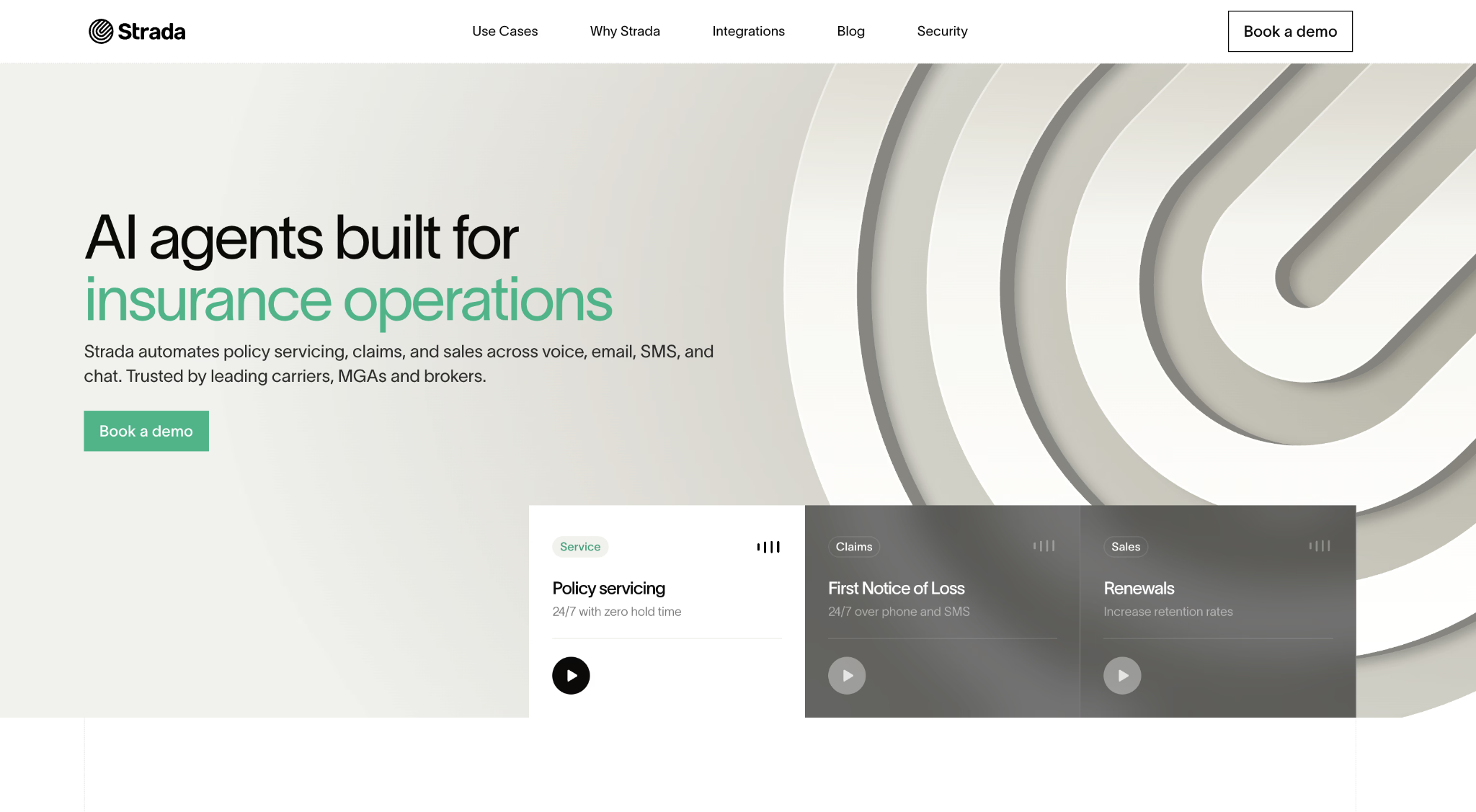
Best For: Insurance and regulated industries needing 24/7 inbound and outbound phone coverage.
Key Features:
- Inbound and outbound call handling.
- Live actions and call transfers.
- Appointment scheduling and CRM automation.
Limitations:
- Built specifically for insurance use cases, so it's less flexible for general business needs.
- Pricing isn't published; requires a custom quote.
Pricing: Custom.
8. Taalk

Best For: SMBs and mid-market teams needing an AI-powered contact center with compliance built in.
Key Features:
- AI-powered contact center spanning voice, text, and email.
- Compliance-first interaction recording, live call transfers, and a native predictive dialer.
- Multilingual support and humanization techniques like authentic background noise for more natural conversations.
Limitations:
- Higher starting price than several no-code alternatives on this list.
- Newer company (founded 2023) with a shorter track record than more established competitors.
Pricing: Pro plan starts at $999/month, with an Elite tier at $1,499/month and custom Enterprise pricing above that. Verify at taalk.com.
9. SnatchBot
Best For: Startups and SMBs wanting a low-cost entry point into voice AI.
Key Features:
- Intelligent chatbots with context retention.
- Voice AI assistants alongside chat.
- Visual no-code bot builder with multi-channel deployment.
Limitations:
- Less enterprise depth compared to platforms like PolyAI or Cognigy.
- Published pricing varies noticeably by source and plan structure, so get a direct quote before budgeting.
Pricing: Pro plan pricing starts around $30 per bot per month, scaling with message volume. Verify current tiers at snatchbot.me.
10. boost.ai
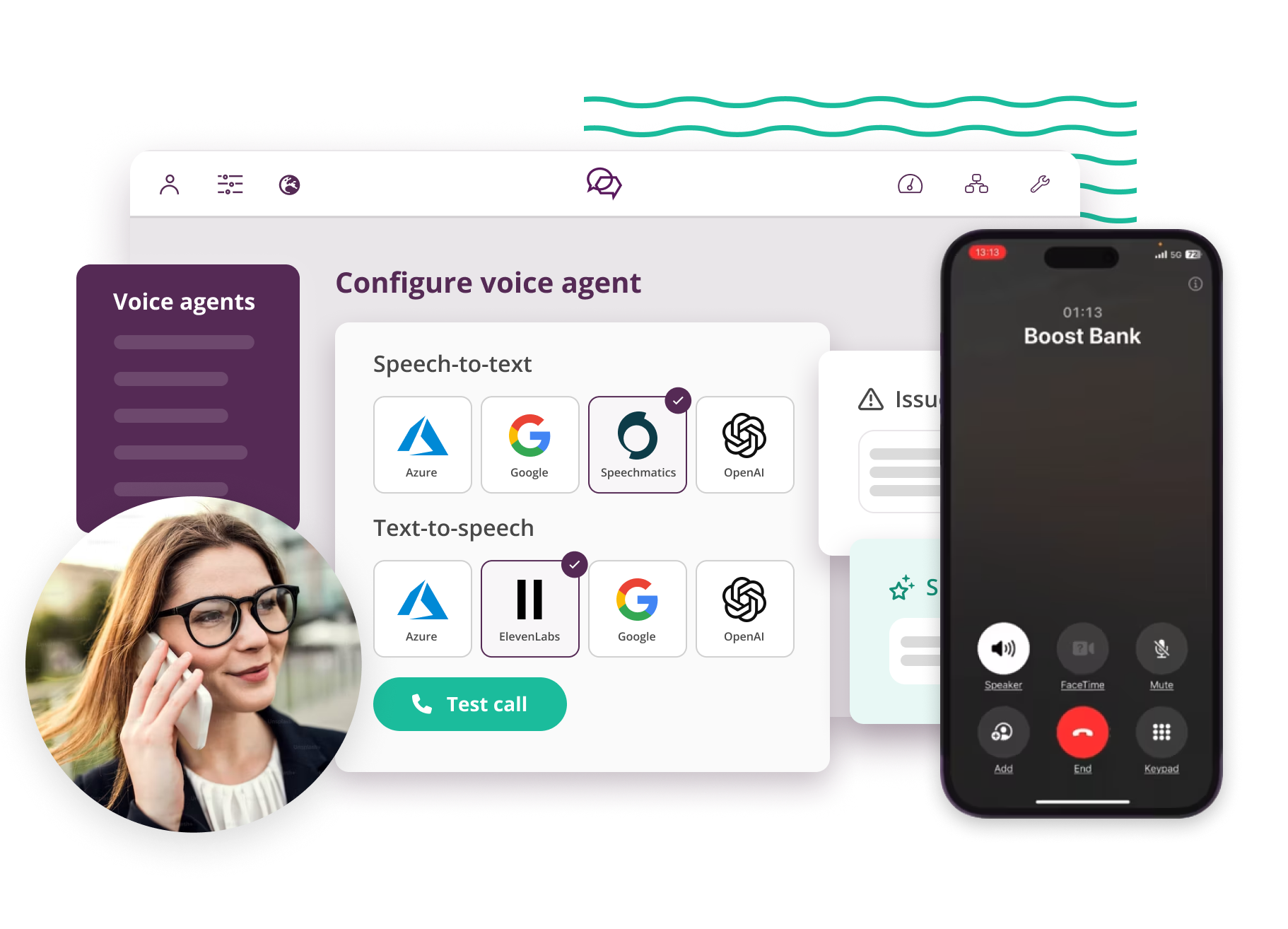
Best For: Banks, insurers, and other regulated businesses needing secure, compliant conversational AI.
Key Features:
- Built specifically for regulated environments.
- Transparent, fast implementations.
- Advanced safety and security controls.
Limitations:
- Pricing isn't published; requires a custom quote.
- Positioned for mid-market and enterprise, so it's less accessible for small teams.
Pricing: Custom. Confirm at boost.ai.
11. Rul.ai
Best For: Support teams wanting fast deployment of multi-turn conversational agents across channels.
Key Features:
- Low-code, omnichannel design.
- Multi-round, real-time conversations.
- Integration with enterprise systems.
Limitations:
- Pricing isn't published; requires a custom quote.
- Smaller public review footprint than category leaders.
Pricing: Custom.
12. Capacity

Best For: Operations and support teams wanting to unify knowledge and automate responses across channels
Key Features:
- Automates support responses instantly.
- Unifies knowledge into one smart system.
- Integrates with 250+ platforms.
Limitations:
- Voice capability is less central than dedicated voice-first platforms on this list.
- Pricing isn't published; requires a custom quote.
Pricing: Custom
📈 From AI Automation to 53,000+ Meetings Booked
See why 10,000+ businesses trust Cleverly to combine automation with human-led outreach to build a predictable B2B pipeline.
How to Choose the Right AI Voice Agent for Your Business
Start with your call volume. Usage-based pricing like Plivo's rewards low, predictable volume. Flat enterprise pricing like PolyAI's or Taalk's makes more sense once you're running high, steady call counts where per-minute costs would add up fast.
Next, weigh compliance. If you're in a regulated field, platforms built for it, like boost.ai, Strada, or Taalk, save you from retrofitting consent and recording rules after the fact.
Decide if you need voice-only or omnichannel. Some businesses only need phone coverage. Others need SMS and chat running alongside it, which narrows the field to platforms like PolyAI, Haptik, or Talkdesk.
Check integration before you check features. A voice agent that can't talk to your CRM or scheduling tool creates manual work somewhere else in the business.
Pilot before you scale. Run a subset of real calls through the platform before a full rollout. This is where demo-only evaluations fall apart.
Finally, weigh speed against control. No-code tools like SnatchBot and Plivo get you live fast. Enterprise platforms like PolyAI and Cognigy take longer to configure but give you more customization once they're running.

AI Voice Agents by Use Case
✅ Customer service: Talkdesk, Haptik, and Capacity are built for high-volume support automation, handling FAQs, order status, and routine tickets around the clock.
✅ Law firms: Intake and scheduling calls need strict compliance and accurate transcription. Platforms like PolyAI and Cognigy, with real-time monitoring and data handling controls, fit this better than generalist tools.
✅ Healthcare: Appointment scheduling and after-hours triage benefit from compliance-aware platforms like boost.ai, or vertical, appointment-focused agents built on Strada-style architecture.
✅ Real estate: Fast lead qualification and scheduling matter most here. Nurix AI's sales-focused agents or a custom-built flow on Plivo both fit this use case well.
This is a directional starting point, not a certification. Verify vertical and compliance credentials directly with each vendor before choosing for a regulated use case.
Where Cleverly Fits Alongside AI Voice Agents
AI voice agents are genuinely good at scale. They handle routine calls, answer FAQs, and book appointments around the clock without getting tired or going off-script.
If your business runs high volumes of predictable, low-complexity inbound calls, one of these 12 platforms will save you real money and headcount.
But there's a gap these tools don't close: high-stakes B2B outbound. Cold calling and appointment setting depend on reading context mid-conversation, adjusting to pushback, and building enough trust in 60 seconds that a stranger agrees to a meeting. That's still a human skill, not a scripted one.
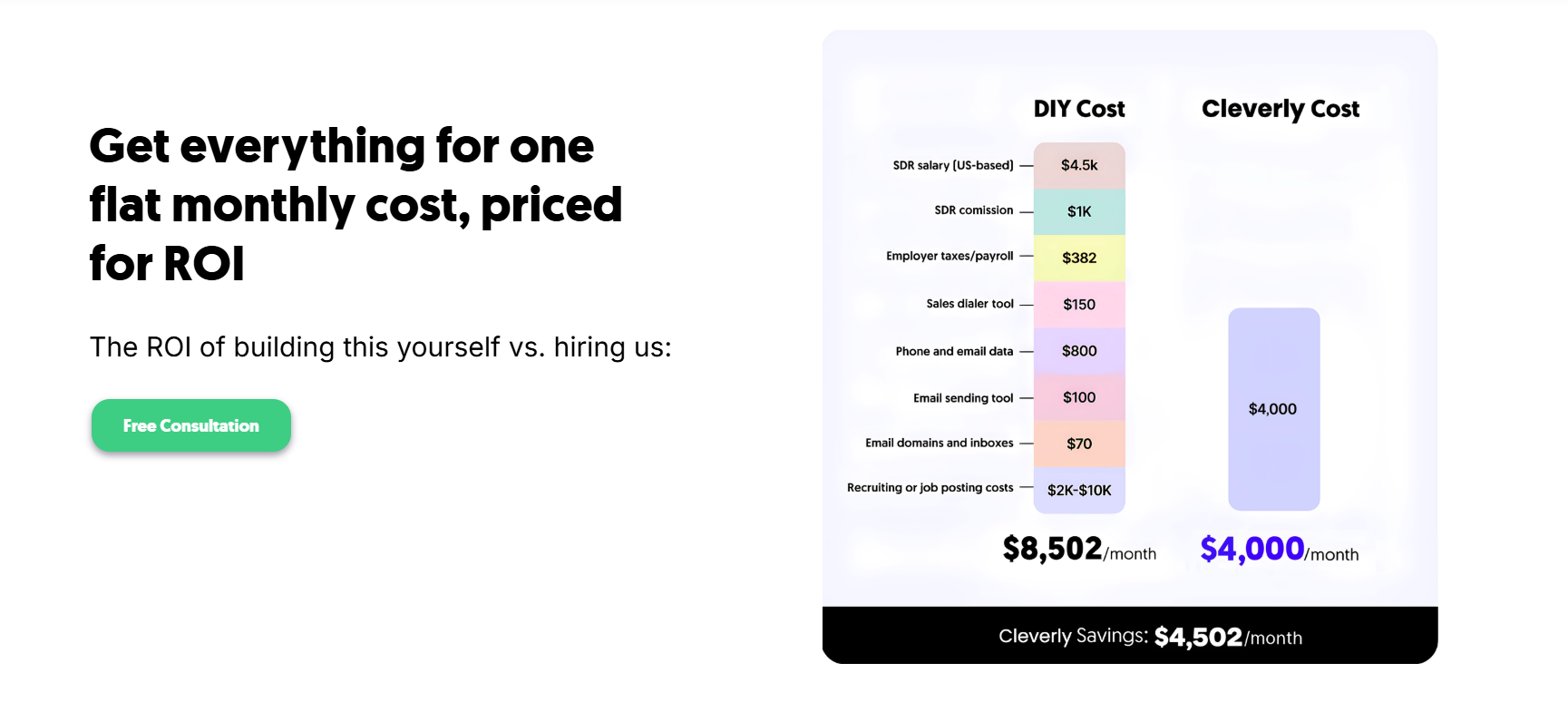
This is where Cleverly's cold calling service is built differently. Instead of automating the call, we place a dedicated, trained SDR in your business, backed by a power dialer, custom scripts, and an SDR manager coaching performance week over week. It's outbound built for pipeline, not inbound support.
Cleverly has generated $312M+ in client pipeline across LinkedIn, cold email, and cold calling combined, and the cold calling system alone has produced 53,000+ booked appointments from over a million calls made.
The two approaches pair well together: let an AI voice agent handle your inbound support and scheduling volume, and let a trained human team run your outbound cold calling and qualify leads into booked meetings.
If you want to see what that looks like for your pipeline, book a strategy call with Cleverly.
Conclusion
AI voice agents have matured enough in 2026 to handle real customer conversations instead of just routing calls through a scripted menu. PolyAI leads this list for enterprise-scale, multilingual, omnichannel coverage, while other platforms win on price, vertical fit, or how fast you can get live with no code at all.
The right pick depends on your call volume, your industry's compliance requirements, and whether you need voice alone or a full omnichannel setup.
And if your goal is outbound B2B pipeline rather than inbound support, pairing one of these AI voice agents with a human-led service like Cleverly covers both sides of the phone.
Frequently Asked Questions
Free Resource
How to Scale a Profitable Cold Call System
Get the complete guide — download it instantly now.
Free Ebook
Download the Free Guide
Enter your details to get instant access.
You're all set! 🎉
Your ebook is downloading now.
Click below if the download didn't start automatically.