Table of Contents
What Is Sales Pipeline Management?
What Is Sales Forecasting?
Sales Forecasting vs Pipeline Management — Key Differences
Pipeline Management Tools vs Forecasting Tools vs Deal Intelligence
Pipeline vs Forecast — Which One Matters More?
How Sales Pipeline and Forecasting Work Together
Common Mistakes Teams Make with Pipeline and Forecasting
How Cleverly Helps Build a Healthier Sales Pipeline for Better Forecasting
Conclusion
Frequently Asked Questions
Modified On :
August 27, 2026
Key Takeaways
- Sales pipeline management tracks active deals through stages, while sales forecasting predicts future revenue based on data.
- Your pipeline shows what you're working on, your forecast shows what will probably close.
- Clean pipeline data with clear stage definitions is essential for accurate forecasting.
- Lead quality matters more than lead volume when building a predictable pipeline and forecast.
- Regular pipeline hygiene and historical win rates turn guesswork into reliable revenue predictions.
- Strong pipeline management drives forecast accuracy, both work together for predictable growth.
A sales pipeline shows the opportunities your team is working today. A sales forecast estimates how much revenue those opportunities are likely to produce within a defined period. They use much of the same data, but they answer different questions.
Pipeline management asks: Which opportunities are active, where are they stuck, and what should the seller do next? Sales forecasting asks: Which opportunities are likely to close, when will they close, and how much revenue should the business expect?
Confusing the two creates a predictable mess. Pipeline reviews become debates about quarterly numbers, stale opportunities inflate expected revenue, and leaders make hiring or budget decisions using forecasts nobody fully trusts.
Across B2B outbound programs, the forecasting problems we see rarely begin with the forecasting formula. They begin with weak qualification, inconsistent stages, unsupported close dates, and opportunities that remain open after buyer momentum disappears.
This guide explains sales forecasting vs pipeline management, how pipeline forecasting connects them, which tools support each function, and how to measure whether your forecasts are becoming more accurate.
What Is Sales Pipeline Management?
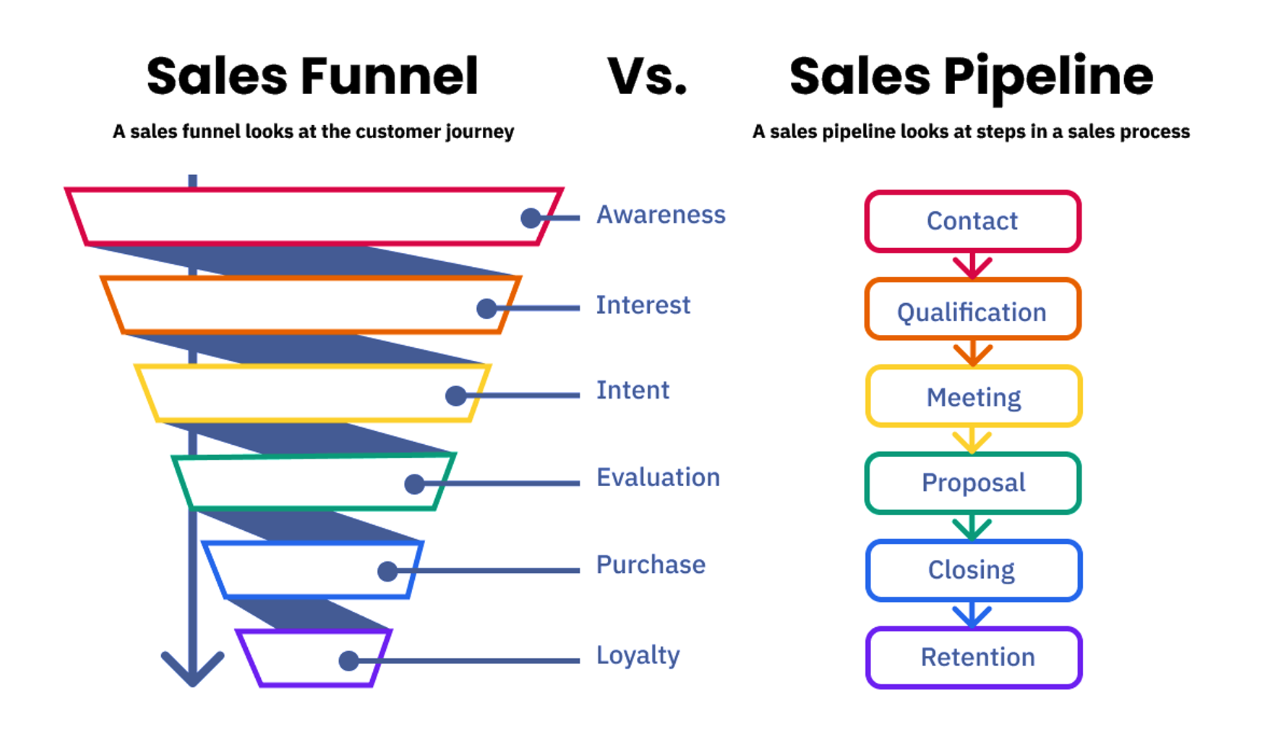
Sales pipeline management is how you track every deal from the moment a lead enters your system until it closes (or doesn't).
Think of it as your sales assembly line. Each deal moves through specific stages, and your job is to keep things moving smoothly.
What pipeline management actually does:
- Shows you where every deal sits right now
- Helps you spot where deals get stuck or drop off
- Gives you visibility into what your team is working on
- Identifies which stages need attention or fixing
Typical pipeline stages look like this:
- Lead comes in (from outbound, inbound, referrals)
- Initial contact made
- Discovery call completed
- Demo or presentation done
- Proposal sent
- Negotiation happening
- Deal closed (won or lost)
Your sales team and managers own this process. They're the ones updating deal stages, following up with prospects, and making sure nothing falls through the cracks.
Here's what matters: pipeline management is operational. It's about the work happening today and this week. It tells you what you're doing, not what's going to happen.
That's where the sales pipeline vs forecast difference really shows up. Your pipeline shows activity. Your forecast predicts results. We'll get to that next.
Tools that Help: Best Sales Pipeline Management Software for B2B Teams
📊 From Pipeline to Predictable Revenue
Cleverly fills your pipeline using LinkedIn outreach, pay-per-meeting cold email, and guaranteed cold calling, so forecasts are based on real meetings.
What Is Sales Forecasting?
Sales forecasting is a data-based estimate of how much revenue a team is likely to close during a defined period. It combines current opportunities, historical conversion rates, deal velocity, rep judgment, and known business conditions to produce a forecast leadership can use for planning.
It's not about what's in your pipeline. It's about what you believe will realistically convert into closed deals and when that cash will show up.
Here's what goes into a solid forecast:
- Your current pipeline data (deal size, stage, close date)
- Historical win rates (how often deals at each stage actually close)
- Deal velocity (how long deals typically take to close)
- Rep performance trends (who consistently hits, who doesn't)
- Seasonal patterns or market conditions
Think of it this way: your pipeline might have $500K in deals. But your forecast might predict only $150K will actually close this month based on stage conversion rates and past performance.
Why forecasting matters so much:
- Revenue planning: CFOs and finance teams need to know what's coming
- Hiring decisions: Can you afford that new SDR or AE next quarter?
- Budget allocation: Where should you invest in marketing, tools, or headcount?
- Leadership reporting: Board meetings and investor updates need real numbers, not hope
The sales forecast vs pipeline difference is simple. Your pipeline is what could happen. Your forecast is what will probably happen based on real data.
Leadership doesn't care about a big pipeline. They care about predictable revenue they can actually count on.
What Is Pipeline Forecasting?
Pipeline forecasting is the practice of estimating future revenue from the opportunities currently in your sales pipeline. It connects the operational view of active deals with the financial question leadership needs answered: how much of this pipeline is likely to close, and when?
A basic pipeline forecast assigns a probability to each opportunity based on its stage. If a $20,000 deal is in a stage with a 40% historical win rate, its weighted forecast value is $8,000. Adding the weighted values of all eligible opportunities produces a starting forecast.
That calculation is useful, but stage probability alone is rarely enough. A credible pipeline forecast should also consider:
- Whether the buyer has confirmed a genuine need
- Whether the right decision-makers are involved
- How long the opportunity has remained in its current stage
- Whether the expected close date is supported by a buyer action
- How the deal compares with previously won and lost opportunities
- Whether the opportunity matches the company’s ideal customer profile
Pipeline forecasting is therefore not a third process that replaces pipeline management or sales forecasting. It is the bridge between them. Pipeline management keeps opportunity data current, while forecasting interprets that data to estimate revenue.
Know More: B2B Sales Mistakes That Quietly Kill Revenue (Save Your Business)
Sales Forecasting vs Pipeline Management — Key Differences
Let’s compare sales pipeline vs forecast.
🚀 Forecast What Actually Closes
10,000+ companies trust Cleverly to deliver sales-ready meetings across LinkedIn, email, and phone, generating $312M+ in pipeline.
Pipeline Management Tools vs Forecasting Tools vs Deal Intelligence
The processes are different, and so are the tools built to support them. Some sales platforms cover all three functions, but each category answers a different question.
What Pipeline Management Tools Do
Pipeline management tools organize active opportunities by stage and help sellers decide what to do next. Their core functions typically include deal tracking, task management, stage movement, activity history, pipeline views, and alerts for stalled opportunities.
Use a pipeline management tool when the primary problem is execution. For example, deals are being forgotten, stage definitions are inconsistent, follow-ups are late, or managers cannot see where opportunities are getting stuck.
What Sales Forecasting Tools Do
Sales forecasting tools estimate likely revenue for a particular week, month, quarter, or year. They may combine weighted pipeline value, historical conversion rates, rep-submitted forecasts, deal velocity, seasonality, and risk signals.
Use a forecasting tool when leadership needs a more defensible answer to questions such as:
- How much revenue are we likely to close this quarter?
- Which forecast category contains the most risk?
- Are we likely to meet quota?
- How accurate were our previous forecasts?
- Which changes could materially affect the current revenue projection?
What Deal Intelligence Tools Do
Deal intelligence tools analyze the quality and momentum of individual opportunities. Depending on the platform, they may examine emails, calls, stakeholder engagement, next steps, inactivity, buyer sentiment, and changes to close dates.
Pipeline management tells you where a deal sits. Deal intelligence helps explain whether the deal is healthy enough to remain there. Forecasting then considers that evidence when estimating whether and when the opportunity will close.
Do You Need Separate Tools?
Not always. Many CRM and revenue platforms include pipeline management, forecasting, and deal-inspection features in one system. The more important requirement is that the functions share the same opportunity data.
Buying three separate platforms will not improve accuracy if sellers still enter inconsistent stages, unsupported close dates, or incomplete deal values. Start by defining the process and required data. Then choose software that supports those requirements without forcing the team to maintain competing versions of the pipeline.
Pipeline vs Forecast — Which One Matters More?
Asking pipeline vs forecast which matters more is like asking if your car needs an engine or wheels.
You need both. But they do completely different jobs.
How they work together
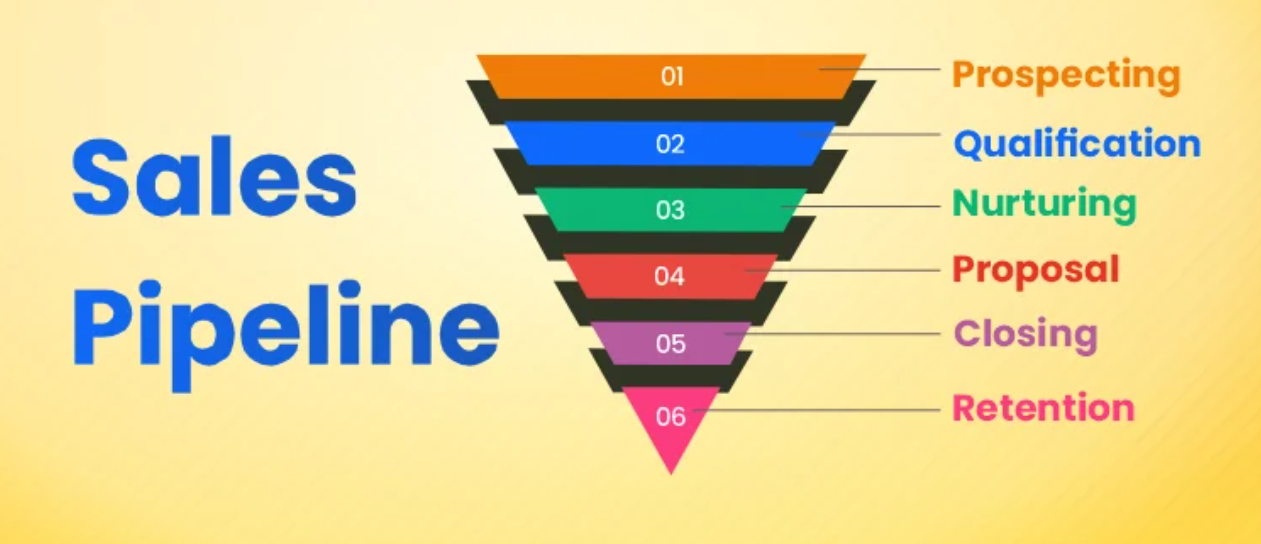
Your pipeline is the engine. It's where the work happens. Clean data, consistent follow-up, deals moving through stages. That's what gives you control over your sales process.
Your forecast is the dashboard. It tells you where you're headed based on what's happening in the pipeline. It gives leadership visibility into future revenue.
Strong pipeline = accurate forecast
Teams that manage their pipelines well can forecast with confidence. Why? Because they have:
- Clean data at every stage
- Realistic deal values and close dates
- Consistent stage definitions everyone follows
- Regular pipeline reviews to spot problems early
Weak pipeline = forecasting guesswork
When your pipeline is messy, your forecast becomes fiction. We see this all the time:
- Stale deals sitting in "proposal sent" for six months
- Inflated deal sizes that will never close at that number
- Reps sandbagging or over-committing with no accountability
- No clear criteria for what belongs in each stage
The result? You tell leadership $300K is coming. Only $120K closes. Now hiring freezes, budget gets cut, and trust evaporates.
Bottom line: You can't choose between them. Fix your pipeline management first. Your forecast accuracy will follow.
How Sales Pipeline and Forecasting Work Together
Think of sales pipeline vs forecast like this: your pipeline is the raw ingredient, and your forecast is the finished dish.
One feeds the other. But if your ingredients are bad, your meal will be too.
Keep Pipeline Reviews and Forecast Calls Separate
Pipeline reviews and forecast calls should exchange data, but they should not become the same meeting.
A pipeline review is an action-oriented working session. Managers inspect opportunity quality, confirm buyer progress, identify stalled deals, coach sellers, and agree on next steps. The purpose is to change what the team does while an opportunity is still active.
A forecast call is a prediction-oriented session. Leadership reviews expected revenue, forecast categories, major risks, recent changes, and confidence in the current projection. The purpose is to determine what is likely to happen and communicate that estimate to the wider business.
When the meetings are combined, managers often spend the entire session debating numbers. That leaves little time for the coaching and deal inspection that could improve those numbers. Salesforce’s guidance on pipeline management and forecasting similarly recommends treating the two activities as distinct, even though pipeline information feeds the forecast.
Pipeline data becomes forecast predictions
Every deal in your pipeline carries information:
- Deal size
- Current stage
- Expected close date
- Days in current stage
- Source (outbound, inbound, referral)
Your forecast takes all that data and applies probability. A deal in "discovery" might have a 20% close rate. A deal in "contract sent" might be 70%. That's how you move from "here's what we're working on" to "here's what will probably close."
Clean data is everything
Garbage in, garbage out. If your pipeline is full of:
- Deals that should've been marked lost months ago
- Made-up close dates just to keep deals active
- Inflated deal values that were never realistic
Your forecast will be worthless. Leadership will stop trusting your numbers.
What actually makes forecasting work
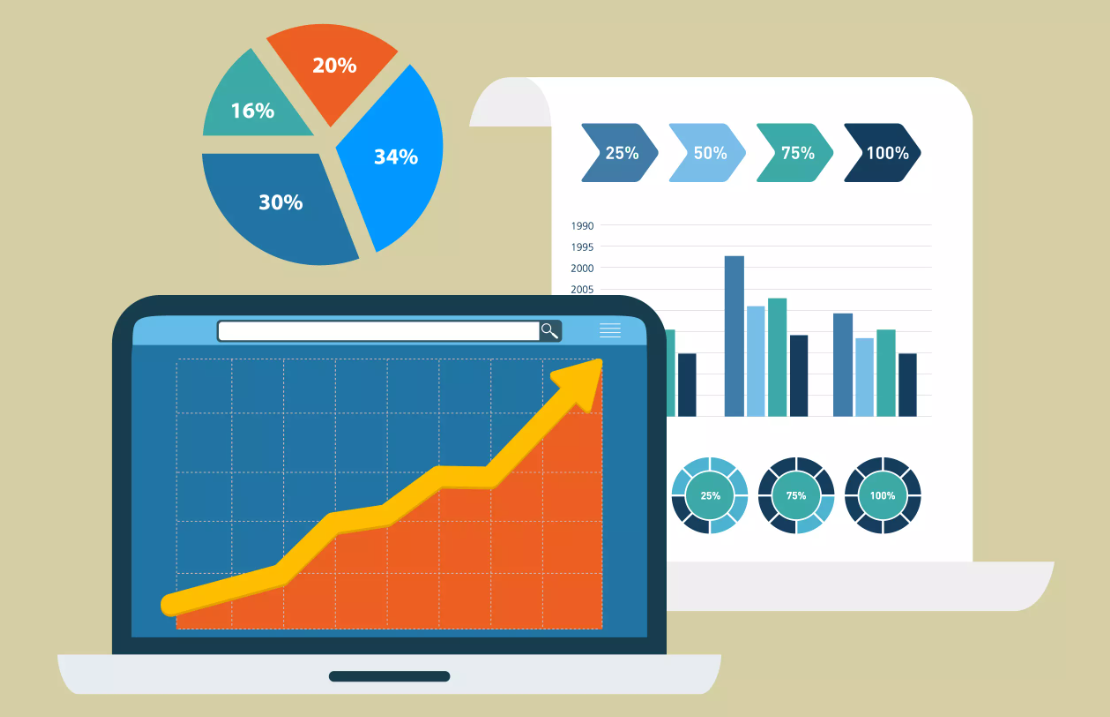
- Clear stage definitions: Everyone knows what qualifies a deal for each stage
- Probability weighting: Stages tied to actual historical win rates, not guesses
- Regular pipeline hygiene: Weekly or biweekly reviews to update or remove stale deals
- Deal velocity tracking: Know how long deals typically take to close
How to Measure Sales Forecast Accuracy
Forecast accuracy measures how closely predicted revenue matches the revenue that actually closes during the forecast period.
A straightforward calculation is:
Forecast error percentage = |Forecast revenue − Actual revenue| ÷ Actual revenue × 100
For example, suppose a team forecasts $500,000 for the quarter but closes $425,000. The absolute difference is $75,000. Dividing $75,000 by $425,000 produces a forecast error of approximately 17.6%.
Track more than the final percentage. Review forecast accuracy by:
- Sales rep
- Team or territory
- Product or service line
- Lead source
- Forecast category
- Deal-size range
- New business versus renewals
This breakdown shows where the error originates. A team-wide forecast might appear reasonably accurate while one territory consistently overcommits and another consistently understates expected revenue.
Do not judge accuracy from a single period. Compare the original forecast, each subsequent forecast revision, and the final result across multiple sales cycles. The goal is not a perfect prediction. The goal is a forecast that becomes more reliable over time and exposes risk early enough for the team to act.
Lead quality changes everything
Here's what most teams miss: forecasting doesn't start when a deal enters your pipeline. It starts with the quality of leads coming in.
Better leads from targeted outbound or qualified inbound convert faster and more predictably. Random, low-fit leads clog your pipeline and tank your forecast accuracy.
When you work with a lead generation agency focused on ICP fit and qualification, your pipeline starts cleaner. That means your forecast becomes more reliable from day one.
Your forecast is only as good as your pipeline. And your pipeline is only as good as what's entering it.
A Connected Pipeline and Forecasting Workflow
A connected process gives each person a clear responsibility without creating duplicate systems.
Sellers update opportunity evidence. They record completed buyer actions, confirmed stakeholders, next steps, deal value, stage, and expected close date. A close date should reflect an agreed buying event, not the last day of the quarter.
Managers inspect the pipeline. During pipeline reviews, they test whether each stage is supported by buyer evidence, coach the rep, and remove or downgrade opportunities that no longer meet the criteria.
RevOps maintains the model. Revenue operations monitors data completeness, stage conversion rates, sales-cycle length, forecast categories, and historical accuracy. It adjusts probabilities when actual results show that the current assumptions are wrong.
Sales leadership owns the forecast. Leaders review the model alongside deal-level judgment, document major risks, and communicate the expected revenue range to finance and executives.
This division keeps the pipeline useful for sellers while giving leadership a forecast grounded in current evidence. Both views should come from the same CRM records, but they should support different decisions.
Common Mistakes Teams Make with Pipeline and Forecasting
We've worked with thousands of B2B teams, and the same sales forecasting vs pipeline management mistakes keep showing up.
Here are the big ones killing your accuracy:
Mistake #1: Confusing pipeline size with future revenue
Having $2M in your pipeline feels great. But if your average win rate is 15%, you're looking at $300K in actual revenue, not $2M.
Too many teams report pipeline value to leadership like it's money in the bank. It's not. It's potential at best.
Mistake #2: Overly optimistic close probabilities
Your rep says the deal is 80% likely to close. Reality check: if deals at that stage historically close 35% of the time, your forecast should reflect 35%, not 80%.
Hope isn't a strategy. Use real historical data, not gut feelings.
Mistake #3: Vague or inconsistent stage definitions
One rep marks a deal "qualified" after a 10-minute intro call. Another rep waits until budget and timeline are confirmed.
Without clear criteria for each stage, your pipeline data becomes meaningless. And your forecast? Pure guesswork.
Mistake #4: Ignoring lead quality and ICP fit
Here's the thing: not all leads are equal.
A pipeline full of companies that don't match your ideal customer profile will have terrible conversion rates. You'll forecast based on quantity, but quality determines what actually closes.
Random outreach and spray-and-pray campaigns fill your pipeline fast. But those deals stall, ghost, or close at painful discounts.
Mistake #5: Forecasting without regular pipeline cleanup
Deals from six months ago still sitting in "demo scheduled." Prospects who ghosted in August still marked as "negotiating."
Stale deals inflate your pipeline and destroy forecast accuracy. If you're not reviewing and cleaning your pipeline weekly, your numbers are already wrong.
The fix is simpler than you think:
- Set clear stage definitions everyone follows.
- Use historical win rates, not wishful thinking.
- Review pipeline health weekly, not quarterly.
- Focus on lead quality and ICP fit from the start.
- Remove or mark lost deals as soon as they stall.
Get these basics right, and both your pipeline management and forecasting become tools you can actually trust.
How Cleverly Helps Build a Healthier Sales Pipeline for Better Forecasting
Here's what we've learned after generating $312M in pipeline for 10,000+ clients: forecasting gets easier when your pipeline starts clean.
Most lead generation agencies focus on volume. We focus on fit.
How we help your pipeline and forecast work better together:
- ICP-driven targeting: We don't blast everyone on LinkedIn. We find companies that actually match your ideal customer profile.
- Multi-channel outreach: LinkedIn, cold email, and cold calling. We meet your prospects where they are.
- Qualified meetings only: Deals enter your pipeline at the right stage with budget, timeline, and interest already confirmed.

Why this matters for your forecast:
Better top-of-funnel inputs = more predictable outcomes. When leads are qualified before they hit your pipeline, your win rates go up and your forecast accuracy follows.
We've made 1M+ cold calls, set 53K appointments, and helped teams like Amazon, Google, Uber, and PayPal build pipelines they can actually count on.
🔥 Our cold calling system books you 10 to 30 qualified sales calls every month. Guaranteed.
- No-accent appointment setters trained and live in 2 weeks
- Breakthrough scripts, data, tech, and power dialer included
- Half the cost of building in-house
- Don't hit your appointment quota? We replace your SDR.
🔥 LinkedIn outreach starting at $397/month. We've generated $51.2M in closed revenue for clients through LinkedIn alone.
🔥 Cold email lead gen? You only pay for meeting-ready leads we deliver.
Outbound consistency creates predictable pipeline creation. And predictable pipelines make forecasting actually work.
Ready to stop guessing and start closing?
Book a strategy call with Cleverly today and let's build a pipeline your CFO will love!
Conclusion
Sales forecasting and pipeline management share data, but they should not be treated as interchangeable work.
Pipeline management is where sellers and managers inspect opportunities, confirm buyer progress, and decide what to do next. Forecasting turns that evidence into an estimate of future revenue. Pipeline forecasting connects the two, while deal intelligence adds context about the strength of individual opportunities.
Start with accurate stages, qualified opportunities, realistic close dates, and regular pipeline inspection. Then measure forecast error over multiple periods and investigate where the variance originates. A forecast becomes useful when leadership can understand it, challenge it, and make decisions from it with confidence.
Frequently Asked Questions
Free Resource
How to Scale a Profitable Cold Call System
Get the complete guide — download it instantly now.

Free Ebook
Download the Free Guide
Enter your details to get instant access.
You're all set! 🎉
Your ebook is downloading now.
Click below if the download didn't start automatically.