Table of Contents
What to Look for in a Sales Cadence Tool
Quick Comparison Table: Best Sales Cadence Tools 2026
Top 10 Sales Cadence Tools for 2026
How to Choose the Right Sales Cadence Tool for Your Team
Why the Best Cadence Tool Won't Replace Strategy and Execution
How Cleverly Approaches Outbound Differently
Conclusion
Frequently Asked Questions
Modified On :
May 20, 2026
Key Takeaways
- The best sales cadence tool in 2026 supports multi-channel outreach (email, calls, LinkedIn, SMS) with AI personalization — single-channel tools alone consistently underperform.
- Outreach and Salesloft lead for enterprise teams, but both carry custom pricing, significant onboarding overhead, and annual contract requirements that make them impractical for smaller organizations.
- Apollo.io remains the strongest all-in-one option for teams that want prospecting data and sequence automation in a single platform — with a free tier for teams just getting started.
- Instantly.ai and Mailshake are the go-to choices for high-volume email-first cadences, while Reply.io and Klenty cover multi-channel SDR workflows at a mid-market price point.
- A sales cadence tool only works as well as the strategy behind it — ICP targeting, copy quality, and offer relevance matter more than which platform you run them on.
Sending a seven-email drip sequence and waiting for replies isn't a cadence strategy anymore.
Response rates on generic, templated sales cadence sequences have dropped below 2% for most B2B teams, and with inboxes getting noisier by the quarter, that number is only going in one direction.
The shift in 2026 is real: buyers respond to signal-driven outreach — sequences triggered by actual buying behavior, role changes, funding events, or content engagement — not arbitrary follow-up timelines.
Choosing the wrong tool for your team size doesn't just hurt conversions — it burns budget.
We cover the 10 best sales cadence tools tested and compared for 2026. For each tool, you'll find a clear breakdown of key features, real limitations, verified pricing, and the specific use case where it wins.
What to Look for in a Sales Cadence Tool
Not all sales cadence tools are built the same. Here's what actually moves the needle when you're evaluating options:
Multi-Channel Support
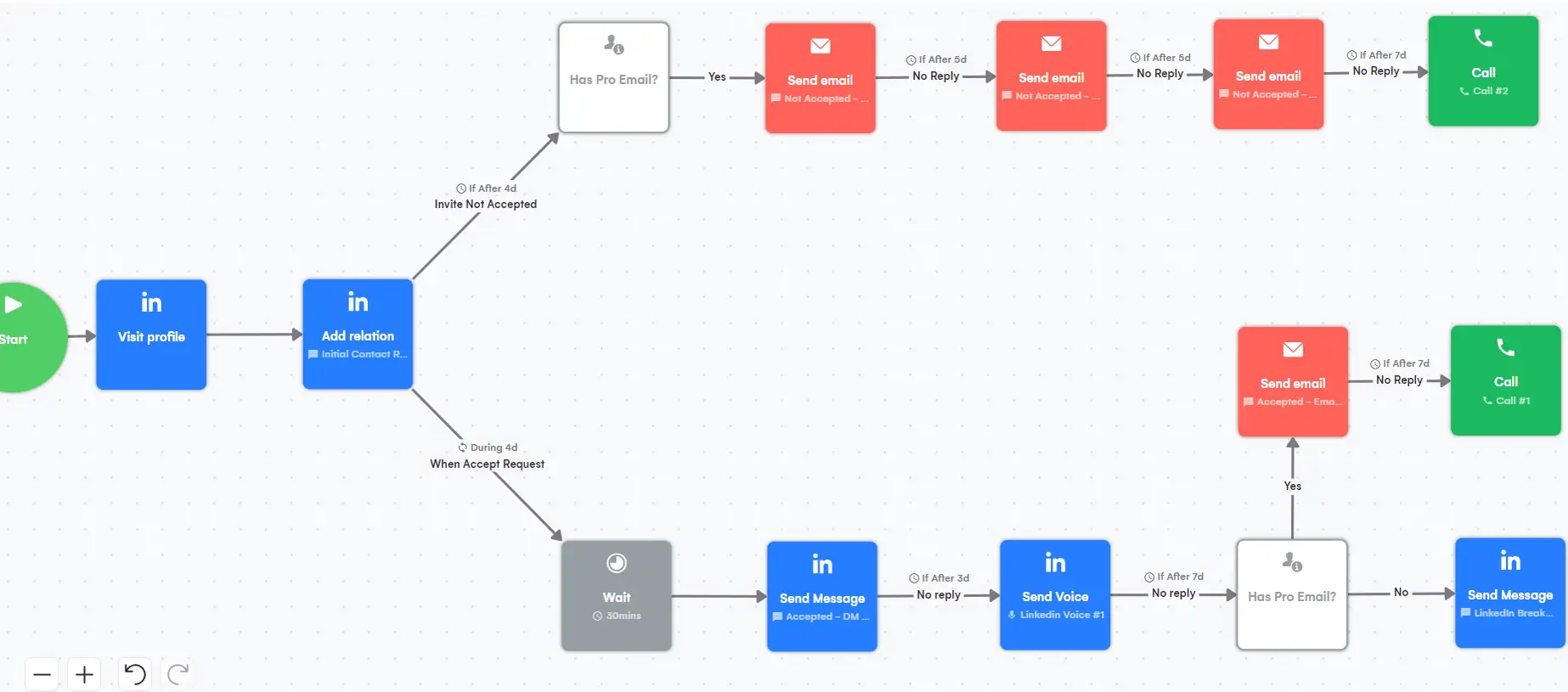
Email-only cadences leave pipeline on the table. The best B2B sales cadence tools connect email, calls, LinkedIn, and SMS into a single workflow — so every touchpoint reaches the prospect where they're most likely to respond. Teams running multi-channel sequences consistently outperform email-only playbooks.
AI Capabilities
In 2026, AI isn't a bonus feature — it's a differentiator. Look for tools that offer AI-assisted personalization at scale, reply detection and auto-categorization, sequence generation, and next-step recommendations. The platforms that can generate contextually relevant copy from prospect data — not just merge tags — are the ones worth paying for.
CRM Integration
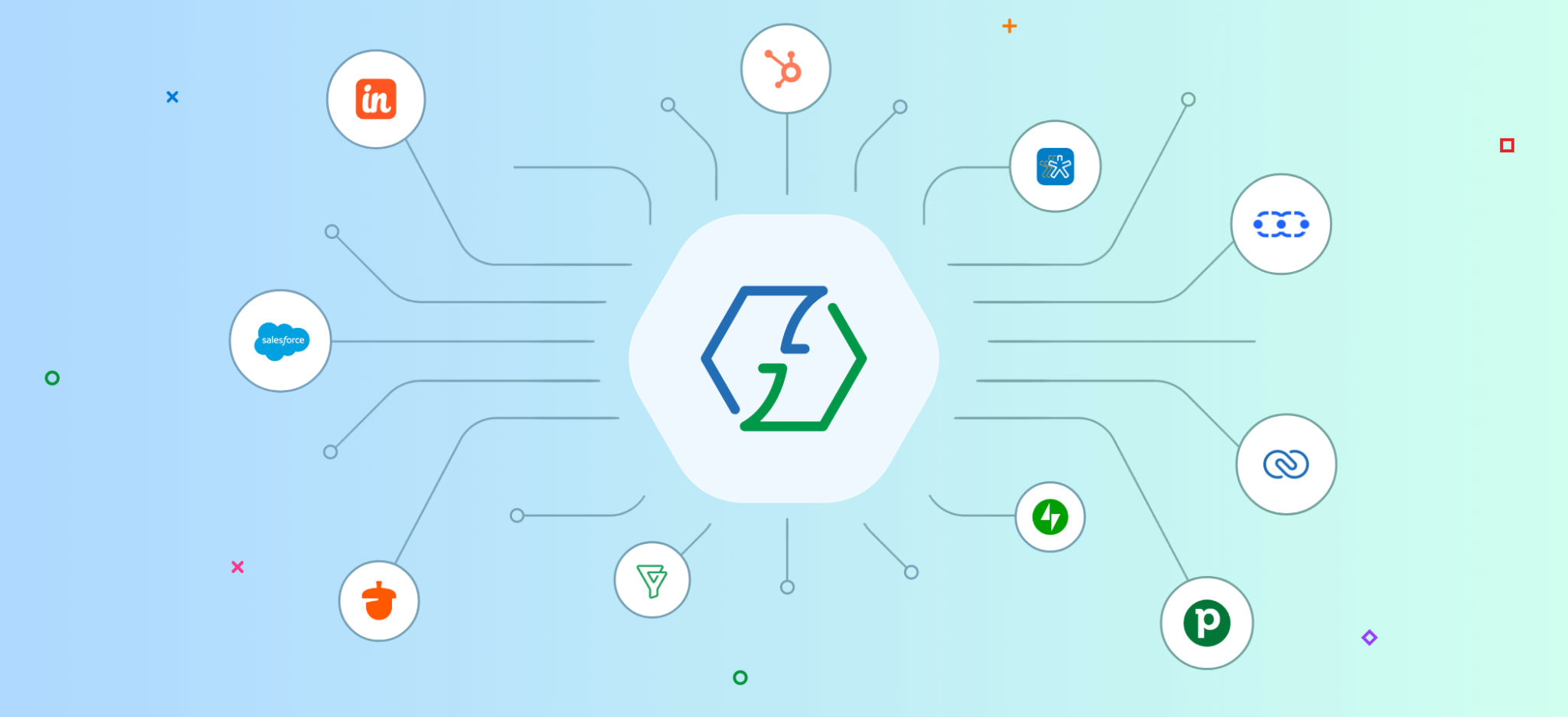
Bi-directional sync with Salesforce, HubSpot, or Pipedrive isn't negotiable. If your SDRs are manually logging activity, adoption rates drop fast and data integrity suffers. The best sales cadence tool fits into your existing CRM motion seamlessly — not around it.
Deliverability Infrastructure
The best sequence in the world doesn't matter if emails don't reach the inbox. Sender warm-up, domain rotation, bounce management, and spam testing are now table-stakes infrastructure, not add-ons. Any tool you evaluate should either include these natively or integrate with a dedicated deliverability layer.
Analytics and Reporting
Step-level performance data is what separates teams that optimize from teams that guess. Open rate, reply rate, and meeting book rate by cadence step tell you exactly where prospects are dropping off — and what to fix.

Pricing Model
Per-seat pricing compounds fast at scale. Usage-based or flat-fee models can make more economic sense for larger teams. Before committing, run the math at your current team size and your projected size 12 months out.
🚀 Cadence Tools Don’t Fix Bad Outreach
We run LinkedIn, cold email & cold calling campaigns that actually convert. Done-for-you outbound from targeting to booked meetings.
Quick Comparison Table: Best Sales Cadence Tools 2026
Top 10 Sales Cadence Tools for 2026
Each tool below is reviewed across key features, real-world limitations, pricing, and best-fit use case. The format is consistent so you can compare apples to apples across the list.
1. Outreach
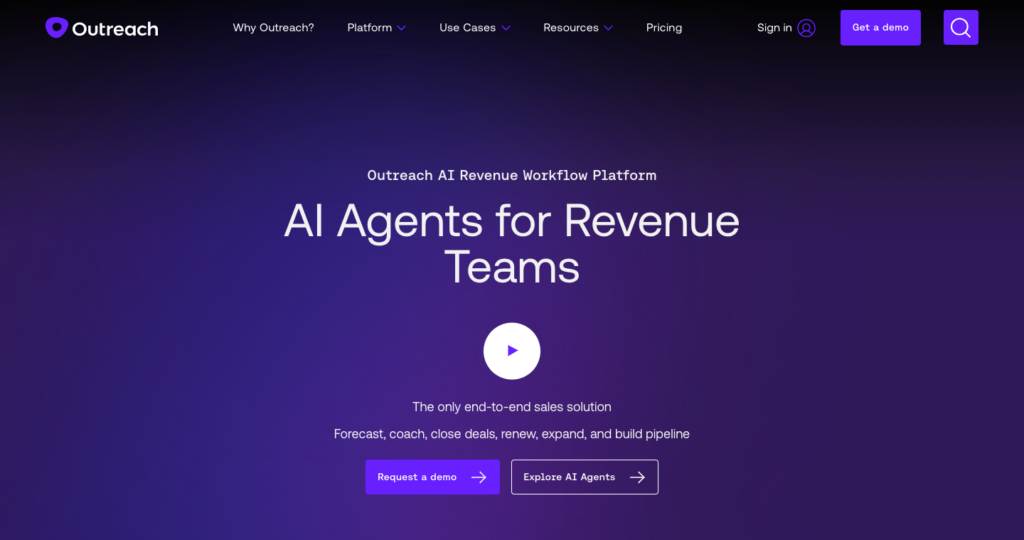
Outreach is the platform most enterprise sales organizations benchmark against when building a serious outbound motion. It started as a sequencing tool and evolved into a full revenue execution platform — covering multi-channel engagement, deal management, conversation intelligence, and AI-powered forecasting.
That capability comes with real cost and complexity. If you're a smaller team or don't have dedicated sales ops managing the platform, the ROI equation gets harder to justify.
Best For: Large enterprise sales teams with complex, multi-step cadences; organizations with deep Salesforce integration requirements; teams needing conditional sequence logic and advanced compliance controls.
Key Features:
- Conditional branching — if/then logic for building personalized cadence paths based on prospect behavior.
- True multi-channel sequences: email, calls, LinkedIn, and SMS from a single workflow.
- Kaia AI: meeting transcription, real-time coaching prompts, deal health scoring.
- Deep Salesforce and HubSpot bi-directional sync.
- Advanced admin controls, governance, and compliance features.
- AI forecasting and pipeline risk identification.
Limitations:
- No published pricing — requires a sales demo to get a quote, which adds friction to the evaluation process.
- Significant onboarding overhead is the norm; most teams need professional implementation and ongoing admin support.
- Annual contracts are standard at enterprise tier — no month-to-month option.
- New SDRs typically take 2–4 weeks to become productive on the platform.
- HubSpot integration is reported as less stable than Salesforce integration.
Pricing: Custom pricing based on team size and features; approximately $120/user/month based on Vendr marketplace data, with enterprise tiers at $160+/user/month. Annual contracts required.
2. Salesloft
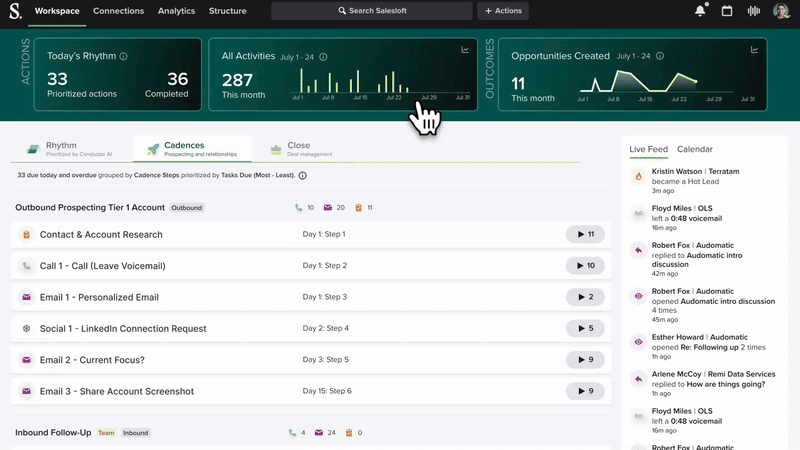
Salesloft has long been positioned as the platform of choice for large, distributed SDR teams that need both cadence execution and coaching infrastructure in the same tool. The acquisition of Clari in late 2025 shifted its narrative toward a broader "Predictive Revenue System" — combining sales engagement with revenue forecasting under one platform story.
If your team needs standardized playbooks, call coaching, and AI-driven sequence optimization at scale, Salesloft is a serious contender. If you're evaluating it right now, ask specifically how the Clari merger affects product packaging and roadmap — it's a fair and important question.
Best For: Large, distributed SDR teams that need coaching infrastructure alongside cadence execution; organizations investing in conversation intelligence and playbook standardization; teams already evaluating Clari for forecasting.
Key Features:
- Multi-channel cadences: email, calls, LinkedIn, and more.
- Rhythm AI: surfaces the highest-priority actions for each rep based on engagement signals.
- Call recording, transcription, and coaching dashboards.
- Playbooks to standardize top-performing outreach across teams.
- Deep Salesforce and HubSpot integrations.
- AI-powered analytics on what's working at the step and sequence level.
Limitations:
- No published pricing; custom-quoted like Outreach.
- The phone dialer is a separate add-on at approximately $200 per user per year — not included in the base price.
- The Clari and Salesloft merger closed on December 3, 2025, with new deals in 2026 increasingly bundled under a unified platform story — which adds cross-sell complexity to the buying process.
- Annual contracts required; no monthly billing
- Overkill for small teams or email-only outreach motions.
Pricing: Custom-quoted; most buyers land between $125 and $165 per user per month at list price, negotiating down to around $100–$130 for mid-market deals. Annual commitment required.
3. Apollo.io
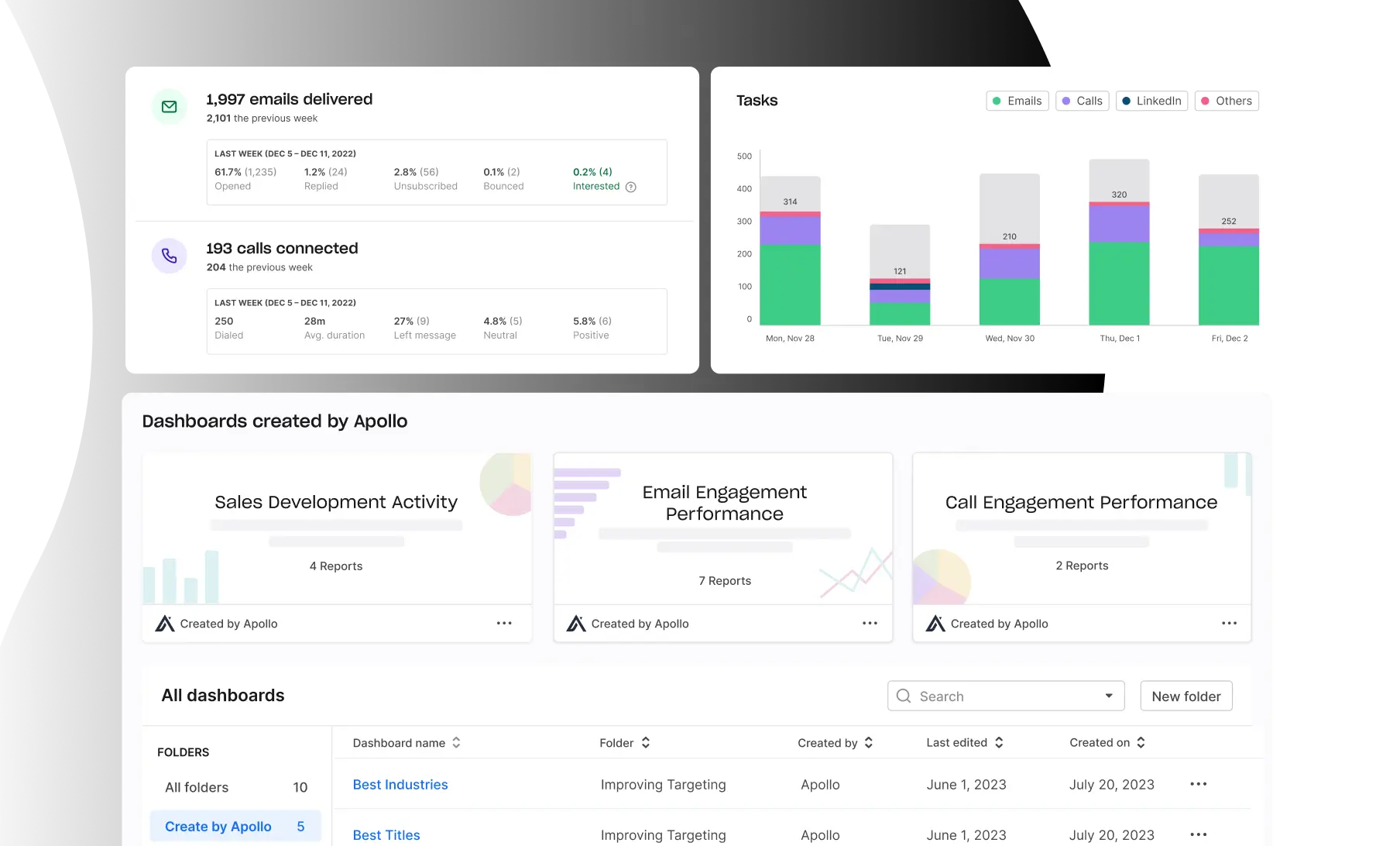
Apollo is the strongest argument for consolidation in the SDR tech stack. Instead of paying separately for a data provider and a sequencing tool, Apollo gives you both — a 210M+ contact database with intent signals layered directly into multi-step sequence automation.
For B2B SDR teams that don't have a separate data contract and want to move quickly, it's hard to beat the value proposition at entry-level pricing.
The trade-off: neither the database nor the sequencing engine is the absolute best-in-class standalone product. But for teams that need "both working well" over "one working perfectly," Apollo consistently delivers.
Best For: B2B SDR teams that want prospecting data and cadence automation in a single tool; mid-market teams without a separate data provider; teams wanting a free tier before committing.
Key Features:
- 210M+ contact database with intent signals and buying signals built in.
- Multi-step sequences with A/B testing and conditional logic.
- LinkedIn touches and call tasks within sequences.
- AI Assistant for agentic workflow automation.
- Free tier available for small teams testing the platform.
- Native integrations with Salesforce, HubSpot, and Pipedrive.
Limitations:
- The credit system is the real cost driver — phone numbers cost 8x more credits than emails, and credits expire at the end of each billing cycle.
- Real-world data accuracy hovers around 65–70% per user reviews, with email bounce rates of 15–25% reported across G2 and Trustpilot — teams may need supplementary verification tools.
- Advanced features like the international dialer and custom reports require the Organization plan at $119/user/month.
- Per-seat pricing adds up quickly for larger teams.
Pricing: Free plan available; Basic at $49/user/month (annual); Professional at $79/user/month (annual); Organization at $119/user/month (annual, 3-user minimum). Monthly billing adds approximately 15–25% to each tier.
4. HubSpot Sales Hub
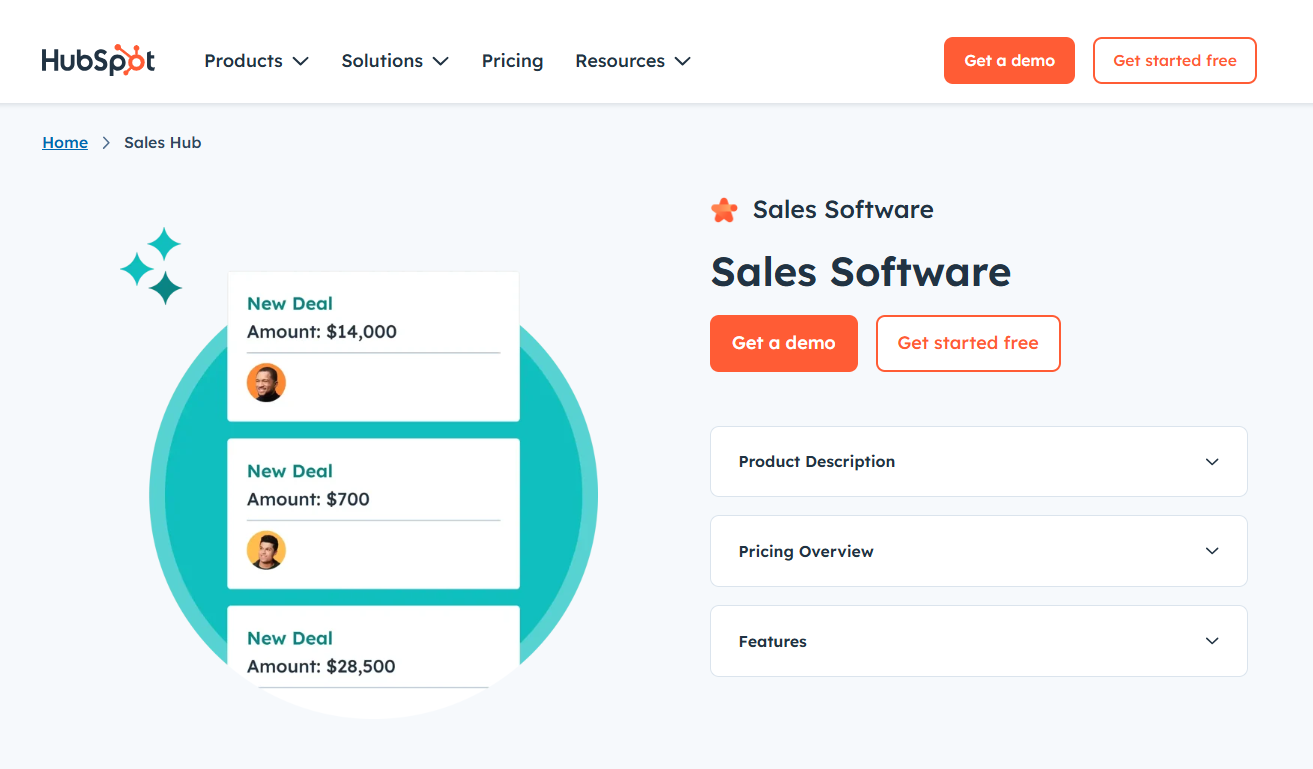
For teams already running on HubSpot CRM, adding Sales Hub sequences is often the path of least resistance — no new tool, no data migration, no disconnected reporting. The integration between CRM data and sequence behavior is genuinely seamless, which is a real advantage for teams that want marketing and sales data to share one source of truth.
The catch is pricing structure. Email sequences require the Professional plan, and the jump from Starter to Professional is substantial. Teams evaluating HubSpot purely for cadence automation should run the full cost math before committing.
Best For: Teams already on HubSpot CRM that want cadences without a new tool; mid-sized to enterprise teams wanting everything under one platform; marketing-aligned sales teams that benefit from connected CRM and campaign data.
Key Features:
- Email sequences with automated follow-ups, open tracking, and click tracking.
- Task automation for calls, meetings, and follow-ups.
- Full pipeline management and revenue forecasting.
- Deep integration across HubSpot CRM, Marketing Hub, and Service Hub.
- Reporting dashboards for team performance and engagement.
- AI-powered lead scoring and deal insights.
Limitations:
- Email sequences are only available on the Professional plan at $100/seat/month — Starter at $15/seat/month does not include sequences.
- The Professional plan includes a mandatory $1,500 onboarding fee in year one.
- Not the strongest platform for cold email deliverability vs. dedicated tools.
- Sequences are linear and email-focused — no conditional branching or true multi-channel automation at most tiers.
Pricing: Starter at $15/seat/month (annual); Professional at $100/seat/month (annual) with a mandatory $1,500 onboarding fee; Enterprise at $150/seat/month with a $3,500 onboarding fee.
5. Reply.io
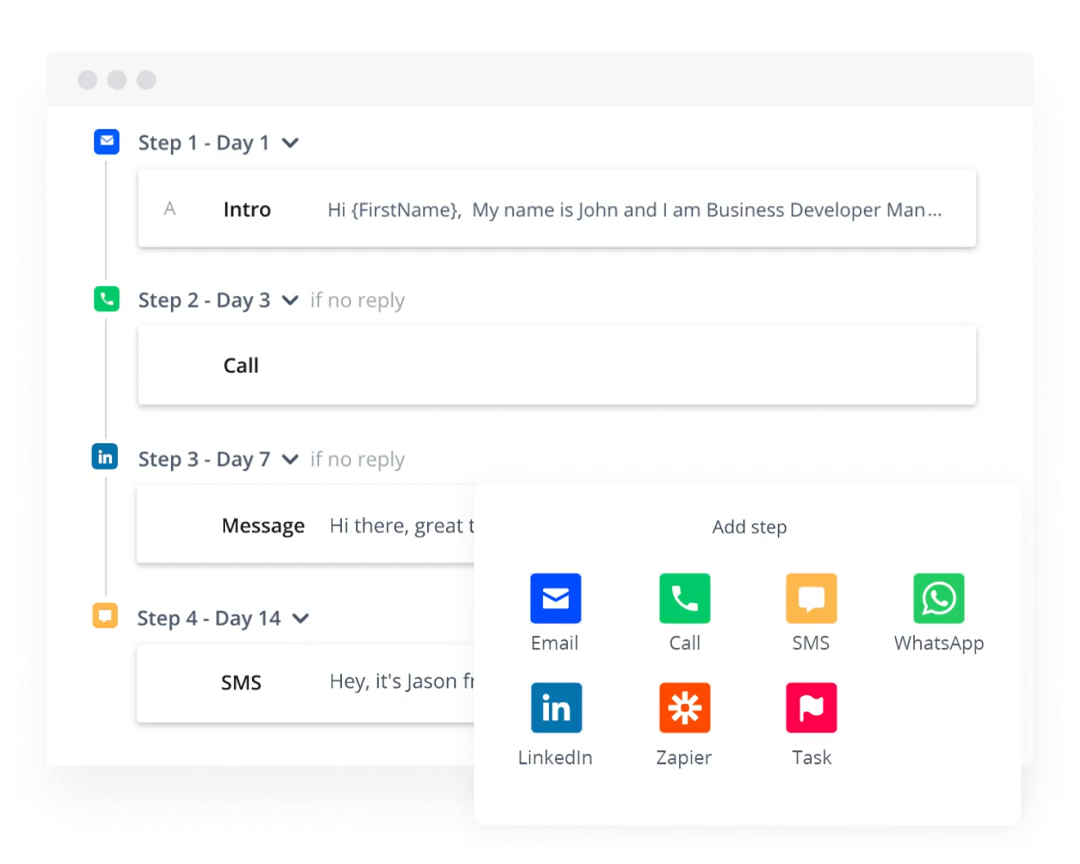
Reply.io sits in a useful middle ground: more affordable than Outreach or Salesloft, more feature-rich on multi-channel than Instantly or Mailshake. Its Jason AI agent generates personalized email copy from prospect profile data, and the platform covers email, LinkedIn, calls, SMS, and WhatsApp in one sequence builder.
The key thing to understand is that multi-channel capability requires the Professional plan — the Starter plan is email-only. Budget accordingly.
Best For: SDR teams running structured multi-channel campaigns combining email, LinkedIn, calls, and SMS; teams wanting AI assistance in writing and optimizing cadence copy; mid-market companies needing strong CRM integration alongside multi-channel outreach.
Key Features:
- Jason AI: generates personalized emails and follow-ups from prospect profile data.
- Multi-channel sequences covering email, LinkedIn, calls, SMS, and WhatsApp.
- AI reply detection and auto-categorization of responses.
- 1B+ verified contacts database for prospecting within the platform.
- CRM integrations with Salesforce and HubSpot.
- Agency plan available for teams managing multiple client accounts.
Limitations:
- LinkedIn automation, calls, and SMS require the Professional plan at $89/user/month — the Starter plan is email-only.
- The Multichannel plan doesn't actually include LinkedIn automation or calling natively — those are separate add-ons that push real costs higher.
- Monthly billing adds 20–30% over annual rates.
- Some users report unexpected auto-renewal charges and limited self-serve cancellation options.
Pricing: Free plan with limited usage; Email Volume plan from $49/user/month (annual); Multichannel Professional at $89/user/month (annual). 14-day free trial available on paid plans.
6. Klenty
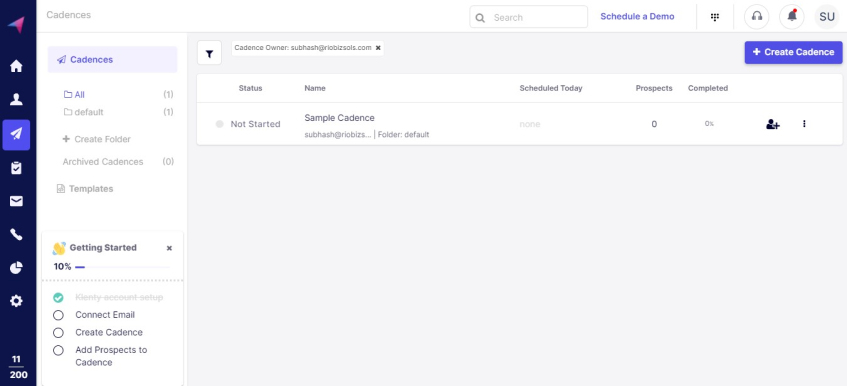
Klenty is purpose-built for outbound SDR teams that need multi-channel cadence automation without the enterprise overhead. It covers email, calls, LinkedIn, SMS, and WhatsApp with intent-based triggers that adjust sequences based on prospect behavior signals.
CRM integrations with Salesforce, HubSpot, Pipedrive, Zoho, and Dynamics are native — not Zapier workarounds.
Best For: SDR teams wanting purpose-built cadence automation without enterprise complexity; teams running intent-triggered, signal-based cadences; growing sales orgs that want cadence and prospecting together.
Key Features:
- Multi-channel sequences: email, calls, LinkedIn, SMS, and WhatsApp.
- Intent-based triggers: start or adjust cadences based on prospect behavior signals.
- Liquid templates for dynamic, variable personalization at scale.
- Native CRM integrations with Salesforce, HubSpot, Pipedrive, Zoho, and Dynamics.
- Cadence playbooks to standardize best outreach practices across reps.
- Parallel dialer and power dialer built into higher tiers.
Limitations:
- Less name recognition than Outreach or Salesloft — smaller ecosystem of native integrations.
- The entry Startup plan at $50/user/month is email-only — multichannel outreach including phone, LinkedIn, and SMS starts at $70/user/month on the Growth plan.
- India-based support team means potential response lag for US teams on urgent issues.
- Best suited for outbound-focused teams — not designed as a full CRM replacement.
Pricing: Startup plan at $50/user/month (annual, email-only); Growth at $70/user/month (annual, multichannel); Plus at $99/user/month (annual, includes AI credits and calling minutes). 14-day free trial available.
7. Instantly.ai
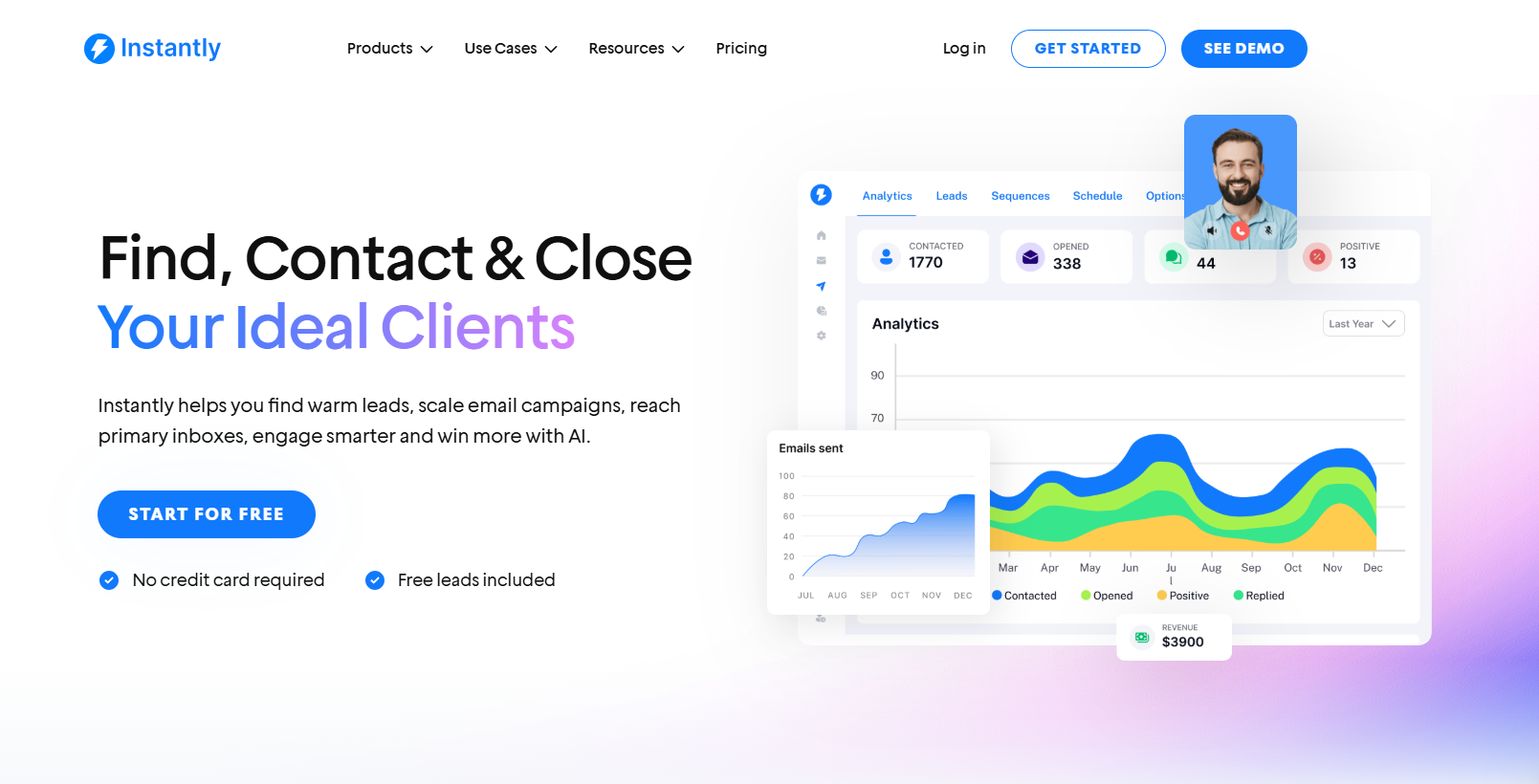
Instantly built its reputation on one thing: high-volume cold email at a flat-fee price. The unlimited email accounts model — where adding more sending inboxes doesn't raise your bill — changed how agencies and high-volume senders think about cost structure.
Know what you're buying though: this is an email-only platform. There are no LinkedIn sequences, no call tasks, no multi-channel logic. If your cadence needs more than email, you're building a two-tool stack.
Best For: Agencies and high-volume senders running thousands of emails per week; teams prioritizing deliverability and inbox placement at scale; email-first cadences where volume and sender rotation are the primary concerns.
Key Features:
- Unlimited email accounts with sender rotation on all plans — cost doesn't scale with inbox count.
- AI Copilot: generates context-aware email copy and sequence variations.
- Automated email warm-up network included natively.
- A 450M+ B2B contact database, AI agents for reply sorting, and a unified inbox (Unibox) for managing replies at scale.
- Inbox placement testing and blacklist monitoring on higher tiers.
Limitations:
- Email channel only — no LinkedIn, calls, or SMS
- The platform is modular: Outreach, Leads (the prospect database), and CRM are three separate subscriptions — real costs for the full stack run significantly higher than the advertised base price.
- The Growth plan caps sending at 5,000 emails per month — most active cold email operations need the Hypergrowth tier at $97/month to run serious volume.
- A/B testing requires Hypergrowth or higher — not available on the entry plan.
Pricing: Growth at $47/month (monthly) or $37.60/month (annual); Hypergrowth at $97/month; Light Speed at $358/month. 14-day free trial available. No permanent free plan.
8. Mailshake
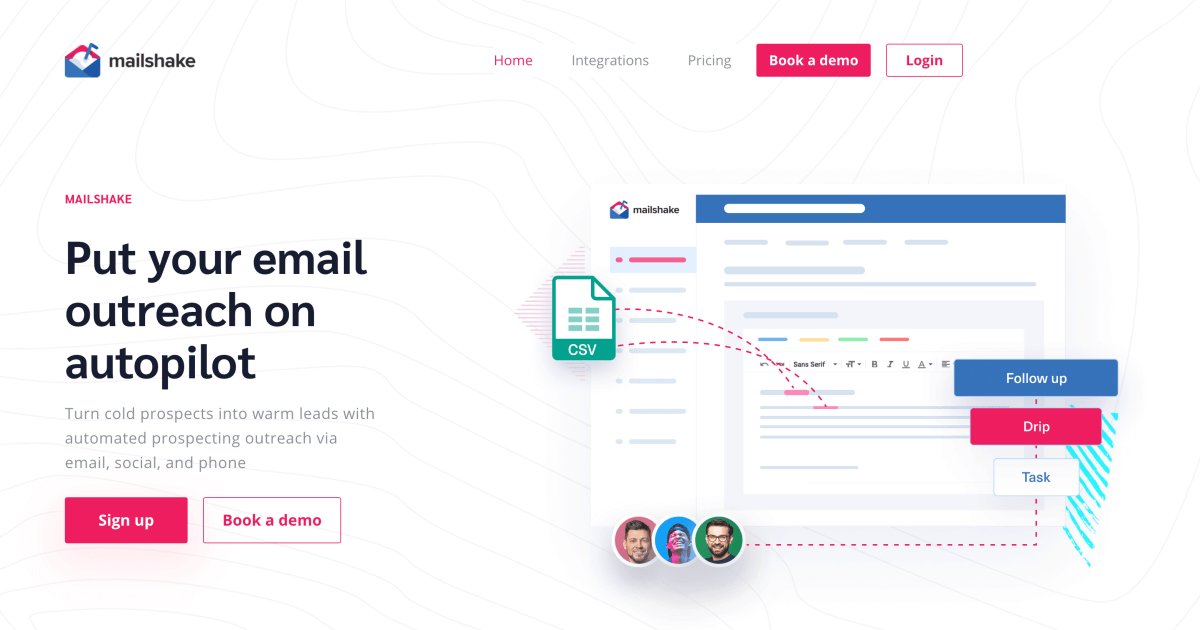
Mailshake has been a reliable choice for email-first outbound teams since 2015. The interface is clean, setup is fast, and the deliverability tools are solid. For founders, small agencies, or lean sales teams that don't need enterprise depth, it gets you to a functional cold email cadence quickly.
The platform added phone dialing and LinkedIn automation on higher tiers, which widens its appeal — but those features require the Sales Engagement plan, which pushes per-seat costs up. If you only need email, there are cheaper options. If you need full multi-channel at a simple price point, Mailshake is worth considering.
Best For: Marketing and sales teams running high-volume cold email campaigns; teams wanting simplicity without enterprise complexity; email-first cadences where ease of use is the priority.
Key Features:
- Multi-step email sequences with personalization and dynamic content.
- SHAKEspeare AI: AI-assisted email writing and subject line suggestions.
- Built-in deliverability tools: warmup, email rotation, and bounce tracking.
- Phone dialer and LinkedIn automation included on the Sales Engagement plan.
- Open, click, reply, and bounce tracking across all plans.
- Integrations with Salesforce, HubSpot, and Pipedrive (Email Outreach plan and above).
Limitations:
- Phone dialer and LinkedIn automation require the Sales Engagement plan at $99/user/month — the entry Starter plan is basic email tracking only.
- No built-in contact database — requires external list building and enrichment tools.
- Less advanced AI personalization than newer platforms like Reply.io or Klenty.
- The Starter plan at $29/month only allows one email address per user, which limits sender rotation for teams that need multiple sending accounts.
Pricing: Starter at $29/user/month; Email Outreach at $49/user/month; Sales Engagement at $99/user/month. Monthly billing; no annual discount currently. No free trial.
9. Close
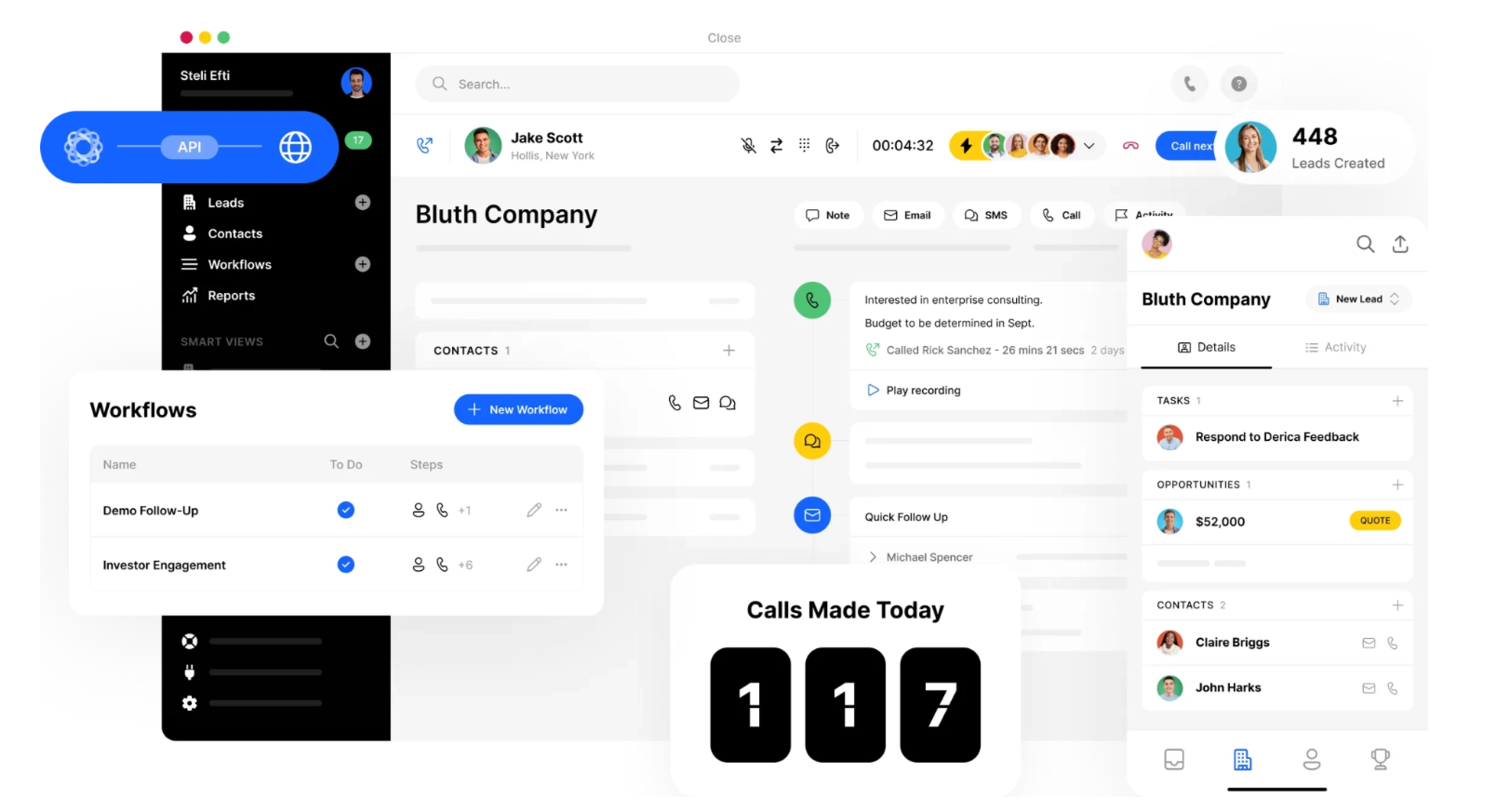
Close is a CRM and sales engagement platform built specifically for outbound-focused SMB teams. Unlike most CRMs that treat calling and email as integrations, Close bundles both natively — which means calls, emails, and SMS are managed from the same screen where deals live.
The platform covers the core cadence use case well, but it doesn't offer the AI personalization depth or intent-based triggering of dedicated cadence platforms. If you need a CRM and a dialer in one tool and don't need enterprise feature depth, Close is worth a serious look.
Best For: Small to mid-sized teams wanting calls, email, and SMS in one place; outbound-focused SMBs that don't need enterprise feature depth; teams that want a built-in power dialer alongside sequence automation.
Key Features:
- Unified inbox: calls, emails, and SMS managed in one view without app switching.
- Power dialer for working through call lists efficiently.
- Smart sequences: automate multi-channel follow-ups.
- Built-in pipeline management and deal tracking.
- AI Call Assistant for call transcription and summaries (add-on).
- Integrations with Zapier, Slack, and other productivity tools.
Limitations:
- Not suited for large enterprise teams with complex compliance or governance requirements.
- Less advanced AI personalization than dedicated best sales cadence automation tools for SDRs.
- No built-in contact database — external list building and enrichment required.
- Calling and SMS are charged separately based on usage (per-minute rates via Twilio) — costs vary based on calling volume.
Pricing: Plans range from $9 to $139 per user/month; no long-term contracts required. 14-day free trial and 30-day money-back guarantee available.
10. Freshsales
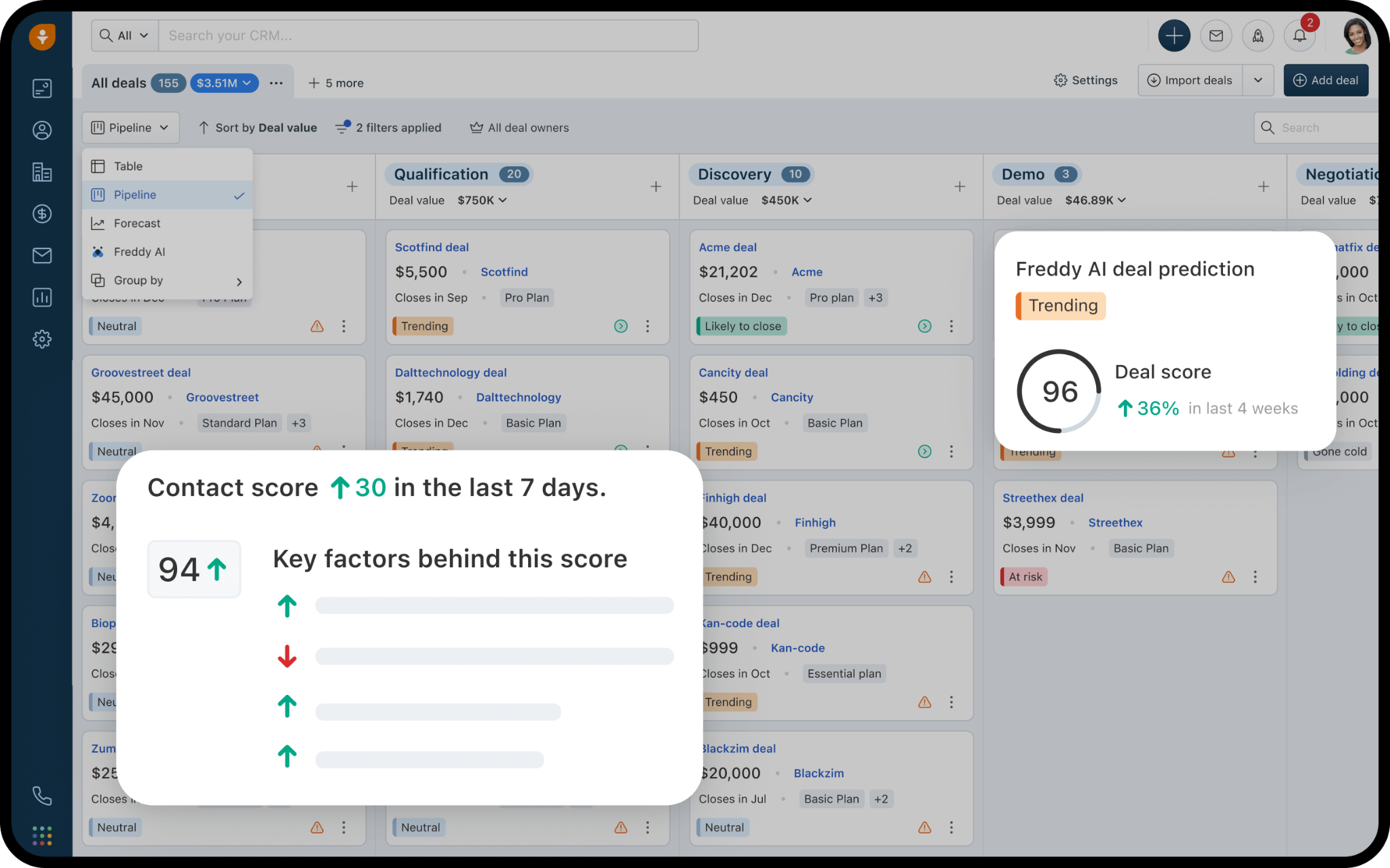
Freshsales is the right fit for early-stage teams transitioning from spreadsheets to a proper CRM and outreach workflow. The free plan supports up to three users with built-in phone, live chat, and pipeline management — a genuinely usable starting point.
Freddy AI handles lead scoring and next-action recommendations, and the paid tiers are priced well below most competitors at equivalent feature levels.
The limitation is reach: Freshsales is designed for inbound-led or hybrid motions. For pure cold outbound at scale with complex multi-channel cadences, dedicated outbound platforms will outperform it.
Best For: Startups and early-stage teams wanting affordable AI-powered sales automation; teams transitioning from spreadsheets to a structured CRM and cadence workflow; companies that want a free starting point before committing to paid tiers.
Key Features:
- Freddy AI: lead scoring, next-best-action recommendations, and deal insights.
- Sales sequences: automate personalized outreach across email and phone.
- 360-degree contact view: all interactions and history in one place.
- Free plan available for up to 3 users.
- Integration with the broader Freshworks suite (Freshdesk, Freshchat, etc.).
- Built-in phone and live chat on all plans.
Limitations:
- Multi-channel sequences are limited compared to dedicated outbound platforms like Klenty or Reply.io.
- AI features deliver the most value within the full Freshworks ecosystem — standalone value is lower if you're not using other Freshworks products.
- Less suitable for high-volume cold outbound vs. inbound-led or warm outreach motions.
- Phone calls are charged per-minute on top of plan fees — budget accordingly for call-heavy teams.
Pricing: Free plan for up to 3 users; Growth at $9/user/month (annual); Pro at $39/user/month (annual); Enterprise at $59/user/month (annual).
📈 More Automation ≠ More Pipeline
$312M pipeline generated across outbound channels. We handle outreach, follow-ups & booking—you close deals.
How to Choose the Right Sales Cadence Tool for Your Team
With ten tools on the table, the right call comes down to a few core decisions. Work through these in order:
✅ Define your channels first. If you're email-only, Instantly or Mailshake are the most cost-efficient options. If you need true multi-channel — email plus calls plus LinkedIn — Reply.io, Klenty, or Outreach are the serious contenders.
✅ Match team size to platform economics. Solo operators and small SMB teams (1–5 reps) do better with Close or Freshsales. Mid-market teams (5–30 reps) get the best value from Apollo.io or Reply.io. Enterprise teams of 50+ should be evaluating Outreach or Salesloft.
✅ Map your CRM dependency. If your team lives in Salesforce, Outreach delivers the strongest native integration. If you're HubSpot-primary, starting with HubSpot Sales Hub sequences removes tool sprawl entirely. Pipedrive teams tend to have more flexibility across the mid-market options.
✅ Run the full cost math. Most tools show a deceptively low entry price. Apollo's credit system, Salesloft's dialer add-on, HubSpot's mandatory onboarding fees, and Instantly's modular pricing all mean your actual monthly bill will look different from what the pricing page suggests. Run the numbers at your actual team size with realistic usage before signing anything.
✅ Pilot before you commit. Most tools offer 14-day trials. Use them. Run live sequences with real prospects — not test contacts — before signing an annual contract. Deliverability performance and ease of use only become apparent when you're sending at real volume.
Why the Best Cadence Tool Won't Replace Strategy and Execution
There's a pattern we see constantly: teams invest in the most capable sales cadence tools with AI, wire up their CRM, set up their sequences — and then wonder why reply rates are still flat.
The tool automates execution. It doesn't fix targeting, messaging, or offer quality. Generic copy sent to the wrong ICP will produce low reply rates regardless of whether it's running through Outreach or Instantly.
The most common failure mode isn't picking the wrong platform. It's investing in platform features before nailing the fundamentals: a tightly defined ICP, a verified and enriched contact list, a compelling offer that's specific to the prospect's situation, and follow-up sequences that feel like natural conversation rather than automated blasts.
This is where most B2B companies hit the ceiling managing outbound internally. They have the tools. They don't have the dedicated expertise — the ICP research, the list building, the copy iteration, the response handling — to run campaigns at the level that actually produces pipeline.
How Cleverly Approaches Outbound Differently
At Cleverly, we're a fully done-for-you B2B lead generation agency that handles the full outbound motion — not just the tooling.
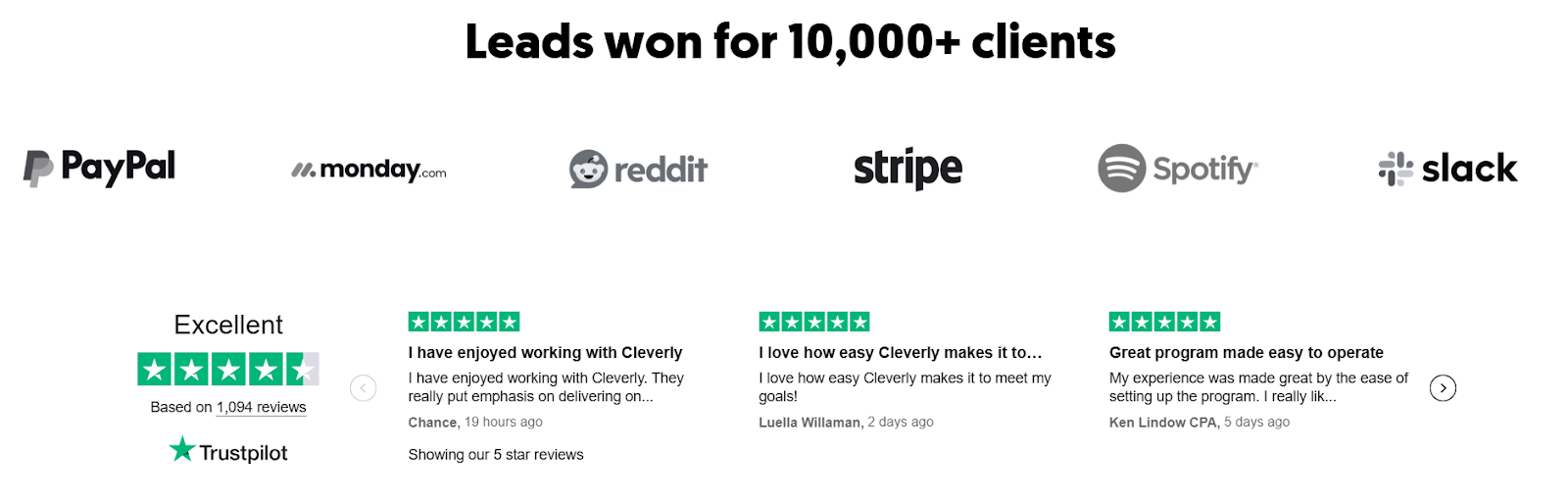
We've helped 10,000+ B2B companies generate pipeline across LinkedIn outreach, cold email, and cold calling, working with companies including Amazon, Google, Uber, PayPal, Slack, Spotify, and more. That's resulted in $312M in pipeline revenue and $51.2M in closed revenue for our clients.
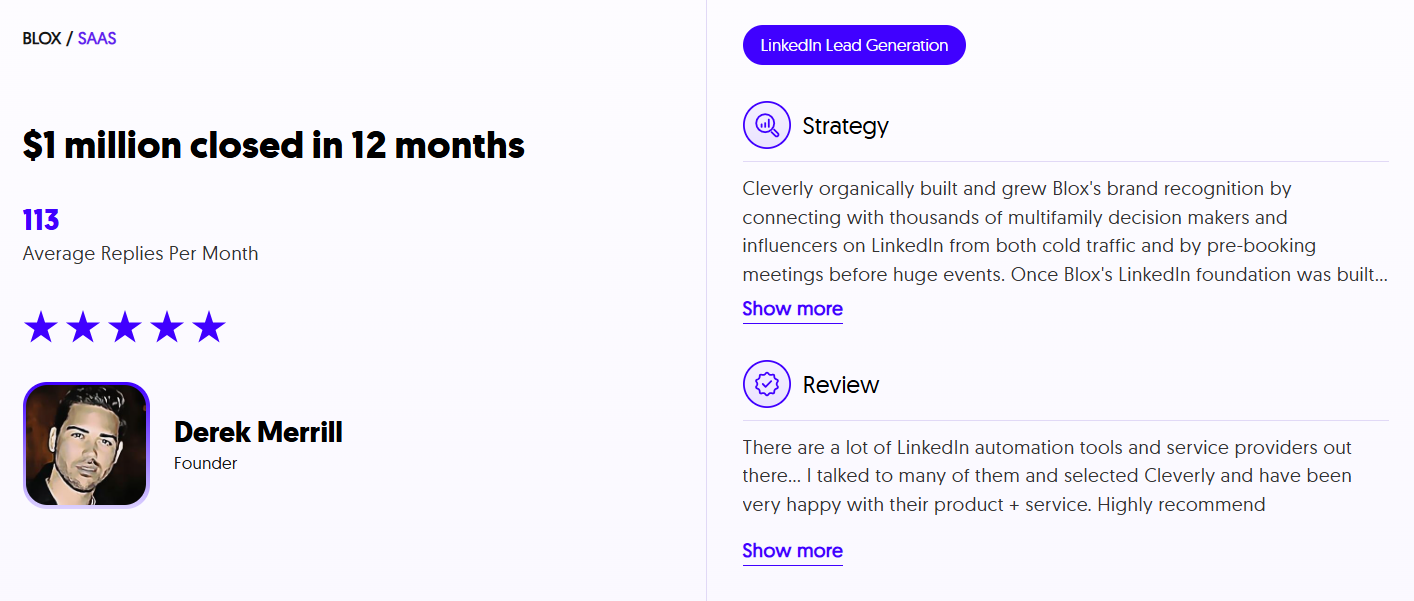
Our outbound approach is built on signal-based personalization — we don't send templated blasts to purchased lists. Every campaign starts with verified ICP research, enriched prospect data, and cadence copy written specifically for the audience and offer.
- LinkedIn lead generation starts at $397/month.
- On the cold email lead gen side, our Scale model means you only pay per meeting-ready lead — no flat retainer, no wasted spend.
- Our cold calling system has made 1M+ calls and set 53,000+ appointments, booking 10–30 qualified sales calls per month for clients at one flat monthly cost.
If your team has tried managing outbound internally and hit the execution ceiling, we'd love to show you what a properly built system looks like.
🤝 Book a strategy call with Cleverly and we'll map out exactly what a done-for-you cadence looks like for your ICP!
Conclusion
No single sales cadence tool wins across every team size and use case. The right call depends on your channels, your CRM, your team size, and how much you want to manage internally.
For enterprise teams, Outreach and Salesloft remain the benchmark — powerful, expensive, and worth it at scale when you have the ops capacity to run them.
For all-in-one data and sequencing, Apollo.io is the most practical mid-market choice. Reply.io and Klenty cover multi-channel AI cadences at a fraction of enterprise pricing. Instantly and Mailshake are the go-to options for email-first volume.
Close and Freshsales serve SMB teams that want a CRM and dialer in one platform without the complexity overhead.
The tool is the vehicle. ICP targeting, copy quality, and follow-up discipline determine how far you go.
Frequently Asked Questions
Free Resource
How to Scale a Profitable Cold Call System
Get the complete guide — download it instantly now.
Free Ebook
Download the Free Guide
Enter your details to get instant access.
You're all set! 🎉
Your ebook is downloading now.
Click below if the download didn't start automatically.