

Table of Contents
What Makes MSP Lead Generation Different From Other B2B Lead Gen
Why MSPs Struggle to Generate Consistent Leads
8 Proven MSP Lead Generation Strategies to Win New Business in 2026
How to Choose the Right Lead Generation Mix for Your MSP
Common Mistakes MSPs Make With Lead Generation
How Cleverly Helps MSPs Build a Predictable Lead Generation Pipeline
Conclusion
Frequently Asked Questions
Modified On :
July 27, 2026
Key Takeaways
- Referrals alone can't scale an MSP. You need a system that combines outbound (cold email, LinkedIn, cold calling) with inbound (content, local SEO) to keep pipeline flowing year-round.
- MSP buyers now vet you long before they ever call. Your website, reviews, and content have to do the trust-building work that a sales rep used to do on a discovery call.
- Not every channel fits every MSP. Local, SMB-focused providers should lean on referrals, local SEO, and cold calling. Vertical specialists (healthcare, legal, finance) get more mileage from LinkedIn and compliance-safe email.
- Trying to run all eight strategies at once dilutes results. Pick two or three that match your ICP and bandwidth, get them working, then expand.
- Consistency beats cleverness. Most MSPs lose deals not because their pitch is weak, but because follow-up stops after one or two touches.
Referrals built your MSP. They probably won't scale it.
71% of MSPs now say customer acquisition is their single biggest challenge, even as the industry keeps growing. That's not a coincidence. Kaseya's 2026 report found that customer acquisition has become the top concern for the majority of MSPs, even as 55% expect double-digit revenue growth this year.
Everyone's optimistic about the market. Fewer people have actually figured out how to consistently fill the pipeline.
At the same time, buyer behavior has shifted under your feet. B2B buyers now review roughly 11 pieces of content and complete about 61% of their purchase journey before they ever contact a vendor.
Translation: by the time an IT director picks up the phone, they've already Googled you, checked your reviews, and half-decided whether you're on the shortlist.
This guide covers why MSP lead generation works differently than lead gen for most B2B companies, the 8 strategies that actually move the needle in 2026, how to pick the right mix for your business, and the mistakes that quietly kill pipeline.
If you're an MSP owner, sales lead, or marketing manager trying to build something more predictable than "wait for a referral," this is for you.
What Makes MSP Lead Generation Different From Other B2B Lead Gen
Lead generation for MSP companies isn't the same game as SaaS or agency lead gen, even though the tactics look similar on the surface.
You're asking for a lot of trust, upfront
A prospect isn't buying a tool. They're handing over their servers, their data, their compliance posture, and their peace of mind. That changes what convinces them. Price matters less than proof. Case studies, certifications, and client logos carry more weight than a slick pitch deck.
The sales cycle runs longer and warier
Where a SaaS deal might close in a demo call, MSP deals usually involve a security review, a reference check, and sometimes a trial period. Rushing this stage backfires.
More than one person has to say yes
The business owner cares about cost and risk. The office manager cares about responsiveness. If there's an existing IT hire, they're quietly wondering if you're about to make their job smaller. Your messaging has to work for all three.
Geography still matters for a lot of MSPs
If you serve SMBs, local presence and local SEO carry real weight. If you specialize in a vertical like healthcare or finance, you can go national because the vertical expertise matters more than the zip code.
Spray-and-pray falls flat here
Generic "we do IT support" messaging blends into a crowded market. Prospects have heard it a hundred times. What gets a reply is specificity: the exact pain, the exact industry, the exact outcome.
🚀 Fill Your MSP Pipeline With Qualified Buyers
Our LinkedIn, cold email, and cold calling campaigns generate 15–30 qualified meetings every month with IT decision-makers.
Why MSPs Struggle to Generate Consistent Leads
If your pipeline feels like a rollercoaster, it's usually one of these five problems.
You're over-relying on referrals. Referrals are great leads. They're also unpredictable ones. Referrals still influence a large share of B2B buying decisions, but building a business entirely around word-of-mouth means your growth stalls the moment client turnover slows or a few big accounts quiet down.
Your messaging doesn't differentiate. "24/7 support, proactive monitoring, and cybersecurity" is what every MSP says. It tells a prospect nothing about why you're different from the three other MSPs they got a quote from last month.
You don't have a defined ICP. Targeting "any local business with 10+ employees" isn't a strategy. It's a way to burn through a list without learning anything about what actually converts.
Follow-up dies too early. Most deals aren't won or lost on the first touch. They're won on the third, fourth, or fifth. If your system stops after one email and one call, you're leaving qualified prospects on the table.
You're underinvesting in outbound because referrals "have always worked." That logic holds right up until it doesn't. The MSPs growing fastest in 2026 are running outbound and inbound in parallel, not waiting for the phone to ring.
8 Proven MSP Lead Generation Strategies to Win New Business in 2026
These strategies work best combined, not run in isolation. Start with two or three that fit your ICP and team bandwidth, then layer in more as you get traction.
1) Cold Email Outreach
Cold email is the most scalable way to get in front of IT decision-makers you don't already know. It doesn't depend on an existing audience or ad budget.
The mistake most MSPs make: leading with a service list instead of a pain point. Nobody replies to "we offer managed IT services." People reply to messaging built around downtime cost, security risk, or compliance deadlines they're actually worried about.
Segment by vertical. A healthcare prospect worried about HIPAA responds to different language than a law firm worried about client confidentiality. Generic email to both undersells the specificity that makes MSP messaging work.
On benchmarks: the average cold email reply rate across industries sits around 3.4%, while top-performing campaigns clear 10% or higher. For MSPs, a well-targeted, pain-led campaign should land closer to the top end of that range, especially in regulated verticals where the pain point is sharp and specific.
If you're targeting healthcare, finance, or legal clients, keep messaging compliance-safe: no fear-mongering about breaches you can't substantiate, no name-dropping other clients without permission.
2) LinkedIn Outreach and Social Selling
LinkedIn gives you something cold email can't: the ability to see the person's title, company size, and role before you ever send a message. That precision matters when you're trying to reach a business owner, IT manager, or office manager directly.
The structure that works: a connection request with a short, relevant note, followed by a value-driven follow-up sequence once they accept. Skip the pitch in the connection request itself.
Founder-led outreach consistently outperforms generic SDR scripts on LinkedIn. A message that reads like it came from a person who runs the company lands differently than one that reads like a template.
Posting and engaging with relevant content before you pitch also warms up cold connections. A prospect who's seen your name in their feed a few times replies differently than one seeing it for the first time in a DM.
3) Cold Calling
Cold calling gets you a real conversation faster than any other channel, and it lets you handle objections live instead of losing the prospect to silence.
It works especially well for local and regional MSPs targeting SMBs, where a phone call still feels normal rather than intrusive. Pairing it with an email or LinkedIn touch beforehand warms the call up. Prospects respond better to a call when they've already seen your name once.
A simple script structure: open with a reason for the call, ask a pain-point question, and close with a specific ask for a short discovery call. Don't try to sell the whole service on the phone. The goal of the call is the next meeting, not the close.
Dial volume matters, but list quality matters more. Fifty calls to a well-qualified list beats two hundred calls to a generic one.
4) Referral and Channel Partnerships
Referrals convert better than almost any other channel. The problem is most MSPs treat them as luck instead of a system.
Build formal partnerships with people who talk to your ICP before you do: CPAs, business consultants, telecom and ISP reps, and complementary software vendors. These partners see opportunities before an IT need becomes obvious.
Make it easy for them to refer you. A one-pager explaining what you do and who you serve, a clear referral incentive, and a simple hand-off process remove the friction that kills most partner referrals before they start.
Don't skip your existing clients either. Ask for referrals at natural moments, like after a successful project or a positive quarterly review, and consider a modest incentive. One active, engaged partner can realistically deliver a handful of qualified leads a month, which adds up fast across five or six partnerships.
5) Content Marketing and Local SEO
Content does the trust-building that used to happen on a first call. By the time a prospect reads your blog post on ransomware costs or compliance deadlines, they've already started forming an opinion about whether you know what you're talking about.
For local MSPs, local SEO matters more than almost anything else you can do organically. Ranking for "IT support [city]" or "managed services [location]" puts you in front of prospects actively searching, not prospects you have to interrupt.
Case studies and client success stories convert better than generic service pages because they show outcomes, not promises. Gated resources like a cybersecurity checklist or a free security assessment give you a natural way to capture a lead's contact info in exchange for something useful.
Set expectations here: content compounds slowly. Most MSPs see meaningful inbound results in 3 to 6 months, not weeks.
6) Paid Search and PPC

Paid search fills the gap while your organic content is still building momentum. Bidding on high-intent terms like "managed IT services near me" puts you in front of prospects who are actively looking, not prospects you're interrupting.
The part most MSPs get wrong isn't the ad copy. It's the landing page. A generic homepage sends paid traffic to die. A landing page that matches the ad's specific promise converts far better.
Set budget guardrails based on whether you're going local or national. Local campaigns can work with a modest budget because the audience is smaller and more targeted. National campaigns for vertical specialists need a bigger spend to compete.
Retargeting matters too. Most visitors won't convert on the first visit. A retargeting sequence for people who hit your site and left recovers some of that lost interest.
7) Industry Events, Webinars, and Community Engagement

Events and webinars work because they put you in a room (physical or virtual) with people who are already thinking about the problem you solve.
MSP-specific events like MSP Summit or Channel Futures are worth the travel budget if you're actively looking to grow. For SMB-focused MSPs, local chamber of commerce meetings and business networking groups often deliver a better return relative to cost.
Webinars on timely, specific topics like ransomware trends or an upcoming compliance deadline work as lead magnets because they solve a real, current problem.
Whatever channel you use, the follow-up window matters more than the event itself. Following up within 24 to 48 hours converts dramatically better than waiting a week, by which point the conversation has gone cold.
8) Website Conversion Optimization
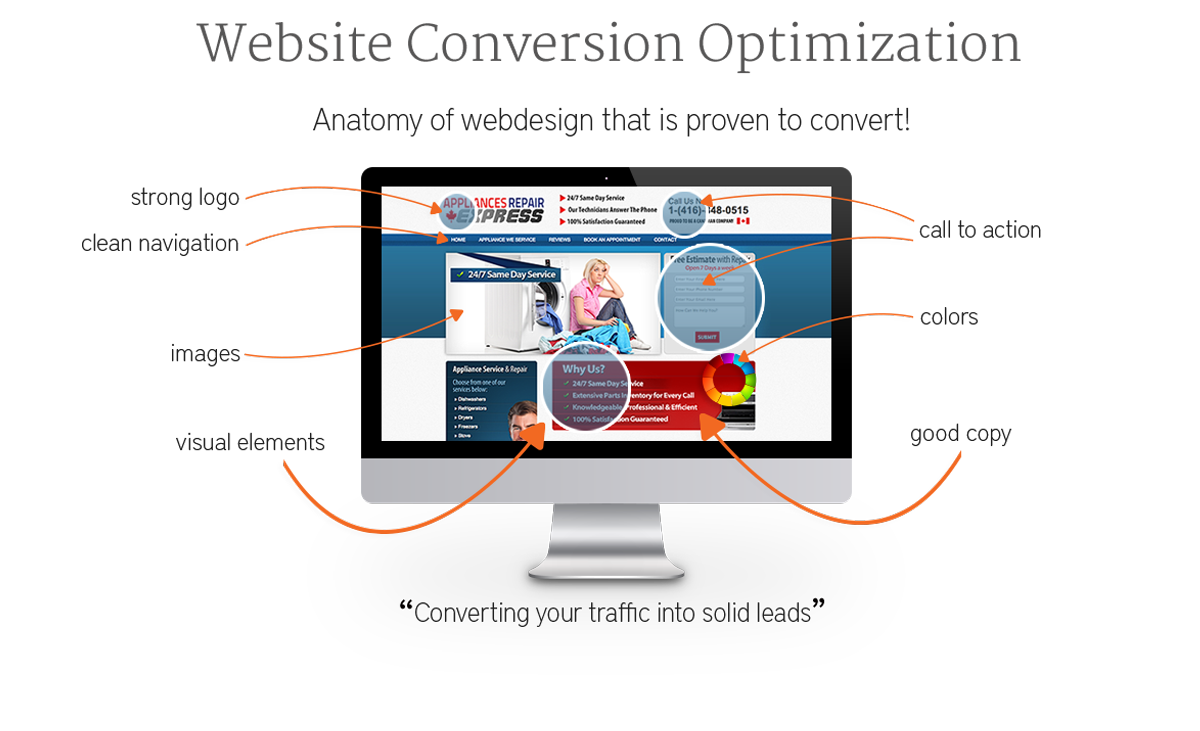
Your website is often the last trust check before a prospect reaches out, which makes it one of the highest-leverage things you can fix.
Clear service positioning, visible pricing signals (even a range), and proof like certifications and client logos matter more than polished design. Prospects are scanning for reasons to trust you, not admiring your color scheme.
Keep your calls to action low-friction: a free assessment, a security audit, or a short discovery call converts better than "contact us." Chat widgets and contact forms should be optimized for speed of response, since a slow reply loses the moment.
Don't overlook the basics. Mobile responsiveness and page speed affect conversion more than most MSPs assume, and they're cheap to fix relative to the leads lost from ignoring them.
📈 53,000+ Meetings Booked. Predictable Growth Delivered.
Join 10,000+ businesses using Cleverly to build a scalable outbound engine that consistently turns prospects into pipeline.
How to Choose the Right Lead Generation Mix for Your MSP
There's no universal answer to how to generate leads for MSP companies. The right mix depends on four things: your target market size, your ICP, your budget, and how long your sales cycle typically runs.
✅ If you're a local or SMB-focused MSP, referrals, local SEO, and cold calling tend to outperform other combinations. Your buyers are nearby, price-sensitive, and often make faster decisions.
✅ If you're a vertical specialist (healthcare, legal, finance), LinkedIn outreach, content, and compliance-safe cold email tend to work better. Your buyers are more sophisticated, harder to reach by phone, and more responsive to demonstrated expertise than to local proximity.
A quick way to think about it:
Running every channel at once, right out of the gate, usually backfires. It dilutes your team's attention and makes it impossible to tell what's actually working. Start with two channels, get them producing consistently, then expand.
Set realistic timelines. Most MSPs see their first meetings within 2 to 3 months of launching a new channel, and a genuinely predictable pipeline takes 3 to 6 months to stabilize. If someone promises faster, be skeptical.
Common Mistakes MSPs Make With Lead Generation
❌ Leading with services instead of outcomes. "24/7 support" describes what you do. "Eliminate unplanned downtime" describes what the prospect gets. The second one gets replies.
❌ No defined ICP. Targeting "any business" instead of a specific niche means your messaging can never be specific enough to stand out.
❌ Giving up after one or two touches. Most replies come from the third, fourth, or fifth touch in a sequence, not the first.
❌ Treating referrals as a strategy instead of a system. Hoping for referrals isn't the same as building a formal process to generate them consistently.
❌ No follow-up cadence for website or event leads. A lead that fills out a form or attends a webinar and doesn't hear back within a day or two is a lead you paid to lose.
❌ Underpricing to compensate for weak proof. If your pipeline is thin, the fix is better positioning and proof, not a lower price. Discounting to win deals usually just attracts price-sensitive clients who churn first.
How Cleverly Helps MSPs Build a Predictable Lead Generation Pipeline
Running outbound lead generation properly while also managing client IT environments is close to a full-time job on its own, and most MSPs don't have the bandwidth to do both well.
That's the gap Cleverly fills.
We run done-for-you B2B lead generation that combines LinkedIn outreach, cold email, and cold calling into one system built around your ICP, so you're not managing three separate tools and three separate learning curves.
Everything runs end-to-end on our side: ICP and vertical targeting, verified contact lists, personalized multi-channel messaging, and response handling that gets qualified conversations onto your calendar.
For MSPs specifically, that matters because the trial-and-error of figuring out targeting and messaging is exactly what costs most providers their first few months of pipeline. We've already run that experimentation across thousands of B2B campaigns, so you're not starting from zero.
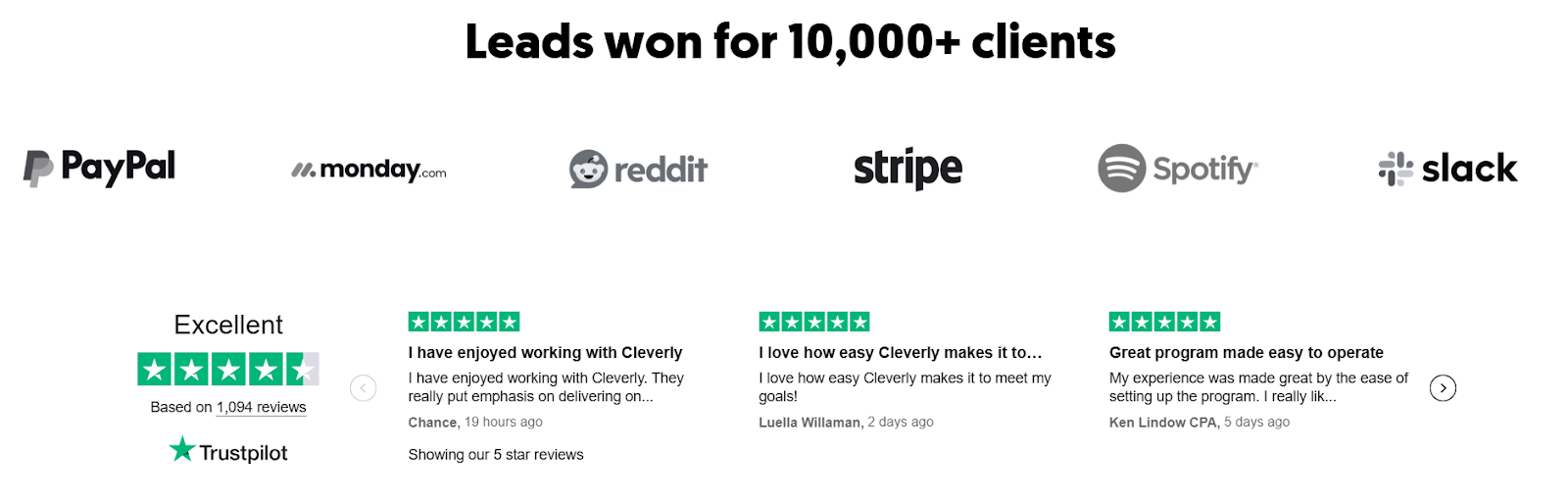
This fits best for MSPs with a defined service offering who want consistent, qualified conversations without building an in-house SDR function from scratch.
If that sounds like where you're at, book a strategy call with Cleverly and we'll walk through what a pipeline built around your ICP would actually look like.
Conclusion
Winning new MSP business in 2026 isn't about finding the one tactic that works. It's about building a deliberate, multi-channel system where outbound and inbound reinforce each other instead of competing for attention.
Referrals got you here, but they won't scale a growth plan on their own. Start with two or three strategies that genuinely fit your ICP and your team's bandwidth, give them the 2 to 3 months they need to start producing, and expand from there.
Consistency and real follow-up will do more for your pipeline than any single channel choice ever will.
Frequently Asked Questions
Free Resource
How to Scale a Profitable Cold Call System
Get the complete guide — download it instantly now.
Free Ebook
Download the Free Guide
Enter your details to get instant access.
You're all set! 🎉
Your ebook is downloading now.
Click below if the download didn't start automatically.


