Table of Contents
Block and Delete Connects on LinkedIn
Why Remove Connections?
Remove vs. Unfollow vs. Block: Which One Should You Use?
Deleting Connections From Your LinkedIn Account
Removing Connections Using the LinkedIn Website
Removing Connections Using the Mobile App
Bulk LinkedIn Contact Deletions
Blocking Connections to Your LinkedIn Account
Safe LinkedIn Connection Removal Practices & Limits
Streamline Your LinkedIn Experience
Frequently Asked Questions
Modified On :
June 2, 2026
Key Takeaways
- LinkedIn doesn't notify anyone when you remove a connection — it's completely silent.
- Removing a connection permanently deletes their endorsements and recommendations, even if you reconnect.
- Unfollowing keeps the connection but clears them from your feed — use it before reaching for remove.
- Native bulk removal doesn't exist for first-degree connections; you'll need a third-party tool.
- Stay under 30 removals per day to avoid triggering LinkedIn's anti-spam systems.
LinkedIn makes networking simple. With one globally-used professional platform, it's easy to find others in your field and stay in touch.
Existing contacts become a springboard to engage with more people in your area of expertise. You can use these connections to navigate career growth and get real-world information and insights from those who understand exactly what you do.
LinkedIn encourages users to add connections and broaden their network - both to benefit the company and its members. But there can be too much of a good thing. At some point you may wonder how to remove connections on LinkedIn.
At Cleverly, we manage LinkedIn outreach for thousands of B2B clients and deal with connection list hygiene constantly - bloated networks hurt engagement rates, dilute targeting, and slow down outreach. This guide covers everything: how to remove connections safely, when to unfollow instead of remove, how to do it in bulk, and how to keep your account from getting flagged while you clean house.
Why Remove Connections?
If you’ve spent any time on social media, you already know not every connection adds real value. On LinkedIn especially, the quality of your network matters more than the raw number of contacts.
Some common reasons to remove LinkedIn connections include:
- Irrelevant or Spam Accounts – Fake profiles, bots, or salesy accounts that clutter your feed.
- Low-Value Connections – People outside your industry, role, or target audience who don’t contribute to your professional goals.
- Competitors – If you accidentally connected with someone at a rival company, you may want to limit the visibility they have into your updates and activity.
- Inactive Profiles – Dormant accounts that haven’t posted or engaged in years bring no benefit to your network.
But beyond relevance, there’s also a performance angle to consider:
- Improved Reach & Engagement – LinkedIn's algorithm weighs engagement signals from your first-degree connections when deciding how widely to distribute your posts — low-engagement connections actively hurt your reach.
- Better Networking ROI – A lean, engaged network makes it easier to track who’s truly valuable and worth nurturing, instead of wasting time on irrelevant contacts.
- Cleaner Feed & Insights – Removing clutter helps you focus on the content, insights, and discussions that matter most to your career or business.
That said, don’t be too quick to cut ties. Someone who isn’t engaging today could become relevant in the future.
For example, a quiet connection may switch industries, get promoted into a decision-making role, or circle back as a client later on.
Unless they’re spammy or harmful to your reputation, think twice before removing them entirely.
🔗 From Dead Connections to B2B Opportunities
Cleaning up your LinkedIn is just step one, our proven outreach fills your network with decision-makers who convert. Book a free LinkedIn lead gen strategy call today.
Remove vs. Unfollow vs. Block: Which One Should You Use?
Before you dive into removing connections, it's worth knowing that LinkedIn gives you three different ways to distance yourself from someone — and they're not interchangeable. Picking the wrong one can do more damage than the person you're trying to avoid.
Remove Connection
Removing a connection ends the mutual relationship entirely. They leave your connections list, you leave theirs. Neither party is notified. They can still follow your public content (unless you restrict it), but they can no longer message you for free, and you lose the ability to see each other's private updates.
This is the right move when the relationship is genuinely dead or counterproductive — spam accounts, irrelevant contacts, people you never intended to connect with in the first place.
Unfollow
Unfollowing keeps the connection intact but stops their posts from appearing in your feed. They stay in your connections list, you stay in theirs. They can still message you. You just don't see their content anymore.
This is the right move when the relationship has some value — a past colleague, a client who posts irrelevant content — but you'd rather not sever ties. It's also useful when you want to clean up your feed without risking a professional awkwardness.
How to unfollow someone on LinkedIn: Go to their profile → click the "Following" button → select "Unfollow." They won't be notified.
Block
Blocking is the most aggressive action. The other person can't view your profile, send you messages, or interact with your content in any way. You become invisible to each other on LinkedIn.
Use this for harassment, spam that keeps coming back after removal, or situations where you need a hard wall between you and another user.
Quick reference:
When in doubt: if the problem is noise in your feed, unfollow. If the relationship is over, remove. If there's a conduct issue, block.
Deleting Connections From Your LinkedIn Account
First, you should know that once you break a connection, all of the endorsements or recommendations offered to you by that connection will also disappear. Even if you later reconnect, the fruits of your previous connection are gone forever.
The necessary steps for removal are a little different depending on whether you are using the website or mobile app. But in either case it is a simple process once you know where to click.
🚀 Replace Weak Links with Real Leads
Deleting old connections? Let Cleverly help you rebuild with targeted, high-value prospects. Start generating qualified leads from just $397/month.
Removing Connections Using the LinkedIn Website
You can remove a connection via the LinkedIn website from either your connections page or the individual's profile page.
From Your Connections Page
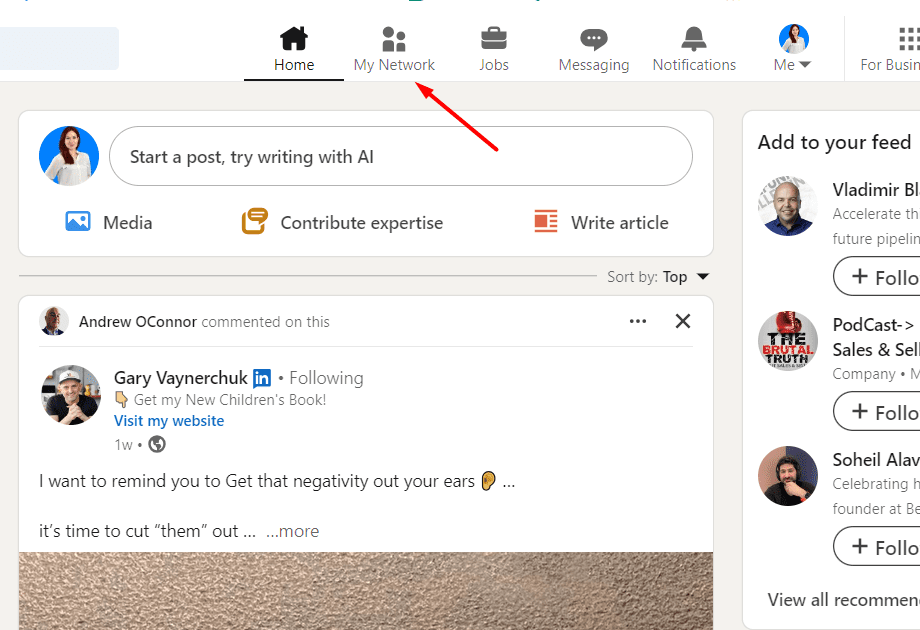
1. From your homepage, click on the My Network icon at the top of the page.
2. Find and click on the Connections link on the left rail.

3. Find the connection you wish to remove.
4. Click on the More icon next to that connection.
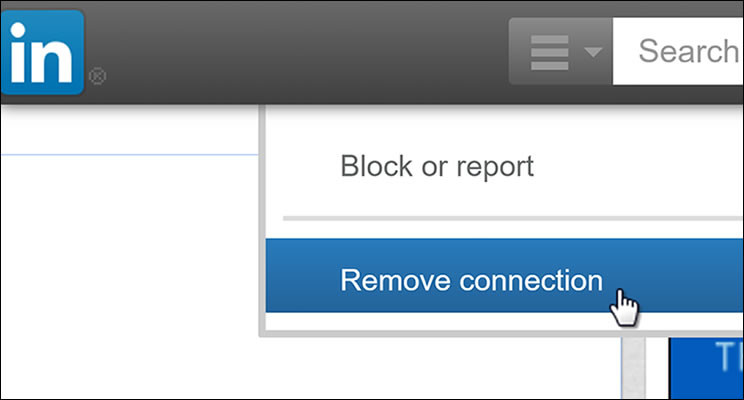
5. Click on Remove Connection.
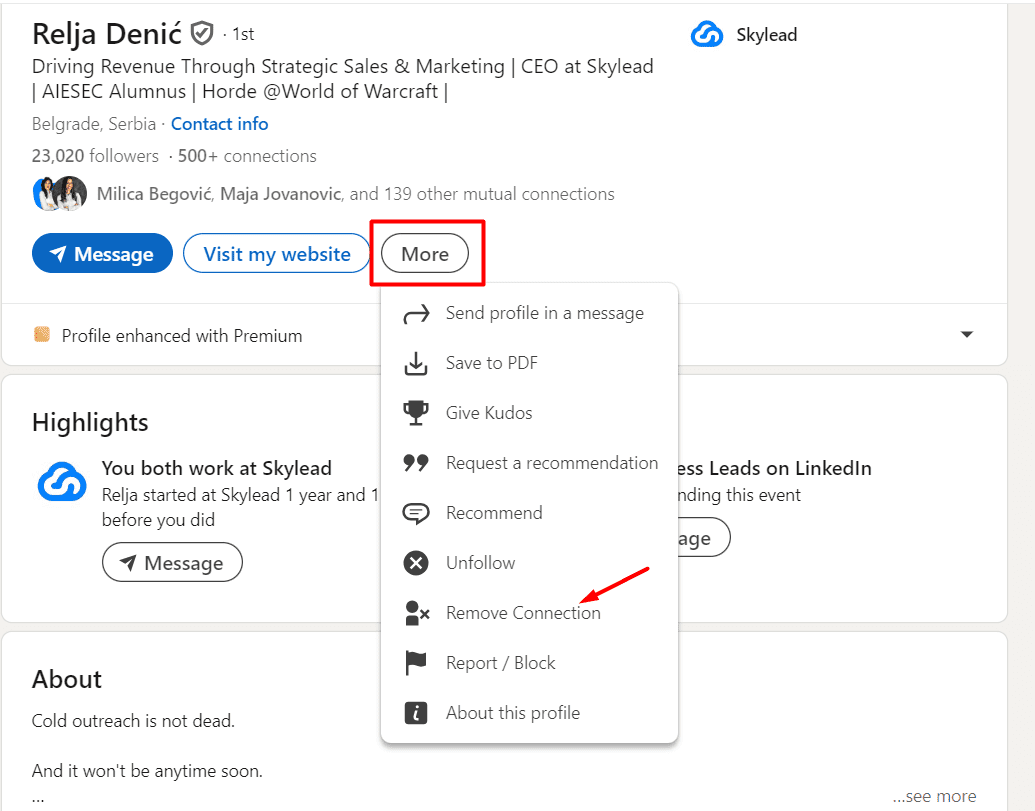
5. A "Remove Connection" pop-up window will appear; click on Remove in that window.
That’s it. The connection is now broken. The person will no longer show up as a connection or on your contacts page.
How to Hide Connection Removals from Your Network
LinkedIn doesn't notify the person you remove — but it can notify your broader network. By default, LinkedIn broadcasts certain profile and network activity to your connections. If you're doing a cleanup and don't want people seeing a flurry of network change updates, turn this off first.
To disable activity broadcasts:
- Click your profile photo → Settings & Privacy
- Go to Visibility → Visibility of your LinkedIn activity
- Find "Share profile updates with your network" and toggle it off
To hide your connections list from others:
- Same Settings & Privacy path → Visibility → Who can see your connections
- Set to Only you
This ensures no one can see who you've connected with — or quietly check whether you've removed them by scanning your connections list.
Once your cleanup is done, you can turn these back on if you want your network to see your updates and connections again.
From the Connection’s Profile Page
- Find and open the connection’s profile page.
- Click on the More button located in the introduction section of the profile.
- Select Remove Connection.
Once this is done, the individual’s status will change to "Connection Removed."
Removing Connections Using the Mobile App
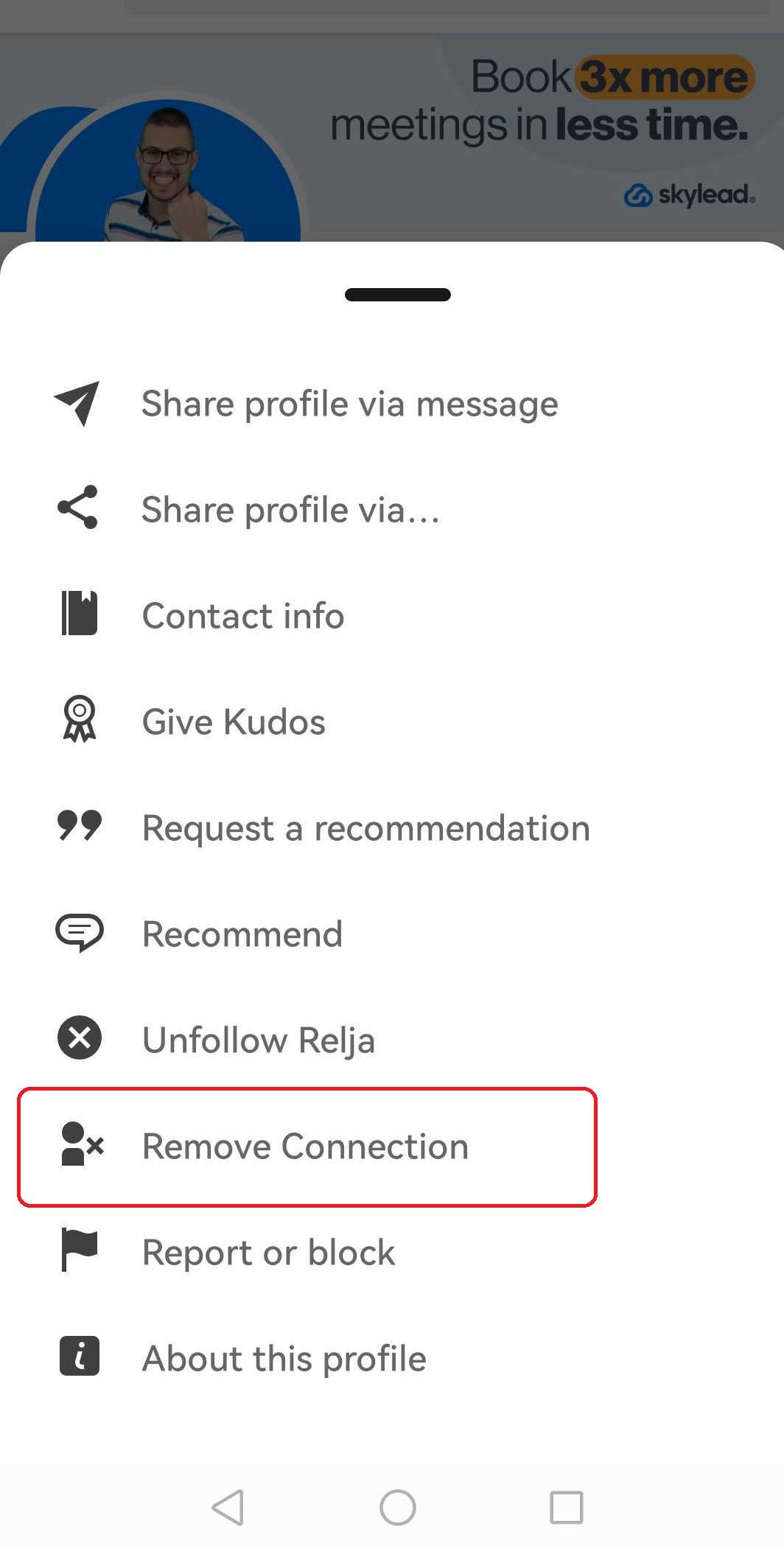
Like everything else, the LinkedIn mobile app is designed to make it quick and easy to accomplish tasks while you are on the go. Removing contacts is no exception.
Just four easy steps get the job done.
- Find and open the connection's profile page.
- Click on the More button.
- Select Remove Connection.
- Click on Remove Connection in the pop-up window that appears.
No matter how you choose to remove a connection to your LinkedIn account, the person being disconnected will not be notified of the change.
What Actually Happens After You Remove a Connection
Here's the full picture of what changes — and what doesn't — when you remove someone on LinkedIn:
What changes immediately:
- They disappear from your connections list and vice versa
- Direct messaging access is severed (unless you're both LinkedIn Premium users or share group membership)
- Endorsements and recommendations they gave you are removed permanently — even if you reconnect later
- Your posts and activity become less visible to them, depending on your privacy settings
What stays the same:
- Mutual group memberships remain intact. If you're both in the same LinkedIn Group, you'll still appear in that group together and can interact through it. Remove doesn't mean remove from groups.
- They can still follow your public profile content if you have a public presence
- Any messages in your existing conversation thread stay in your inbox — they don't disappear
One thing most people miss: If you remove someone and later want to reconnect, you'll need to send a new connection request. If they accept, the connection is restored — but any endorsements or recommendations from the previous connection are gone forever. There's no restoring those.
Bulk LinkedIn Contact Deletions
If you synced your LinkedIn contacts list with a different contact list, you may have many connections you do not need or want.
Thankfully, there is a way to delete these imported contacts all at once.
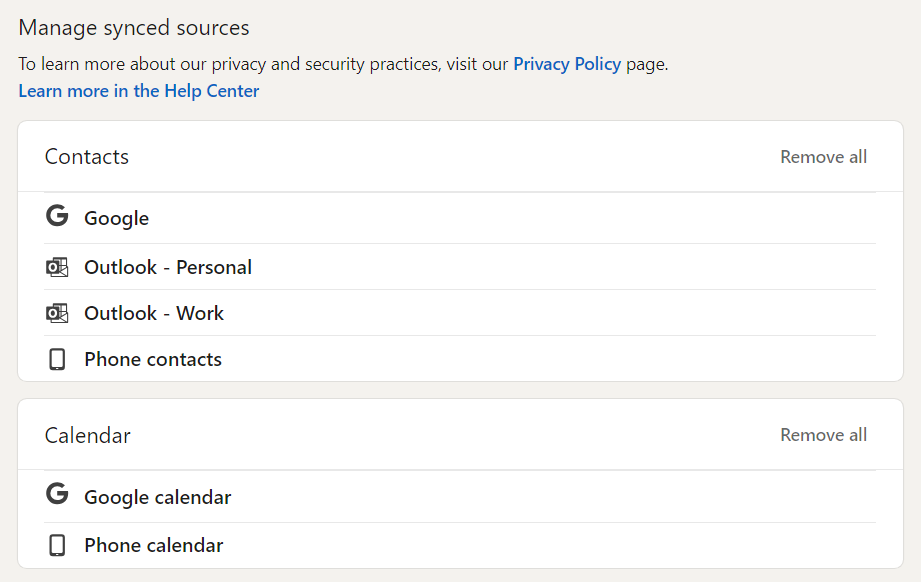
Option 1: Using LinkedIn’s Native Settings
- Click on the My Network icon at the top of your homepage.
- Click on the Contacts button on the left rail.
- Select Manage Synced Contacts from the right rail.
- Find the contact source you want to delete and click the Remove All button located next to it.
- Click Continue to confirm your choice.
Option 2: Using Third-Party Tools for Bulk Deletions
If you want to clean up actual first-degree LinkedIn connections in bulk, LinkedIn doesn’t offer a built-in feature. This is where third-party LinkedIn tools come in—but proceed carefully, since LinkedIn discourages automation.
Here are some popular tools:
1. LeadDelta
- What it is: A connection manager for LinkedIn that lets you tag, filter, and bulk-remove contacts.
- How to use: Import your LinkedIn connections into LeadDelta → filter by job title, company, or relevance → bulk-select and remove.
- Pros: Clean interface, great for CRM-like connection management, safer than browser extensions.
- Cons: Paid subscription; doesn’t handle outreach/automation.
- Risks: Must be used within LinkedIn’s daily action limits.

2. Linked Helper
- What it is: A desktop app that automates LinkedIn tasks, including connection removals.
- How to use: Install the app → choose “Connection Remover” → set filters → run automation.
- Pros: Very powerful automation features, customizable workflows.
- Cons: Steeper learning curve, heavier automation footprint.
- Risks: Higher risk of violating LinkedIn’s automation policies if overused.
3. PhantomBuster
- What it is: A cloud-based automation platform that runs LinkedIn “Phantoms” (scripts), including bulk connection removals.
- How to use: Set up the “Remove LinkedIn Connections” Phantom → upload a CSV of unwanted contacts → run automation.
- Pros: Cloud-based (doesn’t hog your computer), flexible integrations.
- Cons: Requires some technical setup; limited actions per day on lower plans.
- Risks: If not throttled, may trigger LinkedIn restrictions.
Before choosing any third-party option, check our roundup of the best LinkedIn automation tools - it covers safety ratings, use cases, and price points across the major platforms.
LinkedIn Connection Remover Browser Extensions
If you're looking for a Chrome extension specifically, a few options exist — but manage your expectations. Most browser-based connection remover extensions work by automating clicks in your LinkedIn session, which LinkedIn's terms of service discourages.
Some known options in this category include Dux-Soup and LinkedIn connection cleanup scripts found on GitHub — but these carry higher risk of account restrictions than dedicated tools like LeadDelta or Linked Helper, which operate with more controlled, rate-limited automation.
The safer approach for browser-based users: Use LeadDelta's Chrome extension, which integrates with your LinkedIn session but operates within safer rate limits than pure automation scripts. It gives you a filtered view of your connection list and lets you remove connections in batches without running afoul of LinkedIn's systems.
Bottom line: if someone is selling a Chrome extension that promises to remove hundreds of connections in minutes, be skeptical. The tools worth using prioritize your account's safety over speed.
How to Remove "People You May Know" Suggestions on LinkedIn
"People You May Know" is LinkedIn's suggestion feature — it's not a list of your connections, it's a list of people LinkedIn thinks you might want to connect with. These are not the same thing as connections, and managing them works differently.
If you want to clear out or stop seeing specific suggestions:
To dismiss a single suggestion:
- Go to My Network at the top of your LinkedIn homepage
- Find the person under "People You May Know"
- Click the X on their suggestion card to dismiss it
Dismissing a suggestion doesn't block the person or prevent them from seeing your profile. It just tells LinkedIn's algorithm you're not interested in that connection. The suggestion may come back if LinkedIn detects a new reason to surface them (shared connection, company change, etc.).
To reduce suggestion clutter overall:
- Adjust your email sync settings: if you've synced your phone contacts or email, LinkedIn uses that data to generate suggestions. Go to Settings & Privacy → Data privacy → Sync contacts to manage or remove synced sources.
- Review and remove imported contacts from your Contacts page to reduce the data pool LinkedIn draws from
Note: there's no way to fully disable the "People You May Know" feature — it's baked into LinkedIn's networking model. Dismissing suggestions one by one is the only native option.
Blocking Connections to Your LinkedIn Account
Blocking a contact is a stronger measure than removal. When you block an individual it not only breaks the connection but also separates them from you in other ways.
Once a person is blocked from your LinkedIn account, the following things will happen:
- You can't view each other’s profile pages.
- You can't access each other's shared content.
- You can't message each other through LinkedIn.
- Any recommendations or endorsements you received from that person disappear.
- Their profile stops showing up in LinkedIn features such as “People Also Viewed” and “More Suggestions for You."
If you've decided that avoiding this person warrants the heavier approach, here are the steps to block them from your LinkedIn account.

- Find and open the account profile page you would like to block.
- Click on the More button located below the member's profile picture.
- Select Report/Block from the list.
- A “What do you want to do?” pop-up window will appear. Select Block [add member's name].
- Click Block to finish the process.
As with removing a contact, the blocked person will not be notified of this change — that is, unless the two of you have ever shared a LinkedIn Recruiter account.
If you choose to unblock someone and the behavior that made you want to block them in the first place reappears, you have to wait 48 hours before you can block them again.
Safe LinkedIn Connection Removal Practices & Limits
LinkedIn doesn’t publish an official rulebook on how many people you can safely remove per day. But like with connection requests or messages, the platform tracks suspicious behavior patterns.
Removing too many people in bulk can trigger restrictions, or even temporary account blocks.
Here’s what you should know:
How Many Removals Per Day Is Safe?
- 10–30 removals/day is considered safe for most accounts.
- Newer accounts should stay closer to 10/day.
- Established accounts with thousands of connections can usually handle 20–30/day without issues.
- Anything beyond 50/day (especially if automated) risks tripping LinkedIn’s anti-spam systems.
⚠️ Important: These are community-tested safe ranges, not LinkedIn’s official limits. Always err on the side of caution.
Best Practices to Avoid Restrictions
- Spread Out Actions – Don’t remove dozens of people back-to-back. Space it out throughout the day.
- Mix in Other Activity – Balance removals with normal LinkedIn usage (liking, commenting, posting). A natural activity pattern reduces risk.
- Use Filters Before You Remove – Instead of mass deletions, filter connections by job title, geography, or relevance (using tools like LeadDelta) to make smarter removals.
- Avoid Full Automation – Tools that remove hundreds of connections at once (e.g., Linked Helper/PhantomBuster at full speed) are more likely to get flagged.
- Regular Cleanups > One-Time Purges – It’s safer to prune 20 irrelevant contacts a week than to nuke 500 in a single day.
✅ Pro Tip: If you’re doing a major cleanup project, aim for steady weekly trimming rather than a one-day bulk purge. This keeps your account safe and your network quality steadily improving.
Streamline Your LinkedIn Experience
Now that you know how to remove and block unwanted connections, it’s time to curate a LinkedIn network that actually works for you. By keeping only the connections that are truly valuable, you’ll see:
- A cleaner feed filled with content that matters.
- Stronger engagement on your posts, since you’re reaching the right audience.
- Faster access to the people and opportunities that can move your career or business forward.
Taking a little time now to clean up your contact list means less clutter, fewer spammy requests, and more meaningful conversations down the road.
And if you’re looking to go beyond cleanup into real LinkedIn lead generation, that’s where we come in.

At Cleverly, we’ve helped 10,000+ clients generate leads with top companies like:
- Amazon
- Uber
- PayPal
- Slack
- Spotify & more
…resulting in millions of dollars in closed deals. Our LinkedIn lead gen pricing starts at just $397/month, making it easier than ever to turn your LinkedIn presence into a revenue engine.
👉 Ready to transform your LinkedIn network into a powerful growth channel? Get started with Cleverly today
Frequently Asked Questions
Free Resource
How to Scale a Profitable Cold Call System
Get the complete guide — download it instantly now.
Free Ebook
Download the Free Guide
Enter your details to get instant access.
You're all set! 🎉
Your ebook is downloading now.
Click below if the download didn't start automatically.