

Table of Contents
What Is a B2B Appointment Setting Brief?
Why Your Appointment Setting Brief Makes or Breaks Campaign Performance
What to Include in a B2B Appointment Setting Brief
B2B Appointment Setting Brief Template
Common Mistakes That Weaken Your Appointment Setting Brief
How to Use Your Brief Once It's Sent
How Cleverly Turns Your Brief Into 15–30 Booked Sales Calls Every Month
Conclusion
Frequently Asked Questions
Modified On :
July 13, 2026
Key Takeaways
- An appointment setting brief is the single document that determines whether an outsourced campaign books the right meetings or wastes everyone's time — most campaigns underperform because this document doesn't exist or is too vague to act on.
- Every brief needs seven core sections: company overview, ICP definition, value proposition, qualification criteria, channel preferences, objection handling guidelines, and handoff process.
- Vague ICP definitions are the number-one reason outsourced campaigns fail — "mid-market B2B companies" is not a target, it's a guess.
- Your brief is a living document — update it after the first 30 days based on what the data is telling you about which messages and segments are working.
- The best briefs are built collaboratively with the agency during onboarding, not emailed as a PDF and never revisited.
Somewhere between signing the contract with a new appointment setting agency and seeing the first calendar invite land, something usually goes wrong.
Outreach sounds generic. The people being targeted don't match your buyer. Meetings get booked with prospects your AEs would never close. And everyone ends up blaming the agency.
The real problem, more often than not, is that nobody wrote anything down.
An appointment setting brief is the document that fixes this. It's the structured onboarding foundation that gives an external team everything they need to represent you accurately, target the right people, and book meetings that your sales team can actually close.
This guide covers what belongs in a B2B appointment setting brief, why each section matters, and a fill-in-the-blank template you can hand to any agency and get results.
It's built for founders, sales leaders, and RevOps teams preparing to outsource appointment setting for the first time — or restructuring a campaign that isn't performing.
What Is a B2B Appointment Setting Brief?
The simplest way to describe it: an appointment setting brief is an onboarding manual written for the agency, not a pitch deck for clients.
It's a structured document that gives an external SDR team or appointment setting agency everything they need to represent your company and book qualified meetings on your behalf.
Think of it as the answer to the question every agency is quietly asking from day one: "What does a good meeting actually look like for this client?"
A strong brief covers seven core areas:
- Who you are and what you sell
- Who you're targeting and why
- What your value proposition is and how to talk about it
- What qualifies a meeting as worth your AE's time
- Which channels to use and how
- How to handle the objections that will come up
- How meetings get handed off to your team
Without it, agencies default to their own assumptions about your ICP, your offer, and what a qualified conversation looks like. If your ICP is vague, your outsourced team will waste time calling the wrong people — and appointment setting only works if everyone agrees on what a good meeting is.
A well-built brief shortens onboarding by weeks and directly improves meeting quality from day one. Without one, you're paying for speed and getting guesswork.
🚀 The Best Briefs Lead to Faster Results
Most campaigns take weeks to align on ICPs, messaging, and goals. Our onboarding process gets campaigns live in as little as 2–3 weeks.
Why Your Appointment Setting Brief Makes or Breaks Campaign Performance
When targeting criteria are too broad, too generic, or built from outdated assumptions, even a skilled SDR team cannot produce qualified conversations. The brief is what prevents that from happening.
Here's how it plays out across each function of the campaign:
1️⃣ Targeting: Without a precise ICP definition, agencies build prospect lists based on their best guess of who you serve. That list becomes the ceiling for everything that follows. Bad list, bad meetings — no amount of great copy can fix it.
2️⃣ Messaging: Without knowing your proof points, key differentiators, and the tone you want, copy defaults to the same templated pitch your prospects have already ignored from five other vendors this week.
3️⃣ Qualification: Without defined criteria for what makes a meeting worth booking, SDRs optimize for the metric they can control — meetings booked. That's not the same thing as meetings that convert. Instead of tracking vanity metrics like the raw number of meetings booked, the focus should be on sales-accepted opportunities your AEs have confirmed are qualified and can actually convert to customers.
The companies that get the most from outsourced appointment setting are the ones that show up to onboarding prepared. The brief is that preparation. Agencies can only execute as well as the information they're given — and most of the time, they're given very little.
What to Include in a B2B Appointment Setting Brief
A brief that agencies can actually use has seven core sections. Here's what each one needs and why it matters to the people running your campaign.
1. Company and Offer Overview
This section gives the SDR team the foundational context they need before they ever make a call or write a message. It should answer:
- Who you are: company name, what you sell, your market, and stage of business
- What problem you solve: one or two plain-language sentences about the specific pain you eliminate — not your marketing tagline
- Why buyers choose you over alternatives: two or three genuine differentiators without the fluff
- Deal size and sales cycle length: an SDR who knows your average deal is $40K and closes in 60 days will position urgency and follow-up timing very differently than one working a $5K, two-week close
- Current hooks: any offers, free trials, audits, or lead magnets being used to drive outreach conversions
This section should take about ten minutes to write and will save the agency weeks of guessing.
2. Ideal Customer Profile (ICP)
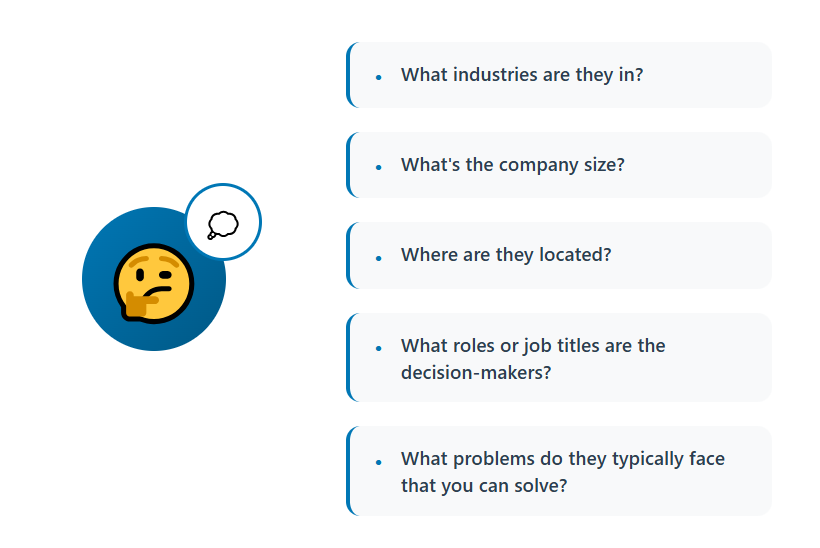
This is the most important section in the brief — and the one that gets written most loosely. "Mid-market B2B companies" is not an ICP. It's a description of half the business world.
A precise ICP brief for a sales agency includes:
- Target titles: who has the authority and budget to buy — specific titles, not categories ("VP of Sales at B2B SaaS companies with 50–500 employees," not "sales leaders")
- Company firmographics: industry, headcount range, revenue range, geography, and business model
- Buying triggers: the conditions that signal a prospect is ready — funding rounds, headcount growth, tool changes, new leadership, or specific business problems they're actively trying to solve
- Negative filters: who to explicitly exclude — company sizes, industries, competitor clients, or your existing customers
- Secondary personas: if there are influencers or additional decision-makers worth reaching alongside your primary target, define them here
The more specific your ICP definition, the better the list the agency builds. And the list determines everything downstream.
3. Value Proposition and Key Messaging
This section tells the SDR team what to say — and more importantly, how to say it in a way that sounds like you.
Include:
- Your core value proposition: the specific outcome you deliver, in plain language ("We help mid-market SaaS companies cut their inbound response time from days to minutes, which doubles their demo-to-close rate")
- 2–3 proof points: real case study results, customer metrics, or wins the SDR can drop into outreach — these are what separate your message from every other cold outreach in the prospect's inbox
- Tone and voice guidance: formal or conversational, technical or simplified — without this, the agency defaults to its own style, which may have nothing to do with how your brand actually sounds
- Messaging guardrails: what not to say — competitor comparisons you want to avoid, claims you can't support, or regulatory language specific to your industry
- Common objections and preferred responses: if your sales team already knows how to handle "we're happy with our current vendor," the SDR team should too before they hit the phones
4. Qualification Criteria

This section defines what a qualified meeting actually is — and what it isn't.
Without it, you'll get meetings. They just won't be the right ones.
A complete qualification criteria section covers:
- Minimum thresholds: role seniority, budget authority, company fit, and expressed timing or interest — all of which should be confirmed before anyone hits your calendar.
- Hard disqualifiers: conditions under which a prospect should never be booked — already locked into a competitor contract, outside your target territory, or below the minimum deal size that makes your economics work.
- "Not right now" protocol: does a prospect who says "check back in Q3" get a nurture note in the CRM, or a hard pass? The agency needs to know.
- Where meetings go: the exact calendar link, booking tool, and whose name the invite should come from — the logistics matter more than people expect.
This section also protects your AEs. A qualification standard that's written down can be measured, reviewed, and refined. One that lives only in someone's head can't.
5. Outreach Channels and Approach
Tell the agency which channels to use, in what order, and how hard to push.
This section should cover:
- Channel priorities: LinkedIn, cold email, cold calling, or some combination — and which goes first.
- Any restrictions: "No cold calling C-suite directly" or "LinkedIn connection before any email" are the kinds of guardrails that protect your brand.
- Sequence structure: number of touches, days between follow-ups, and when to mark a prospect as exhausted and move on.
- Outreach hooks: any assets the SDR should use to anchor their messages — a case study, a free audit, a webinar, or a benchmark report that gives prospects a reason to engage beyond the cold pitch.
- What has and hasn't worked before: if you ran outreach through a previous agency or internally and learned that a specific sequence structure tanked response rates, share that — it's the fastest way to save the new agency from repeating your experiments.
6. Objection Handling Guidelines
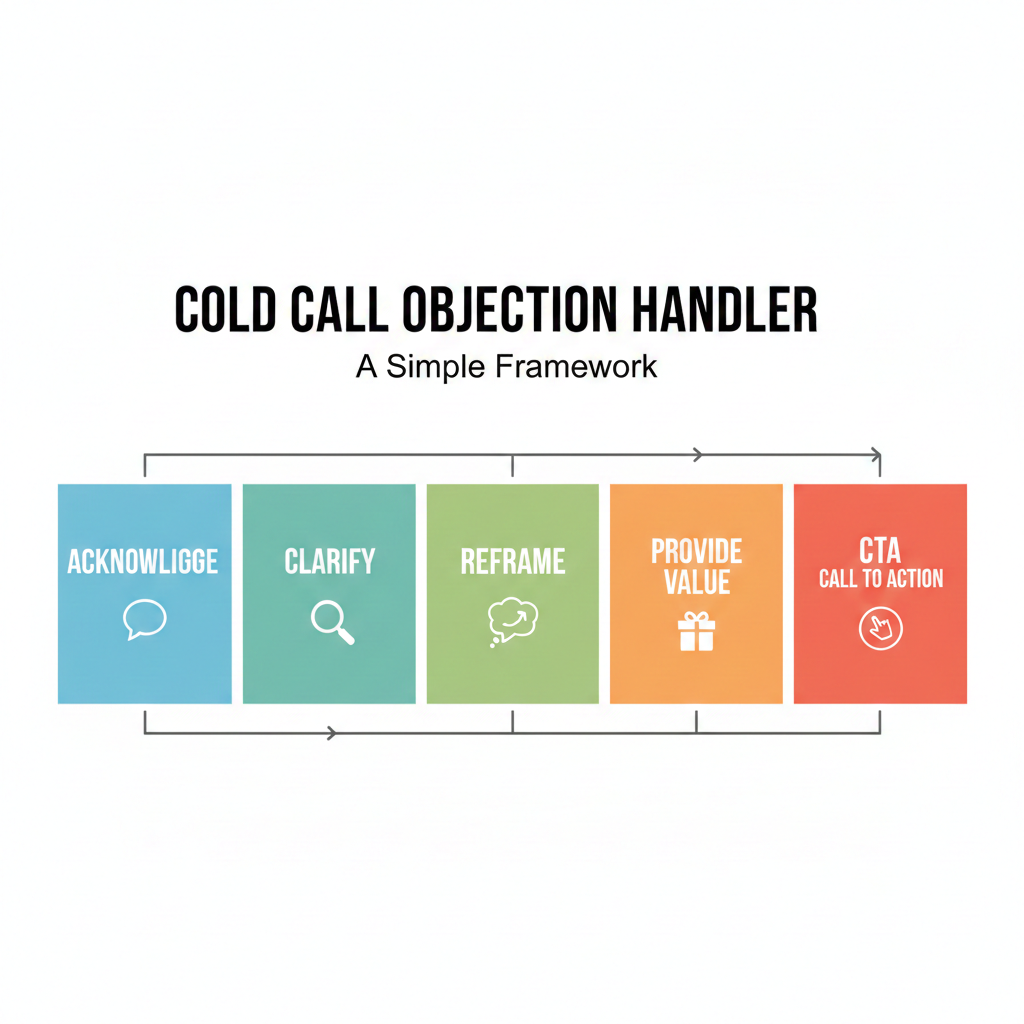
Every sales meeting booking campaign hits the same five objections within the first two weeks. The question is whether your SDR team knows how to handle them or not.
This section should document:
- Your top 3–5 objections — "we already have a vendor," "we're not looking right now," "send me more information," "I'm not the right person"
- Preferred responses for each: give the agency the language your best reps actually use, not a generic script — the goal is for prospects to feel like they're talking to someone who understands their business
- Escalation protocol: which objections should the SDR push through, and which ones should get flagged to your internal team before responding
- Hard limits: what the SDR is never authorized to promise or commit to without checking with you — free trials, discounts, custom scope, or aggressive timelines should all be flagged
- Incentives in play: if the SDR is cleared to offer a free consultation, a pilot, or a time-limited discount to convert the meeting, that needs to be in the brief
Without this guidance, SDRs who hit the first "not interested" without a playbook will drop the conversation — losing prospects who could have been saved with one more well-timed touch.
7. Meeting Logistics and Handoff Process
This is the section that protects the meeting after it's been booked. Include:
- Where meetings are booked: the exact calendar tool, link, and whose name the invite comes from — alignment here prevents no-shows caused by confusion at the scheduling step
- What the SDR captures and passes along: company name, contact title, key context from the conversation, and specifically what the prospect believes the meeting is about — this last point matters enormously for AE prep
- AE briefing process: who briefs the AE before the call and how — a calendar hold with no notes is a setup for a wasted first impression
- Expected meeting format: if the SDR told the prospect this was a "quick 15-minute discovery call" and the AE shows up ready to run a 45-minute demo, that mismatch will kill the conversation
- No-show protocol: does the SDR re-engage, or does your internal team follow up? Define it in advance so nothing falls through the cracks
📈 Good Briefs Create Better Meetings
10,000+ clients served. $312M pipeline generated. We know exactly what information turns outreach into revenue.
B2B Appointment Setting Brief Template
Here's a fill-in-the-blank template built around the seven sections above. It's designed to be handed to any appointment setting agency on day one and used as the foundation for onboarding.
.png)
One important note on how to use this template: the brief is a starting point, not a finished document. The best B2B meeting setting campaigns treat the brief as a living document — updated after the first 30 days based on what the data reveals about which messages are landing, which ICP segments are converting, and what objections are coming up most often.
The most effective onboarding starts with a strategic consultation to understand the client's business, target audience, goals, and objectives — and then builds the campaign around those specifics.
A brief that gets reviewed, questioned, and refined in a working session with the agency produces far better results than one that gets emailed as a PDF and filed away.
Common Mistakes That Weaken Your Appointment Setting Brief
These are the patterns that show up again and again in underperforming campaigns — and all of them trace back to the brief.
❌ Writing a vague ICP
"Mid-market B2B companies in tech" gives an agency nothing to work with. Which titles? Which verticals? What company size? What buying signals? The agency can't build a precise list from a broad description, and the quality of that list determines everything downstream.
❌ Skipping the qualification criteria.
When the agency doesn't know what a qualified meeting looks like, they optimize for meetings booked — not meetings that convert. Vague expectations lead to slow ramp-up and unclear ROI, and when outsourced teams aren't working toward clearly defined targets, results become harder to measure and harder to improve.
❌ No objection guidance.
SDRs who hit the first "not interested" without a playbook drop the conversation. A lot of those conversations could have been saved. The objections your best reps handle every day are predictable — put them in the brief.
❌ Giving the agency ten value propositions.
When everything is important, nothing is. Give the SDR team two or three tight proof points and a clear core message. A focused pitch lands. A kitchen-sink pitch doesn't.
❌ Not updating the brief after launch.
Campaign data tells you what's working. If a specific message is getting replies and another is getting ignored, that's information. A brief that never gets updated never gets better.
❌ Treating the brief as a formality.
The more detail and context the agency has, the more your outreach sounds like your company — not a templated pitch that could have come from any vendor in any industry. The brief is where that specificity lives.
How to Use Your Brief Once It's Sent
Handing over a brief is step one. Getting value from it requires a few more moves.
✅ Walk through it with the agency in a live session. A brief reviewed together surfaces gaps and assumptions that a solo read never catches. Ask the agency what questions the brief didn't answer. Those gaps are usually where the campaign gets into trouble.
✅ Request a sample target list before the full build. After the brief is reviewed, ask to see 20 to 30 names from the first prospect list. Does it match what you described in your ICP? If the titles, industries, or company sizes feel off, fix it before the campaign launches — not after the first month of bad meetings.
✅ Review first-draft copy with the brief in hand. Is the value proposition accurate? Does the tone match your brand? Are your proof points being used correctly? SDRs are not copywriters by default — your brief gives them the raw material, but the first draft needs your review.
✅ Set a 30-day checkpoint to update the brief. After the first month of outreach, you'll know which ICP segments are responding, which messages are converting, and which objections are coming up most. Use that information to sharpen every section of the brief that's performing below expectations.
✅ Keep one shared version. The brief should live somewhere both your team and the agency can access and reference — not in someone's email drafts or a downloaded PDF on a laptop. Version control matters when targeting and messaging evolve over time.
How Cleverly Turns Your Brief Into 15–30 Booked Sales Calls Every Month
Most appointment setting problems aren't execution problems. They're onboarding problems - campaigns that launch without a clear ICP, a strong value proposition, or a shared definition of what a qualified meeting looks like.
We built Cleverly's appointment setting services around solving that from day one. When you work with us, a dedicated account manager leads a full strategy session before any outreach goes live.
We build your ICP-matched prospect lists, write personalized outreach copy grounded in your proof points and positioning, and manage the full campaign across LinkedIn, cold email, and cold calling simultaneously — so your AEs stay focused on closing, not chasing pipeline.
Here's how the process runs on your behalf. We cold call 200 to 300 decision-makers from your ICP every day to build new pipeline. We funnel existing leads from your CRM into an AI-powered dialer to convert stalled conversations into booked meetings.
We qualify contacts quickly - filtering out poor fits before anyone reaches your calendar. And confirmed, qualified appointments land directly on your calendar, ready to close.
What we eliminate for clients: AEs wasting time prospecting, slow follow-up on warm leads, SDR hiring delays and turnover, and inconsistent meeting flow quarter to quarter. We handle prospecting, dead list reactivation, lead qualification, and speed-to-lead execution - following up within minutes and nurturing leads across multiple touches until they commit.
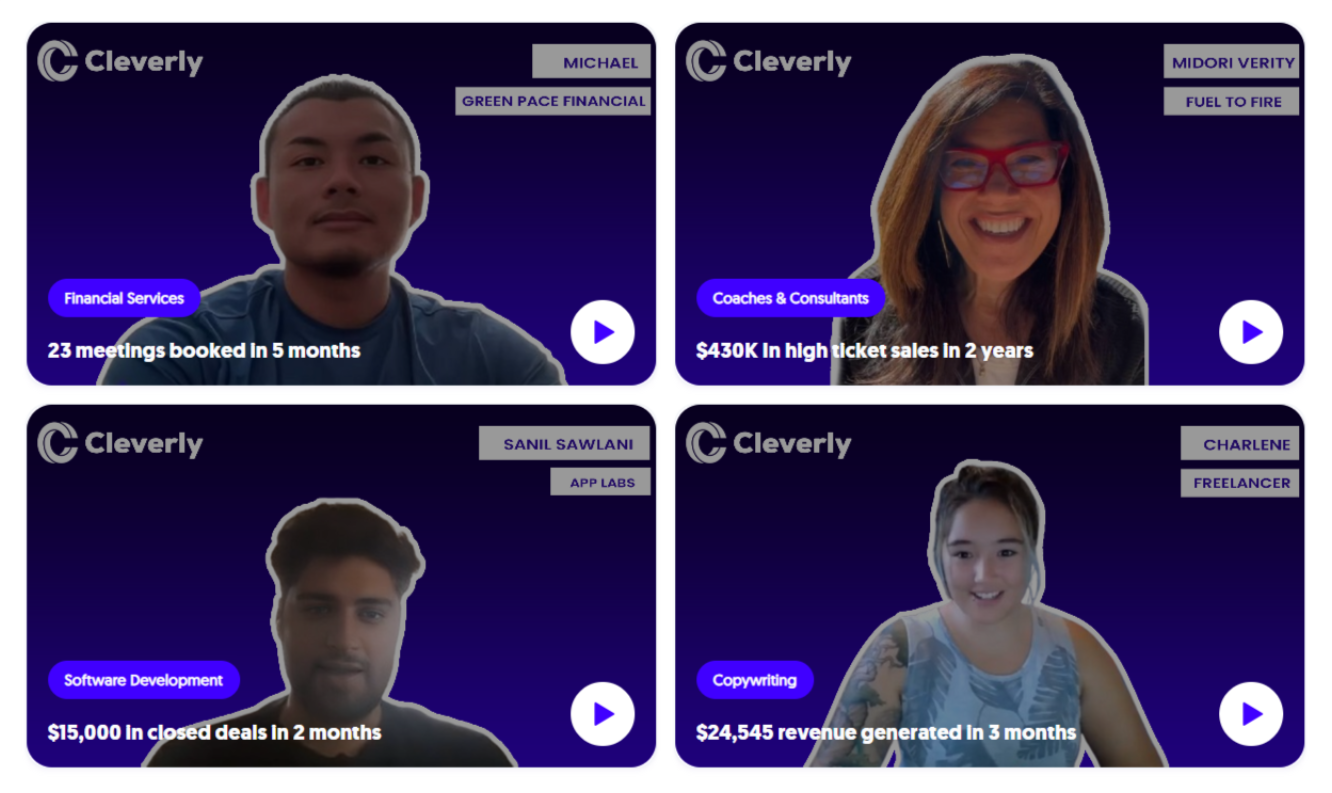
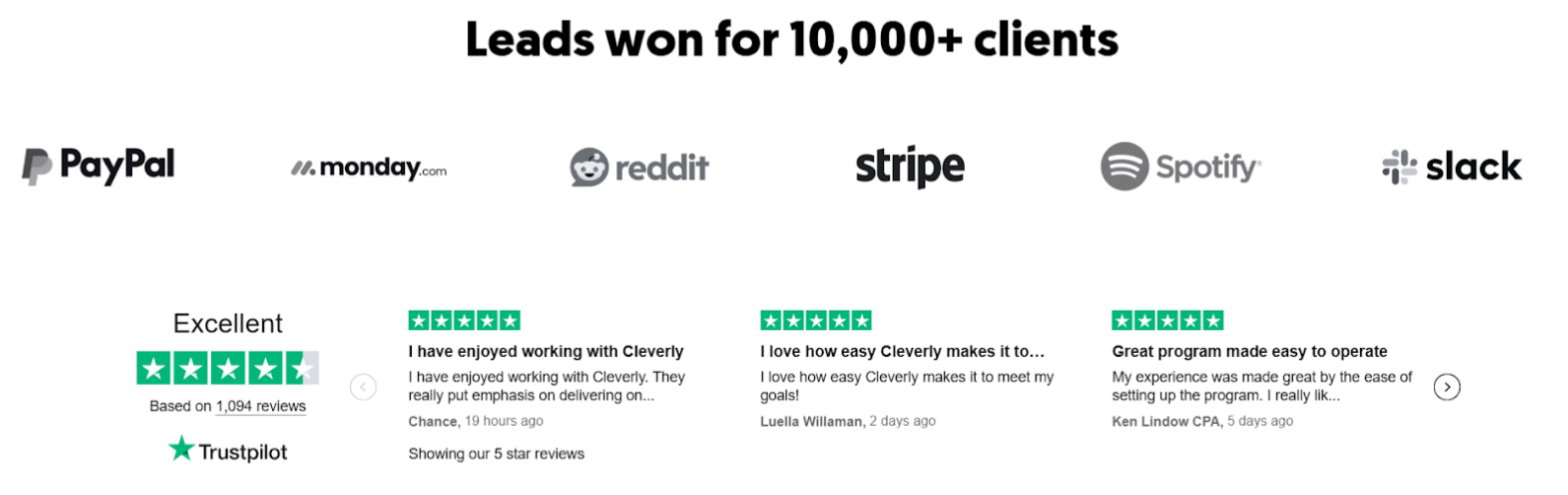
We've generated $312M in client pipeline and set appointments for 10,000+ clients including eBay, Airbnb, DocuSign, Loom, and Airtable. We're rated 4.6/5 on Trustpilot across 1,136+ reviews.
Pricing: LinkedIn Appointment Setting from $697/month (600 prospects/month). Cold Calling Appointment Setting from $2,997/month with guaranteed appointments or we replace the SDR.
Your first qualified meeting could be on the calendar in weeks. Book a strategy call with Cleverly and turn your brief into booked pipeline.
Conclusion
The companies that consistently get qualified meetings from their appointment setting agencies all have one thing in common: they showed up to onboarding with a real brief.
Not a vague summary, not a pitch deck, not a verbal walkthrough on the first call — a structured document that gave the agency what it needed to represent them accurately and book meetings worth taking.
Use the template and framework in this guide, hand it to your agency on day one, and treat it as a document that gets sharper with every campaign cycle. The brief is where good meetings start.
Frequently Asked Questions
Free Resource
How to Scale a Profitable Cold Call System
Get the complete guide — download it instantly now.
Free Ebook
Download the Free Guide
Enter your details to get instant access.
You're all set! 🎉
Your ebook is downloading now.
Click below if the download didn't start automatically.


