Table of Contents
What Does "Ending an Email Formally" Actually Mean?
Why the Way You Close an Email Matters More Than You Think
The 3 Core Elements of a Formal Email Ending
Best Formal Email Sign-Offs in 2026 (With When to Use Each)
How to Formally End an Email by Context (With Real Examples)
"Sincerely" and Other Classic Sign-Offs — Are They Still Relevant in 2026?
Email Sign-Offs to Avoid in Formal and Professional Emails
How to End a Cold Email Formally Without Killing the Reply Rate
How Cleverly Turns Cold Email Endings Into Booked Meetings
Conclusion
Frequently Asked Questions
Modified On :
April 20, 2026
Key Takeaways
- A formal email ending has three distinct parts — closing line, sign-off phrase, and email signature — and all three need to match in tone.
- According to Boomerang's analysis of 350,000+ email threads, emails ending with "Thanks in advance" generated a 65.7% response rate versus 51.2% for generic closings like "Best" — a 28% difference driven purely by the sign-off.
- "Best Regards" is the most universally safe B2B sign-off in 2026; "Sincerely" still works but reads stiff in anything other than the most formal contexts.
- In cold outreach, the closing line is a conversion lever — a vague ending like "Let me know" kills reply rates that strong copy worked hard to earn.
- Avoid presumptuous, aggressive, or overly casual sign-offs in professional emails — they signal poor judgment before you've even had a conversation.
- You can drop the sign-off entirely in ongoing threads after the third reply — but never in first-contact or formal request emails.
Email opening gets all the attention, the ending gets rushed. And that’s exactly why emails fall flat.
The closing is the last thing a recipient reads. And thanks to what psychologists call the recency effect — the cognitive bias where people remember the last thing they encountered more vividly than anything in the middle — your email ending carries disproportionate weight on whether someone replies, ignores, or forms a negative impression of you.
Research confirms this isn't trivial. Boomerang's study of 350,000+ email threads found that emails with no closing averaged just a 43% response rate versus 52–66% for properly closed emails — and the gap widens further depending on which sign-off you use.
Whether you're an SDR sending first-contact outreach, a founder pitching a partnership, or a job candidate following up on an application — this guide covers everything you need to know about how to end an email formally: the anatomy of a proper ending, sign-offs by context, real examples, what to avoid, and cold email best practices.
What Does "Ending an Email Formally" Actually Mean?
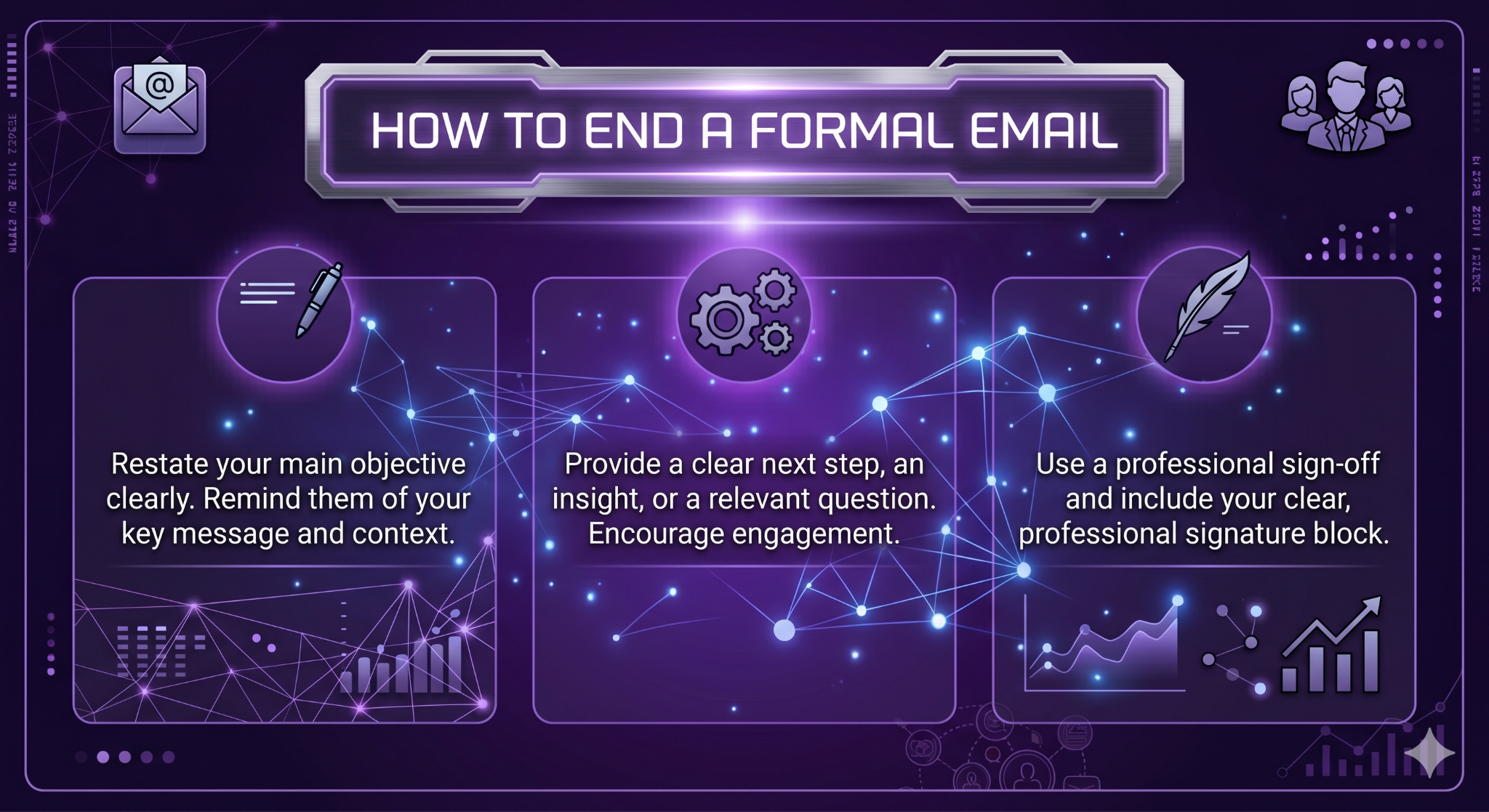
How to end an email formally is less about picking the right phrase and more about understanding that a formal email ending is a three-part structure — not just one word before your name.
The Three-Part Structure
Every well-crafted formal email ends with:
- A closing line — one to two sentences that wrap up the email's purpose or state the next step.
- A sign-off phrase — the short phrase immediately before your name ("Best regards," "Sincerely," etc.).
- An email signature — your full name, title, company, contact info, and relevant links.
Each part plays a different role. The closing line sets context and intent. The sign-off sets tone. The signature provides credibility and makes it easy for the recipient to follow up.
The Difference Between a Closing Line and a Sign-Off
This is where most people go wrong — they treat these two elements as the same thing.
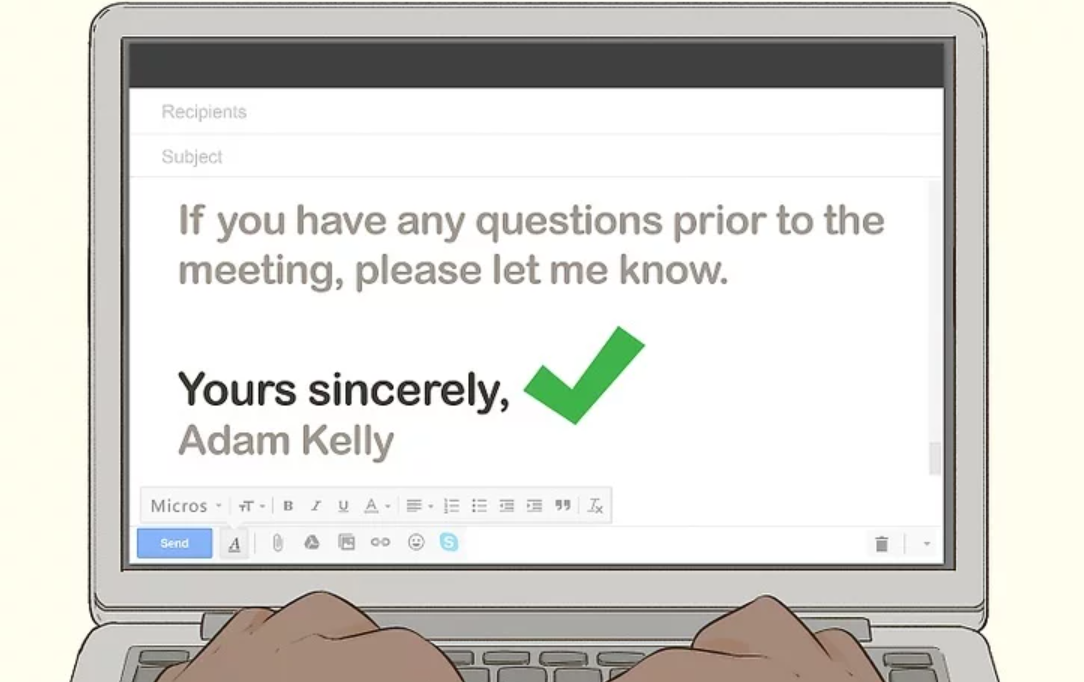
A closing line is an actual sentence: "I look forward to discussing this further," or "Please don't hesitate to reach out if you have questions."
A sign-off phrase is the one or two words right before your name: Best regards, / Sincerely, / Kind regards,
Both need to be present in a formal email. Skipping either one makes the email feel abrupt or incomplete.
What a Well-Structured Ending Looks Like
❌ Poorly structured: "Let me know. — John"
✅ Well-structured: "I'd love to connect for a brief call this week — please feel free to grab time on my calendar below.
Best regards, John Smith | VP of Sales | Acme Corp | john@acmecorp.com | (555) 123-4567
The difference isn't just aesthetics. One closes the loop clearly. The other leaves the recipient wondering what to do next.
📩 A Better Sign-Off Won’t Fix a Broken Funnel
We write and run cold emails that actually get replies. You only pay for qualified meetings we book.
Why the Way You Close an Email Matters More Than You Think
Most salespeople treat the sign-off as dead space. It's not.
Closing the email is your digital handshake — the last signal you send before the recipient decides whether to reply now, reply later, or quietly move on. Get it wrong and even a strong opening can lose the response it earned.
The Psychology Behind Email Sign-Offs
A study in the Journal of Personality and Social Psychology found that recipients were more than twice as likely to help when emails included expressions of gratitude — a finding that directly maps to sign-off choice.
When your closing line expresses appreciation or acknowledges the recipient's time, it triggers a reciprocity response. They feel more inclined to engage.
Mismatched tone is another killer. Ending a formal proposal email with "Cheers!" signals either carelessness or inexperience — neither of which helps you close a deal or land an interview.

Why This Matters Specifically in B2B
In cold outreach, personalization boosts response rates by up to 32% — and that principle extends to how you close an email, not just how you open it. A generic, thoughtless ending tells the reader the email was a template blast. A specific, intentional closing tells them you wrote this for them.
The sign-off is the last impression before silence. Make it count.
The 3 Core Elements of a Formal Email Ending
Let's break down each component so you can apply it precisely across every context.
1. The Closing Line
The closing line is the final sentence (or two) of the email body — before the sign-off. It should do one of three things:
- Summarize the ask: "Please let me know if you'd like me to send over the proposal."
- State a clear next step: "I'll follow up on Thursday if I don't hear back."
- Express appreciation: "Thank you for your time — I genuinely appreciate it."
What it should never do: leave the recipient without direction. "Let me know" is not a closing line — it's a placeholder that signals you didn't think this through.
Be specific and actionable. Instead of "Looking forward to hearing from you," try: "Looking forward to your thoughts — Friday works well on my end if you'd like to connect."
2. The Sign-Off Phrase
This is the short phrase immediately before your name. Punctuation matters: always follow it with a comma.
The sign-off sets the emotional temperature of the email's ending. Formal emails need formal sign-offs. Using "Catch ya!" after a proposal to a CFO is a judgment call that reflects badly.
Quick sign-off temperature guide
3. The Email Signature
A clean email signature does three things: confirms your identity, provides contact options, and signals professionalism.
What belongs in a formal signature:
- Full name
- Job title and company name
- Phone number
- Website or LinkedIn profile
- Relevant links (calendar booking, company page)
What doesn't belong: stock photo headshots, animated GIFs, 12 lines of legal disclaimers, or motivational quotes. Keep it functional.
🚀 Stop Polishing Emails. Start Booking Calls.
From targeting to copy to sending—we handle it all. More replies. More meetings. Zero busywork.
Best Formal Email Sign-Offs in 2026 (With When to Use Each)
Not every sign-off works in every situation. Here's your reference guide to professional ways to end an email — matched to the right context.
Sincerely
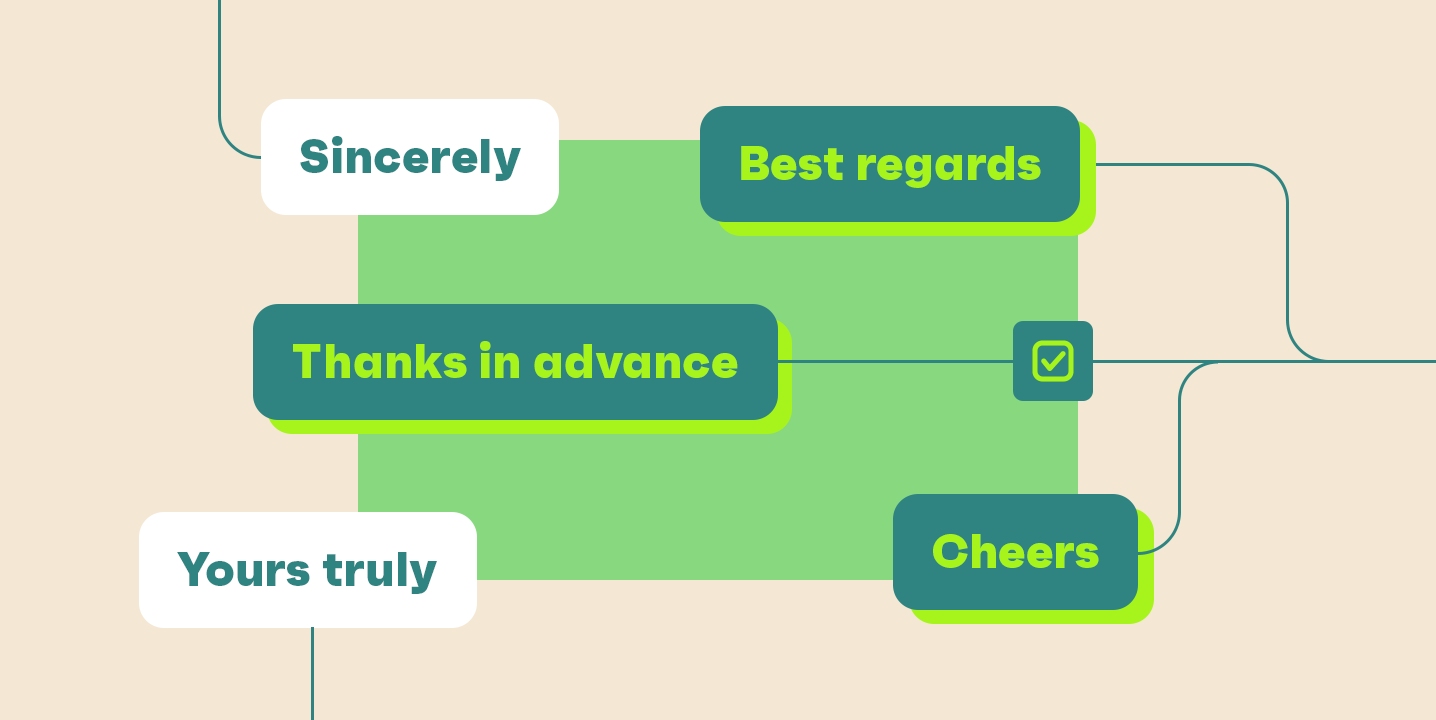
The gold standard for highly formal correspondence. Use it for job applications, cover letters, official letters, and first outreach to senior government or institutional contacts.
It conveys seriousness and respect — but it can read stiff in everyday B2B communication. Most professional email norms have shifted; "Kind regards" covers the same formality level with less friction and reads more modern in day-to-day business email.
Best Regards
The most universally safe sign-off for B2B communication in 2026. Neutral, professional, and versatile — it fits vendor correspondence, new client emails, introductory outreach, and most professional situations where you want to be warm but not overly familiar.
When in doubt, use "Best regards." It's the professional default.
Kind Regards
One step warmer than "Best Regards." Ideal after one or two prior exchanges when you want to signal a developing relationship without abandoning professionalism.
Common in consulting, legal, and financial services once a working relationship has started.
Warm Regards
For follow-up emails, post-meeting notes, or established relationships where maintaining rapport matters. It's personal without being casual — a good fit for accounts you're nurturing or clients you know well.
Thank You / Thank You for Your Time
Boomerang's analysis found that gratitude-based closings like "Thank you" generated a 57.9% response rate, and "Thanks in advance" topped the study at 65.7% — making appreciation-based sign-offs consistently among the highest-performing closings.
Use these when you're asking for something, requesting a meeting, or following up on a proposal. They work best when the gratitude feels earned — not automated.
Respectfully
Reserved for highly formal or hierarchical correspondence: academic submissions, legal communications, government correspondence, or emails to senior institutional leaders. In regular B2B cold outreach, it reads overly stiff.
Looking Forward to Hearing From You
An action-oriented close for emails where you're clearly expecting a response. Works well in sales and follow-up contexts — especially when paired with a specific timeframe.
"I look forward to hearing from you by the end of the week" is sharper and more effective than the same phrase left open-ended.
How to Formally End an Email by Context (With Real Examples)
The same sign-off doesn't work in every situation. Here's how to end an official email across six real-world contexts.
Job Application or Cover Letter Email
Tone: Formal, appreciative, forward-looking.
"Thank you for your time and consideration. I'd welcome the opportunity to discuss how my background aligns with the role.
Sincerely, [Full Name]"
First Outreach to a Prospect or Client
Tone: Respectful, concise, non-pushy. Avoid "Thanks in advance" here — save it for collaborative relationships.
"Would love to share a quick idea relevant to what [Company] is working on. Would a 15-minute call next week work?
Best regards, [Full Name] | [Title] | [Company]"
Follow-Up Email After No Response
Tone: Polite, confident, action-oriented. Don't apologize for following up.
"Happy to resend any information if helpful — just let me know. I'll plan to follow up one more time on Friday if I don't hear back.
Kind regards, [Full Name]"
Formal Request or Proposal Email
Tone: Professional, clear about next steps.
"Please let me know if you'd like to move forward or if you have any questions about the scope. I'm happy to set up a call to walk through the details.
Best regards, [Full Name]"
Post-Meeting or Thank You Email
Tone: Warm but professional.
"It was great connecting today. I'll follow up with the resources we discussed by Thursday. Looking forward to next steps.
Warm regards, [Full Name]"
Email to Senior Leadership or Executive
Tone: Formal, concise, deferential — executives don't want to scroll.
"Thank you for your time. I'm happy to provide any additional context you'd find helpful.
Respectfully, [Full Name] | [Title]"
"Sincerely" and Other Classic Sign-Offs — Are They Still Relevant in 2026?
The short answer: it depends on what you're sending and who you're sending it to.
"Sincerely" hasn't disappeared — it's just been repositioned. It belongs in highly formal correspondence: cover letters, legal documents, academic submissions. Outside those contexts, it can feel like you printed and mailed the email.
"Best Regards" has largely replaced "Sincerely" in everyday B2B communication because it reads as professional without the stiffness. Most corporate email culture in 2026 has settled on "Best regards" or "Kind regards" as the sensible defaults.
Generational Shifts Are Reshaping Sign-Off Norms

Gen Z makes up roughly 27% of the global workforce and is projected to hit 31% by 2035 — and their email style is already reshaping workplace norms. Common closings from younger professionals include "Stay awesome," "Catch you later," and sometimes no sign-off at all — particularly in internal threads.
This matters for how you receive emails, not necessarily how you send them in formal contexts. When you're sending formal outreach, don't assume casual is the right call just because internal team culture leans that way.
When You Can Drop the Sign-Off Entirely
After the third reply in an ongoing thread, "Kind regards" is just noise. Signing your first name or skipping the closing entirely is perfectly acceptable in that context. The exception: if the thread has been tense, a warm sign-off on your final reply can reset the tone.
The rule of thumb: if it's first contact, a formal request, or a relationship you want to maintain — always include the sign-off.
Email Sign-Offs to Avoid in Formal and Professional Emails
Some closings actively hurt your reply rate or your credibility. Here's what to cut.
❌ Overly Casual Sign-Offs
"Cheers," "Talk soon," "Later," "See ya" — these work in internal Slack threads. They don't belong in formal outreach, proposals, or any email to someone you haven't met.
❌ Presumptuous Closings
"Thanks in advance" when there's no collaborative relationship yet comes across as assuming cooperation that hasn't been offered. Reserve it for relationships where goodwill is already established.
❌ Aggressive or Demanding Endings
"Looking forward to your immediate response" — this triggers reactance. No one responds well to implied pressure, especially from a stranger. If you need something by a specific date, state it as a request, not a demand.
❌ Tone-Deaf Closings
Ending a formal email with "Stay awesome!" or a joke the recipient didn't expect signals that you didn't read the room. Humor has a place — it's just not in your first email to a VP of Finance.
❌ No Sign-Off in First-Contact Emails
Abrupt endings feel like hang-ups. Emails with no closing average a 43% response rate versus 52–66% for properly closed emails. La Growth Machine In a first-contact scenario, leaving out the sign-off reads as either careless or arrogant.
❌ Religious or Overly Personal Closings
In some markets, closings like "Stay blessed" are culturally normal — but they can confuse or alienate recipients in different markets. When in doubt, stick with neutral professional sign-offs that travel well across cultures.
How to End a Cold Email Formally Without Killing the Reply Rate
Cold email outreach follows the same three-part structure as formal email — but the stakes on each element are higher, because you're asking a stranger to take an action they didn't request.
The Closing Line in Cold Email
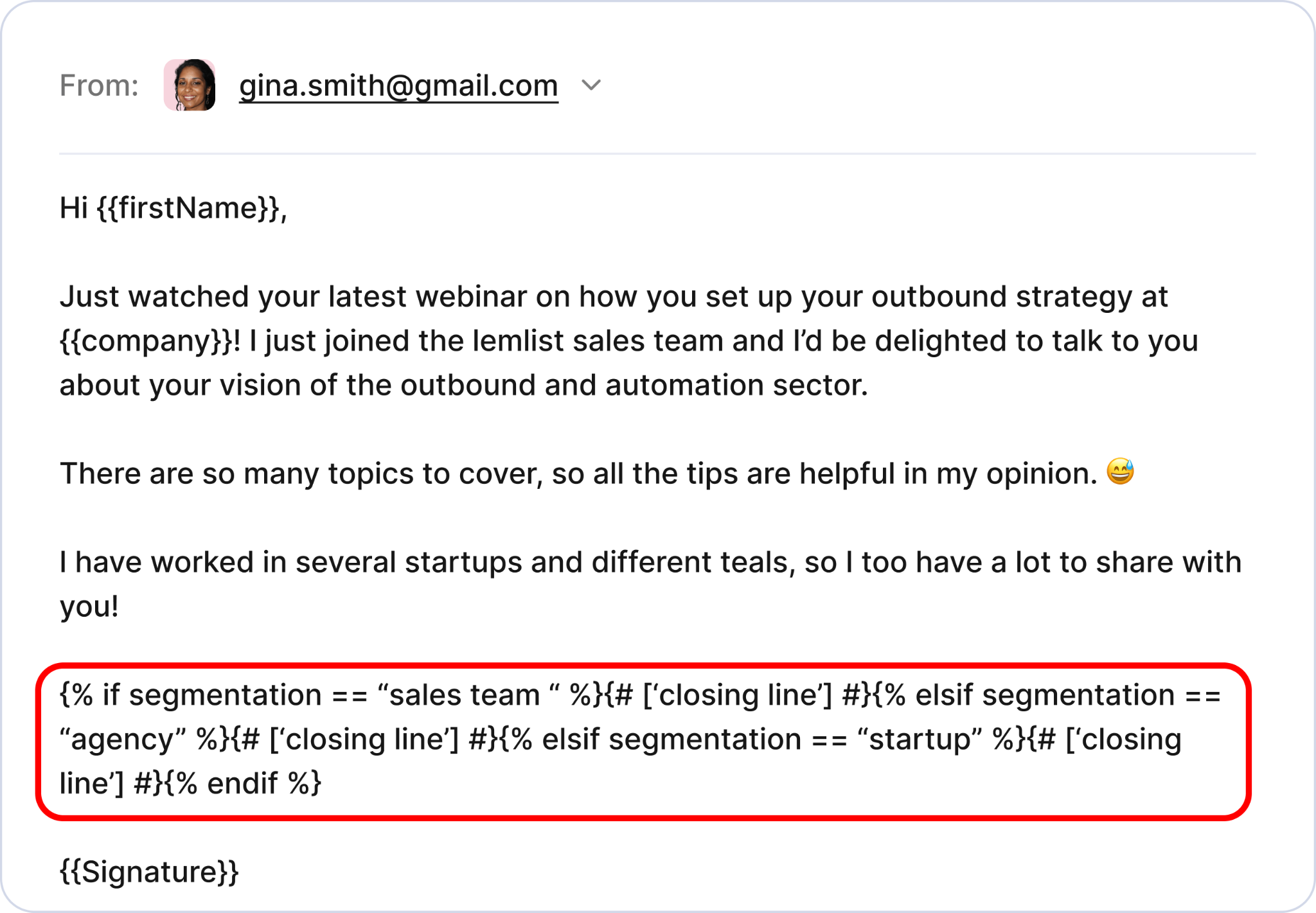
This is not the place for vague phrases. "Let me know if this is relevant" puts all the work on the recipient. A better closing line makes the next step obvious and frictionless:
- "Would a 15-minute call Thursday or Friday work?"
- "Happy to send over a quick case study if relevant — just say the word."
- "I'll follow up once next week if I don't hear back — no pressure either way."
Specific. Low-friction. Clear on what happens next.
Sign-Off Tone for Cold Outreach
In a cold email, your sign-off needs to signal confidence without overfamiliarity. "Best regards" and "Thank you for your time" consistently outperform casual closings like "Cheers" or overly warm ones like "Warmly" in B2B cold outreach contexts.
In B2B tech, casual greetings and closings (Hi, Hey, Thanks) do outperform formal ones in some tests — which is worth A/B testing against your own list. But for first-contact outreach to executives, default to professional until you know your audience responds differently.
The Cold Email Signature
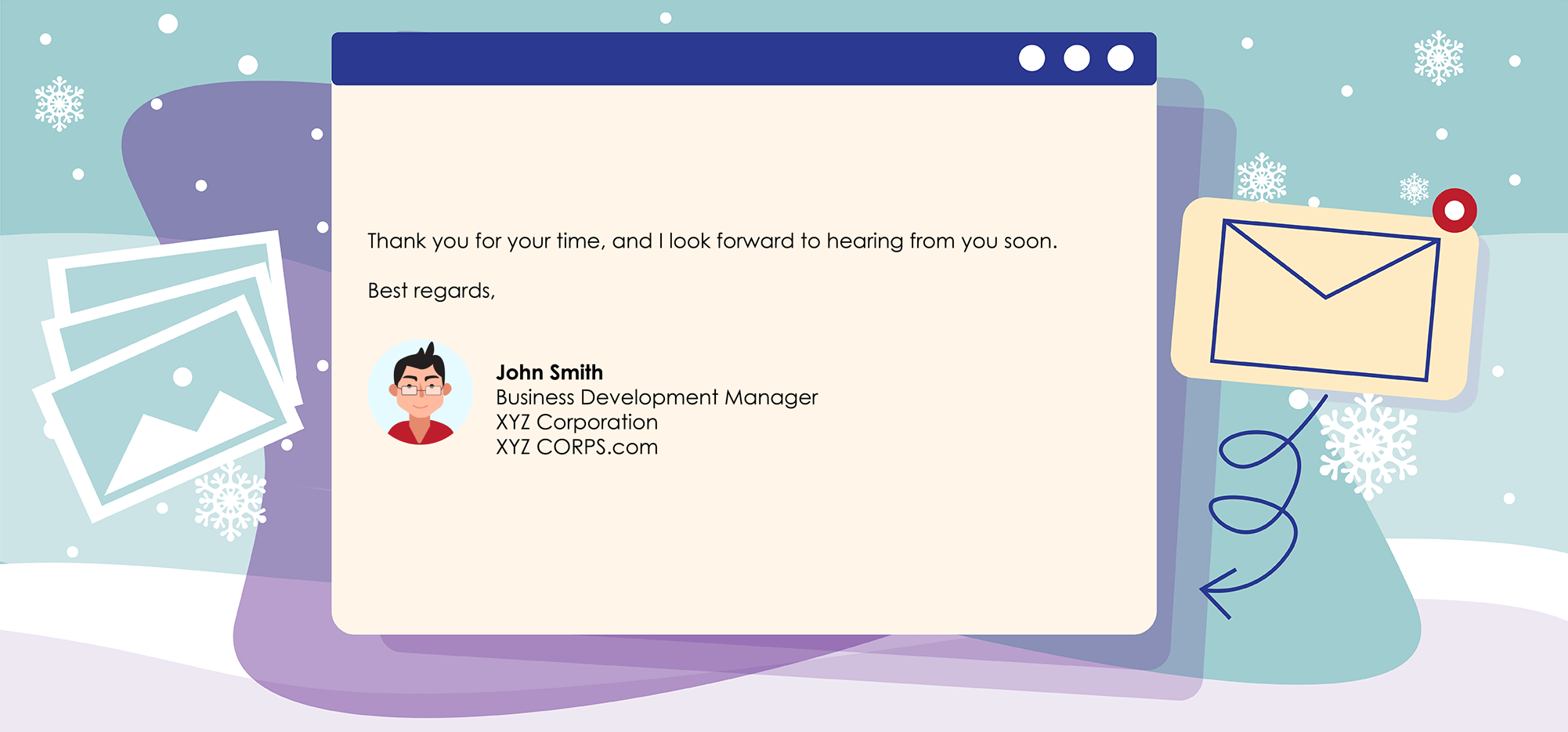
Your signature in cold outreach does a specific job: it builds credibility for someone who has never heard of you. Include:
- Full name and job title
- Company name
- One relevant link (website, LinkedIn, or case study)
- Phone number (optional but recommended for high-ACV deals)
Keep it short. A 6-line signature on a 60-word cold email looks off-balance and signals inexperience.
Why a Weak Ending Undermines a Strong Opening
Think of your cold email as a relay race. The subject line gets the open. The opening line earns the read. The body makes the case. The closing line passes the baton — it needs to do its job or everything before it goes to waste.
How Cleverly Turns Cold Email Endings Into Booked Meetings
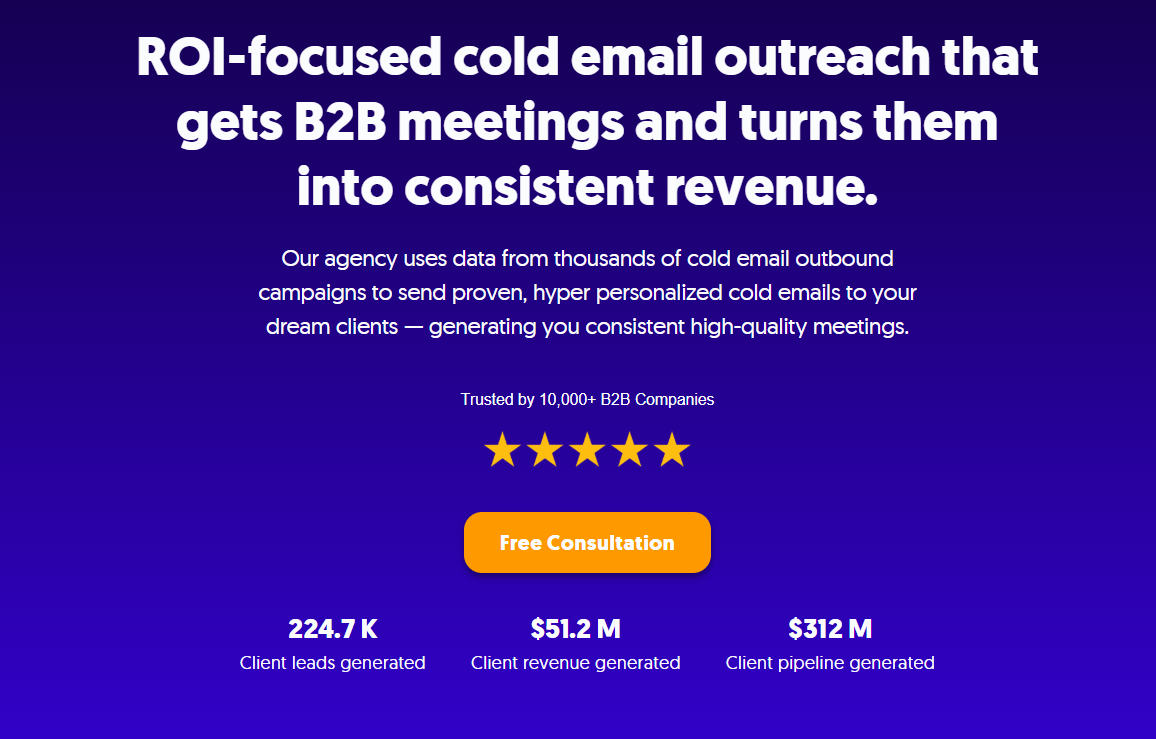
Most teams focus heavily on cold email copy and subject lines — and then paste in a generic closing that undoes the work. Getting a reply from a cold email means every element has to pull together, including how it ends.
At Cleverly, our cold email outreach service treats the closing line and sign-off as intentional conversion levers — not afterthoughts. Every sequence we build is engineered for replies: from the subject line to the ICP targeting to the specific call-to-action in the final sentence.
We've run thousands of campaigns across every B2B vertical, and we know what actually moves prospects from "read" to "replied."
Here's what makes Cleverly different from a solo sender trying to optimize sign-offs:
- We build hyper-targeted, multi-source verified lists so your emails reach the right people in the first place.
- We write and A/B test every element of the sequence — copy, structure, CTA, and closing language — based on what converts across real campaigns.
- We manage deliverability, reply handling, and meeting handoffs end-to-end.
The result isn't just better open rates. It's qualified meetings on your calendar — from cold prospects who actually wanted to talk.
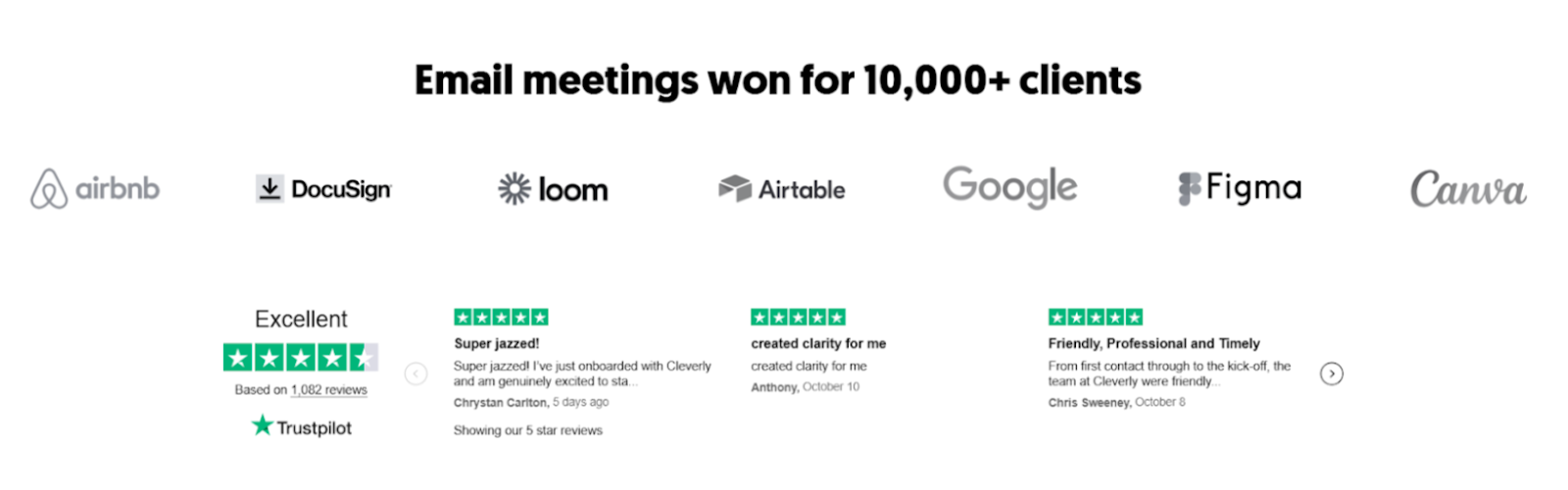
We've helped 10,000+ B2B companies generate $312M in pipeline through done-for-you cold email outreach with month-to-month pricing and no long-term contracts.
📧 Book a strategy call with Cleverly and we'll show you exactly how we'd build and close your outbound system.
Conclusion
Ending an email formally is not a formality — it's a strategic decision. The closing line, sign-off, and signature are the last things your recipient reads, and they shape whether that reader replies, ignores, or forms an opinion about you.
In 2026, the best formal email endings are intentional, specific, and always include a clear next step. Match the tone to the context, never skip the sign-off in first-contact emails, and in cold outreach — treat the closing line as the conversion moment it actually is.
Frequently Asked Questions
Free Resource
How to Scale a Profitable Cold Call System
Get the complete guide — download it instantly now.
Free Ebook
Download the Free Guide
Enter your details to get instant access.
You're all set! 🎉
Your ebook is downloading now.
Click below if the download didn't start automatically.