Table of Contents
What Is a Follow Up Email After an Interview?
When to Send a Follow Up Email After an Interview
Format for a Follow Up Email After an Interview
How to Write a Follow Up Email After an Interview (Step-by-Step)
Follow Up Email After Interview Templates (By Scenario)
Common Mistakes to Avoid in Your Follow Up Email
How Cleverly's Cold Email Services Help You Master Professional Outreach
Conclusion
Frequently Asked Questions
Modified On :
April 15, 2026
Key Takeaways
- A follow up email after an interview sent within 24 hours is one of the highest-leverage, lowest-effort moves a job seeker can make — and most candidates skip it entirely.
- There are two distinct types: a thank-you email (sent within 24 hours) and a status check email (sent after no response) — knowing which one to send and when is everything.
- The format for a follow up email after an interview is simple: specific subject line, personalized opener, one callback to the conversation, brief restatement of fit, and a soft next-step ask — all under 150 words.
- Personalization is the single biggest differentiator — referencing something real from the interview is what separates a follow-up that gets a reply from one that gets ignored.
- The same principles that make interview follow up emails effective — timing, clarity, a specific ask — are the same ones that drive results in professional cold outreach.
Most candidates prep hard for interviews. They research the company, rehearse answers, pick the right outfit — and then go completely silent the moment they walk out the door.
That silence? It's costing people jobs.
68% of hiring managers say follow-up emails carry more weight than they ever did before. And yet a huge chunk of candidates never send one. In fact, 57% of job seekers don't send a thank-you note after an interview — which means doing it puts you ahead of more than half your competition before the hiring manager even reviews another application.
The follow-up email isn't just a formality. It's a second chance to make your case.
This guide covers everything: what a follow-up email is, exactly when to send it, the right format for a follow up email after an interview, a step-by-step writing process, ready-to-use templates for every scenario, and the mistakes that quietly kill your chances.
What Is a Follow Up Email After an Interview?
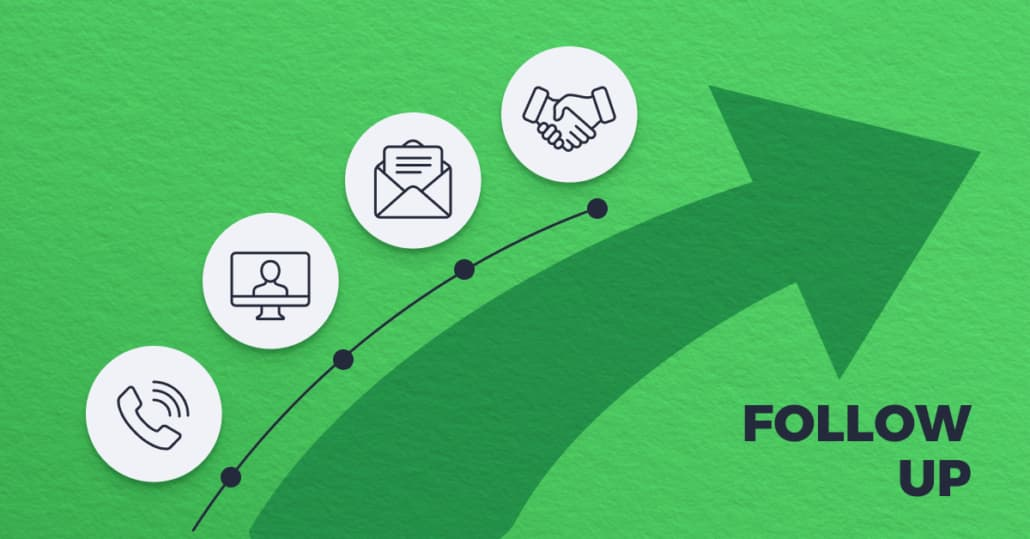
A follow up email after an interview is a short, professional message sent to the hiring manager or recruiter after your interview is done. Simple concept — but it does a lot of heavy lifting.
There are two main types, and they serve different purposes:
- Thank-you email — sent within 24 hours of the interview. It expresses appreciation for their time, references something specific from the conversation, and reaffirms your interest in the role.
- Status check email — sent after no response. You're politely checking in on the hiring timeline without being pushy about it.
What does a follow-up signal to a hiring manager? A few things: that you're professional, that you're genuinely interested in the role (not just job-hunting at volume), and that you pay attention to the details that most people overlook.
It's also not pushy. Hiring managers are juggling a dozen open reqs, screening calls, panel interviews, and internal approvals simultaneously. A short, well-timed follow-up doesn't annoy them — it helps them remember you exist.
📩 Great Emails Don’t Just Follow Up—They Convert
We craft and send cold emails that get replies and book meetings. You only pay for qualified calls we deliver.
When to Send a Follow Up Email After an Interview
Timing is everything. Send too early and you look impatient. Send too late and the decision's already been made without you. Here's the timeline that works:
🕓 Within 24 hours
Send your thank-you email. This is the one that matters most. It's fresh, it's timely, and it lands while the interviewer still remembers your conversation clearly.
🕓 After 1 week:
If no response and no specific timeline was given, send a polite check-in. Keep it brief — just a reminder of who you are, which role you interviewed for, and a simple ask about next steps.
🕓 After 2 weeks
If the first follow-up also went unanswered, send a second short note. Acknowledge that hiring timelines shift, restate your interest, and make it easy for them to respond with a simple yes, no, or "we're still deciding."
🕓 After 1 month
One final, gracious close-the-loop message. This one's less about getting the job and more about leaving the door open — roles reopen, referrals happen, and the hiring manager you followed up with professionally today might be the one who calls you in six months.
One rule that overrides all of the above: if the interviewer gave you a specific timeline ("we'll be in touch by Friday"), wait until that window has passed before reaching out. Respecting their stated timeline shows you actually listened.
Format for a Follow Up Email After an Interview
Before we get into templates, let's talk structure. The format for a follow up email after an interview is the same whether you're a fresh grad or a senior director — what changes is the tone and the specific details you reference.
Here's what every follow-up should include:
Subject line: Short and specific. Include the job title or your name so it's easy to identify in a crowded inbox. Examples:
- "Follow-Up: Marketing Manager Interview — [Your Name]"
- "Thank You — [Your Name] | [Role]"
- "Re: [Job Title] Interview — Checking In"
Opening: Address the interviewer by name. Open with a genuine thank-you — not a hollow "I just wanted to reach out," but a real acknowledgment of their time.
Body: This is where most people blow it by going generic. Reference one specific thing from the interview — a challenge they mentioned, a project that came up, a skill they said they were looking for. This is the line that proves you were actually listening.
Middle: Briefly connect your background to what they need. One or two sentences max. You're not resubmitting your resume — you're making one crisp connection.
Closing: Ask a soft, low-pressure question about next steps or the decision timeline. You're not demanding an answer — you're just opening the door.
Signature: Full name, phone number, and your LinkedIn URL.
Length: Under 150 words. Shorter is better. A concise, focused follow-up reads as confident. A long one reads as anxious.
🚀 Turn Emails Into Revenue, Not Just Vague Replies
From targeting to copy to sending—we handle everything. More replies. More meetings. Zero busywork.
How to Write a Follow Up Email After an Interview (Step-by-Step)
Now let's put it all together. Here's exactly how to write a follow up email after an interview from scratch.
Step 1 — Write a Specific Subject Line
Don't go with "Following Up" or "Thank You." Those get buried. Include the role and your name — something that makes your email instantly identifiable when the hiring manager scans their inbox three days after your interview.
Step 2 — Open with a Warm, Personalized Thank-You
Use their actual name. Write like you're talking to a real person, not filling out a form. "Hi Sarah" lands warmer than "Dear Ms. Johnson" in most hiring contexts — read the room based on how the interviewer came across.
Step 3 — Reference One Specific Moment from the Interview
This is the move that separates a good follow-up from a forgettable one. Did they mention a challenge their team is facing? A product launch coming up? A skill gap they're trying to fill? Bring it back. One sentence is enough.
Example: "I really appreciated you sharing the challenges the team is working through as you expand into enterprise accounts — it's exactly the kind of environment where my background in sales ops has made a measurable difference."
Step 4 — Reinforce Your Fit in One or Two Sentences
You're not rewriting your cover letter. Just draw one clean line between what they need and what you bring. Make it specific, not generic.
Step 5 — Express Interest Without Desperation
There's a tone difference between "I'm very excited about this opportunity" and "I'd love to keep the conversation going." Both express interest. The second one sounds more like a person, less like a form letter.
Step 6 — Close with a Soft Next-Step Ask
Something like: "Could you share a rough sense of your decision timeline? I want to make sure I'm responsive on my end." It's a real question with a practical purpose — and it gives them an easy reason to reply.
Step 7 — Proofread. Then Proofread Again.
Typos in a follow-up email undo strong interview performances. It's that simple. Read it out loud before you hit send. One careless mistake signals the opposite of what you're trying to prove.
Follow Up Email After Interview Templates (By Scenario)
We have six ready-to-use follow up emails after interview examples — each built for a different situation. These aren't copy-paste templates. They're frameworks. Swap in the specific details from your own interview and they'll feel genuine every time.
1) Thank-You Email (Within 24 Hours)
Best for: Any interview format — phone, video, or in-person.
2) Follow-Up Email After No Response (1 Week Later)
Best for: When the stated hiring timeline has passed or you haven't heard back in 5–7 business days.
3) Follow-Up After a Phone or Video Interview
Best for: After a screening call or remote interview round.
4) Second Follow-Up After 2 Weeks — Still No Response
Best for: When the first follow-up also went unanswered. This is your interview follow up email after 2 weeks.
5) Follow-Up When You Have a Competing Job Offer
Best for: When another company has extended an offer and this role is your first preference.
6) Final Follow-Up to Close the Loop (After 1 Month)
Best for: One last message before fully moving on.
Common Mistakes to Avoid in Your Follow Up Email
Even strong candidates tank their chances with avoidable follow-up mistakes. Here's what to watch for when writing your follow up email after interview:
❌ Following up too soon
Sending a follow-up within hours of the interview signals impatience. Wait at least until the next business day before sending your thank-you note.
❌ Being too generic
"I enjoyed our conversation and look forward to hearing from you" tells the interviewer nothing. If your email could have been sent to any company for any role, it reads like a template — because it is one.
❌ Writing too much
Long paragraphs in a follow-up read as anxious, not enthusiastic. If your email is more than 150 words, cut it down. Every extra sentence reduces the chance they finish reading.
❌ Forgetting to proofread
A typo in your follow-up after an interview is the kind of thing hiring managers remember. Spell-check isn't enough — read it out loud before sending.
❌ Following up too many times
Two follow-ups without a response is the max. After that, you've made your interest clear. A third or fourth message crosses from persistent into uncomfortable.
❌ Misreading the tone
Overly casual language in a formal company culture — or stiff, formal language with a startup — both signal poor self-awareness. Look at how the interviewer communicated with you and match it.
❌ Not sending one at all
This is still the most common mistake. A missing follow-up isn't neutral — it can read as disinterest, especially in competitive hiring situations where another candidate did send one.
How Cleverly's Cold Email Services Help You Master Professional Outreach
Something worth naming: writing a strong follow up email after an interview and writing a high-converting cold email are more alike than most people realize. Both require the same core skills — a specific subject line, a personalized opener, a concise value statement, and one clear ask.
Get those four things right, and you'll get responses. Miss them, and you won't.
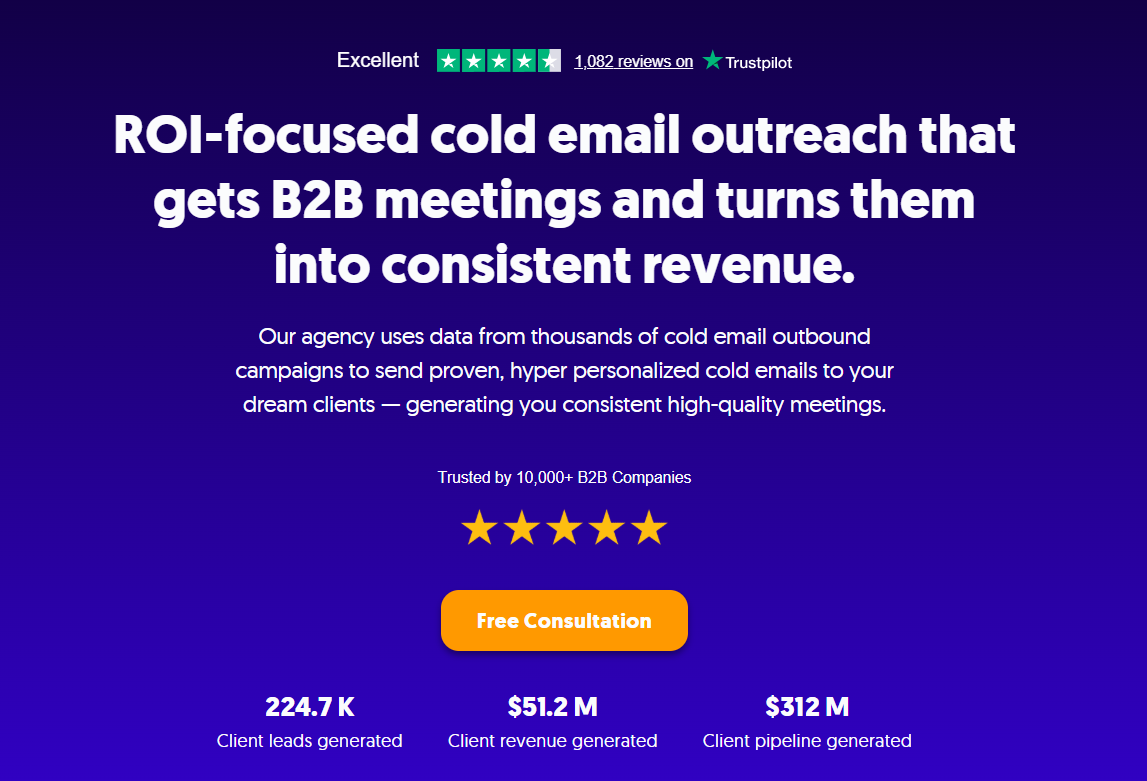
Cleverly specializes in cold email outreach for B2B companies — building and running complete outbound systems from ICP targeting and verified list building to copywriting, sequencing, and reply management. The same messaging principles that make an interview follow-up land are the ones we apply at scale across thousands of outbound campaigns.
What makes our approach different is the infrastructure behind it: multi-source verified data, tested messaging frameworks, and end-to-end execution that removes the trial-and-error most teams go through when managing cold email in-house.
Whether you're a job seeker sharpening your professional communication or a B2B company that wants qualified sales meetings without managing the outreach yourself — the fundamentals are the same.
📬 Want Expert-Level Cold Email Outreach Done For Your Business?
We run fully done-for-you cold email campaigns that have generated $312M in pipeline for 10,000+ B2B companies. You only pay for meeting-ready leads we deliver.
🔥 Book a free strategy call and see exactly how we'd approach your outbound.
Conclusion
A follow up email after an interview isn't a nice-to-have. It's one of the most underused tools in a job seeker's arsenal — and one of the easiest ways to stand out when every other candidate is staying quiet.
The formula isn't complicated: send your thank-you within 24 hours, check in after a week if you haven't heard back, and keep every message short, specific, and personal. Use the right template for the right moment. Reference something real from your conversation. And don't skip the proofread.
The candidates who get callbacks aren't always the most qualified ones. They're often just the ones who followed up thoughtfully — and didn't leave the decision up to chance.
Frequently Asked Questions
Free Resource
How to Scale a Profitable Cold Call System
Get the complete guide — download it instantly now.
Free Ebook
Download the Free Guide
Enter your details to get instant access.
You're all set! 🎉
Your ebook is downloading now.
Click below if the download didn't start automatically.