Table of Contents
7 Methods to Find Company Email Addresses
How to Verify an Email Address Is Valid Before Sending
Best Way to Find Company Email Addresses at Scale
Common Mistakes When Finding Company Email Addresses
How Cleverly's Cold Email Agency Handles List Building and Verification
Conclusion
Frequently Asked Questions
Modified On :
August 13, 2026
Key Takeaways
- No single method finds every email. The highest hit rate comes from combining manual research, finder tools, pattern matching, and verification instead of relying on one approach.
- Guessing an address and sending to it without verification is the fastest way to damage your domain's sender reputation, and reputation is far harder to rebuild than to protect.
- Pattern matching only works because most companies use a consistent internal email format. One confirmed address at a domain is often worth more than ten guesses.
- Manual research (websites, LinkedIn, search operators) fits one-off lookups. Scaling outreach to real volume requires a repeatable process, not more manual digging.
- Finding an accurate email address is step one, not the whole strategy. Deliverability, relevance, and list hygiene decide whether that email actually turns into a reply.
Every outreach campaign lives or dies on one thing: whether you can actually reach the right inbox. No email, no conversation. It sounds obvious, but most people underestimate how much a single guessed address can cost them.
The latest cold email benchmark data shows an average bounce rate of 7 to 8%, while top-performing campaigns keep bounce rates below 2%, with the best staying under 1%.
That gap isn't random. It's the difference between senders who verify their data and senders who don't. And 83% of all non-delivery traces back to poor sender reputation, not subject lines or send times.
This guide covers seven ways to find company email addresses that actually hold up in 2026, from free manual research to finder tools and verification steps.
Whether you're an SDR building a list, a founder doing your own outbound, or a recruiter tracking down a candidate, you'll walk away with a process you can actually repeat, not just a list of tools.
7 Methods to Find Company Email Addresses
You don't need all seven methods every time. But knowing all of them means you're never stuck when one comes up empty. Use them in combination. No single method works for every company or every person.
1) Check the Company Website Directly
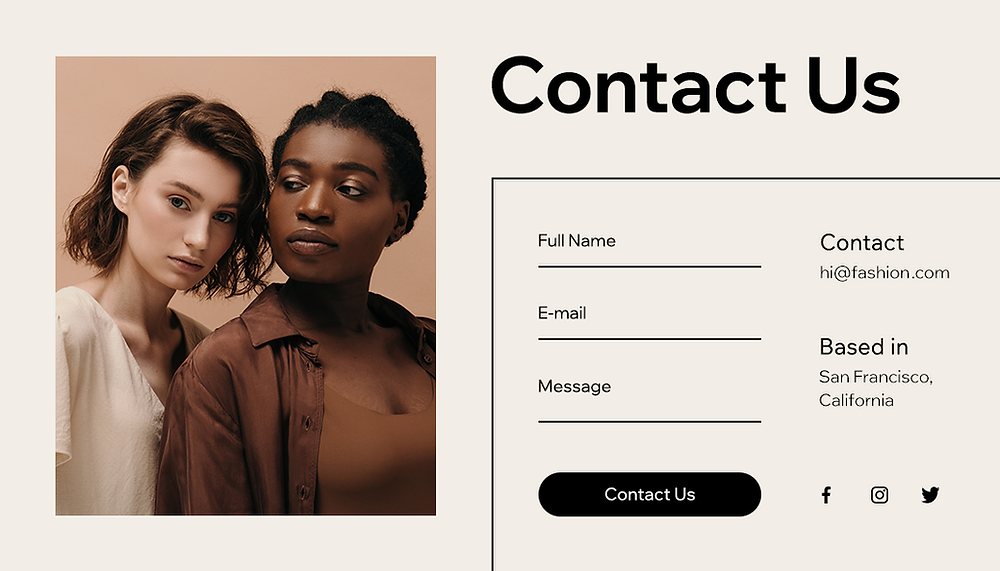
Start here before anything else. Look at the contact page, the footer, "About" or "Team" pages, and any press or media section.
Most companies publish at least one role-based inbox, things like info@, sales@, or press@. Even if that's not the exact person you need, it hands you the domain's email pattern, which you can apply later.
This method is completely free. Its only limitation is coverage. If a company keeps a thin public footprint, you won't find much here.
2) Check LinkedIn's "Contact Info" Section
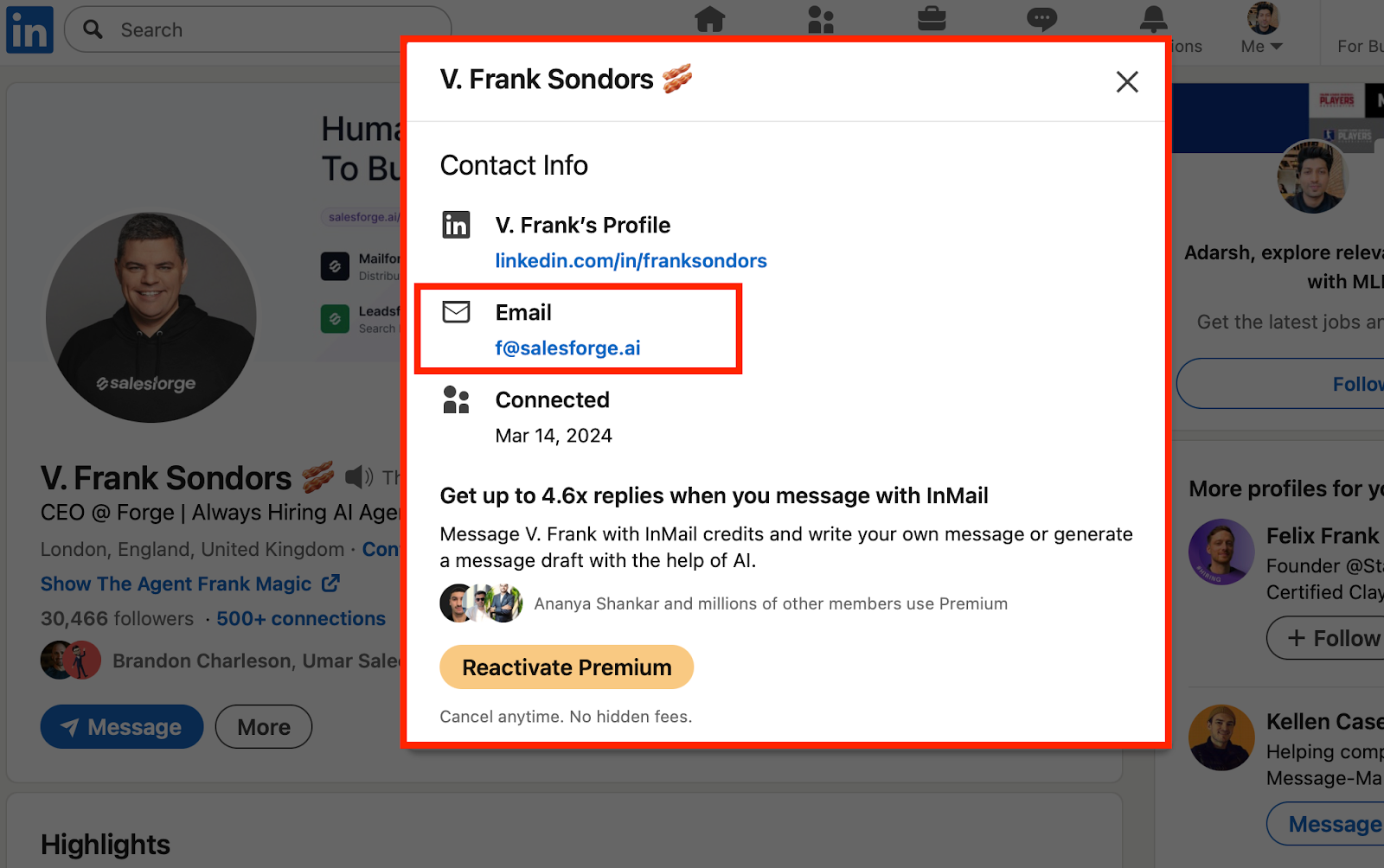
This is the single most overlooked place to find a company email address. On a person's LinkedIn profile, click "Contact Info" right below their headline and photo.
If they've chosen to make their work email visible, it shows up here. A surprising number of professionals do this, especially people in sales, recruiting, and business development who want to be reachable.
It's free, and when it works, it's the fastest single-contact method on this list. No guessing, no pattern matching, just a confirmed address straight from the source.
3) Use an Email Finder Tool
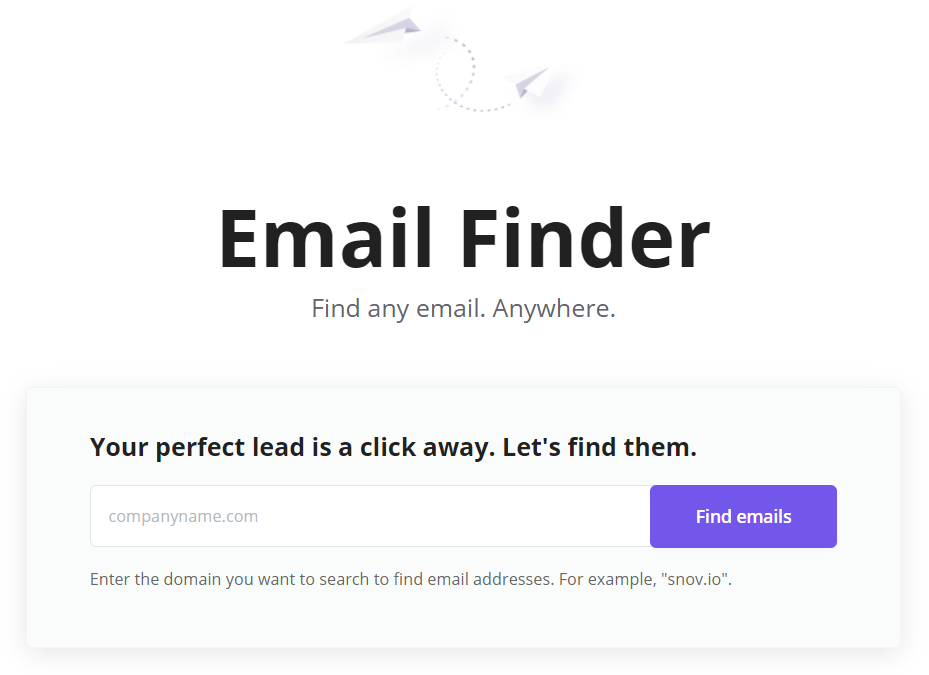
When manual lookups don't cut it, a dedicated finder tool speeds things up considerably. A few worth knowing:
- Hunter.io: A domain search that surfaces known email addresses tied to a company, each with a confidence score. The database covers roughly 200 million contacts, updated daily, and paid plans now start around $34 to $49 a month depending on the tier.
- Apollo.io: A much larger contact database that bundles email, phone numbers, and LinkedIn data together in one platform. Apollo claims 97% email accuracy across its 230 million-plus contact database, though coverage quality varies more outside North America. The free plan works for light use; paid tiers run from roughly $49 to $119 per user per month.
- Snov.io: Combines email finding with outreach and light CRM features on one credit system. As of mid-2026, plans range from a free trial with 50 credits up through paid tiers starting around $39 a month.
Most of these tools offer a free tier generous enough to test accuracy before you commit to a paid plan. Use that free tier to check whether their coverage actually fits your target companies before paying for volume.
4) Identify and Apply the Company's Email Pattern
This is the method that scales best once you understand it. Find one confirmed address at the domain, whether that's a support@ inbox, a press@ contact, or a bio email listed somewhere public.
From that one address, you can usually infer the pattern: firstname.lastname@, f.last@, or just firstname@. Apply that same structure to your target's name.
This works especially well at companies with consistent internal formatting, which is most mid-size and larger organizations. It works less well at smaller companies or ones that mix formats across departments.
5) Verify Guessed Addresses Before Sending
This step is not optional if you care about deliverability. Once you've got a guessed address, run it through an email verification tool, something that does an SMTP or MX record check, before it ever touches a send.
A smart approach: generate two or three pattern guesses for the same person, then verify each one to find which is actually real. Skipping this step is the single fastest way to hurt your sender reputation.
6) Use Search Engine Operators
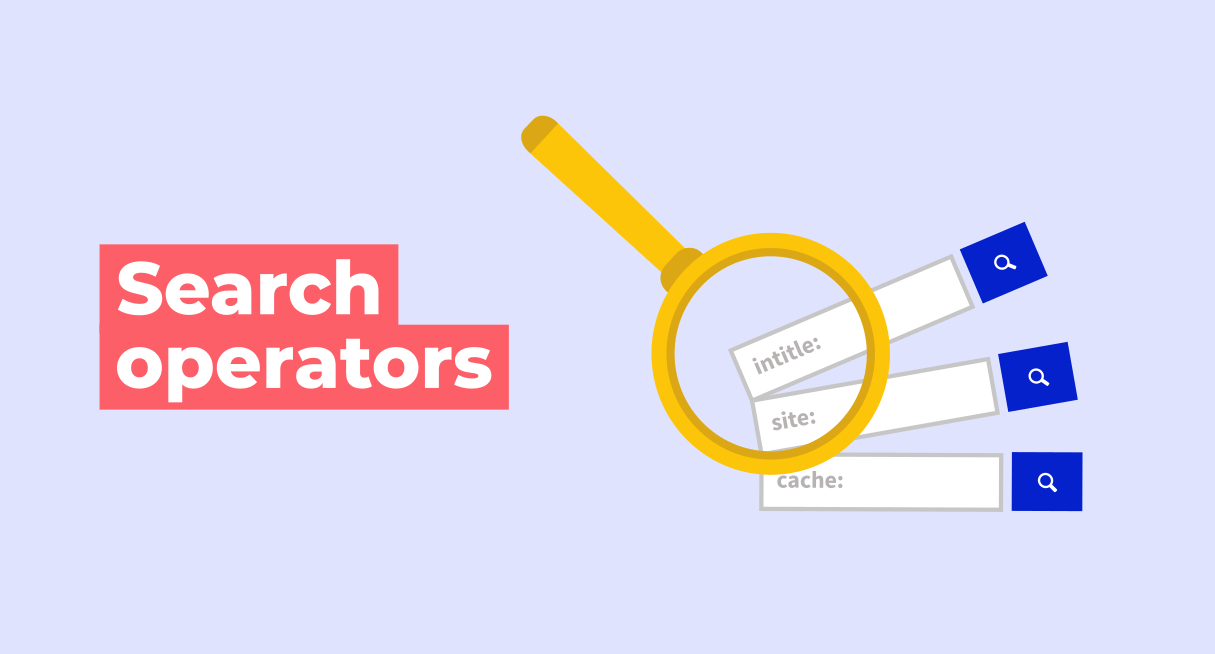
A quick search for "[name] email" or a targeted query like "site:companydomain.com contact" often surfaces pages that are publicly indexed but not linked prominently on the company's site.
This works especially well for executives, published authors, and conference speakers, people who've had contact info attached to a byline, a press mention, or a speaker bio somewhere online.
7) Check Other Public Profiles and Social Media
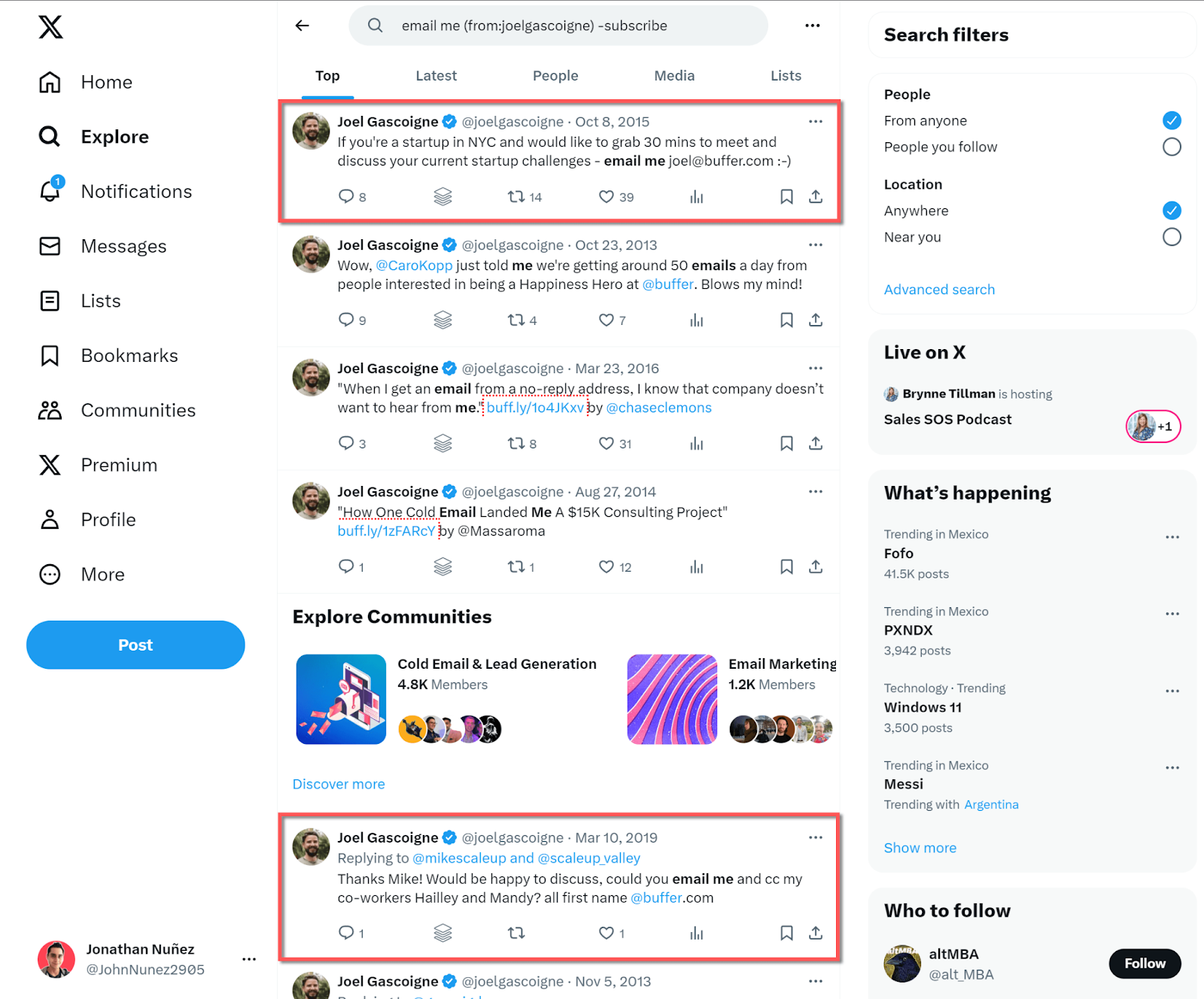
X/Twitter bios, GitHub profiles, and personal websites sometimes list a public email directly. Press releases, conference speaker pages, and podcast show notes are also worth a scan.
This is a supplementary method, not a primary one. Use it when the six methods above haven't surfaced anything.
📧 Find the Right Emails. Start Better Conversations.
Our cold email campaigns generate 15–30 qualified meetings every month with targeted, personalized outreach.
How to Verify an Email Address Is Valid Before Sending
Never send to a guessed or scraped address without verifying it first. This one habit protects everything else you're trying to build.
Run an SMTP or MX record check, or use a dedicated verification tool, before any address goes into a live campaign. Here's the catch most people miss: catch-all domains accept every address you throw at them, even invalid ones, which can hand you a false "valid" result.
Cross-check with a second signal when you can, LinkedIn activity or a finder tool's confidence score both work.
A properly warmed domain with correct setup can achieve inbox placement well above 80%, while the same emails sent from a cold, unverified domain land in the inbox at a fraction of that rate. A clean, verified list is what protects that placement over time.
Best Way to Find Company Email Addresses at Scale
For a handful of contacts, manual research works fine. For real list-building, you need a repeatable sequence:
- Identify the domain
- Check the company's email pattern with a finder tool
- Construct the likely address
- Verify it before sending
This combination takes under two minutes per contact and typically lands somewhere in the 85 to 95% accuracy range for corporate addresses. Manual, one-by-one research through websites and LinkedIn is fine for a small batch, but it doesn't scale to the volume a real campaign needs.
If you're building lists for volume, pair a finder tool with a verification step every time. Skipping either half of that combination is where accuracy drops fast.
🚀 Better Data. More Meetings. Stronger Pipeline.
With 53,000+ meetings booked and $312M+ in pipeline generated, Cleverly helps 10,000+ businesses turn cold outreach into predictable revenue.
Common Mistakes When Finding Company Email Addresses
❌ Sending to guessed addresses without verifying them first. This is the single most common and most costly mistake on this list.
❌ Relying on outdated data from free tools without checking how recently it was refreshed.
❌ Ignoring catch-all domain false positives during verification, which can make a dead address look valid.
❌ Skipping compliance checks. Collecting and emailing contacts without confirming you're following the relevant data and anti-spam regulations for that person's region.
❌ Using one method exclusively. No single method, including finder tools, has full coverage. Combining two or three consistently outperforms relying on one.
How Cleverly's Cold Email Agency Handles List Building and Verification
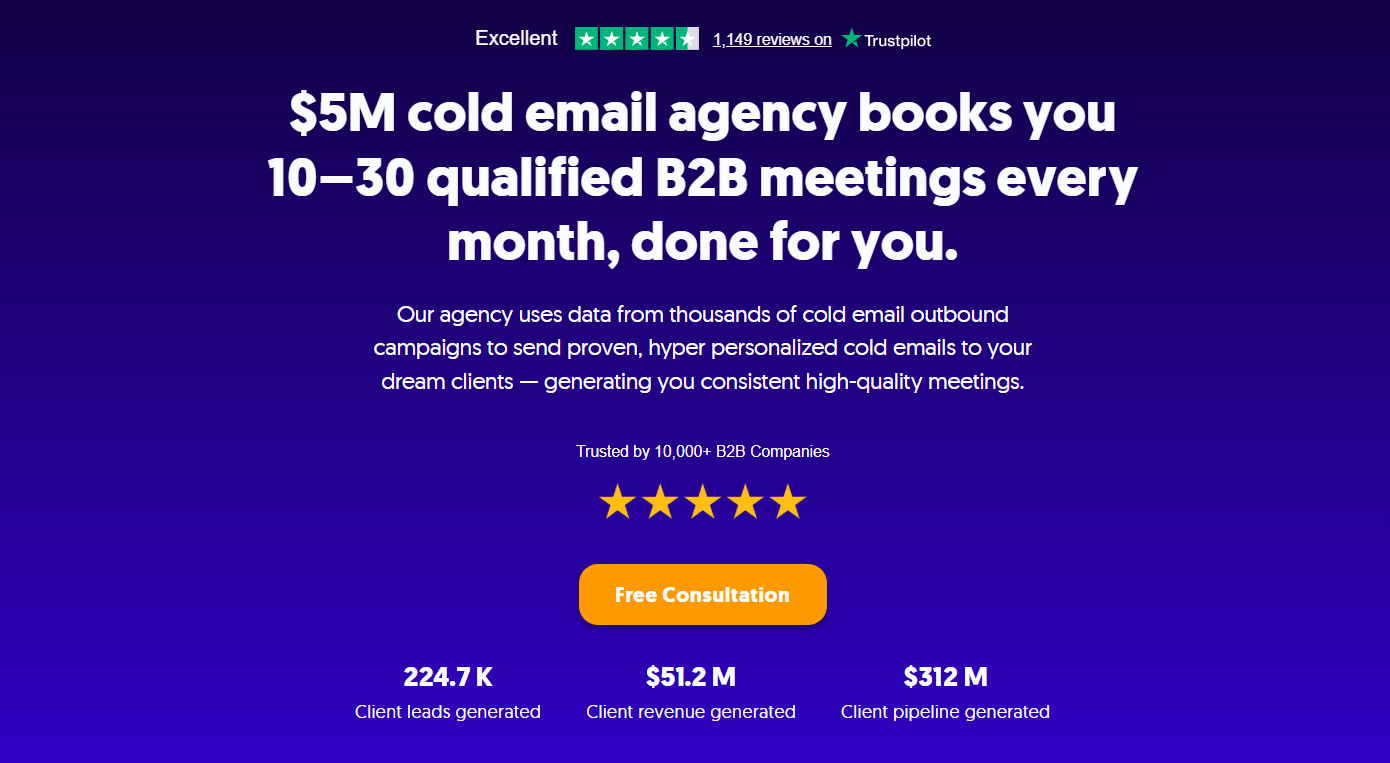
Finding an accurate email is only the first step. Building, verifying, and maintaining a clean list at scale is an ongoing operational job, and it's one most teams underestimate until their bounce rate starts climbing.
As a cold email agency, we handle ICP-aligned list building, multi-source email finding, and verification as part of every campaign we run. It's not left to the client to piece together manually between tool subscriptions and spreadsheet cleanup.
This matters because bad data is one of the biggest hidden causes of poor deliverability and wasted outreach spend. A managed process, one that treats list hygiene as ongoing rather than a one-time task, reduces that risk considerably.
We've built this into how we've generated $312 million in client pipeline across the outbound campaigns we've run.
If you'd rather run cold email on verified data from day one instead of researching and checking every contact yourself, that's exactly what we're built for. Book a strategy call with Cleverly to see how it works.
Conclusion
No single method finds every email address. The highest accuracy always comes from combining manual research, finder tools, pattern matching, and verification, not from betting everything on one tactic. Verify before you send, every time, regardless of which method surfaced the address.
Scale matters too. Manual methods work fine for a handful of contacts, but real list-building needs tools and verification working together. And remember: an accurate, verified email is only as useful as the outreach behind it. Finding the address is step one. What you say once you land in that inbox is what actually gets you a reply.
Frequently Asked Questions
Free Resource
How to Scale a Profitable Cold Call System
Get the complete guide — download it instantly now.

Free Ebook
Download the Free Guide
Enter your details to get instant access.
You're all set! 🎉
Your ebook is downloading now.
Click below if the download didn't start automatically.