Table of Contents
What Is Sales Acceleration Software?
Benefits of Using Sales Acceleration Tools
What to Look for in the Best Sales Acceleration Software
Quick Comparison: Top 10 Sales Acceleration Tools at a Glance
10 Best Sales Acceleration Tools & Software in 2026
Free Sales Acceleration Software — What You Can (and Can't) Expect
How to Choose the Right Sales Acceleration Software for Your Business
Conclusion
Frequently Asked Questions
Modified On :
July 1, 2026
Key Takeaways
- Sales acceleration software only pays off when your team actually uses it daily. Adoption beats feature count every time.
- Match the tool to your actual bottleneck. Prospecting, engagement, visibility, and closing are four different problems with four different tool categories.
- Free tiers exist across most of this list, but they're built for testing, not scaling. Budget for paid plans once you're past 5-10 reps.
- Stacking too many tools creates more friction than it removes. Most teams do better with two or three tools used well than six used poorly.
- Software accelerates what your team already does well. It doesn't fix a broken outbound process or replace the human judgment that turns a lead into a closed deal.
The average B2B lead sits untouched for 42 hours before anyone follows up. During that window, a prospect who filled out a form or replied to a cold email is already talking to someone else, or has moved on entirely.
That gap between "interested" and "ignored" is exactly what sales acceleration software exists to close.
The stakes are higher than they used to be. Roughly 89% of revenue organizations now use AI in some part of their sales process, and teams using AI tools convert leads into pipeline at meaningfully higher rates than teams that don't.
Meanwhile leads contacted within five minutes close at more than double the rate of leads contacted a day later. Manual, unassisted selling simply can't keep pace anymore.
This guide breaks down what sales acceleration software actually is, what separates a good tool from a shiny one, and the 10 best options on the market in 2026, organized by the problem each one solves.
Whether you're an SDR manager trying to stop leads from going cold, a RevOps lead building a stack from scratch, or a founder deciding where to spend your first software dollars, you'll find a clear starting point here.

What Is Sales Acceleration Software?
Sales acceleration software is any tool or platform that helps a sales team move prospects through the pipeline faster. It does this by automating repetitive outreach tasks, surfacing buying signals your reps would otherwise miss, improving how efficiently reps spend their time, and giving managers visibility into where deals get stuck.
No single tool does all of this. Instead, the category breaks down into five overlapping buckets:
- Prospecting and data intelligence — finding accurate contact and company data
- Sales engagement — sequencing outreach across email, calls, and social
- Conversation intelligence — analyzing calls and emails for coaching and deal risk
- Pipeline management — tracking deals and forecasting revenue
- CRM — the system of record everything else plugs into
Why the Stack Matters More Than Any Single Tool
Think of it less like buying one piece of software and more like assembling a relay team. A data tool hands off to an engagement tool, which hands off to your CRM, which feeds a conversation intelligence tool. When those handoffs are clean, deals move. When they're not, reps spend their time re-entering data instead of selling.
Used together, the right combination can shorten your sales cycle, lift win rates, and increase rep output without adding a single headcount. That's the actual promise of this category, not "more software" for its own sake.
🚀 Software Doesn't Book Meetings. Execution Does
Pair the right tools with a proven outbound team that delivers 15–30 qualified meetings every month.
Benefits of Using Sales Acceleration Tools
Here's what changes when a team implements the right sales acceleration tools instead of running outreach manually:
- Faster lead follow-up. Automated triggers make sure no lead sits idle after a form fill, email open, or intent signal.
- Higher rep productivity. Less time spent on data entry and admin work means more time in actual sales conversations.
- Better lead prioritization. Intent data and scoring models surface the accounts most likely to buy, instead of making reps guess.
- Improved pipeline visibility. Managers can see exactly where deals stall and coach reps before a deal dies quietly.
- Consistent outreach at scale. Sequences keep cadence going even when individual reps get busy or distracted.
- Shorter sales cycles. Removing friction at each stage keeps momentum instead of letting deals go cold between touches.
What to Look for in the Best Sales Acceleration Software
Not every tool on a "best of" list will fit your team. Before you commit budget, run any candidate through these filters:
1. Data accuracy. A prospecting tool is only as good as the contacts behind it. Bad emails and stale titles waste rep time no matter how slick the interface is.
2. CRM integration. If it doesn't sync cleanly with Salesforce, HubSpot, or Pipedrive, your reps will end up doing double data entry, and adoption will die within a month.
3. Automation depth. Look for tools that trigger actions based on prospect behavior, not just a fixed schedule. Behavior-based automation is what actually catches a prospect at the right moment.
4. Ease of use. A powerful tool your team won't open is worth zero. High-complexity platforms with low adoption rates are the most common wasted spend in this category.
5. Scalability. Ask whether the tool works as well for a 3-person team as it does for a 30-person team, or whether you'll outgrow it in a year.
6. Reporting and analytics. You need visibility into pipeline health and rep performance. Without it, you're managing by gut feeling.
7. Pricing model. Per-seat, usage-based, and flat pricing all behave differently as you scale. Match the model to your growth plan, not just today's headcount.
8. Free tier or trial availability. Especially important if you're a small business testing before you commit real budget.
📈 Already Have the Tech Stack? Now Build the Pipeline.
Join 10,000+ businesses using Cleverly's LinkedIn, cold email, and cold calling services to turn software into measurable revenue.
Quick Comparison: Top 10 Sales Acceleration Tools at a Glance
Use this table to get oriented before the full breakdown below.
10 Best Sales Acceleration Tools & Software in 2026
These are organized by primary use case. Pick based on where your biggest sales friction actually lives, not by what's trending.
1) Apollo.io
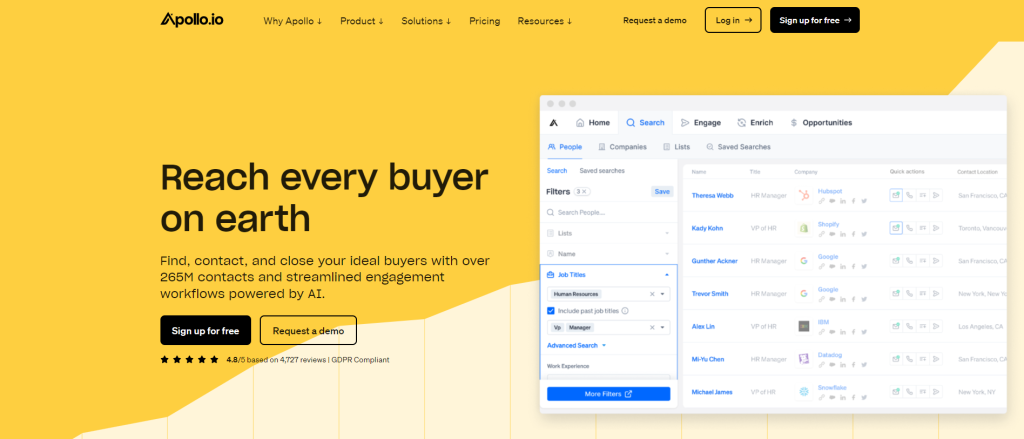
Best for: prospecting and outreach in a single platform
Apollo has become the default starting point for teams that want a database and a sequencing tool without paying for two separate platforms. It's especially popular with SDR teams that need volume without enterprise-level budget.
Standout features: a 275M+ contact database, built-in email sequencing, a LinkedIn Chrome extension, intent data, and native CRM sync.
Pricing: Apollo runs four plans in 2026: Free, Basic at roughly $49 per user per month, Professional at roughly $79 per user per month, and Organization at roughly $119 per user per month, all cheaper on annual billing. Worth noting: Apollo uses a credit system on top of seat pricing, so mobile number reveals and bulk exports can push real costs higher than the sticker price suggests.
Best fit: SDR teams and small businesses that want prospecting and engagement in one tool instead of managing a two-tool stack.
2) Outreach.io
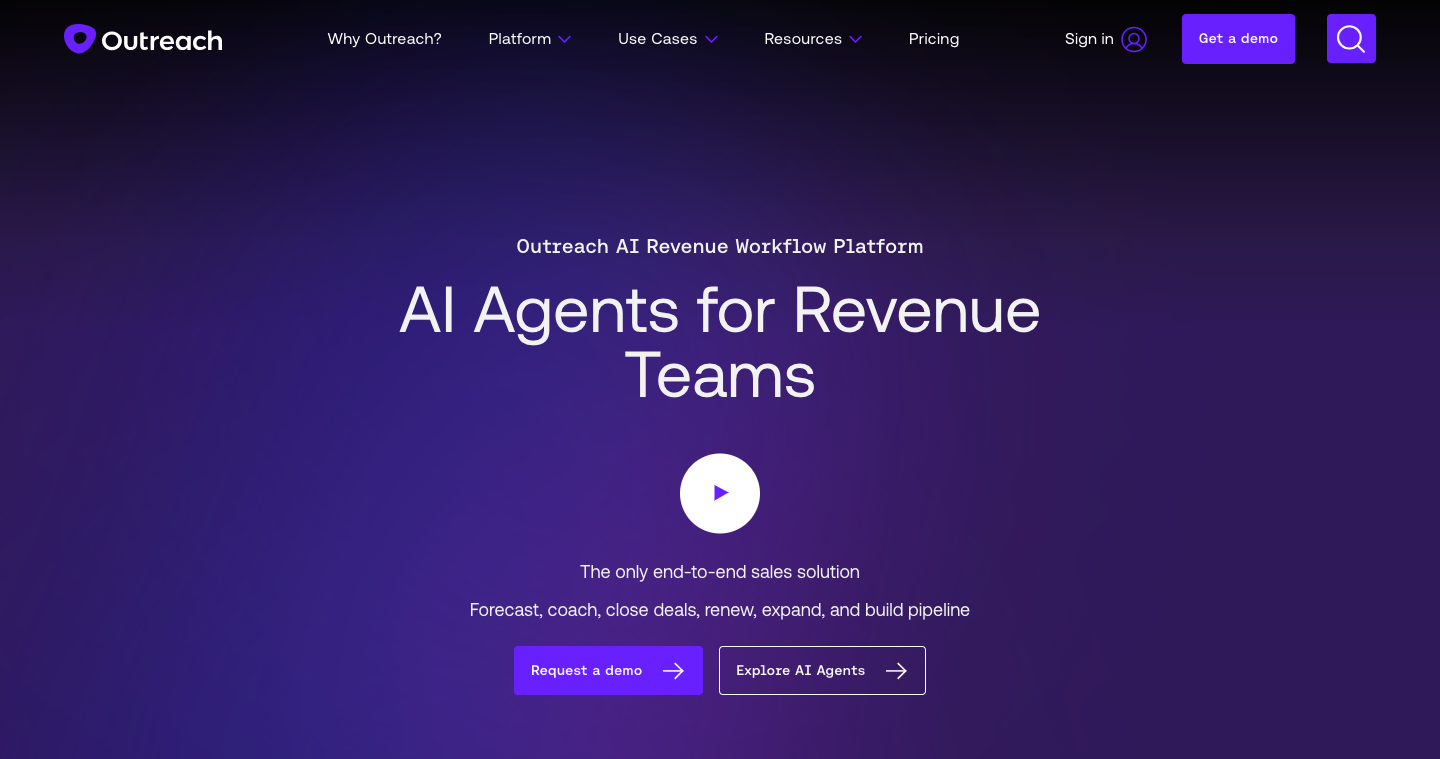
Best for: enterprise sales engagement and execution
Outreach is built for larger sales orgs running complex, multi-step outbound motions across many reps. It goes beyond sequencing into deal inspection and forecasting, which is why it tends to show up in RevOps conversations rather than SDR onboarding decks.
Standout features: AI-driven sequencing, deal inspection, conversation intelligence, and revenue forecasting built into the same platform.
Pricing: Custom, quote-based enterprise pricing. Expect this to run well above the per-seat tools on this list.
Best fit: mid-market to enterprise teams that need one execution platform tying sequencing, coaching, and forecasting together.
3) Salesloft
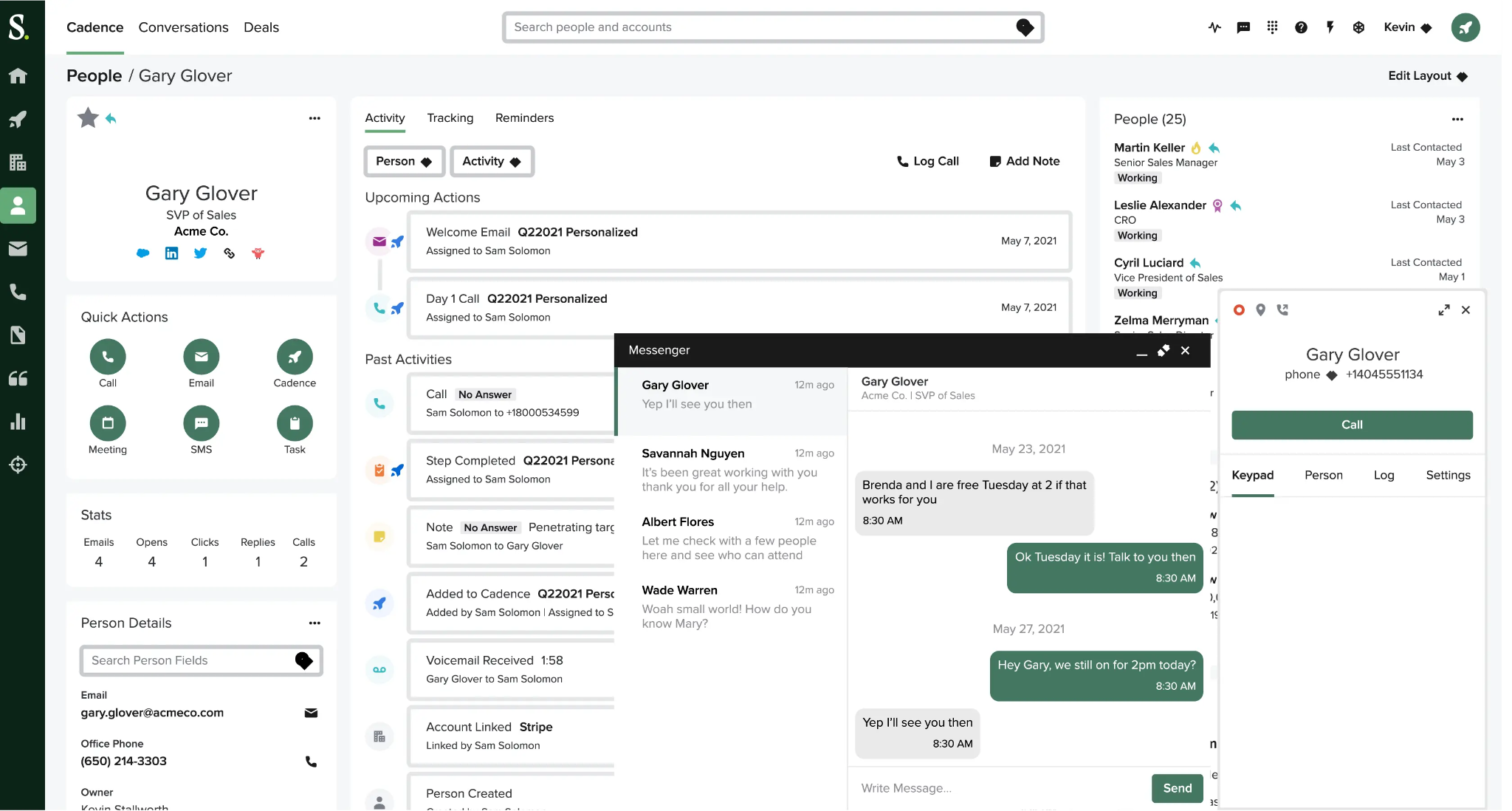
Best for: revenue orchestration and signal-based selling
Salesloft's pitch is that sequences shouldn't run on a fixed clock. Instead, they adjust based on what a buyer actually does, like visiting a pricing page or opening the same email three times.
Standout features: dynamic sequences triggered by buyer signals, pipeline analytics, and built-in coaching tools for managers.
Pricing: Custom pricing, typically quoted per seat with add-ons for advanced features.
Best fit: teams that want their outreach cadence to adapt automatically instead of running the same static sequence for every prospect.
4) ZoomInfo
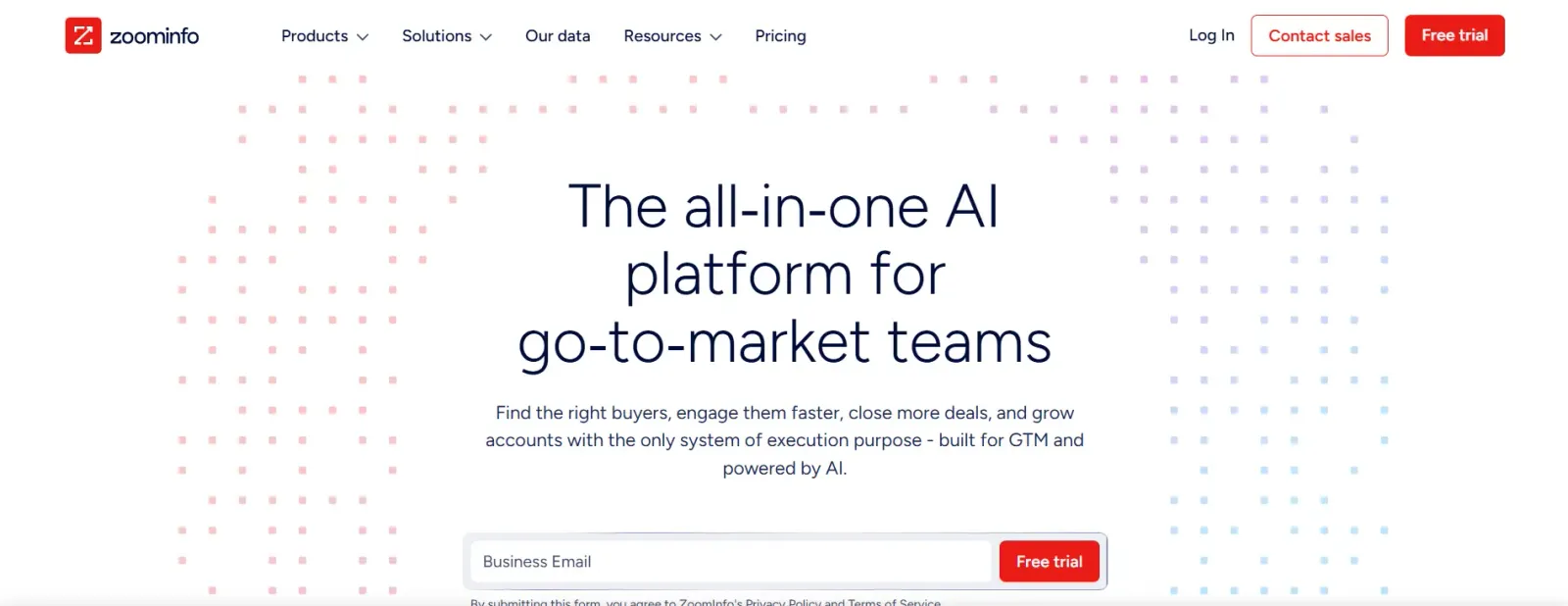
Best for: B2B contact data and intent intelligence at scale
ZoomInfo is the data layer a lot of other tools on this list get compared against. Its strength isn't sequencing, it's the depth and accuracy of the underlying database, especially for larger, more complex accounts.
Standout features: a verified contact database, buying intent signals, org charts for target accounts, and CRM enrichment.
Pricing: Custom, and generally the highest price point in this category. ZoomInfo is built for enterprise budgets.
Best fit: teams that need high-accuracy prospecting data at scale and are willing to pay a premium for it.
5) Gong
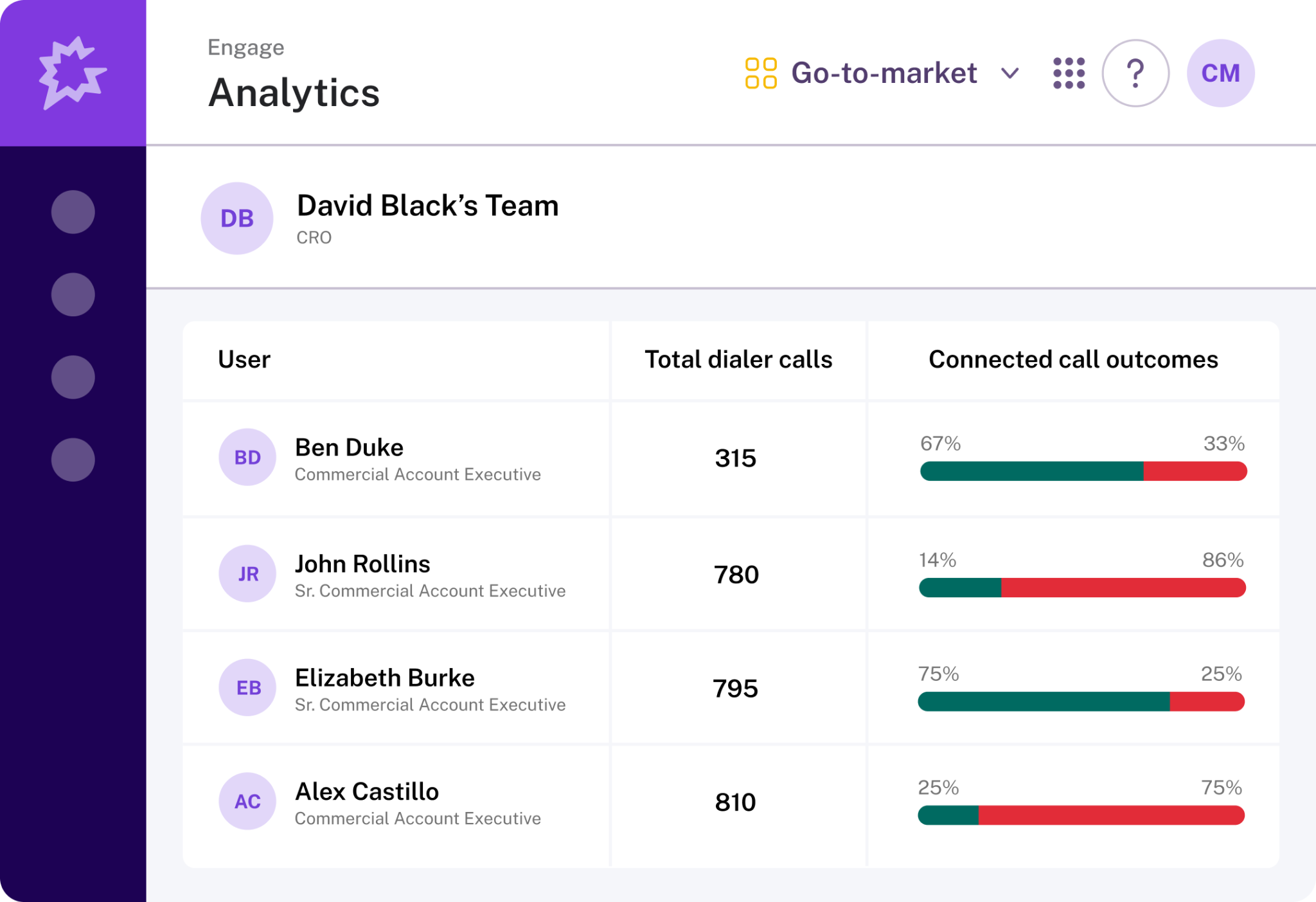
Best for: conversation intelligence and deal coaching
Gong records and analyzes sales calls and emails, then surfaces patterns, like which talk tracks correlate with closed deals and which ones correlate with ghosted prospects. It's less about outreach volume and more about improving what happens once a rep gets someone on the phone.
Standout features: AI analysis of calls and emails, deal risk detection, rep coaching insights, and forecast accuracy tied to actual conversation data.
Pricing: Custom, typically in the $100-200 per seat per month range.
Best fit: sales managers and RevOps teams that want visibility into what's actually happening inside deals, not just what's logged in the CRM.
6) HubSpot Sales Hub
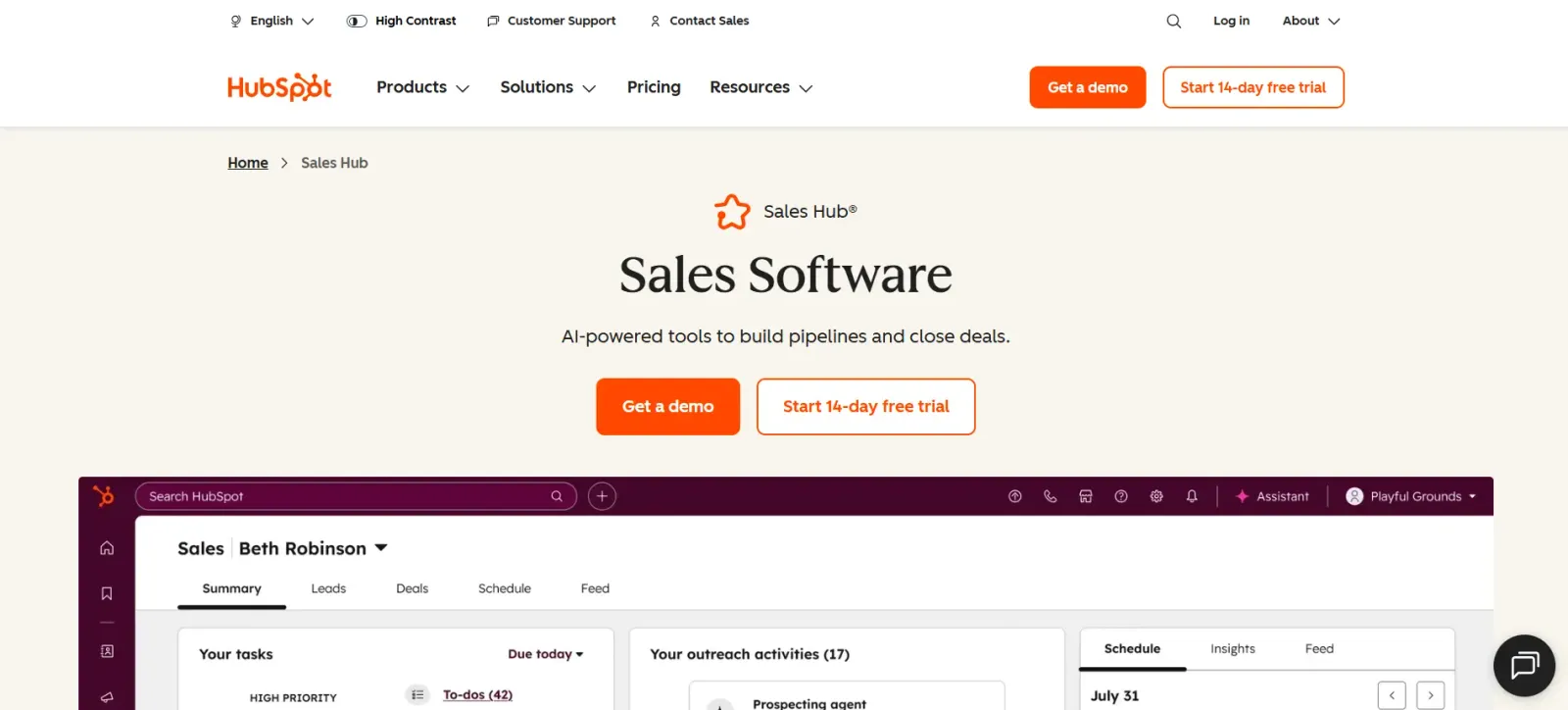
Best for: inbound-led sales teams and small to mid-size businesses
HubSpot's advantage is consolidation. If you're already running HubSpot for marketing, Sales Hub keeps your CRM, sequences, and pipeline in the same system instead of stitching together separate tools.
Standout features: CRM, email sequences, pipeline management, and a meeting scheduler bundled into one platform.
Pricing: HubSpot Sales Hub offers a free tier, with paid plans starting around $20 per seat per month and scaling up to $150 per seat per month for Enterprise. G2
Best fit: small to mid-size teams that want an all-in-one CRM and sales engagement tool without managing separate logins and syncs.
7) Clari
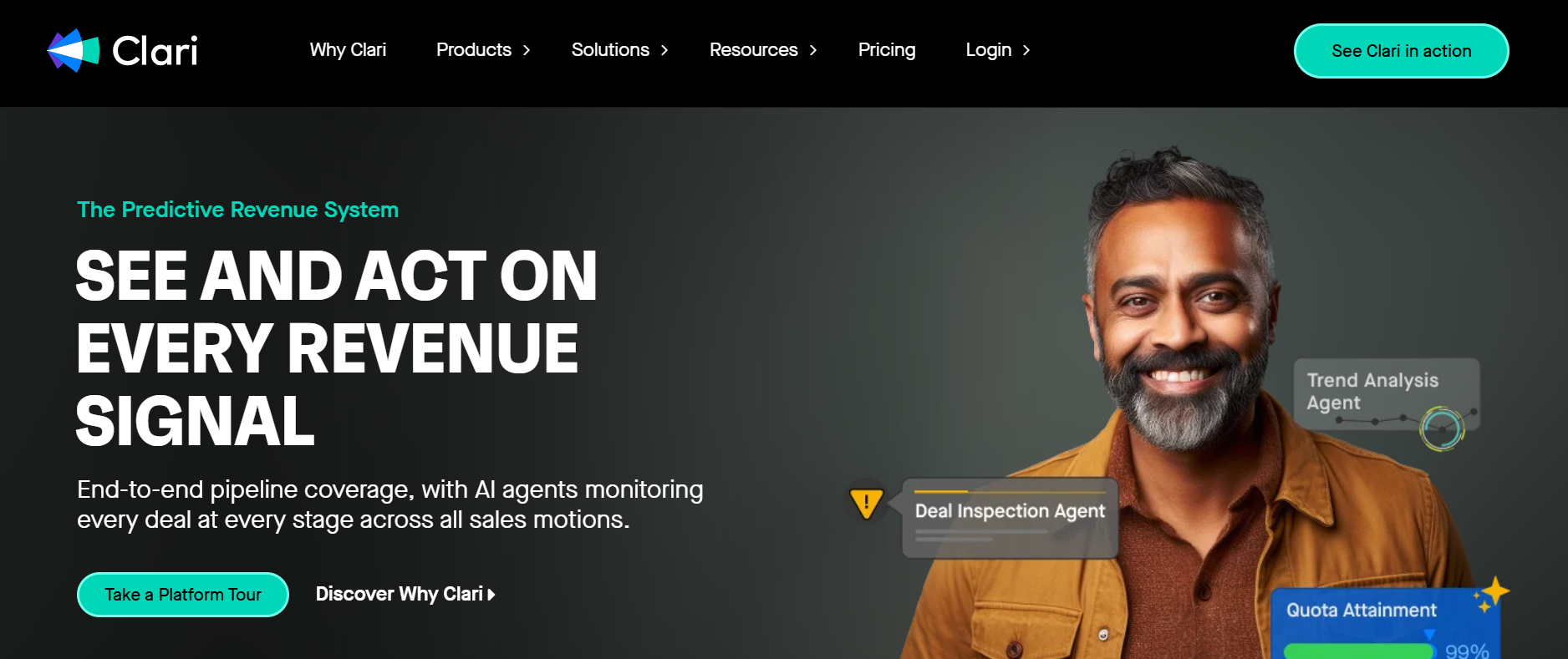
Best for: pipeline visibility and revenue forecasting
Clari sits closer to the CRO's dashboard than the SDR's inbox. It's built to answer "will we hit the number this quarter" with actual data instead of a rep's gut feeling in a forecast call.
Standout features: AI-powered deal inspection, forecast accuracy scoring, CRM activity analysis, and opportunity risk scoring.
Pricing: Custom enterprise pricing.
Best fit: VP Sales and RevOps teams that need accurate forecasting and early warning on deal health, not another outreach tool.
8) Cognism
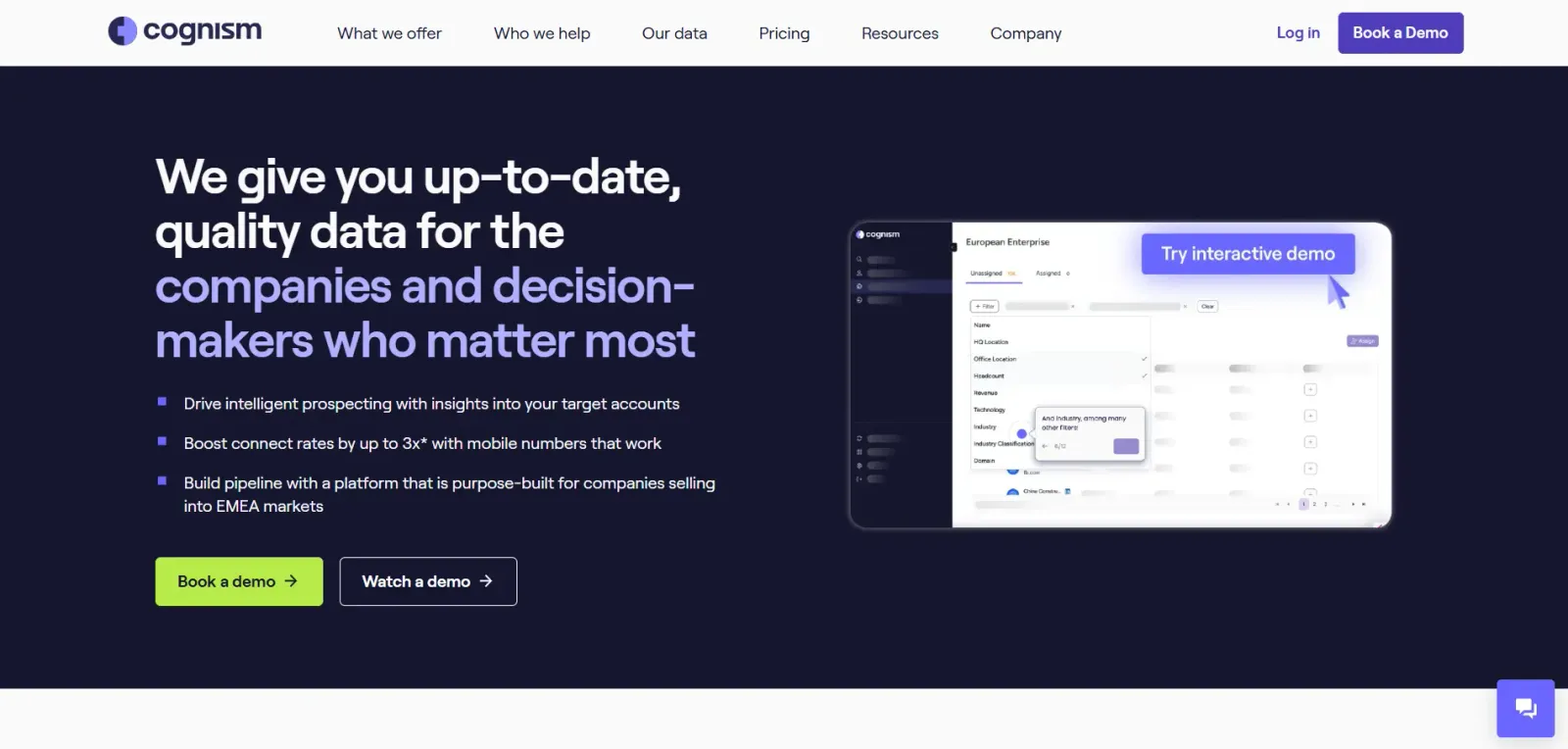
Best for: compliant B2B contact data for outbound teams
Cognism built its reputation on data that holds up under GDPR scrutiny, which matters a lot if your outbound touches European contacts. It's a common ZoomInfo alternative for teams selling globally.
Standout features: a GDPR-compliant database, verified mobile numbers, intent data, and CRM enrichment.
Pricing: Custom pricing, quoted per seat or per credit pool depending on plan.
Best fit: European and global sales teams that need compliant, high-accuracy contact data without the compliance risk of a US-only database.
9) Pipedrive
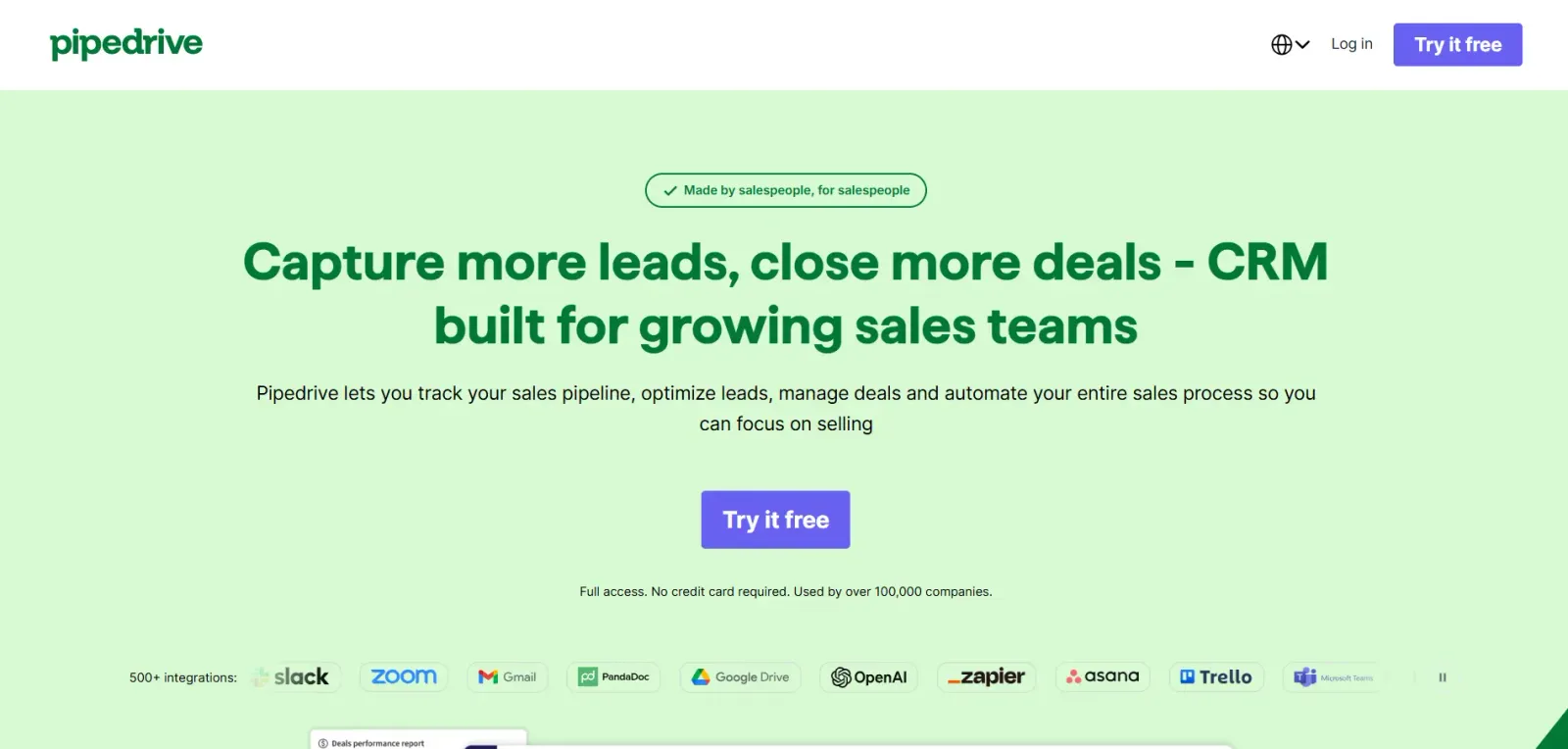
Best for: pipeline management for small and mid-size sales teams
Pipedrive is a CRM built by salespeople, and it shows. The visual pipeline view is genuinely one of the more intuitive ones on the market, which matters if adoption is your biggest risk with a new tool.
Standout features: a visual, drag-and-drop pipeline, activity reminders, email integration, and an AI sales assistant.
Pricing: Pipedrive's entry tier starts around $14 per user per month on annual billing, with higher tiers unlocking automation, forecasting, and AI features. There's no permanent free plan, but a 14-day free trial is available.
Best fit: small business sales teams that need structured pipeline management without the complexity (or cost) of an enterprise CRM.
10) Lavender
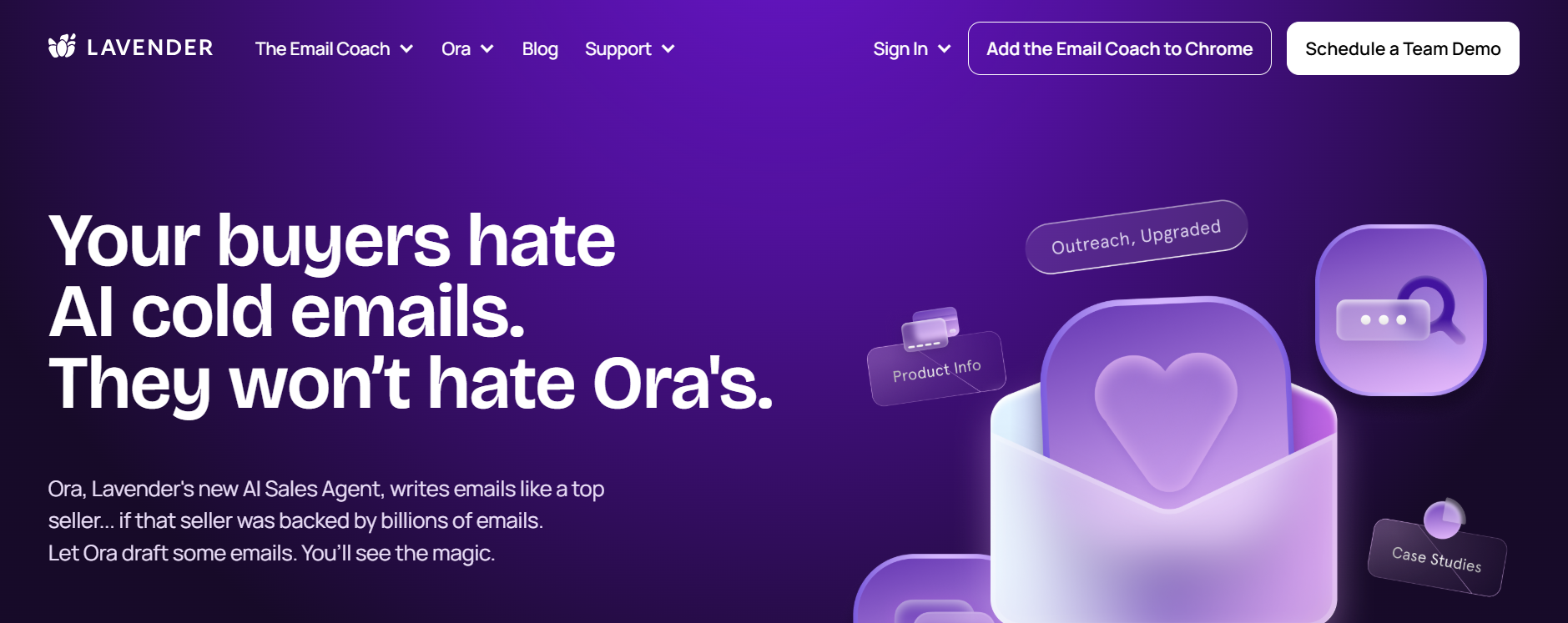
Best for: AI-powered email writing and optimization
Lavender doesn't send emails or manage sequences. It scores the emails your reps are already writing and tells them exactly what to fix before they hit send, which makes it a coaching layer rather than a full platform.
Standout features: real-time email scoring, personalization suggestions pulled from LinkedIn and company data, and reply rate coaching for managers tracking team performance.
Pricing: Lavender offers a free tier limited to 5 emails per month, with paid plans starting at $29 per month for unlimited coaching and scaling to $69 per user per month for team analytics and shared templates.
Best fit: SDRs and AEs who want to improve cold email quality and reply rates without guessing what's wrong with their copy.
Free Sales Acceleration Software — What You Can (and Can't) Expect
Several tools on this list offer genuinely usable free tiers. But "free" comes with real limits, and knowing where those limits sit before you build a workflow around a free plan will save you a painful migration later.
What you can realistically get for free:
- A functional CRM (HubSpot's free tier)
- Limited prospecting credits (Apollo's free plan)
- Basic email scoring (Lavender's 5 emails per month)
- A pipeline trial period (Pipedrive's 14-day trial)
What you generally won't get free:
- Intent data or buying signals
- Advanced, behavior-based automation
- Conversation intelligence or call analysis
- Deep enterprise integrations or SSO
Free tools are genuinely useful for early-stage teams testing a workflow before committing budget. But once you're generating real volume, most teams hit the ceiling fast, usually within the first month of serious use.
If you're just getting started, Apollo.io's free tier, HubSpot Sales Hub's free CRM, and Lavender's free plan are the most practical starting points.

How to Choose the Right Sales Acceleration Software for Your Business
Start by identifying the actual bottleneck. Are you struggling to find good leads, get replies once you've found them, see where deals stall, or close what's already in motion? The right tool depends entirely on which of those is true right now, not on what's popular.
✅ If you're a small business: prioritize all-in-one tools with free tiers, like Apollo or HubSpot. Avoid enterprise platforms with steep learning curves; they'll cost you more in onboarding time than they save in features.
✅ If you're mid-market: invest in a CRM plus sales engagement combo first, then layer in conversation intelligence as the team grows and coaching becomes a bigger lever than raw volume.
✅ If you're enterprise: purpose-built platforms like Outreach, Salesloft, Gong, and Clari justify their cost at scale, where even small efficiency gains compound across dozens of reps.
Two things apply no matter your size. First, avoid tool sprawl. More tools rarely means more sales; a simple, well-adopted stack consistently outperforms a complex, underused one. Second, always test integrations with your existing CRM before you sign anything. A tool that doesn't sync cleanly creates more manual work than it removes.
How Cleverly Accelerates B2B Pipeline Without the Tool Overhead
Building and managing a full sales acceleration stack takes time, budget, and technical expertise that not every team has sitting around. Even with the right tools, someone still has to source the data, write the sequences, manage deliverability, and keep optimizing week over week.
That's the gap Cleverly fills. Instead of software you manage yourself, we run fully managed B2B lead generation across LinkedIn outreach, cold email, and cold calling, so your team receives qualified, ICP-matched leads without touching the prospecting infrastructure.
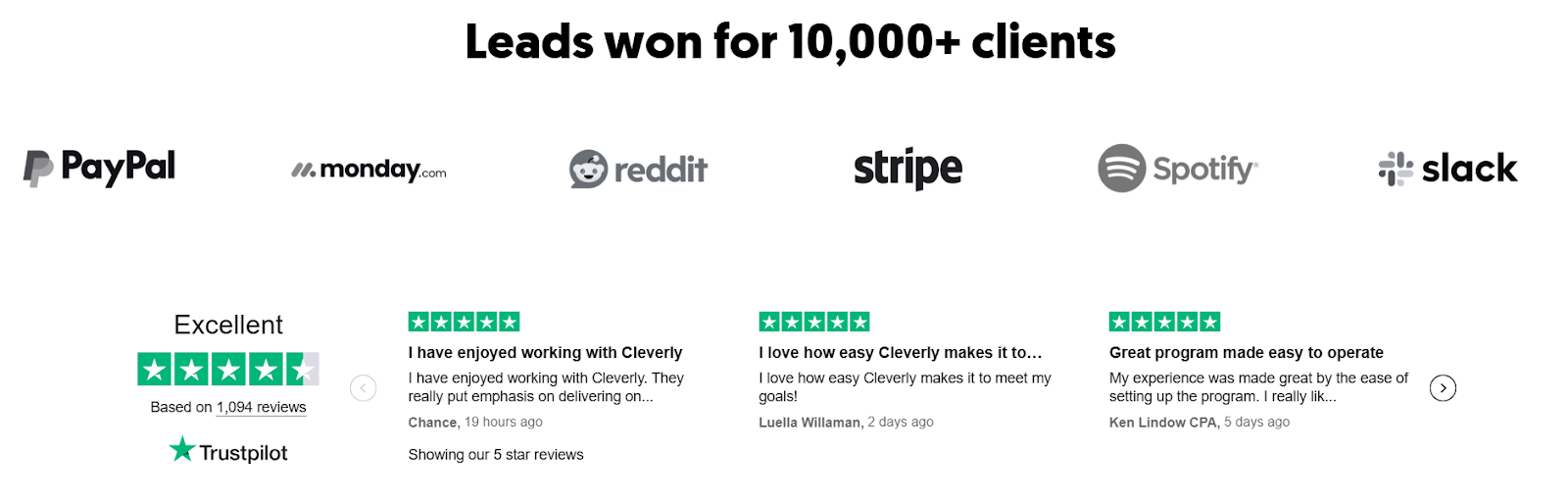
We've helped 10,000+ clients, including teams at Airbnb, DocuSign, and Loom, generate real pipeline this way.
Where most tools on this list help reps do more with their time, Cleverly removes the task entirely. Targeting, data sourcing, messaging, and outreach execution are handled end-to-end by our team, not left for your reps to configure and maintain between calls.
That difference matters most for teams that don't have a dedicated RevOps person to keep a five-tool stack running smoothly.
The result is faster pipeline entry, higher-quality first conversations, and more time for your existing reps to focus on what software can't do: actually closing the deal.
If you'd rather have qualified leads show up than manage another platform, book a strategy call with Cleverly and we'll walk you through what that looks like for your team.
Conclusion
The best sales acceleration software isn't the one with the longest feature list. It's the one your team opens every day, because adoption is what actually drives ROI, not the number of checkboxes on a comparison page.
Match the tool to your real constraint, whether that's prospecting, engagement, visibility, or closing, and resist the urge to buy for problems you don't have yet.
Start with one or two tools, integrate them properly with your CRM, and measure the impact before you add anything else to the stack. Whether you build that stack yourself or hand the outbound motion to a team that already runs it daily, the goal is the same: less time managing process, more time in front of real revenue.
Frequently Asked Questions
Free Resource
How to Scale a Profitable Cold Call System
Get the complete guide — download it instantly now.
Free Ebook
Download the Free Guide
Enter your details to get instant access.
You're all set! 🎉
Your ebook is downloading now.
Click below if the download didn't start automatically.